



The stork is a bird that is filled with whimsy and wonder, often wrapped into the story of life. However, these birds are much more than a symbol of a new arrival; they are found in the hundreds of thousands around the world, residing primarily in Europe until the breeding season is over. Even with 19 different species, the identification of this bird is notable for its white, black, and gray feathers and long legs.
Evolution and Classification
As members of the clade Aequornithes, storks are related to several birds with an affinity for water. Included in that vast extended family are:
- Gaviiformes (loons)
- Pelecaniformes (herons, ibises, pelicans, shoebill, and hamerkop)
- Procellariiformes (albatross and petrels)
- Sphenisciformes (penguins)
- Suliformes (boobies, cormorants, darters, gannets, and frigatebirds)
Storks themselves belong to the order Ciconiiformes, and consist of the following genera:
- Anastomus: These birds’ main characteristics include their large size and beaks, which only meet at the tip. They include the African and Asian openbills.
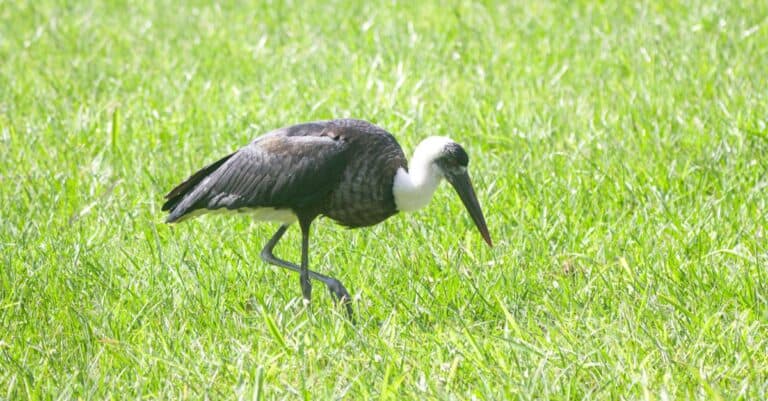
- Ciconia: Generally medium-sized with black and white plumage, these storks are known for their habit of mating for life. They include Abdim’s stork, the African woolly-necked stork, the Asian woolly-necked stork, the black stork, the Maguari stork, the oriental stork, the storm’s stork, and the white stork.
- Ephippiorhynchus: Found in Africa, Asia, and Australia, the storks are recognizable by their impressive sizes, large beaks, and black and white plumage. They include the saddle-billed stork and the black-necked stork.
- Jabiru: These birds, which occasionally wander into the United States, are mainly found from Mexico to Argentina. They can be recognized by their white plumage, bare heads and necks which are black, and a scarlet pouch at the base of their necks. They are capable of growing to 5 feet in height and are graceful and skilled in the air.
- Leptoptilos: Distinguishable by their bald heads and necks, these birds, which are found in Africa and Asia, are somewhat reminiscent of vultures. Unsurprisingly, they keep them company and feed alongside them since they are scavengers. They include the greater adjutant, the lesser adjutant, and the marabou stork.
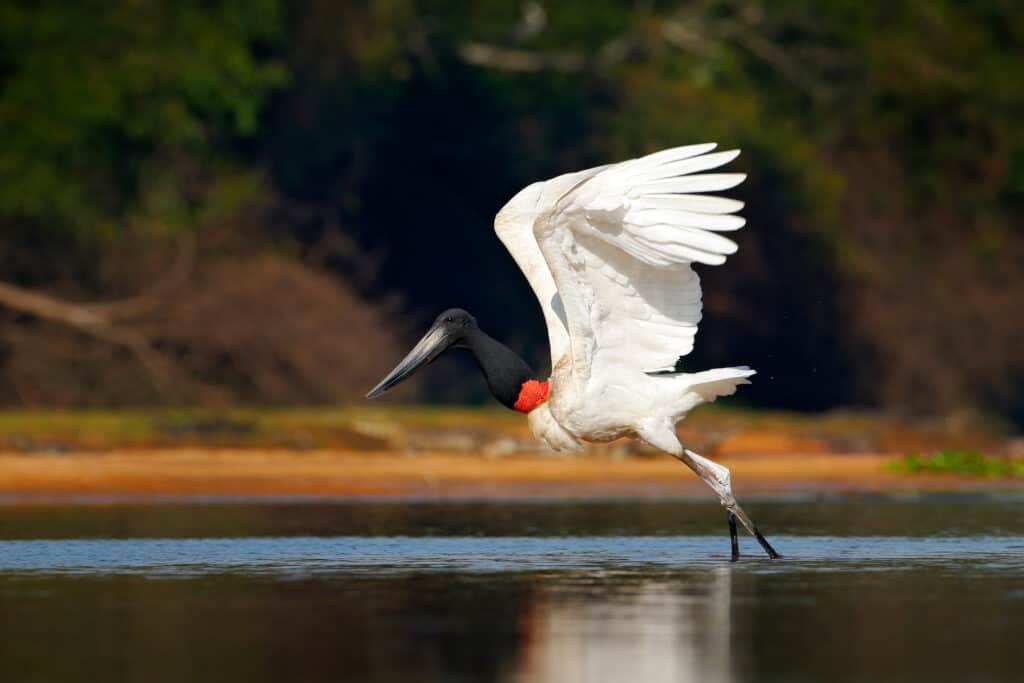
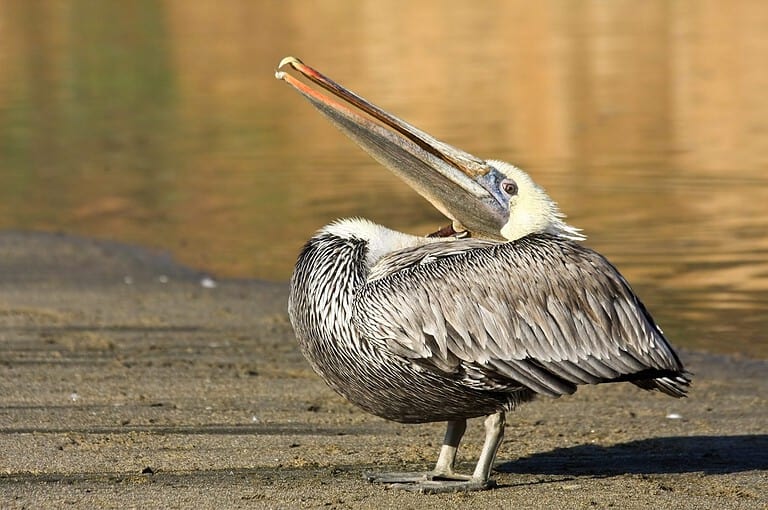
Storks are related to penguins, loons, herons, and even petrels.
©Ondrej Prosicky/Shutterstock.com
Types
There are 20 extant stork species, including:
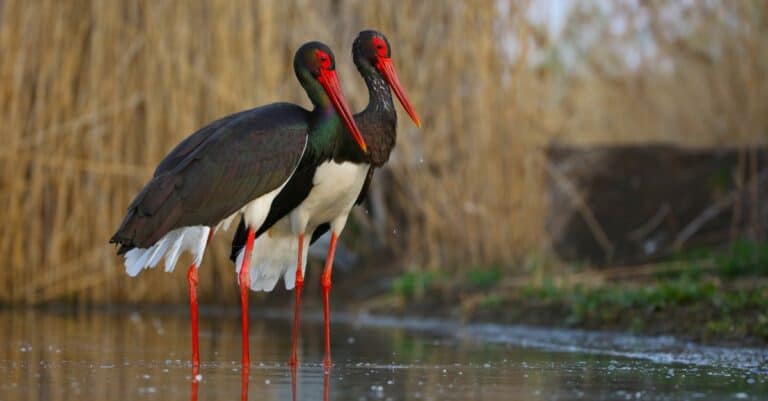
- Black stork (Ciconia nigra): Recognizable by its black plumage, red legs, dark eyes surrounded by bright red coloring, and red beak, this stork also has white feathers on the ventral part of its torso. It can be found in southern Europe, although it heads south of the Sahara during winter to warmer climes.
- Oriental stork (Ciconia boyciana): Found in China, Japan, Manchuria, and Siberia, this bird is noted for its white plumage, which darkens at the extremities of its wings, its bright red legs, and dark beak. It is capable of reaching 5 feet in height and weighing 13 pounds.
- Painted stork (Mycteria leucocephala): Found in marshes south of the Himalayas, this stork is capable of growing to 40 inches in height and weighing 7.7 pounds. Noted for its bald orange head, hooked yellow beak, and white plumage, it also has majestic black wings patterned with white at their upper parts.
- Storm’s stork (Ciconia stormi): Standing at slightly over 3 feet, this bird can be recognized by its plumage, which is mostly black, with white underparts, eyes surrounded by yellow rings, a pink beak, and dull red legs. It can be found in Indonesia, Malaysia, and southern Thailand.
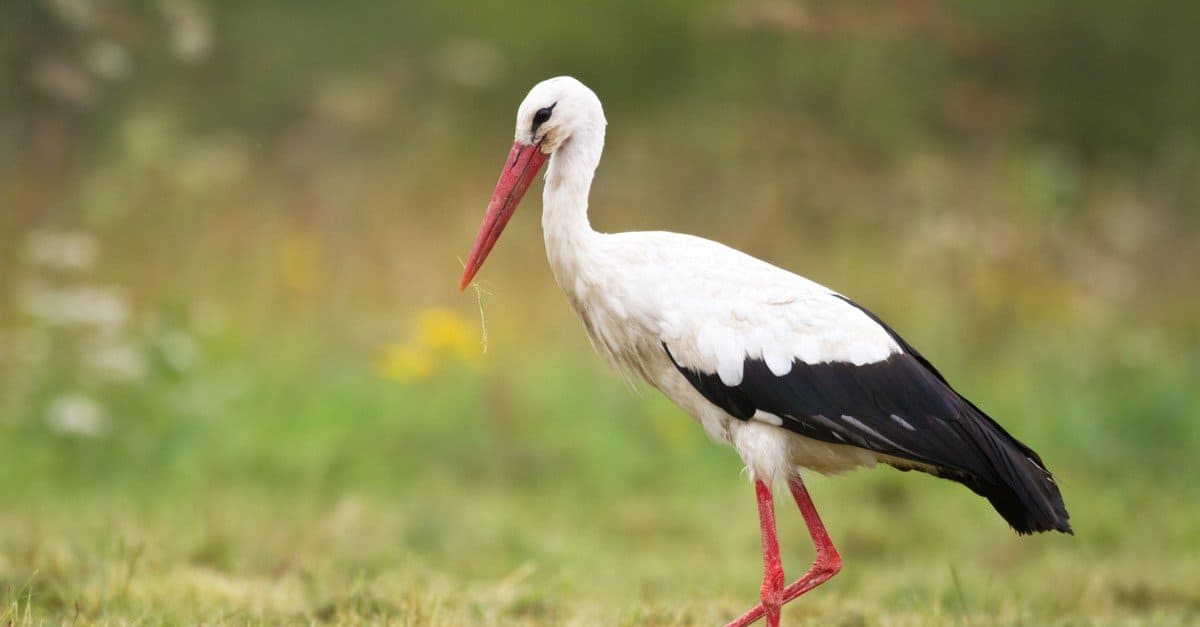
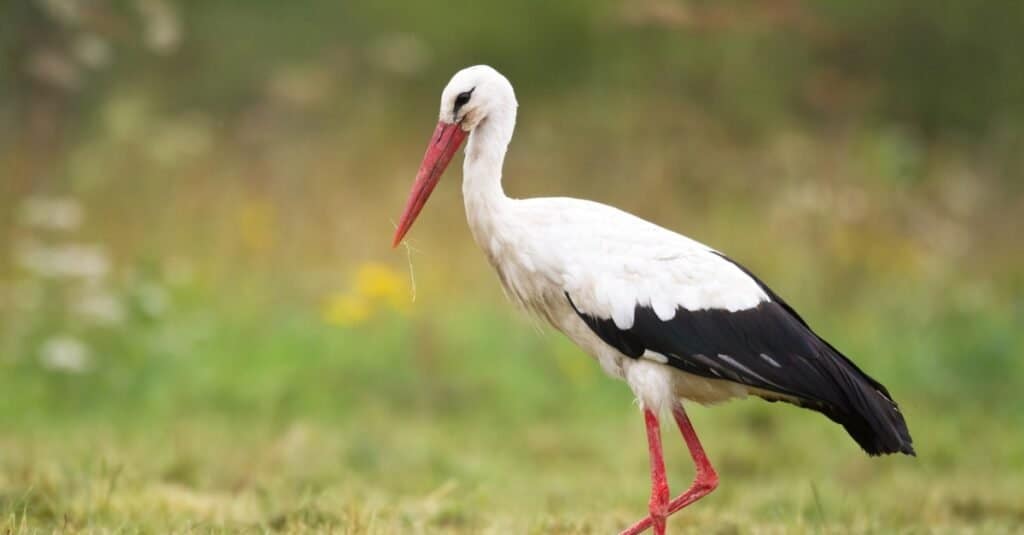
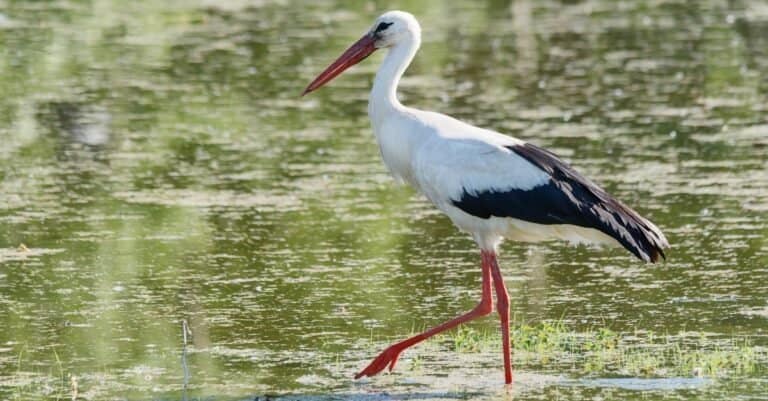
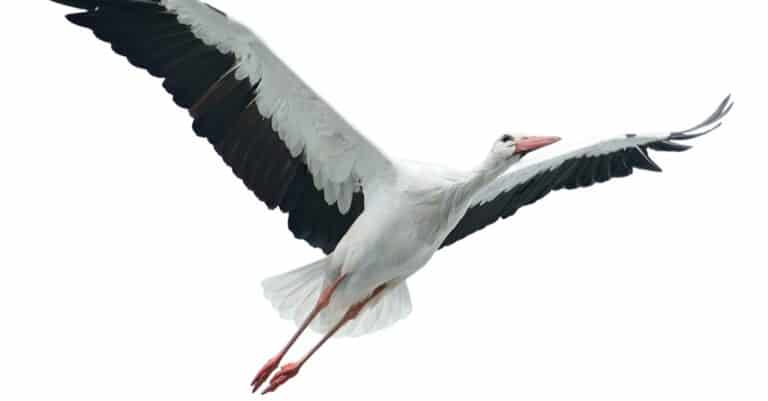
- White stork (Ciconia ciconia): The white stork can be found in southern and central Europe and Asia. It also prefers to head to Africa during the winter. The bird is recognized by its white plumage and wings fringed with black feathers, a pink beak, pink legs, and dark eyes.
The full list of extant stork species:
- Abdim’s stork, Ciconia abdimii
- African woolly-necked stork, Ciconia microscelis
- African openbill, Anastomus lamelligerus
- Asian openbill, Anastomus oscitans
- Asian woolly-necked stork, Ciconia episcopus
- Black-necked stork, Ephippiorhynchus asiaticus
- Black stork, Ciconia nigra
- Greater adjutant, Leptoptilos dubius
- Jabiru, Jabiru mycteria
- Lesser adjutant, Leptoptilos javanicus
- Marabou stork, Leptoptilos crumenifer
- Maguari stork, Ciconia maguari
- Milky stork, Mycteria cinerea
- Oriental stork, Ciconia boyciana
- Painted stork, Mycteria leucocephala
- Saddle-billed stork, Ephippiorhynchus senegalensis
- Storm’s stork, Ciconia stormi
- White stork, Ciconia ciconia
- Wood stork, Mycteria americana
- Yellow-billed stork, Mycteria ibis
Where to Find Storks
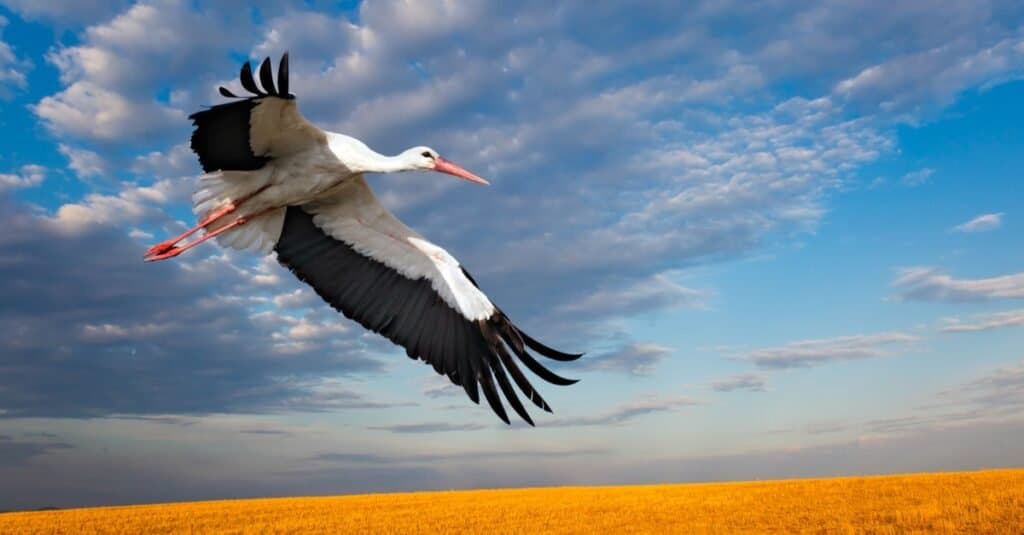
Storks prefer wetlands and marshes and are considered a good omen in many cultures
©muratart/Shutterstock.com
Most native species of storks come from Europe, and only one species — the wood stork — is even located in the United States. They prefer habitats with wetlands and marshes, giving them easy access to their preferred foods. Since they migrate towards the equator during autumn and winter, they are easiest to spot in the summertime atop buildings or near trees where they build their massive nests. They return after the coldest months have passed in February, March, and April, and the presence of their nests is meant to be a good omen.
Nests
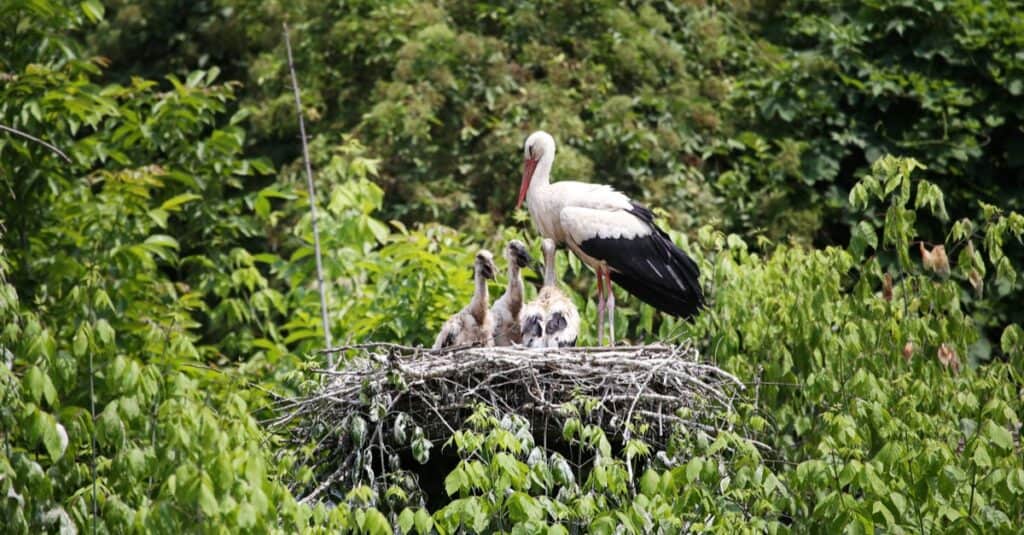
Storks are further divided into 20 species belonging to 6 genera.
©MikeDotta/Shutterstock.com
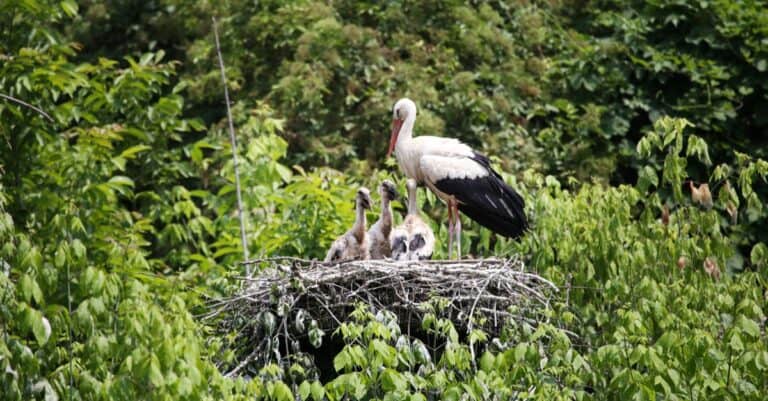
Both male and female storks build their large nests together during the breeding season, which varies by species and region. To accommodate the large eggs (which are almost 3 inches in width and weigh nearly 7 ounces), the nest is about 3.3 to 6.6 feet deep and 2.6 to 4.9 feet wide. Since these birds are so broad, their nest can weigh anywhere from 130 to 550 lbs once it is built.
The nest is constructed by both members of the mating pair, and other birds (like sparrows and common starlings) will use the nest when the pair leaves.
Appearance
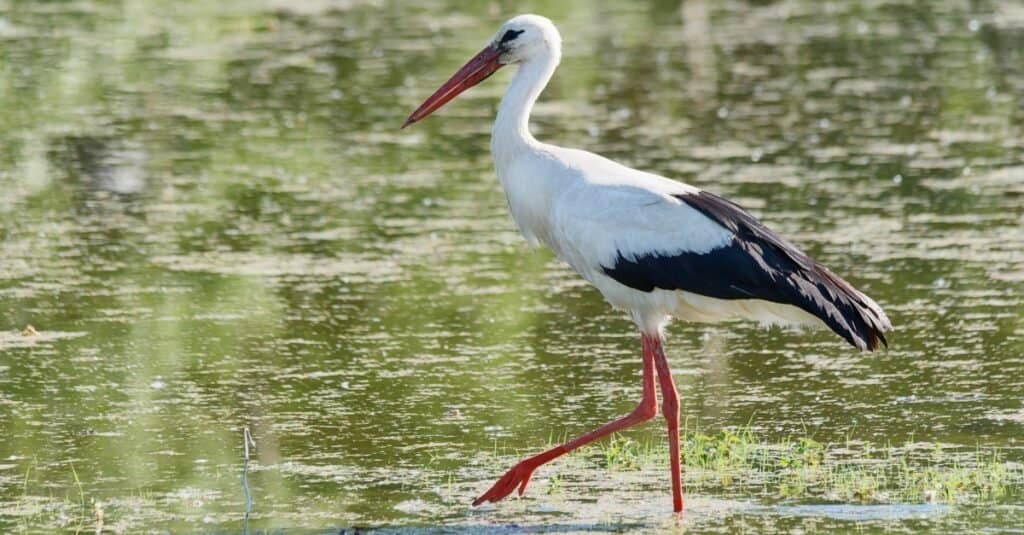
Storks are known for their sturdy, yet streamlined torsos, long bills, and long legs.
©iStock.com/nedomacki
The appearance of this bird will largely depend on the species. For the most part, all of these wading birds have long legs and a thick body that resembles a sturdy football. They also have a long bill and a long neck. White storks have white bodies with black feathers along their wings, though the wood stork has a grayer appearance to their wings.
The wingspan varies between the species, but the only species found in the United States stretches about 44 inches from one side to the other. The largest wingspan is 9.4 feet. The average stork weighs up to 7.4 lbs.
Behavior
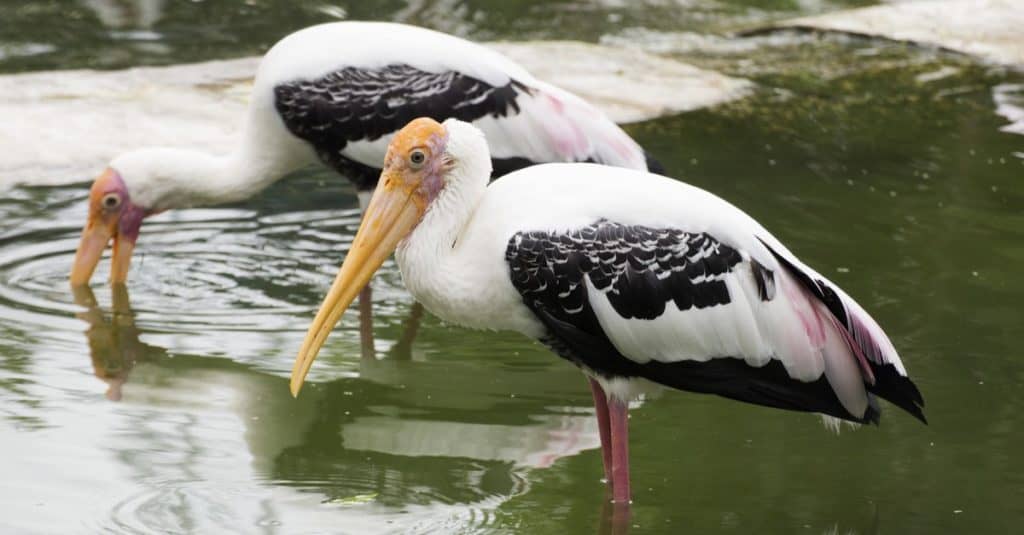
Storks may be gregarious or solitary and are known for the clattering sounds they make with their beaks.
©kungverylucky/Shutterstock.com
The life of this bird is solitary, choosing to live alone unless it is breeding season. Some species choose to live in groups when they aren’t breeding, while others will live within a flock for their entire life. Their group behavior seems to change from one bird to the next.
Rather than tweeting a song like other birds, the call is a clattering noise made with their bill. Some people compare the sound to that of firing off a machine gun. These calls vary with what the bird is trying to communicate.
Migration Pattern and Timing
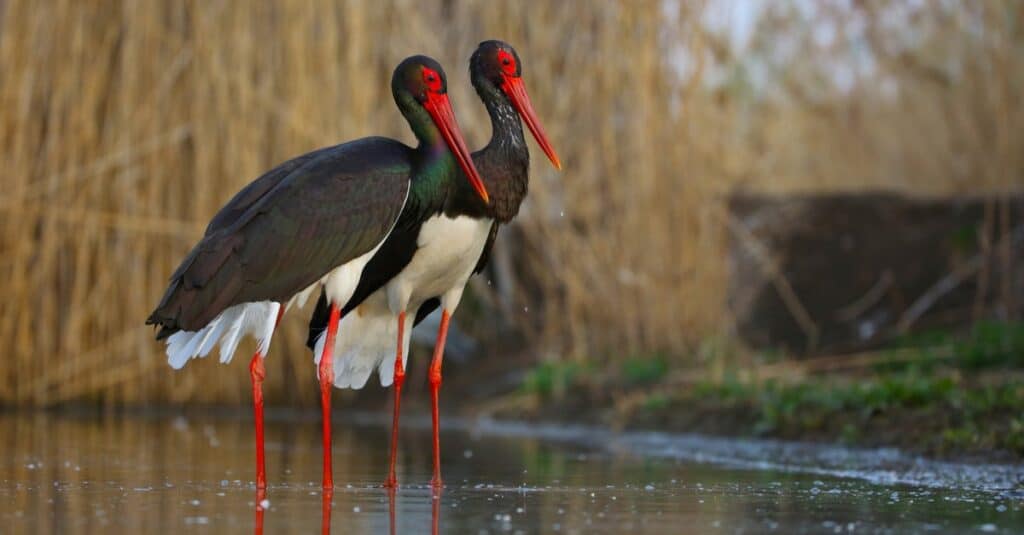
Black storks can be found in southern Europe, although they prefer to winter south of the Sahara.
©iStock.com/JMrocek
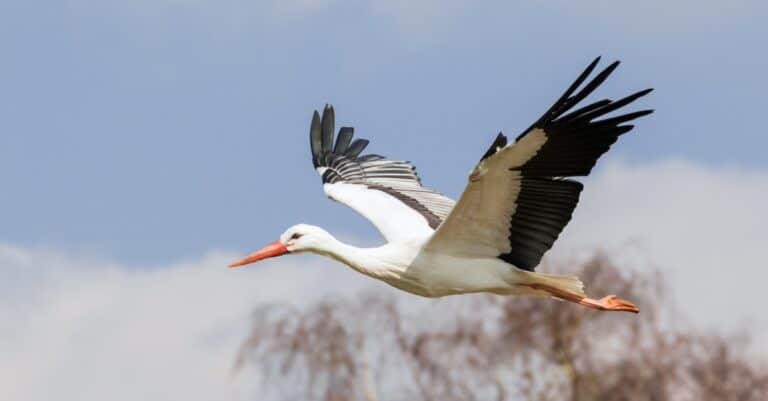
Migration occurs throughout the year for the white stork. Leaving behind their summer breeding ground, they will flock towards Africa by the end of September on a journey that takes about 26 days. They won’t go north again until the spring, which takes about 49 days. They often have much more access to food and water during the trek back.
Diet
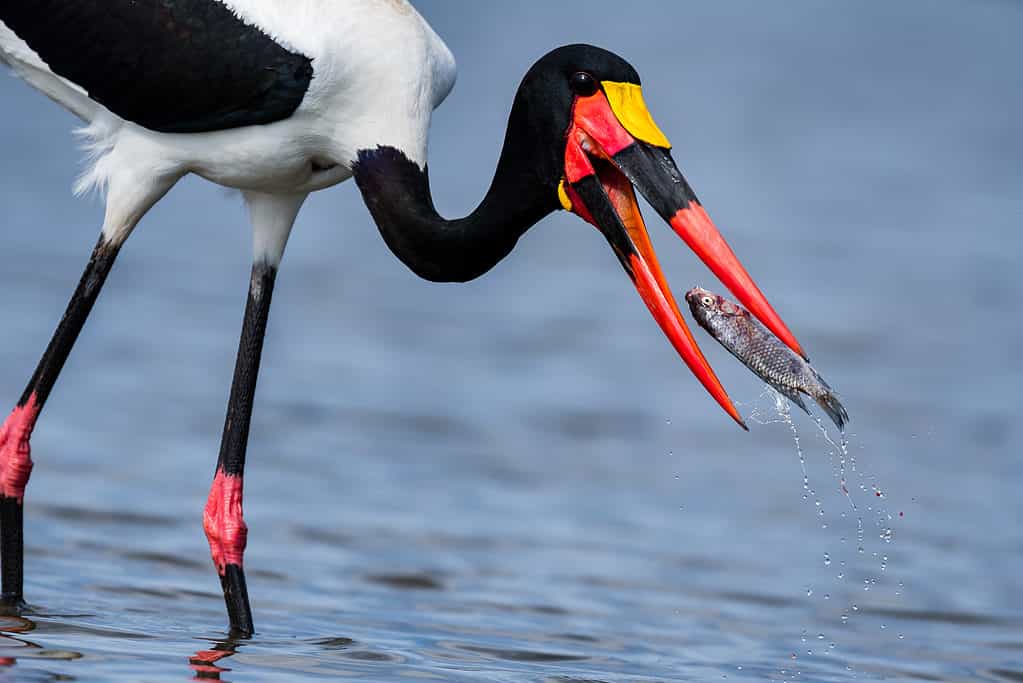
Storks are opportunistic feeders and eat fish, amphibians, and invertebrates.
©Matrishva Vyas/Shutterstock.com
These birds generally maintain a carnivorous diet, though the selection of what they eat is considered opportunistic. They seek out food on the ground, even from other nests. Low-laying vegetation often has many of the foods that they’ll eat, though their beak also allows them to catch food from shallow waters.
What Do Storks Eat?
These birds tend to eat whatever is around them, though their prey is quite small. The majority of their diet is comprised of frogs and toads, fish, rodents, earthworms, mollusks and crustaceans, insects, and tadpoles. Sometimes, they will go after the baby chicks or eggs of other birds.
Predators, Threats, and Conservation Status
Part of the reason that it survives for so long is that this bird doesn’t have many predators. The eggs are at a much greater risk of being eaten by small mammals and birds. Instead, changes in agriculture and the continued industrialization of their wetland homes by humans are a much greater threat.
What Eats Storks?
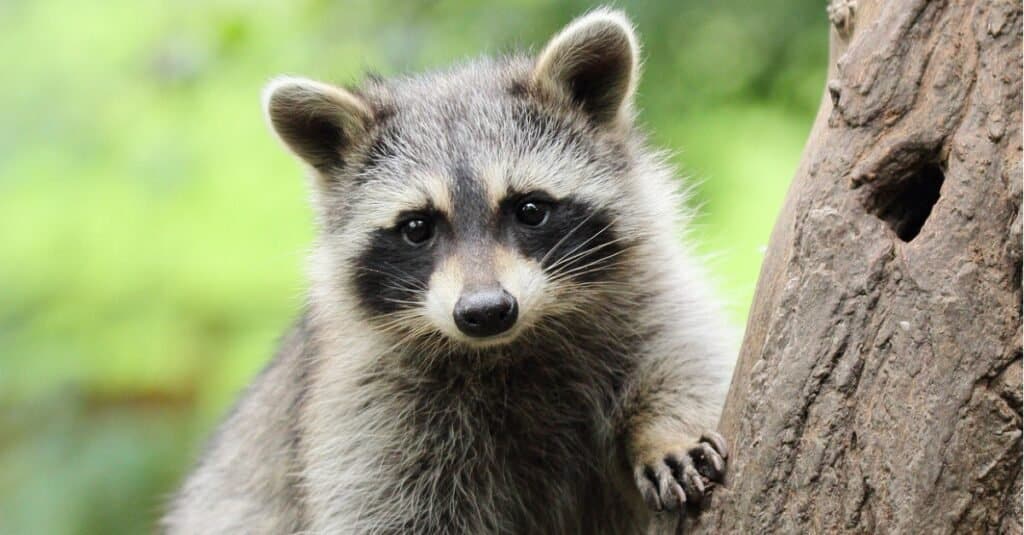
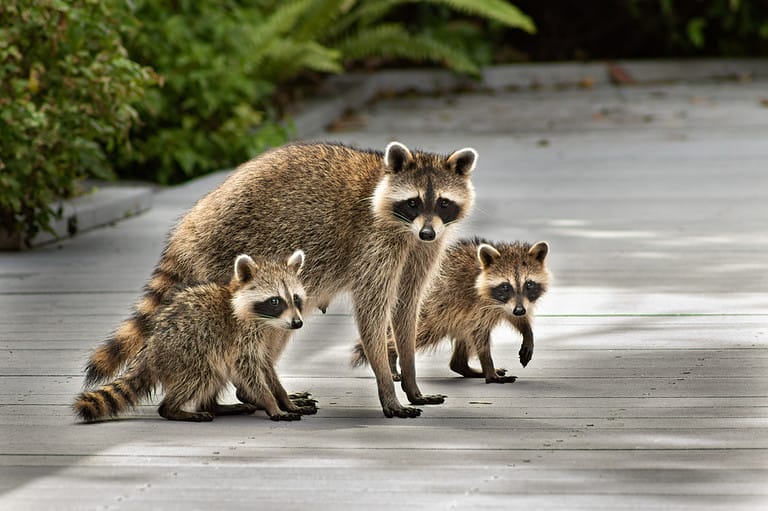
Raccoons are known to be rather partial to stork eggs.
©iStock.com/amadeusamse
While this wading bird is far from an apex predator, their large size protects it from others. On occasion, American alligators will go after the wood stork, but the eggs typically entice other predators. Animals like striped skunks, vultures, corvids, and grackles use the eggs as nutrients, but the location of their nests puts the eggs in a prime spot for being stolen by raccoons.
Reproduction, Young, and Molting
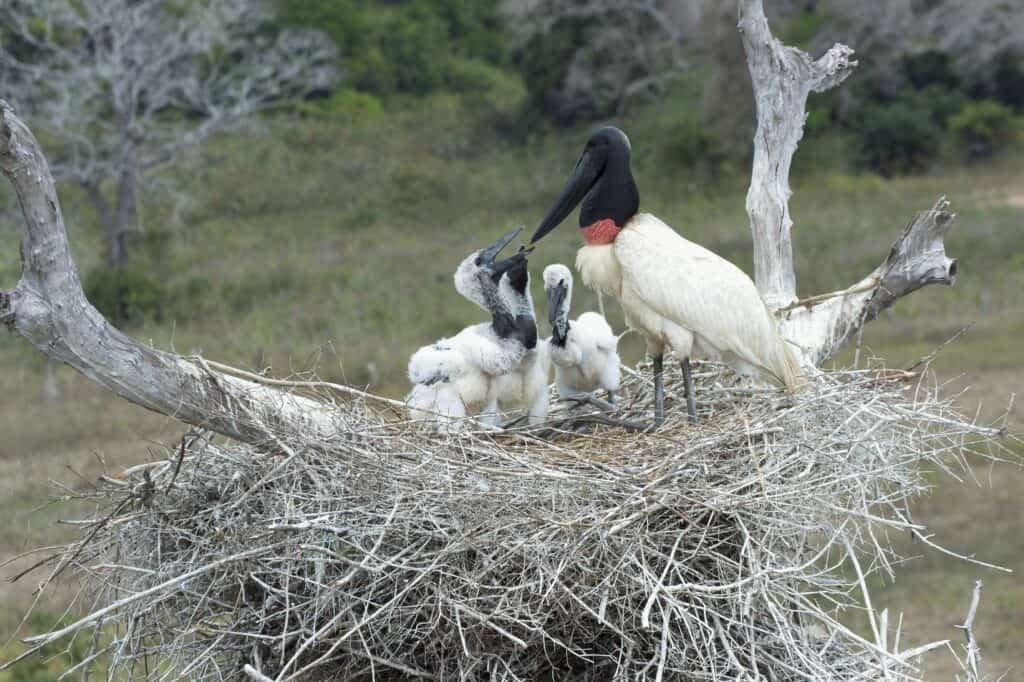
Stork eggs are incubated for slightly over a month, following which they hatch.
©GTW/Shutterstock.com
The average clutch size is between 1 and 7 eggs, and the female typically lays eggs once a year in a large nest. Often, the best habitat for this nest is in wetlands, between trees, or on manmade buildings.
The incubation period of the eggs starts from the moment that the female lays the egg, taking about 33 to 34 days until hatching. The strongest hatchling is typically the one born first, and the weaker baby (or babies) sometimes are killed by the parents due to their reduced likelihood of surviving after leaving the nest.
‘Storks molt regularly throughout their lives, and most white storks begin breeding at around 3 to 5 years old. The longest lifespan in the wild is 39 years, though there are some in captivity that have lived up to 35 years.
Population
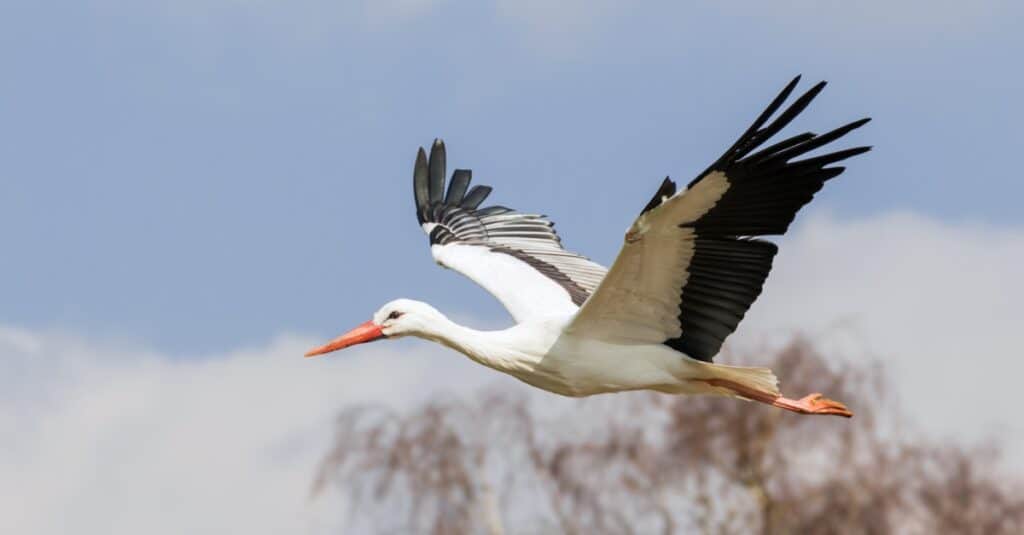
Some stork species, such as the white stork, have become locally extinct in China since 1980.
©Ian Duffield/Shutterstock.com
In the entire world, experts estimate that there are as many as 704,000 individuals, as of 2015. Europe seems to be where the majority of these storks are found, accounting for approximately 447,000 to 495,000 individuals. Some stork species, such as the white stork, have become locally extinct in China since 1980, but other species like the endangered oriental stork still persist in the region.
At this point, industrialization and the change in agricultural methods have both caused a decline in populations. Their current conservation status is largely “not extinct,” though the reduction in wetland habitats led some stork species to be listed as threatened or endangered in the past, though most are now classified as of Least Concern. In the United States, they have a “threatened” status, which is why the U.S. Migratory Bird Treaty Act specifically protects the wood stork.