
S
Species Profile

Sunset Ball Python

Python regius

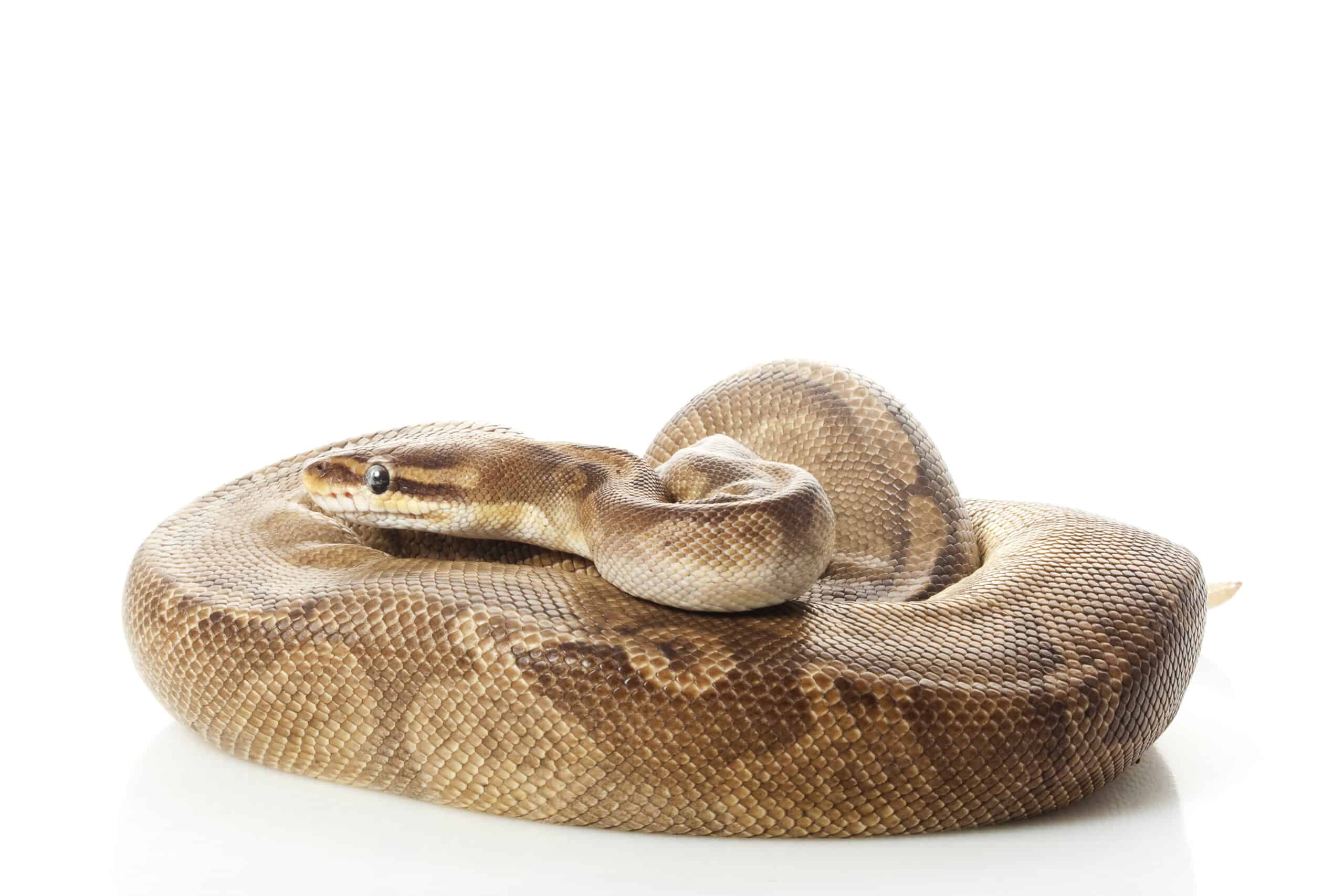
Bring the golden hour home.
Fivespots/Shutterstock.com

Sunset Ball Python Distribution

Domesticated Species

Found Worldwide

At a Glance

Domesticated
Also Known As Ball python, Royal python, BP
Diet Carnivore
Activity Crepuscular+
Lifespan 12 years
Weight 2.8 lbs
Status Not Evaluated
Did You Know?

"Sunset" is a color/pattern morph (a captive-bred variety), not a separate species from the Ball Python (Python regius).

Scientific Classification

The Sunset Ball Python is a captive-bred color/pattern morph of the Ball Python (Python regius), a small-to-medium constrictor native to West and Central Africa and widely kept as a pet.

Kingdom
Animalia
Phylum
Chordata
Class
Reptilia
Order
Squamata
Family
Pythonidae
Genus
Python
Species
Python regius

Distinguishing Features

  • Captive-bred “morph” (selectively bred genetic coloration/pattern variation) within Python regius
  • Typically characterized in the pet trade by enhanced warm tones (often orange/yellow) and altered pattern contrast relative to wild-type Ball Pythons (exact expression varies by lineage and combinations)
  • Retains Ball Python species traits: stout-bodied constrictor, relatively small head, heat-sensing labial pits, and characteristic defensive ‘balling’ behavior

Physical Measurements

Males and females differ in size

Length
2 ft 9 in (1 ft 12 in – 3 ft 7 in)
4 ft 7 in (3 ft 3 in – 5 ft 11 in)
Weight
2 lbs (2 lbs – 3 lbs)
5 lbs (3 lbs – 10 lbs)
Tail Length
4 in (4 in – 6 in)
6 in (4 in – 7 in)
Top Speed
1 mph
slithering

Appearance

Primary Colors
Secondary Colors
Skin Type Smooth, glossy overlapping scales typical of Python regius; no special skin structure from the morph, but colors can appear more reflective under proper humidity.
Distinctive Features
  • Not a separate species or subspecies; a captive-bred color/pattern morph of Ball Python (Python regius).
  • Compared with base species (wild-type), shows intensified orange/gold coloration and reduced dark pattern contrast.
  • Often presents a warm "sunset" gradient effect across dorsum and flanks; pattern edges look washed or pastel.
  • Like other ball pythons: West/Central African origin, crepuscular/nocturnal, shy, prone to defensive 'balling'.
  • Diet and behavior match species norms: ambush constrictor feeding primarily on rodents in captivity.
  • Care: 50-60% humidity (higher during shed), secure hides, thermal gradient ~24-26°C cool side and ~31-33°C warm spot.
  • Care: stress-sensitive; thrives with minimal handling after feeding and consistent enclosure parameters.
  • Health/care notes (species-typical): respiratory infections if cool/damp, retained shed if too dry, mites, obesity with overfeeding.
  • Health/care notes (morph-related): no universally confirmed syndrome specific to 'Sunset,' but buy from reputable breeders and watch for feeding issues or kinking common to poor breeding practices.

Sexual Dimorphism

Sexual dimorphism is typical of Ball Pythons: females usually grow heavier and longer-bodied, while males stay smaller with proportionally longer tails and larger cloacal spurs. Color and pattern expression are not reliably sex-linked in this morph.

  • Generally smaller adult body mass than females.
  • Longer, thicker tail past the vent; larger cloacal spurs.
  • Often matures earlier and may show more frequent breeding-season roaming.
  • Larger overall size and heavier-bodied adult build.
  • Shorter tail relative to body length; smaller cloacal spurs.
  • May require more body reserves; increased risk of egg-binding if husbandry is poor.

Did You Know?

"Sunset" is a color/pattern morph (a captive-bred variety), not a separate species from the Ball Python (Python regius).

Sunset morphs are bred to intensify warm orange-to-golden hues and "clean up" darker markings compared with wild-type regius.

Like all ball pythons, they're famous for curling into a tight defensive "ball," which inspired the common name.

Ball pythons are native to West & Central Africa, where they often use rodent burrows and termite mounds as shelter.

Captive ball pythons commonly live 20-30+ years with proper husbandry, making them a long-term commitment.

Ball pythons have heat-sensing labial pits that help them detect warm-blooded prey in low light.

Sunset is frequently combined with other morphs in breeding projects, producing wide variation in color intensity and pattern.

Because Sunset is selected for appearance, ethical breeding focuses on genetic diversity and avoiding overproduction of unwanted animals.

Unique Adaptations

  • Heat-sensing labial pits (shared with many pythons) for locating endothermic prey.
  • Powerful constriction with backward-curving teeth to hold prey while coiling.
  • Flexible skull and highly kinetic jaws allow swallowing prey larger than the head width.
  • "Shivering thermogenesis" during brooding (species trait): females can generate heat by muscular contractions to warm eggs.
  • Sunset morph trait (captive-bred): selectively maintained reduced dark pigment and enhanced orange/gold tones; purely aesthetic and does not change species ecology.

Interesting Behaviors

  • Balling behavior: when stressed, they tuck the head under coils and form a compact ball.
  • Nocturnal/crepuscular activity: often more alert at dusk and night, spending daytime hidden.
  • Ambush feeding: they typically wait near cover and strike quickly, then constrict.
  • Seasonal fasting: adults may refuse food during cooler seasons or breeding season, even when otherwise healthy.
  • Scent investigation: frequent tongue-flicking to "taste" air particles and follow odor trails.
  • Burrow appreciation: many individuals settle more readily when given snug hides and ground-level cover.
  • Careful climbing: primarily terrestrial, but may explore low branches or enclosure décor at night.

Cultural Significance

In parts of West Africa, especially Benin, pythons are sacred in Vodun and kept at sites like the Temple of Pythons in Ouidah. Ball Pythons (Python regius) are popular pets; morphs like Sunset show captive breeding for color and pattern, with growing focus on welfare, responsible ownership, and ethical trade.

Myths & Legends

In Vodun traditions of Dahomey (now Benin), people honor the great serpent Dan, tied to rainbow images and seen as a cosmic force of protection and world order; pythons are treated as sacred.

Ouidah, Benin, is associated with longstanding local traditions of sanctuary pythons-stories describe pythons as protected beings connected to spiritual guardianship, with practices of sheltering them and returning them unharmed.

West African serpent veneration more broadly includes tales of snakes as messengers between the human world and the spirit world, or as protective household/temple beings whose presence signals blessing and safety.

The European name "royal python" for Python regius comes from old keeper and trade stories that link the snake with kings and high status. The name stayed as the snakes became common.

Conservation Status

NE Not Evaluated

Has not yet been evaluated against the criteria.

Population Stable

Life Cycle

Birth 6 hatchlings
Lifespan 12 years

Lifespan

In the Wild 5–20 years
In Captivity 10–40 years

Reproduction

Mating System Polygynandry
Social Structure Solitary
Breeding Pattern Transient
Fertilization Managed Selective
Birth Type Internal_fertilization

Sunset is a captive-bred color/pattern morph; mating behavior matches ball pythons. Solitary adults form brief pairings when introduced; males may mate with multiple females and vice versa. Copulation is internal; females lay and brood eggs without helpers.

Behavior & Ecology

Social Solitary Group: 1
Activity Crepuscular, Nocturnal
Diet Carnivore Appropriately sized rats (most captive individuals transition best to frozen-thawed rats once established).

Temperament

Species context: generally shy, secretive ambush constrictor; relies on hiding over confrontation.
Breed distinction (Sunset morph): captive-bred orange/gold coloration; behavior typically matches standard Python regius.
HUBS: most individuals are calm, tolerant pets with regular gentle handling; some remain defensive or food-focused.
Stress response: tight balling, head hiding, freezing, short defensive strikes; prolonged stress may reduce feeding.
Handling variation: juveniles more reactive; adults often steadier; confidence improves with consistent, low-stress routines.
Social tolerance: cohabitation often increases stress/competition; best housed singly except brief supervised pairing.
Health concerns (common): respiratory infections from cool/damp setups, mites, stomatitis, retained shed, obesity, thermal burns.
Morph-linked issues: no widely recognized Sunset-specific neurologic syndrome; prioritize reputable lines to limit inbreeding effects.
Care requirements (core): secure snug hides, minimal visual exposure, consistent heat gradient, moderate humidity with higher during shed.
Feeding behavior: strong scent-driven feeding response; avoid handling immediately pre/post feeding to reduce regurgitation risk.

Communication

Hiss Primary defensive sound
Chemical cues via pheromones; tongue-flicking to sample scents
Tactile signaling: body tension, coiling/balling, gentle pushing during interaction
Visual/postural cues: S-shaped neck, head withdrawal, rapid retreat to hide
Breeding cues: male courtship rubbing/aligning; cloacal spur use during mating

Habitat

Biomes:
Savanna Tropical Dry Forest Tropical Rainforest Wetland Freshwater
Terrain:
Plains Hilly Valley Riverine
Elevation: Up to 3937 ft

Ecological Role

Mesopredator (small-to-medium constrictor) in West/Central African savanna/forest mosaic ecosystems; in captivity, functions as an obligate carnivorous pet with no natural ecosystem role.

Rodent population regulation (reduces crop/pest pressure in native range) Energy transfer within food webs (links small-mammal prey to larger predators that may prey on pythons) Supports ecosystem stability by moderating small-mammal abundance and associated disease/vector dynamics

Diet Details

Main Prey:
Small rodents Shrews and small mammals Small birds

Human Interaction

Domestication Status

Semi domesticated

Ball pythons (Python regius) come from West and Central Africa but have been bred in captivity for decades for the pet trade. The "Sunset" is a captive-bred color and pattern morph made by selective breeding and kept in breeding lines. These snakes are semi-domesticated (tolerant of handling and captive care) but the species is not fully domesticated.

Danger Level

Low
  • minor bites (usually superficial; often feeding-response related)
  • scratches from teeth during defensive strikes
  • rare constriction risk mainly to very small pets/children if grossly mishandled; adult ball pythons are typically not a serious threat to healthy adults
  • zoonotic risk is low but includes Salmonella from reptile handling/cleaning if hygiene is poor

As a Pet

Suitable as Pet

Legality: Sunset Ball Python (Python regius) is usually legal to keep in many U.S. places as a non-venomous pet. Some states, cities, landlords, or HOAs may ban them or need permits. Check local and state rules first.

Care Level: Moderate

Purchase Cost: $600 - $4,000
Lifetime Cost: $3,000 - $12,000

Economic Value

Uses:
Companion animal (pet trade) Captive breeding (morph market) Education/outreach animals Reptile supply/equipment market (enclosures, thermostats, feeders)
Products:
  • live animals (Sunset morph individuals; breeding stock)
  • genetic/morph lines (pairings to produce Sunset combinations)
  • ancillary goods/services (enclosures, heating/thermostats, substrate, hides, feeders, veterinary services)

Relationships

Predators 5

Raptors Accipitridae
Secretarybird Sagittarius serpentarius
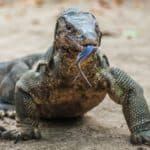
Monitor lizard Varanus
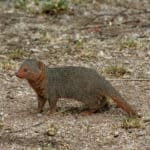
Mongoose Herpestidae
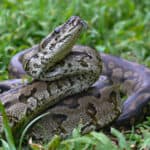
Large snakes Serpentes

Related Species 5

African Rock Python Python sebae Shared Genus
Southern African Rock Python Python natalensis Shared Genus
Angolan Python Python anchietae Shared Genus
Burmese Python Python bivittatus Shared Genus
Reticulated Python Malayopython reticulatus Shared Family

Ecological Equivalents 4

Animals that fill a similar ecological role in their ecosystem

Captive-bred Ball Python morphs Python regius A captive-bred morph of Python regius with bright orange-gold “sunset” coloration and reduced dark patterning. Individuals are shy, prefer hides, and reach the same size as typical ball pythons; they have the same care requirements and general health risks.
Kenyan Sand Boa Eryx colubrinus Similar small-to-medium, rodent-eating constrictor often kept as a pet. Shares a sit-and-wait feeding strategy and a captive husbandry focus on stable heat gradients and secure enclosures, though sand boas are more fossorial and prefer drier setups.
Rosy Boa Lichanura trivirgata Similar-sized constrictor occupying a small-mammal predation niche. Common in captivity and generally calm, with comparable feeding (small rodents) and the same emphasis on maintaining correct temperatures to prevent respiratory disease.
Corn Snake Pantherophis guttatus Belongs to a different family but fills a broadly comparable ecological role as a rodent-eating, human-associated captive pet snake. Shares similar prey types and many husbandry principles (thermal gradients, enrichment, biosecurity), while typically being more active than ball pythons.

The sunset ball python is covered in rust and burnt-orange colors. The first individual was found in Africa as a wild-hatched snake.

This snake is native to central and western Africa, and the primary export countries are Benin, Togo, and Ghana. Now, several breeders incorporate the sunset gene into their programs and produce beautiful snakes that exhibit some of the reds and oranges of the original.

Incredible Sunset Ball Python Facts

  • Outback Reptiles imported and sold the first sunset ball python to Brian Barczyk in the early 2000s for $70,000.
  • This color morph is a recessive mutation. It’s covered in a rusty, burnt-orange color gradient.
  • Sunset genes are used in combination with others like cinnamon, enchi, and banana. The combination produces different patterns and colors.

Sunset Ball Python Scientific Name and Classification

Just like other ball pythons, sunset ball pythons are in the family Pythonidae and their scientific name is Python regius. Their specific name means royal, kingly, or of a king. It comes from a belief that rulers used to wear ball pythons on their wrists, like jewelry. Cleopatra was rumored to have done this.

Ball pythons have a habit of coiling up into a ball, either because they feel threatened or when they need to sleep – hence, their common name.

Sunset Ball Python Appearance
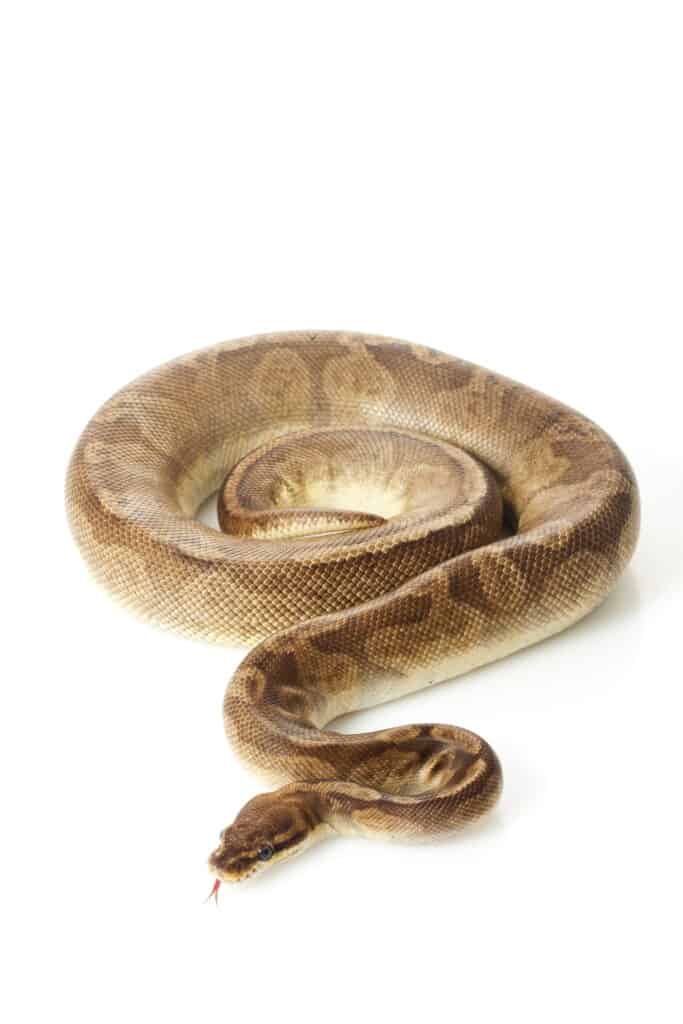
👁 Sunset ball python

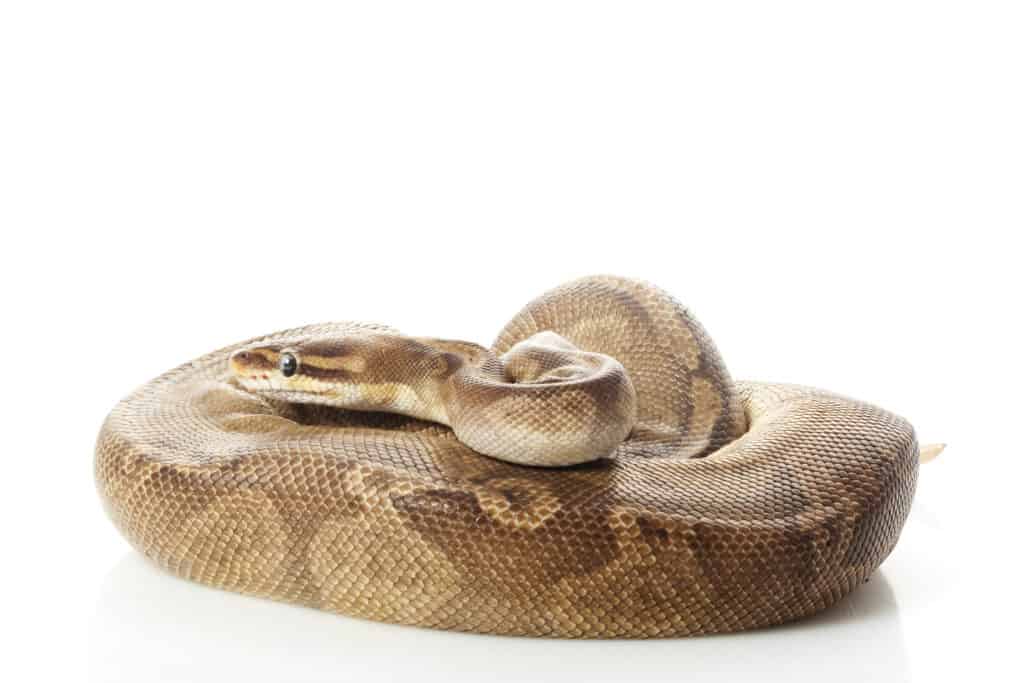
Sunset ball pythons have a beautiful red-orange color palette that doesn’t look much like their normal ball python siblings.

©Fivespots/Shutterstock.com

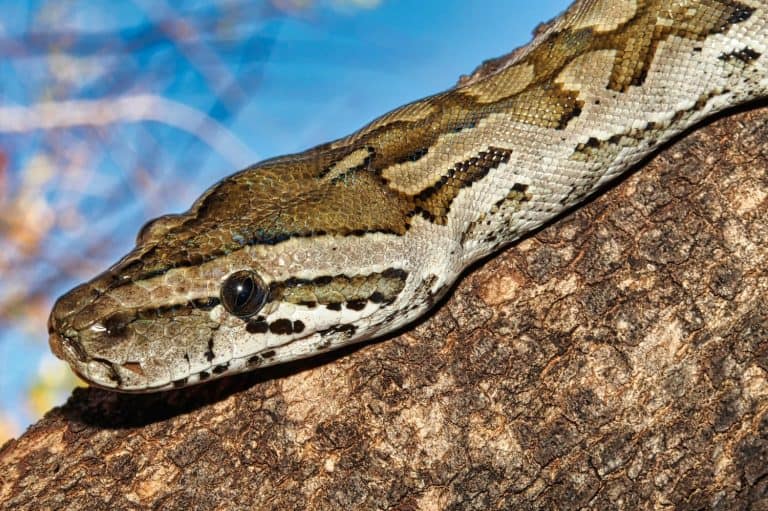
The ball python is a small to medium-size python that grows to about 4-6 feet long. Females are typically longer and thicker than males. They have a triangular head with blunted snout, and along their upper lips, they have heat-sensitive pits that help them find warm-blooded prey even in the dark. These snakes have vertical pupils and a mouth full of teeth. Their classic pattern has been described as a series of alien heads down the length of the body. While this is certainly one way to describe them, their markings can vary widely and even be almost completely absent in some individuals.

Sunset Ball Python Color Morph

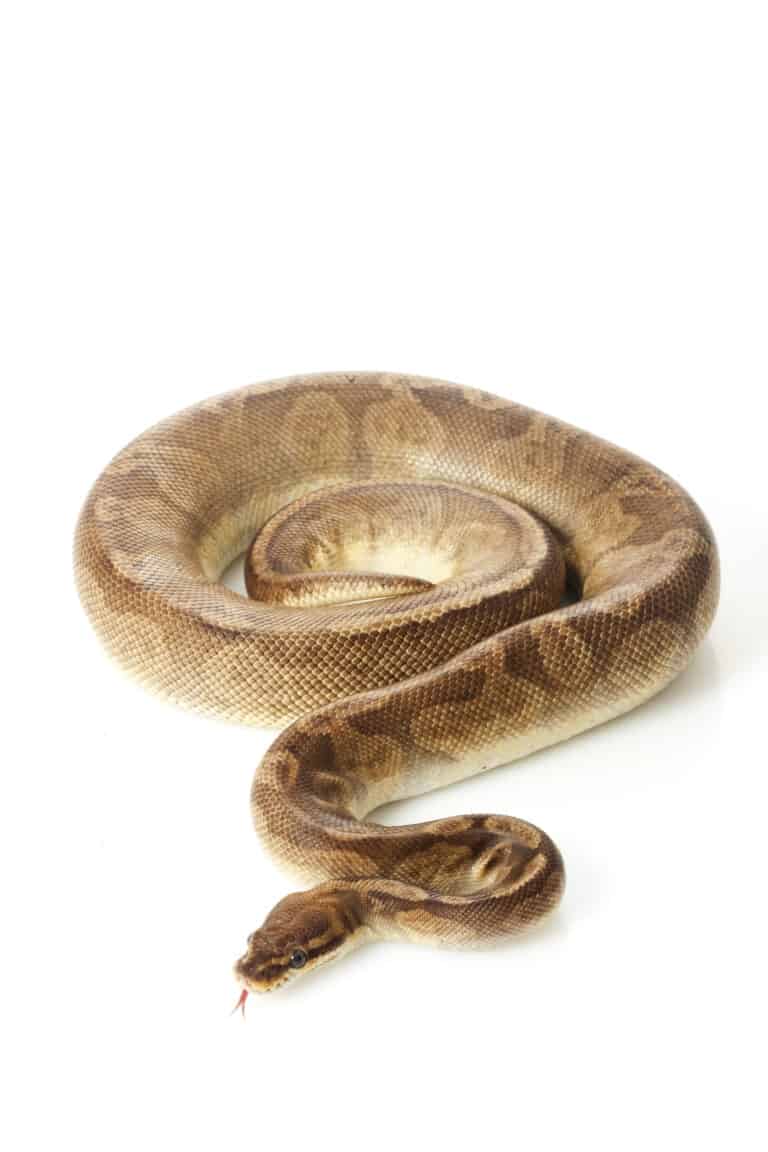
Sunset ball pythons have a beautiful red-orange color palette that doesn’t look much like their normal ball python siblings. The head of a sunset can be anything from a deep tan to chocolate brown. The markings are more stretched out and look more like candle flames or even banding. Their color begins as a side flaming in bright orange close to the belly and becomes dark brown toward the dorsal stripe, which often has a bubble-like pattern.

Some color morphs like the sunset are naturally occurring mutations that breeders like Brian Barczyk are waiting to find. His video on some of the history of the growth of the ball python pet trade is really informative. Breeders actively seek out natural mutations like this one. It’s how they inject fresh genes into their lines and create designer ball pythons. These morphs come in colors and patterns like the banana, spider, and yellow belly.

The first snake with this color pattern originated in Africa. U.S. breeder Brian Barczyk got a phone call from a trader there, telling him about a fantastic new ball python color. This isn’t always the case, but Barczyk requested photos anyway. When he saw the photos, he was shocked to see that this snake was really different than anything he’d seen before. He paid Outback Reptiles $70,000 to purchase the snake and have it imported.

Sunset Ball Python Behavior

Sunset ball pythons, like other ball pythons and their morphs, make excellent pets. These snakes are docile and tolerate gentle handling pretty well. They’re also easy to care for; once you have a habitat set up for your snake, need very little aside from fresh water and food.

They’re nocturnal and spend most of their time hidden somewhere. Some people call these snakes the packrats of the snake world because they prefer a lot of clutter in their habitat. These snakes use their camouflage to move underneath the grasses and leaf litter. They stay hidden in abandoned burrows, under old logs, and anywhere else that gives them a snug little spot to feel safe.

As pythons, they’re nonvenomous constrictors that squeeze their prey until its heart stops. Then, they can swallow it whole without worrying about it escaping. These ambush predators don’t do a lot of active hunting. Instead, they wait for their meal to wander close enough to grab.

Sunset Ball Python Habitat and Diet

In the wild, ball pythons live in open grasslands, forests, and agricultural areas. In Central Africa, they’re found in 17 countries. Burkina Faso, Cote d’Ivoire, Central African Republic, DR Congo, Guinea-Bissau, Guinea, Senegal, Sierra Leone, Mali, Ghana, Togo, Benin, Niger, Nigeria, Cameroon, Chad, and South Sudan are all part of their range.

They have a cryptic pattern that incorporates browns, yellows, and greens into the alien head shapes. It allows them to camouflage in the dense underbrush of their native environment.

Their diet in the wild includes any small warm-blooded animal that they can overpower, primarily rodents and birds. In captivity, most of them are happy to take rats or mice every other week or so. However, they’re known for going on months-long hunger strikes with no ill effects.

Sunset Ball Python Predators, Threats, Conservation, and Population

Natural predators abound for these snakes. They’re not large pythons, and of course, they’re nonvenomous. Any predator large enough would be likely to go after one. This could include everything from mongooses to king cobras and birds of prey.

Sunset ball pythons are still gaining in popularity in the pet trade, but not too many breeders are doing a lot with them yet. It’s likely that they’re just too new of a gene set, and it’ll take time to have enough of them in circulation. The first one was found in Africa as a hatchling and imported by Outback Reptiles. It’s likely that there are more of them out in the wild, but it’s impossible to tell for sure.

However, the overall ball python population is declining in the wild. The species is under tremendous pressure from numerous sources. Locals hunt them for food, skin, and traditional medicine. Excessive pet trade export and agricultural expansion may also damage the wild population. Ball pythons are exploited more heavily than any other snake species, according to the IUCN Redlist of Threatened Species assessment. If the present trends continue, it’s possible that the ball python may become endangered in West Africa.

Sunset Ball Python Reproduction, Babies, and Lifespan

Like other ball pythons, sunset ball pythons can live for 20-30 years in captivity. After successful mating, females lay 3-15 eggs. They coil around their eggs until they hatch, about 50-60 days later. Sometimes they leave the eggs to bask and warm up or allow the eggs to cool a bit if the weather is too warm.

Breeding the sunset ball python wasn’t initially successful. Barczyk originally believed that it was a dominant trait, and bred the first snake with several normal ball pythons. Those clutches produced all normal ball pythons – no sunsets. He sold them all as normal, so there may be a few hidden sunsets waiting to be discovered, but time will tell.

It wasn’t until later that the recessive nature of the gene proved itself, and breeders began to have success producing sunsets and mixes with other morphs.

Next Up

View all 385 animals that start with S

Sources

  1. Sunset Bal Python | Morph Market / Accessed August 19, 2022
  2. D'Cruze, N., Wilms, T., Penner, J., Luiselli, L., Jallow, M., Segniagbeto, G., Niagate, B. & Schmitz, A. 2021. Python regius. The IUCN Red List of Threatened Species 2021: e.T177562A15340592. https://dx.doi.org/10.2305/IUCN.UK.2021-2.RLTS.T177562A15340592.en. Accessed on 19 August 2022. / Published July 16, 2012 / Accessed August 19, 2022
  3. Python regius | Reptarium Reptile Database / Accessed August 20, 2022

About the Author

Gail Baker Nelson

Gail Baker Nelson is a writer at A-Z Animals where she focuses on reptiles and dogs. Gail has been writing for over a decade and uses her experience training her dogs and keeping toads, lizards, and snakes in her work. A resident of Texas, Gail loves working with her three dogs and caring for her cat, and pet ball python.
Connect:

Thank you for reading! Have some feedback for us?

Contact the AZ Animals editorial team

Related Articles You May Find Interesting


Sunset Ball Python FAQs (Frequently Asked Questions)

Yes, like other ball pythons, they’re pretty easy to take care of and make terrific beginner snakes.

Not usually, they can be a little snippy when they’re younger but generally mellow out as they age.

All ball pythons eat primarily rodents, but will also eat small birds and lizards.

They’re classic ambush predators, these snakes aren’t very active and wait for their food to stumble close enough to grab.

Not at all! These are nonvenomous constrictors that squeeze the life out of their prey before swallowing it whole.