




T
Species Profile

Tarantula

Theraphosidae

Big spiders, quiet ambush masters
iStock.com/Natalie Ruffing

Tarantula Distribution

Click a location to explore more animals from that region

Loading map...

Found in 89 countries

๐Ÿ‡ฆ๐Ÿ‡ซ Afghanistan ๐Ÿ‡ฆ๐Ÿ‡ด Angola ๐Ÿ‡ฆ๐Ÿ‡ท Argentina ๐Ÿ‡ฆ๐Ÿ‡บ Australia ๐Ÿ‡ง๐Ÿ‡ฉ Bangladesh ๐Ÿ‡ง๐Ÿ‡ด Bolivia ๐Ÿ‡ง๐Ÿ‡ท Brazil ๐Ÿ‡ง๐Ÿ‡ธ Bahamas ๐Ÿ‡ง๐Ÿ‡ผ Botswana ๐Ÿ‡ง๐Ÿ‡ฟ Belize ๐Ÿ‡จ๐Ÿ‡ฉ Democratic Republic of Congo ๐Ÿ‡จ๐Ÿ‡ฌ Republic of Congo ๐Ÿ‡จ๐Ÿ‡ฎ Cรดte d'Ivoire ๐Ÿ‡จ๐Ÿ‡ฒ Cameroon ๐Ÿ‡จ๐Ÿ‡ณ China ๐Ÿ‡จ๐Ÿ‡ด Colombia ๐Ÿ‡จ๐Ÿ‡ท Costa Rica ๐Ÿ‡จ๐Ÿ‡บ Cuba ๐Ÿ‡จ๐Ÿ‡พ Cyprus ๐Ÿ‡ฉ๐Ÿ‡ด Dominican Republic ๐Ÿ‡ฉ๐Ÿ‡ฟ Algeria ๐Ÿ‡ช๐Ÿ‡จ Ecuador ๐Ÿ‡ช๐Ÿ‡ฌ Egypt ๐Ÿ‡ช๐Ÿ‡ธ Spain ๐Ÿ‡ช๐Ÿ‡น Ethiopia ๐Ÿ‡ซ๐Ÿ‡ฏ Fiji ๐Ÿ‡ฌ๐Ÿ‡ฆ Gabon ๐Ÿ‡ฌ๐Ÿ‡ซ French Guiana ๐Ÿ‡ฌ๐Ÿ‡ญ Ghana ๐Ÿ‡ฌ๐Ÿ‡ฒ Gambia ๐Ÿ‡ฌ๐Ÿ‡ณ Guinea ๐Ÿ‡ฌ๐Ÿ‡ถ Equatorial Guinea ๐Ÿ‡ฌ๐Ÿ‡ท Greece ๐Ÿ‡ฌ๐Ÿ‡น Guatemala ๐Ÿ‡ฌ๐Ÿ‡ผ Guinea-Bissau ๐Ÿ‡ฌ๐Ÿ‡พ Guyana ๐Ÿ‡ญ๐Ÿ‡ณ Honduras ๐Ÿ‡ญ๐Ÿ‡น Haiti ๐Ÿ‡ฎ๐Ÿ‡ฉ Indonesia ๐Ÿ‡ฎ๐Ÿ‡ณ India ๐Ÿ‡ฎ๐Ÿ‡ถ Iraq ๐Ÿ‡ฎ๐Ÿ‡ท Iran ๐Ÿ‡ฎ๐Ÿ‡น Italy ๐Ÿ‡ฏ๐Ÿ‡ฒ Jamaica ๐Ÿ‡ฐ๐Ÿ‡ช Kenya ๐Ÿ‡ฐ๐Ÿ‡ญ Cambodia ๐Ÿ‡ฑ๐Ÿ‡ฆ Lao People's Democratic Republic ๐Ÿ‡ฑ๐Ÿ‡ฐ Sri Lanka ๐Ÿ‡ฑ๐Ÿ‡ท Liberia ๐Ÿ‡ฑ๐Ÿ‡พ Libya ๐Ÿ‡ฒ๐Ÿ‡ฆ Morocco ๐Ÿ‡ฒ๐Ÿ‡ฌ Madagascar ๐Ÿ‡ฒ๐Ÿ‡ฒ Myanmar ๐Ÿ‡ฒ๐Ÿ‡ผ Malawi ๐Ÿ‡ฒ๐Ÿ‡ฝ Mexico ๐Ÿ‡ฒ๐Ÿ‡พ Malaysia ๐Ÿ‡ฒ๐Ÿ‡ฟ Mozambique ๐Ÿ‡ณ๐Ÿ‡ฆ Namibia ๐Ÿ‡ณ๐Ÿ‡ฌ Nigeria ๐Ÿ‡ณ๐Ÿ‡ฎ Nicaragua ๐Ÿ‡ณ๐Ÿ‡ต Nepal ๐Ÿ‡ต๐Ÿ‡ฆ Panama ๐Ÿ‡ต๐Ÿ‡ช Peru ๐Ÿ‡ต๐Ÿ‡ฌ Papua New Guinea ๐Ÿ‡ต๐Ÿ‡ญ Philippines ๐Ÿ‡ต๐Ÿ‡ฐ Pakistan ๐Ÿ‡ต๐Ÿ‡น Portugal ๐Ÿ‡ต๐Ÿ‡พ Paraguay ๐Ÿ‡ธ๐Ÿ‡ง Solomon Islands ๐Ÿ‡ธ๐Ÿ‡ฉ Sudan ๐Ÿ‡ธ๐Ÿ‡ฌ Singapore ๐Ÿ‡ธ๐Ÿ‡ฑ Sierra Leone ๐Ÿ‡ธ๐Ÿ‡ณ Senegal ๐Ÿ‡ธ๐Ÿ‡ท Suriname ๐Ÿ‡น๐Ÿ‡ญ Thailand ๐Ÿ‡น๐Ÿ‡ณ Tunisia ๐Ÿ‡น๐Ÿ‡ท Turkey ๐Ÿ‡น๐Ÿ‡น Trinidad and Tobago ๐Ÿ‡น๐Ÿ‡ผ Taiwan ๐Ÿ‡น๐Ÿ‡ฟ Tanzania ๐Ÿ‡บ๐Ÿ‡ฌ Uganda ๐Ÿ‡บ๐Ÿ‡ธ United States ๐Ÿ‡บ๐Ÿ‡พ Uruguay ๐Ÿ‡ป๐Ÿ‡ช Venezuela ๐Ÿ‡ป๐Ÿ‡ณ Vietnam ๐Ÿ‡ป๐Ÿ‡บ Vanuatu ๐Ÿ‡ฟ๐Ÿ‡ฆ South Africa ๐Ÿ‡ฟ๐Ÿ‡ฒ Zambia ๐Ÿ‡ฟ๐Ÿ‡ผ Zimbabwe

At a Glance

Family Overview This page covers the Tarantula family as a group. Stats below are general traits shared across the family.
Also Known As Bird-eating spider, Bird spider, Baboon spider, Hairy spider
Diet Carnivore
Activity Nocturnal+
Lifespan 12 years
Weight 0.17 lbs
Status Not Evaluated
Did You Know?

Size spans from small "dwarf" tarantulas (~7-10 cm legspan) to giants like Theraphosa with ~25-30 cm legspan.

Scientific Classification

Family Overview "Tarantula" is not a single species but represents an entire family containing multiple species.

Tarantulas (family Theraphosidae) are large-bodied mygalomorph spiders found primarily in tropical and subtropical regions. They are characterized by robust build, prominent fangs that strike downward (mygalomorph condition), and often noticeable hair-like setae; many New World species possess urticating hairs used for defense.

Kingdom
Animalia
Phylum
Arthropoda
Class
Arachnida
Order
Araneae
Family
Theraphosidae

Distinguishing Features

  • Mygalomorph spiders with fangs that articulate downward (not crossing)
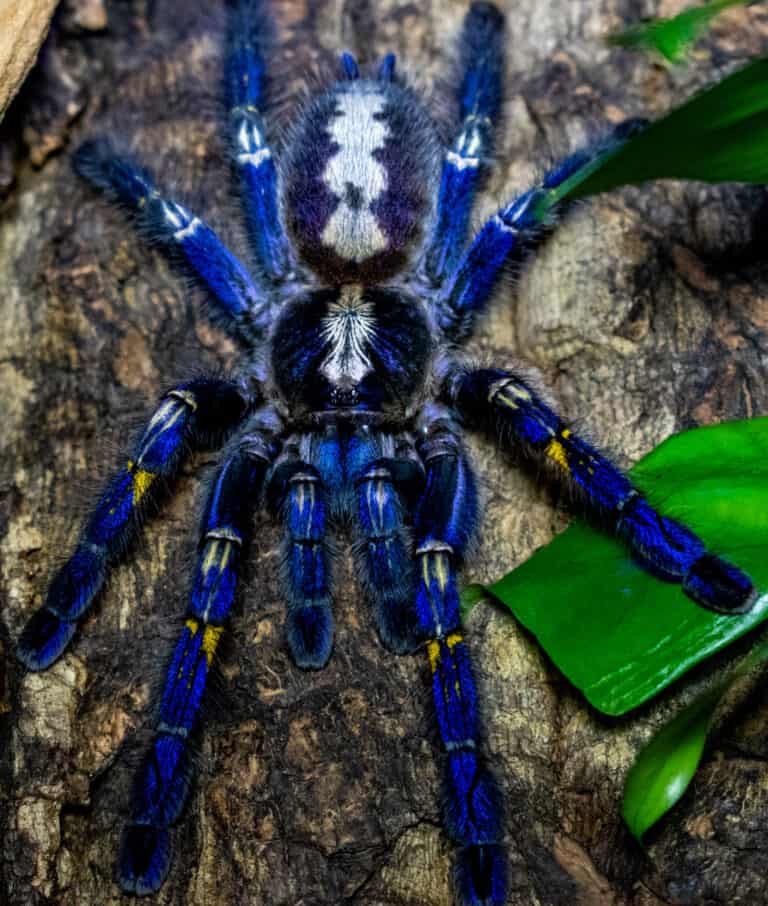
  • Generally large, robust bodies with dense setae; some species have striking coloration
  • New World theraphosids may have urticating hairs; Old World species generally lack them and may rely more on biting/defensive displays
  • Typically slow-growing, long-lived (females often much longer-lived than males)

Physical Measurements

Males and females differ in size

Length
โ™‚ 6 in (1 in โ€“ 11 in)
โ™€ 6 in (2 in โ€“ 12 in)
Weight
โ™‚ 0 lbs (0 lbs โ€“ 0 lbs)
โ™€ 0 lbs (0 lbs โ€“ 0 lbs)
Top Speed
1 mph
running
Venomous

Appearance

Primary Colors
Secondary Colors
Skin Type Hard chitinous exoskeleton densely covered in setae; many New World species have urticating abdominal hairs, while Old World species typically lack them. Feet often have scopulae for climbing; some species possess stridulatory setae.
Distinctive Features
  • Measurements (family-wide range): adult body length ~1-12 cm; legspan ~3-30+ cm, with substantial variation among genera.
  • Lifespan (range across species/sexes): males often ~2-6 years; females commonly ~8-25+ years, occasionally longer in captivity.
  • Robust mygalomorph build with downward-striking fangs and powerful chelicerae; thick legs and large abdomen are typical.
  • Predominantly nocturnal ambush predators; most prey are insects and other arthropods, with vertebrates taken opportunistically.
  • Ecology varies widely: many species are terrestrial burrowers (silk-lined retreats), others are arboreal using silk tube retreats; a few are semi-fossorial or opportunistic wanderers.
  • New World vs Old World trend: New World tarantulas often rely on urticating hairs and may be less likely to bite; Old World tarantulas lack urticating hairs and more often use threat displays and biting.
  • Web use is usually for retreats, trip-lines, and egg sacs rather than prey-capture webs; extent varies by habitat and lifestyle.
  • Defensive behaviors can include threat postures, stridulation in some taxa, and rapid bursts of speed; temperament varies greatly by species and individual.

Sexual Dimorphism

Sexual dimorphism is common: adult males are typically smaller-bodied with longer legs, and mature faster. Females are usually heavier-bodied, longer-lived, and often have proportionally larger abdomens; coloration differences occur in some lineages but are inconsistent across the family.

โ™‚
  • More slender body with proportionally longer legs in many species
  • Tibial hooks/spurs present in some lineages for mating clasping
  • Enlarged pedipalps with emboli (mating organs) after maturity
  • Often shorter lifespan and increased roaming behavior when mature
โ™€
  • Larger, heavier-bodied build in many species
  • Generally longer lifespan and prolonged reproductive potential
  • Often more sedentary, maintaining burrows or retreats longer-term
  • May show less pronounced leg elongation than mature males

Did You Know?

Size spans from small "dwarf" tarantulas (~7-10 cm legspan) to giants like Theraphosa with ~25-30 cm legspan.

Females commonly outlive males by many years; in several species females can live for decades.

Most tarantulas don't build prey-catching webs; they use silk for burrows, retreats, trip lines, and egg sacs.

New World tarantulas (Americas) often have urticating hairs they kick off as a defense; Old World species generally lack them.

They grow by molting (shedding the exoskeleton); before a molt many become reclusive and may refuse food.

Despite the "bird-eater" nickname, most of their diet is insects and other invertebrates; some larger species can take small vertebrates opportunistically.

Many species are nocturnal and rely on vibration sensing rather than keen vision to detect prey and threats.

Unique Adaptations

  • Mygalomorph fangs: large, downward-striking fangs suited for a powerful stabbing bite and grappling prey.
  • Urticating hairs (New World lineages): detachable, irritating setae that can be kicked or brushed toward attackers; placement and hair types vary among genera.
  • Robust exoskeleton and thick legs: supports a sit-and-wait lifestyle, including wrestling larger prey items.
  • Silk use optimized for retreats (not orb webs): strong, abrasion-resistant silk for lining burrows, reinforcing hides, and protecting egg sacs.
  • Vibration-focused sensing: highly sensitive leg hairs and slit sensilla detect substrate and air movements-crucial in low-light hunting.
  • Venom tuned for prey: generally optimized to subdue invertebrates; potency and effects vary across the family.

Interesting Behaviors

  • Ambush predation: many wait at a burrow entrance or retreat, then lunge when vibrations signal prey.
  • Burrowing vs. arboreal living: numerous species dig and line burrows; others are tree-dwellers that build silken tube retreats in bark crevices or vegetation.
  • Nocturnal routines: activity peaks at night for many species, though some are crepuscular or seasonally variable.
  • Defensive displays (variable by region): many Old World species more readily threat-pose (raised front legs, exposed fangs) and may be faster to bite; many New World species more often rely on urticating hairs and retreat.
  • Silk "trip lines": some lay silk around a burrow/retreat that transmits vibrations, functioning like an early-warning system.
  • Reproductive behavior: males wander to find females; courtship involves species-specific tapping/vibration signals and careful approach to avoid being mistaken for prey.
  • Seasonal shifts: in some habitats individuals become more surface-active during wet seasons (prey abundance, breeding) and stay deeper during dry periods.

Cultural Significance

Tarantulas (Theraphosidae) are famous big spiders in media and scary pictures. Many are kept as pets because they are hardy and have bright colors. In parts of Southeast Asia, people eat them. The name and bird-eating tales shaped their image.

Myths & Legends

Tarantism (southern Italy): folklore held that a "tarantula" bite caused a frenzied illness cured by frantic dancing to specific music-linked to the Tarantella tradition and the city/region of Taranto that lent its name to "tarantula."

In the early 1700s Maria Sibylla Merian drew a large spider holding a bird. Her picture helped start stories that tarantulas (Theraphosidae) eat birds and the name "bird-eating spider."

Naming lore and fear narratives: in many European-descended traditions, "tarantula" became a byword for dangerous spiders, featuring in cautionary tales and sensational accounts that amplified their perceived menace far beyond typical human risk.

Conservation Status

NE Not Evaluated (family-level); assessed species span Least Concern to Endangered/Critically Endangered, with many Data Deficient

Has not yet been evaluated against the criteria.

Population Unknown

Looking for a specific species?

Chilean rose tarantula

Grammostola rosea

In English-language popular culture and the pet trade, "tarantula" is very often exemplified by commonly kept, New World tarantulas-especially the Chilean rose tarantula-making it one of the most frequently referenced species when people say "a tarantula."

  • New World theraphosid; can defend with urticating hairs rather than relying only on biting.
  • Typically a slow-growing, relatively long-lived tarantula (females generally outlive males by a wide margin).
  • Mostly terrestrial and nocturnal/crepuscular, using silk-lined retreats rather than prey-capture webs.
  • Like other mygalomorphs, has downward-striking fangs and a robust body plan.
  • Temperament and coloration vary among individuals and populations; husbandry popularity reflects hardiness rather than representing the whole family's diversity.
View Chilean rose tarantula Profile

You might be looking for:

Goliath birdeater

22%

Theraphosa blondi

One of the largest tarantula species by mass; rainforest-dwelling South American theraphosid.

Chilean rose tarantula

18%

Grammostola rosea

Popular pet tarantula from Chile; typically docile, slow-growing theraphosid.

View Profile

Mexican redknee tarantula

16%

Brachypelma hamorii

Well-known, brightly marked Mexican species; common in captivity and conservation discussions.

View Profile

Pinktoe tarantula

12%

Avicularia avicularia

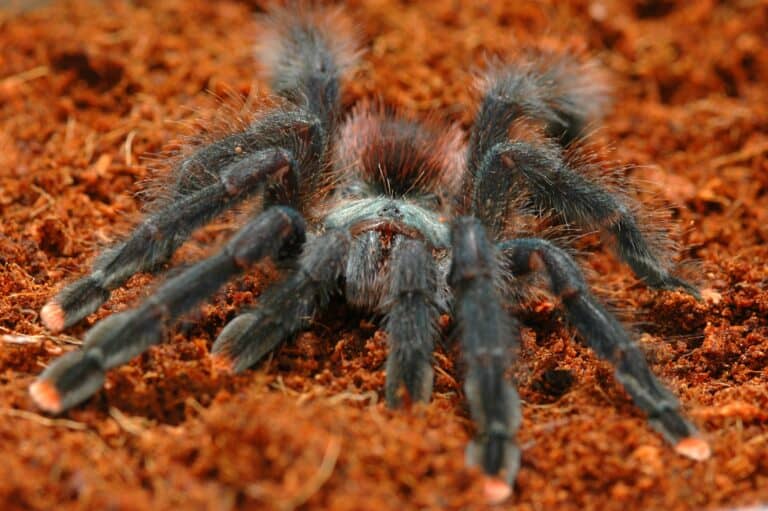
Arboreal New World tarantula with characteristic pink-tipped feet; found in northern South America.

View Profile

Cobalt blue tarantula

10%

Cyriopagopus lividus

Old World, fossorial species known for vivid blue coloration and defensive temperament.

View Profile

Life Cycle

Birth 500 spiderlings
Lifespan 12 years

Lifespan

In the Wild 2โ€“30 years
In Captivity 3โ€“40 years

Reproduction

Mating System Polygynandry
Social Structure Solitary
Breeding Pattern Transient
Fertilization Internal Fertilization
Birth Type Internal_fertilization

Across Theraphosidae, adults are typically solitary. Roaming males locate females and transfer sperm via pedipalps after courtship; both sexes may mate with multiple partners, though frequency varies among species. Females usually rear egg sacs and spiderlings alone.

Behavior & Ecology

Social Aggregation Group: 1
Activity Nocturnal, Crepuscular, Cathemeral
Diet Carnivore Large, soft-bodied or easily subdued insects-commonly crickets and roaches (where available).
Seasonal Hibernates

Temperament

Generally reclusive and avoidance-oriented; prefers retreat over confrontation
Defensiveness varies widely: from docile species to highly defensive/fast-reacting species
Territorial around burrows/retreats; aggression mostly toward prey or intruders
Cannibalism risk is common, especially among juveniles or during food scarcity
Males become more mobile and risk-tolerant while roaming for mates
New World taxa often rely on urticating hairs; Old World taxa more often rely on threat display and biting

Communication

Stridulation (rasping sounds) in some species when threatened or disturbed
Silk-laid chemical cues/pheromones for mate finding and receptivity
Substrate vibrations (drumming/tapping) during courtship and territorial displays
Tactile signaling with legs and pedipalps during courtship to reduce attack risk
Threat postures: raised forelegs, exposed fangs, body orientation and retreat blocking
Hair-flicking with urticating setae (many New World lineages) as a defensive signal
Webbing and retreat architecture as indirect cues of occupancy/size to conspecifics

Habitat

Biomes:
Tropical Rainforest Tropical Dry Forest Savanna Desert Hot Desert Cold Mediterranean Temperate Grassland Temperate Forest Temperate Rainforest Alpine +4
Terrain:
Mountainous Hilly Plateau Plains Valley Coastal Island Riverine Volcanic Karst Rocky Sandy Muddy +7
Elevation: Up to 13123 ft 4 in

Ecological Role

Natural control of insect and other arthropod populations Supports food webs as prey for birds, reptiles, mammals, and parasitoids Soil disturbance and aeration via burrowing in fossorial species Local nutrient cycling through processing of animal biomass (predation and occasional scavenging)

Diet Details

Main Prey:
Insects Cockroaches Arachnids Myriapods Terrestrial isopods Small reptiles Amphibians Small mammals Nestling birds +3

Human Interaction

Domestication Status

Wild

Theraphosidae (tarantulas) are wild animals with no true domestication like dogs or cats. People interact by collecting, trading, studying, and teaching about them. Many are bred in captivity, which helps some wild populations, but wild collection still happens. Some species face trade or conservation rules to protect them.

Danger Level

Moderate
  • Painful bites with local swelling/redness; severity varies by species and individual
  • More intense bite outcomes are more often reported from some Old World taxa (still typically not life-threatening in healthy adults, but can involve significant pain, cramping, or systemic discomfort)
  • Urticating hairs (many New World species): skin irritation, eye injury risk if rubbed into eyes, and respiratory irritation if airborne
  • Allergic reactions (rare but possible) to venom or hairs
  • Secondary infection from improper wound care
  • Indirect injury risk from startle responses (dropping the spider can injure the animal; sudden movements can cause falls or accidents)

As a Pet

Suitable as Pet

Legality: Tarantula (Theraphosidae) pets are often legal but rules vary by place. Some areas ban dangerous or exotic invertebrates, limit native collection, or protect certain species (e.g., CITES). Buying captive-bred and checking local permits is safest.

Care Level: Moderate

Purchase Cost: $20 - $2,000
Lifetime Cost: $150 - $2,500

Economic Value

Uses:
Pet and hobby trade (captive-bred and sometimes wild-caught) Education and outreach (zoos, museums, classrooms) Scientific research (venom, physiology, behavior, ecology) Ecotourism/wildlife viewing in some regions
Products:
  • live animals (adult specimens and juveniles/spiderlings)
  • breeding stock within the hobby
  • educational exhibits and programs
  • research materials (e.g., venom components/peptides for biomedical study)

Relationships

Predators 9

Tarantula hawk Pepsis spp.
Tarantula hawk wasp Hemipepsis
Spider wasp Pompilidae
Birds Aves
Small mammals Mammalia
Reptiles Squamata
Frogs and toads Anura
Ants Formicidae
Large centipedes Scolopendra spp.

Related Species 5

Trapdoor spiders Ctenizidae Shared Order
Purseweb spiders Atypidae Shared Family
Funnel-web spiders Atracidae Shared Order
Diplurid funnel-web spiders Dipluridae Shared Order
Brush-footed trapdoor spiders Barychelidae Shared Family

Ecological Equivalents 5

Animals that fill a similar ecological role in their ecosystem

Trapdoor spider Ctenizidae Similar sit-and-wait, burrow- or retreat-based predation strategy. Many occupy comparable soil microhabitats and ambush passing arthropods.
Wolf spider Lycosidae Overlap as ground-dwelling generalist predators of insects and other arthropods; they commonly exhibit nocturnal or crepuscular activity in many habitats. Wolf spiders are araneomorphs and are typically more active hunters.
Huntsman spider Sparassidae In some regions, they fill a similar role as large-bodied predators in forests and human-adjacent habitats; they take large insect prey and may opportunistically prey on small vertebrates.
Scorpions Scorpiones Occupy a comparable niche as relatively large, long-lived arachnid predators in arid to tropical systems; overlap in prey (insects and other arthropods) and in shelter use (crevices, burrows).
Large centipedes Scolopendromorpha Often co-occur and compete for similar prey. Both are nocturnal predators capable of taking relatively large arthropods and occasionally small vertebrates.

Types of Tarantula

15

Explore 15 recognized types of tarantula

Goliath birdeater Theraphosa blondi
Burgundy goliath tarantula Theraphosa stirmi
Brazilian salmon pink birdeater Lasiodora parahybana
Chilean rose tarantula Grammostola rosea
Brazilian black tarantula Grammostola pulchra
Mexican redknee tarantula Brachypelma hamorii
Mexican fireleg tarantula Brachypelma boehmei
Pinktoe tarantula Avicularia avicularia
Antilles pinktoe tarantula Caribena versicolor
Indian ornamental tarantula Poecilotheria regalis
Gooty sapphire ornamental Poecilotheria metallica
Cobalt blue tarantula Cyriopagopus lividus
Arizona blonde tarantula Aphonopelma chalcodes
Greenbottle blue tarantula Chromatopelma cyaneopubescens
Orange baboon tarantula Pterinochilus murinus

More than 1,000 species of tarantulas have been identified all around the world!

Tarantulas are among the largest spiders in the world. Many people fear them due to their size and their hairy appearance. However, most tarantulas pose little to no danger to humans. They are reclusive creatures and would much rather avoid confronting a person. Humans are much too large for tarantulas to eat, after all. If given a chance, a tarantula will most likely scurry away to safety, or if cornered, may engage in defensive posturing. In the unlikely event of a bite, most tarantula species are only mildly venomous to humans. Tarantulas are mostly nocturnal. They are prey to many different animals, and they devour many insects, other spiders, and other small creatures in the many different habitats where they live. One of the greatests threats to these fascinating arachnids is overharvesting for the pet trade.

Incredible Tarantula Facts

  • Tarantulas live on every continent except Antarctica, but they are most abundant in South America.
  • They burrow mainly underground, or under logs or rocks, and sometimes in trees.
  • More than 150 genera of tarantulas have been recognized.
  • Tarantulas may eat every few days or as little as once a month.
  • The largest tarantula has a leg span of up to 12 inches.
  • Males live only a short time after mating, but females can live for decades.

Where to Find Tarantulas

Tarantulas live all around the world. They are found on every continent except Antarctica. In North America, most tarantulas range from the southern and southwestern United States throughout Mexico. Likewise, in Europe and Asia these creatures are found primarily in more southern regions. Tarantulas range over most of Africa, Australia, Central America, as well as many islands. More species live in South America than on any other continent.

Tarantulas live in a wide variety of habitats, ranging from the wettest rainforests to the driest deserts. Different species make their homes in savannas, grasslands, prairies, scrublands, and pampas regions. Some species, especially those with arboreal lifestyles, are more at home in rainforests. And some tarantulas thrive in the deserts and the mountains.

Tarantula Burrows

Most tarantulas burrow underground or under rocks or logs. Some hide away in crevices. Others weave webbed burrows in trees. Wherever these reclusive creatures choose to burrow, they do it alone. The only time more than one tarantula will share a burrow is in the first few weeks after they hatch. Then they disperse to make homes of their own, where they live most of their lives in secrecy.  

Scientific Name

Tarantulas belong to the family known as Theraphosidae. Within this family are more than a dozen subfamilies. More than 1,000 different species of tarantulas are currently identified. That is far too many to list individually. Even the genera are too numerous to list here, especially given that so many new species and genera have been identified in just the last few years.

As of this publication, the World Spider Catalog lists 159 different genera within the Theraphosidae family. The most recent addition is the Chinchaysuyu genus from Peru, added in 2023. The oldest genera include Theraphosa, named in 1809, and Avicularia, named in 1818. 

Tarantula Appearance

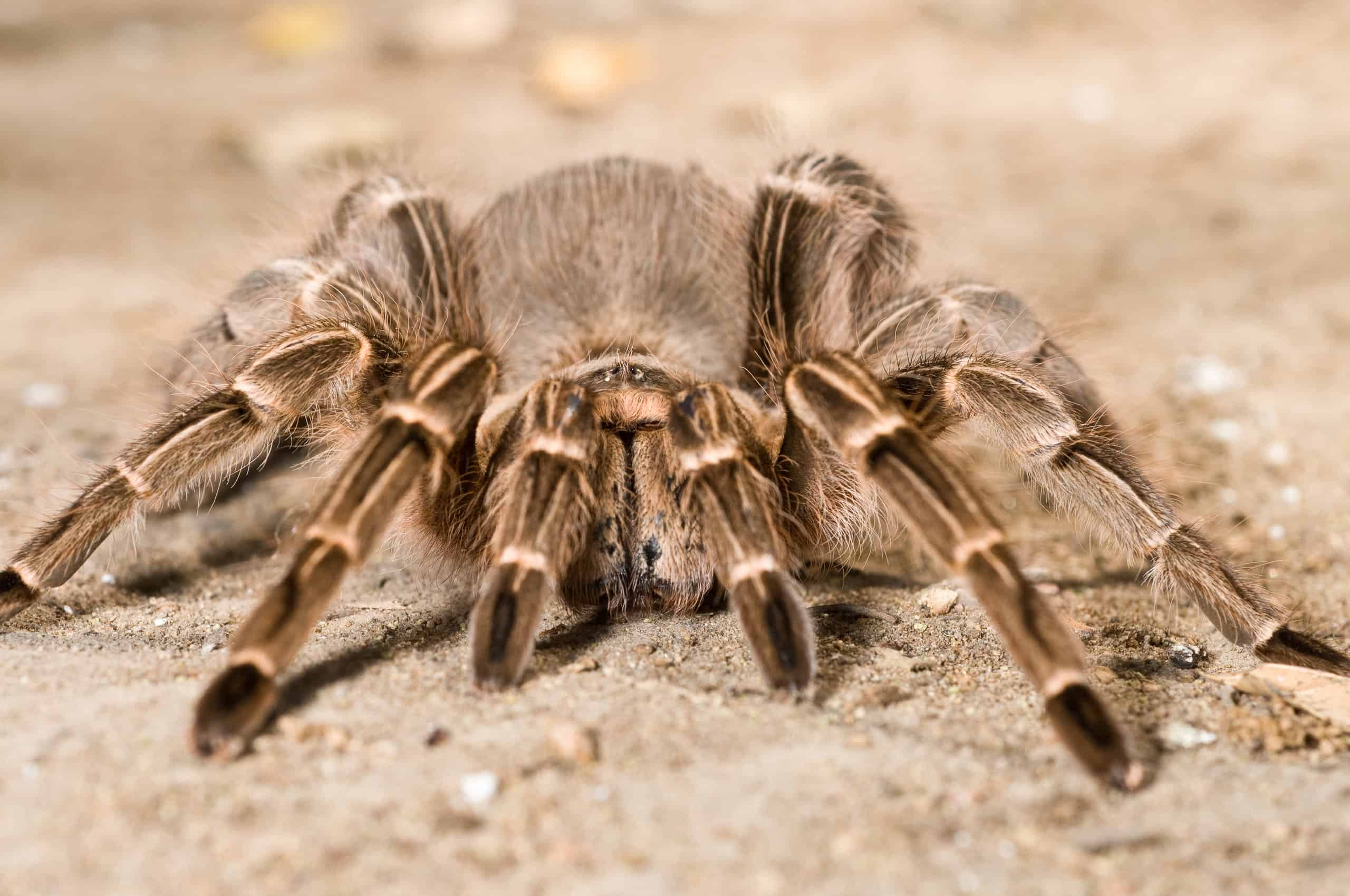
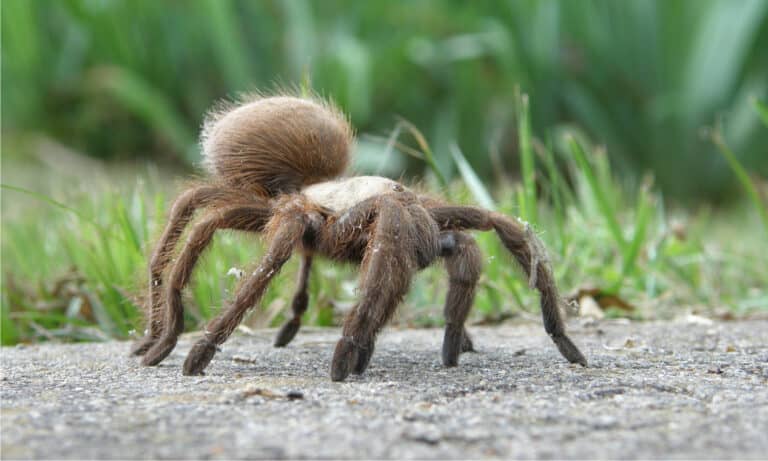
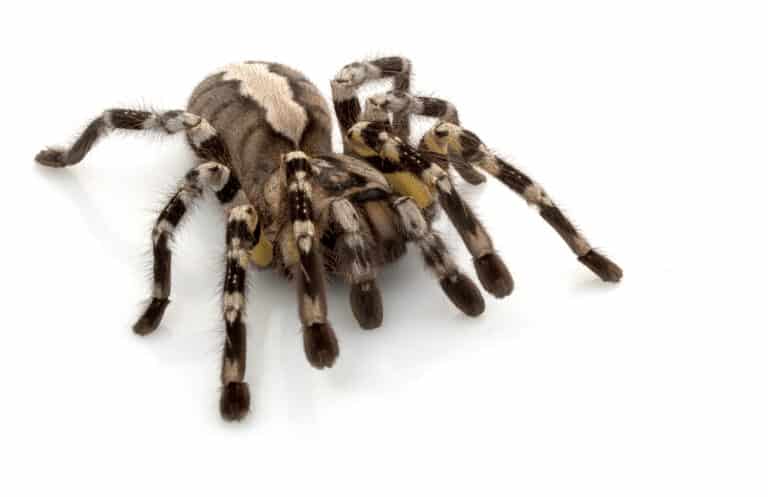
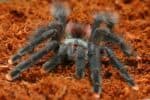
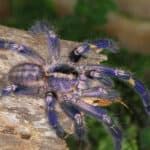
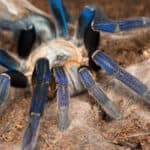
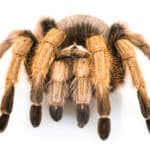
Tarantulas are large, hairy spiders that come in a wide variety of colors, from browns and grays to electric blues, pink, orange, yellow, and even green. The largest tarantula, the Goliath birdeater, can grow to lengths of 5 inches or more, with leg spans up to 12 inches. This behemoth weighs in at about six ounces, as much as a burrowing owl! Most tarantulas are significantly smaller than that, but they are still quite large, compared to other spiders.

Females of each species are larger than males. Females are generally more colorful than males of the same species as well. This could be in part because tarantulas change in appearance as they molt. Adults usually have more vivid colors and patterns than juveniles, and females, due to their much longer lifespans, will molt more times than males.

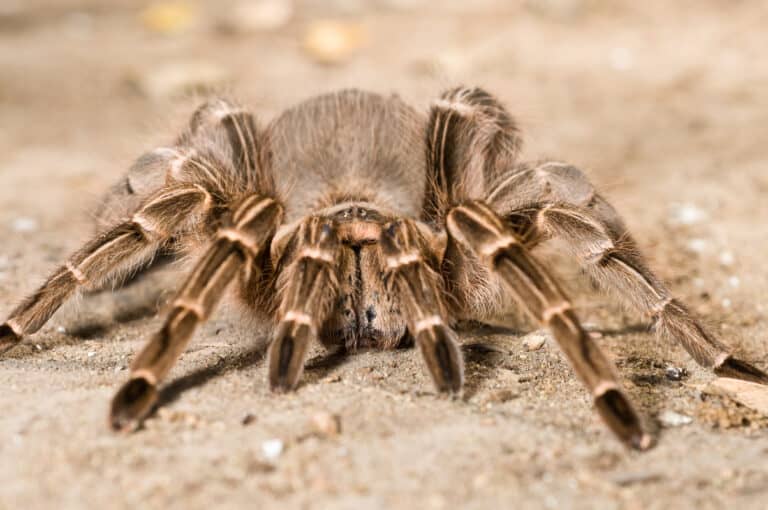
Tarantulas have eight hairy, jointed legs and two body parts, the cephalothorax and the abdomen. The cephalothorax is sometimes also called the prosoma, and the abdomen is also known as the opisthosoma. Their eight legs extend from the cephalothorax, as do the pedipalps. Pedipalps look like a shorter pair of legs, extending from the front, near the head. These are used for sensing and for moving things around.

Tarantulas have large fangs, or chelicerae, and a small tube-shaped mouth. They have eight eyes, but only the larger two are easy to spot. These are right up front, on the center of their head. Four more eyes, much smaller, are in a row underneath the two main eyes. And two more eyes lie hidden, one on each side of the head.  
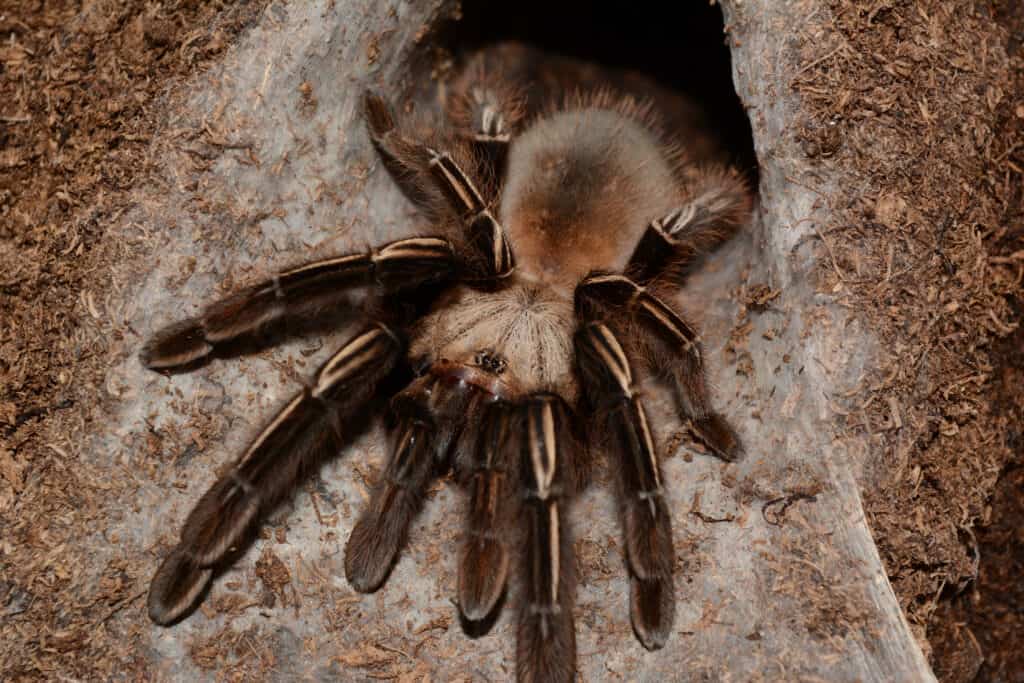
๐Ÿ‘ Image

An adult, female skeleton tarantula,

Ephebopus murinus

, emerges from her burrow.

ยฉxtotha/Shutterstock.com

Behavior

Tarantulas basically just want to be left alone. They spend most of their lives either hidden in burrows, under logs or rocks, or in the canopy of trees. They come out to hunt, mainly at night, with a frequency as often as every few days to as little as once a month, depending on a number of factors. The rest of the time, they stay hidden.

These large spiders are independent from just two or three weeks after they hatch. They disperse and live solitary lives, except for mating season, which usually occurs once per year. Mating is brief, if the male is successful in his courtship and avoids being eaten. Males precede mating by emerging, sometimes in large numbers, and setting out in search of females. This is not a true migration, as one might witness in species that move between locations seasonally.

Tarantulas are usually described as slow-moving, deliberate, and docile creatures. They generally do not behave aggressively with the exception of females guarding their young. They do engage in defensive behaviors, such as rearing up on their back legs with their front legs in the air and showing their fangs. If this defensive posturing is unsuccessful in deterring a predator, some tarantula species flick urticating hairs at their attackers. These hairs can irritate or even blind a predator, giving the tarantula a chance to run away and hide.

Diet

Tarantulas eat a wide variety of prey. Essentially, as long as a potential meal is small enough to capture and devour, a tarantula will eat almost anything that crosses its path. Invertebrates, including insects, larvae, other spiders, and all sorts of arthropods make up the bulk of a tarantulaโ€™s diet. They also eat small mammals, including mice or voles, and small birds. Many species eat reptiles, including lizards and snakes, as well as amphibians and even small fish.

Unlike many other spiders, tarantulas do not weave webs to catch their prey. They may spin lines of silk that act as tripwires, leading out from their burrows, to alert them to the presence of potential prey or nearby threats. But when it comes to catching a meal, they rely on the tactics of ambush and pursuit. 

Once a tarantula catches an unfortunate victim, it uses its large fangs to disable, kill, and ultimately liquify the prey from the inside out. This is necessary, because it does not have large enough mouth parts to actually bite off chunks of its prey or swallow them whole. Instead, it injects its prey with venom and enzymes that will break down tissues into a soupy liquid. Then it sucks out the liquid with its straw-like mouth and discards the leftovers in a compact ball of waste.

Reproduction

Tarantula reproduction is different from what you might expect, based on other animal species. The mating season usually happens just once per year. After spending the first several years of their lives all alone, males suddenly succumb to the urge to breed. They weave a special mat of silk, upon which they rub their abdomen until they eject a mass of sperm. Then they rub their pedipalps in the sperm, soaking up as much as possible into a pair of structures called palpal bulbs. The sperm will remain viable inside these bulbs until the male is able to mate with one or more females.

Armed with their sperm-loaded appendages, the males embark on a search for willing female mates. Male tarantulas of a species often leave their burrows simultaneously in large numbers, possibly to increase the chances that at least some of them will elude predators. They search for females, following chemical scents and vibrations, until they encounter the silken threads leading to a hidden burrow.

Once a male tarantula locates a female of the same species, he engages in courtship. He approaches and taps on the webbing at the entrance to the burrow. If the male is clumsy in his courtship, or the female is simply too hungry to mate, she may engage in sexual cannibalism and eat the male before he is able to escape.

Fertilization

The successful male mates with a female by engaging her face to face and inserting his pedipalps into the femaleโ€™s genitalia. He may use special spurs on his front legs to hold back the femaleโ€™s fangs as he deposits his stored sperm in a sac inside her reproductive cavity. When the mating is complete, he quickly runs away. Although a male tarantula is at greater risk of being attacked and eaten before mating than after, a timely exit is essential. Surviving males may mate with additional females before the mating season is over.

After mating, a female tarantula may retain the sperm sac and her eggs for some time, depending on the species. She will deposit both the eggs and the sperm in a silk cocoon in her burrow. Again, depending on the species, females may lay 50 to more than 2,000 eggs. The female guards the egg sac aggressively for up to nine weeks, turning it occasionally, until the eggs hatch. Then she continues watching over the babies until they disperse two to three weeks later.

Predators

Tarantulas may be frightening to many people, but to a wide variety of animals, they just look like a big, hairy snack. Some of the natural predators of tarantulas include lizards, snakes, large frogs, and birds of prey such as owls, hawks, and eagles.

Mammals, such as opossums, skunks, honey badgers, weasels, coatis, and armadillos easily dig prey out of burrows. This makes them very effective predators of tarantulas. Other mammalian predators include canine species such as coyotes and certain foxes, along with felines such as ocelots, jaguars, lynxes and more.  

Other arachnids such as larger tarantulas and scorpions, along with arthropods such as centipedes, crabs, and various insects prey on tarantulas.

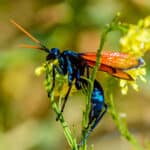
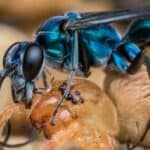
Perhaps the most horrific predators, though, are wasps. Tarantula hawks, wasps of the Pepsis genus, attack tarantulas with a venom that paralyzes but does not kill. The female wasps sting their prey, and once they immobilize the tarantula, they drag it back to a prepared burrow and stuff it inside. The wasp deposits an egg on the body of the tarantula, seals the burrow and leaves in search of more prey. The egg soon hatches and the larva begins to devour the defenseless tarantula.

Lifespan

Female tarantulas can live a very long time. Depending on the species, females may live 40 years or longer. Males, on the other hand, live only about 5 to 10 years. Once they reach sexual maturity, they survive only about another 12 to 18 months at most. Many are eaten during their search for a mate. The ones that do survive their mating season rarely survive the next molt.

The IUCN Red List for Threatened Species lists many tarantulas as species of least concern. These have relatively stable populations and sufficient numbers and ranges such that they do not require intervention. Some, however, are much less common with populations that are in serious decline.

Species such as the stunning orange and black Mexican Fireleg, or Brachypelma boehmei, the Mexican Orange Beauty, or Brachypelma baumgarteni, and the Mexican Blackvelvet, or Brachypelma schroederi, all native to Mexico, are classified as endangered. Likewise, the Asian tarantulas, Poecilotheria formosa, Poecilotheria rufilata, and Haploclastus kayi. These are all endangered due to habitat degradation and overharvesting for the pet trade. Species such as Nesiergus halophilus and Nesiergus gardineri, endemic to the Seychelles islands, are listed as critically endangered. Their threats include invasive species and the loss of coastal habitat due to rising sea levels.

View all 589 animals that start with T

Sources

  1. World Spider Catalog / Accessed May 23, 2023
  2. Nelson Ferretti, et. al. / Published August 27, 2022 / Accessed May 24, 2023

About the Author

Tavia Fuller Armstrong

Tavia Fuller Armstrong is a writer at A-Z Animals where her primary focus is on birds, mammals, reptiles, and chemistry. Tavia has been researching and writing about animals for approximately 30 years, since she completed an internship with the U.S. Fish and Wildlife Service. Tavia holds a Bachelorโ€™s Degree in Biology with a wildlife emphasis from the University of Central Oklahoma. A resident of Oklahoma, Tavia has worked at the federal, state, and local level to educate hundreds of young people about science, wildlife, and endangered species.
Connect:

Thank you for reading! Have some feedback for us?

Contact the AZ Animals editorial team

Related Articles You May Find Interesting


Tarantula FAQs (Frequently Asked Questions)

Tarantulas are large, hairy spiders with two main body parts: an abdomen and a cephalothorax. They have eight hairy, jointed legs and a pair of appendages near their head called pedipalps. They have eight eyes and large chelicerae, or fangs.

Tarantulas come in a wide variety of colors, from browns and grays to electric blues, pink, orange, yellow, and even green.

Tarantulas are large in general. Smaller species weigh around one ounce, and have a leg span between 4 and 5 inches. The largest known species, the Goliath bird eater, can weigh up to six ounces, has a body around five inches long, and its leg span can reach 12 inches.

Tarantulas are generally slow-moving creatures, but they can scurry quickly if threatened or if ambushing prey.

More than 1,000 species of tarantulas have been identified, and more than 150 different genera have been named. Many species have been identified in recent years, and some species have been regrouped into different genera as new information has been discovered.

With more than 1,000 recognized species all around the world, new varieties of tarantulas are still being discovered today.

Tarantulas live on every continent except Antarctica. They are most common in South America. They can be found in a wide variety of habitats, ranging from the wettest rainforests to the driest deserts. Different species make their homes in savannas, grasslands, prairies, scrublands, and pampas regions. Some species, especially those with arboreal lifestyles, are more at home in rainforests. And some tarantulas thrive in the deserts and the mountains.

Tarantulas do not migrate, but males do travel, sometimes significant distances, in search of a mate. During the mating season, males may be seen traveling together in large numbers, possibly to increase their overall chances of surviving predation.

A tarantula will eat almost anything that crosses its path. Invertebrates, including insects, larvae, other spiders, and all sorts of arthropods make up the bulk of a tarantulaโ€™s diet. They also eat small mammals, including mice or voles, and small birds. Many species eat reptiles, including lizards and snakes, as well as amphibians and even small fish.

Female tarantulas may lay as few as 50 or as many as 2,000 or more eggs at a time.

Tarantula eggs hatch after about nine weeks, and they baby tarantulas, also known as spiderlings or slings, leave the burrow after another two to three weeks.

Female tarantulas live up to 40 years or more, depending on the species. Males, however, live only about 5 to 10 years. They die within 12 to 18 months after reaching sexual maturity.

Many tarantulas are common and are listed as species of least concern by the IUCN Red List. These species are not considered rare. However, some of the least common species are listed as vulnerable, endangered, or even critically endangered. These species are considered rare, and some are endemic to tiny areas, including small islands. Loss of habitat, climate change, and overharvesting for the pet trade are all contributing factors to the decline of tarantula species.