T
Species Profile

Tick

Ixodida

Small bite, big impact
Afanasiev Andrii/Shutterstock.com

At a Glance

Order Overview This page covers the Tick order as a group. Stats below are general traits shared across the order.
Also Known As bloodsucker, blood-sucking parasite, mite (colloquial), parasitic arachnid, ectoparasite
Diet Sanguivore
Activity Diurnal+
Lifespan 3 years
Weight 0.001 lbs
Status Not Evaluated
Did You Know?

Ticks are arachnids (8-legged as nymphs/adults), not insects; only the 6-legged larva is an exception among their life stages.

Size Comparison

Human 5'8"
Tick 0 in

Tick stands at 0% of average human height.

Scientific Classification

Order Overview "Tick" is not a single species but represents an entire order containing multiple species.

Ticks are blood-feeding arachnids within the order Ixodida. They are ectoparasites of vertebrates (and occasionally other animals) and are medically and veterinary important as vectors of pathogens (bacteria, viruses, protozoa). Major groups include hard ticks (family Ixodidae) and soft ticks (family Argasidae).

Kingdom
Animalia
Phylum
Arthropoda
Class
Arachnida
Order
Ixodida

Distinguishing Features

  • Arachnids with 8 legs as adults/nymphs (larvae typically have 6 legs)
  • Specialized mouthparts (capitulum) for anchoring and blood-feeding
  • Life stages: egg → larva → nymph → adult, with blood meals between molts (varies by species)
  • Hard ticks often have a dorsal scutum; soft ticks are more leathery and lack a scutum

Physical Measurements

Males and females differ in size

Height
0 in (0 in – 0 in)
Length
0 in (0 in – 0 in)
Weight
0 lbs (0 lbs – 0 lbs)
Top Speed
0 mph
crawling

Appearance

Primary Colors
Secondary Colors
Skin Type Tough chitinous cuticle; hard ticks with rigid dorsal scutum and expandable alloscutum; soft ticks lack scutum and have leathery, wrinkled integument; mouthparts form a projecting capitulum.
Distinctive Features
  • Typical tick size range (varies by species): larvae ~0.05 cm; nymphs ~0.1-0.2 cm; unfed adults ~0.2-0.5 cm; engorged adult females commonly ~1.0-1.2 cm.
  • Lifespan across Ixodida varies widely: many complete life cycle in ~1-3 years; some (notably soft ticks) can persist and feed intermittently for 5-10+ years.
  • Body plan: fused oval body without narrow "waist"; 6-legged larvae, 8-legged nymphs/adults; no antennae or wings (distinguishes from insects).
  • Major lineages differ: hard ticks (Ixodidae) usually have a dorsal scutum and prolonged feeding (days); soft ticks (Argasidae) lack scutum and often feed quickly (minutes-hours) in repeated bouts.
  • Host-finding is commonly via questing on vegetation and detecting CO₂/heat/odors; many soft ticks are nidicolous (nest/burrow dwelling).
  • Life cycles vary among 1-host, 2-host, and 3-host strategies; most require a blood meal at each active stage before molting or egg-laying.
  • Ecology is broadly vertebrate-associated (mammals, birds, reptiles, amphibians); host specificity ranges from narrow to very broad across the order.
  • Medically/veterinarily important as vectors: different tick groups transmit diverse bacteria, viruses, and protozoa; vector competence and pathogen associations vary greatly by species and region.
  • Key feeding/attachment traits: barbed hypostome, cementing in many hard ticks, and salivary secretions that aid blood-feeding and pathogen transmission.
  • Sexes and stages differ in appearance: scutum size, body expansion during feeding, and ornamentation vary by family and species across Ixodida.

Sexual Dimorphism

Dimorphism is common but variable across Ixodida. Females are typically larger at full engorgement and have a smaller scutum (hard ticks), allowing major expansion; males often have a larger scutum and feed less or briefly.

  • Hard ticks: scutum often covers most of dorsum; body expands less during feeding.
  • Often smaller overall at full engorgement; may appear darker due to extensive scutum.
  • In some taxa, more pronounced scutal ornamentation or punctation patterns.
  • Hard ticks: scutum usually limited to anterior dorsum; abdomen (alloscutum) expands greatly.
  • Typically achieve much larger size after feeding; gravid females become markedly distended.
  • In many species, broader body outline and less continuous dorsal sclerotization than males.

Did You Know?

Ticks are arachnids (8-legged as nymphs/adults), not insects; only the 6-legged larva is an exception among their life stages.

Across the order, unfed adults are often just a few millimeters long, but engorged females can swell to roughly 1-3 cm.

Hard ticks (Ixodidae) typically take one long blood meal per life stage; soft ticks (Argasidae) often take many shorter meals over their lives.

Many ticks can wait long periods between meals by slowing metabolism and conserving water-some species can persist for years.

Some tick-borne pathogens can be carried through molts (transstadial transmission), and in certain tick-pathogen combinations can even pass from mother to offspring (transovarial transmission).

Ticks don't "jump" or "fly"; many species use a behavior called questing-climbing vegetation and grabbing passing hosts.

The sensory organ most associated with host detection in many ticks is Haller's organ on the first pair of legs, which helps detect cues like CO₂ and odors.

Unique Adaptations

  • Expandable body wall: Ticks can greatly increase body volume during feeding via a flexible cuticle, especially pronounced in hard ticks.
  • Anti-hemostatic, immunomodulatory saliva: Salivary molecules help prevent clotting, reduce inflammation, and modulate host defenses-key to prolonged feeding and pathogen transmission risk.
  • Cementing attachment (common in hard ticks): Many hard ticks secrete a "cement" to anchor mouthparts during long meals.
  • Specialized sensory toolkit: Haller's organ and other sensilla detect host cues such as CO₂, heat, odors, and vibrations; sensitivity differs among species and habitats.
  • Water-balance resilience: Ticks limit dehydration through behavioral microhabitat choice and physiological water conservation-critical for off-host survival.
  • Durable, multi-stage life cycle: Egg → larva → nymph → adult, with blood feeding at multiple stages; hard vs. soft ticks differ strongly in feeding frequency and duration.
  • Pathogen compatibility: Some tick species are particularly effective vectors for certain bacteria, viruses, or protozoa due to physiology and ecology; vector competence varies widely across the order.

Interesting Behaviors

  • Questing vs. nest-dwelling: Many hard ticks "quest" on vegetation, while many soft ticks are nidicolous-living in nests, burrows, or shelters and feeding when hosts return (variation is broad across species).
  • One-, two-, and three-host life cycles: Depending on species, ticks may stay on one host through multiple stages or drop off between stages to find new hosts.
  • Timed activity and diapause: Seasonal dormancy and synchronized activity peaks help match host availability and avoid desiccation; patterns vary by climate and species.
  • Mate-finding on hosts: In many hard ticks, mating commonly occurs on the host, aided by pheromones; strategies differ across families.
  • Aggregation: Some ticks cluster in protected microhabitats to reduce water loss; soft ticks in particular may form aggregations in refuges.
  • Host range variation: The order includes extreme generalists (feeding on many vertebrates) and specialists tied to particular host groups (e.g., certain birds, reptiles, or mammals).
  • Opportunistic host use: While vertebrates are the norm, some ticks may occasionally feed on atypical hosts when the usual host is scarce (varies by species and life stage).

Cultural Significance

Ticks (Ixodida) are common parasites of people, livestock, and pets, linked to woods and outdoor life. They shape herding, pet care, and public health advice (clothes, repellents, tick checks). Ticks drove early medical entomology and vector-borne disease studies.

Myths & Legends

Ancient Greek and Roman writers recorded ticks as notable parasites; classical natural history texts discuss them alongside other "biting" pests, reflecting their long-standing place in everyday life and early natural philosophy.

The word "Ixodes" traces to Greek roots associated with "sticky/clinging," reflecting an old, widely noted trait: their tenacious attachment to hosts.

In Latin, the genus name "Ricinus" (a tick genus) means "castor bean," a naming tradition tied to the resemblance between an engorged tick and a seed-an example of how human observation shaped animal naming lore.

In older European and colonial rural life, people used household and farm methods—smoke, oils, and herbs—to keep away biting pests. Ticks were often called "vermin" in these remedies.

Historical accounts from the early study of tick-borne illnesses (e.g., ranching/frontier regions documenting mysterious fevers linked to tick exposure) became part of local narratives about "bad ground" or "danger seasons," later reframed through scientific discovery.

Looking for a specific species?

Blacklegged tick (deer tick)

Ixodes scapularis

Although "tick" refers to a very diverse order (Ixodida), Ixodes scapularis is one of the most frequently referenced ticks in public health messaging and popular media because of its role in transmitting Lyme disease and other pathogens in North America.

  • Measurements (across Ixodida): unfed larvae are about ~0.05 cm long; unfed adults are typically ~0.3-0.5 cm; fully engorged adult females commonly reach about ~1.0 cm (size varies by species and feeding state).
  • Many ticks (Ixodida) grow in about 1–3 years, but some live longer. Soft ticks can survive and breed for roughly 5–10 years because they take small blood meals and can fast long.
  • Behavior/ecology (across Ixodida): life cycles vary (one-host, two-host, or three-host); many hard ticks "quest" on vegetation for passing hosts, while many soft ticks are nidicolous (living in nests/burrows) and feed rapidly during host visits.
  • Feeding strategy variation: hard ticks typically attach and feed for days with a single large meal per stage; soft ticks often take shorter, repeated meals (minutes to hours) and may feed multiple times as adults.
  • Medical/veterinary importance (across Ixodida): many species can transmit bacteria, viruses, and protozoa; which pathogens are involved depends strongly on tick species, host community, and geography-there is no single 'typical' tick-pathogen association.
View Blacklegged tick (deer tick) Profile

You might be looking for:

Blacklegged (Deer) Tick

27%

Ixodes scapularis

Hard tick (Ixodidae) common in eastern North America; important vector of Lyme disease and other pathogens.

View Profile

Castor Bean Tick

22%

Ixodes ricinus

Hard tick widespread in Europe; vector of Lyme borreliosis and tick-borne encephalitis virus.

Lone Star Tick

18%

Amblyomma americanum

Hard tick in the southeastern/central United States; associated with several tick-borne illnesses and alpha-gal syndrome.

View Profile

Brown Dog Tick

15%

Rhipicephalus sanguineus

Hard tick closely associated with dogs; globally distributed and often found indoors/kennels.

View Profile

Life Cycle

Birth 2000 larvas
Lifespan 3 years

Lifespan

In the Wild 0.2–20 years
In Captivity 0.2–25 years

Reproduction

Mating System Promiscuity
Social Structure Transient
Breeding Pattern Transient
Fertilization Internal Fertilization
Birth Type Internal_fertilization

Across Ixodida, mating is typically opportunistic with brief pairings, often on-host (many hard ticks) or in refuges (many soft ticks). Males may mate repeatedly; female mating ranges from single to multiple mates, with rare parthenogenesis in some lineages.

Behavior & Ecology

Social Aggregation Group: 1
Activity Diurnal, Nocturnal, Crepuscular, Cathemeral
Diet Sanguivore Vertebrate blood (and associated tissue fluids/lymph during feeding)
Seasonal Hibernates

Temperament

Primarily non-social ectoparasites; contact between individuals is brief and situational.
Opportunistic host-seekers: many hard ticks quest on vegetation; many soft ticks ambush from shelters.
Generally risk-averse; activity strongly constrained by humidity/temperature, with retreat to refuges common.
Mating varies widely: some mate on-host, others off-host; males may seek females via pheromones.
Aggregation tendency varies: from largely solitary to dense nest/roost-associated clusters in some lineages.

Communication

Chemical communication (sex pheromones, assembly/aggregation cues) important across many species.
Contact chemoreception via sensory setae and mouthparts during mating and site assessment.
Host detection via CO2, odors, heat, and moisture gradients Notably through Haller's organ
Tactile interactions during courtship/mating; limited cooperative behavior beyond aggregation.
Vibration/airflow and substrate cues can trigger activity or host-seeking in some species.

Habitat

Biomes:
Tropical Rainforest Tropical Dry Forest Savanna Desert Hot Desert Cold Mediterranean Temperate Grassland Temperate Forest Temperate Rainforest Boreal Forest (Taiga) Tundra Alpine Wetland +7
Terrain:
Mountainous Hilly Plateau Plains Valley Coastal Island Riverine Volcanic Karst Rocky Sandy Muddy +7
Elevation: Up to 16404 ft 3 in

Ecological Role

Obligate blood-feeding ectoparasites of vertebrates; important regulators of host-parasite interactions and major vectors/reservoir-bridges for diverse pathogens.

Influence vertebrate population dynamics and behavior via parasitism pressure Serve as key vectors for bacteria, viruses, and protozoa, shaping disease ecology in wildlife, livestock, and humans Provide food resources for tick predators/parasitoids and contribute to parasite biodiversity in ecosystems Link host communities by moving pathogens among species and across trophic networks

Diet Details

Main Prey:
Mammals Birds Reptiles Amphibians

Human Interaction

Domestication Status

Wild

Ticks (order Ixodida) are not domesticated. They are blood‑feeding parasites that evolved with vertebrate hosts. Human contact is mainly accidental biting of people and domestic animals, strong control efforts (acaricides, habitat and host management), and use in medical and scientific research on pathogens, vector biology, and immune responses. Hard ticks (Ixodidae) and soft ticks (Argasidae) differ in feeding.

Danger Level

High
  • Transmission of bacterial diseases (varies by region/species; e.g., Lyme borreliosis, spotted fevers, anaplasmosis, ehrlichiosis, relapsing fevers)
  • Transmission of viral diseases (e.g., tick-borne encephalitis group viruses, Crimean-Congo hemorrhagic fever virus, Powassan virus in some regions)
  • Transmission of protozoal diseases (e.g., babesiosis in some regions)
  • Direct effects of bites: local reactions, secondary infection from scratching, and occasionally severe allergy/anaphylaxis
  • Alpha-gal syndrome (delayed red-meat allergy) associated with bites from certain tick species in some regions
  • Tick paralysis from neurotoxins in saliva (uncommon but potentially serious)
  • Household/community exposure risk when ticks are carried indoors on people, pets, or wildlife

As a Pet

Not Suitable as Pet

Legality: Ticks are usually not treated as pets, but keeping or breeding them is discouraged and may be limited by public health, farm, or lab safety rules. Moving or owning disease-carrying ticks often needs permits; release is illegal in many places.

Care Level: Expert Only

Purchase Cost: Up to $50
Lifetime Cost: Up to $200

Economic Value

Uses:
Public health impact (disease burden and healthcare costs) Veterinary and livestock losses (reduced productivity, hide damage, mortality) Pest control and prevention industries Research and biotechnology (vector biology, immunology, pathogen studies) Wildlife management and surveillance
Products:
  • Acaricides and tick-control treatments (topicals, dips, collars, pour-ons)
  • Repellents and protective clothing treatments
  • Anti-tick vaccines for livestock in some regions
  • Diagnostics and surveillance services for tick-borne pathogens
  • Laboratory colonies/materials for research (under controlled conditions)

Relationships

Predators 6

Parasitoid tick wasp Ixodiphagus
Ant Formicidae
Ground beetles Carabidae
Spiders Araneae
Grooming mammals Didelphis virginiana; Rodentia
Tick-eating birds Buphagus spp.

Related Species 6

Hard ticks Ixodidae Shared Family
Soft ticks Argasidae Shared Family
Nuttalliellid tick Nuttalliella namaqua Shared Order
Ixodes ticks Ixodes Shared Genus
Amblyomma ticks Amblyomma Shared Genus
Rhipicephalus ticks Rhipicephalus Shared Genus

Ecological Equivalents 5

Animals that fill a similar ecological role in their ecosystem

Fleas Siphonaptera Blood-feeding ectoparasites of vertebrates. Many species are disease vectors and rely on host contact and proximity of habitats (nests and bedding), similar to many ticks—especially nidicolous forms.
Sucking lice Anoplura Obligate blood-feeding ectoparasites of mammals. Share strong host association and medical/veterinary relevance, although lice remain on the host continuously, whereas ticks often spend long periods off-host.
Mosquitoes Culicidae Hematophagous vectors of pathogens affecting humans and animals; they overlap in public-health role but differ in feeding duration (seconds to minutes versus hours to days for many ticks) and in life history.
Biting midges Ceratopogonidae Small blood-feeding flies that transmit animal pathogens (e.g., livestock viruses). They occupy a comparable vector niche, although they are flying, short-feeding insects rather than long-feeding arachnids.
Leeches Hirudinea Blood-feeding ectoparasites that secrete anticoagulant and anti-inflammatory saliva; ecologically analogous through hematophagy, though taxonomically unrelated and primarily aquatic or semiaquatic.

Types of Tick

12

Explore 12 recognized types of tick

Blacklegged tick (deer tick) Ixodes scapularis
Castor bean tick Ixodes ricinus
Lone star tick Amblyomma americanum
Brown dog tick Rhipicephalus sanguineus
American dog tick Dermacentor variabilis
Rocky Mountain wood tick Dermacentor andersoni
Asian longhorned tick Haemaphysalis longicornis
Mediterranean Hyalomma tick Hyalomma marginatum
African relapsing fever tick Ornithodoros moubata
Fowl tick Argas persicus
Spinose ear tick Otobius megnini
Nuttalliellid tick Nuttalliella namaqua
👁 Image

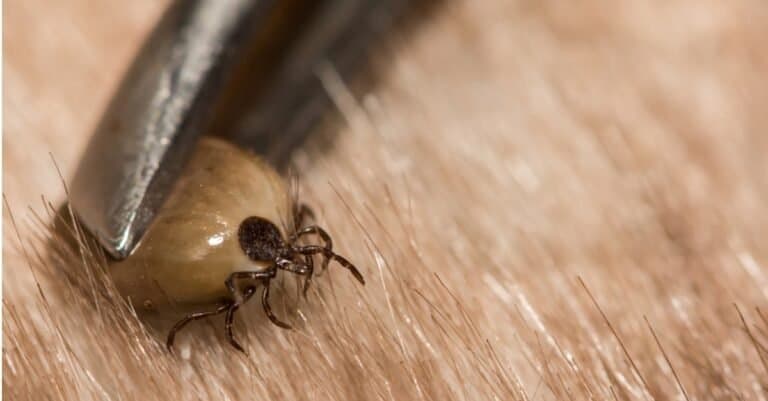
The tick is a parasitic arachnid that feeds mainly on the blood of mammals and birds, but sometimes also on reptiles and amphibians.

Dog and deer ticks are the most well-known types of these pests. Both can cause skin irritations and diseases such as Lyme disease and Rocky Mountain Spotted Fever.

The American dog tick and the brown dog tick prefer to feed on dogs and on humans, although cats also get them. Humans often get Lyme disease from deer ticks.

Incredible Tick Facts!
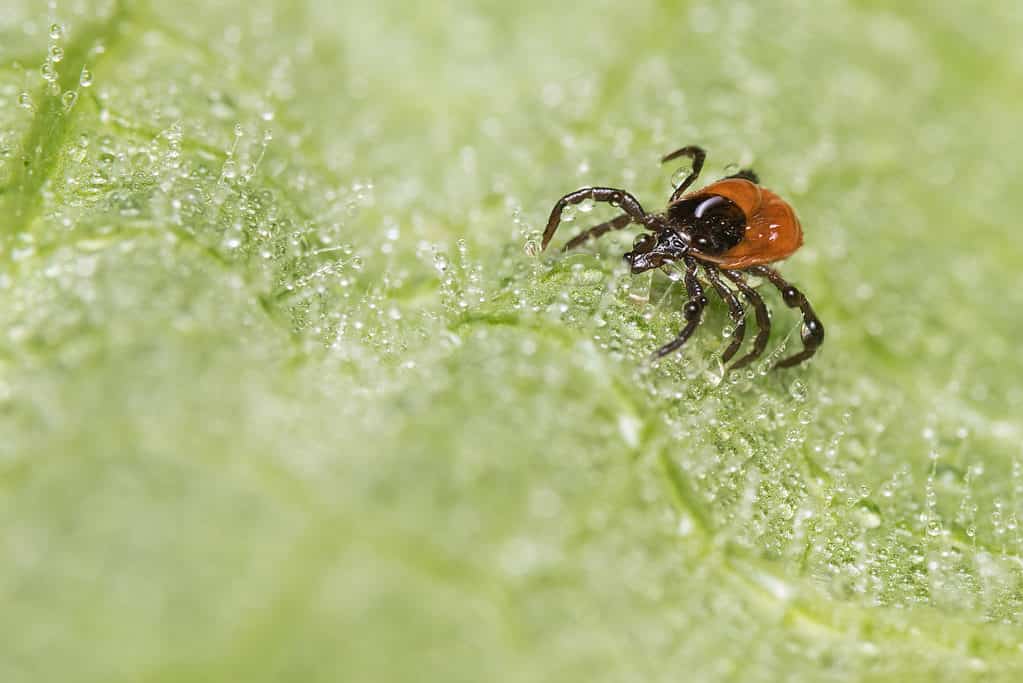
👁 Blacklegged tick

Ticks drink blood and then need blood to survive.

©iStock.com/Ladislav Kubeš

  • Their diet is blood, which it needs to live.
  • They aren’t insects but arachnids, meaning they’re related to spiders, mites, and scorpions
  • They’re different from other biting pests because they feed for long periods of time, sometimes for days.
  • It takes 24-48 hours of one being attached to transmit infections such as Lyme disease, which often appears with flu symptoms.
  • They don’t jump or fly onto their host but crawl and reach out to grab them or fall from a perch above.
  • There are 900 types of ticks found worldwide!

Species, Types, and Scientific Names

👁 Tick Header - Tick Burrowed In
Ticks are classified into two groups: hard (Ixodidae) and soft (Parasitiformes), which are members of the mite superorder (Argasidae).

Ticks belong to the mite superorder Parasitiformes and are divided into two groups hard (Ixodidae) and soft (Argasidae). There are 700 species of hard ticks and 200 soft ticks. A third family, Nuttalliellidae, of which Nuttalliella is the only genus, is the most primitive lineage and lives in southern Africa. Deinocrotonidae is an extinct genus.

The Ixodidae family has one-host, two-host, or three-host members. The Argasidae family has seven nymphal stages, called instars, all of which need blood to survive. Regardless, all species have four life stages of egg, larva, nymph, and adult.

As arachnids, ticks have four pairs of legs and no antennae in all life stages, except during the larval stage in which they have three pairs of legs. Like spiders, they also have a head and cephalothorax (fused middle and rear) and are predatory.

Fewer than 60 species bite and spread diseases to humans. Here are the scientific names of the most common species in the United States, all of which are hard types of ticks:

  • American dog (wood): Dermacentor variabilis
  • Brown dog: Rhipacephalus sanguineus
  • Deer (black-legged): Ixodes scapularis
  • Western black-legged: Ixodes pacificus
  • Rocky Mountain wood: Dermacentor andersoni
  • Gulf Coast: Amblyomma maculatum
  • Lone Star: Amblyomma americanum

Evolution and Origins
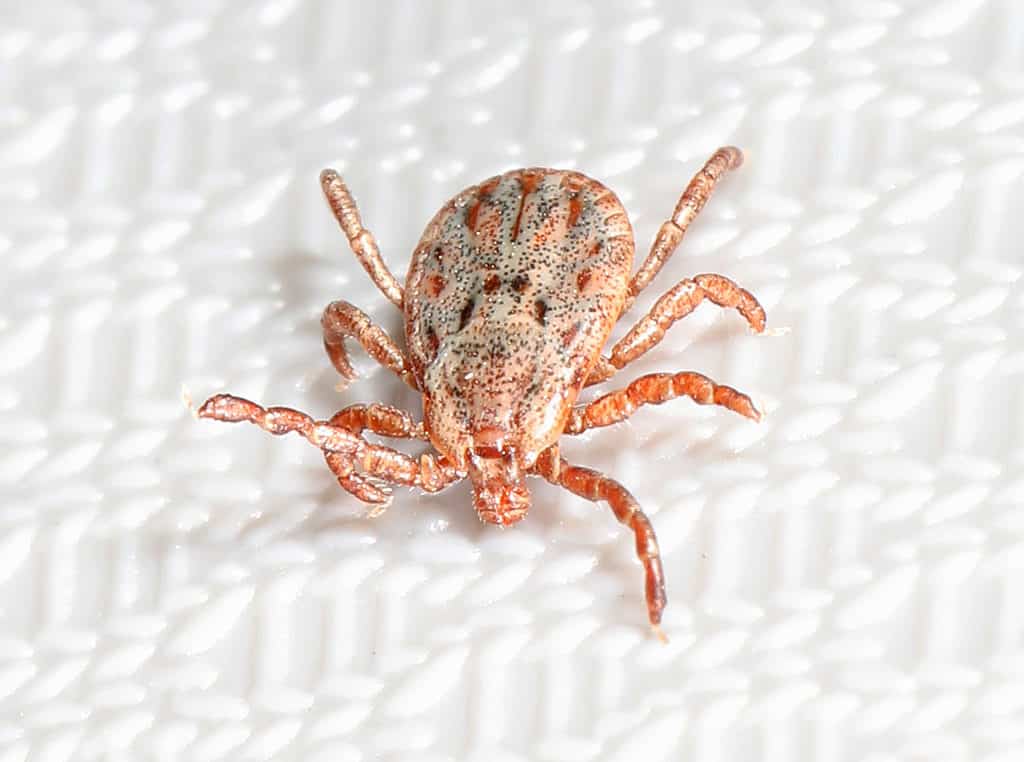
👁 Image

In addition to conventional ways, researchers now investigate ticks using novel molecular markers.

©Judy Gallagher / Flickr – Original / License

Scientists use new techniques called molecular markers to study ticks along with traditional methods. Ticks first appeared during a time called the pre-mid Cretaceous period, and two families of ticks called Argasidae and Ixodidae emerged in the middle of the Cretaceous period.

The first hosts of ticks were likely reptiles or amphibians.

Furthermore, ticks used to live on dinosaurs! Ticks lived around 90 million years ago and studies indicate that these ticks fed on feathered dinosaurs, both avian and non-avialan species, but not on modern birds.

So, it is confirmed that ticks existed on dinosaurs.

Appearance
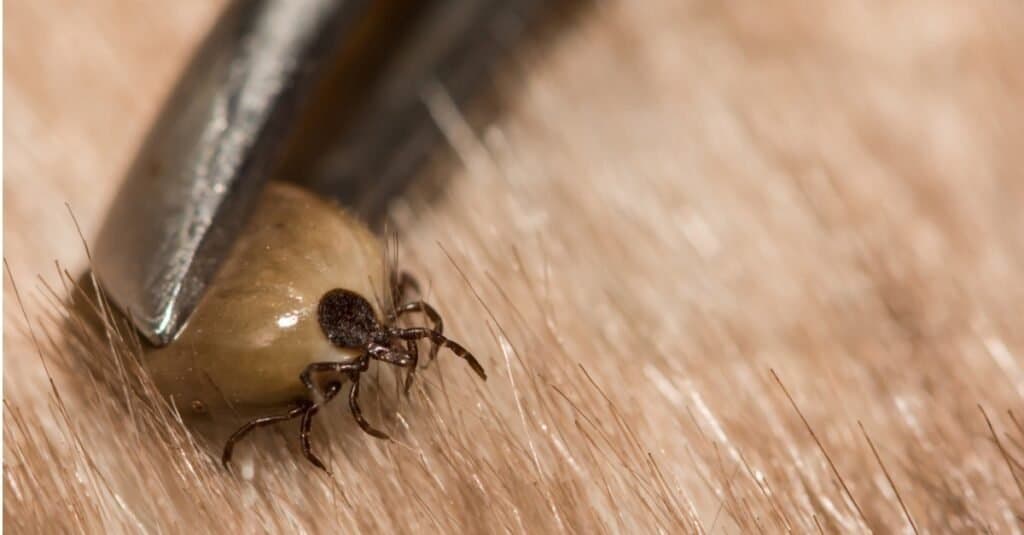
👁 Female Deer Tick removed from an accidental host.

Ticks of all kinds have a little head and a connected center and back.

©iStock.com/JasonOndreicka

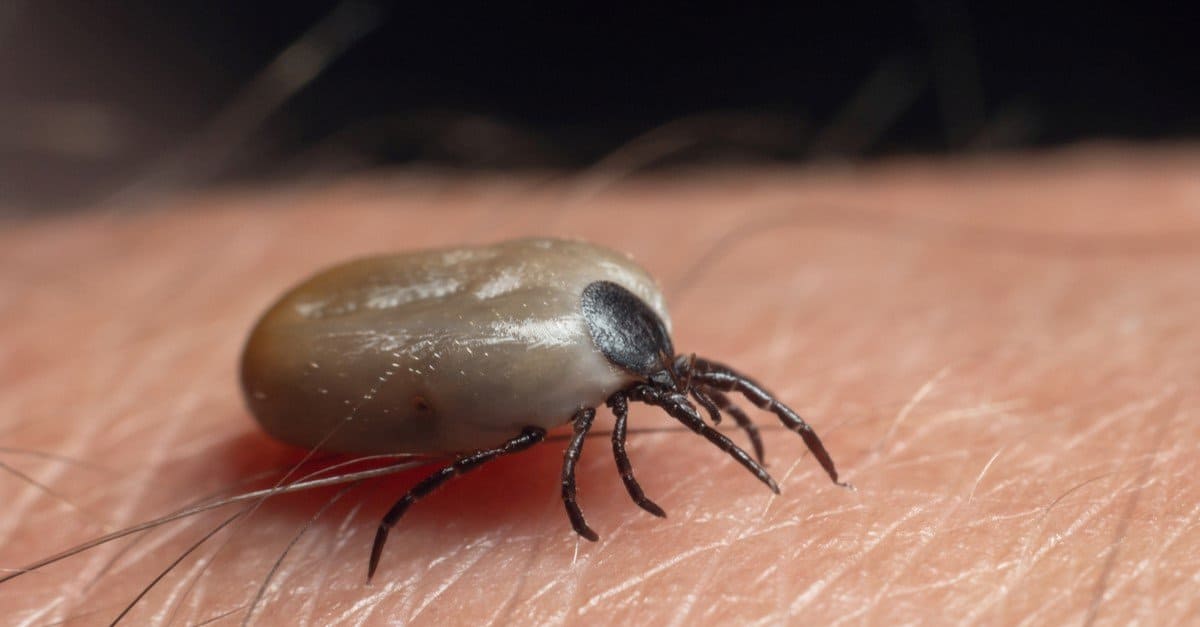
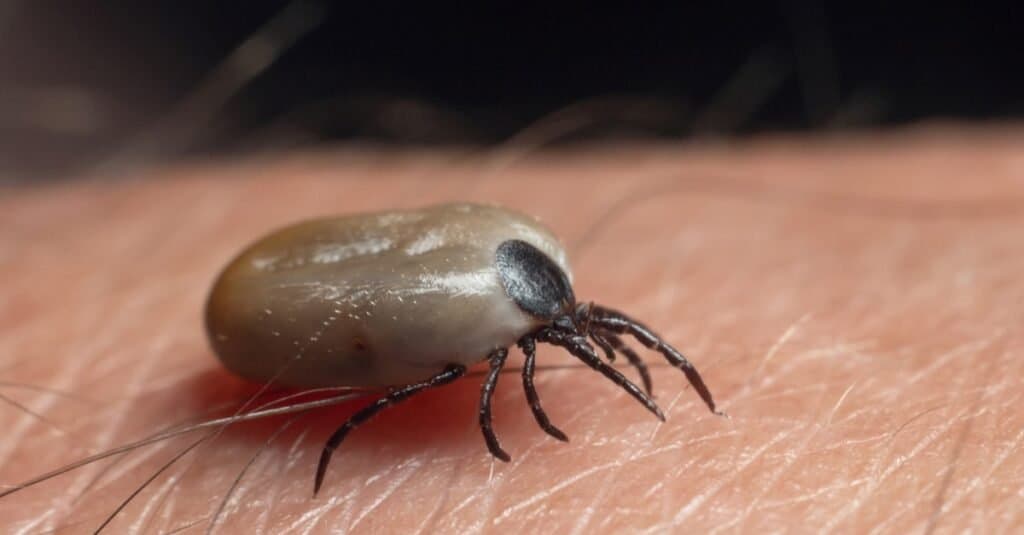
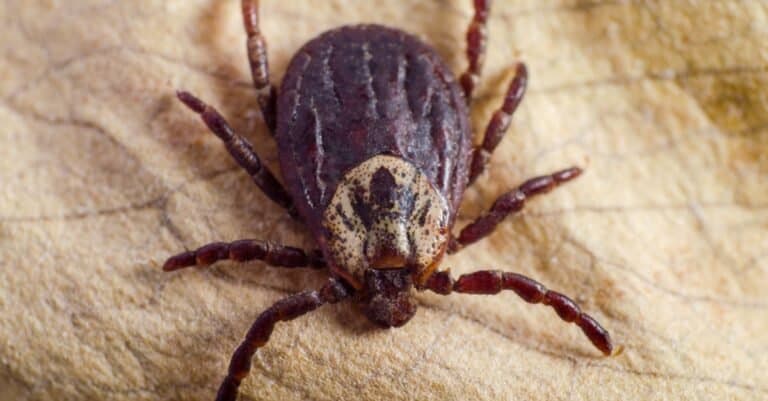
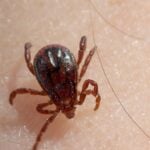
All types of ticks have a small head and a fused middle and rear. They are round and brown or black in color, with no antennae and four pairs of legs. You can easily identify them by their shield, also called a scutum. A deer tick has a solid-colored scutum, while others have patterns.

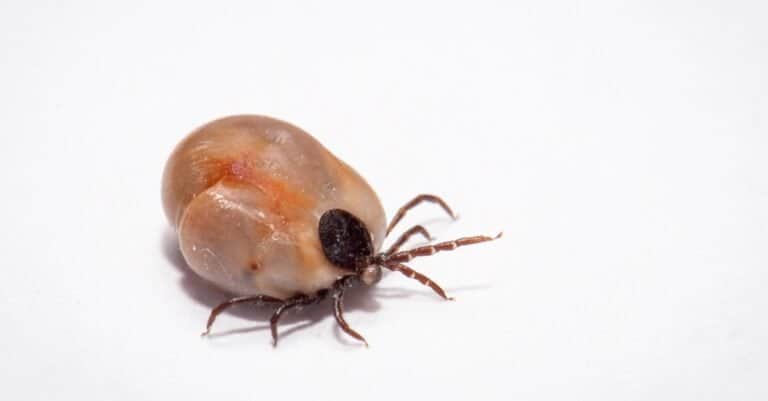
When they bite and feed on humans or on dogs, they become engorged with blood and increase in size 200 to 600 times their normal unfed size. The size of the pest depends on the species.

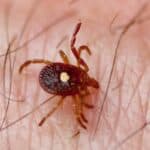
The species with a white dot is called the Lone Star species. It is particularly aggressive and known to bite humans as nymphs or adult females, and is so named because it comes with a white dot on its back that looks like a lone star. Although the white dot is visible to the naked eye, it only appears during the adult stage.

Another species with white dots on its back is the American dog tick, which is brown with white or silver/grey markings.

When & Why to Keep an Eye Out
👁 Bald-faced hornet

You should always take measures while going outside or letting your dog or cat out in the yard or woods because many tick species require exposure to the outdoors at some stage in their life cycle.

©Ernie Cooper/Shutterstock.com

Many tick species need to be outdoors at some point to complete their life cycle, and you should always take precautions when going outside or having a dog or cat in the yard or woods. The brown dog tick is unlike other species because it can complete its entire life cycle either indoors or outdoors.

It mainly bites dogs but will also bite humans and cats. Care should be taken to inspect pets, oneself, and family members if you see a tick, notice skin irritation, or have flu symptoms. Tick-borne diseases such as Lyme often come with flu symptoms.

Ticks carry diseases and can transmit diseases to humans and pets without even knowing they were bitten. Once they have been attached for 24-48 hours, they can transmit the following diseases:

  • American dog (wood): Rocky Mountain spotted fever and tularemia
  • Brown dog: Rocky Mountain spotted fever
  • Deer (black-legged): Lyme disease, hard tick relapsing fever, ehrlichiosis, Powanssan disease, anaplasmosis, and babesiosis
  • Western black-legged: Lyme disease and anaplasmosis
  • Rocky Mountain wood: Rocky Mountain spotted fever, Colorado fever, and tularemia
  • Gulf Coast: Rickettsiosis (a type of spotted fever)
  • Lone Star: Tularemia and human monocytic ehrlichiosis

Habitat

Ticks live all around the world with all species making their habitat outdoors. Of the types of those that bite humans, they prefer the woods, woodpiles, unkempt tree lines, and overgrown fields as their habitat. They can enter homes and other builds through lawn equipment, pets, and clothes.

Diet

👁 The Gulf Coast Tick
The hosts they favor biting on depend on the tick species, and they all eat blood.

All have a diet of blood, and the hosts they prefer to bite depend on the tick species. Some species are named for the hosts they mainly bite, such as dogs and deer. Others are named for where they are found, such as the Lone Star and Gulf Coast.

All are hematophagous, that is, they feed exclusively on blood. They need bacterial symbionts to give them the compounds they cannot get from blood, and they mainly get it from the Coxiella burnetii bacteria, which naturally infects sheep, goats, and cattle.

Prevention

There are three steps to take in the process of getting rid of these small but dangerous creatures: removal, treatment, and prevention. How you approach them depends on whether you find them on humans, on dogs, or in your yard.

For removal from your yard, you need to mow the grass, throw out piles of leaves and other debris, and get rid of old furniture and trash. Prevention involves putting up a fence against wild animals and keeping play equipment away from trees and yard edges. Clearing tall brush and putting up a barrier of wood chips or gravel will also stop them from entering your yard from the woods.

For removal on humans, use a pair of clean, fine-tipped tweezers to grab the tick as close to the skin as possible and steadily pull it upwards. For bite treatment, sanitize the bite area and your hands with soap and water or rubbing alcohol.

Get rid of the tick by flushing it down the toilet or bring it to your doctor for identification by putting it in rubbing alcohol or in a sealed bag or container. For prevention of bites, shower within two hours of coming in from the outdoors. Examine clothes and backpacks. If the clothes need to be washed, use hot water. Otherwise, tumble them dry on high heat for 10 minutes to kill them.

For removal, treatment, and prevention on dogs, powder, dip, spray, spot-on treatment, and shampoo all work directly on the body. Collars are prevention of them on the head and neck. Oral medication is monthly and disrupts all life cycles of tricks. Brewer’s yeast given in dog food is said to be effective against them as well as fleas.

View all 589 animals that start with T

Sources

  1. Pest World / Accessed December 27, 2021
  2. Wikipedia / Accessed December 27, 2021
  3. The Tick App / Accessed December 27, 2021
  4. Mayo Clinic / Accessed December 27, 2021
  5. Treating Bruises / Accessed December 27, 2021
  6. Pub Med / Accessed December 27, 2021
  7. CDC / Accessed December 27, 2021
  8. Western Pest Services / Accessed December 27, 2021
  9. CDC / Accessed December 27, 2021
  10. Pet MD / Accessed December 27, 2021
  11. CDC / Accessed December 27, 2021
  12. CDC / Accessed December 27, 2021
  13. CDC / Accessed December 27, 2021
  14. CDC / Accessed December 27, 2021
  15. Pest Guides / Accessed December 27, 2021
  16. Pointe Pest Control / Accessed December 27, 2021
  17. Earth Kind / Accessed December 27, 2021
  18. Animal Diversity Web / Accessed December 27, 2021
  19. Animals Network / Accessed December 27, 2021
  20. Treating Bruises / Accessed December 27, 2021
  21. Pet Resources / Accessed December 27, 2021
  22. Study / Accessed December 27, 2021

About the Author

Rebecca Bales

Rebecca is an experienced Professional Freelancer with nearly a decade of expertise in writing SEO Content, Digital Illustrations, and Graphic Design. When not engrossed in her creative endeavors, Rebecca dedicates her time to cycling and filming her nature adventures. When not focused on her passion for creating and crafting optimized materials, she harbors a deep fascination and love for cats, jumping spiders, and pet rats.
Connect:

Thank you for reading! Have some feedback for us?

Contact the AZ Animals editorial team

Related Articles You May Find Interesting

👁 Image
Articles

Are Classroom Pets Really a Good Fit for Schools?


Tick FAQs (Frequently Asked Questions)

Use a clean, fine-tipped pair of tweezers to grab its body and steadily pull it upwards.

It looks like an insect, but it’s not. You can tell a tick by its hard shield (scutum) and in the case of the Lone Star species, a scutum with a white dot.

The bite looks like a normal bug bite. However, those that cause Lyme disease cause a bullseye rash.

Remove it immediately and carefully with tweezers, sanitize the bite area and your hands, and get rid of the pest.

Yes, they carry diseases that can infect humans as well as dogs and cats.

It’s an arachnid, which is related to spiders, mites, and scorpions.

Yes, it has curved teeth as well as spines on its mouthparts.

No, they don’t hurt, because the pests inject a chemical into the host’s blood to prevent them from feeling pain. The only way to notice it is by seeing it or being allergic, which causes itching, swelling, and pain.

Ticks are eaten by chickens, guinea fowl, and frogs.

The key differences between fleas and ticks include size, appearance, behavioral characteristics, and how they move.