


T
Species Profile

Turnspit

Canis lupus familiaris

The original kitchen "motor" on paws
Internet Archive Book Images / flickr

Turnspit Distribution

Click a location to explore more animals from that region

Endemic Species
Origin Location

This map shows the native origin of the Turnspit. As a domesticated species, they are now found worldwide.

Loading map...

Size Comparison

Human 5'8"
Turnspit 11 in

Turnspit stands at 16% of average human height.

At a Glance

Domesticated
Also Known As Spit dog, Turning dog, Kitchen dog, Turner, Wheeler
Diet Omnivore
Activity Diurnal+
Lifespan 12 years
Weight 13 lbs
Status Not Evaluated
Did You Know?

Turnspit dogs powered a treadmill-like "spit wheel" to rotate meat evenly over open fires.

Scientific Classification

The Turnspit Dog was an extinct domestic dog type historically bred for kitchen labor, running in a wheel to rotate roasting spits. It was typically small, low-set, and long-bodied, selected for endurance and compliance rather than companionship. The type declined as mechanical spit-turners and changing culinary practices spread.

Kingdom
Animalia
Phylum
Chordata
Class
Mammalia
Order
Carnivora
Family
Canidae
Genus
Canis
Species
Canis lupus familiaris

Distinguishing Features

  • Small, low-set, long-bodied build
  • Bred for endurance running in a wheel
  • Historic kitchen working role (spit turning)
  • Often described with short legs and sturdy frame

Physical Measurements

Males and females differ in size

Height
โ™‚ 10 in (9 in โ€“ 12 in)
โ™€ 9 in (8 in โ€“ 10 in)
Length
โ™‚ 1 ft 8 in (1 ft 6 in โ€“ 1 ft 12 in)
โ™€ 2 ft (1 ft 10 in โ€“ 2 ft 4 in)
Weight
โ™‚ 19 lbs (15 lbs โ€“ 24 lbs)
โ™€ 17 lbs (13 lbs โ€“ 20 lbs)
Tail Length
โ™‚ 8 in (6 in โ€“ 10 in)
โ™€ 7 in (6 in โ€“ 8 in)
Top Speed
19 mph
running

Appearance

Primary Colors
Secondary Colors
Skin Type Short coat
Distinctive Features
  • Extinct domestic dog type bred for kitchen wheel labor.
  • Low-set, long-bodied build; short legs and elongated back.
  • Broad chest and strong forequarters for steady trotting.
  • Hardy feet and paw pads adapted to repetitive wheel running.
  • Often described as compliant, endurance-focused working temperament.
  • Likely predisposed to back strain and intervertebral disc issues.
  • Risk of obesity without regular activity; strict portion control needed.
  • Care emphasizes nail trimming, paw inspections, and joint-friendly exercise.
  • Not a wild canid; a specialized historical form of domestic dog.
  • No modern kennel-club standard; appearance varied by locality and purpose.

Sexual Dimorphism

Sexual dimorphism was generally mild, as selection favored working endurance over show traits. Males tended to be slightly heavier and broader, while females were a bit lighter and finer-boned.

โ™‚
  • Slightly larger frame with broader head and chest.
โ™€
  • Slightly lighter build with narrower chest and head.

Did You Know?

Turnspit dogs powered a treadmill-like "spit wheel" to rotate meat evenly over open fires.

They were selected for stamina and compliance, not looks-an early example of purpose-bred canine labor.

Contemporary accounts describe them as small, long-bodied, and short-legged, suited to steady wheel-running.

As clockwork and mechanical spit-turners spread, the turnspit's job disappeared and the type faded out.

The turnspit is often discussed as a distinct working type rather than a standardized modern kennel-club breed.

Like all domestic dogs, it belongs to Canis lupus familiaris-showing how human needs shape dog diversity.

Kitchen staff sometimes kept two dogs to alternate shifts, reflecting the long, demanding work periods.

Unique Adaptations

  • Low-set, long-bodied build likely improved stability and traction in a running wheel.
  • Selection emphasized endurance and biddability, producing dogs that would keep pace for extended periods.
  • A compact frame reduced space needs in crowded kitchens and made wheel housing easier.
  • Coat and constitution were expected to cope with soot, smoke, and variable indoor heat.
  • Behavioral adaptability to repetitive work reflects domestic dogs' broader capacity for task specialization.

Interesting Behaviors

  • Set into a wheel, they maintained a steady, endurance trot for long roasting sessions.
  • They were trained to start, stop, and change pace on cues from kitchen workers.
  • Many accounts note strong food-focus and eagerness to stay near hearths and roasting drippings.
  • Working in noisy, smoky kitchens encouraged tolerance of heat, commotion, and close quarters.
  • Handlers often rotated dogs in pairs, building routine-driven, shift-like working habits.

Cultural Significance

The turnspit dog symbolizes pre-industrial domestic labor, where canine work supported household food production. Its disappearance tracks technological change, and it remains a historical example of how selective breeding followed human economic needs.

Myths & Legends

British kitchen lore held that turnspit dogs could "sense Sunday," trotting more reluctantly on roast-heavy days when the wheel ran longest.

A common naming anecdote says many were called "Jack," making "turnspit Jack" a stock character in period kitchen stories.

Household tales warned mischief-makers that a neglected turnspit might "stop the roast," ruining feasts and inviting a cook's wrath.

In some families, the dog's steady wheel rhythm was treated as a good-omen "hearth clock," believed to keep the home's luck turning.

Conservation Status

NE Not Evaluated

Has not yet been evaluated against the criteria.

Population Stable

Life Cycle

Birth 4 pups
Lifespan 12 years

Lifespan

In the Wild 10โ€“13 years
In Captivity 8โ€“15 years

Reproduction

Mating System Polygyny
Social Structure Managed Domestic
Breeding Season Year-round; estrus typically twice yearly
Breeding Pattern Serial
Fertilization Managed Selective
Birth Type Internal_fertilization

Behavior & Ecology

Social Pack Group: 3
Activity Diurnal, Crepuscular
Diet Omnivore roasted meat scraps

Temperament

Compliant
Docile
Persistent
Enduring
Food-motivated
Handler-focused
Reserved
Low-prey
Stubborn
Stress-prone
Back-sensitive

Communication

short barks
whines
soft growls
panting
body language
scent marking
tail carriage
pacing
seeking contact

Habitat

Terrain:
Plains Hilly
Elevation: Up to 4412 ft 9 in

Ecological Role

Domestic commensal and kitchen worker; minor opportunistic predator.

food waste recycling rodent control human companionship

Diet Details

Main Prey:
Other Foods:
Grains Vegetable scraps Fruit

Human Interaction

Domestication Status

Domesticated

Developed in Britain (notably 16th-19th centuries) from domestic dogs for kitchen labor, running "turnspit" wheels to rotate roasting spits. Bred for low stature, stamina, and compliance; declined with mechanical spit-turners and became extinct.

Danger Level

Low
  • Defensive nipping if mishandled
  • Zoonotic disease risk (historic)
  • Bites during forced work/stress

As a Pet

Not Suitable as Pet

Legality: Extinct; no legal pet ownership possible.

Care Level: Expert Only

Purchase Cost:
Lifetime Cost:

Economic Value

Uses:
Household Labor Heritage Tourism Research
Products:
  • service
  • exhibits
  • education

Relationships

Predators 4

Gray Wolf Canis lupus
Eurasian Lynx Lynx lynx
Red Fox Vulpes vulpes
Golden Eagle Aquila chrysaetos

Related Species 6

Gray Wolf Canis lupus Shared Genus
Coyote Canis latrans Shared Genus
Golden Jackal Canis aureus Shared Genus
Ethiopian Wolf Canis simensis Shared Genus
Red Fox Vulpes vulpes Shared Family
Raccoon Dog Nyctereutes procyonoides Shared Family

Ecological Equivalents 4

Animals that fill a similar ecological role in their ecosystem

Dachshund Canis lupus familiaris Low-slung, long-bodied dog bred for stamina and persistence.
Welsh Corgi Canis lupus familiaris Short-legged working dog bred for endurance and compliance.
Basset Hound Canis lupus familiaris Low-set, heavy-bodied dog with a steady, tireless gait.
Rat Terrier Canis lupus familiaris Utility dog used in kitchens and yards for vermin control.

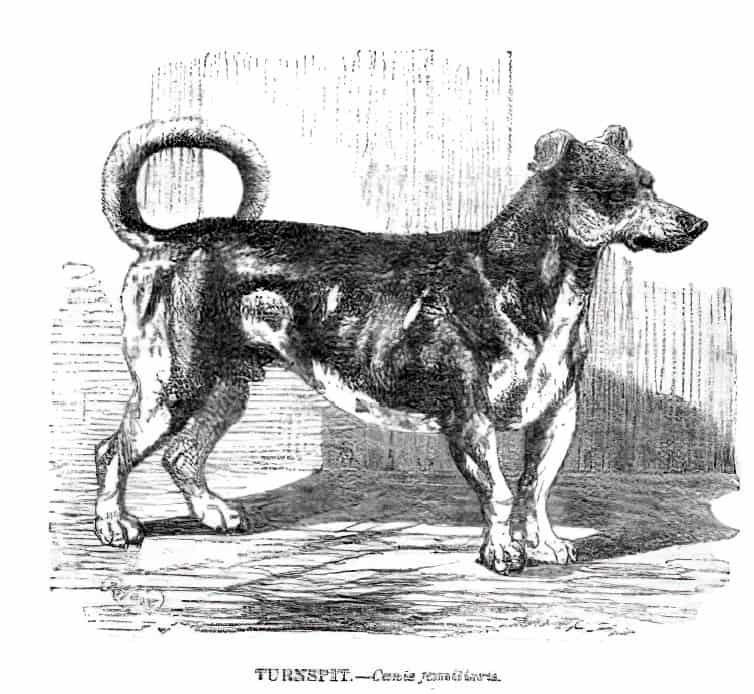
The Turnspit (Canis vertigus) is an extinct breed that was a vital part of kitchens in Great Britain in the 16th century. This small dog wasnโ€™t a beloved pet; it was a working dog specifically bred to run in a wooden wheel that turned a spit over a fire. These dogs were called the cooking dog, kitchen dog, or vernepator cur, and they were first mentioned in the first book ever written about dogs in 1576.

Turnspit History

๐Ÿ‘ Turnspit Dog

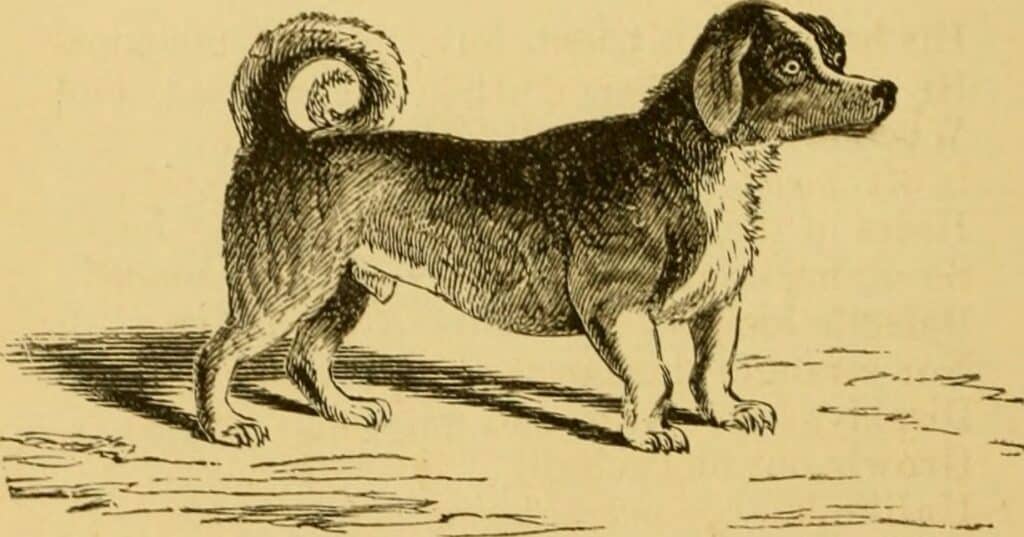
The turnspit was also known as vernepator cur, which is Latin for โ€œthe dog that turns the wheel.โ€

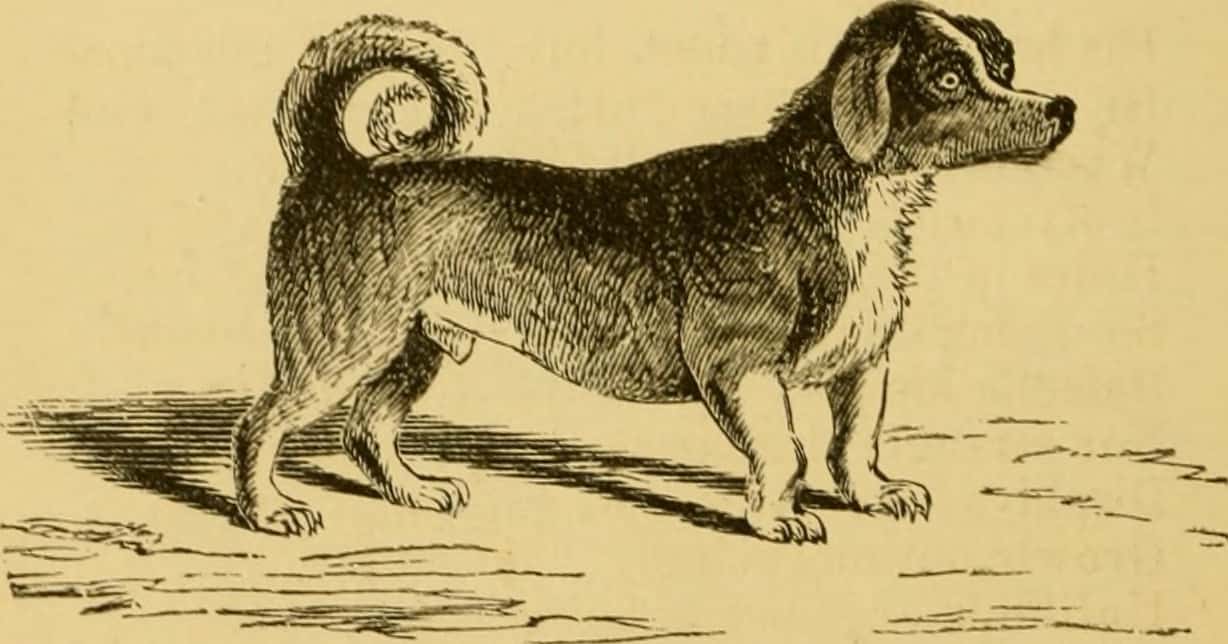
ยฉInternet Archive Book Images / flickr โ€“ Original / License

Itโ€™s no secret that the British love their roasts; every Sunday is a feast with family or friends, and there is always a beef, pork, or chicken roast on the table. This is a tradition passed down from medieval times, but with one difference. Instead of using an oven, the British used a turnspit dog. These tiny dogs were specifically bred to run on a wheel in the kitchen that turned the meat over an open flame, which cooks it evenly without burning it. That is why the turnspit was also known as vernepator cur, which is Latin for โ€œthe dog that turns the wheel.โ€

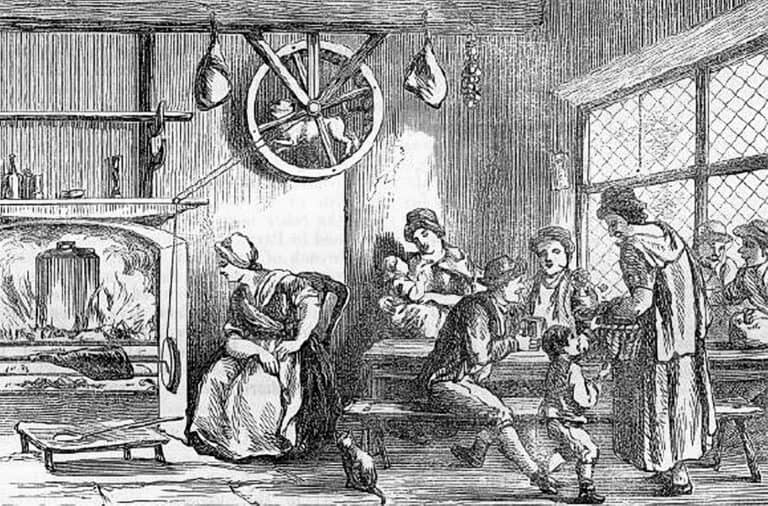
The wooden wheel (almost like a giant hamster wheel) was mounted on the wall in the kitchen near the fireplace. Once cooking commenced, the turnspit was hoisted into the wheel and started to run. There was a chain attached to the wheel that ran to the spit, and as the dog ran, the spit would turn. The wheel was high up and far from the fire because they didnโ€™t want the dogs to get too hot and overheat. Unfortunately, these dogs were viewed as tools and not beloved family pets. The only day off these dogs had was Sunday, as they accompanied their masters to church. But not because their masters wanted to give them some fresh air, but rather as foot warmers in the cold church.

Before the turnspit was bred, the lowest-ranking kitchen staff member would turn the spit. It would usually be a young boy standing behind a bale of wet hay for protection from the heat. Unfortunately, they would have to stand there for hours, and their hands would often blister.

How Did Turnspits Become Extinct?

At the start of the 1750s, these tiny working dogs were all over Britain. However, a hundred years later, in 1850, they were almost non-existent. Then, by the 1900s, turnspits had disappeared altogether. Unfortunately, the reason for their demise was that spit-turning machines, named clock jacks, became available. At first, these machines were very expensive, so owning turnspits became a stigma of poverty. Furthermore, Brits found them ugly with a sullen disposition, so nobody wanted them as pets.

Turnspits in America

While turnspits were not as popular in the United States, there is proof that they did occur. For example, William Pennโ€™s wife (the founder of Pennsylvania ) wrote to breeders in England requesting a wooden wheel for her turnspits. Furthermore, Benjamin Franklinโ€™s Pennsylvania Gazette reported advertisements for these dogs in Philadelphia. Additionally, they were present in the Statehouse Innโ€™s kitchen in Philly. But they were primarily used in large hotels across America to turn roasts. However, the founder of the SPCA found out about turnspits in hotels in New York in the 1850s and was appalled by how they were treated. Thus, the SPCA was formed shortly after.

Turnspit Size and Weight

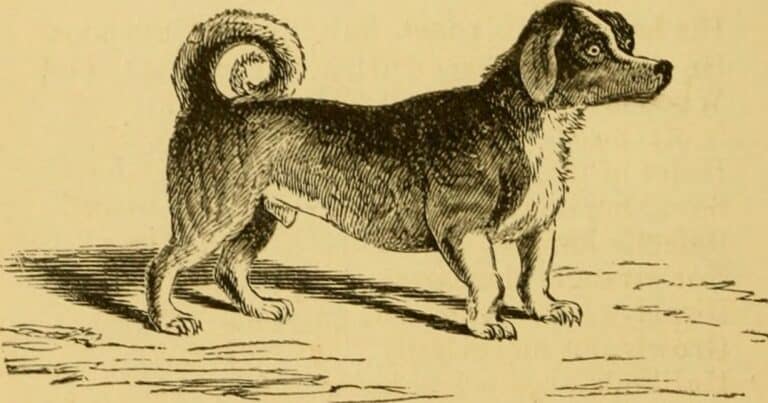
The turnspit was a small breed, weighing between 15 to 25 pounds and measuring 8 to 12 inches tall. In addition, they had short legs and long backs. They also had stocky bodies, long snouts, and short coats. Furthermore, they had curly, upright tails that almost touched their backs. It was also common for these dogs to have bent legs because of the hours spent in the wheel. They came in several colors, including brown, red, gray, white, and a combination of multiple colors.

Turnspits Common Health Issues

Because these dogs werenโ€™t considered pets, owners would not take much notice of them. Therefore, they probably didnโ€™t take them to the vet when they were sick. So, there is very little information about what health issues plagued this breed. However, because they were so overworked, they developed large muscles and bent legs. In addition, they likely suffered from lung issues or breathing difficulties because of all the smoke they inhaled.

Life Expectancy

For a dog that didnโ€™t get much attention, they had relatively long lifespans for their time. Turnspits could live as long as 9 to 12 years.

Turnspits Temperament

While these dogs were easy to train and extremely hard-working, they didnโ€™t have the best temperament. But who could blame them? All they did was work and never received any love or affection. However, they were loyal dogs and highly intelligent. For example, when roasting a spit, they would take turns on the wheel without any supervision or instruction from their owners.

๐Ÿ‘ Turnspit Dog Working

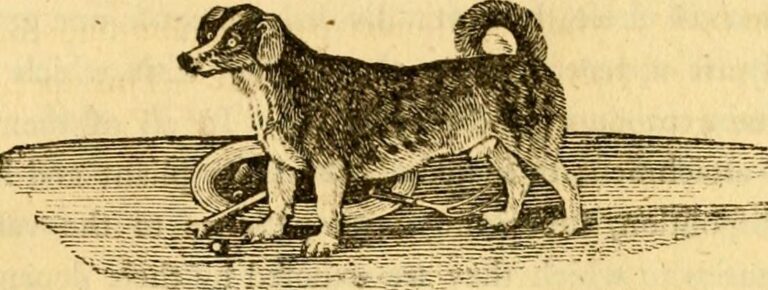
The Turnspit had to run in special wheels for hours, turning meat before the fire.

ยฉHenry Wigstead / public domain โ€“ Original / License

How to Take Care of Turnspits

As mentioned above, these dogs were seen more as kitchen aids than pets and treated as such. However, if they were around today, this is how owners should care for them:

Grooming

Due to their short coats, turnspits wouldnโ€™t require much grooming. A good brush once a week would suffice. Furthermore, bathing a dog too often washes away its natural oils, causing dry skin and irritation. Therefore, only bathe them when necessary.

Training

Unfortunately, training was brutal for these hard-working dogs. Turnspits were confined to the wooden wheel for hours. They were forced to keep the wheel turning while smelling the meat roasting out of reach and thirsting for water. Because these dogs were so intelligent, they didnโ€™t require much training. However, owners would throw red-hot coals into the wheel when they wanted them to run faster.

Today, that cruel treatment wouldnโ€™t stand, and it is one of the reasons why the SPCA exists. If they were still around, it would probably be really easy to train them with positive reinforcement.

Exercise

As turnspits were bred to have stamina, they would need plenty of exercise if they were around today. However,  back in the 16th century, they ran for hours and didnโ€™t require any additional activity.

Dogs similar to the Turnspits

While the turnspit no longer exists, two very similar dogs might even be descendants of these hard-working dogs. The Welsh corgi and Glen of Imaal Terrier share many characteristics with turnspits.

Welsh Corgi

The Welsh Corgi is notorious for being the Queenโ€™s favorite dog breed. However, before they were Queen Elizabethโ€™s most prized possessions, they were bred as working dogs, herding sheep, cattle, and other livestock. Therefore, they are energetic dogs and require plenty of exercise to prevent them from gaining weight. Additionally, these dogs require a lot of mental stimulation because they are so intelligent. And if they donโ€™t receive the attention they need, Welsh corgis will misbehave by chewing or digging.

Glen of Imaal Terrier

The Glen of Imaal terrier is named after a valley in Ireland where they originated. This breed is strong and independent, which is why they were bred for fox and badger hunting. In addition, they would kill rodents in their homes, making them a very popular breed. These dogs are compact and easy to groom and adapt well to most homes as long as they get enough exercise and mental stimulation. Unfortunately, Glens are diggers thanks to their history of hunting small game. Additionally, they tend to bark a lot when sensing a stranger, making them incredible watchdogs.


View all 589 animals that start with T

Sources

  1. Wikipedia / Accessed April 13, 2023
  2. NPR / Accessed April 13, 2023
  3. Modern Farmer / Accessed April 13, 2023

About the Author

Chanel Coetzee

Chanel Coetzee is a writer at A-Z Animals, primarily focusing on big cats, dogs, and travel. Chanel has been writing and researching about animals for over 10 years. She has also worked closely with big cats like lions, cheetahs, leopards, and tigers at a rescue and rehabilitation center in South Africa since 2009. As a resident of Cape Town, South Africa, Chanel enjoys beach walks with her Stafford bull terrier and traveling off the beaten path.
Connect:

Thank you for reading! Have some feedback for us?

Contact the AZ Animals editorial team

Related Articles You May Find Interesting


Turnspit FAQs (Frequently Asked Questions)

The Turnspit (Canis vertigus) is an extinct breed that was a vital part of kitchens in Great Britain in the 16th century. This small dog wasnโ€™t a beloved pet; it was a working dog specifically bred to run in a wooden wheel that turned a spit over a fire.

By the 1900s, turnspits had disappeared altogether. Unfortunately, the reason for their demise was because spit-turning machines, named clock jacks, became available. At first, these machines were very expensive, so owning turnspits became a stigma of poverty. Furthermore, Brits found them ugly with a sullen disposition, so nobody wanted them as pets.

Yes, instead of using an oven, the British used a turnspit dog. These tiny dogs were specifically bred to run on a wheel in the kitchen that turned the meat over an open flame, which cooks it evenly without burning it.