







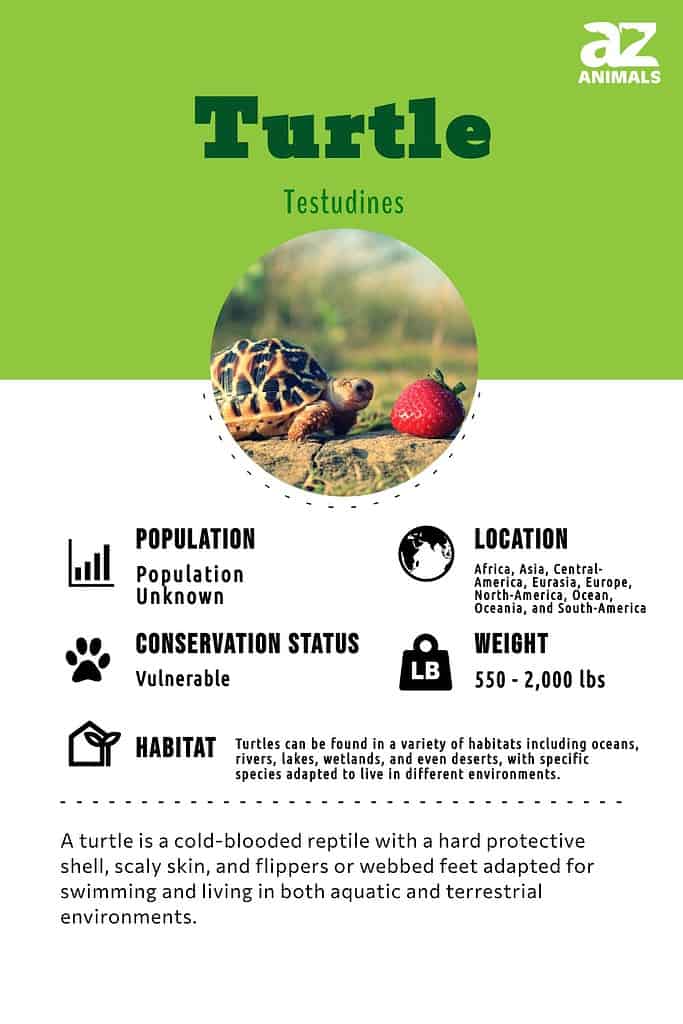
T
Species Profile

Turtles

Testudines

Armored travelers of sea and land
JGA/Shutterstock.com

Turtles Distribution

Click a location to explore more animals from that region

Invasive Species

This map shows coastal regions where Turtles are found.

Loading map...

Found in 73 countries

๐Ÿ‡ฆ๐Ÿ‡ช United Arab Emirates ๐Ÿ‡ฆ๐Ÿ‡ท Argentina ๐Ÿ‡ฆ๐Ÿ‡บ Australia ๐Ÿ‡ง๐Ÿ‡ฉ Bangladesh ๐Ÿ‡ง๐Ÿ‡ท Brazil ๐Ÿ‡ง๐Ÿ‡ผ Botswana ๐Ÿ‡ง๐Ÿ‡ฟ Belize ๐Ÿ‡จ๐Ÿ‡ฆ Canada ๐Ÿ‡จ๐Ÿ‡ฑ Chile ๐Ÿ‡จ๐Ÿ‡ณ China ๐Ÿ‡จ๐Ÿ‡ด Colombia ๐Ÿ‡จ๐Ÿ‡ท Costa Rica ๐Ÿ‡จ๐Ÿ‡บ Cuba ๐Ÿ‡ฉ๐Ÿ‡ช Germany ๐Ÿ‡ฉ๐Ÿ‡ด Dominican Republic ๐Ÿ‡ฉ๐Ÿ‡ฟ Algeria ๐Ÿ‡ช๐Ÿ‡จ Ecuador ๐Ÿ‡ช๐Ÿ‡ฌ Egypt ๐Ÿ‡ช๐Ÿ‡ธ Spain ๐Ÿ‡ช๐Ÿ‡น Ethiopia ๐Ÿ‡ซ๐Ÿ‡ฏ Fiji ๐Ÿ‡ซ๐Ÿ‡ท France ๐Ÿ‡ฌ๐Ÿ‡ญ Ghana ๐Ÿ‡ฌ๐Ÿ‡ท Greece ๐Ÿ‡ฌ๐Ÿ‡น Guatemala ๐Ÿ‡ญ๐Ÿ‡น Haiti ๐Ÿ‡ฎ๐Ÿ‡ฉ Indonesia ๐Ÿ‡ฎ๐Ÿ‡ฑ Israel ๐Ÿ‡ฎ๐Ÿ‡ณ India ๐Ÿ‡ฎ๐Ÿ‡ถ Iraq ๐Ÿ‡ฎ๐Ÿ‡ท Iran ๐Ÿ‡ฎ๐Ÿ‡น Italy ๐Ÿ‡ฏ๐Ÿ‡ฒ Jamaica ๐Ÿ‡ฏ๐Ÿ‡ด Jordan ๐Ÿ‡ฏ๐Ÿ‡ต Japan ๐Ÿ‡ฐ๐Ÿ‡ช Kenya ๐Ÿ‡ฐ๐Ÿ‡ญ Cambodia ๐Ÿ‡ฐ๐Ÿ‡ท South Korea ๐Ÿ‡ฑ๐Ÿ‡ฆ Lao People's Democratic Republic ๐Ÿ‡ฑ๐Ÿ‡ฐ Sri Lanka ๐Ÿ‡ฒ๐Ÿ‡ฆ Morocco ๐Ÿ‡ฒ๐Ÿ‡ฌ Madagascar ๐Ÿ‡ฒ๐Ÿ‡ฒ Myanmar ๐Ÿ‡ฒ๐Ÿ‡ฝ Mexico ๐Ÿ‡ฒ๐Ÿ‡พ Malaysia ๐Ÿ‡ณ๐Ÿ‡ฆ Namibia ๐Ÿ‡ณ๐Ÿ‡ฌ Nigeria ๐Ÿ‡ณ๐Ÿ‡ต Nepal ๐Ÿ‡ด๐Ÿ‡ฒ Oman ๐Ÿ‡ต๐Ÿ‡ฆ Panama ๐Ÿ‡ต๐Ÿ‡ช Peru ๐Ÿ‡ต๐Ÿ‡ฌ Papua New Guinea ๐Ÿ‡ต๐Ÿ‡ญ Philippines ๐Ÿ‡ต๐Ÿ‡ฐ Pakistan ๐Ÿ‡ต๐Ÿ‡ฑ Poland ๐Ÿ‡ท๐Ÿ‡ด Romania ๐Ÿ‡ธ๐Ÿ‡ฆ Saudi Arabia ๐Ÿ‡ธ๐Ÿ‡ง Solomon Islands ๐Ÿ‡ธ๐Ÿ‡จ Seychelles ๐Ÿ‡ธ๐Ÿ‡ฌ Singapore ๐Ÿ‡น๐Ÿ‡ญ Thailand ๐Ÿ‡น๐Ÿ‡ณ Tunisia ๐Ÿ‡น๐Ÿ‡ท Turkey ๐Ÿ‡น๐Ÿ‡ผ Taiwan ๐Ÿ‡น๐Ÿ‡ฟ Tanzania ๐Ÿ‡บ๐Ÿ‡ฆ Ukraine ๐Ÿ‡บ๐Ÿ‡ฌ Uganda ๐Ÿ‡บ๐Ÿ‡ธ United States ๐Ÿ‡บ๐Ÿ‡พ Uruguay ๐Ÿ‡ป๐Ÿ‡ช Venezuela ๐Ÿ‡ป๐Ÿ‡ณ Vietnam ๐Ÿ‡พ๐Ÿ‡ช Yemen ๐Ÿ‡ฟ๐Ÿ‡ฆ South Africa

Size Comparison

Human 5'8"
Turtles 10 in

Turtles stands at 14% of average human height.

At a Glance

Order Overview This page covers the Turtles order as a group. Stats below are general traits shared across the order.
Also Known As Tortoise, Terrapin, Chelonian
Diet Omnivore
Activity Diurnal+
Lifespan 50 years
Weight 900 lbs
Status Not Evaluated
Did You Know?

Adult sizes range from ~7-10 cm padloper tortoises to ~2 m leatherback sea turtles.

Scientific Classification

Order Overview "Turtles" is not a single species but represents an entire order containing multiple species.

Turtles (order Testudines) are reptiles characterized by a bony shell (carapace and plastron), a toothless beak, and a slow metabolism relative to many vertebrates. They include marine sea turtles, freshwater/terrestrial turtles, and tortoises, with diverse diets and life histories spanning aquatic to fully terrestrial environments.

Kingdom
Animalia
Phylum
Chordata
Class
Reptilia
Order
Testudines

Distinguishing Features

  • Bony shell: carapace and plastron
  • Toothless keratin beak
  • Ribcage fused to shell
  • Ectothermic reptile physiology
  • Long lifespan common in many species

Physical Measurements

Males and females differ in size

Height
โ™‚ 6 in (1 in โ€“ 1 ft 12 in)
โ™€ 5 in (1 in โ€“ 3 ft 3 in)
Length
โ™‚ 98 ft 5 in (19 ft 8 in โ€“ 656 ft 2 in)
โ™€ 12 in (3 in โ€“ 6 ft 7 in)
Weight
โ™‚ 4 lbs (0 lbs โ€“ 1,984 lbs)
โ™€ 11 lbs (0 lbs โ€“ 1,984 lbs)
Tail Length
โ™‚ 3 in (0 in โ€“ 1 ft 4 in)
โ™€ 3 in (0 in โ€“ 12 in)
Top Speed
22 mph
swimming

Appearance

Primary Colors
Secondary Colors
Skin Type Scaly to leathery
Distinctive Features
  • Bony shell: carapace and plastron fused to ribs and vertebrae.
  • Keratin scutes typical; leatherback lineage shows reduced scutes, leathery covering.
  • Toothless keratin beak; jaw shape varies with diet and habitat.
  • Neck retraction varies; cryptodires retract straight, pleurodires fold sideways.
  • Limbs range from stout elephantine legs to paddle-like marine flippers.
  • Size range: smallest adults ~8-10 cm; largest exceed 200 cm.
  • Coloration highly variable; often camouflage-matched to water, forest, or sand.
  • Lifespan spans decades; many species 30-80+ years, some over 100.
  • Hatchlings emerge small with softer shells; harden and thicken with age.
  • Sexual markings often subtle; head/neck patterns stronger in some freshwater taxa.

Sexual Dimorphism

Dimorphism is common but variable: males often have longer tails, a more concave plastron, and enlarged foreclaws, while females are frequently larger-bodied. In many sea turtles it is subtler, mainly tail length and body size.

โ™‚
  • Longer, thicker tail with vent positioned farther from shell edge.
  • Concave plastron common in many species for mating stability.
  • Elongated foreclaws in several freshwater turtles.
  • Smaller overall body size in many tortoises and pond turtles.
โ™€
  • Larger body and wider shell opening for egg production.
  • Flatter plastron typical in many lineages.
  • Shorter tail with vent closer to shell edge.
  • Broader hind region in some species, aiding nesting posture.

Did You Know?

Adult sizes range from ~7-10 cm padloper tortoises to ~2 m leatherback sea turtles.

Adult mass spans roughly ~0.1 kg in the smallest tortoises to 500-700 kg in the largest sea turtles.

Lifespan varies widely: some small turtles live ~15-30 years, while giant tortoises can exceed 100 years.

Testudines includes sea turtles, freshwater turtles, softshells, side-necks, and fully terrestrial tortoises.

Most species lay eggs on land; many hatchlings use temperature-dependent sex determination.

Several lineages navigate long distances, using cues like Earth's magnetic field and coastal landmarks.

Many turtle groups are threatened by habitat loss, fisheries bycatch, illegal trade, and climate-driven nesting changes.

Unique Adaptations

  • A bony shell (carapace plus plastron) fused to ribs and vertebrae provides defense while still allowing limb movement.
  • Retracting neck styles differ: cryptodires pull the neck straight back; pleurodires fold it sideways under the shell edge.
  • Marine species have paddle-like flippers and salt glands to excrete excess salt from seawater.
  • Softshell turtles have leathery shells and snorkel-like snouts, enabling fast swimming and buried ambush hunting.
  • Many species tolerate low oxygen by slowing metabolism; some can overwinter in cold water with extreme physiological suppression.
  • Temperature-dependent sex determination links nest temperature to offspring sex, making populations sensitive to warming sands.

Interesting Behaviors

  • Sea turtles make long migrations between feeding grounds and natal beaches, but many freshwater turtles stay within small home ranges.
  • Basking is common in many freshwater turtles for thermoregulation, while many tortoises time activity to cooler hours.
  • Courtship ranges from gentle nuzzling to vigorous chasing or shell-ramming, varying greatly among families.
  • Nest-site selection is critical; females often choose specific sand, soil moisture, and sun exposure for incubation.
  • Some species form seasonal aggregations at basking sites or underwater refuges, while others are strongly solitary.
  • Many hatchlings emerge in synchronized bursts, an antipredator strategy that varies with climate and local predators.

Cultural Significance

Turtles symbolize longevity, stability, and protection in many cultures. They appear in creation stories, calendars, and art worldwide, and also feature in traditional food and medicine-driving both reverence and conservation challenges.

Myths & Legends

In some Iroquois traditions, Sky Woman lands on a turtle's back; Earth grows into Turtle Island.

In Hindu tradition, Vishnu's tortoise avatar supports Mount Mandara during the churning of the ocean of milk.

In Chinese mythology, a creator goddess cut off a giant turtle's legs and used them as pillars to hold up the sky.

In a Japanese folktale, a sea turtle leads a fisherman to an undersea Dragon Palace.

In some Chinese legends, the Black Tortoise is a northern guardian associated with longevity and protection.

Conservation Status

NE Not Evaluated (order-level; species span LC to CR/EX regionally, with many threatened globally)

Has not yet been evaluated against the criteria.

Population Decreasing

Protected Under

  • CITES Appendix I
  • CITES Appendix II
  • US ESA
  • EU Habitats Directive

Looking for a specific species?

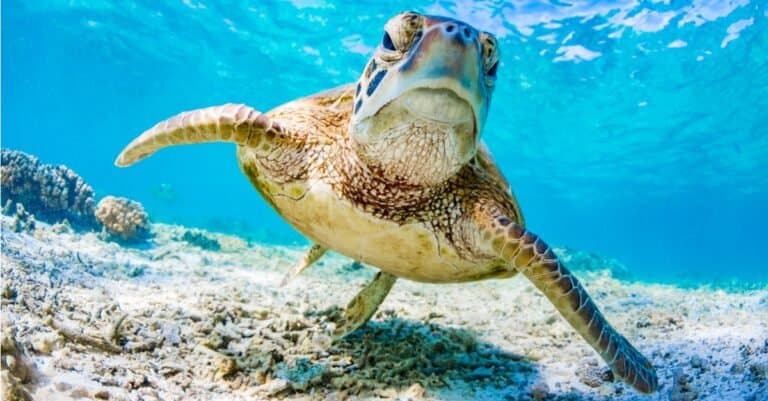
Green sea turtle

Chelonia mydas

Widely recognized globally as an iconic "turtle," frequently referenced in media and conservation.

  • Across Testudines, adult size ranges ~8-180 cm carapace length.
  • Body mass spans roughly ~0.1-700+ kg across the order.
  • Lifespan varies widely: ~10-20 years to 100-200+ years.
  • Ecology ranges from fully marine to freshwater and fully terrestrial.
  • Diet varies: herbivory, omnivory, and carnivory across life stages.

You might be looking for:

Green sea turtle

22%

Chelonia mydas

Large herbivorous sea turtle of tropical and subtropical oceans; common in coral reefs and seagrass meadows.

Loggerhead sea turtle

18%

Caretta caretta

Robust sea turtle with large head and strong jaws; widespread in temperate and subtropical seas.

Leatherback sea turtle

14%

Dermochelys coriacea

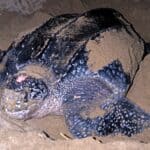
Largest living turtle; leathery carapace and deep-diving lifestyle; highly migratory across oceans.

View Profile

Galรกpagos giant tortoise

12%

Chelonoidis niger (complex)

Iconic giant tortoises from the Galรกpagos; long-lived herbivores with varied shell shapes across islands.

View Profile

Red-eared slider

12%

Trachemys scripta elegans

Common freshwater turtle often kept as a pet; invasive in many regions outside its native range.

View Profile

Common snapping turtle

10%

Chelydra serpentina

Large freshwater turtle with powerful bite and long tail; inhabits ponds, lakes, and slow rivers.

View Profile

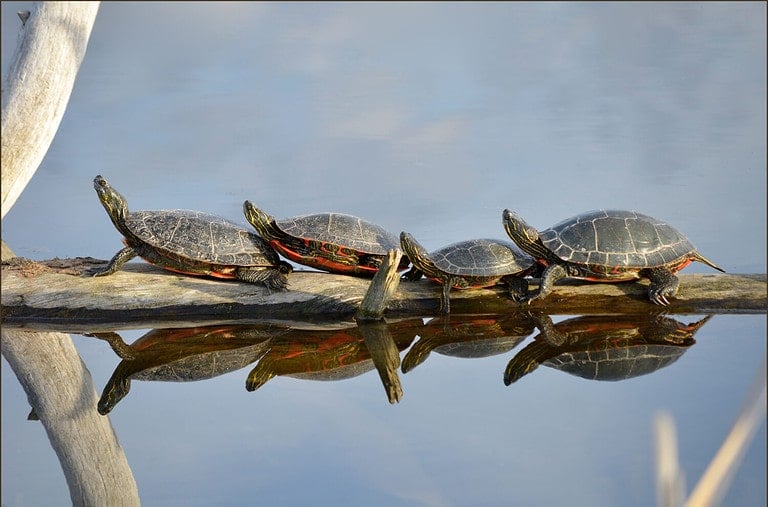
Painted turtle

7%

Chrysemys picta

Small-to-medium freshwater turtle with colorful markings; frequent basker in North American wetlands.

View Profile

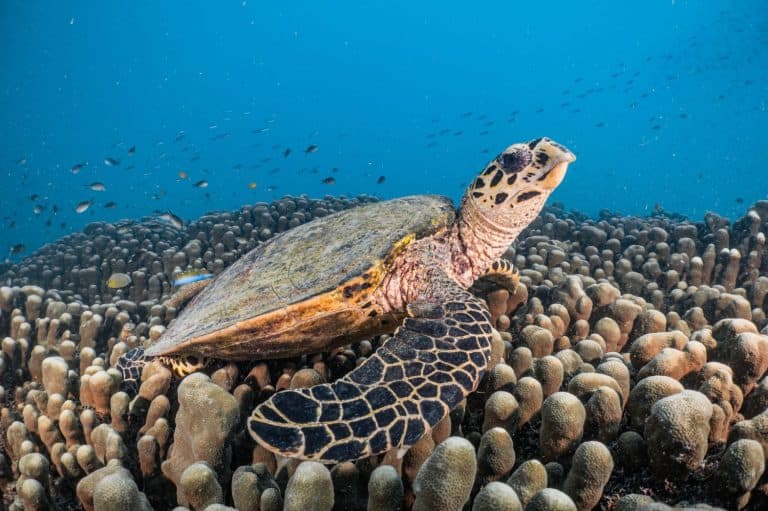
Hawksbill sea turtle

5%

Eretmochelys imbricata

Coral-reef associated sea turtle with narrow beak; historically exploited for "tortoiseshell" keratin scutes.

Life Cycle

Birth 20 hatchlings
Lifespan 50 years

Lifespan

In the Wild 10โ€“190 years
In Captivity 15โ€“200 years

Reproduction

Mating System Promiscuity
Social Structure Solitary
Breeding Season Spring-summer; varies with latitude and rainfall
Breeding Pattern Transient
Fertilization Internal Fertilization
Birth Type Internal_fertilization

Across Testudines, adults are largely solitary and mate through brief seasonal encounters; both sexes may have multiple partners, with frequent multiple paternity aided by female sperm storage. Courtship and competition vary widely, and post-laying parental care is typically absent.

Behavior & Ecology

Social Bale Group: 5
Activity Diurnal, Nocturnal, Crepuscular, Cathemeral
Diet Omnivore aquatic plants
Seasonal Migratory, Hibernates 3,107 mi

Temperament

Wary
Shy
Docile
Defensive
Territorial
Tolerant

Communication

hisses
grunts
clicks
chirps
low-frequency calls
scent cues
musk release
head bobbing
tactile nudging
courtship circling
body posture

Habitat

Biomes:
Tropical Rainforest Tropical Dry Forest Savanna Desert Hot Desert Cold Mediterranean Temperate Grassland Temperate Forest Temperate Rainforest Boreal Forest (Taiga) Tundra Alpine Freshwater Marine Wetland +9
Terrain:
Coastal Island Riverine Plains Valley Hilly Mountainous Karst Rocky Sandy Muddy +5
Elevation: Up to 11482 ft 11 in

Ecological Role

Diverse consumers linking aquatic and terrestrial food webs

nutrient cycling seed dispersal grazer control scavenging cleanup prey population control

Diet Details

Main Prey:
Insects Fish Crustaceans Mollusks Worms
Other Foods:
Aquatic plants Algae Seagrass Fruit Carrion

Human Interaction

Domestication Status

Wild

Turtles are not truly domesticated. Since ancient times in Asia, the Mediterranean, and the Americas, people collected and kept them for food, medicine, and ritual. Modern captive breeding and farming (especially in China) supply meat and pets; most remain wild-managed.

Danger Level

Moderate
  • Salmonella from handling or habitats
  • Powerful bite in large species
  • Scratches during handling
  • Zoonoses from poor hygiene
  • Boat/gear injuries during capture

As a Pet

Not Suitable as Pet

Legality: Varies widely; many CITES-listed; some pets legal captive-bred.

Care Level: Experienced

Purchase Cost: $20 - $5,000
Lifetime Cost: $2,000 - $50,000

Economic Value

Uses:
Food Pets Tourism Research Culture
Products:
  • meat
  • eggs
  • shell
  • leather
  • jewelry

Relationships

Predators 9

Human Homo sapiens
Raccoon Procyon lotor
Red fox Vulpes vulpes
Coyote Canis latrans
American crow Corvus brachyrhynchos
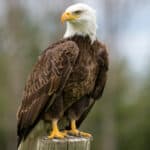
Bald eagle Haliaeetus leucocephalus
Tiger shark Galeocerdo cuvier
Great white shark Carcharodon carcharias
Orca Orcinus orca

Related Species 6

Sea turtles Cheloniidae Shared Family
Leatherback sea turtles Dermochelyidae Shared Family
Tortoises Testudinidae Shared Family
Pond and box turtles Emydidae Shared Family
Softshell turtles Trionychidae Shared Family
Snapping turtle Chelydridae Shared Family

Ecological Equivalents 4

Animals that fill a similar ecological role in their ecosystem

Nile crocodile Crocodylus niloticus Large ectothermic aquatic reptile that overlaps in wetlands and riverine habitats.
Green iguana Iguana iguana Ectothermic reptile with a slow metabolism; often herbivorous and dependent on basking for thermoregulation.
Tuatara Sphenodon punctatus Long-lived reptile with a slow life history and temperature-influenced development.
American alligator Alligator mississippiensis Aquatic reptile that shares freshwater systems and has similar basking and nesting pressures.

Types of Turtles

20

Explore 20 recognized types of turtles

Leatherback sea turtle Dermochelys coriacea
Green sea turtle Chelonia mydas
Hawksbill sea turtle Eretmochelys imbricata
Loggerhead sea turtle Caretta caretta
Olive ridley sea turtle Lepidochelys olivacea
Kemp's ridley sea turtle Lepidochelys kempii
Flatback sea turtle Natator depressus
Red-eared slider Trachemys scripta
Painted turtle Chrysemys picta
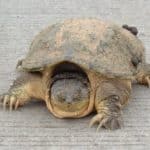
Common snapping turtle Chelydra serpentina
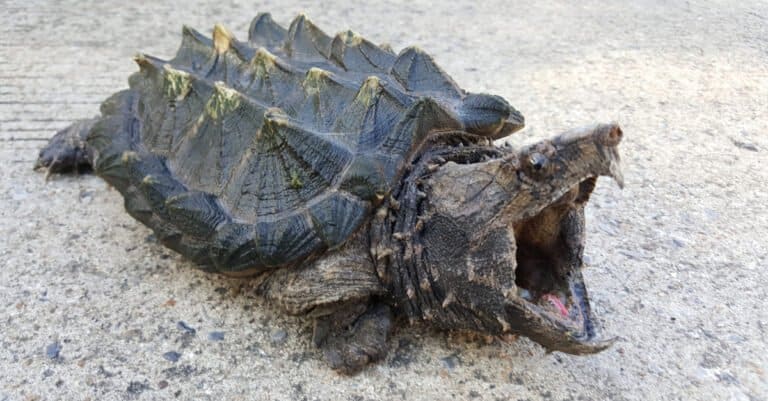
Alligator snapping turtle Macrochelys temminckii
Spiny softshell turtle Apalone spinifera
Chinese softshell turtle Pelodiscus sinensis
Common musk turtle Sternotherus odoratus
Eastern box turtle Terrapene carolina
Diamondback terrapin Malaclemys terrapin
Bog turtle Glyptemys muhlenbergii
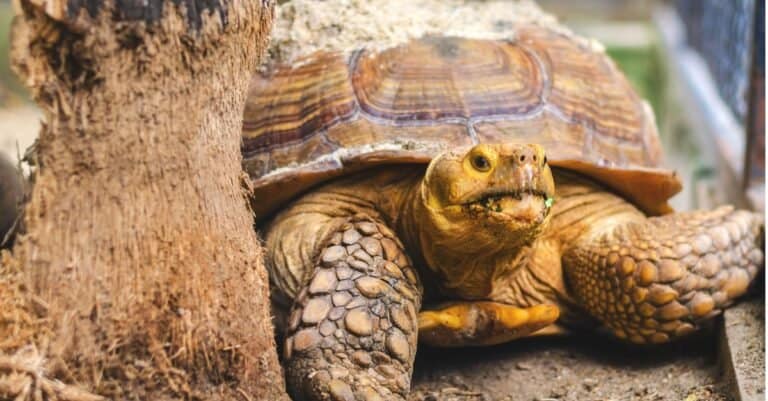
African spurred tortoise Centrochelys sulcata
Galรกpagos giant tortoise Chelonoidis niger
Aldabra giant tortoise Aldabrachelys gigantea
๐Ÿ‘ Image

Over half of all turtle species are threatened by pollution and other human-caused issues.

Turtles are a broad group of animals, and theyโ€™ve existed on this earth for quite some time. There are over 300 different species, and each one has unique facts about its behaviors, diets, and appearances.

They can be found on land and in the sea, but more species are sea turtles. Unfortunately, that also means that more sea turtles are at risk of extinction.

4 Incredible Turtle Facts!
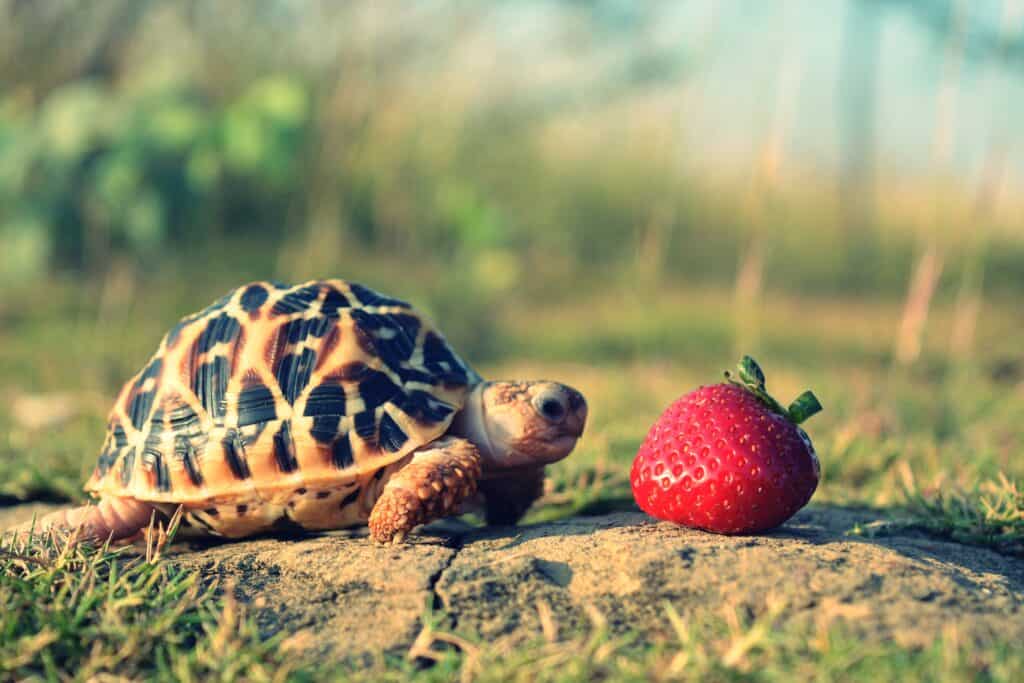
๐Ÿ‘ Turtle About to Eat a Strawberry

Turtles are opportunistic eaters.

ยฉHemant Singh/Shutterstock.com

Here are some fun turtle facts.

  • Though many people use the phrases โ€œtortoiseโ€ and โ€œturtleโ€ interchangeably, they are not the same animal.
  • Turtles donโ€™t participate in hibernation like other reptiles.
  • Most sea turtles abandon their eggs on the shore, allowing them to hatch on their own before making their way to the ocean.
  • The average pet turtle has a lifespan of nearly 80 years with the right care.

For more interesting facts, read โ€œ10 Incredible Turtle Facts.โ€

Turtle vs. Tortoise

These two animals are rather close together, but the facts show that they are much different. Tortoises have a much longer lifespan, which correlates with their large size.

Scientific Name
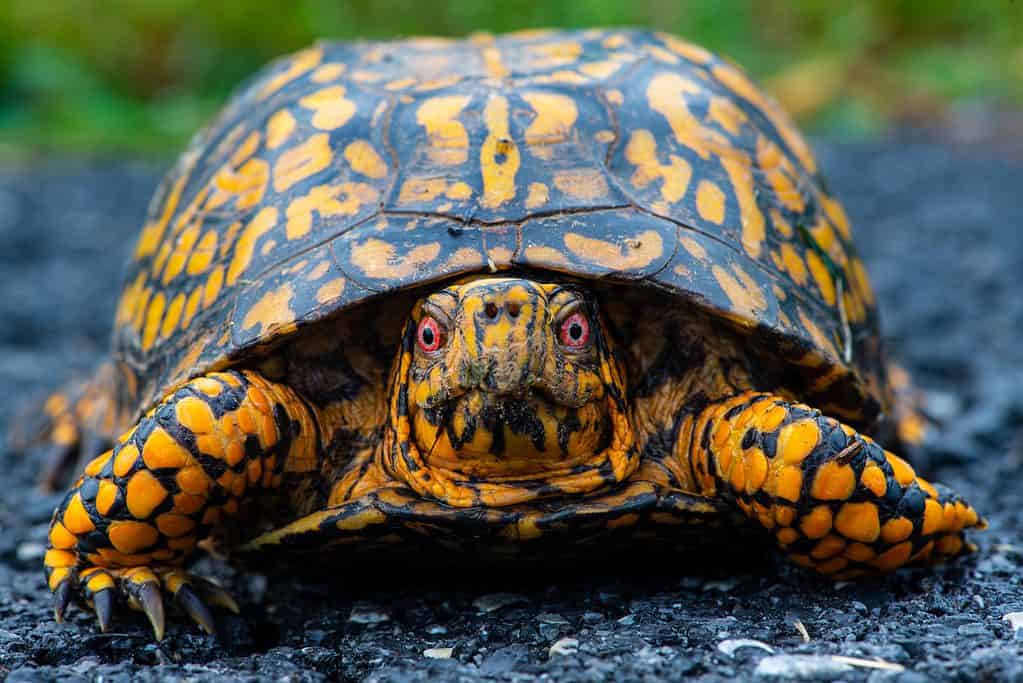
๐Ÿ‘ north american box turtle

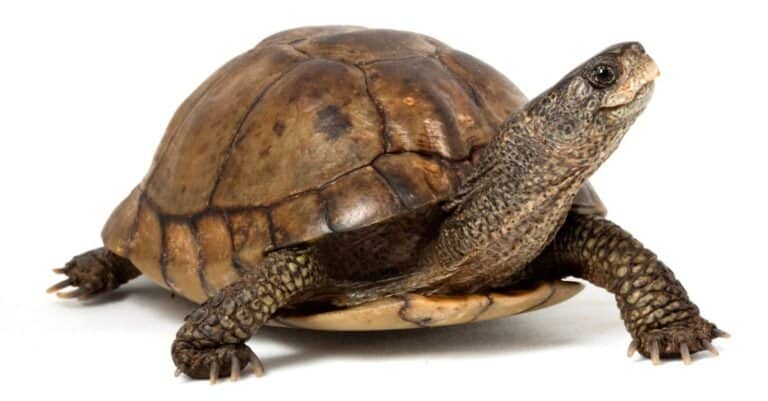
The box turtles of North America have dome-shaped shells which hinge at the bottom.

ยฉRenEgAdeRooStEr/Shutterstock.com

The common name of the turtle is simply that โ€“ turtle. Their scientific name is Testudines, and the only other names that they go by are their particular species. Most of these animals are broken down simply into sea turtles and land-based turtles, though most land-based turtles are actually tortoises.

The turtle belongs to the Reptilia class in the Cheloniidae family, which primarily represents sea turtles. The word โ€œTestudinesโ€ comes from the Latin word โ€œtesta,โ€ which means โ€œshell.โ€

Different Types

  • Tortoise
  • Sea turtles
  • Red-eared slider
  • Common snapping turtle
  • Pond slider
  • Box turtles
  • Softshell turtles
  • Painted turtle
  • Chelidae
  • Chinese pond turtle
  • Common musk turtle
  • Dโ€™Orbignyโ€™s slider
  • Chinese softshell turtle
  • European pond turtle
  • Eastern box turtle
  • Japanese pond turtle
  • Patagoniaemys
  • Pond turtles
  • Yellow-spotted river turtle
  • Spotted turtle
  • Chinese stripe-necked turtle
  • Malayemys
  • Trachemys callirostris
  • Bog turtle
  • Mexican musk turtle
  • Sternotherus
  • Razor-backed musk turtle
  • Cryptodira
  • Asian box turtle
  • Pleurodira
  • Cooters
  • Mud turtles
  • Yellow pond turtle
  • Kinosternidae
  • Carbonemys
  • Pelomedusidae
  • Spiny turtle
  • Northern river terrapin
  • Philippine forest turtle
  • Black marsh turtle
  • Black pond turtle
  • Spanish pond turtle
  • Painted wood turtle
  • Thalassochelydia
  • Liaochelys
  • Larachelus

Evolution and Origins

The land-dwelling stem turtles began to live a semi-aquatic lifestyle around 110 million years ago, later developing into freshwater and saltwater turtle species that are entirely aquatic. The majority of these turtles would keep refining and simplifying the armor plating of their Proganochelys progenitor.

While some experts contend that turtles are more closely related to lizards and snakes than to lizards or snakes, others contend that turtles belong in the category of animals known as archosaurs, which also includes crocodiles, pterosaurs, dinosaurs, and birds.

The earliest known progenitor of contemporary turtles is a reptile called Eunotosaurus, which existed around 260 million years ago during the Permian epoch.

Appearance
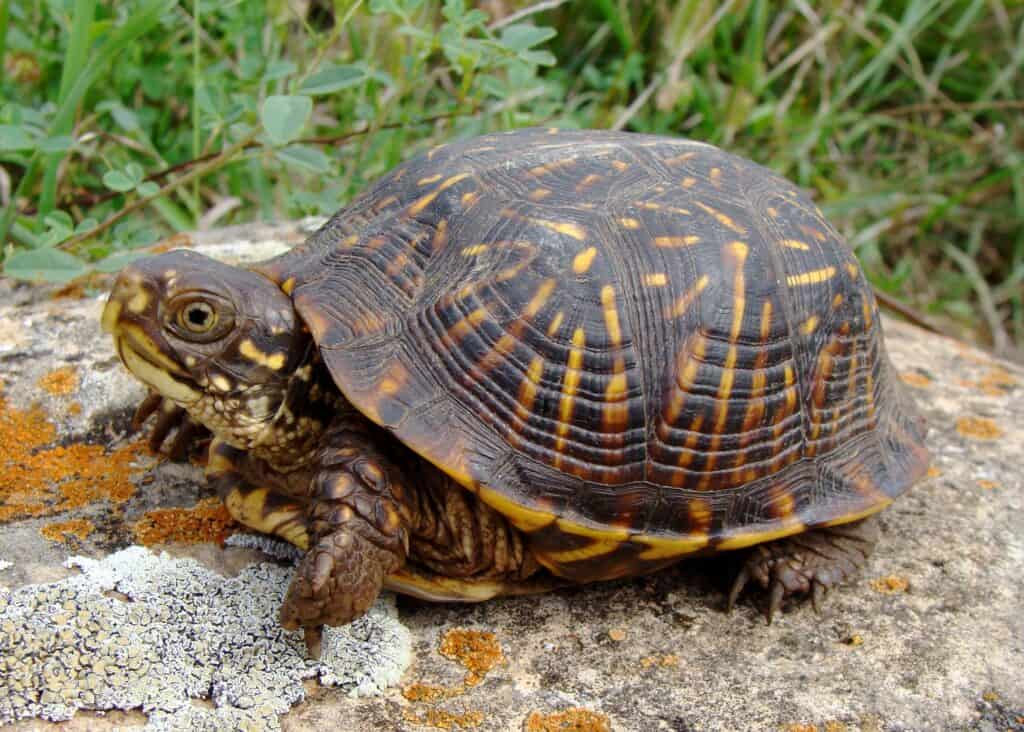
๐Ÿ‘ Ornate box turtle

The ornate box turtle is only found in the United States.

ยฉMatt Jeppson/Shutterstock.com

With over 300 different species to account for, itโ€™s a bit difficult to determine what size youโ€™re looking for. The size entirely depends on the species! For instance, if you have a pet turtle, it will likely reach no more than 4 to 12 inches. However, the largest turtle ever known was 15 feet long, measuring from his head to his tail. He even was 13 feet wide from one flipper to the other.

Considering the great range in size, the same is true of their weight. While the largest turtle weighed over 2,000 pounds, this animal can be anywhere in between. The sea turtle alone weighs about 420 lbs. when it is fully grown.

If youโ€™re looking for a particular color for the turtle, you wonโ€™t be disappointed. They practically are found in every color under the sun. Most people imagine that they are green (like the green sea turtle), though they can also be brown or even black like the snapping turtle. The color is primarily determined by the area in which they live.

A group of turtles can be called many things, like a bale, a dole, or a nest of turtles.

Behavior
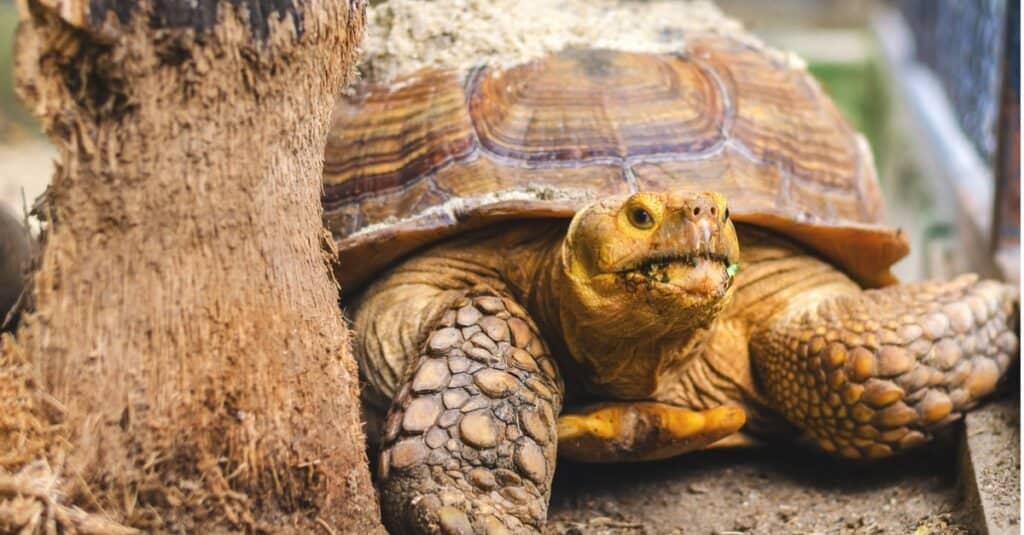
๐Ÿ‘ Giant Turtle in Thailand
This Giant Turtle in Thailand is only one example of over 300 species of turtles that cover all of the major continents.

ยฉKitinut Jinapuck/Shutterstock.com

As much as the appearance varies from one species to the next, their behavior varies as well. Some species are solitary, while others prefer to live with a family for most of their life. The groups are called bales or dole, but their personality is where things greatly change.

Pet turtles are meant to be more friendly and docile unless threatened. In the ocean, the Red-Eared Slider is particularly friendly, which is a shared reputation among many sea turtles. The snapping turtle, however, is a different story.

Ultimately, researchers have found that the snapping turtle is not exactly as aggressive as one might think. Instead, they focus on defending themselves as much as they can when they are approached by a human. They spend their days waiting for their next meal, but getting bit is not worth risking.

Even though other reptiles have a time of hibernation, the same is not true of turtles. Their bodily processes slow, but hibernation does not settle in.

Habitat
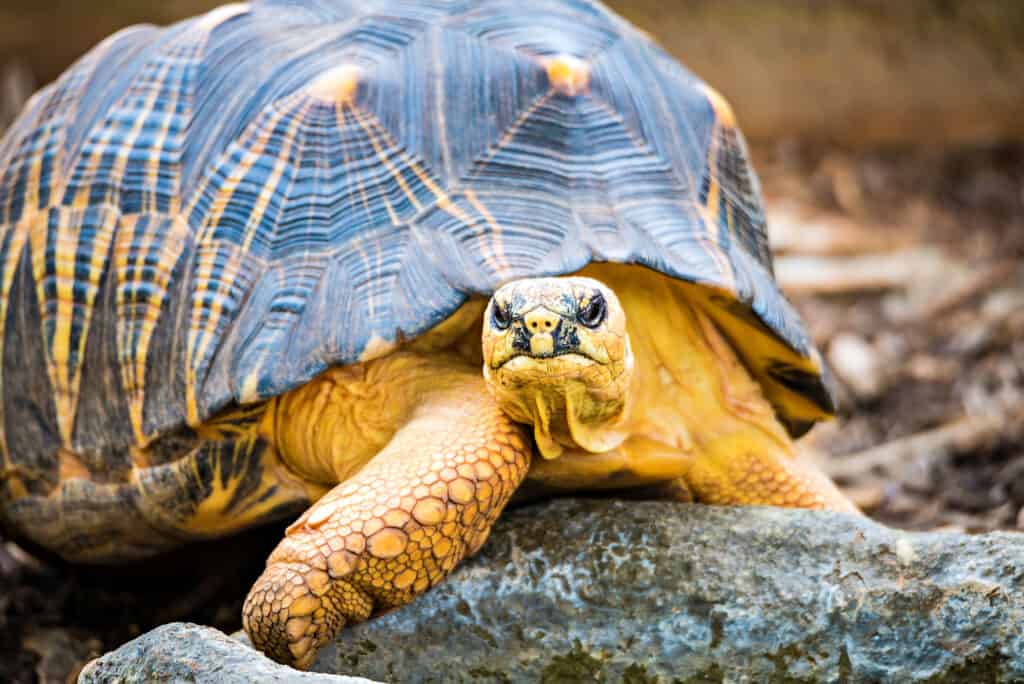
๐Ÿ‘ Razor-Backed Musk Turtle (Sternotherus carinatus)

Turtles are found all over the world. They are incredibly adaptable to many different environments, living on land and in the sea.

ยฉiStock.com/alex grichenko

Turtles are found all over the world. They are incredibly adaptable to many different environments, living on land and in the sea. Most commonly, these reptiles are found in southeastern North America and South Asia, though a shocking number of them are sea turtles.

To swim through the waters, they have flippers with incredible control over their direction and speed. They can even maintain a warm body temperature with their large bodies, and they stay warm with the extra fat that they carry.

Land-based turtles mostly have to rely on their behaviors to defend themselves. The shell is fused with its spine, and it is quite easy to damage without the right safe spot to hide.

Predators & Threats

The time in a turtleโ€™s life that they are at the greatest peril is when they are young. Their shells are still quite soft, and they are on the menu for many predators โ€“ large and small. Turtles tend to graze on what they find, enjoying shrubs and fruits that they can get their mouths on. When available, they will also enjoy small insects.
Humans and pollution tend to be the biggest threats to any species.

What eats turtles?

Turtles arenโ€™t part of the food chain for many animals, but it is easy for them to get caught up. In the ocean, sharks are a major threat, though killer whales will also go after them. As a baby, the turtle can be eaten by just about any animal, including dogs, seabirds, ghost crabs, and fish.

What do turtles eat?
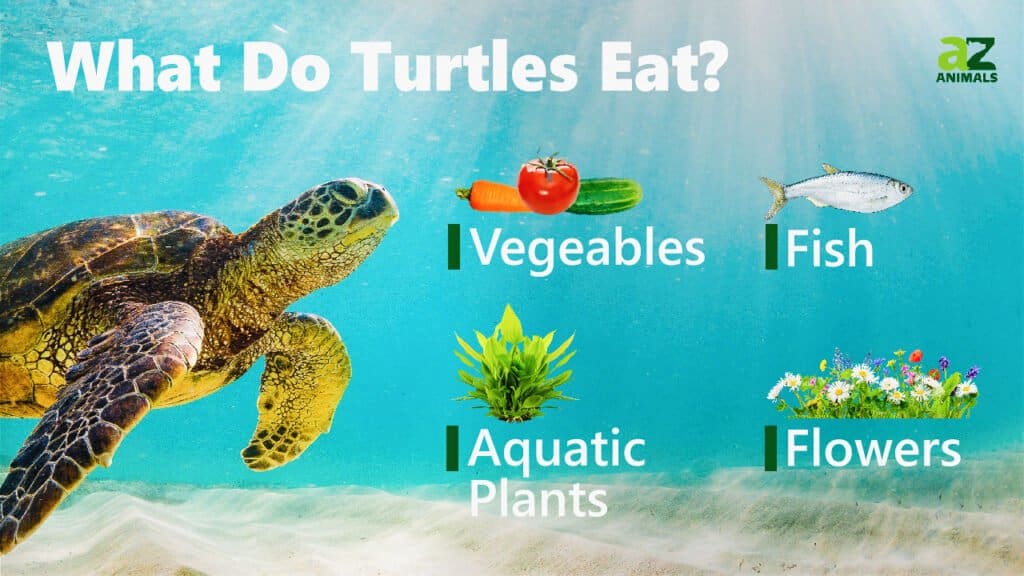
๐Ÿ‘ What Do Turtles Eat
Vegetables, fish, aquatic plants, and flowers.

Since the turtle has such a broad diet, it is easy for him to find something for his meals. Though most land turtles will eat the foliage nearby, theyโ€™ll also eat caterpillars and other invertebrates that can round out the protein that they need.

Reproduction, Babies, and Lifespan

The way that sea turtles and land-based turtles mate is a bit different. In the sea, the male approaches the femaleโ€™s back while she is swimming, holding on with his claws. However, land-based turtles vary in their approach. Typically not mated for life, the species can be 5-10 years old before they are sexually mature enough to mate.

Since turtles are reptiles, they release eggs. Most sea turtles will lay their eggs on land and leave them behind, allowing their hatchlings to take care of themselves from birth. Other species will hold their eggs inside their body for up to two years before releasing them to hatch.

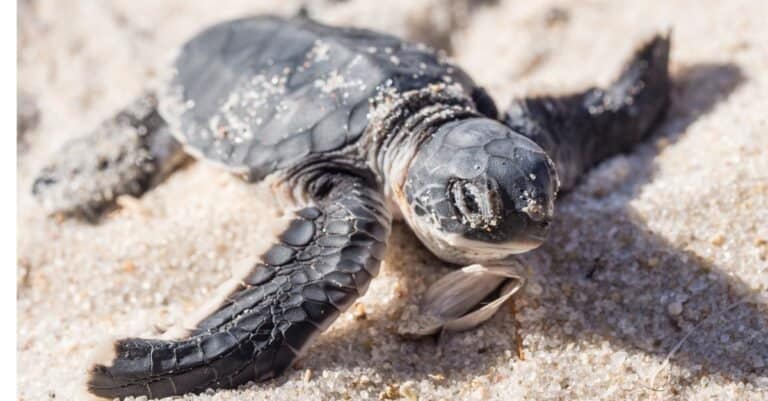
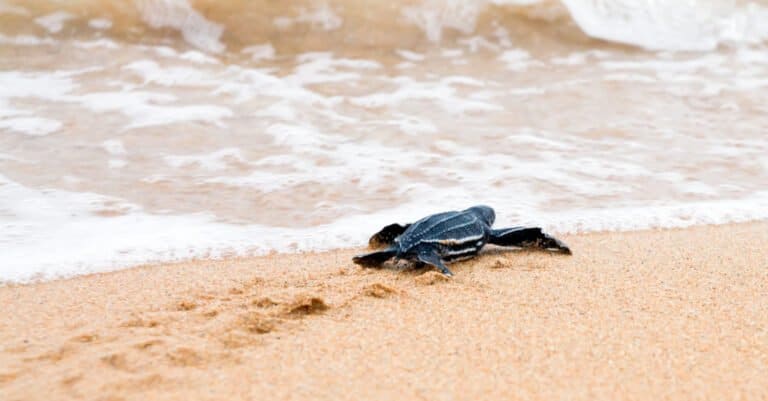
For the most part, these babies are called hatchlings. They are able to move and see within moments after they hatch, but they are quite weak. The sea turtles born on the beach and near water have to trek back to the water as quickly as possible to avoid the predators that are waiting to eat them.

The beach can be a dangerous place. They are out in the open until the sand meets the sea. Once theyโ€™ve left the beach, the turtles that show group behaviors will seek out a family, โ€œadoptingโ€ a mother as their own in the sea.

The lifespan varies from one species to another. Even in captivity or as a pet, larger species can live for up to 100 years or more.
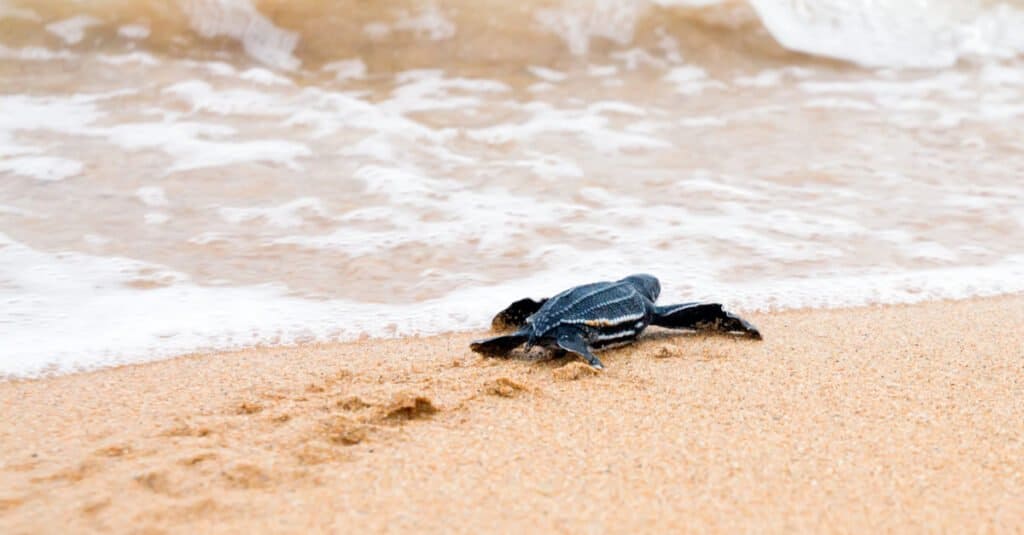
๐Ÿ‘ Baby Leatherback Turtle Going to the Surf
Taking care of itself from birth, this baby Leatherback turtle makes its way to the surf

.

ยฉIrinaK/Shutterstock.com

Population

Sea turtles alone account for 6.5 million of these reptiles in the while, though there are many species that are critically endangered. The numbers seem steady for many species of both land-based and sea-based turtles, but conservation efforts are still being made to reduce the pollution that can trap and kill so many species in the ocean.

The IUCN Red List of Threatened Species includes 187 different species of both turtles and tortoises that are currently threatened with extinction. The most endangered turtle species in the world is the Yangtze giant softshell turtle.

View all 589 animals that start with T

Sources

  1. Britannica / Accessed September 21, 2021
  2. National Oceanic and Atmospheric Administration / Accessed September 21, 2021
  3. Turtle Owner / Accessed September 21, 2021
  4. Turtle Pets / Accessed September 21, 2021
  5. The Nature Conservancy / Accessed September 21, 2021
  6. Wikipedia / Accessed September 21, 2021
  7. Tortoise Expert / Accessed September 21, 2021
  8. Cool Pets Advice / Accessed September 21, 2021
  9. Live Science / Accessed September 21, 2021
  10. Wildlife Informer / Accessed September 21, 2021
  11. Infinite Spider / Accessed September 21, 2021
  12. Sea Turtle Status / Accessed September 21, 2021
  13. Mom.com / Accessed September 21, 2021
  14. Conservation and Trade Management of Freshwater and Terrestrial Turtles in the United States / Accessed September 21, 2021

About the Author

Rebecca Bales

Rebecca is an experienced Professional Freelancer with nearly a decade of expertise in writing SEO Content, Digital Illustrations, and Graphic Design. When not engrossed in her creative endeavors, Rebecca dedicates her time to cycling and filming her nature adventures. When not focused on her passion for creating and crafting optimized materials, she harbors a deep fascination and love for cats, jumping spiders, and pet rats.
Connect:

Thank you for reading! Have some feedback for us?

Contact the AZ Animals editorial team

Related Articles You May Find Interesting


Turtles FAQs (Frequently Asked Questions)

Turtles are omnivores, consuming everything from seagrass and moss to shrimp and even other smaller turtles.

A turtle can be a very good pet but be warned they are marketed as low maintenance pets but there is a difference in care for water turtles and box turtles. In which water turtles are lower maintenance than box turtles, both still requiring regular tank cleaning and care.

They are in fact much more intelligent than you would think, even smart enough to recognize their owners by sight and sound, all because of an instinctual intelligence.

Crabs, jellyfish, squid, shrimp, cuttlefish, sea cucumbers, sponges, algae, worms, snails, insect larvae, aquatic insects, crustaceans, water plants, frogs, snakes, fish, and smaller turtles are all part of a sea and box turtle diet.

Turtles can live anywhere between 30 to 200+ years depending on species and environment.

Yes! They, in fact, do fart, and just like humans, their farts can range in sound and size with a very rank aroma because of their diet.

Taking care of a turtle can be rather challenging because of frequency but by task, itโ€™s rather simple. First, you have to regularly monitor and clean its tank to keep a most ideal habitat at all times and leave room for basking when caring for a box turtle. Diet is an easy task to take on since they have so many different possible food options, just remember to take out old food and replace it often at regular feeding times. Everything else is as simple as any other pet.

Hatching turtle eggs takes anywhere from 40 to 75 days, depending on the species and environment.