U
Species Profile

Urial

Ovis orientalis

Horns of the high dry hills
Jrs Jahangeer/Shutterstock.com

Size Comparison

Human 5'8"
Urial 2 ft 6 in

Urial stands at 43% of average human height.

At a Glance

Wild Species
Also Known As Arkar, Arkhar, Shapo, Red sheep, Asian red sheep
Diet Herbivore
Activity Crepuscular+
Lifespan 10 years
Weight 90 lbs
Status Vulnerable
Did You Know?

Adult males typically weigh 50-90 kg; females about 30-50 kg, varying across regional populations.

Scientific Classification

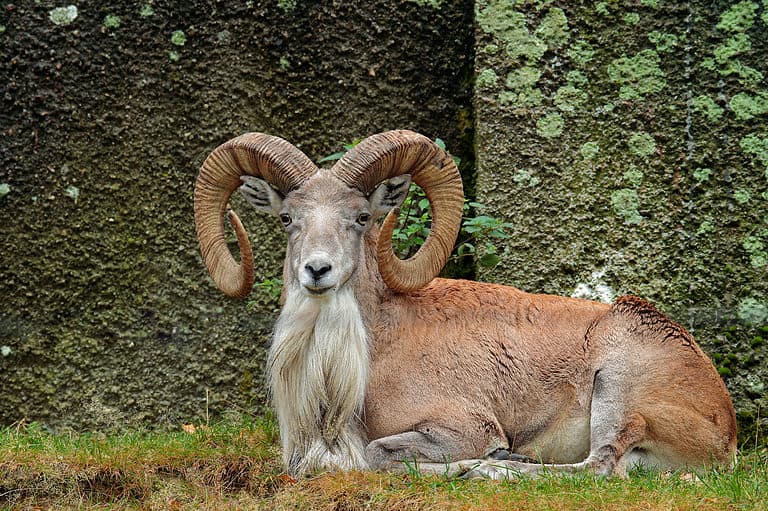
The urial is a wild sheep of the genus Ovis, native to arid hills and mountains of western and south-central Asia. Males typically have prominent, often forward-curving horns and a seasonal ruff. Taxonomy varies by authority, with some populations split into separate species.

Kingdom
Animalia
Phylum
Chordata
Class
Mammalia
Order
Artiodactyla
Family
Bovidae
Genus
Ovis
Species
orientalis

Distinguishing Features

  • Rams with large, sweeping horns
  • Rufous to sandy coat coloration
  • Seasonal neck ruff in males
  • Prefers open, arid mountain slopes

Physical Measurements

Males and females differ in size

Height
โ™‚ 2 ft 11 in (2 ft 7 in โ€“ 3 ft 1 in)
โ™€ 2 ft 6 in (2 ft 4 in โ€“ 2 ft 7 in)
Length
โ™‚ 5 ft 6 in (4 ft 7 in โ€“ 5 ft 9 in)
Weight
โ™‚ 154 lbs (110 lbs โ€“ 198 lbs)
โ™€ 84 lbs (66 lbs โ€“ 99 lbs)
Tail Length
โ™‚ 5 in (4 in โ€“ 6 in)
โ™€ 5 in (4 in โ€“ 6 in)
Top Speed
31 mph
running

Appearance

Primary Colors
Secondary Colors
Skin Type Seasonal short fur
Distinctive Features
  • Rufous-tan summer coat; darker, thicker winter pelage.
  • White rump patch contrasts sharply with back when alarm-running.
  • Male horns heavy, forward-curving; outer curve often 70-100 cm.
  • Narrower muzzle and sheep-like profile; no goat beard.
  • Adult male neck/chest ruff develops seasonally around breeding period.
  • Coat coloration highly variable across Ovis orientalis complex populations.
  • Ears relatively short; tail short with pale underside.
  • Hunting pressure can select for smaller-horned males in some areas.

Sexual Dimorphism

Strong: males are larger and carry massive forward-curving horns plus a seasonal neck/chest ruff; females are smaller, usually with short horns or hornless. Degree varies among populations within the Ovis orientalis complex.

โ™‚
  • Body mass commonly ~50-90 kg; robust neck and shoulders.
  • Large horns with strong annuli; thick bases and sweeping curl.
  • Seasonal dark ruff on neck/chest, most developed during rut.
โ™€
  • Body mass commonly ~30-50 kg; slimmer build.
  • Horns absent or short, slender, gently curved when present.
  • More uniform coat pattern; lacks pronounced rutting ruff.

Did You Know?

Adult males typically weigh 50-90 kg; females about 30-50 kg, varying across regional populations.

Head-body length is commonly 120-160 cm; shoulder height about 70-90 cm; tail length roughly 7-15 cm.

Rams grow heavy, forward-curving horns that can reach about 90 cm along the curve in large males.

Rut is usually in autumn; ewes carry lambs about 150-160 days, most often birthing a single lamb.

Female groups with lambs often form small herds, while adult males stay separate except during the rut.

In the wild, lifespan is often ~10-12 years; in captivity, individuals can reach ~15-17 years.

Taxonomy is contentious: many authorities split "urial" populations into separate species or subspecies within Ovis.

Arid peaks, iconic horns.

interestingBehaviors=[

Ewes and lambs form vigilant nursery groups, rotating scanning positions on open slopes.

Seasonal movements track forage: higher elevations in warm months, lower slopes and valleys in winter.

Bedding sites are chosen for long sightlines; individuals repeatedly use the same escape routes.

Rams may spar outside rut, but the most intense fights concentrate during peak breeding weeks.

Unique Adaptations

  • Forward-curving horns distribute impact in head-to-head clashes, supporting repeated contests during the breeding season.
  • A seasonal neck-and-chest ruff in males enlarges visual display and may protect skin during rut fights.
  • Cryptic tan-to-rufous coats blend with steppe rock and dry grass, reducing detection in open terrain.
  • Efficient ruminant digestion allows use of tough grasses, forbs, and shrubs typical of arid hillsides.
  • Sure-footed, cloven hooves and strong dewclaws help traction on loose scree and steep, broken slopes.

Interesting Behaviors

  • During the rut, rams perform parallel walks, neck displays, and horn clashes to establish mating access.
  • Ewes and lambs form vigilant nursery groups, rotating scanning positions on open slopes.
  • Seasonal movements track forage: higher elevations in warm months, lower slopes and valleys in winter.
  • Bedding sites are chosen for long sightlines; individuals repeatedly use the same escape routes.
  • Rams may spar outside rut, but the most intense fights concentrate during peak breeding weeks.

Cultural Significance

Across western and south-central Asia, urial are emblematic game animals; horns appear in regional art and trophy traditions. Hunting pressure, habitat fragmentation, and managed trophy programs strongly shape local conservation and livelihoods.

Myths & Legends

In Greek myth, the flying ram Chrysomallos bore Phrixus to safety; its hide became the Golden Fleece sought by Jason.

In the zodiac tradition, Aries-the Ram-symbolizes assertive power and leadership, a long-standing celestial emblem across West and Central Asia.

Ancient Near Eastern and Iranian animal-style art frequently uses the ram motif as a sign of strength and virility in elite regalia.

In Persianate courtly symbolism, horned rams appear as emblems of courage and masculine vigor in poetry and decorative arts.

Conservation Status

VU Vulnerable

Facing a high risk of extinction in the wild.

Population Decreasing

Protected Under

  • CITES Appendix II
  • National game laws

Life Cycle

Birth 1 lamb
Lifespan 10 years

Lifespan

In the Wild 7โ€“13 years
In Captivity 10โ€“18 years

Reproduction

Mating System Polygyny
Social Structure Harem Based
Breeding Season October-December (rut), lambing March-May
Breeding Pattern Seasonal
Fertilization Internal Fertilization
Birth Type Internal_fertilization

During the seasonal rut, dominant rams compete via displays and horn clashes, then closely tend and guard estrous ewes, mating with multiple females. Ewes provide all parental care and rear lambs without helpers.

Behavior & Ecology

Social Herd Group: 15
Activity Crepuscular, Diurnal
Diet Herbivore bunchgrasses

Temperament

Wary
Gregarious
Skittish
Dominant

Communication

bleats
snorts
grunts
visual postures
scent marking
flehmen response
horn clashes

Habitat

Biomes:
Temperate Grassland Desert Hot Mediterranean Alpine
Terrain:
Mountainous Hilly Plateau Rocky
Elevation: Up to 8202 ft 1 in

Ecological Role

Key mountain-steppe herbivore and prey for large carnivores.

grazing regulation seed dispersal nutrient cycling prey base

Diet Details

Other Foods:
Bunchgrasses Stipa grass Poa grasses Carex sedges Forbs Milkvetch Artemisia Shrub leaves +2

Human Interaction

Domestication Status

Wild

Not domesticated. Humans interact via subsistence/trophy hunting, protected-area management, and occasional captive breeding/translocations; major conflict is forage competition and disease spillover with domestic sheep/goats (e.g., IUCN Red List Ovis vignei; Shackleton 1997).

Danger Level

Moderate
  • Horn goring during handling
  • Head-butting injuries in rut
  • Zoonoses via contact (orf)
  • Vehicle collisions in range

As a Pet

Not Suitable as Pet

Legality: Usually restricted; permits required; often illegal privately.

Care Level: Expert Only

Purchase Cost: $2,000 - $15,000
Lifetime Cost: $20,000 - $60,000

Economic Value

Uses:
Hunting Tourism Conservation Research Pastoralism
Products:
  • trophies
  • meat
  • hides
  • genetics

Relationships

Predators 5

Gray wolf Canis lupus
Persian leopard Panthera pardus tulliana
Snow leopard Panthera uncia
Eurasian lynx Lynx lynx
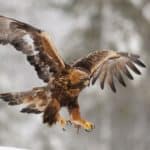
Golden eagle Aquila chrysaetos

Related Species 8

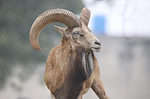
Asiatic mouflon Ovis gmelini Shared Genus
Argali Ovis ammon Shared Genus
Domestic sheep Ovis aries Shared Genus
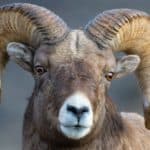
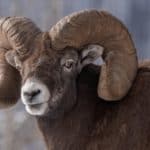
Bighorn sheep Ovis canadensis Shared Genus
Dall sheep Ovis dalli Shared Genus
Urial Ovis vignei Shared Genus
Bezoar ibex Capra aegagrus Shared Family
Markhor Capra falconeri Shared Family

Ecological Equivalents 5

Animals that fill a similar ecological role in their ecosystem

Asiatic mouflon Ovis orientalis Arid hill sheep; shares grazing niche and rutting behavior.
Bharal Pseudois nayaur Mountain grazer that uses steep terrain to avoid predators.
Siberian ibex Capra sibirica High-relief herbivore exhibiting seasonal altitudinal movements in arid ranges.
Markhor Capra falconeri Rocky-slope browser-grazer. Shares predators and occupies the same rugged habitat.
Goitered gazelle Gazella subgutturosa Steppe-desert grazer that occupies arid foothills and feeds on grasses and forbs.

Urials are wild species of sheep that originated from Asia. They are a nearly ancient species of sheep, and domesticated sheep descend from their line. They have become endangered due to predation and human activities such as poaching, livestock grazing, and range and habitat loss.

Facts

  • Lambs and their mothers communicate by scent. They can recognize each other using their olfactory senses.
  • The urial is the ancestor of modern-day domestic sheep. They are also the oldest line of this species.
  • Urials are very gregarious and have their own social structure based on hierarchy and dominance.
  • Older male urials have their own โ€œboys onlyโ€ herd. Male juveniles stick with the females and lambs in another herd before joining the guys when they are mature.
  • Urials are a vulnerable species due to poaching, range loss, encroachment, and competition for resources with livestock. Two of the subspecies are considered endangered and critically endangered.

Scientific Name

The classification of the urial has been widely debated. After recent molecular studies, most taxonomists agree that the proper scientific name is Ovis vignei, yet some authors use Ovis orientalis as a synonym instead. Other authors use them interchangeably and classify both as the same species. However, Ovis orientalis is used to classify the mouflon, a similar animal to the urial. Since these animals have a different number of chromosomes each (the urial with 58 and mouflon with 54) as well as other differences, they are considered separate species.

The urial consists of six subspecies.

  • Transcaspian urial (Ovis vignei arkal)
  • Bukharan urial (Ovis vignei bocharensis)
  • Turkmenian sheep or Afghan urial (Ovis vignei cycloceros)
  • Punjab urial (Ovis vignei punjabensis)
  • Ladakh urial (Ovis vignei vignei)
  • Blanfordโ€™s urial or Baluchistan urial (Ovis vignei blanfordi) 

Urials belong to the genus Ovis, which comprises sheep and their closely related wild relatives. They also belong to the order Artiodactyla which houses hoofed, even-toed ungulates such as giraffes, pigs, cows, buffaloes, goats, and camels.

These sheep are also commonly called shapo or arkars.

Appearance
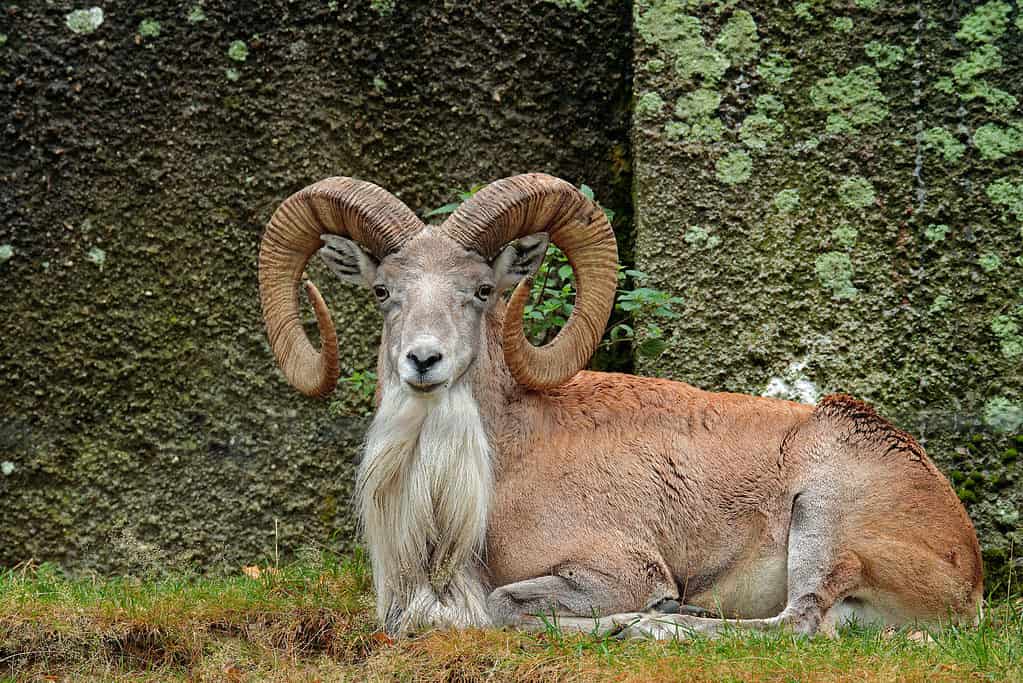
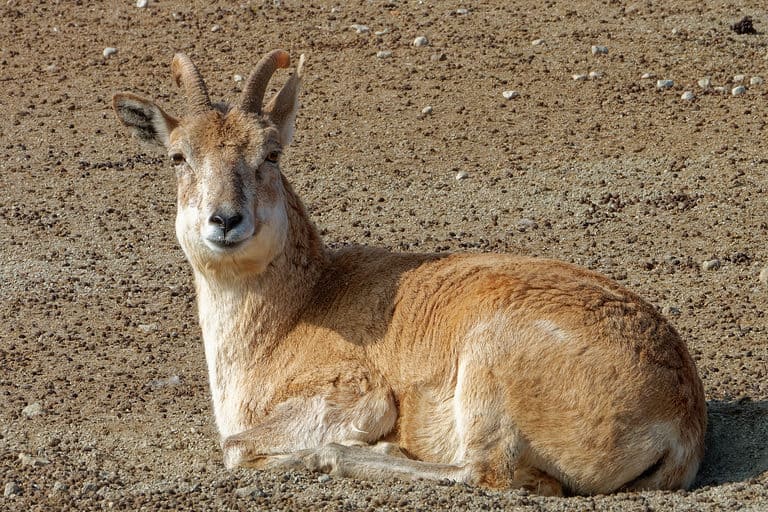
๐Ÿ‘ Urial lying down

Urials are nearly ancient, wild sheep.

ยฉOndrej Prosicky/Shutterstock.com

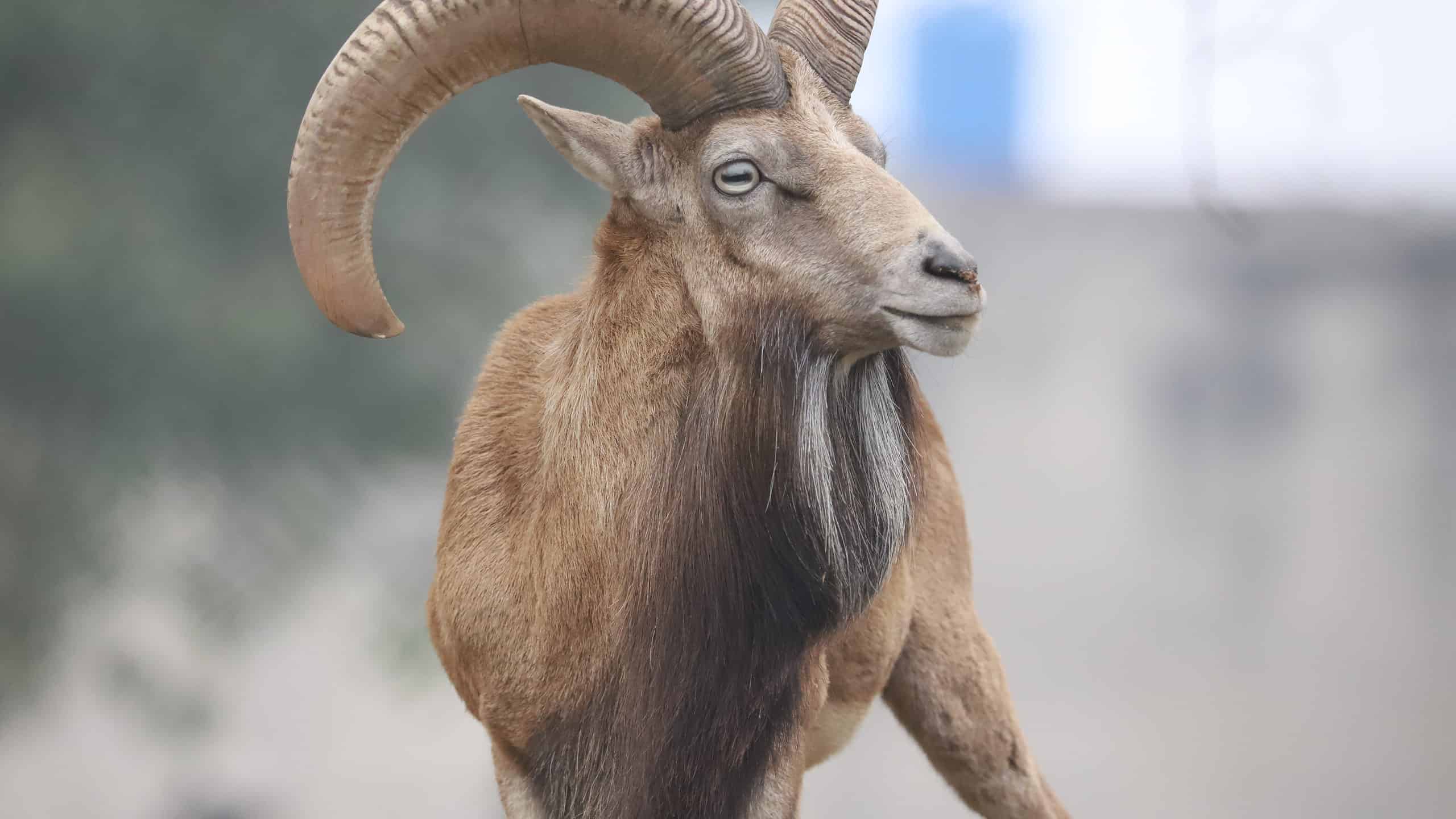
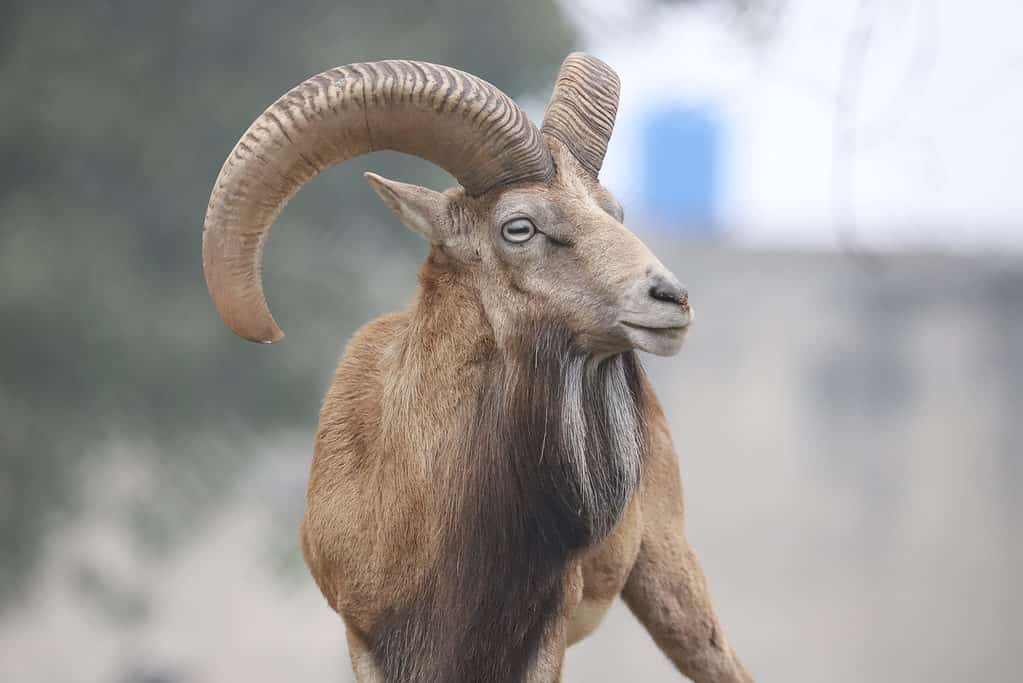
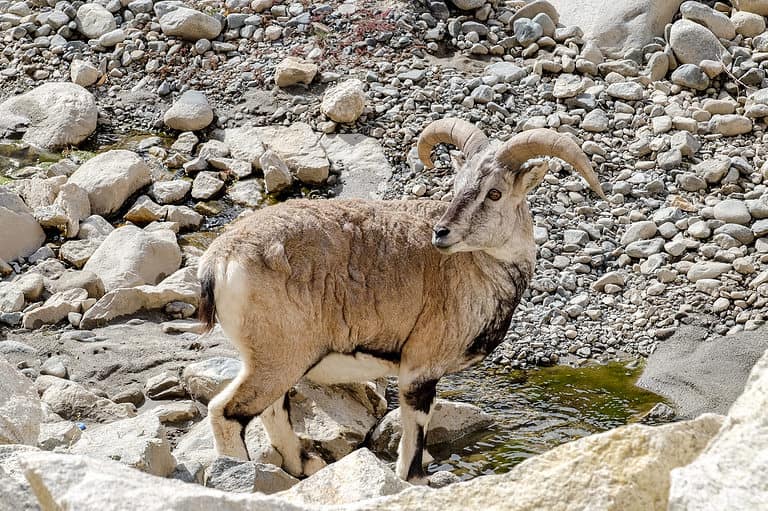
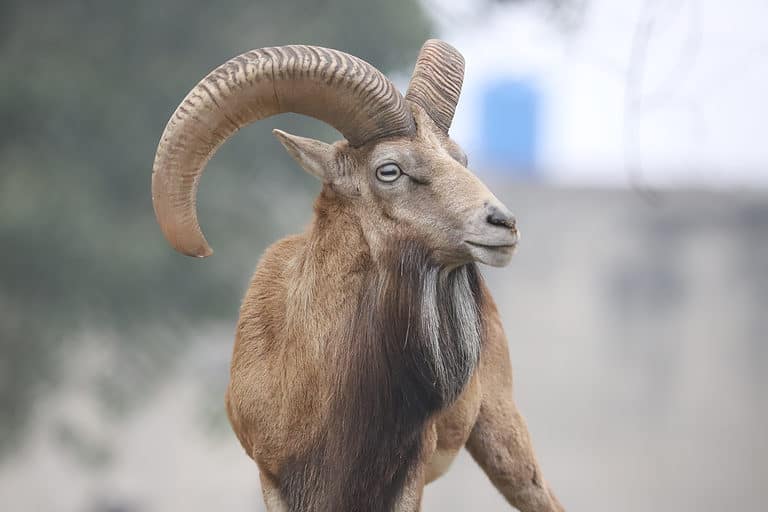
The urial is a medium-sized species of wild sheep also known as shapo or arkhar in their native regions. They have a distinctive long, reddish-brown coat, which fades during the colder winter season. Another distinguishing feature of theirs is the enormous horns the males have. These horns curl outwards from the top of the head and extend all the way to the back of the head.

There is a great amount of sexual dimorphism in the urial species, meaning that it is easy to tell the males and females apart due to physiological differences. Female urial horns are shorter and more compressed. The horns of the male urial can grow to around 3.3 feet long. Also, the male urials have a black ruff on their necks that spread out to the chest area. They also have white beards below their mouth whereas female urials typically have a solid color throughout their entire body, except for their lower legs near the hooves.

Adult male urials average about 2.62 feet to 3 feet tall to their shoulder and weigh around 200 pounds.

Evolution and History

Urials belong to the sheep genus, Ovis. This genus has been the subject of decades-long debates and disputes concerning its species and subspecies.

New molecular studies show that Ovis is a monophyletic group, which means that its members are descended from a common ancestor or ancestral group that is not shared with any other group. Ovis deviated from the artiodactyl mammal subfamily Caprinae about two to three million years ago, most likely in Asia.

Urials, like other sheep belonging to the genus Ovis, adapted to their environment quite well. They have thick, long coats that insulate them from cold winters. Long bristly hair grows over their wooly coat during autumn to prepare them for the winter and is promptly shed in spring when they no longer require it.

Both female and male urials have horns which they use to fight each other with to establish their dominance. They rarely injure each other with their horns because they mostly ram their heads together. For protection, they have double-layered skulls and thick skin.

Behavior

Urials have an interesting social structure. They are very sociable and prefer to create herds based mostly on familial relationships. Herds usually consist of ewes, their lambs, and juvenile sheep. The male urials typically form their own herds. Herds can reach sizes of over a hundred individuals and tend to reduce around spring and summer time.

Dominance plays a large role in the social structure of urials. The rules of dominance tend to favor whoever has the larger body size. When it comes to male urials, the dominating males are usually the ones who have larger horns. It is hierarchal โ€“ the bigger the horn, the higher up in rank the ram is.

The importance of maintaining this social structure is that the authoritative males stop the younger males from bullying the female urials. Urials of the same size can be aggressive toward each other, and accomplish this with front kicks and head twists. They do not stand up on their hind legs when they are fighting.

Urials are diurnal animals which means they are usually active during the day and less active at night during rest. They are not territorial animals, but they do move within their range. They make use of cavities in cliffs or grassy slopes for shelter.

Urials often rest underneath shrubs.

Diet

Urials are herbivorous animals. Their main diet consists of grasses, shrubs, and grains. They also eat tree leaves and bushes if grasses are unavailable. Urials forage at crop fields as well.

Urials have been observed consuming at least 26 different plant species. These sheep are bovines, thus, they are ruminant animals. They possess a four-chambered stomach and โ€œchew the cud.โ€

Habitat and Population

Urials are Asiatic sheep with origins in Afghanistan, India, Iran, Kazakhstan, Pakistan, Tajikistan, Turkmenistan, the Himalayas, and Uzbekistan. They have also been introduced in Oman. These sheep inhabit forests, open woodland, grassland, shrubland, rocky cliffs, and montane regions. They prefer the gentle, grassy slopes as opposed to the rocky parts of mountains. Urials live in regions of elevation up to 4,500 meters or 14,763 feet.

The urial population is decreasing and the species is listed as vulnerable, according to the IUCN Red List of Threatened Species. The Transcaspian and Bukharan urials are listed as critically endangered and endangered respectively.

The total global population of the urial is estimated to be around 30,000 animals with 18,000 mature individuals. Urials are threatened due to many factors such as poaching, habitat degradation, range loss, overgrazing by livestock, and disease transmission.

Reproduction and Lifespan

Urial sheep practice polygyny wherein a male mates with multiple females. Female urials typically reach sexual maturity at the age of a year and a half, and give birth to their first young at two years old. They reach full maturity at age eight.

Depending on the location of their habitat, the urial mating season typically begins any time from September to November and continues to December. The male urials, or rams, usually live in their own herds. However, once the mating season begins, they choose about four to five females, or ewes, to mate with. These ewes gestate for a period of about five months and may separate themselves from the herd once their gestation period draws to a close. They usually give birth to one lamb, but older ewes are known to birth up to three.

After giving birth to her lamb, the ewe and her offspring tend to live apart from the herd for a short duration of three to seven days. During this time, the lamb becomes stronger. They return to the herd where the lamb continues to nurse from its mother until it reaches independence in around five or six months. The lambs start to eat solid food bit by bit after about a month.

Urials typically live up to eight to twelve years in the wild, with the average maximum lifespan being eleven years.

Predators and Threats

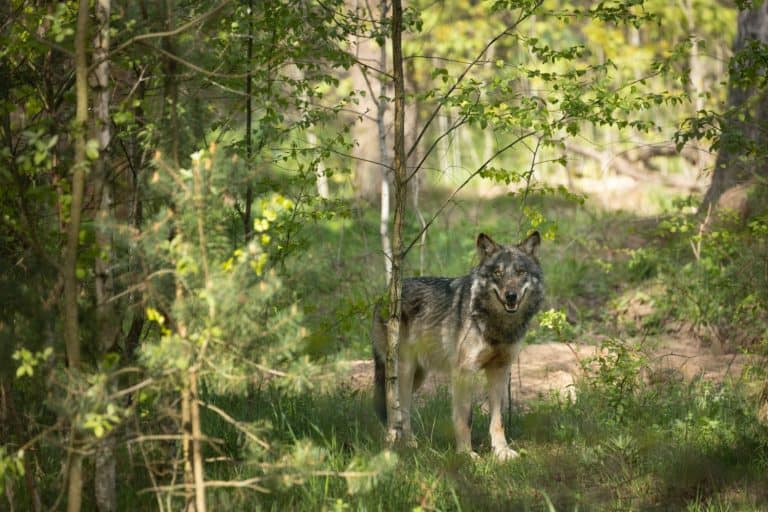
Urials have many natural predators, typical of herd animals. These predators are typically large carnivores and include snow leopards, wolves, golden eagles, and shepherd dogs. The eagles and dogs mostly go after the lambs in the herd because they are much smaller than the bigger animals. Urials are well-equipped to handle most instances of predation by chasing the predator away or kicking at them en masse.

Urials also face other threats, mostly environmental. They are classified as a vulnerable species and some of the subspecies are endangered and critically endangered on their own. Urials are mostly threatened by poaching. They also have to compete with livestock for grazing land and forage.

Urials would have had some measure of protection against predator attacks and poaching if they inhabited the rocky parts of mountainous regions, but they avoid those parts. Their contact with livestock such as domesticated sheep and goats also puts them at risk of contracting infectious diseases from these animals.

View all 36 animals that start with U

Sources

  1. Britannica / Accessed December 1, 2022
  2. IUCN Red List / Accessed December 1, 2022
  3. Rezaei, Hamid R., et al. / Published November 1, 2009 / Accessed December 1, 2022
  4. Wikipedia / Accessed December 1, 2022
  5. Wikipedia / Accessed December 1, 2022

About the Author

Rose Okeke

Hi! I am a writer, actor, and filmmaker. Reading is my favorite hobby. Watching old movies and taking short naps are a close second and third. I have been writing since childhood, with a vast collection of handwritten books sealed away in a duffel bag somewhere in my room. I love fiction, especially fantasy and adventure. I recently won the James Currey Prize 2022, so now, naturally, I feel like I own words. When I was 11, I wanted to be a marine biologist because I love animals, particularly dogs, cats, and owls. I also enjoy potatoes and chocolate in all their glorious forms.
Connect:

Thank you for reading! Have some feedback for us?

Contact the AZ Animals editorial team

Related Articles You May Find Interesting


Urial FAQs (Frequently Asked Questions)

Urials are herbivorous animals. They mostly eat grasses, shrubs, grains, tree leaves and bushes.

Urial horns are large and they curl outward. Male urial horns can grow up to 3.3 feet long and are much larger than the horns of the female.

Urials have a distinctive long, reddish-brown coat which fades during the colder winter. Their prominent horns are also pretty distinctive. The males also have white beards.

Urials are Asiatic sheep with origins in Afghanistan, India, Iran, Kazakhstan, Pakistan, Tajikistan, Turkmenistan, the Himalayas, and Uzbekistan. They have also been introduced in Oman

Sheep are classified under the genus Ovis, which urials (Ovis vignei) belong to. Therefore, urials are simply a species of sheep. Urials, however, are wild sheep. Most sheep you probably know are domesticated. Urials are actually the oldest line of the Ovis genus, and the ancestors to the modern-day domesticated sheep.

The urial population is endangered due to many factors such as poaching, habitat degradation, range loss, overgrazing by livestock, and disease transmission.

These predators are typically large carnivores and include snow leopards, wolves, golden eagles, and shepherd dogs. The eagles and dogs mostly go after the lambs in the herd because they are much smaller than the bigger animals.

Urials are also called shapo or arkhar in their native regions in Asia.

Urials belong to the kingdom Animalia.

Urials belong to the phylum Chordata.

Urials belong to the class Mammalia.

Urials are members of the order, Artiodactyla, along with other even-toed hoofed animals.

Urials belong to the family Bovidae.