


Z
Species Profile

Zebu

Bos taurus indicus

Humped cattle, built for the tropics.
Leonidas Santana/Shutterstock.com

Zebu Distribution

Click a location to explore more animals from that region

Origin Location

This map shows the native origin of the Zebu. As a domesticated species, they are now found worldwide.

Loading map...

Size Comparison

Human 5'8"
Zebu 4 ft 1 in

Zebu stands at 72% of average human height.

At a Glance

Domesticated
Also Known As Indicine cattle, Indian cattle, Desi cattle, Tropical cattle, Humped ox
Diet Herbivore
Activity Diurnal+
Lifespan 15 years
Weight 900 lbs
Status Not Evaluated
Did You Know?

Adult zebu commonly stand about 120-150 cm at the withers, varying widely among indicine breeds.

Scientific Classification

Zebu are indicine domestic cattle characterized by a shoulder hump, large dewlap, and strong heat and parasite tolerance. They are widespread in South Asia, East Africa, and tropical regions, and are often used for milk, meat, and draft power.

Kingdom
Animalia
Phylum
Chordata
Class
Mammalia
Order
Artiodactyla
Family
Bovidae
Genus
Bos
Species
Bos taurus

Distinguishing Features

  • Prominent shoulder hump
  • Large loose dewlap
  • Heat and drought tolerance
  • Often long, upward-curving horns

Physical Measurements

Males and females differ in size

Height
โ™‚ 4 ft 5 in (3 ft 11 in โ€“ 4 ft 11 in)
โ™€ 3 ft 11 in (3 ft 5 in โ€“ 4 ft 5 in)
Length
โ™‚ 9 ft 10 in (8 ft 2 in โ€“ 11 ft 10 in)
Weight
โ™‚ 1,433 lbs (992 lbs โ€“ 1,984 lbs)
โ™€ 705 lbs (441 lbs โ€“ 992 lbs)
Tail Length
โ™‚ 2 ft 9 in (2 ft 4 in โ€“ 3 ft 3 in)
โ™€ 3 ft 1 in (2 ft 7 in โ€“ 3 ft 7 in)
Top Speed
25 mph
running

Appearance

Primary Colors
Secondary Colors
Skin Type Short hair
Distinctive Features
  • Prominent cervicothoracic hump over shoulders, typically larger in males.
  • Large pendulous dewlap and loose skin folds under neck and brisket.
  • Withers height commonly ~120-150 cm, strongly breed- and sex-dependent.
  • Long, often drooping ears; ears may be large in many tropical landraces.
  • Pigmented muzzle and eye-rings common; tail ends in dark switch.
  • Horns variable: polled to long; many have upward- or outward-curving horns.
  • Loose, pliable hide and short coat associated with tropical heat tolerance.
  • Domestic draft conformation: deep chest, strong limbs, and durable hooves.

Sexual Dimorphism

Males are typically taller and heavier with a thicker neck and more prominent hump and horn development; females are smaller-bodied with comparatively reduced hump and more evident udder development under dairy selection.

โ™‚
  • Larger shoulder hump and heavier forequarters.
  • Thicker neck and more pronounced cresting.
  • Horns often thicker or longer, depending on breed and selection.
โ™€
  • Smaller hump and lighter head/neck proportions.
  • Udder and teats more developed in dairy-selected lines.
  • Generally finer bone and slimmer shoulders than males.

Did You Know?

Adult zebu commonly stand about 120-150 cm at the withers, varying widely among indicine breeds.

Typical adult masses: cows ~300-600 kg; bulls often ~500-900 kg in large zebu types.

Like other domestic cattle, zebu have 2n = 60 chromosomes (a key, well-documented bovine trait).

Indicine (zebu-derived) breeds often average ~290-295 days gestation, several days longer than many taurine breeds (~283 days).

Typical lifespan is ~15-20 years; well-managed individuals may reach about 25 years.

African "Sanga" cattle arose from long-term taurine ร— indicine mixing, combining zebu hardiness with local adaptations.

Unique Adaptations

  • The shoulder hump stores fat, providing an energy reserve during seasonal feed shortages.
  • Loose skin and a prominent dewlap increase surface area, improving convective heat loss in hot climates.
  • Short hair and often-pigmented skin help reduce solar heat gain and sun damage in open rangelands.
  • Indicine physiology supports better performance under heat stress, helping maintain appetite and fertility during high temperatures.
  • Many zebu show enhanced resistance or tolerance to ticks and internal parasites compared with numerous taurine cattle populations.

Interesting Behaviors

  • Herds are strongly social; cows form stable groups while mature bulls may range separately outside breeding.
  • They wallow in mud or water to cool the body and reduce biting-fly pressure.
  • When used for draft, they learn steady, low-speed pulling and respond to voice and rein cues.
  • Zebu spend hot hours seeking shade, then increase grazing during cooler mornings and evenings.
  • Mothers guard calves closely and use head-lowered threats to deter intruders near newborns.

Cultural Significance

Zebu underpin smallholder farming across South Asia and tropical Africa-supplying milk, meat, manure, and draft power. They also symbolize wealth and social status in pastoral societies and appear prominently in Hindu cattle traditions.

Myths & Legends

In Hindu tradition, Nandi-the bull attendant and mount of Shiva-is revered; temple icons often resemble humpped, dewlap-heavy indicine cattle.

Kamadhenu (Surabhi), the wish-fulfilling divine cow of Hindu mythology, embodies abundance and is invoked in stories of sages and kings.

Krishna's cowherd legends (Gokul/Vrindavan) celebrate cattle as sacred companions, with protective stories centered on tending and safeguarding the herd.

In Madagascar, zebu feature in ancestral rites; horns displayed on tombs memorialize status and lineage, linking cattle to family honor and remembrance.

Among several Nilotic pastoral traditions (e.g., Dinka), cattle are portrayed as a divine gift, with origin stories tying clan identity to named, prized oxen.

Conservation Status

NE Not Evaluated

Has not yet been evaluated against the criteria.

Population Stable

Life Cycle

Birth 1 calf
Lifespan 15 years

Lifespan

In the Wild 10โ€“25 years
In Captivity 12โ€“30 years

Reproduction

Mating System Polygyny
Social Structure Managed Domestic
Breeding Season Year-round; often peaks in rainy season
Breeding Pattern Transient
Fertilization Managed Selective
Birth Type Internal_fertilization

Zebu reproduction is typically polygynous: a bull mates with multiple cows during brief estrus periods, often under human-controlled herd management (pasture mating or artificial insemination). No stable pair bond forms; calves are raised by the dam without helpers.

Behavior & Ecology

Social Herd Group: 20
Activity Diurnal, Crepuscular, Cathemeral
Diet Herbivore tropical grasses

Temperament

Gregarious
Hierarchical
Maternal
Wary
Reactive

Communication

lowing
bellowing
calf bleats
snorts
olfactory investigation
flehmen response
allogrooming
head and horn postures
tail and ear signals

Habitat

Biomes:
Savanna Tropical Dry Forest Temperate Grassland Mediterranean Desert Hot Tropical Rainforest Wetland +1
Terrain:
Plains Riverine Plateau
Elevation: Up to 9842 ft 6 in

Ecological Role

Large grazing herbivore shaping vegetation and nutrient cycling in managed landscapes

nutrient cycling seed dispersal vegetation control soil fertilization habitat creation

Diet Details

Other Foods:
Tropical grasses Legume forbs Browse leaves Hay Silage Crop residues

Human Interaction

Domestication Status

Domesticated

Domesticated from Indian aurochs (Bos primigenius namadicus) in South Asia ~8,000-7,000 BP (Loftus 1994; Chen 2010) for milk, meat and draft. Typical adults 300-800 kg; gestation ~283 days; lifespan 15-20 years.

Danger Level

Moderate
  • Kicks and trampling during handling
  • Horn goring in intact bulls
  • Zoonoses: brucellosis, leptospirosis, TB
  • Aggression during rut or calf protection

As a Pet

Not Suitable as Pet

Legality: Usually legal as livestock; not a household pet.

Care Level: Expert Only

Purchase Cost: $300 - $3,000
Lifetime Cost: $20,000 - $60,000

Economic Value

Uses:
Agriculture Dairy Draft Meat Leather Culture Research
Products:
  • milk
  • meat
  • hide
  • manure
  • draft power

Relationships

Predators 7

Tiger Panthera tigris
Lion Panthera leo
Leopard Panthera pardus
Dhole Cuon alpinus
Gray wolf Canis lupus
Spotted hyena Crocuta crocuta
Nile crocodile Crocodylus niloticus

Related Species 6

Taurine cattle Bos taurus taurus Shared Species
Gaur Bos gaurus Shared Genus
Banteng Bos javanicus Shared Genus
Yak Bos grunniens Shared Genus
American bison Bison bison Shared Family
Domestic water buffalo Bubalus bubalis Shared Family

Ecological Equivalents 6

Animals that fill a similar ecological role in their ecosystem

Domestic water buffalo Bubalus bubalis Large domestic grazer that thrives in humid tropics and flooded pastures.
African buffalo Syncerus caffer Herding tropical grazer with similar body size and comparable predator pressures.
Banteng Bos javanicus Tropical bovine grazer that overlaps in habitat and forage types.
Gaur Bos gaurus Large Asian bovine browser-grazer that occupies a similar forest-edge grazing niche.
Gayal Bos frontalis Managed bovine raised for meat and draft in South and Southeast Asia.
Dromedary camel Camelus dromedarius Heat-tolerant domestic livestock used for transport and draft power.

Zebu Subspecies

1

Explore 1 recognized types of zebu

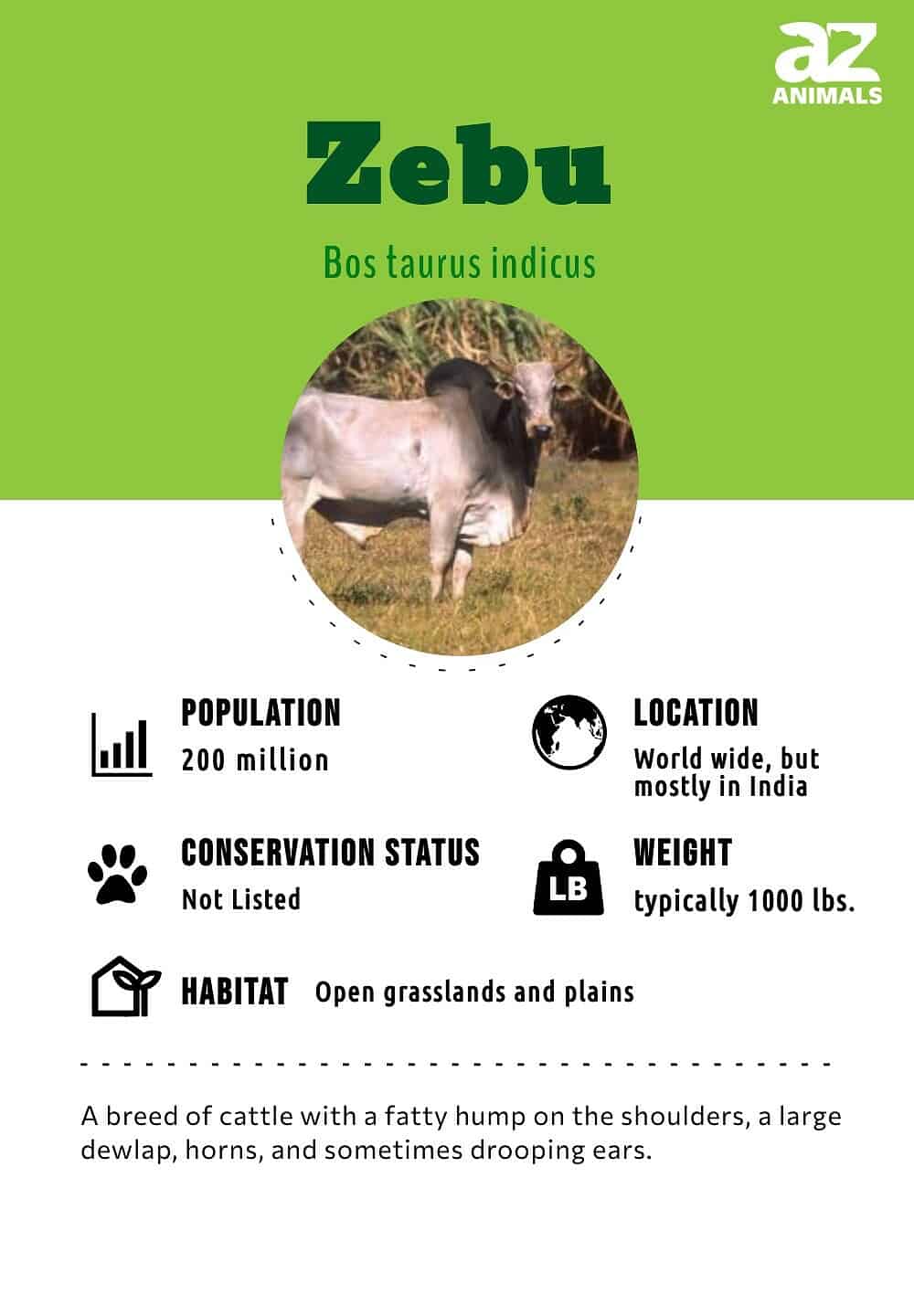
The zebu is the most common subspecies of domesticated cattle on the Indian subcontinent, where it has traditionally served the role of a working or riding animal.
๐Ÿ‘ Image

Because it was considered to be a sacred animal in Hinduism, the zebu is not a significant source of meat, and although it can provide plenty of milk, the zebu is not the most efficient dairy cattle either. Approximately 70 breeds of zebu are currently recognized, many of them created from crosses with the other subspecies of domesticated cattle, the taurine. This unique union has produced many new breeds that suit a variety of different climates and circumstances.

5 Incredible Zebu Facts!

  • The zebu is an animal that evolved from a wild species of cattle called the aurochs. It is estimated that they first appeared more than 8,000 years ago somewhere in Southern Asia.
  • Popular breeds include the gyr (or gir), the kankrej, the Nguni, and the American Brahman.
  • The zebu was first introduced into the Americas in the 19th century.
  • The zebu also sometimes goes by the name of humped cattle or indicine cattle.
  • The zebu is an animal that has inspired human art and culture for many thousands of years. It has appeared on coinage, architecture, and statues.

Scientific Name

๐Ÿ‘ Wacwa Zebu (Cameroon)

The scientific name for Zebu is Bos taurus meaning ox or cattle and bull, but it covers every type of domesticated cattle.

ยฉL. Mahin / Creative Commons โ€“ Original

The scientific name of the zebu is Bos taurus or Bos taurus indicus. Bos is the name of the genus (which includes both wild and domesticated cattle) and simply derives from the Latin word for ox or cattle. The species name taurus (which actually just means bull in Latin) includes every type of domesticated cattle on the planet. Traditionally, this name has also referred to the bull-like astrological sign and the Greek mythological figure. Indicus, the Greek term for India, refers only to the subspecies of zebu. The animal is considered to be different enough from the other cattle subspecies (which is called Bos taurus taurus) to warrant a separate subspecies designation.

Like all domesticated cattle, the zebu is closely related to the bison, buffalo, sheep, goats, and antelopes in the family of Bovidae. All members of this family belong to the order of Artiodactyla, or the even-toed ungulates. The one physical characteristic that unites all members of this order is the presence of hooves on the feet that can bear weight equally on two toes; hence the name. Many (but not all) ungulates are ruminants that digest plants by fermenting them in the multi-chambered stomach.

There are 75 major breeds of Zebu, generally split between India and Africa. Among the best-known breeds, besides those mentioned elsewhere in this article, are the Guzerat, Sahiwai, Acchai, Cholistan, Dhanni, White Nukra, Lohanni, Red Sindhi, Umblachery, Vechur, Deoni, Ponwar, Malvi, and Nelore. Evidence of the widespread breeding of Zebu is indicated in some of the names like Abyssinian Highland and Hโ€™Mong.

Appearance

๐Ÿ‘ Zebu, sometimes known as humped cattle or Brahman cattle, a type of domestic cattle originating in the Indian Subcontinent

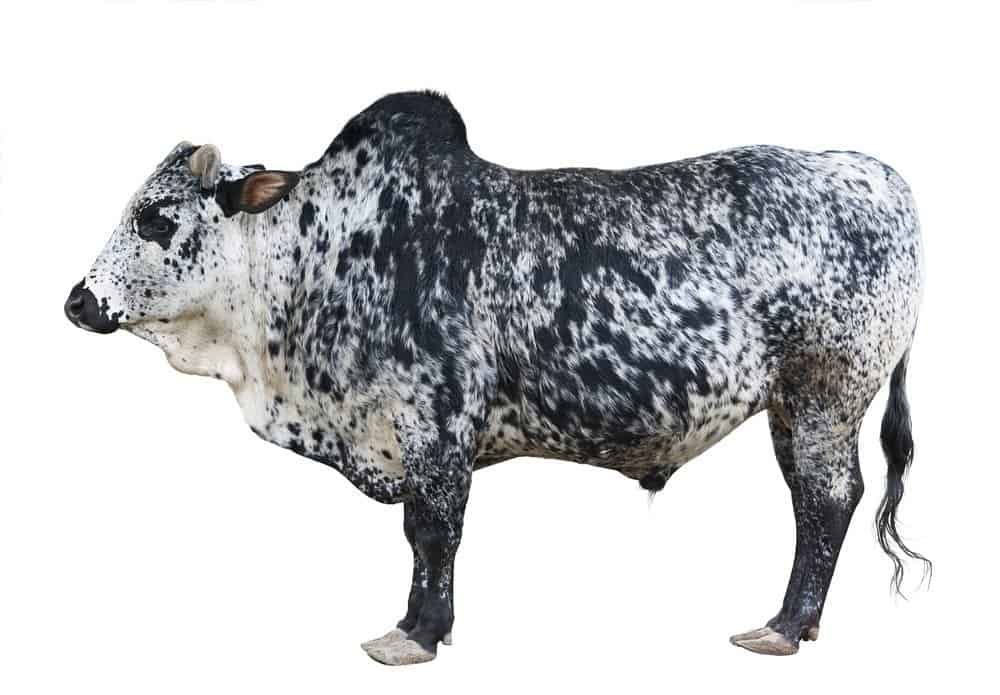
Zebu, also known as humped cattle or Brahman cattle, sometimes have spotted coloring.

ยฉEkaterina V. Borisova/Shutterstock.com

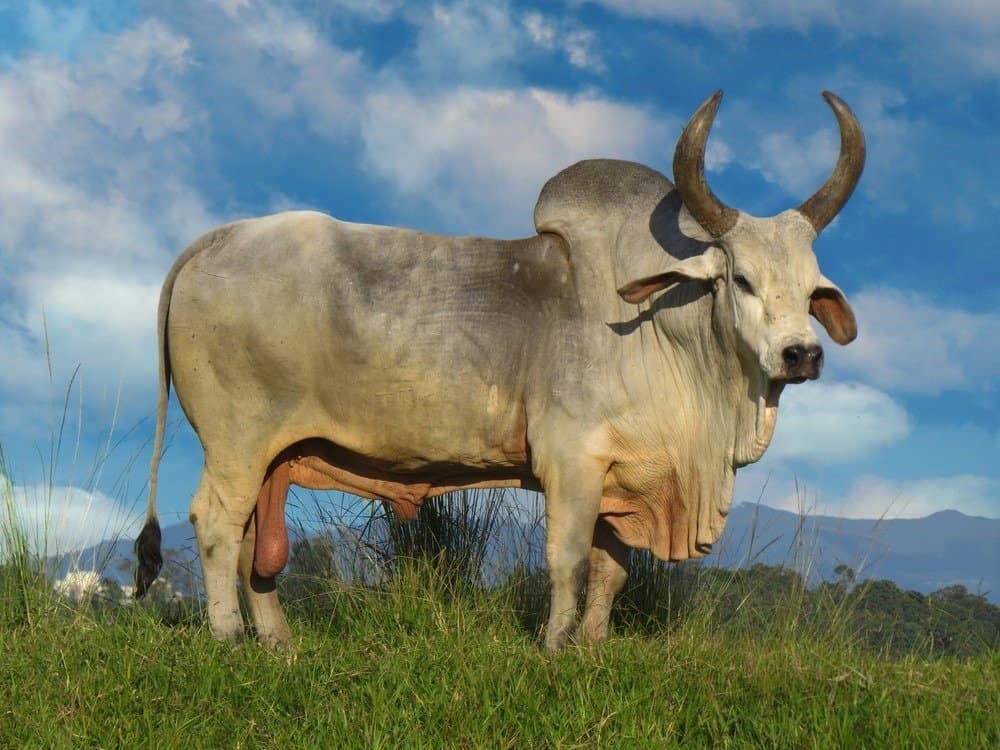
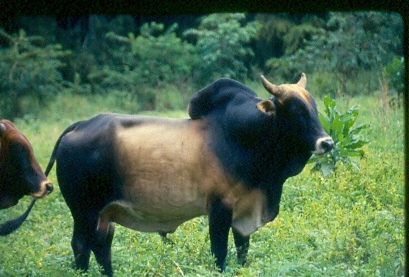
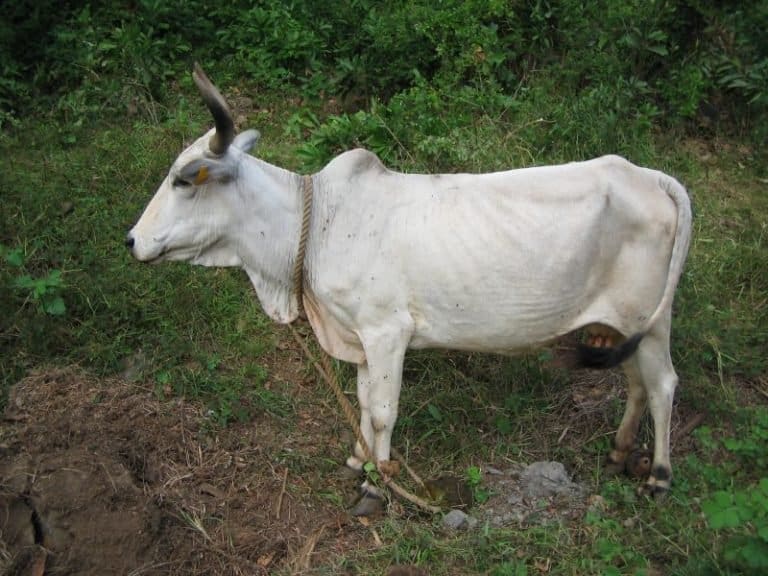
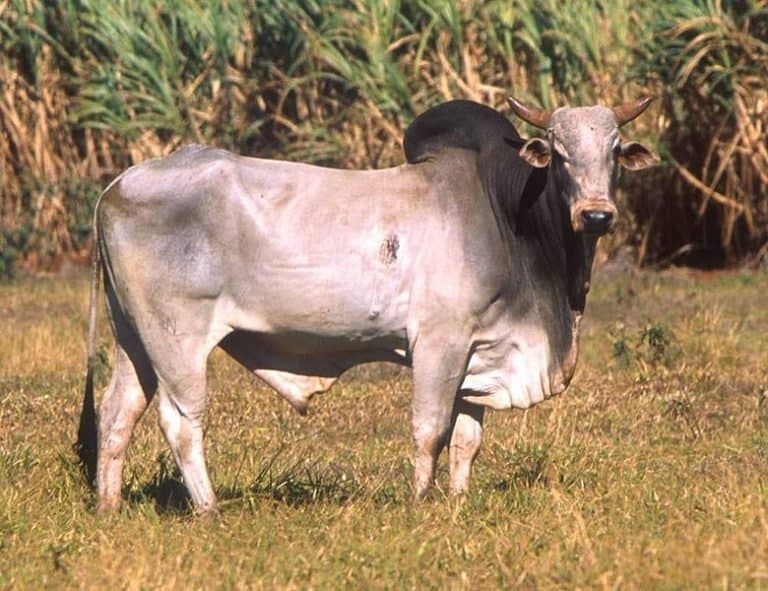
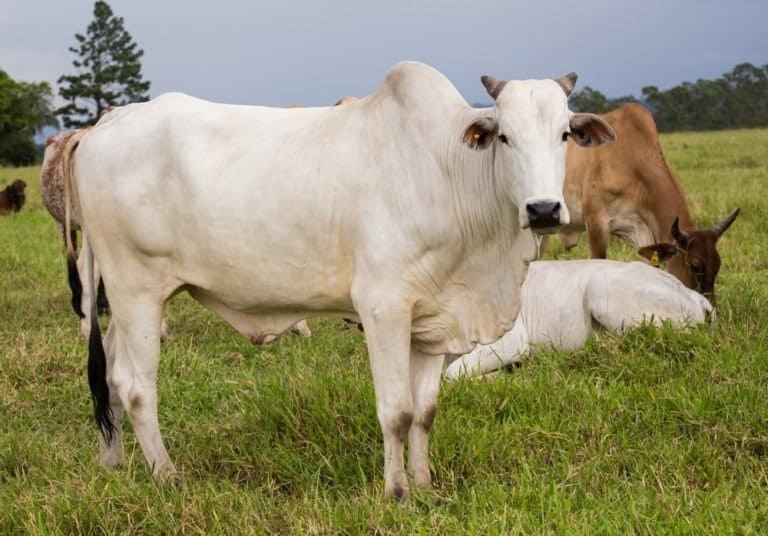
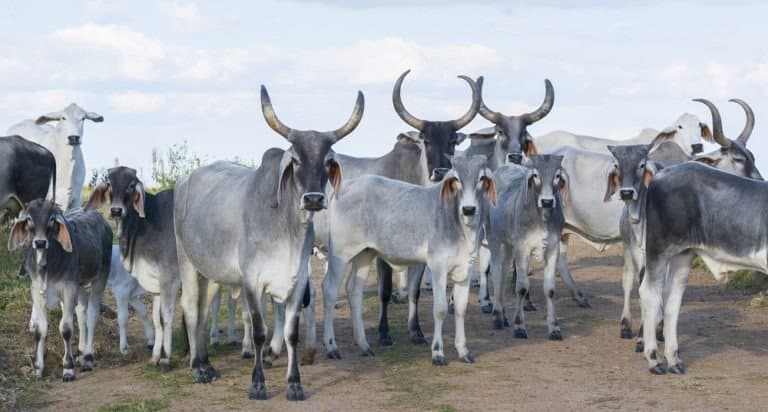
Compared to the standard taurine cattle with which most people are familiar, the zebu has many physical differences that attest to its separate origin. It is characterized by the prominent humped shoulders, drooping ears, loose skin (called a dewlap) around the neck, and horns that curve upward and back. Gray is the dominant color along the upper half of the body and the hooves (becoming black near the shoulders), while white dominates around the belly and legs. Other common colors include brown or red, sometimes occurring in a spotted pattern.

The largest breed is the Sibi Bhagnari, which measures a massive 84 inches long and up to 3,500 pounds in weight. However, in general, the typical zebu breed is less than 1,000 pounds. The miniature zebu (which is actually a naturally occurring breed, not created by humans) is the smallest zebu breed of all, weighing no more than 400 or 500 pounds.

The zebu exhibits high levels of sexual dimorphism (meaning large differences between the sexes). A sexually mature male zebu is almost always called a bull. An adult female, however, is only known as a cow after itโ€™s given birth to the first calf. Until then, itโ€™s known as a heifer. Males tend to be larger than females on average, but both sexes grow horns throughout their lives.

Like all other cattle, the zebu is specialized for a leisurely grazing lifestyle in which it chews and digests tough plant matter that would prove too difficult for most other species. This process begins when the zebu grinds up the grass in a circular motion with its specialized lower teeth. Once itโ€™s swallowed, the plant matter then passes through the first part of the four-chambered stomach, the rumen, where itโ€™s mixed in with bacteria to break it down. At various intervals the plant matter is regurgitated and chewed over as a substance called cud. In the final chambers, specialized proteins break down and absorb the nutrients into the bloodstream. It can take cattle some 70 to 100 hours just to process food. This is among the slowest rates of any known animal.

Behavior
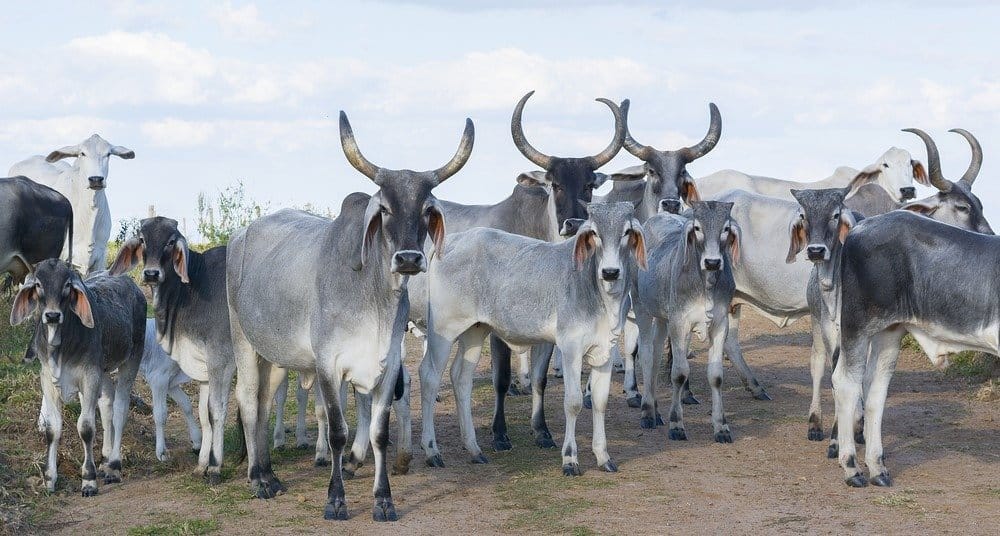
๐Ÿ‘ Herd of zebu cattle

Zebu cattle live in large herds with a hierarchical organization.

ยฉFabricioUZ/Shutterstock.com

The zebu is a social species that gathers together in large herds for the entire year. Wild groups are led by a single bull and contain both females and their offspring. The herd has a hierarchical organization, and each member of the herd must yield to the one above it or else face reprisals and attacks. These hierarchies are usually based on factors such as age, sex, and dominance, and calves are typically born with the same group status of the mother. The hierarchy is usually quite stable, which serves to minimize conflicts, but dominant males can lose their status when they are dethroned by another male.

Cattle communicate with each other through touch, sound, visual cues, and chemical signals. Combined with their excellent cognition, cattle can easily identify other members of the herd and form particularly strong bonds with their mothers. To spy incoming predators, the zebu has eyes on the side of its head with horizontal pupils to take in a massive field of view all around it.

The zebus are well-adapted for survival in the hotter, drier climates of India (and also have a high toleration for droughts and famines) thanks to two specific adaptations. First, zebus contain more sweat glands on their body than any other types of cattle. Second, just like camels, the zebuโ€™s hump serves as a handy storage unit for nutrients that can be accessed when food is scarce. Zebus are also very resistant to viruses, diseases, and parasites. This makes them the preferred type of cattle in many southern or tropical regions of the world.

Origin

๐Ÿ‘ Ox Guzera was the first breed of Zebu cattle to arrive in Brazil.

Zebu cattle have a long history. The Ox Guzera was the first breed of Zebu cattle to arrive in Brazil.

ยฉLeonidas Santana/Shutterstock.com

The history of Zebu cattle goes back thousands, even millions, of years. They were bred from the wild Asian or Indian aurochs, considered the ancestors of modern cattle. Fossil evidence indicates that the aurochs evolved from Bos acutifrons, which existed two million years ago in India.

The Zebu or indicine cattle were domesticated in the Indian subcontinent between 7000 and 6000 BCE. They were dispersed throughout northwestern South Asia by 4000 BCE, and by 2000 BCE they were in Egypt and then spread across Africa. The zebu was actually the first type of domesticated cattle to arise. A separate lineage later broke off and gave rise to all other domesticated cattle, the taurine.

The Zebu breed has been crossbred with numerous other taurine cattle, including the Charolais (which resulted in the Charbray) and the Angus (which produced the Brangus). When it reached the shores of South America, breeders created the now popular Indo-Brazilian zebu. The rate of breeding is only limited by the human capacity to create them.

Habitat
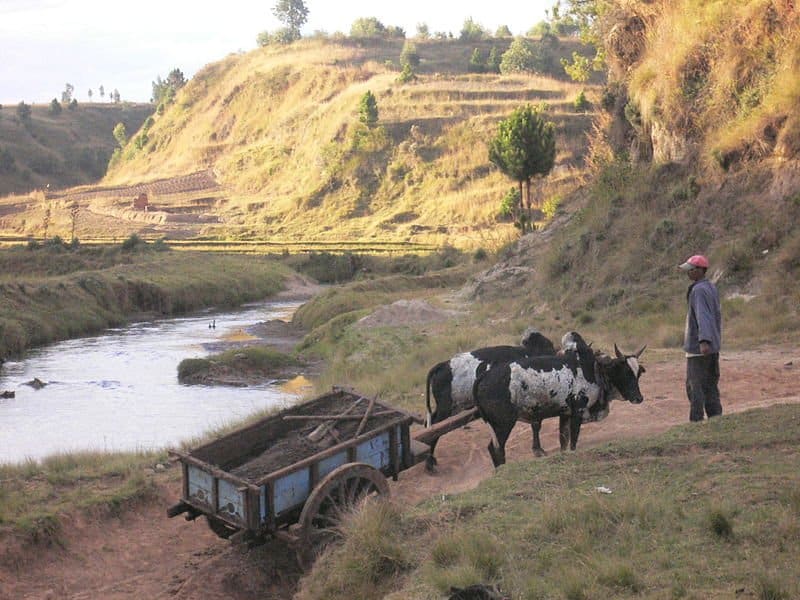
๐Ÿ‘ Image

Zebu are used as working animals in many parts of the world to pull carts or plows or otherwise provide transportation.

ยฉIno Paap / Creative Commons โ€“ Original

The zebu was originally domesticated in Southern Asia and became the dominant form of domesticated cattle in India. From there it spread through most of the global south, including the Middle East, Africa, South America, and parts of Europe and North America, where people crossed it with local cattle to create unique breeds. Zebus prefer the open grasslands and plains where food is most abundant, but they are used in many countries as draught animals to pull carts or power farm implements.

Diet

The zebuโ€™s diet consists entirely of grasses, clovers, stems, flowers, and other plant material. To support itself, the zebu can consume around 150 pounds of vegetation a day (depending on the weight of the breed). It grazes up to eight hours and spends the rest of its time resting and chewing cud.

Predators and Threats

Because of its size and herd-based lifestyle, the zebu has no natural predators except for the wolf, lion, bear, and a few other carnivores. These predators almost always prefer to attack a young, old, sick, or isolated zebu rather than a full-grown adult that has the protection of the herd. If threatened directly, the zebu can run away at speeds of up to 25 mph or stand its ground and fight with its horns. Domesticated cattle are obviously slaughtered in large numbers by humans, but because so many are bred every year, they are one of the most widespread mammalian species in the world.

Reproduction, Babies, and Lifespan
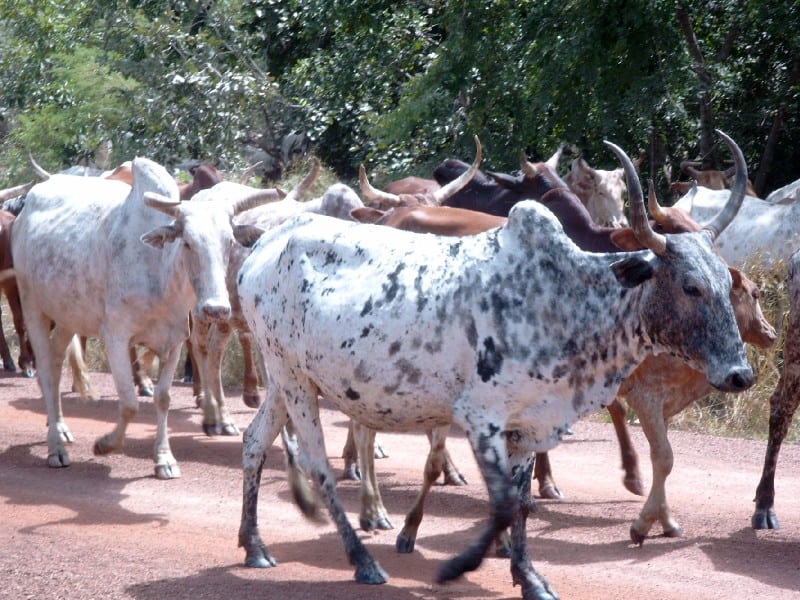
๐Ÿ‘ Image

The Zebu herd has a dominant male who retains exclusive breeding rights to all females.

ยฉMarco Schmidt / Creative Commons โ€“ Original

Because of the zebuโ€™s hierarchical organization, the dominant male of the herd retains exclusive breeding rights to all of the females, and he has the ability to breed all year long instead of one specific season. Once impregnated by the dominant bull, the female carries a single calf for approximately nine months at a time. Because of the challenges presented by the birth process, she rarely produces twins.

Although itโ€™s able to stand and walk at birth, the calf is nevertheless highly dependent on its mother with whom it shares a very close bond. The cow nurses the calf for the first six months of life, while the entire herd plays a critical role in its protection and training until the calf achieves its independence. The zebu reaches sexual maturity somewhere between one and two years, and the typical life expectancy is around 20 years, about the same length of other cattle.

Population

It is estimated that there are more than 200 million zebus currently living on the planet. Most of these zebu breeds still reside in India, but there are millions more scattered throughout the rest of the world, particularly in Africa and Southeast Asia. Some breeds are considered more valuable or desirable than others, so population numbers can vary quite a bit by breed.

In the Zoo

The miniature zebu is a very popular exhibit throughout the United States because of its approachable and docile temperament. For people in the area, it can be found at the childrenโ€™s section of the Saint Louis Zoo and the barnyard section of Zoo New England. It is also a prominent exhibit at the Sunset Zoo in Manhattan, Kansas, the Hattiesburg Zoo in Mississippi, the Eerie Zoo in Pennsylvania, the Virginia Zoo in Norfolk, the Happy Hollow Park and Zoo in San Jose, and the Greater Vancouver Zoo in Canada. Besides the miniature zebu, the Peoria Zoo in Illinois keeps one of the larger zebu breeds in the contact barn section.

View all 14 animals that start with Z

Sources

  1. Britannica / Accessed December 3, 2020
  2. Animal Diversity Web / Accessed December 3, 2020
  3. Happy Hollow Park & Zoo / Accessed December 3, 2020

Thank you for reading! Have some feedback for us?

Contact the AZ Animals editorial team

Related Articles You May Find Interesting


Zebu FAQs (Frequently Asked Questions)

The zebu is a subspecies of the domesticated cattle that also goes by the name of humped or indicine cattle. It features a large hump, drooping ears, a sagging flap of neck skin, and gray or white coloring. The zebu is genetically distinct enough from other subspecies of cattle, the taurine, to earn its own classification, but itโ€™s also close enough that they can interbreed with each other.

Zebu was adapted into English from the same French word. It is believed that the word might have come from a Tibetan origin for a certain type of bull.

The miniature zebu is too small to be an effective working animal, and so many people keep it as a companion and pet. However, this breed is not an indoor pet by any stretch of the imagination. It requires a sizable amount of land in which to roam and feed. A farm or other type of grazing land is a necessity.

Zebu bulls can be quite aggressive about protecting their territory and breeding rights. Because of the physical size and large horns, this animal is not to be tussled with. Unless youโ€™re a professional herder or farmer, it is best to let them be.

The zebu has a life expectancy of about 20 years in the wild. But if the zebu is slaughtered for food, then its lifespan is often cut far short of that.

Zebus are Herbivores, meaning they eat plants.

Zebus belong to the Kingdom Animalia.

Zebus belong to the class Mammalia.

Zebus belong to the phylum Chordata.

Zebus belong to the family Bovidae.

Zebus belong to the order Artiodactyla.

Zebus are covered in Leathery skin.

Zebus belong to the genus Bos.

Zebus live in tropical jungles and open plains.

Zebus eat grass, seeds, and flowers.

Predators of Zebus include humans, bears, and wildcats.

The average number of babies a Zebu has is 1.

There are around 75 different species of Zebu!

The scientific name for the Zebu is Bos taurus indicus.

Zebus can live for 12 to 16 years.

A Zebu can travel at speeds of up to 25 miles per hour.