Z
Species Profile

Zonkey

Equus asinus × Equus quagga (or other Equus zebra spp.)

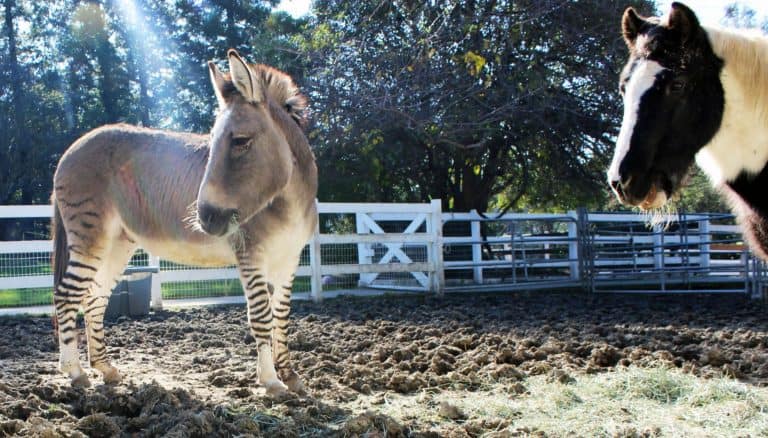
Half stripes, full attitude
Shllabadibum Bubidibam/Shutterstock.com

Zonkey Distribution

Domesticated Species

Found Worldwide

Human-managed hybrid bred in captivity wherever donkeys and zebras are kept, most commonly in southern Africa and in private collections globally.

Size Comparison

Human 5'8"
Zonkey 4 ft 3 in

Zonkey stands at 75% of average human height.

At a Glance

Domesticated
Also Known As Zonkey, Zedonk, Zebroid
Diet Herbivore
Activity Diurnal+
Lifespan 20 years
Weight 420 lbs
Status Not Evaluated
Did You Know?

A zonkey is most often a donkey crossed with a plains zebra, producing an equid with mixed traits.

Scientific Classification

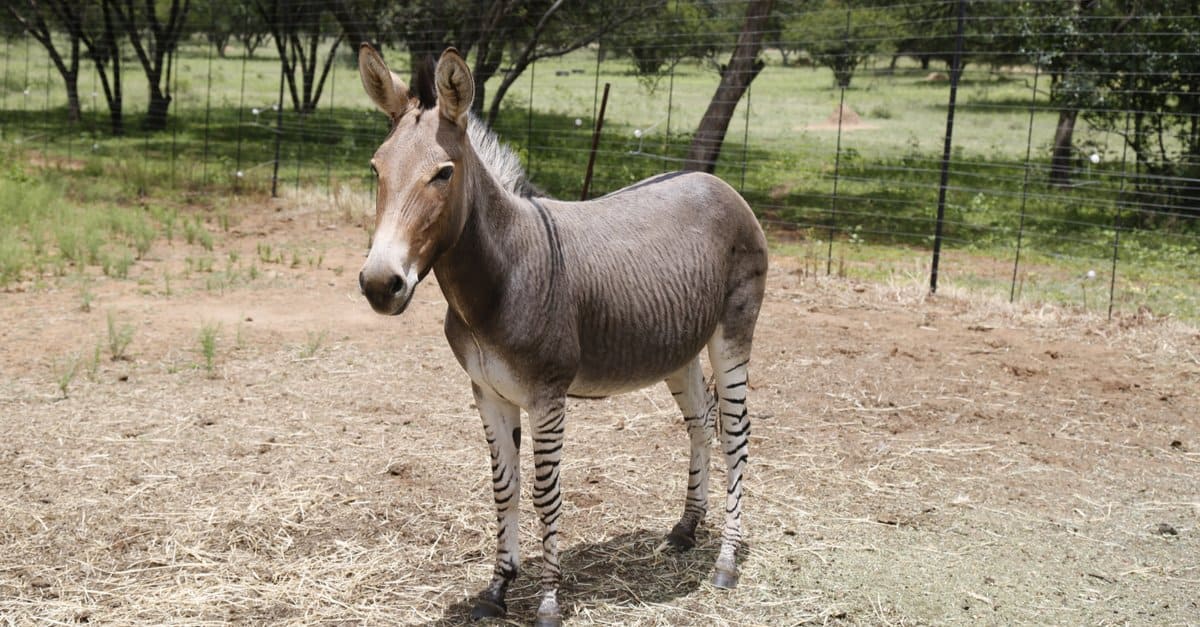
A zonkey is a hybrid equid produced by crossing a donkey (Equus asinus) with a zebra (commonly plains zebra, Equus quagga). It is typically sterile, shows partial zebra striping (often on legs/shoulders), and has a donkey-like head and body proportions. It’s a human-managed hybrid rather than a wild, naturally maintained taxon.

Kingdom
Animalia
Phylum
Chordata
Class
Mammalia
Order
Perissodactyla
Family
Equidae
Genus
Equus

Distinguishing Features

  • Donkey-like body with zebra striping patches
  • Often striped legs and shoulders
  • Typically sterile (especially males)
  • Equid build: strong hooves, long ears common

Physical Measurements

Males and females differ in size

Height
4 ft 1 in (3 ft 7 in – 4 ft 7 in)
4 ft 1 in (3 ft 5 in – 4 ft 7 in)
Length
8 ft 2 in (6 ft 11 in – 9 ft 6 in)
Weight
639 lbs (441 lbs – 838 lbs)
529 lbs (375 lbs – 705 lbs)
Tail Length
1 ft 7 in (1 ft 4 in – 1 ft 10 in)
1 ft 6 in (1 ft 2 in – 1 ft 10 in)
Top Speed
31 mph
running

Appearance

Primary Colors
Secondary Colors
Skin Type Short coat
Distinctive Features
  • Donkey-like head with long ears; zebra striping overlays body.
  • Striping usually strongest on legs and shoulders; torso often lightly marked.
  • Upright, short mane; may show zebra-like banding near the neck.
  • Body proportions typically donkey-leaning: narrower chest, straighter topline.
  • Hooves often donkey-shaped; may require frequent trimming on hard ground.
  • Tail often intermediate: donkey tuft with partial zebra hairing.
  • Facial markings vary; some show zebra-style muzzle barring.
  • Hybrid origin: phenotype highly variable by zebra species and parent direction.
  • Usually human-managed; not a stable wild taxon or maintained population.
  • Common sterility, especially males; mule-like hybrid genetics limit breeding.

Sexual Dimorphism

Sexual dimorphism is generally mild and variable, similar to donkeys and zebras. Many individuals (especially males) are sterile, so breeding-related selection for pronounced dimorphism is limited.

  • Often slightly heavier neck and shoulder muscling than females.
  • May develop more pronounced cresting with age and good nutrition.
  • Typically a bit smaller-framed with finer head and neck.
  • Udder and teats visible when mature; otherwise subtle differences.

Did You Know?

A zonkey is most often a donkey crossed with a plains zebra, producing an equid with mixed traits.

Most zonkeys are sterile, like mules, because donkey and zebra chromosomes don't pair cleanly.

Striping is usually strongest on legs and shoulders, while the body often looks more donkey-colored.

Many zonkeys vocalize with a mix of brays and zebra-like snorts or barks, depending on parentage.

Temperament can be less predictable than a donkey's, reflecting the zebra parent's stronger flight response.

Because they're hybrids, zonkeys aren't a standardized breed; each individual can look and behave differently.

Unique Adaptations

  • Partial striping can visually echo zebra camouflage; stripe placement commonly concentrates on limbs and forequarters.
  • Hybrid conformation often combines donkey-like head and body proportions with zebra-influenced coat patterning.
  • Many inherit tough, fast-growing hooves needing regular trimming, especially on hard or dry footing.
  • Metabolism is frequently "easy-keeper" like a donkey's, requiring careful diet to prevent obesity and laminitis.
  • Behavioral "edge" from zebra ancestry can increase vigilance, demanding more secure fencing and experienced management.

Interesting Behaviors

  • Often wary of restraint and novelty; may startle quickly and test boundaries more than typical donkeys.
  • Can bond strongly to a companion animal, but may be less tolerant of unfamiliar equids or crowded herds.
  • May show mixed vocal repertoire-bray-like calls plus sharper zebra-style snorts when alarmed.
  • Tends to use defensive kicking or biting if pressured; low-stress handling and clear routines reduce incidents.
  • Grazing and browsing preferences can be donkey-leaning, but activity levels may be higher than many donkeys.

Cultural Significance

Zonkeys are human-managed hybrids seen in zoos, sanctuaries, and farms, often used to teach genetics and equid diversity. They also reflect long-standing cultural fascination with zebras' stripes and donkeys' working-animal heritage.

Myths & Legends

In southern African folklore, zebra stripes are explained through tales where zebra is marked after a fiery conflict, leaving permanent dark bands.

A well-known Khoisan story tells how zebra got its stripes after an encounter with Baboon near water and fire, scorching and streaking the coat.

In the Biblical story of Balaam, a donkey sees an angel unseen by humans and speaks, becoming a symbol of unexpected insight.

Greek myth associates donkeys with Dionysus' follower Silenus, whose drunken ride on a donkey appears in classical storytelling and art.

Aesop's fables repeatedly cast the donkey as a moral character-stubborn, burdened, or underestimated-shaping enduring folk attitudes toward donkeys.

Conservation Status

NE Not Evaluated

Has not yet been evaluated against the criteria.

Population Stable

Life Cycle

Birth 1 foal
Lifespan 20 years

Lifespan

In the Wild 10–30 years
In Captivity 15–40 years

Reproduction

Mating System Data Deficient
Social Structure Managed Domestic
Breeding Season Late spring to summer in temperate zones
Breeding Pattern Not Applicable
Fertilization Managed Selective
Birth Type Internal_fertilization

Zebra-donkey hybrids are usually sterile, so they do not maintain a breeding population. When fertile mating occurs, it follows equid polygyny: males mate multiple females, internal fertilization; females provide all nursing and care.

Behavior & Ecology

Social Herd Group: 3
Activity Diurnal, Crepuscular
Diet Herbivore grass hay

Temperament

Wary
Reactive
Intelligent
Stubborn
Defensive
Curious

Communication

brays
whinnies
snorts
squeals
grunts
ear postures
body language
tail swishing
scent marking
mutual grooming

Habitat

Biomes:
Tropical Dry Forest Savanna Desert Hot Desert Cold Mediterranean Temperate Grassland Temperate Forest Alpine Wetland Freshwater Boreal Forest (Taiga) +5
Terrain:
Plains Hilly Plateau Valley
Elevation: Up to 17060 ft 5 in

Ecological Role

Human-managed hybrid grazer, ecosystem impact limited to enclosed ranges.

grazing pressure seed dispersal nutrient cycling

Diet Details

Other Foods:
Pasture grasses Grass hay Browse leaves Forbs Shrubs Mineral salt

Human Interaction

Domestication Status

Semi domesticated

Zonkeys are deliberate donkey×zebra hybrids produced in captivity (19th-20th century onward) for novelty, display, and occasional work/riding. Typically sterile; striping and zebra-like reactivity shape handling risks across zoos, ranches, and private collections.

Danger Level

High
  • Powerful kick and strike injuries
  • Biting; can be hard to release
  • Flighty, unpredictable reactions under stress
  • Handling accidents during restraint/transport
  • Aggression when cornered or confined

As a Pet

Not Suitable as Pet

Legality: Varies by jurisdiction; often regulated as exotic equid.

Care Level: Expert Only

Purchase Cost: $1,500 - $8,000
Lifetime Cost: $20,000 - $70,000

Economic Value

Uses:
Tourism Education Research Agriculture
Products:
  • exhibit
  • handling
  • training

Relationships

Predators 6

Lion Panthera leo
Spotted hyena Crocuta crocuta
African wild dog Lycaon pictus
Leopard Panthera pardus
Nile crocodile Crocodylus niloticus
Human Homo sapiens

Related Species 5

Donkey Equus africanus asinus Shared Genus
Plains zebra Equus quagga Shared Genus
Mountain zebra Equus zebra Shared Genus
Grévy's zebra Equus grevyi Shared Genus
Horse Equus ferus caballus Shared Genus

Ecological Equivalents 8

Animals that fill a similar ecological role in their ecosystem

Mule Equus asinus × Equus caballus Sterile hybrid. Shares similar management needs, hoof care, diet, and handling challenges.
Hinny Equus caballus × Equus asinus Has comparable hybrid temperament variability and often requires experienced, consistent training.
Zorse Equus spp. x Equus caballus Inherits zebra-derived wariness and therefore requires secure fencing and low-stress handling.
African wild ass Equus africanus Browser-grazer adapted to sparse forage; indicates low-sugar dietary needs.
Onager Equus hemionus Arid-adapted equid. Similar parasite control and hoof wear considerations.
Domestic horse Equus ferus caballus Occupies the working equid niche. Used for riding and driving; zonkeys are usually less tractable and less suitable for riding.
Domestic donkey Equus africanus asinus Hardy, thrifty metabolism. Hybrids with zebras (zonkeys) can be prone to obesity and laminitis.
Cattle Bos taurus Pasture grazer. Co-grazing increases deworming and pasture rotation needs.

The world of hybrid animals is fascinating and bizarre. While hybrid animals can appear in the wild, it’s a rare occurrence. Hybrid animals are usually created through controlled crossbreeding at specialized farms or zoos. One of the popular hybrid animals that have stirred the curiosity of many animal lovers is the Zonkey–an animal created by breeding a male zebra and a female donkey.
Classification

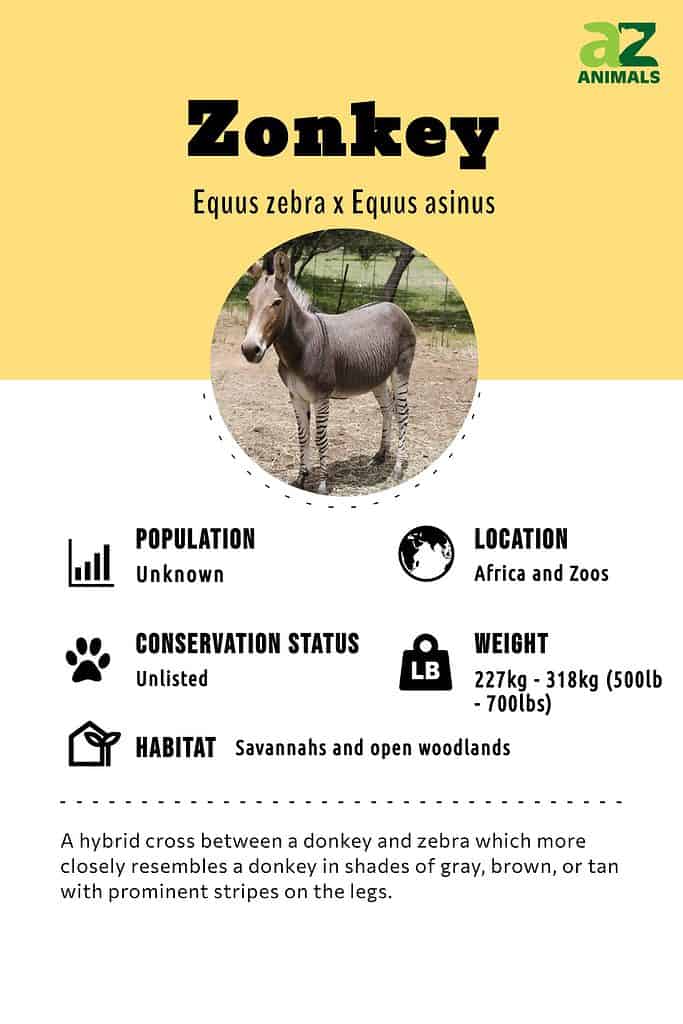
The Zonkey is a hybrid animal that is created by cross-breeding two different species of animal that belong to the same genetic group.

Technically though, an individual is only classed as a Zonkey if it is sired from a male Zebra and female Donkey, as one that has a male Donkey and female Zebra parents are known as a Zedonk. Like many other animal hybrids around the world including the Mule and the Liger, however, the Zonkey is a sterile animal meaning that it cannot produce offspring of its own. The Zedonk is also sterile. Unlike the Liger though, Zonkeys can live in the wild as Zebras and Donkeys are naturally found in close proximity to one another in parts of Africa. Although they are very rare, cases of wild Zonkeys have been reported but the majority of them today are found in zoos around the world and are bred as tourist attractions.

Watch on YouTube

Evolution

As far as the evolution of the Zonkey goes, there’s not too much to tell. This species was mentioned by Charles Darwin in his world-changing “Origin of Species,” which was written in 1859. This is recorded proof that they were in existence at that point in history. Dated earlier, a man named Lord Morton cross-bred horses around 1815. So zonkey hybrids have existed in captivity at least since the 19th century.

The zonkey doesn’t occur often in the wild, likely due to chromosomes. While a donkey has 62 chromosomes, the zebra has 44-62 based on the particular species. This difference in numbers between males and females results in female offspring who have poor fertility and male offspring who are sterile–an anomaly termed Haldane’s Rule.

Types of Zebroids

There are no sub-species of Zonkey, but below is a list of Zebroids–zebras crossed with other members of the horse family:

  • Zonkey (Equus zebra x Equus asinus) – Other names: zebonkey, zebrinny, zebrula, zebadonks. Created by cross-breeding a male zebra and female donkey. Unlisted by the ICUN.
  • Zedonk (Equus zebra × Equus asinus) – Other names: zebrass, zebronkey, zebadonk, zenkey or deebra. Created by cross-breeding a male donkey and female zebra. Unlisted by the ICUN.
  • Zorse (Equus zebra x Equus caballus) – Other names: zebra mule, zebrule, golden zebra. Created by cross-breeding a male zebra and female horse.
  • Hebra (Equus zebra x Equus caballus) – Cross between a male horse and female zebra.
  • Zony (Equus zebra x Equus equine) – Created by cross-breeding a male horse with a female pony.
  • Zetland (Equus zebra x Equus caballus)– Created by cross-breeding a male horse and a female Shetland pony.
  • Zebrass (Equus zebra x Equus asinus) – Created by cross-breeding a male horse and any ass (jenny) species.
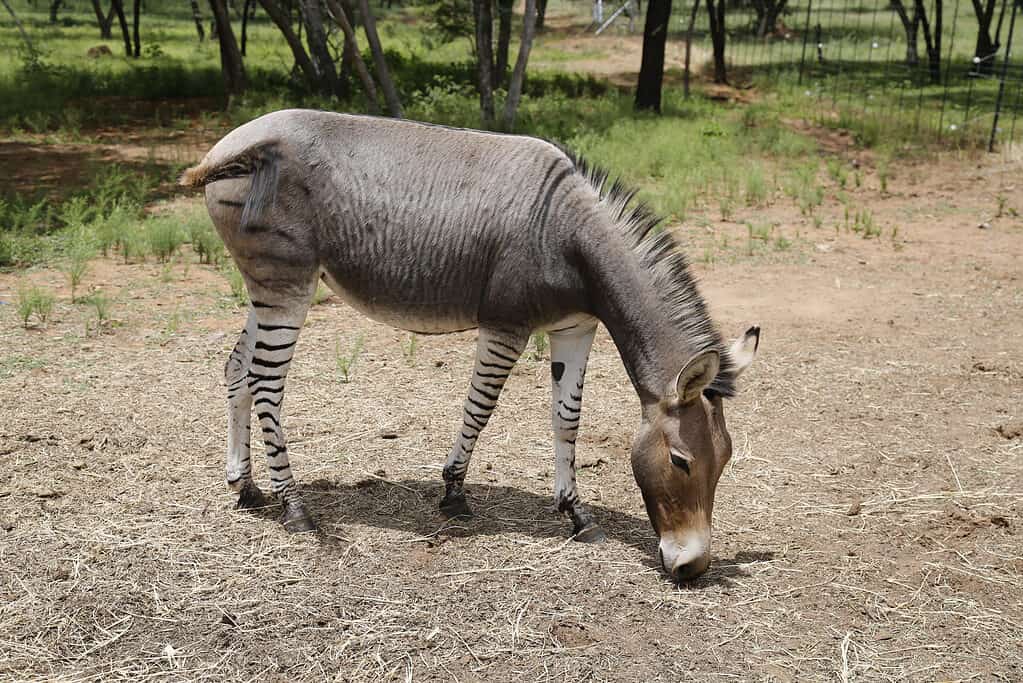
👁 A zebroid,also known as, zedonk, zorse, zebra mule, zonkey, and zebmule

A zebroid is any member of the horse family cross-bred with a zebra.

©Shllabadibum Bubidibam/Shutterstock.com

Anatomy and Appearance

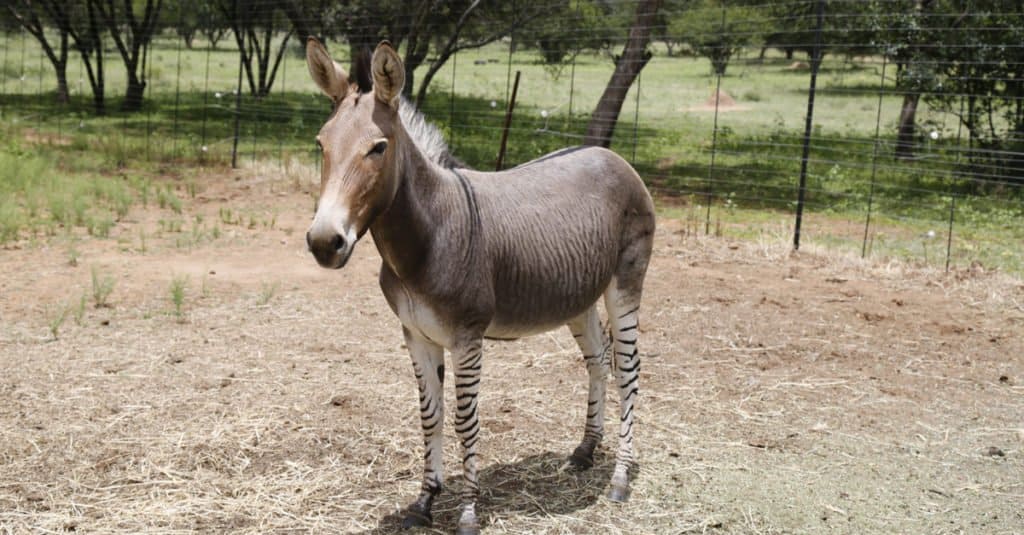
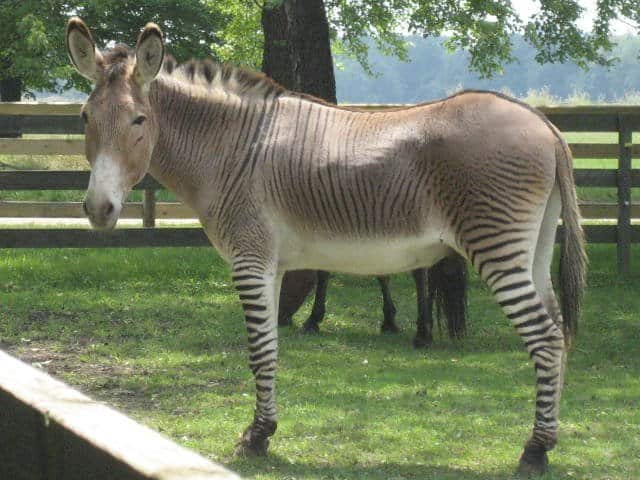
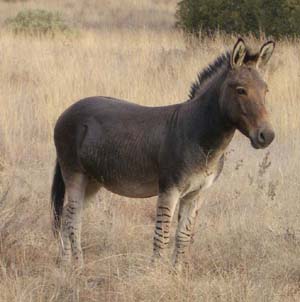
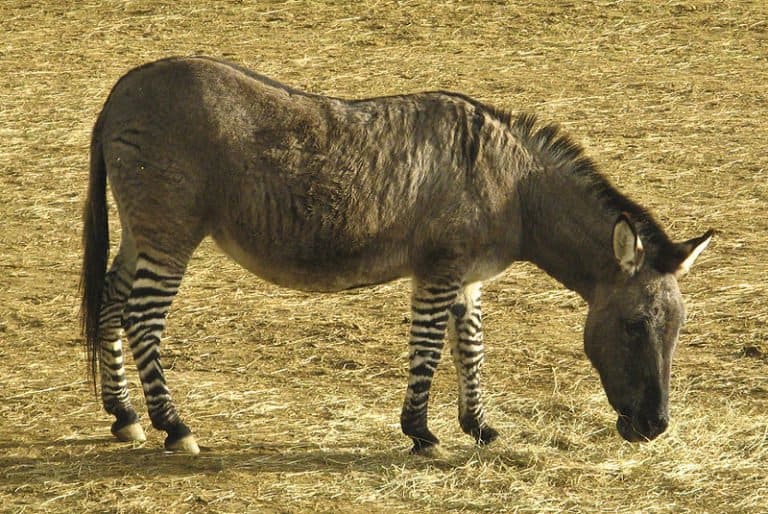
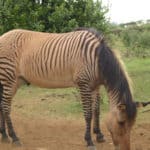
The Zebra and the Donkey are closely related to one another and both belong to the Horse family means these two species share several similar characteristics including their size. The Zonkey tends to be of a similar size to these animals but takes on a more definitive Donkey-like appearance, with the obvious exception of inheriting the uniquely-striped pattern on their fur from their Zebra parent. Zonkeys and Zedonks (donkey father and zebra mother) are animals that tend to be either tan, brown, or grey in color with a lighter underside, and it is on the lighter parts of their body like their legs and belly where the Zonkey’s darker stripes are most prominent (they are much harder to see on the darker parts). The Zonkey also has a black mane that extends along the ridge of its back to the tip of its black tail, and a large head and ears which makes the Zonkey look much more like a Donkey than a Zebra.

👁 Image

A Zonkey takes on the general appearance of a mule but with stripes that are most prominent on its legs.

©Ruth Boraggina / Creative Commons – Original

Distribution and Habitat

Out of the three species of Zebra that are found living on the African continent, two are found in Eastern Africa whilst the other is found in more southern regions. Generally preferring to inhabit savannas and open woodlands throughout their historical range, Zebras are often found in enormous herds, particularly on the Serengeti plains where they migrate thousands of miles following the rains that bring new grass. Some are also found in close proximity to human settlements where they are known to have to compete with domestic livestock, such as Donkeys, for food. It is in these areas where Zonkeys are most likely to be produced naturally in the wild as it allows the two separate species to mate. Sadly, however, the world’s Zonkeys tend to be found in zoos and animal institutions where they are generally bred deliberately.

Behavior and Lifestyle

Despite being very similar animals both in appearance and behavior, zebras have not been domesticated like donkeys have. Humans have utilized donkeys for thousands of years for work and other purposes, but zebras have not been tamed because of their more aggressive nature. The Zonkey not only inherits the stripes of the zebra but also its wild streak. One of the Zonkey’s most favorable characteristics is its sheer power–a combination of the stamina of the Donkey mixed with the speed and strength of the Zebra. This gives the zonkey skills that can make it a valuable work animal that can pull heavy loads.

👁 Zonkey

One of the Zonkey’s best characteristics is its inherited stamina from the Donkey and speed and strength from the Zebra.

©Shllabadibum Bubidibam/Shutterstock.com

Reproduction and Life Cycles

A male Zebra must be mated with a female Donkey for a Zonkey to be produced. If the sexes are switched, the offspring is a Zedonk. The gestation period can last for more than a year, and then the female Donkey births a single Zonkey foal. Like Zebra and Donkey foals, this foal is also able to stand up just minutes after birth. The Zonkey foal remains with its mother for five to six months of age, at which point it becomes independent and joins another herd. This kind of behavior happens a bit later with Zebra foals, which can take up to four years to leave the herd. Like numerous other hybrid animals, the Zonkey can’t produce offspring of its own, as the cross-breeding of two different species often results in their young being sterile and unable to continue a population.
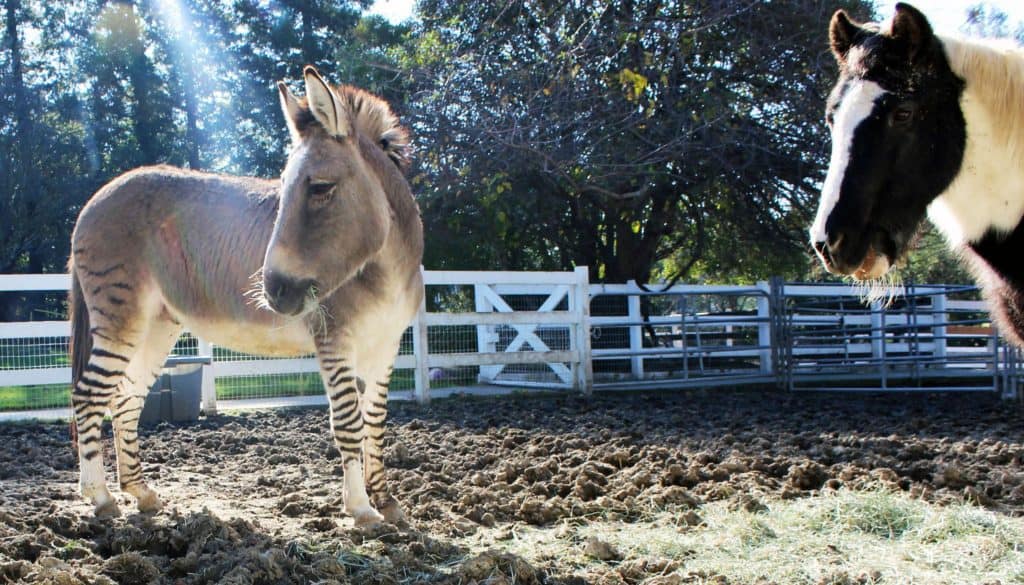
👁 Image

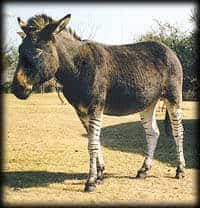
The zonkey can’t produce offspring of its own since the cross-breeding of two different species often results in their young being sterile.

©Strange Biology / Flickr – Original

Diet and Prey

Like Donkeys, Zebras, Horses, and their other relatives, Zonkeys are herbivorous animals meaning that they survive on a diet that is solely comprised of plant matter. The majority of their food is made up of grasses and herbs that grow on the ground and like all equines, the Zonkey has flat, broad teeth which are the perfect tools for grinding down the fibrous grass. Along with grazing, Zonkeys also like to browse for other types of food including fruits and berries which are found growing more common in less arid areas. Due to the fact that Zonkeys are naturally found in the African wilderness, there is always competition for both food and water from other animals inhabiting the same area and so they are always on the move in search of greener pastures.
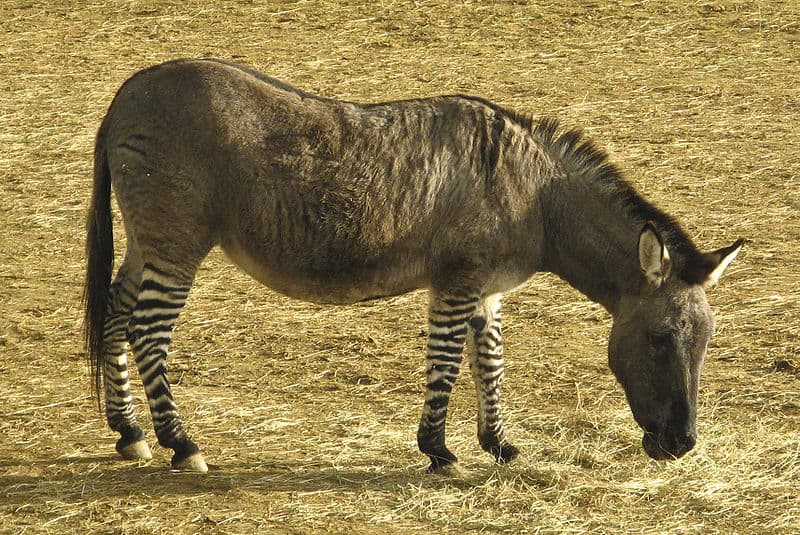
👁 Image

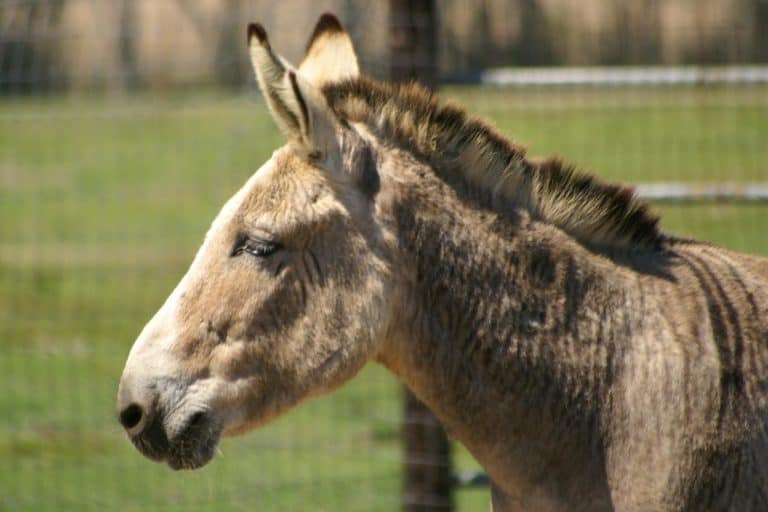
Zonkeys are herbivorous animals which graze on grasses and herbs that grow on the ground.

©Dcgi / Creative Commons – Original

Zonkey Predators and Threats

Despite their large size and the fact that they are long-living animals, both Zebras and Donkeys (and therefore Zonkeys) are important prey to numerous carnivores throughout their natural range. Lions and Hyenas are their most common predators, along with African Hunting Dogs and large felines like Leopards and Cheetahs. Even though they remain a stable food source for these large predators, they are often hard to catch and Zebras particularly are known to protect wounded individuals to prevent them from being hurt anymore. Although rarer today, one of the biggest threats to both Zebras and Donkeys in Africa has been the fact that they have been subjected to hunting for both their meat and their skins. They are also being pushed into more isolated regions of their natural habitats meaning a decrease in the likelihood of wild Zonkeys.

Interesting Facts and Features

Although we often only think of Donkeys as being domesticated animals, wild herds of Donkeys can still be found living on the continent and in herds up to 100 strong in northern Africa, but this is an area that is not inhabited by Zebras and so the chances of a Zonkey occurring under these conditions would be extremely rare. Zonkeys have been mentioned by naturalists for centuries including Darwin who mentioned the possibility of a fertile female Zonkey that was being exhibited at the London Zoo. The Zonkey is thought to be a popular work animal as they have an apparent resistance to certain pests and diseases, something which is thought to have been inherited from their Zebra father.
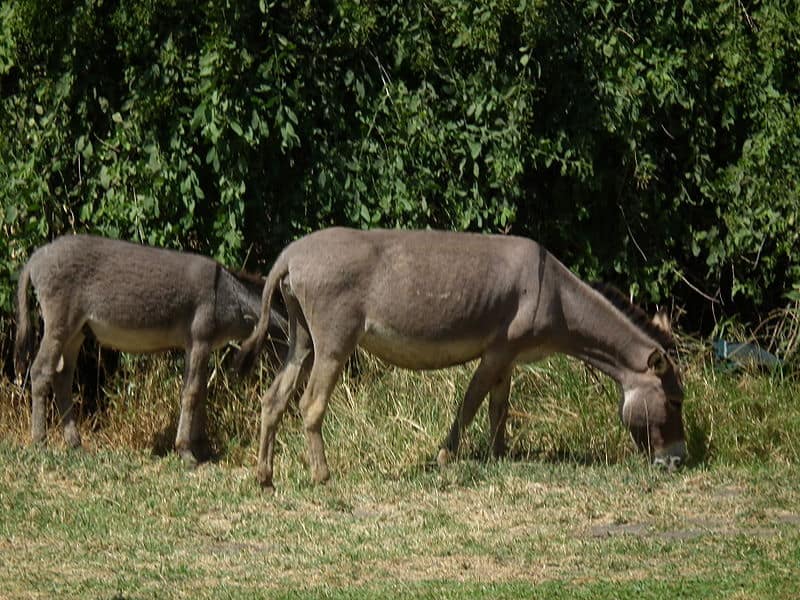
👁 African Donkey, Equus asinus, picture taken in Tanzania

While wild donkey herds do exist in Africa, the chances of them mating with zebras naturally are rare.

©Nevit Dilmen, CC BY-SA 3.0, via Wikimedia Commons – Original / License

Relationship with Humans

Originally bred by Humans to pull heavy loads and thought to have appeared in zoos in the 19th century, the Zonkey first became famous when one was accidentally sired in Colchester Zoo in the 1970s, and they have since continued to exhibit Zonkeys as a popular tourist attraction. Along with now being bred in zoos around the world, Zonkeys are also bred for riding and as work animals involved in transport and pulling heavy loads due to their strength and stamina. In the wild in Africa however, Zebras have come under particular threat from people due to both hunting and loss of habitat for growing Human settlements or land clearance for agriculture.
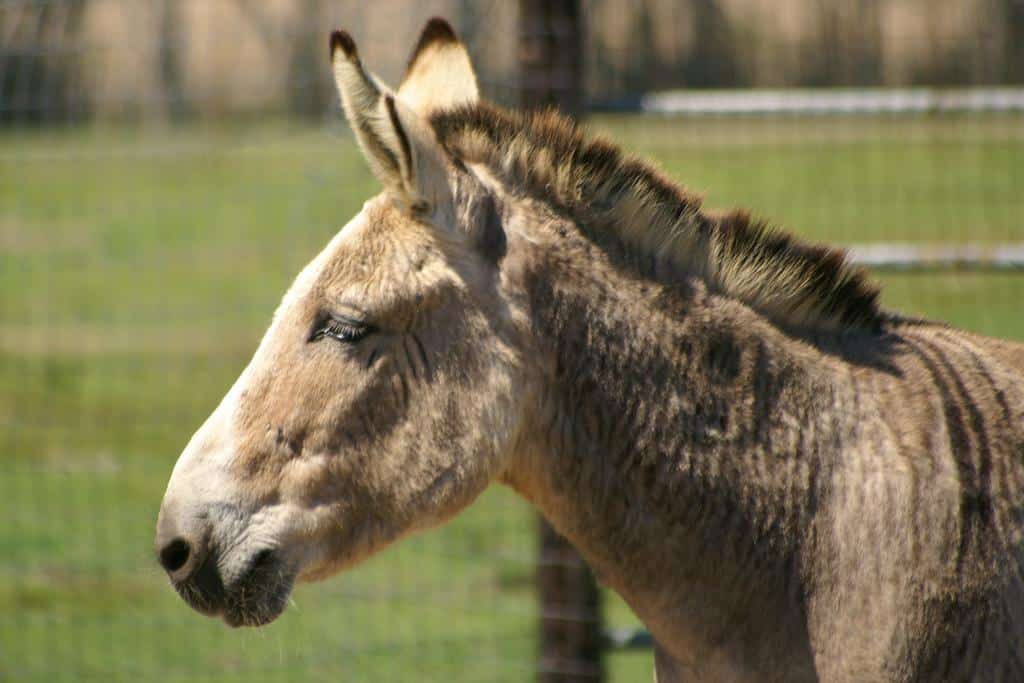
👁 Image

The Zonkey became famous after one was accidentally sired in the Colchester Zoo in the 1970s.

©Tracy / Flickr – Original

Conservation Status and Life Today

Because the Zonkey is a cross-bred animal and cannot continue a population, it is not listed by the IUCN. The three Zebra species though are all listed with the Plains Zebra as Least Concern, the Mountain Zebra as Vulnerable, and the Grevy’s Zebra as Endangered. This means that the chances of Zonkeys occurring in the wild are becoming slimmer and slimmer, with the majority of them today found in zoos and used as work animals.

View all 14 animals that start with Z

Sources

  1. David Burnie, Dorling Kindersley (2011) Animal, The Definitive Visual Guide To The World's Wildlife / Accessed November 8, 2008
  2. Tom Jackson, Lorenz Books (2007) The World Encyclopedia Of Animals / Accessed November 8, 2008
  3. David Burnie, Kingfisher (2011) The Kingfisher Animal Encyclopedia / Accessed November 8, 2008
  4. Richard Mackay, University of California Press (2009) The Atlas Of Endangered Species / Accessed November 8, 2008
  5. David Burnie, Dorling Kindersley (2008) Illustrated Encyclopedia Of Animals / Accessed November 8, 2008
  6. Dorling Kindersley (2006) Dorling Kindersley Encyclopedia Of Animals / Accessed November 8, 2008
  7. David W. Macdonald, Oxford University Press (2010) The Encyclopedia Of Mammals / Accessed November 8, 2008
  8. Hybrid Animals / Accessed November 8, 2008
  9. Zonkey Information / Accessed November 8, 2008
  10. Donkey Facts / Accessed November 8, 2008
  11. About Zebras / Accessed November 8, 2008

About the Author

Abby Parks

Abby Parks has authored a fiction novel, theatrical plays, short stories, poems, and song lyrics. She's recorded two albums of her original songs, and is a multi-instrumentalist. She has managed a website for folk music and written articles on singer-songwriters, folk bands, and other things music-oriented. She's also a radio DJ for a folk music show. As well as having been a pet parent to rabbits, birds, dogs, and cats, Abby loves seeking sightings of animals in the wild and has witnessed some more exotic ones such as Puffins in the Farne Islands, Southern Pudu on the island of Chiloe (Chile), Penguins in the wild, and countless wild animals in the Rocky Mountains (Big Horn Sheep, Mountain Goats, Moose, Elk, Marmots, Beavers).
Connect:

Thank you for reading! Have some feedback for us?

Contact the AZ Animals editorial team

Related Articles You May Find Interesting


Zonkey FAQs (Frequently Asked Questions)

Zonkeys are Herbivores, meaning they eat plants.

Zonkeys belong to the Kingdom Animalia.

Zonkeys belong to the class Mammalia.

Zonkeys belong to the phylum Chordata.

Zonkeys belong to the family Equidae.

Zonkeys belong to the order Perissodactyla.

Zonkeys are covered in Fur.

Zonkeys belong to the genus Equus.

Zonkeys live in Africa and zoos.

Zonkeys live in savannas and open woodlands.

A Zonkey can travel at speeds of up to 35 miles per hour.