Sea Urchin
Spines, jaws, and ocean power
 |
VOOZH | about |
Spines, jaws, and ocean power
Tails, trails, and total regeneration
Nature's masters of rapid evolution
Born in water, ruler of the air
Built for land, made for time
Brains, beaks, and big voices
Armored ambush masters of water
Crests, ponds, and potent defenses
Feathers, flight, and endless variety
Eat. Molt. Metamorphose.
In animal coloration, green refers to surface colors that preferentially reflect light in the green region of the visible spectrum (approximately 495-570 nm), producing hues from yellow-green to blue-green. It can arise from pigments (notably biliverdin and related tetrapyrroles, sometimes in combination with carotenoids) and/or from structural mechanisms that generate green through selective scattering, interference, or filtering.
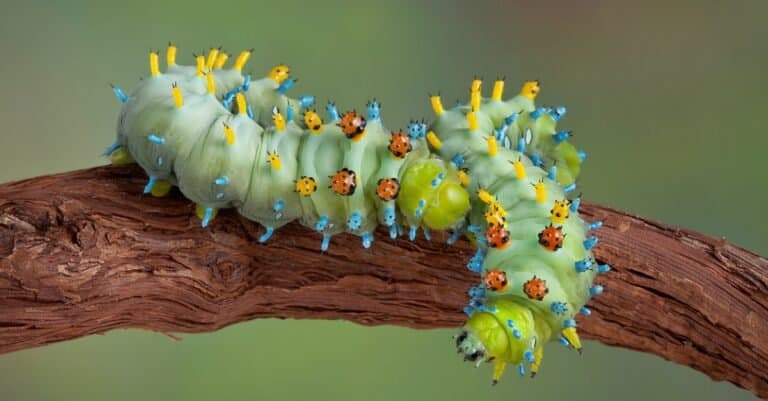
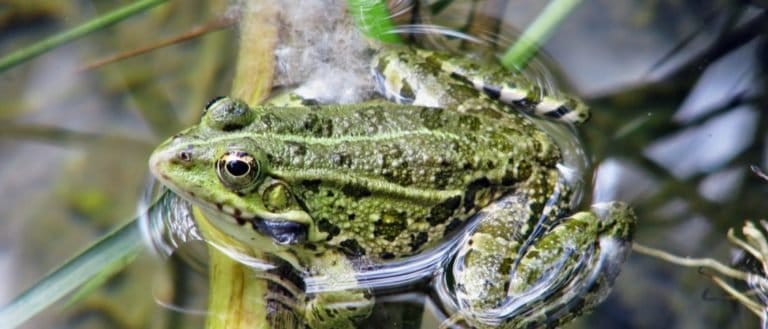
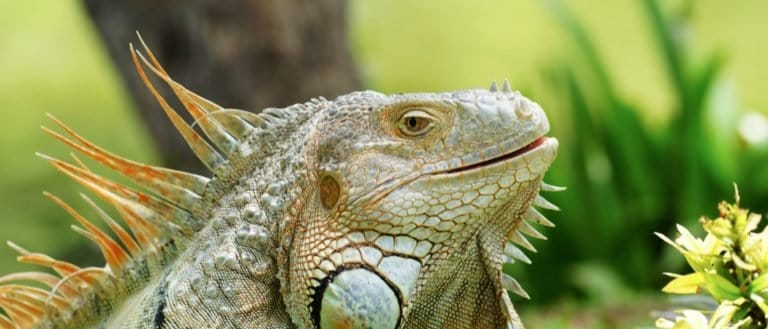
Green is one of the most widespread and ecologically meaningful colors in the animal kingdom because it aligns closely with the dominant background of many terrestrial habitats-living foliage. From leaf-mimicking insects and emerald tree frogs to green snakes and parrots, green coloration often functions as camouflage by reducing visual contrast against vegetation in the eyes of predators or prey. In many species, the exact shade-yellow-green, grassy green, or blue-green-tracks the local light environment and plant community, helping animals blend into sunlit leaves, shaded understory, or mossy substrates.
Green in animals is produced in more than one way, and the mechanism matters for how the color looks and performs. Some animals use pigments such as biliverdin (a bile pigment that can be deposited in skin, scales, eggshells, or feathers) to absorb non-green wavelengths and leave a green appearance. Others rely on structural coloration-microscopic arrays in feathers, scales, or cuticle that reflect specific wavelengths-sometimes combined with yellow pigments to yield a vivid green. Because structure-based greens can be angle-dependent (iridescent) or brightness-tuned, they may double as attention-grabbing signals in courtship displays.
Beyond concealment, green can carry information. Bright, saturated greens may advertise species identity, individual quality, or readiness to mate, especially when paired with contrasting colors or patterns. In some cases, green also plays a role in thermoregulation or UV/visible signaling (important to birds, reptiles, and insects that perceive ultraviolet), making "green" not just a simple hue but a flexible solution shaped by physics, biochemistry, and behavior.
On animals, green typically reads as a leaf- or moss-like coloration that can range from bright, fresh "spring" greens to deep olive and bluish teal-greens. It often appears most convincing in diffuse or mottled patterns that mimic vegetation: fine speckling, marbling, scalloped edges, lichen-like flecks, or bands that break up body outline. Green can show as an overall body wash (e.g., many tree frogs), as localized patches (flanks, dorsal surfaces, wing coverts), or as iridescent/metallic highlights (common in insects and some birds). In many vertebrates, true green pigment is rarer; instead, green may be produced by yellow pigments layered over blue structural coloration, giving a vivid but angle-dependent or lighting-sensitive effect. Surface texture matters: matte greens look "velvety" or "cryptic," while glossy/iridescent greens can appear jewel-like and high-contrast. Under shade (forest canopy), greens often shift toward darker olive; in direct sunlight, structural greens can flash brighter and more saturated.
~495-570 nm (approx.; blue-green ~495-520 nm, true green ~520-550 nm, yellow-green ~550-570 nm)
Approx. #00A000-#7FFF00 (yellow-green end) and #00A000-#00C070 (blue-green end); common "animal greens" often sit in muted ranges like #2F6B2F-#7A8F3A (olive/moss)
Humans: With trichromatic vision (typically sensitive to short/medium/long wavelengths), humans perceive green as a distinct hue between yellow and blue, and are especially sensitive to brightness differences in the green region. Matte olive or moss greens may be read as 'natural' and low-contrast in vegetation, while saturated emerald or iridescent greens can look conspicuous and "shiny," particularly in sun. Other animals: Perception varies widely by photoreceptor types and sensitivity. - Many mammals (e.g., dogs, deer) are dichromats: greens are often perceived more like yellowish or grayish tones rather than a vivid, separate hue; green camouflage can still work via brightness and pattern, but "bright green" signaling may be less effective to them than to trichromats/tetrachromats. - Primates (including humans and many Old World monkeys) are typically trichromats and can distinguish reds/oranges from greens well; green body color can appear strongly distinct from red signals (fruit, skin flushes, etc.). - Many birds are tetrachromats and often have additional sensitivity into the ultraviolet; greens produced structurally may include UV components or contrast with UV-reflective plumage, making patterns and signals potentially more vivid to birds than to humans. - Many reptiles and amphibians have good color discrimination in the visible range and may also detect UV; green may be highly salient for species recognition or mate choice in some taxa, while remaining cryptic in foliage to predators with different visual systems. - Many insects have photoreceptors tuned to UV/blue/green and often use green contrast for vegetation detection; iridescent greens can create strong polarization/angle cues, potentially making 'metallic green' highly noticeable to insect viewers even when it looks merely shiny to humans. Overall, the same green animal coloration can be cryptic to one viewer (e.g., a dichromatic mammal predator) but conspicuous to another (e.g., a UV-sensitive bird), depending on hue discrimination, UV sensitivity, polarization sensitivity, and ambient lighting.
Medium, natural green resembling fresh leaves; typically matte to semi-matte and often paired with pale bellies for countershading. Common in arboreal frogs, lizards, and some birds.
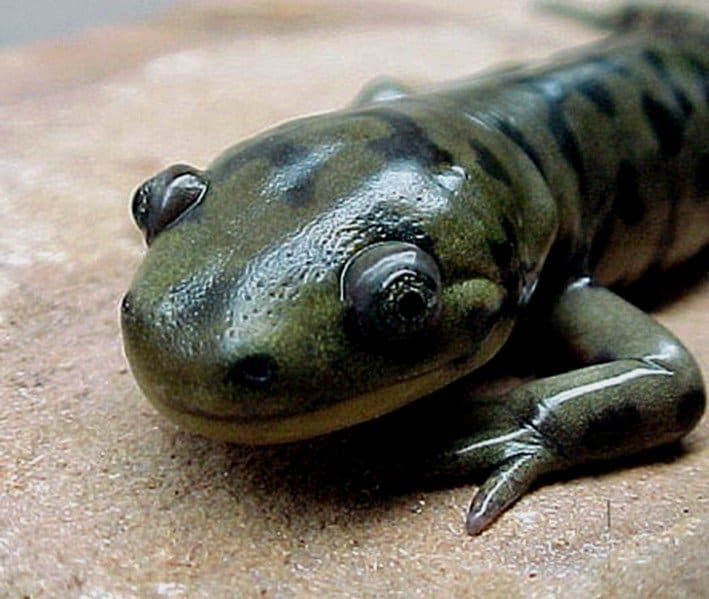
Duller, darker green with gray/brown influence; reads as shaded vegetation or moss. Often accompanied by mottling or lichen-like specks for bark/rock camouflage.
Yellow-brown-leaning green; excellent for dry grasses, scrub, and understory. Frequently seen as subdued dorsal coloration in reptiles, amphibians, and many insects.
Highly saturated, vivid green that can appear "clean" and bright; may be pigment-based or a pigment+structural mix. Often used in display contexts (courtship, warning, territorial signals) and stands out against darker backgrounds.
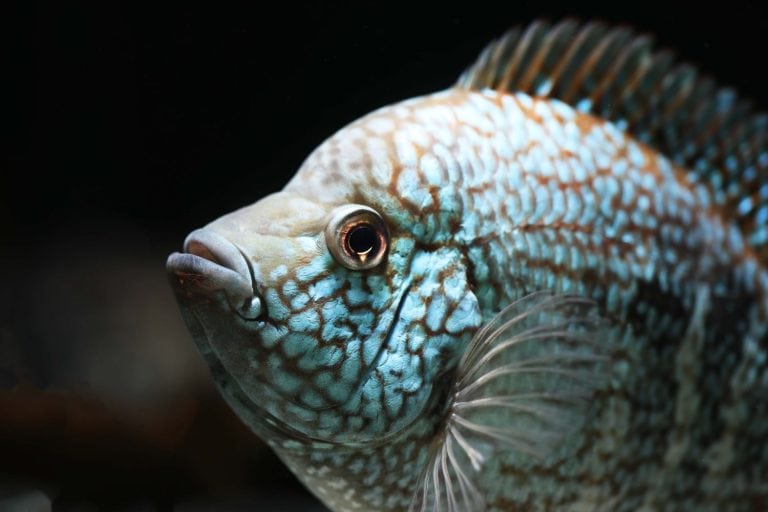
Green shifted toward cyan; common in structural coloration, sometimes appearing cooler and more luminous. Can look different with viewing angle and lighting due to iridescence.
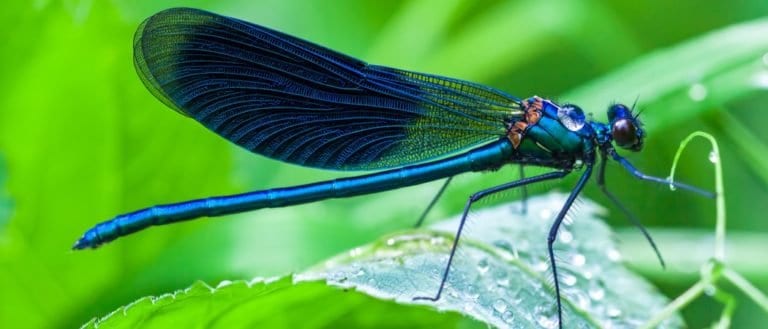
Angle-dependent green with gold/blue flashes; produced by microstructures (common in beetles, some butterflies, some birds). Appears glossy, reflective, and can 'spark' in sun while dulling in shade.
Green broken by pale/yellow/gray flecks and irregular patches; mimics lichens, dappled light, or leaf litter. Helps disrupt body outline, especially on bark or rocks.
Some animals shift green intensity or hue with temperature, stress, hormones, or seasonal molt; greens may dull to brown/olive during cool periods or brighten during breeding.
Biliverdin is a green bile pigment formed during heme breakdown. Chemically it is a bilin (an open-chain or linear tetrapyrrole), not a porphyrin (which is a cyclic tetrapyrrole). It can contribute to genuine green coloration when deposited in tissues (for example, some eggshells, bones, scales, or skin), sometimes shifting toward blue-green or yellow-green depending on concentration and co-occurring pigments.
Diet-derived yellow pigments. Alone they appear yellow to yellow-orange, but when deposited over a blue structural reflector they yield green (common in birds, reptiles, fish, and some insects).
Yellow pigments common in amphibians, reptiles, and fish skin; housed in xanthophores. When layered above iridophores (reflecting blue) they produce green.
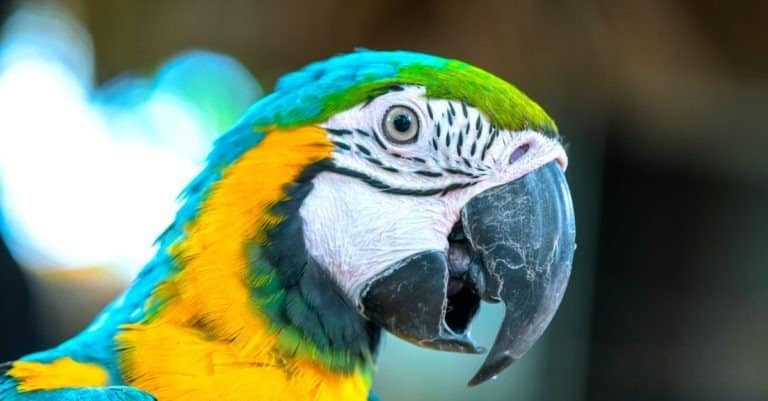
Parrot-specific red-to-yellow polyenal pigments; yellow psittacofulvins over a blue structural base produce many parrot greens. Unlike carotenoids, these are synthesized by the bird.
Dark brown/black pigment that rarely creates green directly but commonly deepens and stabilizes green by absorbing stray light beneath structural layers or pigment layers, increasing saturation and reducing "whiteness."
Physical nanostructures that reflect specific wavelengths (often blue). Combined with yellow pigment layers, the perceived color becomes green; in some taxa the structure itself can peak in green.
Green coloration is broadly adaptive in vegetated and algal environments by reducing detection and increasing survival (camouflage/masquerade), while also enabling nuanced, relatively low-risk visual signaling for mates and conspecific interactions. Its value is highest where backgrounds are predominantly green and lighting is complex, and it can be enhanced by patterns, behavior, and microhabitat choice that reinforce crypsis.
Green coloration blends an animal into foliage, moss, algae, and other plant substrates by matching dominant background hues and reducing visual contrast (especially in the green-sensitive vision of many predators and prey).
Effectiveness: High in dense vegetation, leafy canopies, grasslands, kelp/algal beds, and mossy or lichen-covered substrates; moderate when background greens vary seasonally or are patchy; reduced in arid, leafless, or snow-covered habitats, during drought/leaf-off seasons, or under lighting that shifts colors (e.g., some nocturnal or deep-water conditions where green may appear darker/gray).
Green can act as a low-conspicuousness signaling channel at close range (e.g., subtle saturation/UV components) for territoriality, aggression, appeasement, or status signaling, allowing communication without strongly increasing long-distance detectability.
Effectiveness: High for short-range/social interactions within vegetation where receivers are nearby and can discern hue/saturation (and sometimes UV reflectance); moderate in open habitats where green becomes conspicuous against non-green backgrounds; variable under different light spectra (forest shade vs. direct sun) and for species with limited green discrimination.
Consistent green tones, patterning (e.g., green with specific stripes, borders, or UV highlights), and body-region placement can help conspecifics identify species and avoid mismating in visually complex plant habitats.
Effectiveness: High in communities with many similarly shaped species where pattern placement (not just hue) is distinctive; moderate where many sympatric species are also green and patterns overlap; reduced in low-light environments or where chemical/acoustic cues dominate.
Green coloration can support masquerade or mimicry of leaves, stems, or algae (including leaf-mimicking shapes plus venation-like patterns), making the animal perceived as inedible plant matter rather than prey.
Effectiveness: High when combined with matching shape/behavior (swaying like leaves, remaining still) and in habitats with abundant similar plant models; moderate if only color matches but outline/behavior gives away the animal; reduced when predators use motion, thermal cues, or close-range inspection.
Beyond concealment, green can contribute to predator avoidance by lowering detection and facilitating crypsis during resting, ambush, or nesting; in some taxa it may also coincide with integument properties that reduce wear or provide some UV screening when paired with other pigments.
Effectiveness: High for ambush predators and sedentary life stages in vegetation; moderate when animals must move frequently across mixed substrates; reduced where predators rely less on vision (e.g., some nocturnal mammals) or where backgrounds are predominantly non-green.
In some species, greener, more saturated, or more UV-reflective green (often structurally produced) can indicate individual quality (condition, parasite load, foraging ability) and be favored in mate choice, while still remaining relatively cryptic to distant predators.
Effectiveness: High where mates assess subtle color differences at close range and where green is not overly conspicuous to predators; moderate when environmental variation (diet, season) alters expression and reliability; reduced when predation pressure makes any brightening costly or when females/choosers cannot discriminate green well.
Green surfaces often have intermediate reflectance: they can reflect some visible wavelengths while absorbing others; depending on microstructure and associated infrared properties, green may help balance heat gain and loss in sunflecks and shade typical of vegetated habitats.
Effectiveness: Moderate in dappled-light environments (forest understory, shrublands) where rapid shifts between sun and shade occur; variable depending on whether the green is pigmentary or structural and on near-infrared reflectance; reduced as a primary strategy compared to very dark or very pale coloration in extreme thermal environments.
Green is less commonly aposematic by itself, but can function as warning when paired with contrasting high-visibility elements (e.g., black, red, yellow) or when the green is unusually bright/neon in a context where predators learn that specific green patterns signal toxicity or unpalatability.
Effectiveness: Low to moderate overall; higher in species with strong contrast patterns or repeated predator learning in the community; reduced when green blends into vegetation and fails to stand out or when predators have limited color learning/discrimination.
Often absent or subtle when strong camouflage is essential for both sexes (e.g., many arboreal or foliage-dwelling species). When present, males may show brighter/more saturated green, added iridescence/structural gloss, or contrasting patches (throat, head, flanks) used in courtship and dominance displays, while females tend to be duller or more mottled green-brown for enhanced crypsis (especially during nesting or brooding). In some taxa the reverse occurs if females signal quality or if males prioritize concealment during parental care.
Green coloration commonly improves camouflage in vegetated habitats, which can reduce detectability in field surveys and bias population estimates (e.g., undercounting cryptic frogs, lizards, insects). Survey design often needs adjustments such as auditory call surveys (for amphibians), thermal/IR methods, time-of-day optimization, or capture-mark-recapture approaches. Conversely, bright green morphs or iridescent green structural colors can increase detection and wildlife tourism value, supporting funding and protection, but may also elevate collection/poaching risk (pet trade, ornamental feathers) and disturbance from photographers. Color also affects vulnerability to habitat change: when deforestation, browning vegetation, or invasive plants alter the visual background, formerly well-camouflaged green animals may become more conspicuous to predators, potentially reducing survival. Pollution and diet shifts can change expression of green pigments/structures (e.g., reduced access to pigment precursors or altered molt/skin condition), so color can serve as a visible indicator of ecosystem stress. Finally, public messaging can leverage green animals as "forest health" symbols, but should avoid oversimplifying or neglecting less charismatic, non-green life stages or sexes that also require protection.
Some animals aren't truly green at all: their color comes from layers-blue from feather microstructure plus yellow pigment-so "green" is effectively a built color, not a single dye.
Sloths can look green because algae grow in their fur; the animal's slow lifestyle and grooved hairs create a mini-habitat for algae, boosting camouflage in the canopy.
"Green" can be inside the body: the New Guinea green-blooded skinks get their color from biliverdin, the same breakdown product that turns bruises greenish in humans.
A "green" name doesn't always mean green skin: the green sea turtle is named for green fat and connective tissue, not for a bright green exterior.
Some frogs shift between green and brown by moving pigments within skin cells (and changing how light scatters), so the same animal can look leaf-green by day and bark-brown by night.
Many bright green animals are more visible to their own species than to humans because they also reflect ultraviolet patterns that we can't see.
Structural green in feathers and insect shells works like a nano-scale "color filter": tiny layers reflect green wavelengths the way a tuned mirror reflects specific notes of light.
Camouflage greens often match the spectral "signature" of leaves-meaning they're optimized for how predators see (often with different color sensitivity than humans), not for what looks leaf-like to us.
A leaf-mimicking katydid isn't just green; it often has vein-like lines and shaded gradients, comparable to how a real leaf has lighter veins and darker tissue.
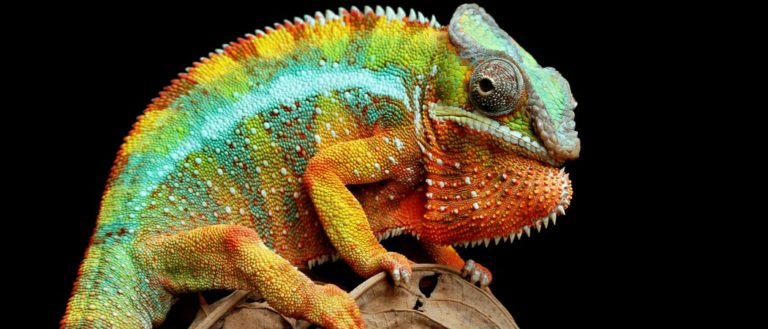
A chameleon's shift from green to yellow or blue-green is less like "painting" and more like re-spacing microscopic crystals under the skin to change which wavelengths get reflected.
Green fluorescence (as in jellyfish GFP) is like a highlighter effect: the animal absorbs higher-energy light (blue/UV) and re-emits it as visible green.
Some "emerald" beetles look metallic because their surface acts like a thin-film coating-similar in principle to the green sheen seen on soap bubbles or oil films.
Green sea turtle (Chelonia mydas) is the largest hard-shelled sea turtle-its name comes from greenish body fat, not a green shell.
The green anaconda (Eunectes murinus) is among the heaviest snakes on Earth; its olive-green patterning is classic river-and-swamp camouflage.
Prasinohaema "green-blooded" skinks of New Guinea push a pigment (biliverdin) to extreme levels-so high that their blood, bones, and tongues can appear greenish.
Many leaf insects and katydids are among the most convincing "living leaf" mimics in the animal world, combining green color with leaf-like veins, notches, and even "bite marks."
Parrots are among the most saturated-looking green birds because their feathers often combine a yellow pigment with a blue structural sheen, producing intense greens that can stay vivid for years.
Some emerald-green insects (e.g., certain jewel beetles) can look extraordinarily bright because their "color" is largely structural-like a microscopic mirror tuned to green wavelengths.
Tailless jumpers, masters of change
Sun-powered lizards of the Americas
Six legs, endless lives.
From geckos to dragons-lizard power
More than night flyers
Crests, ponds, and potent defenses
Hear the rattle, give it space.
Built for land, made for time
Hydraulic feet, star-shaped predators
Brains, beaks, and big voices
Big bill, bigger forest role
Armored ambush masters of water
Big brains, bigger tongues.
Ancient shells, modern survivors
Built to glide, strike, and swallow
Jump, chirp, and shape ecosystems
Small hunters, huge ecological impact
One wing pair. Endless roles.
Born in water, ruler of the air
Eat. Molt. Metamorphose.
Big bluff, sharp beak, potent chemistry.
Feathers, flight, and endless variety
Air-breather with a bubble-nest crown.
Nature's masters of rapid evolution
Thank you for reading! Have some feedback for us?
We appreciate your help in improving our content.
Our editorial team will review your suggestions and make any necessary updates.
There was an error submitting your feedback. Please try again.