|
VOOZH | about |
|
VOOZH | about |
Download the free Kindle app and start reading Kindle books instantly on your smartphone, tablet, or computer - no Kindle device required.
Read instantly on your browser with Kindle for Web.
Using your mobile phone camera - scan the code below and download the Kindle app.
OK
For all the buzz about trendy IT techniques, data processing is still at the core of our systems, especially now that enterprises all over the world are confronted with exploding volumes of data. Database performance has become a major headache, and most IT departments believe that developers should provide simple SQL code to solve immediate problems and let DBAs tune any "bad SQL" later.
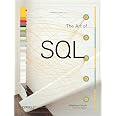
In The Art of SQL, author and SQL expert Stephane Faroult argues that this "safe approach" only leads to disaster. His insightful book, named after Art of War by Sun Tzu, contends that writing quick inefficient code is sweeping the dirt under the rug. SQL code may run for 5 to 10 years, surviving several major releases of the database management system and on several generations of hardware. The code must be fast and sound from the start, and that requires a firm understanding of SQL and relational theory.
The Art of SQL offers best practices that teach experienced SQL users to focus on strategy rather than specifics. Faroult's approach takes a page from Sun Tzu's classic treatise by viewing database design as a military campaign. You need knowledge, skills, and talent. Talent can't be taught, but every strategist from Sun Tzu to modern-day generals believed that it can be nurtured through the experience of others. They passed on their experience acquired in the field through basic principles that served as guiding stars amid the sound and fury of battle. This is what Faroult does with SQL.
Like a successful battle plan, good architectural choices are based on contingencies. What if the volume of this or that table increases unexpectedly? What if, following a merger, the number of users doubles? What if you want to keep several years of data online? Faroult's way of looking at SQL performance may be unconventional and unique, but he's deadly serious about writing good SQL and using SQL well. The Art of SQL is not a cookbook, listing problems and giving recipes. The aim is to get you-and your manager-to raise good questions.
Sharing the knowledge of experts
O'Reilly's mission is to change the world by sharing the knowledge of innovators. For over 40 years, we've inspired companies and individuals to do new things (and do them better) by providing the skills and understanding that are necessary for success.
Our customers are hungry to build the innovations that propel the world forward. And we help them do just that.
Stéphane Faroult is a database consultant, who has helped big companies with database performance issues for more than 25 years. He shared his experience in three SQL books, "The Art of SQL" (O'Reilly), "SQL Refactoring" (O'Reilly) and "SQL Success" (RoughSea). Communication wasn't limited to books, as he also spoke at conferences in Europe and in the US, gave seminars in Asia and Europe, and posted video tutorials on YouTube. His pleasure at sharing technical knowledge led more recently to a new career as a college instructor, and he has taught (so far) in colleges in France, in Canada, in the US and currently in China. Teaching resulted in hard work on presentations, and his latest book "Getting the Message Across" (Apress) demonstrates through examples how to prepare PowerPoint presentations that don’t look like PowerPoint presentations.
Customer Reviews, including Product Star Ratings help customers to learn more about the product and decide whether it is the right product for them.
To calculate the overall star rating and percentage breakdown by star, we don’t use a simple average. Instead, our system considers things like how recent a review is and if the reviewer bought the item on Amazon. It also analyzed reviews to verify trustworthiness.
Learn more how customers reviews work on AmazonStephane Faroult has written perhaps one of the most important books on SQL and Relational Databases since the magisterial work of Dr. E.F. Codd. Faroult uniquely, and effectively, casts the sage teachings of Sun Tzu from "The Art of War" upon the sound theoretical underpinnings of Dr. Codd's "Relational Model for Database Management". And the result is a wonderful, entertaining, and insightful exposition of the critical success factors in modern relational database implementation.
The writing is wonderful, and stunningly clear. A word of caution is necessary, though. Faroult is obviously a brilliant and experienced expert. Some of his work reflected in the corpus of this text is what we could rightly call deep and heavy. It requires serious and thoughtful contemplation. This is not a book to be read quickly. Rather, it is an important work to be studied carefully and referred to often.
There were many aspects of this excellent book that I enjoyed a great deal. His initial chapter on "Laying Plans", Designing Databases for Performance, is one of the best single chapters I've ever read in a technical book. And his final chapter, "Employment of Spies", Monitoring for Performance, was also great. I personally savored Faroult's sage teaching that a sound relational design was the factor most dispositive of success in making modern databases work as described in the first chapter. But I was absolutely delighted that Faroult both headed his final chapter with a quote from the Gospel according to Saint John and included the value of syllogistic logic in his excellent arguments in this final chapter.
In short, the book is great. Faroult is much to be applauded for this excellent work. His book should occupy an honored place in the library of any professional seriously involved in SQL development and design. God bless.
Probably most database solution developers and DBAs have picked up their knowledge of the subject as they have needed it, rather than in a formal and structured (so to speak) method. And even those that have had a structured education probably learned a lot more while in the field. And so there are always gaps. Gaps in technique, but also gaps in the why of many things that I, for example, took for granted about large DBMS's and SQL.
This book handily fills in those gaps. It assumes a moderate to advanced foundation in SQL and DBMS, and then takes off from there.
It is mostly prose with some code and SQL sprinkled throughout, but if you have a foundation, you can flesh out the technique. It is like listening to a graduate level lecture. It is distilled wisdom more than How To, and the more you bring to the material, the more you will get from it. And every page is rich with information. I don't feel like I have wasted my time on any one page, as I often do in the how to manuals.
Definitely an advanced piece.
I haven't yet put any of this book's ideas into practice, but they address real problems I've run into. That in itself makes this book different from the many other database books I've seen, which focus just on introductory stuff.
Imagine a cookbook with no recipes but after you read it it helps to become a better cook. This book does not specifically tells what to do. It does not have codes or technical jargon. It gives you an understanding. The book reads well, it is not full of technical references but it is not to say this book is for someone who does not know the workings of a DBMS. The author draws a relevant parallel between designing a database and waging a war. I enjoyed the quotes thoughtfully peppered in the book. Do me a favor and do not get it...in case we are going after the same job
The rare book on SQL that goes beyond what we've already figured out by hard knocks. The author has a wonderful mix of theory and practice, and shows how procedural realities affect the relational ideals of data access in a relational database.
The chapter on nested data structures is so clear that it makes the topic seem self-evident, so, while simplified, you get a solid picture of what's happening before having to 'attack' an overly-messy real-world project.
It truly makes a developer using SQL feel like s/he has the upper hand, the inside track, and the secret touch!
I think this would be a great book for someone without much experience writing SQL, but for those that have been writing it for years, there's not that much here. I thought the breakdown of the different high level types of queries was interesting. I strongly disliked the reliance on Oracle specific features, and I think some of the monstrous queries could have been handled better. There's a lot of hand-waving about the query optimizer, but in practice this is like the adage that "the compiler is better at optimization than you", which isn't generally true.
The theme is just a way to name the book and provide cute chapter titles and epigraphs. It's not really carried through the content.
I was pleasantly surprised by the content of this book. I was at first concerned about how it is themed after The Art of War, but the material really builds on my basic knowledge of MySQL and I find it very educational. Now I understand why it has kept its resale value in the used bookstores. Recommended.
This is a book in a somewhat-similar vein to Effective C++: 55 Specific Ways to Improve Your Programs and Designs (3rd Edition) (Addison-Wesley Professional Computing Series): it spends most of its time shining light on the dark nooks and crannies of database design and query optimization, and assumes that you've already at least learned that those dark nooks and crannies exist.
It is also written with the database programmer in mind, rather than the database administrator. There are not many books written for us, and I'm really pleased that one of them is a book this excellent.
Plutôt que de lister et décrire les innombrables compteurs de performance, Stéphane Faroult présente ce qui manque à beaucoup d'intervenants intéressés par les temps de réponses d''une base de donnée : une méthode.
Nombreux sont les spécialistes qui disposent d'une solide connaissances des mécanismes internes d''un SGBDR. Mais quand la mer est mauvaise (rough sea), quand les réunions de crises deviennent électriques, il faut plus qu''une connaissance encyclopédique. Car rien n''agace plus les responsables d''un projet que les querelles d''experts. Stéphane est de ceux dont l''autorité apaise les réunions.
Les principes qu''il présente dans son « Art du SQL » et dans son "Refactoring SQL Applications" sont ceux qui prévalent dans l''art de la guerre que livrent au quotidien DBAs et développeurs face à l''explosion des volumes, au code improbable livré en catastrophe à l''époque mais qui depuis n'a cessé d'être copié/collés, aux requêtes générées à la volé par les progiciels et qu''on ne peut pas modifier, à la distance irréconciliable entre logique ensembliste du relationnel et programmation objet avec ses méthodes unitaires, ..'.
Au-delà, préparer la guerre, ie. intégrer cette dimension performance au plus tôt dans la conception du projet, c'est le meilleur moyen de garantir la paix. Et cela est d'autant plus nécessaire que les problèmes de performances naissent souvent d'erreur de conception : en ce sens, penser les performances c'est également
s'interroger sur la fidélité de la représentation électronique du monde réél : la garantie de l'unicité, l'estimation des cardinalités ou le contrôle d'intégrité en sont de bon exemples.
Les principes énoncés nous ramènent souvent au bon sens, celui qui peut disparaître sous la complexité d''un système d''information. Et c'est la marque des gens qui ont les idées claires que de distinguer l''essentiel de l''accessoire, l''information utile parmi le bruit.
Enfin, Stéphane ne se départi jamais de son humour, so british, et c''est un réel bonheur que de lire ou de relire son Art of SQL
Le livre a rencontré un succès international et c''est amplement mérité.
Ottimo libro che permette di acquisire una più ampia visione dei database relazionali sia in fase di modellazione che di ottimizzazione delle queries. A mio parere per comprendere il valore dei suggerimenti dell'autore è necessario avere già un'esperienza concreta con un database relazionale.
One of the best Sql books books available -still very relevant in 2011 - i have read this book many times - the author writes using superb entertaining battle analogies to aid understandin of very complex topics. Enjoyable and illuminating - Most sql books are too simplistic and therefore very boring not this one - also very practical.
This books is mostly filled with Oracle examples, but the ideas presented are applicable to other RDBM's too. It presents you SQL in a way no other book does.
Ottimo libro che spiega bene molti parti di applicazioni di SQL.
Consigliato a chi è gia nel campo da un certi periodo.