|
VOOZH | about |
|
VOOZH | about |
Download the free Kindle app and start reading Kindle books instantly on your smartphone, tablet, or computer - no Kindle device required.
Read instantly on your browser with Kindle for Web.
Using your mobile phone camera - scan the code below and download the Kindle app.
OK
Explore your book, then jump right back to where you left off with Page Flip.
View high quality images that let you zoom in to take a closer look.
Enjoy features only possible in digital – start reading right away, carry your library with you, adjust the font, create shareable notes and highlights, and more.
Discover additional details about the events, people, and places in your book, with Wikipedia integration.
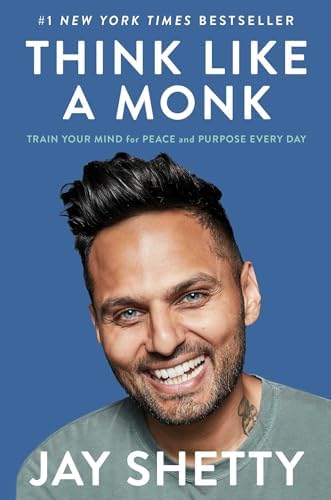
Author Jay Shetty aims to elevate us from the negativity, anxiety, and hopelessness of today’s
world in his book THINK LIKE A MONK: Train Your Mind for Peace and Purpose Every Day, to be
published by Simon and Schuster on April 14. Drawing on both Jay’s experience as a monk in a
Hindu ashram and his post-monk life as an influential thinker and spiritual guide, Think Like a
Monk distills monk wisdom into practical, everyday steps anyone can take to live a less anxious,
more meaningful life.
How can we transform our experience of life today? Jay says, “When I trained as a monk, I
found that monks are able to remain centered and calm amid all the chaos that life throws at
us. Monks are the absolute experts in mastering their minds. I wrote THINK LIKE A MONK in
order to help everyone access the same mindset, the same thinking patterns, the same
processes that help monks find peace, balance, and purpose.”
Like his monk teachers, Jay draws from the Bhagavad Gita, a sacred Indian text based on the
Upanishads, writings from around 800-400 BCE. In a world where people are constantly looking
for answers, Jay believes the wisdom for how to find peace and purpose has been here all
along.
***
Born in north London in 1987, Jay and his sister were raised in a middle-class Indian family.
Until the age of 14, Jay did well in school, stayed out of trouble and tried his best to live up to
his parents’ high expectations. But he was a shy, introverted young boy who was bullied for
being overweight and a little nerdy. When he started secondary school, things changed. He
began playing soccer and rugby, became more popular, and started mixing with the wrong
crowd. Jay’s thrill-seeking ventures got him suspended from school more than once as he tried
to find his identity.
By the time he got to college at Cass Business School in London in 2007, Jay had shifted his
curiosity in more productive directions. He was reading autobiographies of everyone from
Malcolm X to David Beckham, driven to understand the roots of success and making a
difference in the world. Still, when a friend invited him to hear a monk give a talk, he agreed to
go only if his friend would join him at a club afterward.
That night, the monk, Gauranga Das, spoke about the principle of self-sacrifice. He talked about
how people should plant trees under whose shade they do not plan to sit. This was a
transformative moment for Jay. He’d been focused on the success of people who’d gone from
nothing to something—rags-to-riches stories—but this man had done the opposite. And yet he
appeared joyous, confident, and at peace. “He was saying that the greatest thing you can do
with your talents and your skills is to use them in the service of others,” Shetty, now 32, told
People magazine. For Jay, this was a completely new idea of success.
In the community where Jay grew up, it was expected that he would become one of three
things: a doctor, a lawyer, or a failure. When he headed to India to study with monks, his family
was convinced he had chosen option three.
After graduating from college in 2010 with a 1 st class Bachelor of Science degree with Honors in
Behavioral Science, Jay traded his suits for robes, shaved his head, and moved to the ashram,
where he slept on the floor and lived out of a gym locker. Half the day was spent on personal
growth, meditating for hours and studying ancient scriptures. The rest of the time was spent
helping others.
In the course of his studies, Jay was amazed to observe that the wisdom of the monks was as
relevant today as it was when it was first put in writing over 3000 years ago. Then, after three
years as a monk in ashrams in London and Mumbai, one of his teachers told him that he would
have more impact on the world if he left the monk’s path to share his experience and wisdom
with others. This advice was crushing—Jay thought he was going to be a monk for the rest of
his life. In debt, with no employable skills on his resume, he moved back home to north London
with his parents. “Everything I'd learned was tested in that moment,” Jay says of the transition.
“I had to figure out how to put everything I'd learned into practice in the real world.”
Shetty reconnected with old school friends—many working for some of the world’s largest
corporations—who were experiencing tremendous stress, pressure, and unhappiness, and they
invited Shetty to coach them on well-being, purpose, and mindfulness. Jay says, “Very quickly I
realized that a big part of my passion and purpose is to serve and give the wisdom I’ve learned
with others. I started small. For almost a decade I shared my thoughts on psychology,
spirituality, philosophy, and behavioral science at universities, local events, and in small groups
in London. Three years ago I moved to New York, then Los Angeles, and began to present the
wisdom and lessons I had learned from my amazing mentors and coaches online through video.
My intention was to share wisdom with more people so they would see there were other
people out there like them, and it would make a difference. And it did.”
***
Since launching his video channel in 2016, Jay has produced over 400 videos, which have
amassed more than 6.5 billion views and gained over 34 million followers globally. In 2017, he
was named in the Forbes magazine 30-under-30 for being a game-changer in the world of
media. In 2018, he had the #1 video on Facebook with over 360 million views. Jay was the cover
of the November 2019 issue of Adweek and was a People Magazine “one to watch” in
December 2019.
On his podcast, On Purpose, every Monday Jay conducts an hour long interview with a
different inspirational guest. Past guests include Kobe Bryant, Jada Pinkett Smith, Russel Brand,
Novak Djokovic, Khloe Kardashian, and Ray Dalio. Every Friday Jay gives his own guidance on a
topic such as procrastination, confidence, or decision-making.
The podcast, launched in 2019, received 52 million audio downloads in its first year and over
ten million views in podcast videos. It won that year’s Shorty Award for Health and Wellness.
iTunes named On Purpose in their Top New Podcast’s of 2019 and consistently rank Jay as the
#1 Health Podcast. Spotify named Jay the #1 Podcast in India.
Jay’s message has resonated with companies such as Google, L’Oreal, Facebook, Coca Cola,
HSBC, EY, Microsoft and Accenture, who have invited him to lead seminars and deliver keynotes
on finding your purpose in the workplace, well-being for the future, and digital media strategy..
He’s become so much of a cultural phenomenon that he was even asked to portray a version of
himself in the “Bad Boys For Life” trailer with Will Smith and Martin Lawrence.
2020 will bring Jay’s message to a larger audience than ever with the publication of THINK LIKE
A MONK. In the book, Jay draws deeply from ancient wisdom, modern social science, and his
own rich experiences in the ashram to articulate a journey similar to the one he took. He guides
people step-by-step through the process of adapting to the monk mindset, first by letting go—a
cleansing to make space for growth; then by growing—reshaping your life to make decisions
with intention, purpose and confidence; and finally by giving—looking beyond yourself to
deepen gratitude and relationships. He says, “People need to go through experiences to learn,
so the book is full of practical exercises, activities, and experiments. Everything in this book is
something one can actually do in their own time at home, whether in the back of a car, on a
commute, walking the dog, or cooking.” Along the way, Jay proves that everyone can—and
should—think like a monk.
Simon & Schuster will publish the book in the US and Canada, and it will be published in more
than 30 countries worldwide. Simon & Schuster VP and Executive Editor Eamon Dolan says,
“Nobody makes the timeless feel more timely than Jay does. He makes ancient wisdom, which
often comes across as abstract, so clear, so inspiring, and so practical.”
Jay lives in Los Angeles with his wife, Radhi Devlukia Shetty, a plant-based dietitian and
Ayurvedic medicine enthusiast, to whom the book is dedicated. Jay enjoys listening to Drake at
the gym and nature sounds while meditating. He’s a Manchester United fan and really admired
Cristiano Ronaldo’s work ethic and determination on the pitch. Jay and Radhi love eating at
plant-based restaurants, visiting spas, and spending time outdoors cycling and in escape rooms.
“Jay Shetty shows you step by step how Self Power emerges when you shift your identity from
self image to self esteem. This book could change your life and move you from the hypnosis of
social conditioning to being the creative architect of your life journey.”
— Deepak Chopra
“Grab this book, find a comfortable chair, and let Jay Shetty take you on a life-changing journey.
A gifted teacher, Jay guides us with warmth and clarity on a path to greater joy and purpose in
living, offering wisdom that we can put into practice right now. You will want to share it with
everyone you love.”
—Robert Waldinger, MD
Professor of Psychiatry, Harvard Medical School
Director, Harvard Study of Adult Development
Sensei and Priest, Boundless Way Zen
Customer Reviews, including Product Star Ratings help customers to learn more about the product and decide whether it is the right product for them.
To calculate the overall star rating and percentage breakdown by star, we don’t use a simple average. Instead, our system considers things like how recent a review is and if the reviewer bought the item on Amazon. It also analyzed reviews to verify trustworthiness.
Learn more how customers reviews work on AmazonReading Think Like a Monk by Jay Shetty has truly been life-changing for me. This book didn’t just give me information—it gave me perspective, clarity, and practical tools that I could immediately apply to my own life.
What stood out most was how Jay took deep, spiritual lessons and made them simple and relatable. As I turned the pages, I found myself reflecting on my own habits, relationships, and mindset. I realized how much of my daily stress comes from clinging to things I can’t control and how freeing it is to let go. His words reminded me that peace, purpose, and happiness are choices we cultivate within ourselves, not things we chase in the outside world.
One of the most powerful lessons for me was learning how to respond instead of react. That shift alone has changed the way I handle challenges and how I interact with others. I also found myself journaling more, slowing down to practice gratitude, and making time for stillness instead of always rushing.
This book has inspired me to live with more intention, to serve others from the heart, and to align my actions with my values. I feel lighter, more centered, and more focused on what truly matters.
I’m grateful I picked up this book because it gave me exactly what I needed at this stage in my journey. I would encourage anyone searching for direction, healing, or inner peace to read it. You won’t be the same after.
Fantastic read! Life changing and helped to make me a happier version of myself!
Good read, makes me think about all I do and how I live my life, the changes I will make to be a better person.
Good book to read. Listen to him on podcast
As leadership and life coaching books have proliferated over the years, I have read many of them, but have stopped reading most of them for two primary reasons: 1) many don’t cover much new ground, or they take a narrow angle from someone else’s original idea and beat it to death for 250 pages when a 5-page article would have sufficed, and 2) many aren’t very good at helping you put their ideas into practice. In Think Like a Monk, Jay Shetty cannot claim to be raising new ideas, as its ideas are based on a millennia-old spiritual faith system. Using precepts from Eastern spiritual systems in a leadership context is not new either: I read the Tao of Leadership years ago (skipped the Tao of Pooh though) and Brene Brown has successfully recommended thoughtful and vulnerable approaches in her leadership books. But Shetty takes on Buddhism and improving ones’ life are fresh in their enthusiasm and succinctness (Brown’s books can be lengthy and emotionally wringing); plus he provides guided meditations/tests that allow one to easily apply these precepts, if one chooses to do so. Anyone who has studied Buddhism in even a basic fashion will recognize much of this material, but Shetty’s life experiences (he’s lived both in an ashram and in the real business world) gives him a unique perspective and the authority to share how to apply these ancient and great ideas most effectively in our modern world. Think Like a Monk is not just one of the best leadership/life books I’ve read recently, but also one of the best books about Buddhism.
I think this book works well for a general audience, especially for readers who want practical ways to think about peace, purpose, and daily life. I grew up Buddhist, so from that perspective I did not find it very deep as a Buddhist text. To me, much of it reads more like modern self-help with Buddhist-inspired ideas.
That said, I don’t think it is really meant to be a serious religious or doctrinal book. It gives accessible frameworks and simple ways of thinking that can still be useful. I can see why many people like it, especially if they are new to these ideas. For a general audience, I think it is good.
I like how easy it was to read the content of this books and the exercises there were throughout the book. I definitely would read again.
Absolutely loved this book! So much I could say about it but let’s just say, get your highlighter ready, a notebook and pen and even tune into his podcast for an added challenge to self. There are soooo many gems in this book and it’s a lot to digest so plan for take your time and treat it as a journey! If you’re going through life with questions and feelings of unrest or entrapment, this book will free you in a way (even though you ultimately have to make the decision to free yourself).
Personally, I would ignore the negative reviews about him recycling content because what does that have to do with anything? Isn’t everything basically recycled? Only thing you can’t recycle is your own personal experience—-those are facts and you own them. And for people to say there is no proof of him being a Monk is BS because what was he supposed to do?—-take a picture of himself being a Monk and post it for “proof”? That defeats the entire purpose of being a Monk. I swear people are so miserable and they use any and very chance to devalue others and their experiences—-henceforth their need to read this book and open their hearts while doing so.
Anyway, this is a book you won’t regret buying and you can read it multiple times throughout life. Took my three months to read it because not only was I reading other books but I was also purposely taking my time to digest the material and complete the exercises, all of which I found very helpful! If you happen to start reading it and you don’t find it appealing, I recommend putting it down and trying again in 6months to a year. Sometimes we can’t read certain things if we aren’t in that season or head space to receive it. If after a year, you’re still not feeling it —-gift it to someone else. But this is definitely an awesome read and I can tell her put his heart into it!
The book is really practical and filled with mind blowing information. I love the exercises and meditation instructions, so good!
There is no real way to articulate how life-changing a head-injury is, it is like trying to explain the intricacies of, and why human fingerprints are all different, and in uniqueness, we are not unique. That is a long-story-short hahaha
After listening to Jay Shetty talking with Dave Aspery on Bulletproof Radio, well I bought it on my kindle while listening. Jay - who has written so beautifully and eloquently, like his speech - has provided a calming space while navigating my hectic head-injured life. I am always on the lookout for techniques to ease the burden of my experience and gain more energy.
I will be recommending Jay Shetty's book to everyone.
Highly recommend
2020 has been a tough year for most people. There has been lots of chaos and challenges which have made having calm, balance and peace quite difficult. In many cases, this has been particularly difficult because of our ways of thinking. There has been lots of fear and negativity and there have been opportunities for us to better connect with our intention and purpose and find greater meaning in life.
Jay provides great frameworks which combine ancient wisdom with the practicalities of living in the modern world. Jay was a Monk for 3 years and he is able to bring to life stories which show how he developed his thinking and how you don't have to be a monk to think like a monk.
Jay has had phenomenal success and it is clear that his way of thinking, daily routines, practices and habits have helped shape this success. He uses lots of anecdotes of his journey and then combines this with references to ancient texts to highlight concepts and practices.
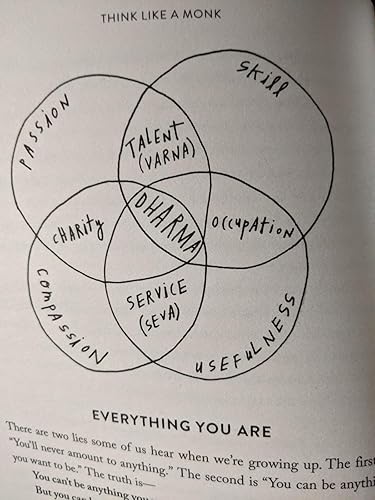
What I love is how humble Jay in his writing, he applies thinking like a Monk through his writing. The book does not preach, it just lays out several different concepts and puts a "Try this" frame around it. The combination of anecdotes, ancient text references, exercises and diagrams really help to bring out the concepts but most importantly provide a practical framework to use.
Jay is a powerful storyteller and he uses the power of story nicely in the book. Just like any other self-development book, it does have concepts that you would have seen in other books. However, lots of people read lots of self-development books and know these concepts at an intellectual level but don't necessarily do anything with this. Lots of people know about Morning Rituals and Gratitude but they still find it difficult to apply these on a daily basis.
This book provides some simple but really powerful ways to change your thinking which will help you train your mind for peace and purpose every day. I liked the meditation examples and also the Vedic Personality Test in the Appendix. Again this is provided with a frame to explore and try it out as opposed to being the exact thing you need to do and use.
If you want to have more conscious, purposeful living then I highly recommend this book. Remember though, reading the book itself will not change your thinking, it will be practical aspects of reflecting and trying out the various concepts within which will support you with your personal growth.
2020 has been a tough year for most people. There has been lots of chaos and challenges which have made having calm, balance and peace quite difficult. In many cases, this has been particularly difficult because of our ways of thinking. There has been lots of fear and negativity and there have been opportunities for us to better connect with our intention and purpose and find greater meaning in life.
Jay provides great frameworks which combine ancient wisdom with the practicalities of living in the modern world. Jay was a Monk for 3 years and he is able to bring to life stories which show how he developed his thinking and how you don't have to be a monk to think like a monk.
Jay has had phenomenal success and it is clear that his way of thinking, daily routines, practices and habits have helped shape this success. He uses lots of anecdotes of his journey and then combines this with references to ancient texts to highlight concepts and practices.
What I love is how humble Jay in his writing, he applies thinking like a Monk through his writing. The book does not preach, it just lays out several different concepts and puts a "Try this" frame around it. The combination of anecdotes, ancient text references, exercises and diagrams really help to bring out the concepts but most importantly provide a practical framework to use.
Jay is a powerful storyteller and he uses the power of story nicely in the book. Just like any other self-development book, it does have concepts that you would have seen in other books. However, lots of people read lots of self-development books and know these concepts at an intellectual level but don't necessarily do anything with this. Lots of people know about Morning Rituals and Gratitude but they still find it difficult to apply these on a daily basis.
This book provides some simple but really powerful ways to change your thinking which will help you train your mind for peace and purpose every day. I liked the meditation examples and also the Vedic Personality Test in the Appendix. Again this is provided with a frame to explore and try it out as opposed to being the exact thing you need to do and use.
If you want to have more conscious, purposeful living then I highly recommend this book. Remember though, reading the book itself will not change your thinking, it will be practical aspects of reflecting and trying out the various concepts within which will support you with your personal growth.