

👁 Against a black background, ELI5 is printed in large blue outline text to the top right. Below is Osiris REx mission in purple to left of the mission badge. Hannah Kaplan stands to the left with the NASA meatball logo.

👁 Colorful image of ball-like consortium of cells. The balls look like yellow, pink, and green balls of twine.




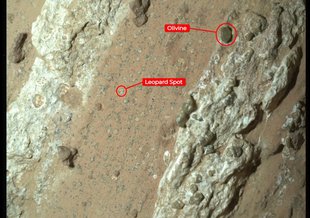

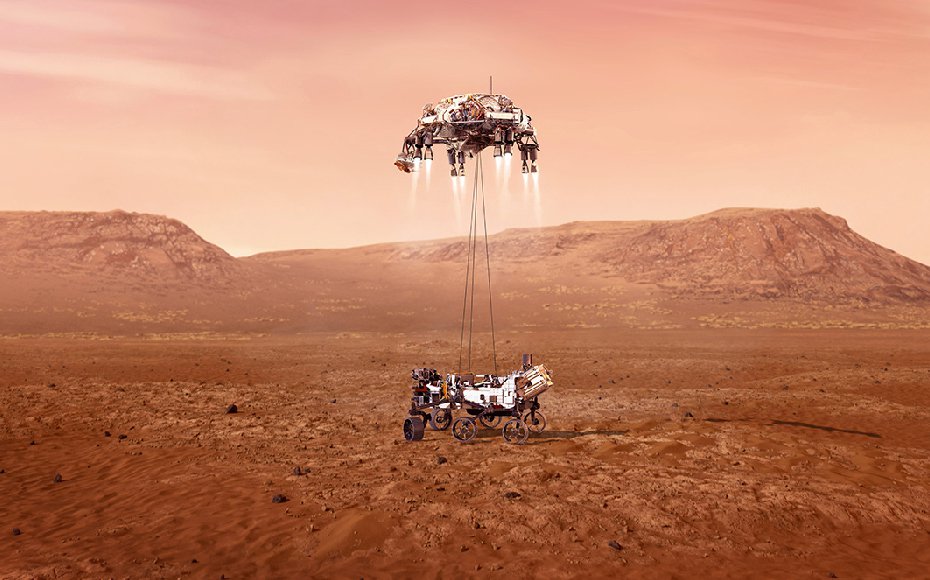
NASA's Mars 2020 mission is the next step in NASA's long-term robotic exploration of Mars. The rover Perseverance will provide important data relevant to astrobiology research, along with a vast amount of geological information about the landing site and the planet at large that will help put the astrobiological data into context.
Perseverance will not be looking for organisms living on Mars today. However, the rover will collect data that could be used to identify biosignatures of ancient microbial life.
What really sets this mission apart is that Perseverance will be collecting a suite of samples to be returned to Earth via a Mars Sample Return mission. The opportunity to bring back samples from another planet will allow our researchers to interrogate them with all of the sophistication and thoroughness that Earth-based instrumentation provides.