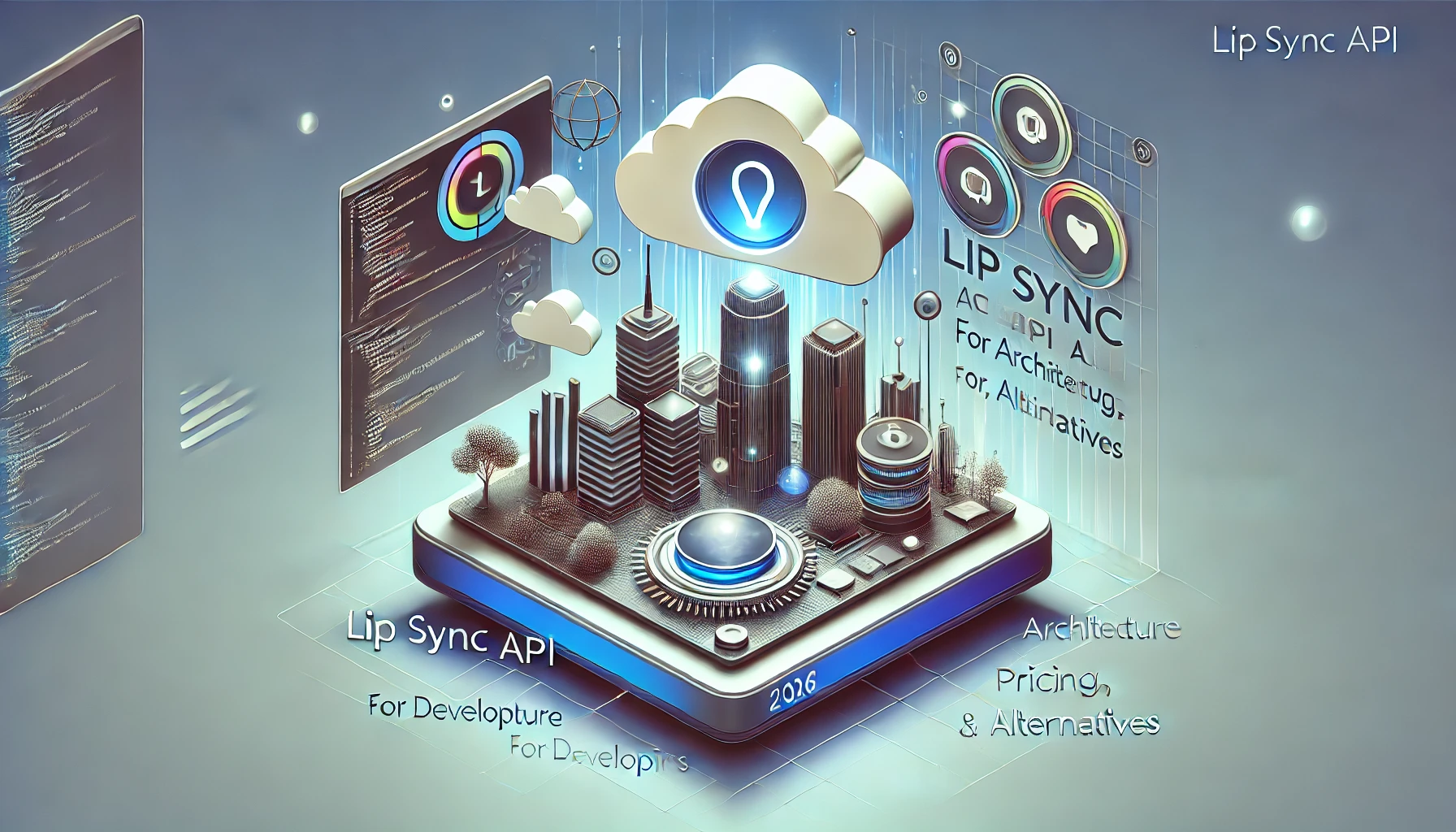
Lip Sync API for Developers 2026: Best Architecture, Pricing, and Alternatives#
The phrase lip sync API usually attracts two types of people: creators trying to animate talking heads, and developers trying to build products around them. This guide is for the second group.
If you want to integrate AI lip sync into apps, automation pipelines, or video products, the real challenge is not just making mouths move. It is building a workflow that handles audio, avatars, rendering queues, retries, and cost control without turning into a mess.
What is a lip sync API?#
A lip sync API takes audio and some visual source, then generates or adjusts video so mouth movement matches the speech. Depending on the provider, the visual source can be:
- A static portrait
- A video clip
- A generated avatar
- A character animation rig
Developers use lip sync APIs for:
- AI avatar videos
- Localization and dubbing
- UGC automation
- Product walkthroughs
- Training content
- Creator tools
Lip sync API vs alternatives#
| Tool type | Strength | Weakness | Best for |
|---|---|---|---|
| Dedicated lip sync API | Strong mouth alignment | Narrow workflow scope | Avatar products |
| Full video avatar platforms | Easier end-to-end UX | Less flexible | Business video generation |
| Open-source sync models | More control | Higher infra complexity | Custom systems |
| Crazyrouter-compatible stack | Flexible multi-step workflow | Requires orchestration | Developers building products |
The lesson is simple: lip sync is rarely a standalone feature in production. It usually sits inside a larger media pipeline.
How to build a lip sync workflow#
A typical production flow looks like this:
- Generate or upload the script
- Create speech audio with TTS
- Upload portrait or video source
- Submit lip sync generation job
- Poll or receive webhook on completion
- Store, review, and deliver output
cURL example#
curl https://crazyrouter.com/v1/video/lip-sync \
 -H "Authorization: Bearer YOUR_API_KEY" \
 -H "Content-Type: application/json" \
 -d '{
 "model": "lip-sync-v1",
 "image_url": "https://example.com/avatar.jpg",
 "audio_url": "https://example.com/voice.mp3"
 }'
Python example#
import requests

payload = {
 "model": "lip-sync-v1",
 "image_url": "https://example.com/avatar.jpg",
 "audio_url": "https://example.com/narration.mp3"
}

resp = requests.post(
 "https://crazyrouter.com/v1/video/lip-sync",
 headers={"Authorization": "Bearer YOUR_API_KEY"},
 json=payload,
 timeout=60,
)

print(resp.json())
Node.js example#
const response = await fetch("https://crazyrouter.com/v1/video/lip-sync", {
 method: "POST",
 headers: {
 "Authorization": `Bearer ${process.env.CRAZYROUTER_API_KEY}`,
 "Content-Type": "application/json"
 },
 body: JSON.stringify({
 model: "lip-sync-v1",
 image_url: "https://example.com/avatar.jpg",
 audio_url: "https://example.com/audio.mp3"
 })
});

console.log(await response.json());
Pricing breakdown#
Lip sync pricing usually depends on:
- Video duration
- Resolution
- Avatar complexity
- Whether TTS is bundled
- Whether rendering includes background effects or editing
Official vs Crazyrouter architecture#
| Approach | Advantage | Problem |
|---|---|---|
| Single-provider lip sync tool | Simple demo path | Limited flexibility |
| Multi-step routed workflow via Crazyrouter | Better control and vendor choice | More engineering required |
This is where Crazyrouter becomes useful. You can combine speech generation, translation, script refinement, and media rendering in one API-driven stack instead of stitching together unrelated products.
Best practices for production#
1. Treat it as a pipeline, not one call#
Script, voice, sync, render, moderation, delivery.
2. Version voices and avatars#
Users notice inconsistency immediately.
3. Budget by duration#
Long videos are expensive and slower. Keep clips short by default.
4. Build retries carefully#
Rendering jobs can fail midway or produce bad sync.
5. Add manual review for public content#
Especially for marketing or customer-facing assets.
FAQ#
What is a lip sync API used for?#
A lip sync API is used to align speech audio with a face or avatar in generated or edited video.
Can developers build avatar apps with lip sync APIs?#
Yes. Lip sync APIs are commonly used in avatar products, training video tools, and localized media workflows.
What is the best lip sync API?#
It depends on whether you care most about quality, speed, cost, or end-to-end workflow support.
Is lip sync AI expensive?#
It can be, especially for long or high-resolution videos. That is why workflow design and cost controls matter.
Why use Crazyrouter for lip sync workflows?#
Because Crazyrouter helps developers combine multiple AI components in one routed stack instead of juggling separate vendors for text, voice, and video.
Summary#
A lip sync API is useful, but only as part of a broader media workflow. The winning teams in 2026 are not the ones calling one flashy endpoint. They are the ones building clean, reliable pipelines for script, voice, sync, and delivery.
If you want to build that stack without hard-locking yourself into one provider, start with Crazyrouter. It is the practical way to assemble AI media workflows that can actually survive production traffic.