
Encapsulate a request as an object, thereby letting you parameterize clients with different requests, queue or log requests, and support undoable operations.

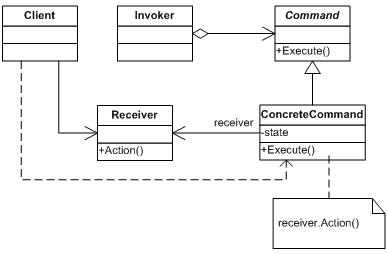
Participants
- Command: declares an interface for executing an operation
- ConcreteCommand: defines a binding between a Receiver object and an action. Implements Execute by invoking the corresponding operation(s) on Receiver
- Client: creates a ConcreteCommand object and sets its receiver
- Invoker: asks the command to carry out the request
- Receiver: knows how to perform the operations associated with carrying out the request.
Code
public class Main {

 public static void main(String[] args) {
 Receiver receiver = new Receiver();
 Command command = new ConcreteCommand(receiver);
 Invoker invoker = new Invoker();
 invoker.setCommand(command);
 invoker.executeCommand();
 }
}

public abstract class Command {

 protected Receiver receiver;

 public Command(Receiver receiver) {
 this.receiver = receiver;
 }

 public abstract void execute();
}

public class ConcreteCommand extends Command {

 public ConcreteCommand(Receiver receiver) {
 super(receiver);
 }

 @Override
 public void execute() {
 receiver.action();
 }
}

public class Receiver {

 public void action() {
 System.out.println("Called Receiver.action()");
 }
}

public class Invoker {

 private Command command;

 public void setCommand(Command command) {
 this.command = command;
 }

 public void executeCommand() {
 command.execute();
 }
}
Output
Called Receiver.action()


For further actions, you may consider blocking this person and/or reporting abuse


