
Abstract
Familial juvenile nephronophthisis (NPH) is an autosomal recessive interstitial nephritis leading to terminal renal failure around puberty. Associations with extrarenal symptoms have been reported, mainly with Leber amaurosis (termed Senior-Løken syndrome). By means of linkage analysis a gene NPH1 for the purely renal form of NPH has been localized to chromosome 2. Genetic heterogeneity has been shown between NPH and Senior-Løken syndrome and also within the group of isolated NPH cases. Further characterization of the NPH1 region led to the isolation of large homozygous deletions in approximately 70% of patients with NPH. The detection of these deletions by PCR represents a simple noninvasive method for precise diagnosis in the majority of patients suspected of having NPH.
This is a preview of subscription content, to check access.
Access this article
Subscribe and save
- Starting from 10 chapters or articles per month
- Access and download chapters and articles from more than 300k books and 2,500 journals
- Cancel anytime
Buy Now
Price excludes VAT (USA)
Tax calculation will be finalised during checkout.
Instant access to the full article PDF.
A case report of NPHP1 deletion in Chinese twins with nephronophthisis
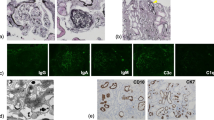
Atypical histological abnormalities in an adult patient with nephronophthisis harboring NPHP1 deletion: a case report
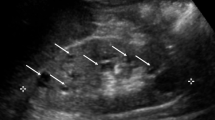
Nephronophthisis: a pathological and genetic perspective
Explore related subjects
Discover the latest articles, books and news in related subjects, suggested using machine learning.Additional information
Received: 23 April 1997 / Accepted: 9 October 1997
Rights and permissions
About this article
Cite this article
Konrad, M., Saunier, S., Calado, J. et al. Familial juvenile nephronophthisis. J Mol Med 76, 310–316 (1998). https://doi.org/10.1007/s001090050222
Issue date:
DOI: https://doi.org/10.1007/s001090050222
Share this article
Anyone you share the following link with will be able to read this content:
Sorry, a shareable link is not currently available for this article.
Provided by the Springer Nature SharedIt content-sharing initiative