
Abstract
While severe acute respiratory syndrome coronavirus (SARS-CoV) was initially thought to enter cells through direct fusion with the plasma membrane, more recent evidence suggests that virus entry may also involve endocytosis. We have found that SARS-CoV enters cells via pH- and receptor-dependent endocytosis. Treatment of cells with either SARS-CoV spike protein or spike-bearing pseudoviruses resulted in the translocation of angiotensin-converting enzyme 2 (ACE2), the functional receptor of SARS-CoV, from the cell surface to endosomes. In addition, the spike-bearing pseudoviruses and early endosome antigen 1 were found to colocalize in endosomes. Further analyses using specific endocytic pathway inhibitors and dominant-negative Eps15 as well as caveolin-1 colocalization study suggested that virus entry was mediated by a clathrin- and caveolae-independent mechanism. Moreover, cholesterol- and sphingolipid-rich lipid raft microdomains in the plasma membrane, which have been shown to act as platforms for many physiological signaling pathways, were shown to be involved in virus entry. Endocytic entry of SARS-CoV may expand the cellular range of SARS-CoV infection, and our findings here contribute to the understanding of SARS-CoV pathogenesis, providing new information for anti-viral drug research.
Mechanisms of SARS-CoV-2 entry into cells
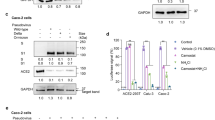
P21-activated kinase 1 (PAK1)-mediated cytoskeleton rearrangement promotes SARS-CoV-2 entry and ACE2 autophagic degradation
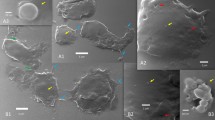
An intra-cytoplasmic route for SARS-CoV-2 transmission unveiled by Helium-ion microscopy
Log in or create a free account to read this content
Gain free access to this article, as well as selected content from this journal and more on nature.com
or


Abbreviations
- (ACE2):
-
angiotensin converting enzyme 2
- (CPZ):
-
chlorpromazine
- (CTB):
-
cholera toxin subunit B
- (EEA1):
-
early endosome antigen 1
- (HEK293E):
-
human embryonic kidney 293E
- (MβCD):
-
methyl-β-cyclodextrin
- (SARS):
-
severe acute respiratory syndrome
- (SARS-CoV):
-
severe acute respiratory syndrome coronavirus
References
Drosten C, Gunther S, Preiser W, et al. Identification of a novel coronavirus in patients with severe acute respiratory syndrome. N Engl J Med 2003; 348:1967–1976.
Ksiazek TG, Erdman D, Goldsmith CS, et al. A novel coronavirus associated with severe acute respiratory syndrome. N Engl J Med 2003; 348:1953–1966.
Pelkmans L, Helenius A . Insider information: what viruses tell us about endocytosis. Curr Opin Cell Biol 2003; 15:414–422.
Sieczkarski SB, Whittaker GR . Dissecting virus entry via endocytosis. J Gen Virol 2002; 83:1535–1545.
Fackler OT, Peterlin BM . Endocytic entry of HIV-1. Curr Biol 2000; 10:1005–1008.
Matlin KS, Reggio H, Helenius A, Simons K . Infectious entry pathway of influenza virus in a canine kidney cell line. J Cell Biol 1981; 91:601–613.
Sieczkarski SB, Whittaker GR . Influenza virus can enter and infect cells in the absence of clathrin-mediated endocytosis. J Virol 2002; 76:10455–10464.
Nunes-Correia I, Eulalio A, Nir S, Pedroso de Lima MC . Caveolae as an additional route for influenza virus endocytosis in MDCK cells. Cell Mol Biol Lett 2004; 9:47–60.
Ng ML, Tan SH, See EE, Ooi EE, Ling AE . Early events of SARS coronavirus infection in vero cells. J Med Virol 2003; 71:323–331.
Qinfen Z, Jinming C, Xiaojun H, et al. The life cycle of SARS coronavirus in Vero E6 cells. J Med Virol 2004; 73:332–337.
Simmons G, Reeves JD, Rennekamp AJ, Amberg SM, Piefer AJ, Bates P . Characterization of severe acute respiratory syndrome-associated coronavirus (SARS-CoV) spike glycoprotein-mediated viral entry. Proc Natl Acad Sci USA 2004; 101:4240–4245.
Yang ZY, Huang Y, Ganesh L, et al. pH-dependent entry of severe acute respiratory syndrome coronavirus is mediated by the spike glycoprotein and enhanced by dendritic cell transfer through DC-SIGN. J Virol 2004; 78:5642–5650.
Huang IC, Bosch BJ, Li F, et al. SARS coronavirus, but not human coronavirus NL63, utilizes cathepsin L to infect ACE2-expressing cells. J Biol Chem 2006; 281:3198–3203.
Simmons G, Gosalia DN, Rennekamp AJ, Reeves JD, Diamond SL, Bates P . Inhibitors of cathepsin L prevent severe acute respiratory syndrome coronavirus entry. Proc Natl Acad Sci USA 2005; 102:11876–11881.
Moore MJ, Dorfman T, Li W, et al. Retroviruses pseudotyped with the severe acute respiratory syndrome coronavirus spike protein efficiently infect cells expressing angiotensin-converting enzyme 2. J Virol 2004; 78:10628–10635.
Kuba K, Imai Y, Rao S, et al. A crucial role of angiotensin converting enzyme 2 (ACE2) in SARS coronavirus-induced lung injury. Nat Med 2005; 11:875–879.
Ray RB, Basu A, Steele R, et al. Ebola virus glycoprotein-mediated anoikis of primary human cardiac microvascular endothelial cells. Virology 2004; 321:181–188.
Blanchard E, Belouzard S, Goueslain L, et al. Hepatitis C virus entry depends on clathrin-mediated endocytosis. J Virol 2006; 80:6964–6972.
Codran A, Royer C, Jaeck D, et al. Entry of hepatitis C virus pseudotypes into primary human hepatocytes by clathrin-dependent endocytosis. J Gen Virol 2006; 87:2583–2593.
Empig CJ, Goldsmith MA . Association of the caveola vesicular system with cellular entry by filoviruses. J Virol 2002; 76:5266–5270.
Dautry-Varsat A . Receptor-mediated endocytosis: the intracellular journey of transferrin and its receptor. Biochimie 1986; 68:375–381.
Dautry-Varsat A, Ciechanover A, Lodish HF . pH and the recycling of transferrin during receptor-mediated endocytosis. Proc Natl Acad Sci USA 1983; 80:2258–2262.
Harding C, Heuser J, Stahl P . Receptor-mediated endocytosis of transferrin and recycling of the transferrin receptor in rat reticulocytes. J Cell Biol 1983; 97:329–339.
Wang LH, Rothberg KG, Anderson RG . Mis-assembly of clathrin lattices on endosomes reveals a regulatory switch for coated pit formation. J Cell Biol 1993; 123:1107–1117.
Benmerah A, Bayrou M, Cerf-Bensussan N, Dautry-Varsat A . Inhibition of clathrin-coated pit assembly by an Eps15 mutant. J Cell Sci 1999; 112 Part 9:1303–1311.
Benmerah A, Poupon V, Cerf-Bensussan N, Dautry-Varsat A . Mapping of Eps15 domains involved in its targeting to clathrin-coated pits. J Biol Chem 2000; 275:3288–3295.
Stan RV . Structure of caveolae. Biochim Biophys Acta 2005; 1746:334–348.
Orlandi PA, Fishman PH . Filipin-dependent inhibition of cholera toxin: evidence for toxin internalization and activation through caveolae-like domains. J Cell Biol 1998; 141:905–915.
Sanchez-San Martin C, Lopez T, Arias CF, Lopez S . Characterization of rotavirus cell entry. J Virol 2004; 78:2310–2318.
Lanzrein M, Schlegel A, Kempf C . Entry and uncoating of enveloped viruses. Biochem J 1994; 302 (Part 2):313–320.
Cantin C, Holguera J, Ferreira L, Villar E, Munoz-Barroso I . Newcastle disease virus may enter cells by caveolae-mediated endocytosis. J Gen Virol 2007; 88:559–569.
Li GM, Li YG, Yamate M, Li SM, Ikuta K . Lipid rafts play an important role in the early stage of severe acute respiratory syndrome-coronavirus life cycle. Microbes Infect 2007; 9:96–102.
Cinatl J Jr, Hoever G, Morgenstern B, et al. Infection of cultured intestinal epithelial cells with severe acute respiratory syndrome coronavirus. Cell Mol Life Sci 2004; 61:2100–2112.
Mossel EC, Huang C, Narayanan K, Makino S, Tesh RB, Peters CJ . Exogenous ACE2 expression allows refractory cell lines to support severe acute respiratory syndrome coronavirus replication. J Virol 2005; 79:3846–3850.
Mirre C, Monlauzeur L, Garcia M, Delgrossi MH, Le Bivic A . Detergent-resistant membrane microdomains from Caco-2 cells do not contain caveolin. Am J Physiol 1996; 271:C887–C894.
Inoue Y, Tanaka N, Tanaka Y, et al. Clathrin-dependent entry of SARS coronavirus into target cells expressing cytoplasmic tail-deleted ACE2. J Virol 2007; 81:8722–8729.
Hamming I, Timens W, Bulthuis ML, Lely AT, Navis GJ, van Goor H . Tissue distribution of ACE2 protein, the functional receptor for SARS coronavirus. A first step in understanding SARS pathogenesis. J Pathol 2004; 203:631–637.
Popik W, Alce TM, Au WC . Human immunodeficiency virus type 1 uses lipid raft-colocalized CD4 and chemokine receptors for productive entry into CD4(+) T cells. J Virol 2002; 76:4709–4722.
Manes S, del Real G, Martinez AC . Pathogens: raft hijackers. Nat Rev 2003; 3:557–568.
Shigeta S, Yamase T . Current status of anti-SARS agents. Antivir Chem Chemother 2005; 16:23–31.
Kliger Y, Levanon EY, Gerber D . From genome to antivirals: SARS as a test tube. Drug Disc Today 2005; 10:345–352.
Negre D, Mangeot PE, Duisit G, et al. Characterization of novel safe lentiviral vectors derived from simian immunodeficiency virus (SIVmac251) that efficiently transduce mature human dendritic cells. Gene Ther 2000; 7:1613–1623.
Kohler G, Milstein C . Continuous cultures of fused cells secreting antibody of predefined specificity. Nature 1975; 256:495–497.
Kee SH, Cho EJ, Song JW, Park KS, Baek LJ, Song KJ . Effects of endocytosis inhibitory drugs on rubella virus entry into VeroE6 cells. Microbiol Immunol 2004; 48:823–829.
Meertens L, Bertaux C, Dragic T . Hepatitis C virus entry requires a critical postinternalization step and delivery to early endosomes via clathrin-coated vesicles. J Virol 2006; 80:11571–11578.
Acknowledgements
We thank Dr James Kappler for editing. We thank Drs Brian Seed and Michael Farzan from Harvard Medical School, Dr Alexandre Benmerah (through Dr Du Feng, Tsinghua University, China) from Institut Pasteur for providing materials and reagents. We thank Ju Xiangwu from Shenyang Pharmaceutical University, China for the statistic analysis. This work was funded by National Natural Science Foundation of China (30421003, 30528002, 30625013, and 30623009) and Ministry of Science and Technology of China (2006AA02Z152 and 2005CB523000). Y. Z. was supported by NNSFC 30600020.
Supplementary information
Rights and permissions
About this article
Cite this article
Wang, H., Yang, P., Liu, K. et al. SARS coronavirus entry into host cells through a novel clathrin- and caveolae-independent endocytic pathway. Cell Res 18, 290–301 (2008). https://doi.org/10.1038/cr.2008.15
Received:
Revised:
Accepted:
Published:
Issue date:
DOI: https://doi.org/10.1038/cr.2008.15
Share this article
Anyone you share the following link with will be able to read this content:
Sorry, a shareable link is not currently available for this article.
Provided by the Springer Nature SharedIt content-sharing initiative
Keywords
This article is cited by
-
Amyloid precursor protein facilitates SARS-CoV-2 virus entry into cells and enhances amyloid-β-associated pathology in APP/PS1 mouse model of Alzheimer’s disease
Translational Psychiatry (2023)
-
Possibilities of simulation of coronavirus SARS-CoV-2 by using light scattering approach
Lasers in Medical Science (2023)
-
Regulation of SARS CoV-2 host factors in the kidney and heart in rats with 5/6 nephrectomy—effects of salt, ARB, DPP4 inhibitor and SGLT2 blocker
BMC Nephrology (2022)
-
Comorbidities and inflammation associated with ovarian cancer and its influence on SARS-CoV-2 infection
Journal of Ovarian Research (2021)
-
Expression map of entry receptors and infectivity factors for pan-coronaviruses in preimplantation and implantation stage human embryos
Journal of Assisted Reproduction and Genetics (2021)