
Abstract
The loss of central nervous system myelin and the failure of remyelination by oligodendrocytes contribute to the functional impairment that characterizes diseases such as multiple sclerosis. Why myelin repair fails in multiple sclerosis is currently unclear; however, new understanding of the generation of oligodendrocytes and myelination during development, as well as an increasing understanding of the bases of successful remyelination, are providing new insights and therapeutic targets. We propose that successful myelin repair of the adult CNS recapitulates a sequence of stages that generally correlate with those seen during development, whereas unsuccessful myelin repair results from the perturbation of a critical process in any one of several sequential events. Defining the rate-limiting steps and most vulnerable aspects at each stage of myelin repair will provide logical targets for therapeutic intervention in demyelinating diseases such as multiple sclerosis.
This is a preview of subscription content, access via your institution
Access options
Subscribe to this journal
Receive 12 print issues and online access
$259.00 per year
only $21.58 per issue
Buy this article
- Purchase on SpringerLink
- Instant access to the full article PDF.
USD 39.95
Prices may be subject to local taxes which are calculated during checkout
The landscape of targets and lead molecules for remyelination
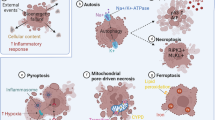
Chronic oligodendrocyte injury in central nervous system pathologies
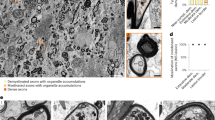
Myelin insulation as a risk factor for axonal degeneration in autoimmune demyelinating disease
References
Reynolds, B.A. & Weiss, S. Generation of neurons and astrocytes from isolated cells of the adult mammalian central nervous system. Science 255, 1707–1710 (1992).
Rao, M.S., Noble, M. & Mayer-Pröschel, M. A tripotential glial precursor cell is present in the developing spinal cord. Proc. Natl. Acad. Sci. USA 95, 3996–4001 (1998).
Rowitch, D.H. Glial specification in the vertebrate neural tube. Nat. Rev. Neurosci. 5, 409–419 (2004).
Miller, R.H. Regulation of oligodendrocyte development in the vertebrate CNS. Prog. Neurobiol. 67, 451–467 (2002).
Miller, R.H. et al. Patterning of spinal cord oligodendrocyte development by dorsally derived BMP4. J. Neurosci. Res. 76, 9–19 (2004).
Vallstedt, A., Klos, J.M. & Ericson, J. Multiple dorsoventral origins of oligodendrocyte generation in the spinal cord and hindbrain. Neuron 45, 55–67 (2005).
Cai, J. et al. Generation of oligodendrocyte precursor cells from mouse dorsal spinal cord independent of Nkx6 regulation and Shh signaling. Neuron 45, 41–53 (2005).
Kessaris, N. et al. Competing waves of oligodendrocytes in the forebrain and postnatal elimination of an embryonic lineage. Nat. Neurosci. 9, 173–179 (2006).
Chandran, S. et al. FGF dependent generation of oligodendrocyte by a hedgehog-independent pathway. Development 130, 6599–6609 (2003).
Noble, M., Murray, K., Stroobant, P., Waterfield, M.D. & Riddle, P. Platelet-derived growth factor promotes division and motility and inhibits premature differentiation of the oligodendrocyte/type-2 astrocyte progenitor cell. Nature 333, 560–562 (1988).
Tsai, H.-H., Tessier-Lavinge, M. & Miller, R.H. Netrin I mediates spinal cord oligodendrocyte precursor dispersal. Development 130, 2095–2105 (2003).
Jarjour, A.A. et al. Netrin-1 is a chemorepellent for oligodendrocyte precursor cells in the embryonic spinal cord. J. Neurosci. 23, 3735–7344 (2003).
Tsai, H.-H. et al. The chemokine receptor CXCR2 controls positioning of oligodendrocyte precursors in developing spinal cord by arresting their migration. Cell 110, 373–383 (2002).
Padovani-Claudio, D.A., Lui, L., Ransohoff, R.M. & Miller, R.H. Alterations in the oligodendrocyte lineage, myelin and white matter in adult mice lacking the chemokine receptor CXCR2. Glia 54, 471–483 (2006).
Calver, A.R. et al. Oligodendrocyte population dynamics and the role of PDGF in vivo. Neuron 20, 869–882 (1998).
van Heyningen, P., Calver, A.R. & Richardson, W.D. Control of progenitor cell number by mitogen supply and demand. Curr. Biol. 11, 232–241 (2001).
Mi, S. et al. LINGO-1 negatively regulates myelination by oligodendrocytes. Nat. Neurosci. 8, 745–751 (2005).
Mi, S. et al. LINGO-1 is a component of the Nogo-66 receptor/p75 signaling complex. Nat. Neurosci. 7, 221–228 (2004).
Charles, P. et al. Negative regulation of central nervous system myelination by polysialic acid adhesion molecule. Proc. Natl. Acad. Sci. USA 97, 7585–7590 (2000).
Wang, S. et al. Notch receptor activation inhibits oligodendrocyte differentiation. Neuron 21, 63–75 (1998).
Woodruff, R.H., Fruttiger, M., Richardson, W. & Franklin, R.M. Platelet-derived growth factor regulates oligodendrocyte progenitor numbers in the adult CNS and their response to following CNS demyelination. Mol. Cell. Neurosci. 25, 252–262 (2004).
Waubant, E. Biomarkers indicative of blood brain barrier disruption in multiple sclerosis. Dis. Markers 22, 235–244 (2006).
Franklin, R.J.M. Why does remyelination fail in multiple sclerosis? Nat. Rev. Neurosci. 3, 705–714 (2002).
Câmara, J. & ffrench-Constant, C. Lessons from oligodendrocyte biology on promoting repair in multiple sclerosis. J. Neurol. 254, 15–22 (2007).
Hinks, G.L. & Franklin, R.J.M. Distinctive patterns of PDGF-A, FGF-2, IGF-1 and TGF-β1 gene expression during remyelination of experimentally-induced spinal cord demyelination. Mol. Cell. Neurosci. 14, 153–168 (1999).
Fuller, M.L. et al. Bone morphogenetic proteins promote gliosis in demyelinating spinal cord lesions. Ann. Neurol. 62, 288–300 (2007).
Huang, J.K. et al. Glial membranes at the node of Ranvier prevent neurite outgrowth. Science 310, 1813–1817 (2005).
Patrikios, P. et al. Remyelination is extensive in a subset of multiple sclerosis patients. Brain 129, 3165–3172 (2006).
Wolswijk, G. & Noble, M. Identification of an adult-specific glial progenitor cell. Development 105, 387–400 (1989).
Penderis, J., Shields, S.A. & Franklin, R.J. Impaired remyelination and depletion of oligodendrocyte progenitors does not occur following repeated episodes of focal existing in the rate central nervous system. Brain 126, 1382–1391 (2003).
Omari, K.M., John, G., Lango, R. & Raine, C.S. Role for CXCR2 and CXCL1 on glia in multiple sclerosis. Glia 53, 24–31 (2006).
Omari, K.M., John, G.R., Sealfon, S.C. & Raine, C.S. CXC chemokine receptors on human oligodendrocytes: implications for multiple sclerosis. Brain 128, 1003–1015 (2005).
Chang, A., Tourtellotte, W.W., Rudick, R. & Trapp, B.D. Premyelinating oligodendrocytes in chronic lesions of multiple sclerosis. N. Engl. J. Med. 346, 165–173 (2002).
Trapp, B.D. et al. Axonal transection in the lesions of multiple sclerosis. N. Engl. J. Med. 338, 278–285 (1998).
Keyoung, H.M. & Goldman, S.A. Glial progenitor-based repair of demyelinating neurological diseases. Neurosurg. Clin. N. Am. 18, 93–104 (2007).
Groves, A.K. et al. Repair of demyelinated lesions by transplantation of purified O-2A progenitors. Nature 362, 453–455 (1993).
Woodhoo, A. et al. Schwann cell precursors: a favorable cell for myelin repair in the central nervous system. Brain 130, 2175–2185 (2007).
Ziv, Y. et al. Immune cells contribute to the maintenance of neurogenesis and spatial learning abilities in adulthood. Nat. Neurosci. 9, 268–275 (2006).
Pluchino, S. et al. Injection of adult neurospheres induces recovery in a chronic model of multiple sclerosis. Nature 422, 688–694 (2003).
Pluchino, S. et al. Neurosphere-derived multipotent precursors promote neuroprotection by an immunomodulatory mechanism. Nature 436, 266–271 (2005).
Nait-Oumesmar, B. et al. Progenitor cells of the adult mouse subventricular zone proliferate, migrate and differentiate into oligodendrocytes after demyelination. Eur. J. Neurosci. 11, 4357–4366 (1999).
Lachapelle, F. et al. Failure of remyelination in the nonhuman primate optic nerve. Brain Pathol. 15, 198–207 (2005).
Bambakidis, N.C. & Miller, R.H. Transplantation of oligodendrocyte precursors and sonic hedgehog results in improved function and white matter sparing in the spinal cord of adult rats after contusion. Spine J. 4, 16–26 (2004).
Bambakidis, N.C., Wang, R.-Z., Franic, L. & Miller, R.H. Sonic Hedgehog induces neural precursor proliferation after adult rodent spinal cord injury. J. Neurosurg. 99, 70–75 (2003).
Gomes, W.A., Mehler, M. & Kessler, J. Transgenic overexpression of BMP4 increases astroglial and decreases oligodendroglial lineage commitment. Dev. Biol. 255, 164–177 (2003).
Setoguchi, T. et al. Traumatic injury-induced BMP7 expression in the adult rat spinal cord. Brain Res. 921, 219–225 (2001).
Enzmann, G.U. et al. Consequences of noggin expression by neural stem, glial and neuronal precursor cells engrafted into the injured spinal cord. Exp. Neurol. 195, 293–304 (2005).
Kiernan, B.W., Götz, B., Fassner, A. & ffrench-Constant, C. Tenascin-C inhibits oligodendrocyte precursor cell migration by both adhesion-dependent and adhesion-independent mechanisms. Mol. Cell. Neurosci. 7, 322–335 (1996).
Rutishauser, U. Polysialic acid and the regulation of cell interactions. Curr. Opin. Cell Biol. 8, 679–684 (1996).
Lee, X. et al. NGF regulates the expression of axonal LINGO-1 to inhibit oligodendrocyte differentiation. J. Neurosci. 27, 220–225 (2007).
Acknowledgements
We thank our colleagues for helpful comments. Parts of this work were supported by grants from the US National Institutes of Health (NS36674 and NS31800) and the Myelin Repair Foundation to R.H.M.
Rights and permissions
About this article
Cite this article
Miller, R., Mi, S. Dissecting demyelination. Nat Neurosci 10, 1351–1354 (2007). https://doi.org/10.1038/nn1995
Published:
Issue date:
DOI: https://doi.org/10.1038/nn1995
Share this article
Anyone you share the following link with will be able to read this content:
Sorry, a shareable link is not currently available for this article.
Provided by the Springer Nature SharedIt content-sharing initiative
This article is cited by
-
Specific Blockade of Bone Morphogenetic Protein-2/4 Induces Oligodendrogenesis and Remyelination in Demyelinating Disorders
Neurotherapeutics (2021)
-
Stores, Channels, Glue, and Trees: Active Glial and Active Dendritic Physiology
Molecular Neurobiology (2019)
-
Intraventricular injections of mesenchymal stem cells activate endogenous functional remyelination in a chronic demyelinating murine model
Cell Death & Disease (2016)
-
P2X7 receptors and Fyn kinase mediate ATP-induced oligodendrocyte progenitor cell migration
Purinergic Signalling (2015)
-
Remyelination and Multiple Sclerosis: Therapeutic Approaches and Challenges
Current Neurology and Neuroscience Reports (2014)
