

Author VADYM ZUKIN
Myths about the army - through the eyes of a former businessman
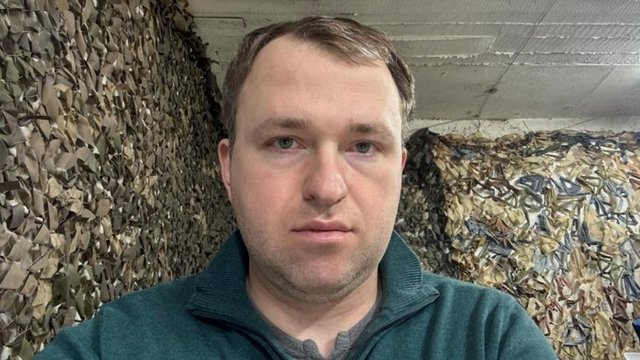
Vadym Zukin, AFU serviceman
Today I caught myself thinking that I've been in the army for 8 months now. During this time, I've noticed that there are many misconceptions and myths surrounding the service.
Myth 1. Everyone in the army must be perfectly healthy.
If your cholesterol is high, your vitamin D is low, your eyesight is "-2" - then you can't serve. That's what many people think. Especially women who don't want their husbands, sons, fathers and brothers let go.
The truth is that there are not many perfectly healthy people in general - and in civilian life too. Many have certain characteristics or chronic illnesses that do not prevent them from serving. The army is not a gathering of perfectly healthy people. As for the desire of women to come up with an excuse why their loved one should not go, this is a completely adequate and healthy female desire, given the stereotypes of our society and the lack of patriotic education for many years.
Myth 2. If you have children, how can you join the army?
In fact, a lot of military personnel have minor children. And many came voluntarily. Everyone makes their own decisions, and these are difficult decisions. But the argument “I have a child” doesn’t really work, because, apparently, most men in the army who are older than 30 or 35 years old have children.
Myth 3. If your experience is “not military”, then it is not needed.
Obviously, civilian experience is very different. Indeed, if in civilian life everything was relaxed and there was no need to delve into anything new, then here it will be necessary. But definitely previous experience is very useful. Of course, only when there is a struggle for independence, because in peacetime it is still much better if the army consists mostly of professional military personnel, and for civilians, patriotically minded, there will be a clear path to be a reservist with the possibility of involvement in times of danger to the country.
Myth 4. Military personnel are dirty and poorly eat.
Hygiene is a matter of personal responsibility, and many people take it very seriously. The food is different, as it is everywhere, but it certainly cannot be called “bad.” It is either average or even good.
Myth 5. Command always makes stupid decisions.
Often, a soldier sees a very limited piece of information. Command usually has a much broader picture. It's a bit like business: when you have only limited information about your piece of work, the leader's decisions seem strange. When you see more, they become clearer. This does not mean that mistakes do not happen. But reality is usually more complicated than it seems.
Myth 6. The rights of the military are massively violated, and this is the norm.
In most cases, this is simply unprofitable and dangerous for the unit itself. No commander is interested in treating his people badly. This directly affects the result, and is also quite dangerous for him himself. It is true that the power of commanders over personnel in wartime is very great. But it is also true that the abuse of this power is not beneficial to anyone.
Myth 7. “I’m not joining the army because I don’t want to die.”
In 8 months, I haven’t met a single person who would like to die. On the contrary, most people want to live. Preferably in a peaceful country. After victory or a peace treaty. But to live. And that’s why many are here.
Myth 8. The military are impudent in everyday matters.
Experience shows that the level of impudent behavior does not really depend on whether a person is a civilian or a military person. And my long stay away from Kyiv shows something else: the behavior of the military in public places is often quite restrained. Since the consequences of improper behavior can be very specific for violating the order even when not performing official duties, since this spoils the reputation of the Armed Forces of Ukraine.
Myth 9. Only the poor or “not very smart” join the army.
There are a lot of educated people, entrepreneurs, IT professionals, doctors, managers among the military. Many had a normal and not poor life before the service. The decision to go is not always about the lack of alternatives.
Myth 10. Those in the army greatly despise those who decided not to go, either officially or not very officially.
In fact, it is precisely in the army that there is less contempt for those who, for various reasons, did not join. For various reasons, but somehow there is no hatred felt anywhere for the rear, the reserved, the "evasive". And not to that extent, and there is no need to waste energy on unnecessary thoughts.
And now a little unexpected truth.
1. For some reason, when you're in the military, some people suddenly stop communicating. Or they start talking as if you "don't have very long left." This is quite strange, because statistically, even in the biggest wars in history, the vast majority of soldiers still survived. And whether a person was in the military or not should not affect the desire to communicate.
2. Many people think that most soldiers are constantly “running around with weapons” or “sitting in the trenches.”
In fact, only a part of them directly perform combat missions with weapons in their hands. The army is a huge system with a lot of different functions. And those who really don’t want to “go into the trenches” have many opportunities to find their application in a quieter place, but, of course, with less financial compensation.
3. The Pixel uniform is not as often seen in real life as it is in social networks in ceremonial photos.
The reality is much less ceremonial and more ordinary. Some say that “we will wear a pixel to the parade.” But I really hope that the authorities will have enough sense to abandon the strange tradition of parades after the war is over.
To be honest, the army is not a separate world or some other planet. These are the same people from the same society. With their own strengths, weaknesses, and features. Perhaps, the best thing society can do now is to avoid another line for the polarization of society, which is quite popular with Ukrainians. After all, we already have enough polar lines: Russian-speaking/Ukrainian-speaking, left/remained, voted for one presidential candidate/voted for another.