


The Aleramici (also Aleramids) were a Northern Italian princely and royal dynasty of Frankish origin.[1] They ruled over various northwestern Italian principalities in Piedmont and Liguria from the 10th to the 17th century, as well as over the Kingdoms of Jerusalem and Thessalonica from the 12th to 13th centuries.
Considered one of the foremost crusader dynasties, the Aleramids notably extended their influence across the Eastern Mediterranean, thrice appointed as successors to the Eastern Roman Imperial throne (under the title of Caesar), without ever ensuring their effective installation. They nevertheless produced two Imperial consorts, one of which (Irene) effectively ruled over part of the Empire under the title of Augusta. Other females of the dynasty also appear as consort-regents in several European states.
The Aleramids were only later named as such by historians seeking to identify the extensive lineage derived from the Frankish Count Aleramo, proclaimed first sovereign Marquis (or Markgrave) of Western Liguria by the Emperor Otto the Great in the year 967. Further research has allowed the division of the lineage into two main branches: the senior Marquises of Savona (later surnamed del Vasto), and the junior Marquises of Monferrat. The last became extinct during the 14th century in the Empress Irene (with female succession in the House of Palaiologos-Montferrat). The senior line of Savona carried on through multiple descending branches, mainly ruling over the Marquisates of Saluzzo and Finale until the 17th century.
Broadly, their decadence in Northern Italy can be linked to the communal movement and the consecutive loss of Imperial dominance in the region in favor of Papal or Ecclesiastical rule (12th century). By the 13th century the Aleramids had lost most of their territorial sovereignty in favor of the Republic of Genoa and the Duchy of Milan. Some late exponents (mainly del Carretto) appear as vassal-lords to the Dukes of Milan and of Savoy, while others became sovereign patricians of the Republic of Genoa. Several others (mainly Lanza) relocated to the Kingdom of Sicily where they continued to exercise a notable influence. One branch (Grana) remained in service of the Holy Roman Empire until their extinction in the 18th century (with female succession in the House of Arenberg).
The Aleramids are ancestors (through female lines) of most European royal families.
History
[edit]Count William I
[edit]The oldest known member of the lineage was the Frankish Count William (or Willelmus), first mentioned as the father of Aleramo in the year 951. He is thought to have been the same Count Wilhelmus indicated as "dilectissimi fideles" (very beloved faithful) of the Kings Hugh of Italy and Rudolph II of Burgondy in the year 924, as well as the same Frankish Count Wilhelmus who, according to the Gesta Berengarii Imperatoris, crossed the Alps at the head of 300 Frankish knights in the year 888 in aid of Guy III of Spoleto during his quest for the Iron Crown. Although it is not clear which were the specific territories that he inherited to his son, an Imperial charter of the year 967 suggests that William passed down a substantial patrimony dispersed through the Carolingian Kingdom of Italy ("tam de hereditate parentum quam de acquistu illi advenientes per diversa loca infra Italicum Regnum coniacentes").[2]
Aleramo I, First Marquis of Western Liguria
[edit]Aleramo, who identified himself as a member of the Salic nation and follower of the Salic law ("ex Natione Vivere et Legge Salica") received from King Hugh of Italy a similar treatment as his father ("fideli nostro Aledramo Comiti"), extending his domains in the Piedmont and Western Liguria through different donations occurred between 933 and 938 (still appearing under the rank of Count). It is still undetermined who was Aleramo's first wife and mother of all three of his children, considered by Jacob of Acqui (14th century) to be a certain princess Adelasia, daughter of the Emperor Otto the Great.[3] Acqui's fanciful story gave rise to a much extended myth regarding Aleramo's legendary origins and unproven imperial marriage (further extended in the 19th century by Giosuè Carducci's "Cavalry and Humanism").[4][3] Aleramo's second marriage nonetheless proves his insertion amongst the Anscarids, one of Medieval Europe's most prestigious royal dynasties. Shortly after the ascent of Berengar II to the throne of Italy, Aleramo married the princess Gerberga, the King's daughter. In the year 961, Gerberga is mentioned as stepmother ("maternia") to Aleramo's children, themselves styled stepchildren ("filiastri"), and thus known to have proceeded from his previous marriage.[2] In the same charter Aleramo is first mentioned as Marquis (“Aledramus Marchio, filius Guilielmi Comitis, et Gilberga filia domini Berengarii Regis"), suggesting the importance of the marriage in the concession of his new rank. On 10 April 967 the Emperor Otto the Great issued a charter confirming Aleramo in all his domains, counties and jurisdictional courts, alongside the then princely title of Marquis, as petitioned by the Empress consort Adelaide, daughter of Rudolph II ("Aledramum Marchionem interventu ac petitione Adhelaydae nostra coniugis atque imperii nostri participis").[2]
The first Aleramici
[edit]Since 967, the Aleramici (name later given by historians to identify the numerous branches of Aleramo's lineage) preserved their forefather's territories alongside the title of Marquis, or Margrave in the Holy Roman Empire. According to Salic Law, the Frank's fiefdoms had to be either shared or equally divided amongst male descendants, leading to the fragmentation of the Aleramid's power and their forefather's principality. As evident in the foundational charter of the Abbey of Grazzano (year 961), Aleramo's firstborn son (William II) died in youth without having produced any offspring ("quondam Gulielmo, que fuit filius noster"), while the third-born, Otto I, also died before his father but did managed to produce two boys. After Aleramo's death around the year 999, his second-born, Anselm I took his father's place as sole head of the entire Western Ligurian March. The first testimony of his succession is found in the foundational charter of the Abbey of San Quentin in Spigno (year 999) where Anselm, son of the late Aleramo, is first mentioned as Marquis alongside his wife Gisla, daughter of Albert I of Milan ("Anselmus Marchio, filius bonae memoriae Aledrami intemque Marchio, et Gisla Comitissa iugalibus, filia Adalberti similique Marchioque").[2] The same charter also mentions his nephews William III and Riprand, sons of his deceased brother Otto I ("Wielelmus et Riprandus germanis, fili bonae memoriae Oddoni").
The Marches of Savona and Monferrat
[edit]Even after Anselm I's death, the sovereignty of the entire March was shared between his children and their junior cousins (sons of his brother Otto I). The two lines (Anselmian and Ottonian) ultimately established themselves in two distinct counties which became the center of their respective jurisdictional courts. The senior branch (Anselm's) took seat in the Ligurian port of Savona, while the junior branch (Otto's) did so in the Piedmontese castle of Casale Monferrato, leading to the distinction of the Aleramids between the Anselmian Marquises of Savona and the Ottonian Marquises of Monferrat. Despite this nominal division, both branches continued sharing sovereignty over the entire March and effectively possessing fiefdoms in each other's jurisdictions at least until the 13th century.
The abundant procreation of males amongst the Aleramids led to the continuous fragmentation of the original March (in accordance to Salic Law), and the subdivision of both Marches (particularly that of Savona) into smaller jurisdictions presided by the different members of the lineage (all preserving the princely rank of Marquis). The junior Ottonian branch was only divided into the Marches of Monferrat and Occimiano (conferred to a junior line later surnamed "Camar"),[5] while the Anselmian line initially formed the three extensive Marches of Savona, Bosco and Sezzadio. The Aleramids of Sezzadio soon became extinct, and their territory returned to their most immediate agnatic relatives of Savona and Bosco. By the 12th century, the surviving Anselmians (Savona and Bosco) had also distinguished their respective lines by the adoption of the surnames del Vasto and del Bosco. The senior Aleramids del Vasto (descendants of Otto III of Savona) formed the Marquisates of Savona, of Finale, Dego, Incisa, Loreto, Cortemilia, Ceva and Clavesana (later adding Saluzzo, and Busca through the Arduinic inheritance of the lower-half of the March of Turin). The successive Marquises of Savona later abandoned the surname del Vasto and instead took the surname del Carretto. The junior Anselmian Aleramids del Bosco (descendants of Ugo II of Bosco) formed the Marquisates of Bosco, Ponzone, Albisola, Varazze, Ussecio and Pareto.[6]
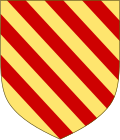
- Heraldry of the Aleramid branches
-
Primitive heraldry of the Anselmian Aleramids del Vasto and del Bosco
-
Primitive heraldry of the Ottonian Aleramids del Monferrato and Occimiano
-
Later heraldry of the Anselmian Aleramids del Carretto
-
Later heraldry of the Anselmian Aleramidsdi Ceva
-
Later heraldry of the Anselmian Aleramidsdi Ponzone




Influence across the Mediterranean
[edit]


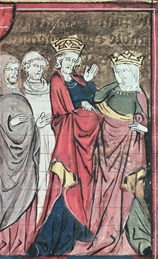
Despite their constant territorial division, the Aleramids managed to maintain control over the lower-half of the Piedmont and the Western flank of the Ligurian Bay, forming powerful alliances with other Italian ruling houses (mainly Anscarids, Arduinids, Obertenghi and Hauteville) and even extending their alliances with further European dynasties (mainly the Capetians and the Hohenstaufens). The senior branch of Savona gained notable influence during the 11th century through successive marriages with the Norman ruling dynasty of Sicily, the House of Hauteville. Firstly was the marriage between Odo the Good Marquis and Emma of Hauteville (daughter of Robert Guiscard), shortly followed by that of Adelaide to Count Roger I of Sicily (later to King Baldwin I of Jerusalem) while her brother Enrico, married Flandina (daughter of the said Roger through a previous marriage). As such, it was the senior Anselmian line of Savona the first to gain considerable influence in the Crusades, most notably through the leadership Tancred, Prince of Galilee, and later through the short queenship of his cousin Adelaide in Jerusalem. The Anselmians also augmented their territories in Northern Italy after the extinction of the Arduinids, inheriting the northern half of the March of Turin to the House of Savoy (through Adelaide of Susa), and the lower half to the Aleramics (through her sister Bertha of Turin). This territorial expansion, alongside the crusader links, allowed Boniface I del Vasto (uncle of Tranced of Galilee and Queen Adelaide) to marry the Capetian princess Agnes of Vermandois, daughter of Hugh I and granddaughter of King Henry I of the Franks.


The junior or Ottonian branch of Monferrato shortly followed their senior relative's involvement in the Crusades, also employing a strong marriage policy to augment their influence. At the time his cousin Adelaide was regent of Sicily, Rainier I of Monferrat secured his own marriage to Gisela of Burgundy, daughter of William I, and sister to Pope Calixtus II. Their son William V of Monferrat then married Judith of Austria, daughter of Leopold III and half-sister of Frederick II of Swabia (father of Emperor Barbarossa) and of Emperor Conrad III. This strong and consolidated insertion amongst Europe's foremost royal families allowed the marriage of Rainier II of Monferrat to Maria Komnene, oldest daughter of Eastern Emperor Manuel I Komnenos, obtaining for the first time the imperial title of Caesar, bestowed upon the appointed successors of the Imperial throne. The rebellion of Andronikos I Komnenos led to the assassination of his cousin Maria and the Caesar Rainier, ending the first Aleramid attempt at securing the Easter Roman Imperial throne.


Rainier's brother, William the Longsword, later married Sybilla of Anjou, successor to her brother Baldwin the Leper's rights in the throne of Jerusalem (which she passed down to their son, Baldwin V, first Aleramid monarch in his own right). Conrad of Monferrat (William and Rainier's brother) firstly married Theodora Angelina, sister of the then childless Emperor Isaac II Angelos, obtaining the proclamation of successor to Isaac's throne and given, like his brother, the imperial rank of Caesar. The harsh anti-Latin sentiment at the Imperial court and his brother Rainier's previous experience, led Conrad to flee Constantinople and arrive by surprise to the city of Acre, from where he launched a strong campaign against Saladin's troops. Conrad soon became the preferred leader of the crusaders and strongest opponent to Guy de Lusignan's controversial rule. He married Isabella I (Sybilla and Baldwin the Leper's sister), effectively reigning over Jerusalem as King-consort, and then as elected-King in 1192, but assassinated shortly afterwards (allegedly by Hashasin hitmen contracted by Richard the Lionheart). His daughter Maria of Monferrat, successively became Queen of Jerusalem after the regency of her stepfather Aimery of Lusignan, becoming the last Aleramid to reign over Jerusalem in their own right. Her daughter, Queen Isabella II of Jerusalem became Holy Roman Empress after her marriage to Frederick II.
A fourth brother, Boniface I, was elected leader of the Fourth Crusade, effectively taking Constantinople from Alexios III in 1204 and founding the Latin Empire that said year. According to contemporary chronicles, Boniface was received by both the clergy and the Eastern Roman people as their new Emperor (Basileus) but was never crowned, having to face an internal rebellion that led to the crowning of Henry I of Flanders as first Latin Emperor, successively married to Agnes of Monferrat, Boniface's daughter, to ensure peace. Following the agreement Boniface managed to ensure his rights over the imperial territory of Thessalonica (already offered to his brothers), and receiving the rank of King. He died shortly afterwards while confronting a raid of Bulgarian rebels. Adelasia or Azalaïs, sister of the previous, married her Anselmian cousin Manfredo II of Saluzzo, and became regent of Saluzzo until her grandson Manfred III's coming of age. Perhaps a sister or daughter of Boniface was Beatrice of Monferrat, firstly married to the Dauphin Guigues V of Albon (and mother of the Dauphine Beatrice, Duchess of Burgundy), successively marrying her Anselmian cousin Henry I del Carretto, Marquis of Savona. Her grandson Guigues VI married another Beatrice of Monferrat, often confused with the previous.
Later that century, Yolande, Boniface's great-great-granddaughter, married Emperor Andronikos II Palaiologos, taking the Greek name of Irene, and effectively ruling over her paternal fiefdoms in Tessalonica under the title of Augusta. After the death of her brother John I in 1305, her son prince Theodore Palaiologos was appointed Marquis of Monferrat in contradiction of the Salic Law still practiced by the Aleramics until then (as upheld by the Anselmian Manfred IV of Saluzzo who reclaimed the Marquisate for himself). The succession was later confirmed by the Holy Roman Emperor Henry VII, who preferred to include a Byzantine prince amongst his subjects rather than to further the empowerment of an already subjected prince. A falsified charter in favor of John I was used by the Emperor to legitimize his decision.
Imperial decline and Papal rise
[edit]

The expansion of the Aleramids through the Mediterranean coincided (or rather


followed) the demise of Imperial dominance over Northern Italy. Since the 11th century, the papacy disputed increasing powers previously attributed to secular/Imperial rule (see Investiture Controversy), and in the following century the country became entrenched in violence between the opposing factions of Guelphs and Ghibellines (the first supporting further advancement of Ecclesiastical dominance through communal rule, while the latter supporting the continuation of secular/Imperial dominance through princely rule). It is not surprising that the Aleramids mainly fought for the ghibelline/Imperial faction, despite some of the less powerful branches (mainly del Bosco and Occimiano) soon surrendering to the overwhelming Guelph advancement. The Aleramid city of Alessandria (a shared fiefdom of the Marquises of Monferrat and Bosco) became the main stronghold of papal/Guelph forces after the destruction of Milan decreed in the Diet of Roncaglia. Between Emperor Frederick I Barbarossa's initial defeat at the Battle of Legnano (1176), and Emperor Frederick II's final defeat at the Battle of Parma (1248), the Alermids had lost control of most of the March of Savona (except for Finale), continuously yielding in favor of the Lombard League. During the 13th century, the coastal Marquisate of Varazze became the main stage of the violent conflicts between the Republic of Genoa (Guelphs) and the Comune of Savona (Ghbellines).
Only the Marquises of Monferrat, Finale and Saluzzo, managed to outlive the conflict, awaiting the soon-following decline of papal-communal rule, and the consecutive rise of the Signoria. Most other surviving Aleramids (all Anselmian) retained reduced control of smaller fiefdoms, acting as vassal-lords to the Dukes of Milan and of Savoy, and specially to the Republic of Genoa. Through several agreements many Aleramids were granted Genoese citizenship, allowing them considerable preeminences, including preserving their princely rank as sovereign patricians of La Superba.[7][8][9]
Rulers of the Aleramid dynasty
[edit]Aleramid dynasty
[edit]| Marquisate of Liguria (924-991) | |||||||||
| Marquisate of Western Liguria (991-1125) |
|||||||||
| Marquisate of Occimiano (991-1275) | |||||||||
| Marquisate of Rocchetta (1084-1203) |
Marquisate of Eastern Liguria Evolved as: Marquisate of Montferrat (991-1306) | ||||||||
| Marquisate of Busca (Lancia branch) (1125-1281) |
Marquisate of Ceva (1125-1313) |
Marquisate of Clavesana (1125-1385) |
Marquisate of Finale (Del Carretto branch) (1125-1566) |
||||||
| Marquisate of Incisa (1125-1548) | |||||||||
| Evolved as: Marquisate of Saluzzo (Del Vasto branch) (1125-1548) |
|||||||||
| Inherited by Palaiologos dynasty (1306-1536) | |||||||||
| Acquired by the House of Savoy | |||||||||
| Divided between the House of Savoy, the Marquisate of Finale and the Genoese Republic | |||||||||
| Marquisate of Zuccarello (Del Carretto branch) (1412-1631) | |||||||||
| Inherited by the House of Gonzaga (from 1536) | |||||||||
| Inherited by the House of Gonzaga | |||||||||
| Annexed to France |
Annexed to Spain | ||||||||
| Annexed to the Genoese Republic | |||||||||
Table of rulers
| ||||||||||||||||||||||||||||||||||||||||||||||||||||||||||||||||||||||||||||||||||||||||||||||||||||||||||||||||||||||||||||||||||||||||||||||||||||||||||||||||||||||||||||||||||||||||||||||||||||||||||||||||||||||||||||||||||||||||||||||||||||||||||||||||||||||||||||||||||||||||||||||||||||||||||||||||||||||||||||||||||||||||||||||||||||||||||||||||||||||||||||||||||||||||||||||||||||||||||||||||||||||||||||||||||||||||||||||||||||||||||||||||||||||||||||||||||||||||||||||||||||||||||||||||||||||||||||||||||||||||||||||||||||||||||||||||||||||||||||||||||||||||||||||||||||||||||||||||||||||||||||||||||||||||||||||||||||||||||||||||||||||||||||||||||||||||||||||||||||||||||||||||||||||||||||||||||||||||||||||||||||||||||||||||||||||||||||||||||||||||||||||||||||||||||||||||||||||||||||||||||||||||||||||||||||||||||||||||||||||||||||||||||||||||||||||||||||||||||||||||||||||||||||||||||||||||||||||||||||||||||||||||||||||||||||||||||||||||||||||||||||||||||
|---|---|---|---|---|---|---|---|---|---|---|---|---|---|---|---|---|---|---|---|---|---|---|---|---|---|---|---|---|---|---|---|---|---|---|---|---|---|---|---|---|---|---|---|---|---|---|---|---|---|---|---|---|---|---|---|---|---|---|---|---|---|---|---|---|---|---|---|---|---|---|---|---|---|---|---|---|---|---|---|---|---|---|---|---|---|---|---|---|---|---|---|---|---|---|---|---|---|---|---|---|---|---|---|---|---|---|---|---|---|---|---|---|---|---|---|---|---|---|---|---|---|---|---|---|---|---|---|---|---|---|---|---|---|---|---|---|---|---|---|---|---|---|---|---|---|---|---|---|---|---|---|---|---|---|---|---|---|---|---|---|---|---|---|---|---|---|---|---|---|---|---|---|---|---|---|---|---|---|---|---|---|---|---|---|---|---|---|---|---|---|---|---|---|---|---|---|---|---|---|---|---|---|---|---|---|---|---|---|---|---|---|---|---|---|---|---|---|---|---|---|---|---|---|---|---|---|---|---|---|---|---|---|---|---|---|---|---|---|---|---|---|---|---|---|---|---|---|---|---|---|---|---|---|---|---|---|---|---|---|---|---|---|---|---|---|---|---|---|---|---|---|---|---|---|---|---|---|---|---|---|---|---|---|---|---|---|---|---|---|---|---|---|---|---|---|---|---|---|---|---|---|---|---|---|---|---|---|---|---|---|---|---|---|---|---|---|---|---|---|---|---|---|---|---|---|---|---|---|---|---|---|---|---|---|---|---|---|---|---|---|---|---|---|---|---|---|---|---|---|---|---|---|---|---|---|---|---|---|---|---|---|---|---|---|---|---|---|---|---|---|---|---|---|---|---|---|---|---|---|---|---|---|---|---|---|---|---|---|---|---|---|---|---|---|---|---|---|---|---|---|---|---|---|---|---|---|---|---|---|---|---|---|---|---|---|---|---|---|---|---|---|---|---|---|---|---|---|---|---|---|---|---|---|---|---|---|---|---|---|---|---|---|---|---|---|---|---|---|---|---|---|---|---|---|---|---|---|---|---|---|---|---|---|---|---|---|---|---|---|---|---|---|---|---|---|---|---|---|---|---|---|---|---|---|---|---|---|---|---|---|---|---|---|---|---|---|---|---|---|---|---|---|---|---|---|---|---|---|---|---|---|---|---|---|---|---|---|---|---|---|---|---|---|---|---|---|---|---|---|---|---|---|---|---|---|---|---|---|---|---|---|---|---|---|---|---|---|---|---|---|---|---|---|---|---|---|---|---|---|---|---|---|---|---|---|---|---|---|---|---|---|---|---|---|---|---|---|---|---|---|---|---|---|---|---|---|---|---|---|---|---|---|---|---|---|---|---|---|---|---|---|---|---|---|---|---|---|---|---|---|---|---|---|---|---|---|---|---|---|---|---|---|---|---|---|---|---|---|---|---|---|---|---|---|---|---|---|---|---|---|---|---|---|---|---|---|---|---|---|---|---|---|---|---|---|---|---|---|---|---|---|---|---|---|---|---|---|---|---|---|---|---|---|---|---|---|---|---|---|---|---|---|---|---|---|---|---|---|---|---|---|---|---|---|---|---|---|---|---|---|---|---|---|---|---|---|---|---|---|---|---|---|---|---|---|---|---|---|---|---|---|---|---|---|---|---|---|---|---|---|---|---|---|---|---|---|---|---|---|---|---|---|---|---|---|---|---|---|---|---|---|---|---|---|---|---|---|---|---|---|---|---|---|---|---|---|---|---|---|---|---|---|---|---|---|---|---|---|---|---|---|---|---|---|---|---|---|---|---|---|---|---|---|---|---|---|---|---|---|---|---|---|---|---|---|---|---|---|---|---|---|---|---|---|---|---|---|---|---|---|---|---|---|---|---|---|---|---|---|---|---|---|---|---|---|---|---|---|---|---|---|---|---|---|---|---|---|---|---|---|---|---|---|---|---|---|---|---|---|---|---|---|---|---|---|---|---|---|---|---|---|---|---|---|---|---|---|---|---|---|---|---|---|---|---|---|---|---|---|---|---|---|---|---|---|---|---|---|---|---|---|---|---|---|---|---|---|---|---|---|---|---|---|---|---|---|---|---|---|---|---|---|---|---|---|---|---|---|---|---|---|---|---|---|---|---|---|---|---|---|---|---|---|---|---|---|---|---|---|---|---|---|---|---|---|---|---|---|---|---|---|---|---|---|---|---|---|---|---|---|
| ||||||||||||||||||||||||||||||||||||||||||||||||||||||||||||||||||||||||||||||||||||||||||||||||||||||||||||||||||||||||||||||||||||||||||||||||||||||||||||||||||||||||||||||||||||||||||||||||||||||||||||||||||||||||||||||||||||||||||||||||||||||||||||||||||||||||||||||||||||||||||||||||||||||||||||||||||||||||||||||||||||||||||||||||||||||||||||||||||||||||||||||||||||||||||||||||||||||||||||||||||||||||||||||||||||||||||||||||||||||||||||||||||||||||||||||||||||||||||||||||||||||||||||||||||||||||||||||||||||||||||||||||||||||||||||||||||||||||||||||||||||||||||||||||||||||||||||||||||||||||||||||||||||||||||||||||||||||||||||||||||||||||||||||||||||||||||||||||||||||||||||||||||||||||||||||||||||||||||||||||||||||||||||||||||||||||||||||||||||||||||||||||||||||||||||||||||||||||||||||||||||||||||||||||||||||||||||||||||||||||||||||||||||||||||||||||||||||||||||||||||||||||||||||||||||||||||||||||||||||||||||||||||||||||||||||||||||||||||||||||||||||||||

.jpg)




Gallery
[edit]-
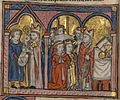
Marriage of Conrad of Montferrat and Isabella I of Jerusalem
-
Coin depicting Irene of Montferrat as Eastern Roman Empress
-
Several Aleramici del Vasto at Castello della Manta
-
Castel Gavone of the Marquises of Finale



Family tree
[edit]| Aleramici |
|---|
Aleramo (958–991) I Marquis of Central Liguria
|
See also
[edit]Notes
[edit]- ^ Arturo Segre, Aleramici, Enciclopedia Italiana (1929), Treccani
- ^ a b c d Muletti, Delfino (1829). Memorie storico-diplomatiche appartenenti alla città ed ai marchesi di Saluzzo (in Italian). Lobetti-Bodoni.
- ^ a b "ALERAMO AND THE MONFERRATO TERRITORY". VISIT ACQUI TERME. 2019-04-26. Retrieved 2025-09-16.
- ^ "History". Gazzeri Monferrato. Retrieved 2025-09-16.
- ^ L. Vergano; S. Gardino (1969). "LA DONAZIONE DEI MARCHESI DI OCCIMIANO AD ALESSANDRIA NEL 1198" (PDF).
{{cite web}}: CS1 maint: multiple names: authors list (link) - ^ Ricaldone, Giuseppe Aldo Di (1972). Annali del Monferrato (951-1708) (in Italian). La cartostampa.
- ^ Barone, Francesco (2014-09-17). "Il tema aleramico tra erudizione e storiografia di interesse siciliano (secoli XVI-XX), in 'Società e poteri nell'Italia medievale. Roma 2014". Studi degli allievi per Jean-Claude Maire Vigueur'.
- ^ Lercari, Andrea. "Patrizi e notabili liguri fra Repubblica di Genova e Corte dei Savoia" (PDF).
- ^ "Giornale Linguistico. Società Ligure di Storia Patria" (PDF).
- ^ Moriondus, J. B. (1790) Monumenta Aquensia (Turin), Pars II, col. 291.
- ^ The couple was already married in 1030, according to Monumenta Aquensia, Pars II, col. 299, quoting Ex libro miraculorum S. Bononii Abbatis Lucediensis, Acta Sanctorum, 30 Aug, Tome VI, p. 623, n. 20.
- ^ According to D H II 305, p. 379, he was at least documented in 1014.
- ^ Despite some sources referring a marriage to Alice of Savoy, a daughter of Peter II of Savoy, the marriage makes sense given the claimantship of the March of Turin (to which the Aleramics opposed the Savoyards). However, the degree of proximity between bride and groom was too close to be permitted.
- ^ According to C. Du Cange, Glossarium mediae et infimae latinitatis, Graz, 1954, III, p. 82, Bonifacio's first bride was initially a bride of his brother Anselmo.
- ^ According to Cluny, Tome V, 3996, p. 348, they were already married in 1127.
- ^ He was alive in 1126, according to Monumenta Aquensia, Pars II, col. 320. It's possible that he lived at least until 1135
- ^ Despite being documented only until 1190, it's possible that she died in 1203, when her younger sons inherited her marquisate.
- ^ According to Hamilton (2000), p.XXI, they were already married on 28 March of that year.
- ^ According to Casale Monferrato, Vol. I, XVI, p. 25, they were already married in 1147.
- ^ Despite their names not being known, they were referenced as Enrico's children in 1203
- ^ a b c d e f g h i j k Vergano, Ludovico; Gardino, Stefano (1969–70). "La donazione dei marchesi di Occimiano ad Alessandria nel 1198" [The donation of the marquises of Occimiano to Alessandria in 1198] (PDF). Rivista di Storia, Arte e Archeologia per le Province di Alessandria e Asti (in Italian): 610–21. Retrieved 8 October 2023.
- ^ Referenced in 1178. See Vergano & Gardino (1969-70).
- ^ No references of his after 1202.
- ^ He was already dead in 1231
- ^ According to Monumenta Aquensia, Pars I, col. 114., he was living in 1198. According to Vergano & Gardino, he still lived in 1202.
- ^ According to Vergano & Gardino, he was still alive in 1202.
- ^ Monumenta Aquensia ad excellentissimum et reverentissimum virum, Volume 2, colonne 397 e 398
- ^ Monumenta Aquensia, Pars II, col. 381.
- ^ Nielen, M.-A. (ed.) (2003) Lignages d'Outremer (Paris), Le Vaticanus Latinus 7806, El parentado de Beimonte principe 9, p. 172.
- ^ He was already dead in 1269.
- ^ Kinkade 2004, p. 165.
- ^ According to Casale Monferrato, Vol. II, CCCXV, p. 118, their last reference dated 1269.
- ^ Olivero, Giovanni (1858). Presso Garrone Teonesto (ed.). Memorie storiche della città e marchesato di Ceva (in Italian).
- ^ Nicol (1994), pp. 52-3.
- ^ Federico was still a minor by the time of his accession, according to Gioffredo (1839), Vol. III, pp. 44-5, citing “Chiesa Cronaca di Saluzzo ms”.
- ^ This child, Giovanni of Saluzzo, was known as Marquis of Clavesana, according to Liber iurium reipublicæ Genvensis, Tome II, CCLXX, col. 952.
- ^ These two children, Emmanuele and Aleramo del Carretto, were Marquises of Clavesana, according to Liber iurium reipublicæ Genvensis, Tome II, CXCII, col. 550.
- ^ AST, sez. I, Monf., feudi, m. 37, n.19
Works cited
[edit]- Kinkade, Richard P. (2004). "Beatrice "Contesson" of Savoy (c. 1250–1290): The Mother of Juan Manuel". La corónica: A Journal of Medieval Hispanic Languages, Literatures, and Cultures. 2, Number 3, Summer (3): 163–225. doi:10.1353/cor.2004.0017. S2CID 163041548.