


Korean drama (Korean: 한국 드라마; RR: Hanguk deurama), also known as K-drama and Koreanovela,[1][2] is a Korean-language television show made in South Korea. These shows began to be produced around the early 1960s, but were mostly consumed domestically until the rise of the Korean Wave in the 1990s. They have since achieved significant international popularity, with millions of viewers across the world. [3]
Beginning around the 1970s, more and more households in South Korea owned televisions. Programs were often produced on low budgets and were mostly consumed domestically. The industry significantly developed in the 1980s, after the spread of color television. Beginning in the early 1990s, several Korean dramas began achieving significant international popularity, primarily in China and Japan. In addition, South Korean popular music ("K-pop") and films began seeing similar successes, which gave rise to rapid international adoption of South Korean media in a phenomenon commonly called the Korean Wave. In the following decades, viewership spread throughout the globe. Rapid growth continued into the 2010s, with the rise in online streaming. Around this period, the American video streaming company Netflix took an interest in the phenomenon, and began releasing Korean dramas on its platform, as well as creating and funding ones. This culminated in the release of the 2021 Squid Game, which was watched by more than 142 million households in its first four weeks.[4] In 2022, Netflix reported that 60 percent of its 221 million subscribers had watched a Korean program in the last year,[5][6] and in April 2023, it announced that it would invest US$2.5 billion in the industry.[7]
The success of Korean dramas has had a significant economic impact on South Korea. In 2022, US$561 million of Korean television content was sold abroad, which was a 30% increase from the previous year,[8] surpassing those of South Korea's major export items such as secondary batteries and electric vehicles.[9] The industry also employs tens of thousands of people.[10] Korean dramas have also been cited as a motivation for tourists to visit the country.
History
[edit]Beginnings and early years
[edit]Radio broadcasting, including the broadcasting of radio dramas in Korea, began in 1927 under Japanese rule, with most programming in Japanese and around 30% in Korean.[11] After the Korean War, radio dramas such as Cheongsilhongsil (1954) reflected the country's mood.[12]


Television broadcasting began in 1956 with the launch of an experimental station, HLKZ-TV, which was shut down a few years later due to a fire.[13] The first Korean television film was a 15-minute piece titled The Gate of Heaven (천국의 문, Cheongugui mun), on HLKZ-TV.[14] Korea's first drama was Death Row, directed by Choi Chang-bong, Korea's first producer, based on the original play by American playwright Harold Everett Porter.[15]
With the opening of the first national television channel the Korean Broadcasting System (KBS), at the end of December 1961, television dramas began to gain momentum.[16] In the early 60s, single-act dramas such as "Friday Theater" and "Continuous Historical Drama" were aired, and daily soap operas were the main ones entering the late 60s.[17]
The first television series was aired by KBS in 1962. Their commercial competitor, Tongyang Broadcasting (TBC), had a more aggressive program policy and aired controversial dramas as well.[18] The first historical TV series aired was Gukto manri (국토만리), directed by Kim Jae-hyeong (김재형), depicting the Goryeo era.[19][20] In the 1960s, television sets were of limited availability, thus dramas could not reach a larger audience.[21]
The most popular drama in the 1960s was Sajikgol Old West Room, which aired in 1967, and the first daily soap opera was Snowfall by Dongyang TV in 1968. Meanwhile, The Frog Husband, which aired on MBC in 1969, caused a social stir for the first time in the nation's drama history, based on an affair.[17]
In the 1970s, television sets started to spread among the general population, and dramas switched from portraying dramatic historical figures to introducing national heroes like Yi Sun-sin or Sejong the Great.[21] Contemporary series dealt with personal sufferings, such as Kim Soo-hyun's influential Stepmother (새엄마, Saeeomma), aired by MBC in 1972 and 1973.[22] As technology and funding were limited, Korean channels could not make series in resource-heavy genres like action and science fiction; American and other foreign series were imported instead.[23]
1980s–2000s
[edit]The 1980s saw a change in Korean television, as color TV became available. Modern dramas tried to evoke nostalgia from urban dwellers by depicting rural life. Kim Soo-hyun's first real commercial success, Love and Ambition (사랑과 야망, Saranggwa yamang), aired on MBC[24] in 1987 and is regarded as a milestone of Korean television,[25] having recorded a 78% viewership. "Streets became quiet at around the airing time of the drama as 'practically everyone in the country' was at home in front of the TV", according to The Korea Times.[12] The most outstanding classical historical series of the era is considered to be 500 Years of Joseon (조선왕조500년, Joseonwangjo 500 nyeon), a serial that ran for eight years, consisting of 11 separate series. The serial was produced by Lee Byung-hoon, who later directed one of the biggest international successes of Korean drama, Dae Jang Geum (2003–04), which was sold in 150 countries.[26][19][21][25]


The 1990s brought another important milestone for Korean television. As technology developed, new opportunities arose, and the beginning of the decade marked the launch of a new commercial channel: Seoul Broadcasting System (SBS), which facilitated and re-initiated a race for catching viewers' attention.[27] The first real commercial success among Korean television series was Eyes of Dawn (여명의 눈동자, Yeomyeongui nundongja), aired in 1991 by MBC, starring Chae Shi-ra and Choi Jae-sung. The series led the viewers through turbulent times from the Japanese rule to the Korean War.[27] The 1992 MBC miniseries Jealousy starring Choi Jin-sil and Choi Soo-jong is considered the first "trendy drama", marking a breakthrough in filming techniques and the beginning of the romantic comedy genre in Korean dramas.[28][unreliable source?][29] The series depicted the lifestyles of young people of the era and is one of the first dramas to air in China, along with Eyes of Dawn.[29][30] New channel SBS also produced successful series, one of them being Sandglass in 1995. Sandglass was another trendy drama, which the Korean Culture and Information Service considers an important milestone, having changed the way Korean dramas are made by introducing a new format.[27] In this decade, the new miniseries format became widespread, with 12 to 24 episodes.[31] The term Hallyu (Korean: 한류) which comes from Mandarin 韓流, (Pinyin: hán liú) was coined in the late 1990s after the success of Star in My Heart in China, and its popularity elevated the main cast to Hallyu stardom.[32][33] This era marked the start of export for Korean dramas, setting off the Korean Wave.[34]
The beginning years of the 2000s gave birth to famous Korean dramas and also marked the period of overseas distribution. Some popular ones are Full House, Autumn in My Heart and Winter Sonata. It marks the birth of a new genre, called "fusion sageuk", essentially changing the ways to produce historical series, with successful pieces such as Hur Jun, Damo and Dae Jang Geum.[19] It started to take over the popularity of conventional dramas among 10s and 20s because of the shorter runtime, and often features trendy content which teenagers find it easy to sympathize with.[35]
When KBS2's Iris premiered in 2009, it featured action scenes unusual for dramas and settings in Japan and Europe. Directed by Yang Yoon-ho, known for Fighter in the Wind and Holiday, it generated early excitement and displayed a cinematic quality. The show left a notable impact on Korean action drama and achieved viewership ratings over 35%.[36]
2010s–present
[edit]My Love from the Star, which aired in 2014, redefined the trajectory of the Korean Wave. Unlike the earlier movement that was primarily centered in Japan, this series achieved massive popularity and profitability in China, ushering in the "Korean Wave 3.0" era. Following this success, Pinocchio set a new record for exports to China, selling for approximately $280,000 (roughly 311.27 million won) per episode.[15]
The mid-2010s marked a structural shift in South Korean television as dominance migrated from terrestrial networks to cable and pay-TV channels. the tvN series such as Reply 1997 and Reply 1994 evoked deep nostalgia for the 1990s, securing the highest viewership ratings ever seen for cable dramas at that time. Furthermore, Misaeng resonated with audiences by portraying the realistic joys and sorrows of office life.[15] In 2015, the tvN series Reply 1988, became a cultural touchstone, setting a new record for cable television rating.[37] This cultural phenomenon was credited by the BBC for ushering in South Korea’s "cable era,"[38] while The Korea Times hailed it as a "National Drama."[39] This record was subsequently surpassed by the 2018 satire Sky Castle,[40] later by the 2020 drama The World of the Married. As of 2026, the latter remains the highest-rated cable drama in history, boasting a peak nationwide rating of 28.371%. Despite major commercial hits like Reborn Rich (2022),[41] and Queen of Tears (2024),[42] that 2020 benchmark remains the industry standard for domestic cable broadcasts.[43]

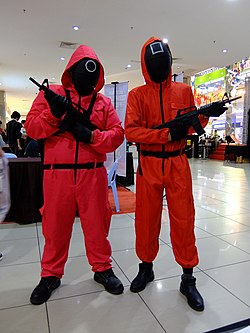
The late 2010s and 2020s saw newfound attention of K-dramas from international markets.[44] Netflix had begun seeking productions from South Korea and other countries since around 2018 to expand offerings for their service with a growing international audience. These efforts came to fruition when Hwang Dong-hyuk's Squid Game starring Lee Jung-jae, drew in more than 111 million viewers within 17 days of its release in September 2021, becoming the service's most-watched program.[44] For his performance, Lee won he Primetime Emmy Award for Outstanding Lead Actor in a Drama Series in 2022, making him the first person to win that award for a non-English-speaking role, and the first Asian man to win that award.[45]
South Korea's International Emmy presence evolved from early milestones to consistent global recognition. Early milestones included Jang Hyuk's 2011 Best Actor nomination for The Slave Hunters[46] and Splash Splash Love's 2016 nomination for Best TV Movie or Mini-Series. After few years gap, in 2021 It’s Okay to Not Be Okay earned a nomination for Best TV Movie or Mini-Series.[47] In 2022, The King’s Affection made history as the first Korean series to win for Best Telenovela.[48][49] That same year, Lee Sun-kyun secured a Best Actor nomination for the sci-fi thriller Dr. Brain.[50] Subsequent nominations included Extraordinary Attorney Woo (2023),[51] Reborn Rich (2023),[51] Daily Dose of Sunshine (2024)[52] and Chicken Nugget.[53]
Several production companies began to produce dramas even before the first season like The Penthouse: War in Life (2020–2021) which aired over three seasons. The introduction of the "season system" is interpreted as changes in the industry due to the 52-hour workweek, viewers' rejection of feature-length dramas, and oversupply of dramas.[54][55][56][57][58][59]


In the mid-2020s, dramas aired on terrestrial and cable networks have experienced a significant decrease in viewership.[61][62] This trend was attributed to changes in viewing habits and the rise in popularity of over-the-top media service (OTT) domestically.[63][64] In 2025, when the Netflix original series When Live Give You Tangerines starring IU and Park Bo-gum aired, it garnered cross-generational popularity signaling that OTT consumers have now appealed to all age groups including middle-aged and older viewers.[65][66] Media outlets have dubbed When Live Give You Tangerines a "National Drama",[67] a sobriquet reserved for productions via over-the-air, cable, and satellite television.[68]
Format
[edit]

A single director usually leads Korean dramas, which are often written by a single screenwriter. This often leads to each drama having distinct directing and dialogue styles. This differs from American television series, which can rely on multiple directors and writers working together.[69]
The 19:00 to 21:00 evening time slots have usually been reserved for daily dramas, which run every night from Monday through Friday. Dramas in these slots are in the telenovela format, rarely running over 150 episodes. Unlike American soap operas, these daily dramas are not broadcast during the daytime. Instead, the daytime schedule often includes reruns of the flagship dramas. The nighttime dailies can achieve very high ratings. During the late 2000s, for example, the weekend series First Wives' Club recorded 41.3%, according to TNS Korea,[70] and the evening series Temptation of Wife peaked at 40.6%, according to TNS Korea.[71]
Plots and storylines
[edit]K-dramas have a multitude of different genres such as action dramas, historical dramas, school dramas, medical dramas, legal dramas, and even horror comedies. While most dramas contain romantic elements and deep emotional themes, some may also contain a tragedy or slice of life theme. There are various styles and tones.[72]
The main themes of Korean television dramas are friendship, family values, and love, blending traditional Confucian and with Western materialism and individualism.[73]
However, it is an emerging trend amongst Korean dramas to showcase ongoing societal issues of Korean society, such as stigma of mental illness,[74] gender inequality, suicide, classism, bullying, spy cameras, corruption, homophobia, or racism.[75]
Historical
[edit]The term sageuk refers to any Korean television or film drama that is either based on historical figures, incorporates historical events, or uses a historical backdrop. While sageuk directly translates to "historical drama", the term is typically reserved for dramas taking place throughout the course of Korean history.[76]
Since the mid-2000s, some sageuk dramas have achieved major success outside of Korea, in places such as the Asia-Pacific, Central Asia, Greater Middle East, Central and Eastern Europe and Latin America.[77] Sageuks including Dae Jang Geum (Jewel in the Palace), Yi San (Lee San, Wind of the palace) and Jumong enjoyed strong ratings in countries such as Vietnam, Uzbekistan, Kazakhstan, Fiji and Iran. Jumong, which aired on IRIB (Islamic Republic of Iran Broadcasting) in 2008, had 85% viewership.[78]
Romance
[edit]Often centered on a love story, series set in contemporary times often focus on family ties and romantic relationships. Characters are mostly idealized with Korean male protagonists described as handsome, intelligent, rich, and in search of "one true love". This has also been a contributing factor to the popularity of Korean dramas among women.[69][79][80][81]
Production
[edit]Korean series were originally produced in-house by the television channels themselves, but have been outsourced to independent companies since the 2000s. In 2012, as much as 75% of all K-dramas were produced this way. Competition is fierce among these companies; out of 156 registered firms, only 34 produced dramas that were actually aired in 2012.[82]
In the late 2010s, a typical Korean drama might cost as much as ₩700 million per episode. Historical dramas have a bigger budget; one episode of the historical romance The Red Sleeve cost as much as ₩950 million.[83] Recently, factors such as improving the work environment, along with whether to sign contracts with domestic and foreign OTT companies such as Netflix, have served as variables. For example, Kingdom had a budget of ₩2 billion per episode, while ₩3 billion was spent on each episode of Sweet Home.[82][84][85][86][unreliable source?]
Often, production companies overrun their budgets and cannot pay salaries. In 2012, actors held a demonstration in front of the headquarters of KBS, expressing their concerns. Actors are usually paid after the last episode is aired. In series made by smaller production companies, there have been cases where the companies went bankrupt and could not pay their actors and crew, while the channel denied all responsibility, claiming all liability was with the bankrupt production firm.[87] Producer Kim Jong-hak spent ₩10 billion on Faith, which was considered a commercial failure, resulting in the inability of Kim to pay crew salaries and other overheads. Kim, who had produced iconic dramas such as Eyes of Dawn and Sandglass, committed suicide after he was accused of embezzlement.[88][89]
The biggest stars may earn more than ₩200 million per episode, with Kim Soo-hyun, the lead of hit dramas Moon Embracing the Sun (2012), My Love from the Star (2013) and It's Okay to Not Be Okay (2020) reportedly receiving ₩500 million per episode for One Ordinary Day in 2021.[90]
Filmmaking process
[edit]As producing a series involves high expenses, production companies seek to shoot the episodes in the shortest time possible. In contrast to practices elsewhere, the first four episodes of Korean series are usually shot in advance, but the rest are shot continuously as the series is being aired. Scripts are not finished in advance, and may change according to viewer feedback and viewership ratings, with popular characters receiving increased screen time and plotlines changing to match audience expectations.[91] These changes may occur a few hours before daily shooting, and the crew might receive only a few ready pages. The production usually works with three camera crews, who work in a rotating manner to speed up filming. Because of unregulated script changes and tight shooting schedules, actors are almost continuously on standby, and have no time to leave the set or sleep properly. The Korean media have a separate word to describe the irregular naps that actors resort to, in often uncomfortable positions or within the set: jjok-jam (쪽잠), or "side-sleeping". Dramas usually air on two days every week, with following episodes having to be shot during the intervening five days. Some Korean actors have admitted to receiving IV therapy during filming, due to extreme schedules and exhaustion.[87][92][93][unreliable source?] Nonetheless, the live-shoot model remains widely used since the production team can react to audience feedback in real time.[91]
Production teams originally sent two tapes to the channels, a primary copy and a backup copy. However, due to the tight filming schedules, a 70-minute episode might arrive at the broadcasting station on seven separate tapes in ten-minute installments. Thus, while the episode is being broadcast, the crew would be still shooting the last minutes or cutting the rest of the episode. During the airing of the nineteenth episode of Man from the Equator, screens countrywide went black for 10 minutes. Actor Kwon Sang-woo openly complained that he was still shooting King of Ambition 30 minutes before the last episode began airing.[87] In South Korea, some production teams still do planning and scheduling manually instead of using dedicated software.[94]
In 2016, dramas such as Descendants of the Sun, Uncontrollably Fond, Moon Lovers: Scarlet Heart Ryeo and Hwarang: The Poet Warrior Youth were all pre-produced before airing. Nonetheless, some pre-produced episodes are often re-edited or even reshot the day of airing, due to audience feedback.[91] The larger broadcasting companies have their own dedicated shooting locations for historical dramas, with extensive and elaborate sets. MBC's series are shot at the Yongin Daejanggeum Park in Gyeonggi Province,[95] while KBS dramas utilize the Mungyeongsaejae Studio (문경새재 KBS촬영장) in North Gyeongsang Province[96] and their studio in Suwon.[97] In April 2023, it was announced Netflix would invest $2.5 billion in K-dramas.[7]
Personnel
[edit]Actors and actresses
[edit]During the early decades of South Korean television, from the 1960s through the early 1990s, the acting profession functioned as a stable corporate career rather than a pursuit of independent stardom. Major broadcasting stations, such as KBS, MBC, and TBC, operated under an exclusive recruitment system known as Gong-chae. Many veteran actors currently working in the industry began their careers through this system,[98] including Lee Byung-hun, who joined the KBS 14th recruitment class in 1991.[99]
Aspiring actors applied directly to a television network and underwent a rigorous, multi-stage audition process.[100] Once hired, they became salaried employees, earning steady compensation comparable to that of network clerks or producers. Salaries were determined by a strict rank system based on an actor's grade or years of service. Legally bound by exclusivity, actors could only appear in programs produced by their employer; for example, an MBC actor was barred from participating in a KBS drama without a rare formal agreement. Furthermore, actors were required to clock in at the studio, attend mandatory training, and perform additional company duties.[101][102]
In 1981, KBS and MBC announced the abolition of the exclusive contract system for actors and screenwriters to lower costs and reduce competition. This shift aimed to transition the industry toward a merit-based compensation model that considers both experience and popularity rather than mere seniority. While producers and top-tier stars welcomed the increased flexibility to work across networks, newer actors expressed concerns about stability. The industry anticipated a complete reorganization of talent and a redirection of funds toward enhancing production quality.[98]
The kdrama industry has a long history of employing child actors to portray younger versions of lead characters or the children of adult protagonists.[103] A significant number of these performers have successfully transitioned into adult careers, with notable examples including Yoo Seung-ho and Yeo Jin-goo; and actresses like Park Shin-hye, Moon Geun-young, Park Eun-bin, Lee Se-young, Moon Ga-young, Kim So-hyun, Kim Sae-ron and Kim You-jung.[104]
The Hallyu movement gained momentum in the late 1990s and early 2000s, led by a foundational group of "first-generation" actors who achieved pan-Asian stardom. In the early 2000s, Japanese media dubbed Bae Yong-joon, Jang Dong-gun, Lee Byung-hun, and Won Bin the "Original Four Kings" of Hallyu. Bae became a central figure when his role in Winter Sonata (2002) garnered a massive following in Japan.[105][106][107] Several actresses were also instrumental in expanding the hallyu's reach. Choi Ji-woo an early initiator of the Korean Wave, earned the nickname "Ji-woo Hime" (Princess Ji-woo) in Japan following the success of Winter Sonata and Stairway to Heaven.[108][109][110] Song Hye-kyo achieved household recognition across Asia with Autumn in My Heart and Full House.[111][112][113] Lee Young-ae sparked global interest in Korean traditional culture through the historical epic Jewel in the Palace.[114] Additionally, Jun Ji-hyun became a top Hallyu star in Chinese-language markets after redefining romantic lead archetypes in the film My Sassy Girl.[115][116][117]
By the 2000s, it became customary for production companies to cast popular K-pop idols in dramas. Initially, this generated mixed reactions.[118] as the public often perceived idol acting as less professional than that of trained actors. While some idols faced criticism for poor performances,[119] the concept of the "idol actor" has since become a standard feature of the industry.[120] Many performers have successfully bridged the gap between music and acting, with individuals such as Bae Suzy, IU, Yim Si-wan, Park Jin-young, Doh Kyung-soo and Im Yoon-ah, achieving significant critical and commercial success.[121][122][123]
Scriptwriters
[edit]Women dominate the drama writing industry; according to the Beijing Metro Reader, they comprise 90% of the profession and penning everything from action to romance.[124] In South Korea, these writers are supported by the Korea Television and Radio Writers Association (KTRWA). This autonomous labor union, located in Seoul, serves roughly 3,700 members working in broadcast and digital media. Beyond community, the KTRWA offers practical protections: writers can register their intellectual property and seek mediation for payment or credit disputes through the organization’s dedicated legal resources.[125][126]
In South Korea, television scriptwriters often achieve a level of fame comparable to the actors themselves. Prominent scriptwriters typically exert significant influence within the industry.[127] A notable pioneer is Kim Soo-hyun. Kim began her career at MBC after winning a 1968 radio drama competition with her play The Fable of That Year's Winter. Writing under her pen name, she debuted on television in 1972 with the drama Rainbow. Over the following four decades, she became one of Korea's most renowned screenwriters. Her body of work includes some of the most-watched shows in Korean history, such as What is Love (1992), Men of the Bath House (1996), and Trap of Youth (1999). In the book Korea Through TV Drama, author Kim Hwan-pyo notes that the streets would often fall silent during the broadcast of Kim Soo-hyun's Love and Ambition (1987) because "practically everyone in the country" was at home watching.[128][129]
The next generation of well-known scriptwriters includes the Hong sisters, Kim Soon-ok, Kim Eun-sook, Lee Kyung-hee, Choi Wan-kyu, Noh Hee-kyung, Park Hye-ryun, and Park Ji-eun.[130] Writer Kim Soon-ok is particularly noted for her ability to captivate male viewers, a demographic that traditionally engaged less with television dramas.[131] In 2021, the term "Kim Soon-ok, Kim Eun-sook, and Kim Eun-hee" was used in media reports to highlight the industry's most influential "star writers."[132]
Directors
[edit]Directors of Korean dramas often achieve a level of public recognition comparable to that of the actors. Prominent television directors include Lee Byung-hoon,[19] Kim Jong-hak,[133] Pyo Min-soo [ko],[134] and Jang Tae-yoo.[135] In recent years, director Jo Hyun-tak was also propelled to fame through his works Sky Castle, which became one of the highest rated dramas in Korean cable television history,[136] and Snowdrop, which, despite its alleged historical distortions, was ranked first among the most-watched series on Disney+ in Asian countries like Singapore and South Korea.[137]
While scriptwriters are predominantly women, directors are typically men.[138] In the early 2000s, female directors were notably scarce within drama divisions, particularly when compared to other sectors of broadcasting.[139] In February 2005, Lee Yoon-jung became the first female director at MBC, debuting with the MBC Best Theatre [ko] Magic Power Alcohol [ko]. At the time of her appointment, women were significantly underrepresented in the field. By the end of 2005, MBC employed only two female directors, while KBS had four and SBS had none.[139] Lee's most famous work is the 2007 series Coffee Prince.[140] Since then, several other female directors have risen to prominence, including Lee Na-jeong,[141] Kim Hee-won, and Jung Ji-in.
Music
[edit]Music plays an important role in Korean dramas. Original soundtracks, abbreviated OST's, are explicitly made for each series, and in contrast to American series, fans have a need to buy the soundtrack album of dramas. This trend started in the 1990s, when producers swapped purely instrumental soundtracks for songs performed by popular K-pop singers. Tom Larsen, director of YA Entertainment, a distributor of Korean TV series, thinks that Korean soundtracks are polished enough musically to be considered standalone hits.[142]


During the 2000s, it became customary for lead actors to participate in original soundtracks, also partially due to the employment of K-pop stars as actors. Actor Lee Min-ho, and leader of boy band SS501, Kim Hyun-joong both recorded songs for Boys Over Flowers, while the actors of You're Beautiful formed a fictional band and held concerts, where they perform the soundtracks live.[143][unreliable source?][144][145]
OST songs of popular K-dramas can also become hits on regular music charts, with good sales of both physical and digital albums. The chart performance of the OST songs usually co-relate to the popularity of the drama. Songs from the OST of Secret Garden for example, had high digital sales and high rankings on music charts.[146][unreliable source?] My Destiny, performed by Lyn for My Love from the Star, led music charts in Hong Kong, Taiwan, South Korea, and other Asian countries.[147] It also won the Best OST award at the 2014 Baeksang Arts Awards.[148][unreliable source?] The soundtrack album of You're Beautiful sold 57,000 physical copies.[149] Performers of OST songs for action series Iris held two concerts in Japan in front of an audience of 60,000 people.[150]
Although the songs in Korean dramas may be a few or repetitive, their choosing process is not considered easy since they are made to convey emotions or scenes. Rocoberry, who composed the soundtrack for Guardian: The Lonely and Great God, created 12 different compositions before I Will Go to You Like the First Snow was chosen, and rewrote it seven times before it got the approval of the production team.[151]
OST composers usually look for singers who have previously had success in the genre. Songs are written to reflect the mood of the series and their structure. Sometimes performers give their own songs for a series. For example, Baek Ji-young thought her song That Man, originally written for her own album, would fit Secret Garden. There are popular OST singers who are often employed, like Baek Ji-young, Lyn, and Lee Seung-cheol.[152][unreliable source?] Sometimes, foreign singers are invited to perform songs for Korean OST. For instance, Swedish artist Lasse Lindh sang several songs for series like Angel Eyes, Soul Mate, I Need Romance, and Guardian: The Lonely and Great God.[citation needed]
Rating system
[edit]The television rating system is regulated by the Korea Communications Commission, and was implemented in 2000. According to the system, programs, including Korean dramas, are rated according to the following principles (ratings irrelevant to dramas are omitted):[153]
- 👁 Republic_Of_Korea_Broadcasting-TV_Rating_System(12).svg
: programs that may be inappropriate for children under 12, such as mild violence, suggestive themes or language. - 👁 Republic_Of_Korea_Broadcasting-TV_Rating_System(15).svg
: programs that may be inappropriate for children under 15. Most dramas and talk shows are rated this way. These programs may include moderate or strong adult themes, language, sexual inference, and violence. - 👁 Republic_Of_Korea_Broadcasting-TV_Rating_System(19).svg
: programs intended for adults only. These programs might include adult themes, sexual situations, frequent use of strong language and disturbing scenes of violence.
.svg)

.svg)

.svg)

Reception
[edit]This section has multiple issues. Please help improve it or discuss these issues on the talk page. (Learn how and when to remove these messages)
(Learn how and when to remove this message)
|


There is a tacit knowledge regarding the production of television series in South Korea that uniquely appeals to consumers. K-dramas have a substantial female presence that makes up their following and representation. The female fandom is specifically targeted, and tacit knowledge is applied most effectively in this area. The Korean actors show a wide range of emotions, and many ad-lib without prompting, even producing genuine tears without assistance.
The acting of women in K-dramas appeals to women universally, showing the struggles that pertain only to women. Women in these television series often assume typically male-dominated professions, and they appeal to all women who want to bring down the image of traditional values and male-dominated communities. K-dramas are successful when women can break free of traditional roles and embrace freedom. The men in K-dramas have begun to present a more fluid nature of representation, which challenges the gender roles typically expected of men. Rather than focusing on being "macho" or "manly," men adopt more feminine and androgynous looks in order to cater to female fans. There is a great focus on the beauty techniques used, ranging from makeup all the way to cosmetic surgeries. The androgyny in K-drama, as well as K-pop, is a common phenomenon and draws the attention of women through global targeting.


According to a researcher at the University of Vienna, the popularity of Korean dramas has its foundation in Confucian values they transmit, which Asian viewers can easily identify with. Respect for elders, filial piety, family-orientedness, and the display of perceived "Asian moral values" play an important role in the Korean series.[154] YA Entertainment, the American distributor of Korean dramas, believes that part of the attractiveness of these series come from the quality of camera work, scenic locations, and spectacular costumes, which make the "final product very stylish and attractive, with arguably some of the highest TV production values in the world."[155] Korean series follow their own formula, are innovative and don't conform to Western television productions.[155] Stephan Lee from Entertainment Weekly called Korean dramas "fascinating and weirdly comforting".[156]
Exports of Korean series yielded US$37.5 million in 2003, which was three times higher than the amount reached in 1999.[157] According to data from Korea Creative Content Agency, in 2013, K-dramas constituted 82% of the culture content export of South Korea, with an income of $167 million, which is four times more than a decade before.[94]
A driving force behind the rising popularity is the intense involvement of fans. Because of the live-shooting production of K-dramas, Korean-speaking fans have the opportunity to participate in their creation[158]—a unique phenomenon in the mass media world. They can influence the content of later shows in the series through complaints and suggestions, which are frequently adopted by the production teams.[159]
The global community of non-Korean-speaking fans, on the other hand, is more involved in the consumption aspects: Fans share their opinions through tweets and comments on newsgroups (for example, the Soompi discussion forum) as well as reviews and recaps on websites and blogs. However, the impact of their social media activity goes beyond the fan community. It spreads the word about the K-drama genre to social connections like acquaintances, friends and family (e.g. Facebook friends or followers on Twitter) and thereby generally raises its popularity. But it also affects the creation of new dramas. It influences the popularity of certain dramas, leading to higher demand for those videos from streaming sites and additional income for broadcasters. When a substantial profit results, it raises not only the prestige of people involved in the production[160] but also provides feedback for production teams and indirectly influences future productions.
Asia
[edit]China
[edit]

In China, South Korean programs on Chinese government TV networks accounted for more than all other foreign programs combined in 2006.[161] Hong Kong has its own channel for airing Korean dramas, TVB J2, but ATV also airs Korean series in prime-time slots.[162] My Love from the Star received enthusiastic feedback from China. It was viewed 40 billion times on numerous Chinese video sites.[163] The drama also spurred interest about Korea, shown by China's increased consumption of Korean products such as chi maek (chicken and beer) and Korean cosmetics.[164]
In Taiwan, interest in Korean dramas began when Star in My Heart aired in 1999. Since then, Korean dramas have become very popular, and according to the South Korean mission, 120 K-dramas had been broadcast in Taiwan in the first half of 2011.[165][166]


Due to the success of Korean dramas in China, some dramas have been compiled to create feature-length films by combining all episodes into one film. The prodigious popularity of Korean dramas in the country has, on some occasions, been caught in the crossfire over diplomatic issues between China and South Korea. Most notable was the THAAD deployment in South Korea, which resulted in the blocking of Korean dramas on streaming services across the country in late February 2017.[167] Following the block, Chinese TV shows showcasing Chinese culture and other similar content replaced Korean content on TV networks' prime time schedules in the country.[168] In November 2017, the ban was lifted unannounced following the appearance of K-pop groups on national TV and the move to resume importation of Korean dramas by Chinese streaming services.[169] In China, apps like IQiyi, which is currently[as of?] also available in Malaysia, Singapore, Taiwan and some other countries in multiple different subtitles, are available to stream and download Korean dramas for viewing.
In 2025, star of My Love from the Star and popular K-drama actor Kim Soo-hyun's fan meeting event in Taiwan was cancelled five days before it was originally scheduled to begin due to issues with his private life.[170]
The Chinese Communist Party-owned daily tabloid Global Times has praised the K-drama When Life Gives You Tangerines after its exclusive release on Netflix, which raised the issue of illegal streaming since Netflix is not available in China.[171] Despite this, a supermarket in Hebei, China, used images of the main characters from the drama in advertisements without permission, including scenes of Park Bo-gum as Gwan-sik selling cabbages and IU as Ae-sun holding a cup of pea rice.[172]
Japan
[edit]

The first Korean drama to gain widespread popularity in Japan was Winter Sonata, which was broadcast on the NHK satellite channel NHK BS2 in 2003. The program was aired twice in the same year due to high demand from viewers.[81] Its star, Bae Yong-joon, was immensely popular leading to a "Yonsama Craze" ("sama" is a Japanese suffix used to show respect for royalty, among others, and "Yon" comes from "Yong" in the actor's name). The fan demographic consisted largely of women in their 40s, 50s and 60s but NHK Broadcasting Culture Research Institute stated the drama "was enjoyed by not just a certain group, but by a great portion of the Japanese people, and its popularity expanded to a widespread interest in Korean culture in general".[173] NHK also hosted a classical concert featuring Winter Sonata's tunes performed by Korean musicians.[81]
Korean dramas boost tourism between Korea and Japan,[81] and are considered a possible way of improving strained relationships between the two countries, as series have become increasingly popular with Japanese viewers.[174][175] Conversely, the series Iris had several pivotal scenes shot in Akita, Japan, which led to an increase of Korean tourists in that part of country.[176][177] The popularity of Korean dramas in Japan continued with series You're Beautiful (2009) which earned high ratings in the country,[178][179] with its star Jang Keun-suk featuring on a Japanese stamp.[180]
In 2018, Ilgan Sports reported that the historical drama Love in the Moonlight, which was first aired in South Korea in 2016, was broadcast in Japan on three channels (TVTokyo, KNTV, and Eisei Gekijou) due to its popularity leading to its star Park Bo-gum being the center of the Korean Wave in Japan akin to Bae Yong-joon.[181][182] Park Bo-gum has since released a Japanese studio album titled "Blue Bird" in 2020 under Pony Canyon,[183] and has held fan meetings and concerts in Japan's major arenas.[184][185][186]
Mongolia
[edit]In Mongolia, Korean dramas have become popular and are broadcast during primetime. Dae Jang Geum achieved success in the country and was broadcast five times due to this. Autumn in My Heart, Winter Sonata and Stairway to Heaven were other popular dramas. The popularity of Korean dramas has resulted in interest in learning the Korean language as well as Mongolians travelling to South Korea. It has also led to increased mutually cooperative relations between Mongolia and South Korea.[187]
North Korea
[edit]Watching films or TV dramas from South Korea is a serious offence in North Korea, punishable by execution,[188] but people still manage to acquire them on CDs, VHS Tapes, streaming services and DVDs.[189]
In 2021, there was an article that young people who were watching the popular drama The Penthouse: War in Life were caught in Pyeongseong, Pyeongnam Province, and will have to serve more than 10 years. Later, the residents of Yanggang Province began to imitate the famous lines from Penthouse series, and the residents were also unable to avoid punishment.[190][191]
Brunei
[edit]In recent times, Korean dramas have experienced growing popularity in Brunei. The growing impact of Korean culture in Brunei led to the hosting of the ninth Korea Forum in the country at Universiti Brunei Darussalam in 2010. Korean television dramas, movies, music, and clothing have had a great impact on the people of Brunei.[192]
Cambodia
[edit]The first Korean drama to be broadcast in Cambodia was Winter Sonata; it was, however, Full House that launched the interest in Korean dramas and entertainment in the country. Following the success of Full House, more Korean dramas have been dubbed into the Khmer language. Korean dramas have become popular, particularly amongst youth in Cambodia.[193]
Indonesia
[edit]In Indonesia, Korean dramas have gained popularity and the popular Korean dramas Winter Sonata and Endless Love were aired on Surya Citra Media in 2002. Some Korean dramas have also been remade into Indonesian versions such as Demi Cinta in 2005 which was a remake of the popular drama Autumn in My Heart and Cinta Sejati, a remake of Stairway to Heaven. RCTI and Indosiar are examples of Indonesian television networks that air Korean dramas in the early times, but later Trans TV airing some of popular Korean dramas until today.[194][195]
Laos
[edit]The popularity of Korean dramas and pop culture in Laos has led to many Laotian tourists travelling to South Korea. Korean pop culture has gained popularity in Laos through the Thai TV channels broadcasting Korean dramas and K-pop bands in the country.[196]
Malaysia
[edit]In Malaysia, Winter Sonata began airing on TV3 in 2003, which started an interest in Korean pop culture in the country. Dae Jang Geum and Autumn In My Heart were also aired in Malaysia. The popularity of Korean dramas have resulted in a positive reception of Korean expatriates in Malaysia.[197]
Myanmar
[edit]In Myanmar, the K-drama Autumn in My Heart was broadcast in the country in 2001, which led to interest in Korean entertainment. When Dae Jang Geum was aired, the drama sparked an interest in Korean cuisine in the country.[198] The rising popularity of Korean dramas and music in Myanmar has led to the Korea Foundation for International Culture Exchange (KOFICE) distributing Korean dramas in the country for free.[199]
Philippines
[edit]Since the 2000s, Korean television dramas are a regular source of entertainment in the Philippines. Huge demands from Filipino viewers prompted Philippine television stations to import South Korean programs.[200][201][202] For more than two decades, GMA Network has the highest number of Korean dramas broadcast in the Philippines.[203] Filipino politician and SAGIP Partylist representative Rodante Marcoleta complimented that Korean dramas have better stories and has a lot of choices: "they may not be so good at acting, but the flow of the story, especially their society is different so it will attract your interest, you get something to learn. They can show their culture, we see it ourselves and we say, we should adopt that too."[204] President Ferdinand "Bongbong" Marcos, Jr. acknowledged the importance of Korean dramas and culture to the Filipinos: "with Korean restaurants sprouting out around the Philippines, Filipinos have shared stories and have laughed over some kimchi, some samgyeopsal with friends and family, and of course, the countless hours we have spent binge-watching our favorite Korean dramas and listening to K-pop. This highlights how the Filipinos love Koreans."[205]
Singapore
[edit]In Singapore, Prime 12 (now known as Suria) originally aired the Korean drama Sandglass every week in 1996 and aired Asphalt Man in 1997. Since 2001, they have been shown on Chinese language channel MediaCorp Channel U daily.[206] The launch of KBS World, ONE TV ASIA, Oh!K, Channel M and streaming app, Viu in Singapore allows viewers to watch Korean dramas with a variety of subtitles in a matter of hours after the original South Korean telecast.[207] Currently,[as of?] Singaporeans also get access to Korean dramas through China-originated online platform IQIYI, which first soft-launched its app in 2019 and planned to expand its international bases in Singapore.[208][209]
Thailand
[edit]When Dae Jang Geum was aired in Thailand, Korean food started gaining wide popularity.[210] Due to the lop-sided nature of entertainment exports favoring South Korea, the Thai government requested increased introduction of popular Thai films to South Korean media outlets. This led to the signing of an Agreement of Cultural Cooperation between the two countries in August 2004.[211]
Vietnam
[edit]Korean dramas have also gained popularity in Vietnam, particularly among women and young people. The fashion and hairstyles presented in Korean dramas have become very popular among the youth of the country.[212]
Bangladesh
[edit]Korean dramas have gained popularity in Bangladesh in recent years.[213] Their rising popularity in the country has led to the Korea Foundation for International Culture Exchange (KOFICE), an organisation which aims to distribute Korean dramas for free to countries, cooperating with broadcasters to distribute Korean dramas for free in the country.[214] With the growing number of K-drama fans in Bangladesh, more and more Facebook groups are popping up, giving them a platform to share their love of the shows with fellow K-drama enthusiasts and take part in events and activities hosted by the groups. One of the largest Bangladeshi K-Drama groups, BD K-Family, arranges a yearly get-together for its members. Other popular Facebook K-Drama groups include K-Drama Archive BD, Korean Lovers Bangladesh, and BD Korean Drama Fam- all of which create opportunities for both local and international fans to participate in discussions about their favourite shows.[215]
Pakistan
[edit]In Pakistan, Korean dramas have gained popularity after the broadcast of My Love from the Star, Empress Ki and The Heirs have been broadcast in dubbed on H Now entertainment. Whereas Pakistan Television Corporation aired Dae Jang Geum and Descendants of the Sun being aired in Filmazia. However, during the pandemic, Hallyu sparked and took Pakistan by storm when the hit shows Crash Landing on You, All of Us Are Dead, and Squid Game took off. With the help of Korean Dramas and "K-pop" Pakistani youngsters are getting more familiar with them. Korean dramas are mostly watched by women and young Pakistanis. Korean dramas are unique enough to be endearing and familiar enough to be reassuring for Pakistani viewers because of the similar storylines regarding family, romance, and comedic elements. Pak-Korea Culture Collaboration (PKCC) is a group of young Pakistanis living in Karachi who want to improve ties between both cultures. The youth have worked with the Korean embassy in Karachi on multiple occasions to host festivals and activities, and they have been incredibly successful in their aim.[216]
Bhutan
[edit]In the Himalayan kingdom of Bhutan, Korean dramas and entertainment have gained popularity, particularly amongst youth. Before interest in Korean entertainment, Bollywood had largely been the most popular form of entertainment in the country. When the Bhutanese film industry launched in the mid-1990s, Bollywood was the only form of influence on the industry. However, in recent years, Korean entertainment has made significant inroads in the country and influenced the entertainment industry alongside Bollywood. Korean entertainment has managed to influence fashion, and many video shops now sell Korean dramas and movies alongside Bollywood films. The interest in Korean entertainment has also led to controversy with older generations voicing their concern that Korean entertainment will deteriorate Bhutanese culture and traditions.[217][218]
India
[edit]In India, after the late 1990s and around 2000 Korean dramas started becoming popular through piracy particularly in north-eastern states such as Manipur, Assam, Meghalaya, Sikkim, Arunachal Pradesh, Tripura, Mizoram and Nagaland as well as parts of eastern state like West Bengal and more recently in southern states like Kerala, Telangana, Tamil Nadu.[219][220] Hindi films and TV serials were banned in Manipur in 2000, as a result local television stations began broadcasting subtitled Korean dramas instead from Arirang TV and KBS World.[221][222] Many young people in north-eastern, eastern, northern and southern parts of India mimic the hairstyles, clothes of Korean actors while Korean fashion became very popular in the region.[223][224][225] As part of cultural exchange, public broadcaster Doordarshan telecast Emperor of the Sea and Dae Jang Geum.[226] Korean dramas are dubbed in Tamil on Puthuyugam TV such as Boys Over Flowers, My Love from Another Star, Playful Kiss and many more.[227] Full House and Hwang Jini started airing on Firangi channel in 2008. Reliance Big TV offered KBS World to its subscribers from 2009 on satellite television. Local fan clubs got help from Consul-General of South Korea while Korean Cultural Centre in India (KCCI) under South Korean embassy started mapping popularity of K-dramas.[228] As per KCCI, the motivation to understand Korean drama properly without subtitles is driving the uptake of Korean language classes among the youth with females outnumbering males.[229] DD Bharati broadcast period drama Hur Jun in 2014 that received highest viewer ratings of 34 million from January to October 2014. Online streaming platform ZEE5 launched Descendants of the Sun to test the Indian market from February 8 to March 1, 2017, and found overwhelming positive response for Korean content with viewership ran close to 56 million.[222] The telecast of Korean drama on Cable TV in 2017 stopped as Korean Broadcasting System Network wanted to raise syndication charges due to accumulation of large viewer-ship base in India that included pockets of Bihar, Kerala and Uttar Pradesh due to short 16 to 20 episodes format that are easier for binge-watching.[230][231] With increasing interest in Korean content among younger generation from tier-1 cities, Samsung through its My Galaxy mobile application is partnering with Korean Broadcasting System (KBS) in 2019 to bring exclusive content for 20 million Indian users.[232] With COVID-19 pandemic, Dish TV started premium K-dramas dubbed in Hindi and Tamil.[233]
Korean dramas are also driving highest viewer-ship on Netflix with second season of TV series Kingdom attained the Top 10 series row as of March 2020. It's Okay to Not Be Okay is on Netflix Top 10 list in India for several weeks in August 2020 which has jumped to number 3 position. Netflix is increasing investment on Korean content to capture the Indian market.[234] Over-the-top media service (OTT) MX Player confirmed rising popularity and demand of Korean dramas among millennial population especially the women audience and is now making deals with South Korean television and radio network company Seoul Broadcasting System (SBS) to bring more content in India. Korean dramas and films became most visited category for ShortsTV in India.[235] As per media experts, the relatable themes in Korean content is fast catching the imagination of general public of almost every age group that is going mainstream and driving highest viewing especially after 92nd Academy Awards winning movie Parasite due to the shared Asian cultural heritage and societal values.[236][237][238] As per Parrot Analytics report, K-drama series Crash Landing on You, is on demand 1.2 times than an average TV series that is 89.8% more than all drama titles shown in India forcing broadcasters to make extra slots as women are at the forefront of consumer demand in Korean content category.[239][240] The COVID-19 lockdown in India proved to be an inflection point in 2020–2021 when Korean drama moved from a niche sub-culture segment to mainstream due to services like Netflix, Rakuten Viki and YouTube. It penetrated to every age group and social background. The popularity of Korean drama forced many over-the-top media service in India such as MX Player, Viu and ZEE5 to bring the dubbed versions in local language that will help cater to large non English speaking audience.[241][242]
Nepal
[edit]Interest for Korean dramas in the Nepal began when Winter Sonata aired on Kantipur Television Network in the mid-2000s. This led to the popularity of other K-dramas such as Boys Over Flowers, Autumn In My Heart, You Are Beautiful and Full House to name a few. Popularity of Korean media products has also led to interest of learning the Korean language and has resulted in the emergence of Korean language tutorials that air on ABC Television in the country. Korean dramas have become popular among Nepali youth and markets are often frequented by teenagers looking to buy the latest dramas. The hairstyles and fashion of Korean actors have influenced the fashion sense of Nepali youth. Fascinated by the lifestyle and food of Korea, restaurants serving Korean cuisine have also been established in the country.[243][244]
Sri Lanka
[edit]In Sri Lanka, the Independent Television Network aired Full House in 2009 and it proved popular. Dae Jang Geum aired on Rupavahini in 2012 and was dubbed in Sinhala under the title Sujatha Diyani (සුජාත දියණී), meaning "The Pure, Valuable Daughter" and received a viewer rate of over 90%.[245] The Independent Television Network, Rupavahini, TV Derana, Sirasa TV, Swarnavahini and TV 1 air Korean dramas dubbed in the Sinhalese language.[246][unreliable source?][247] Streaming service, Iflix also streams many Korean dramas with English and Sinhalese subtitles in the country, some as early as 24 hours after their original Korean broadcast.[248] Additionally, the popularity of Korean pop culture in the country has led to an increasingly warm reception towards Korean people.[249]
Middle East and North Africa
[edit]Since the mid-2000s, Israel, Iran, Morocco and Egypt have become major consumers of Korean culture.[250][251][unreliable source?] Following the success of Korean dramas in the Middle East & North Africa, the Korean Overseas Information Service made Winter Sonata available with Arabic subtitles on several state-run Egyptian television networks. According to Youna Kim (2007), "The broadcast was part of the government's efforts to improve the image of South Korea in the Middle East, where there is little understanding and exposure towards Korean culture" (p. 31).[252] The New York Times reported that the intent behind this was to contribute towards positive relations between Arab & Berber audiences and South Korean soldiers stationed in northern Iraq.[253]
MBC4 (Middle East Broadcasting Channel) played a major role in increasing the Korean wave's popularity in the MENA region (Middle East and North Africa). This broadcasting channel hosted a series of Korean drama, paying for the Arabic subtitles or dubbed. starting 2012 such as Boys Over Flowers (أيام الزهور), You're Beautiful (أنت جميلة), Dream High (حلم الشباب), Coffee Prince (مقهى الأمير). Some Arab countries opposed Korean content (dramas, reality show) out of fear that their youth would abandon Islamic traditions in order to adopt Western modernity. However, this did not stop the Korean industries from exporting more Korean Dramas to the Arab world in the following years such as The Heirs (الورثة). The popularity of Korean dramas in the MENA region-and its continuous growth- originates from the content of these dramas. As the majority of the plots of Korean dramas focus on social issues (love between different social classes or family problems for instance),[254] the Arab audiences fit themselves and could relate to the Korean socio-cultural values as they seem appealing to them. So Korean dramas play the role of an equilibrium point where two, somehow, different cultures could create a new cultural space where these two different cultures could meet.
LBC SAT and Rotana Drama (Rotana Group) played a major role in increasing the Korean wave's popularity in the MENA region (Middle East and North Africa). This broadcasting channel hosted a series of Korean dramas, paying for the Arabic subtitles starting in 2022, such as When I Was the Most Beautiful, Extraordinary You, Find Me in Your Memory, Love in Sadness, The Red Sleeve, and My Secret Terrius. The Arab audiences fit themselves and could relate to the Korean socio-cultural values as they seem appealing to them. So Korean dramas play the role of an equilibrium point where two, somehow, different cultures could create a new cultural space where these two cultures could meet. Fear that the learning rituals embedded in the show would lead Kuwaiti youth to abandon their traditions wholesale in order to adopt Western morality wholesale. However, this did not stop the Korean industries from exporting more Korean dramas to the Arab world in the following years.[255][256][257]
Iran
[edit]

Iran's state broadcaster, Islamic Republic of Iran Broadcasting (IRIB), aired several Korean dramas during prime time slots in recent years, with this decision attributed by some to their Confucian values of respect for others, which are "closely aligned to Islamic culture",[258] while in contrast, Western productions often fail to satisfy the criteria set by Iran's Ministry of Culture and Islamic Guidance.[259] In October 2012, the Tehran Times reported that IRIB representatives visited South Korea to visit filming locations in an effort to strengthen "cultural affinities" between the two countries and to seek avenues for further cooperation between KBS and IRIB.[260][261] In 2008, the Korean drama Jumong achieved 85% viewership in Iran,[78] According to Reuters, until recently audiences in Iran have had little choice in broadcast material and thus programs that are aired by IRIB often attain higher viewership ratings in Iran than in South Korea; for example, the most popular episodes of Jumong attracted over 90% of Iranian audience (compared to 40% in South Korea), propelling its lead actor Song Il-gook to superstar status in Iran.[262][unreliable source?]
Iraq
[edit]In the early 2000s, Korean dramas were aired for South Korean troops stationed in northern Iraq as part of coalition forces led by the United States during the Iraq War. With the end of the war and the subsequent withdrawal of South Korean military personnel from the country, efforts were made to expand availability of K-dramas to the ordinary citizens of Iraq.[263] In 2012, the Korean drama Hur Jun reportedly attained a viewership of over 90% in the Kurdistan region of Iraq. Its lead actor Jun Kwang-ryul was invited by the federal government of Iraq to visit the city of Sulaymaniyah in Kurdistan, at the special request of the country's First Lady, Hero Ibrahim Ahmed.[263]
Egypt
[edit]Autumn in My Heart, one of the earliest Korean dramas brought over to the Middle East, was made available for viewing after five months of "persistent negotiations" between the South Korean embassy and an Egyptian state-run broadcasting company. Shortly after the series ended, the embassy reported that it had received over 400 phone calls and love letters from fans from all over the country.[264] According to the secretary of the South Korean embassy in Cairo Lee Ki-seok, Korea's involvement in the Iraq War had significantly undermined its reputation among Egyptians, but the screening of Autumn in My Heart proved "extremely effective" in reversing negative attitudes.[265]
Europe
[edit]France
[edit].jpg)

In 2013, Bonjour Coree, a French fan club of Korean dramas arranged an event at the Espace Pierre Cardin performance hall near the famous Champs-Élysées street called the "Drama Party". Organized fully voluntarily, the even was attended by then president Park Geun-hye.[266] "Culture can be the first step to understanding each other, and it has an amazing power to help the people of two countries come together, I hope South Korea and France will become even closer through culture" stated Park in the screening.[266]
Romania
[edit]The first Korean drama in Romania was aired on TVR in August 2009 with Dae Jang Geum, and in the following month it became the third most popular television program in the country.[267] Since then, Korean dramas have seen high ratings and further success.[267][268]
Turkey
[edit]The first Korean drama broadcast on television in Turkey began airing on TRT 1 in late 2005. The first series was The Merchant (Tacir). It came to Meltem TV in mid-2009 and the first series was Dae Jang Geum (Saraydaki Mücevher). It began airing on Mesaj TV at the same time. However, as a result of the closure of Mesaj TV on 1 December 2021, they switched to Meltem TV to watch Korean dramas. Until 2013, Korean series had achieved ratings.
In April 2020, the Korean series The King's Daughter, Soo Baek-hyang (Kralın Kızı), which was broadcast on TRT 1 during the daytime, was removed from the air. In 2021, Korean dramas were broadcast on TRT 1 at midnight. In January 2022, the last known TRT foreign series, Queen Seondeok (Muhteşem Kraliçe) Korean series, was removed from the air on TRT 1. It was bid farewell 50 years after the broadcast of TRT's first foreign series in 1972. The last Turkish TV channel to broadcast Korean dramas, Meltem TV, was finally removed from the air in 2024.
North America
[edit]

The Asian American-targeted cable TV channels AZN Television and ImaginAsian aired Korean dramas alongside content from China, Japan, India, Thailand and other parts of Asia. The dramas were aimed at the Asian American community before the channels dissolved in 2008 and 2011 respectively.[269][270] In November 2008, Netflix[271] began offering several Korean dramas as part of its video selection. In August 2009, DramaFever began offering free subtitled video streaming service, with video advertisements, in the United States.[272][273]
Singapore-based Viki streams popular Korean dramas across the world including North America, with subtitles in 70 languages.[274] Companies in Asia have also designed streaming services available online and as mobile apps targeted towards overseas Asian communities. MobiTV created by the Sri Lankan company, Bhasha is a streaming service and mobile app aimed at the Sri Lankan community and streams Korean dramas dubbed in the Sinhalese language alongside other content aired in Sri Lanka.[275] Roopa, created by the same company, is another service available as a mobile app also aimed at the Sri Lankan community, it too streams Korean dramas dubbed in the Sinhalese language.[276] Chinese company PPTV is another example, a mobile app, PPTV网络电视HD streams Korean dramas aimed at the Chinese community alongside content that is primarily available in Mandarin, Cantonese and Korean but also increasingly in English.[277][278] Additionally, Korean dramas are available at online DVD retailers. Some Korean dramas, however, are not available for region 1 (North America) encoding and NTSC video format. Amazon offers streaming of Winter Sonata for a fee.[279]
KBFD-DT in Honolulu, Hawaii broadcasts a majority of Korean dramas on its daily schedule, as well as offering the programs on sale at its website and on demand through its K-Life channel on Oceanic Time Warner Cable. Another Honolulu outlet, KHII-TV devotes three hours of its Sunday afternoon schedule to Korean dramas. KTSF, a channel aimed at the Asian American community in San Francisco, California airs Korean dramas as part of its schedule alongside content in Mandarin, Tagalog, Hindi, Korean, Vietnamese, Japanese, Taiwanese and Cantonese.[280]
South America
[edit]Between 2001 and 2002, South America began to absorb Korean programming. The 1997 series Star in My Heart began its successful broadcast in Chile, Peru and other countries in the area, but these last two were where More had repercussions, including an Ahn Jae-wook fan club founded.[281] In 2002, Winter Sonata, produced by KBS 2TV, became the first series in the region to match the success of Meteor Garden, attracting a cult following in Asia. Marketing sales, including DVD sets and novels, exceeded $3.5 million in Japan. In 2004, then-Japanese Prime Minister Junichiro Koizumi noted that the series' male lead was "more popular than I am in Japan."[282] Other Korean dramas released in later years such as Jewel in the Palace (2003) and Full House (2004) had comparable levels of success.[283]
Chile
[edit]In Chile, which was one of the first countries on a global level, the phenomenon of Korean wave, which is also known as hallyu, began with the first drama aired that was the original 1997 MBC series Star in My Heart in 2001 by Chilevisión past midnight[284] and later years later in 2003 it was retransmitted by Canal 21 (Chillán) [es] in Chillán, but it was not until 2006, when Stairway to Heaven was broadcast at 1:00 pm on the public television channel Televisión Nacional de Chile, which achieved notoriety of this genre being compared to La madrastra—an old very successful Chilean soap opera—due to the high audience figures in its schedule competing directly with other channels, it was also broadcast by TV Chile to other continents dubbed into Spanish.[285][286]
Brazil
[edit]In 2022, the Consulate General of Korea in São Paulo, Brazil, warned fans of Korean culture to be careful of scams, which have been increasing in the country.[287] The notice came about after a Brazilian woman, who is a fan of K-drama, was defrauded by someone pretending to be actor Park Bo-gum, and was extorted R$40,000 (US$7,421.15).[288][289]
Ratings and viewership
[edit]As of January 1, 2024, Viewership ratings are solely provided by Nielsen Korea.[290] Originally, Nielsen Korea's predecessor, Media Service Korea (MSK), was the sole company providing TV viewership ratings using people meter since 1992, but was only limited to Seoul Capital Area.[290][291] In 1998, TNS Media Korea began as a rival company in partnership with Taylor Nelson Sofres (TNS) which extended the service to five major cities; it was officially launched in June 1999 with a more sophisticated viewership rating survey technique.[290] While, in August 1999, AC Nielsen acquired MSK and rebranded it as AC Nielsen Korea and expanded the audience rating survey to the whole country with the aim to increase the credibility of the ratings.[290] In 2005, AC Nielsen Korea signed a merger with AGB Group and AGB Nielsen Media Research was established.[292] AGB Nielsen Media Research merged with KADD Nielsen Media Research in January 2013, and the official name was changed to Nielsen Korea.[290][293]
In 2010, TNS Media Korea was renamed to TNmS (Total National Multimedia Statistics).[294][290] Since late 2018, TNmS stopped providing data to the public through their websites, and instead occasionally releases the ratings through news agencies such as BreakNews.[295] TNmS eventually stopped its operations on January 1, 2024.
List of highest-rated series on terrestrial television
[edit]The list was compiled from data by Nielsen Korea, based on the episode of the highest viewership since 1992.[296]
By household rating
[edit]-
Top 50 series per nationwide household rating # Series Network Nationwide
household rating
(Nielsen)Final episode date Ref 1 You and I MBC TV 66.9% April 26, 1998 [297] 2 First Love KBS2 65.8% April 20, 1997 [298][299] 3 What Is Love [ko] MBC TV 64.9% May 31, 1992 [300][301] 4 Sandglass SBS TV 64.5% February 16, 1995 5 Hur Jun MBC TV 63.5% June 27, 2000 [302] 6 A Sunny Place of the Young [ko] KBS2 62.7% November 12, 1995 [303] 7 Sons and Daughters [ko] MBC TV 61.1% May 9, 1993 [298][299] 8 Taejo Wang Geon KBS1 60.2% February 24, 2002 [304] 9 Eyes of Dawn MBC TV 58.4% February 6, 1992 [305][306] 10 Dae Jang Geum MBC TV 57.8% March 23, 2004 [304] 11 See and See Again [ko] MBC TV 57.3% April 2, 1999 [307] 12 Truth [ko] MBC TV 56.5% February 24, 2000 13 Lovers in Paris SBS TV 56.3% August 15, 2004 [308] 14 Jealousy MBC TV 56.1% July 21, 1992 [309][310] 15 Blowing of the Wind [ko] KBS2 55.8% March 29, 1996 16 Men of the Bath House [ko] KBS2 53.4% September 1, 1996 [303] 17 Gook Hee [ko] MBC TV 53.1% November 16, 1999 [311][312] Trap of Youth [ko; it] SBS TV 53.1% April 15, 1999 [311][312] 19 Tomato [ko] SBS TV 52.7% June 10, 1999 20 M [ko] MBC TV 52.2% August 30, 1994 [313][314] 21 Season of the Storm [ko] MBC TV 52.1% December 30, 1993 [315][316][unreliable source?] 22 Rustic Period SBS TV 51.8% September 30, 2003 23 My Mother's Sea [ko] MBC TV 51.6% December 26, 1993 [317][318] 24 Legend of Ambition [ko] KBS2 50.2% October 25, 1998 [299] 25 Ladies of the Palace [ko] SBS TV 49.9% July 22, 2002 [304] 26 My Son's Woman [ko] MBC TV 49.7% April 13, 1995 [319][unreliable source?][320][unreliable source?] Jumong MBC TV 49.7% March 6, 2007 [321][304] 28 Tears of the Dragon KBS1 49.6% May 31, 1998 [304] 29 My Only One KBS2 49.4% March 17, 2019 [322] 30 Star in My Heart MBC TV 49.3% April 29, 1997 [323][324] Bread, Love and Dreams KBS2 49.3% September 16, 2010 [325] 32 My Lovely Sam Soon MBC TV 49.1% July 21, 2005 [326] 33 Ambition [ko] MBC TV 49.0% October 13, 1994 [327] 34 The Moon of Seoul [ko] MBC TV 48.7% October 16, 1994 [328][329] 35 The Last Match MBC TV 48.6% February 22, 1994 [330][331][332][333] 36 All About Eve MBC TV 48.3% July 6, 2000 [334][335] Wang's Family KBS2 48.3% February 9, 2014 [336] 38 How is Your Husband? [ko] SBS TV 48.2% October 19, 1993 [note 1] 39 Cinderella [ko] MBC TV 48.0% July 13, 1997 [338] 40 All In SBS TV 47.7% April 3, 2003 41 Seoyoung, My Daughter KBS2 47.6% March 3, 2013 [339] 42 Until We Can Love [ko] KBS2 47.1% February 28, 1997 43 My Rosy Life KBS2 47.0% November 10, 2005 [340] 44 Pilot [ko] MBC TV 46.2% November 2, 1993 [341] 45 Autumn in My Heart KBS2 46.1% November 7, 2000 46 Daughters of a Rich Family [ko] KBS2 45.9% April 30, 1995 47 My Husband Got a Family KBS2 45.3% September 9, 2012 [342] 48 Brilliant Legacy SBS TV 45.2% July 26, 2009 [343] 49 My Golden Life KBS2 45.1% March 11, 2018 [344] 50 Dear Heaven SBS TV 44.9% July 2, 2006 [345] -
Top 50 series per nationwide viewers (million) since 2018[note 2] # Series Network Nationwide viewers
number in million
(Nielsen)Final episode date Ref 1 My Only One KBS2 9.246 March 17, 2019 [346] 2 My Golden Life KBS2 8.366 March 11, 2018 [347] 3 Young Lady and Gentleman KBS2 6.956 March 27, 2022 [348] 4 Once Again KBS2 6.893 September 13, 2020 [349] 5 Marry Me Now KBS2 6.669 September 9, 2018 [350] 6 Mother of Mine KBS2 6.247 September 22, 2019 [351] 7 Homemade Love Story KBS2 6.145 March 7, 2021 [352] 8 Revolutionary Sisters KBS2 5.823 September 18, 2021 [353] 9 Beautiful Love, Wonderful Life KBS2 5.693 March 22, 2020 [354] 10 The Penthouse: War in Life 2 SBS TV 5.601 April 2, 2021 [355] 11 The Penthouse: War in Life SBS TV 5.354 January 5, 2021 [356] 12 It's Beautiful Now KBS2 5.300 September 18, 2022 [357] 13 Dr. Romantic 2 SBS TV 5.210 February 25, 2020 [358] 14 Three Bold Siblings KBS2 5.144 March 19, 2023 [359] 15 When the Camellia Blooms KBS2 4.491 November 21, 2019 [360] 16 The Real Has Come! KBS2 4.330 September 10, 2023 [361] 17 The Fiery Priest SBS TV 4.325 April 20, 2019 [362] 18 Money Flower MBC TV 4.085 February 3, 2018 [363] 19 For Eagle Brothers KBS2 4.011 August 3, 2025 [364] 20 Taxi Driver 2 SBS TV 4.005 April 15, 2023 [365] 21 Unasked Family KBS1 3.950 April 17, 2020 [366] 22 Hot Stove League SBS TV 3.921 February 14, 2020 [367] 23 Home for Summer KBS1 3.897 October 25, 2019 [368] 24 Live Your Own Life KBS2 3.884 March 17, 2024 [369] 25 Brilliant Heritage KBS1 3.852 October 9, 2020 [370] 26 The Penthouse: War in Life 3 SBS TV 3.778 September 10, 2021 [371] 27 Beauty and Mr. Romantic KBS2 3.771 September 22, 2024 [372] 28 Iron Family KBS2 3.709 January 26, 2025 [373] 29 Liver or Die KBS2 3.692 March 14, 2019 [374] 30 Our Golden Days KBS2 3.677 January 25, 2026 [375] 31 The Red Sleeve MBC TV 3.668 January 1, 2022 [376] 32 No Matter What KBS1 3.599 March 26, 2021 [377] 33 Man in a Veil KBS2 3.502 February 10, 2021 [378] 34 The Secret of My Love KBS2 3.480 February 9, 2018 [379] 35 Sunny Again Tomorrow KBS1 3.478 November 2, 2018 [380] 36 Good Partner SBS TV 3.473 September 20, 2024 [381] 37 It's My Life KBS1 3.459 April 26, 2019 [382] 38 Dr. Romantic 3 SBS TV 3.423 June 17, 2023 [383] 39 Knight Flower MBC TV 3.395 February 17, 2024 [384] 40 Bravo, My Life KBS1 3.382 September 30, 2022 [385] 41 The Love in Your Eyes KBS1 3.377 March 24, 2023 [386] 42 Love Returns KBS1 3.330 May 4, 2018 [387] 43 The Last Empress SBS TV 3.282 February 21, 2019 [388] 44 The All-Round Wife KBS1 3.245 April 8, 2022 [389] 45 One the Woman SBS TV 3.235 November 6, 2021 [390] 46 Taxi Driver SBS TV 3.117 May 29, 2021 [391] 47 A Pledge to God MBC TV 3.112 February 16, 2019 [392] 48 Man in the Kitchen MBC TV 3.082 March 18, 2018 [393] 49 Gracious Revenge KBS2 3.080 March 27, 2020 [394] 50 Red Shoes KBS2 3.074 December 10, 2021 [395]
By viewers
[edit]List of highest-rated series on cable television
[edit]- The following dramas air on a cable channel/pay TV which normally has a relatively smaller audience compared to free-to-air TV/public broadcasters (KBS, SBS, MBC and EBS).
By household rating
[edit]-
Top 50 series per nationwide household rating # Series Network Nationwide
household rating
(Nielsen)Final episode date Ref 1 The World of the Married JTBC 28.371% May 16, 2020 [396] 2 Reborn Rich JTBC 26.948% December 25, 2022 [397] 3 Queen of Tears tvN 24.850% April 28, 2024 [398] 4 Sky Castle JTBC 23.779% February 1, 2019 [399] 5 Crash Landing on You tvN 21.683% February 16, 2020 [400] 6 Reply 1988 tvN 18.803% January 16, 2016 [401][402] 7 Guardian: The Lonely and Great God tvN 18.680% January 21, 2017 [403] 8 Doctor Cha JTBC 18.546% June 4, 2023 [404] 9 Mr. Sunshine tvN 18.129% September 30, 2018 [405] 10 Extraordinary Attorney Woo ENA 17.534% August 18, 2022 [406] 11 Mr. Queen tvN 17.371% February 14, 2021 [407] 12 Bon Appétit, Your Majesty tvN 17.107% September 28, 2025 [408] 13 Crash Course in Romance tvN 17.038% March 5, 2023 [409] 14 Under the Queen's Umbrella tvN 16.852% December 4, 2022 [410] 15 Love (ft. Marriage and Divorce) 2 TV Chosun 16.582% August 8, 2021 [411] 16 Itaewon Class JTBC 16.548% March 21, 2020 [412] 17 Jeongnyeon: The Star Is Born tvN 16.458% November 17, 2024 [413] 18 Agency JTBC 16.044% February 26, 2023 [414] 19 Vincenzo tvN 14.636% May 2, 2021 [415] 20 Our Blues tvN 14.597% June 12, 2022 [416] 21 100 Days My Prince tvN 14.412% October 30, 2018 [417] 22 Hospital Playlist tvN 14.142% May 28, 2020 [418] 23 Hospital Playlist 2 tvN 14.080% September 16, 2021 [419] 24 King the Land JTBC 13.789% August 6, 2023 [420] 25 The Tale of Lady Ok JTBC 13.575% January 26, 2025 [421] 26 Undercover Miss Hong tvN 13.121% March 8, 2026 [422] 27 Hometown Cha-Cha-Cha tvN 12.665% October 17, 2021 [423] 28 Signal tvN 12.544% March 12, 2016 [424] 29 Welcome to Samdal-ri JTBC 12.399% January 21, 2024 [425] 30 The Lady in Dignity JTBC 12.065% August 19, 2017 [426][427] 31 The Good Bad Mother JTBC 12.032% June 8, 2023 [428] 32 Hotel del Luna tvN 12.001% September 1, 2019 [429] 33 Marry My Husband tvN 11.951% February 20, 2024 [430] 34 Miss Night and Day JTBC 11.744% August 4, 2024 [431] 35 Red Balloon TV Chosun 11.566% February 26, 2023 [432] 36 Twenty-Five Twenty-One tvN 11.513% April 3, 2022 [433] 37 Reply 1994 tvN 11.509% December 28, 2013 [434] 38 Prison Playbook tvN 11.195% January 18, 2018 [435] 39 Little Women tvN 11.105% October 9, 2022 [436] 40 The Uncanny Counter OCN 10.999% January 24, 2021 [437] 41 The Crowned Clown tvN 10.851% March 4, 2019 [438] 42 My Kids Give Me a Headache JTBC 10.715% March 17, 2013 [439][440] 43 Jirisan tvN 10.663% December 12, 2021 [441] 44 Mine tvN 10.512% June 27, 2021 [442] 45 Strong Girl Nam-soon JTBC 10.420% November 26, 2023 [443] 46 Love (ft. Marriage and Divorce) 3 TV Chosun 10.395% May 1, 2022 [444] 47 Typhoon Family tvN 10.342% November 30, 2025 [445] 48 Show Window: The Queen's House Channel A 10.335% January 18, 2022 [446] 49 Encounter tvN 10.329% January 24, 2019 [447] 50 The Art of Negotiation JTBC 10.315% April 13, 2025 [448]
By viewers
[edit]| # | Series | Network | Nationwide viewers number in million (Nielsen) |
Final episode date | Ref |
|---|---|---|---|---|---|
| 1 | Sky Castle | JTBC | 6.508 | February 1, 2019 | [449] |
| 2 | Queen of Tears | tvN | 6.399 | April 28, 2024 | [450] |
| 3 | Crash Landing on You | tvN | 6.337 | February 16, 2020 | [451] |
| 4 | Reborn Rich | JTBC | 6.277 | December 25, 2022 | [452] |
| 5 | The World of the Married | JTBC | 6.248 | May 16, 2020 | [453] |
| 6 | Mr. Queen | tvN | 4.749 | February 14, 2021 | [454] |
| 7 | Mr. Sunshine | tvN | 4.631 | September 30, 2018 | [455] |
| 8 | Extraordinary Attorney Woo | ENA | 4.449 | August 18, 2022 | [456] |
| 9 | Itaewon Class | JTBC | 4.425 | March 21, 2020 | [457] |
| 10 | Crash Course in Romance | tvN | 4.329 | March 5, 2023 | [458] |
| 11 | Bon Appétit, Your Majesty | tvN | 4.213 | September 28, 2025 | [459] |
| 12 | Doctor Cha | JTBC | 4.088 | June 4, 2023 | [460] |
| 13 | Under the Queen's Umbrella | tvN | 4.049 | December 4, 2022 | [461] |
| 14 | Hospital Playlist 2 | tvN | 3.853 | September 16, 2021 | [462] |
| 15 | Vincenzo | tvN | 3.841 | May 2, 2021 | [463] |
| 16 | Jeongnyeon: The Star Is Born | tvN | 3.840 | November 17, 2024 | [464] |
| 17 | Agency | JTBC | 3.685 | February 26, 2023 | [465] |
| 18 | Hotel del Luna | tvN | 3.674 | September 1, 2019 | [466] |
| 19 | Hospital Playlist | tvN | 3.579 | May 28, 2020 | [467] |
| 20 | Our Blues | tvN | 3.419 | June 12, 2022 | [468] |
| 21 | King the Land | JTBC | 3.404 | August 6, 2023 | [469] |
| 22 | Love (ft. Marriage and Divorce) 2 | TV Chosun | 3.344 | August 8, 2021 | [470] |
| 23 | The Tale of Lady Ok | JTBC | 3.292 | January 26, 2025 | [471] |
| 24 | 100 Days My Prince | tvN | 3.264 | October 30, 2018 | [472] |
| 25 | The Uncanny Counter | OCN | 3.257 | January 24, 2021 | [473] |
| 26 | Hometown Cha-Cha-Cha | tvN | 3.237 | October 17, 2021 | [474] |
| 27 | Undercover Miss Hong | tvN | 3.131 | March 8, 2026 | [475] |
| 28 | Prison Playbook | tvN | 3.063 | January 18, 2018 | [476] |
| 29 | Twenty-Five Twenty-One | tvN | 3.047 | April 3, 2022 | [477] |
| 30 | Welcome to Samdal-ri | JTBC | 2.965 | January 21, 2024 | [478] |
| 31 | Marry My Husband | tvN | 2.938 | February 20, 2024 | [479] |
| 32 | Memories of the Alhambra | tvN | 2.853 | January 20, 2019 | [480] |
| 33 | Miss Night and Day | JTBC | 2.815 | August 4, 2024 | [481] |
| 34 | The Good Bad Mother | JTBC | 2.669 | June 8, 2023 | [482] |
| 35 | Strong Girl Nam-soon | JTBC | 2.652 | November 26, 2023 | [483] |
| 36 | Little Women | tvN | 2.618 | October 9, 2022 | [484] |
| 37 | Jirisan | tvN | 2.586 | December 12, 2021 | [485] |
| 38 | Typhoon Family | tvN | 2.512 | November 30, 2025 | [486] |
| 39 | The Art of Negotiation | JTBC | 2.487 | April 13, 2025 | [487] |
| 40 | Encounter | tvN | 2.473 | January 24, 2019 | [488] |
| 41 | Red Balloon | TV Chosun | 2.457 | February 26, 2023 | [489] |
| 42 | The Crowned Clown | tvN | 2.447 | March 4, 2019 | [490] |
| 43 | Mine | tvN | 2.429 | June 27, 2021 | [491] |
| 44 | Pro Bono | tvN | 2.416 | January 11, 2026 | [492] |
| 45 | Alchemy of Souls | tvN | 2.410 | August 28, 2022 | [493] |
| 46 | What's Wrong with Secretary Kim | tvN | 2.383 | July 26, 2018 | [494] |
| 47 | Behind Your Touch | JTBC | 2.328 | October 1, 2023 | [495] |
| 48 | Military Prosecutor Doberman | tvN | 2.279 | April 26, 2022 | [496] |
| 49 | Alchemy of Souls: Light and Shadow | tvN | 2.267 | January 8, 2023 | [497] |
| 50 | The Light in Your Eyes | JTBC | 2.223 | March 19, 2019 | [498] |
See also
[edit].svg)


- List of South Korean television series
- History of Korean animation
- Korean Wave
- Manhwa
- Mass media in South Korea
- International mass media of South Korea
- South Korean culture
- South Korean television dramas in the Philippines
- Television in South Korea
- Webtoon
- Taiwanese television drama
- Philippine television drama
- Japanese television drama
- Chinese television drama
Footnotes
[edit]- ^ As of 2010 it remained 38th in ranking,[citation needed] as of January 2013, it remained 41st in ranking,[citation needed] as of May 2015, it remained around 40th in ranking,[337][unreliable source?] as of June 2018, it remained 39th in ranking.[citation needed]
- ^ a b The number of viewers was released by Nielsen Korea starting January 2018.
References
[edit]- ^ "Telenovela versus Koreanovela". Philstar.com. Retrieved January 7, 2026.
- ^ Macapundag, Sarah S. (June 4, 2024). Character and thematic analysis of the Koreanovela “Boys Over Flowers”.
- ^ "Global rise of Korean soft power". The Korea Times. 2023.
Korean dramas, films and pop music continued their dominance
- ^ White, Peter (October 19, 2021). "'Squid Game': Netflix Reveals A "Mind-Boggling" 142M Households Have Watched Korean Drama". Deadline Hollywood. Archived from the original on October 25, 2021. Retrieved October 19, 2021.
- ^ Chung, Steve (January 29, 2024). "K-Culture Is Here to Stay". Foreign Policy. Archived from the original on January 25, 2024. Retrieved January 25, 2024.
- ^ "60 % of Netflix subscribers watched at least one K-drama in 2022". The Korea Herald. December 29, 2022. Archived from the original on January 1, 2024. Retrieved January 25, 2024.
- ^ a b Emirali, Leon (April 27, 2023). "Netflix's £2bn gamble on South Korea and a new Squid Game is an unlikely nuclear deterrent". CityAM. Archived from the original on May 12, 2023. Retrieved May 2, 2023.
- ^ "Exports of S. Korea TV programs top $500m in 2022". The Korea Herald. December 25, 2023. Archived from the original on January 25, 2024. Retrieved January 25, 2024.
- ^ "K-content exports hit record high in 2022". Korea JoongAng Daily. January 5, 2024. Archived from the original on April 30, 2024. Retrieved April 10, 2024.
- ^ "Cultural Content | InvestKOREA(ENG)". www.investkorea.org. Archived from the original on January 25, 2024. Retrieved January 25, 2024.
- ^ Robinson 1998, pp. 358–78.
- ^ a b Do Je-hae (February 3, 2012). "Book traces history of Korean TV dramas: Analysis on Koreans' fervor for soap operas". The Korea Times. Archived from the original on December 12, 2013. Retrieved December 6, 2013.
- ^ KOCIS 2011, p. 59.
- ^ Jeon 2013, pp. 69–70.
- ^ a b c [광복 70] 첫 불륜 드라마 '개구리 남편', 최고 시청률 '첫사랑'. News1 (in Korean). January 5, 2015. Retrieved February 21, 2026.
- ^ "[그때의 사회면] "TV 사자" 장사진 친 인파 [The Social Aspects of the day] "Let's buy a TV" A long crowd". seoulshinmun. 손성진 Son Sung Jin. April 9, 2018.
- ^ a b "[광복 70] 첫 불륜 드라마 '개구리 남편', 최고 시청률 '첫사랑'[Independence 70] First affair drama "Frog Husband," the first drama of an affair, highest ratings, "First Love"". news1. 한솔 Hansol. January 5, 2015.
- ^ KOCIS 2011, pp. 61–62.
- ^ a b c d X 2007.
- ^ 국토만리(國土萬里) (in Korean). National Institute of Korean History. Archived from the original on October 3, 2018. Retrieved June 2, 2014.
- ^ a b c X 2009.
- ^ Jeon 2013, p. 70.
- ^ Jeon 2013, pp. 70–71.
- ^ 사랑과 야망 | 만나면 좋은 친구 MBC [MBC's official website of "Saranggwa Yamang"]. Munhwa Broadcasting Corporation (in Korean). Retrieved March 28, 2025.
- ^ a b KOCIS 2011, p. 63.
- ^ "What's the secret behind the K-drama wave — and will it crash?". Aljazeera. May 23, 2023. Archived from the original on June 22, 2023. Retrieved November 8, 2023.
- ^ a b c KOCIS 2011, pp. 65–66.
- ^ 부터 까지, 로코 여주 어떻게 달라졌나?. OhmyStar (in Korean). June 9, 2016. Archived from the original on November 15, 2023. Retrieved November 15, 2023.
- ^ a b "K-drama masterpieces (6): 'Jealousy' : Korea.net: The official website of the Republic of Korea". Korea.net. Archived from the original on October 19, 2023. Retrieved November 15, 2023.
- ^ "[40대, 대중문화의 주역] 서태지·질투·쉬리... 40대가 열광한 그때 그시절". 이투데이 (in Korean). January 23, 2015. Archived from the original on October 26, 2023. Retrieved November 15, 2023.
- ^ Jeon 2013, p. 72.
- ^ "K-drama masterpieces: 'Star in My Heart' : Korea.net: The official website of the Republic of Korea". Korea.net. Archived from the original on October 19, 2023. Retrieved November 15, 2023.
- ^ 문, 수연. 1세대 한류드라마 '별은 내 가슴에', 케이블 ETN서 10년 만에 방송 편성. Naver News (in Korean). Archived from the original on November 13, 2023. Retrieved November 15, 2023.
- ^ 전, 원경 (2014). 한국 드라마 수출과 경제위기 간 상관관계에 대한 고찰: 1990년대 후반을 중심으로.
{{cite journal}}: Cite journal requires|journal=(help) - ^ 황정기 (May 12, 2019). 웹드라마, 10대들에겐 주류 "TV 2부 리그는 옛말". Daegu Shinmun (in Korean). Archived from the original on September 3, 2019. Retrieved June 5, 2019.
- ^ 김현진 (April 2, 2020). "영화야? 드라마야? 영화·드라마 경계 무너진다". 서울경제 (in Korean). Retrieved February 21, 2026.
- ^ "As we say goodbye to 'Reply 1988' - The Korea Times". www.koreatimes.co.kr. January 17, 2016. Retrieved January 8, 2026.
- ^ "'Everyone can relate to it': How 2015 TV masterpiece Reply 1988 sparked the Korean drama boom". www.bbc.com. November 13, 2025. Retrieved December 10, 2025.
- ^ "From 'Reply 1988' to 'When Life Gives You Tangerines': How Netflix dramas capture Korea's heart". The Korea Times. March 23, 2025. Archived from the original on March 24, 2025. Retrieved March 24, 2025.
- ^ "'Sky Castle' hits record viewership". Korea JoongAng Daily. January 21, 2019. Archived from the original on April 1, 2020. Retrieved January 22, 2019.
- ^ '재벌집' 분당 시청률 30% 목전, 마지막회서 '부부의 세계' 넘을까. Naver News (in Korean). Archived from the original on December 19, 2022. Retrieved December 19, 2022.
- ^ Kim, Joon-suk (April 29, 2024). '눈물의 여왕' 시청률 24.9%...'사랑의 불시착' 넘어 tvN 드라마 시청률 1위 ['Queen of Tears' viewership rating of 24.9%...Surpassed 'Crash Landing on You' for tvN drama rank #1 viewership ratings] (in Korean). Sports Chosun. Archived from the original on April 29, 2024. Retrieved April 29, 2024 – via Naver.
- ^ "'The World of the Married' series finale smashes ratings records". Korea JoongAng Daily. May 17, 2020. Archived from the original on May 27, 2020. Retrieved May 26, 2020.
- ^ a b Taylor, Alex (October 16, 2021). "Squid Game: The rise of Korean drama addiction". BBC News. Archived from the original on October 16, 2021. Retrieved October 16, 2021.
- ^ "Emmys Latest | Winners dance and dine at Governors Gala". AP NEWS. September 12, 2022. Archived from the original on September 13, 2022. Retrieved September 13, 2022.
- ^ "Korea gets 2 International Emmy nominations" Archived 2011-10-05 at the Wayback Machine. The Korea Herald. October 4, 2011.
- ^ Lodderhose, Diana (September 23, 2021). "International Emmy Awards Nominations: 'Call My Agent' & David Tennant Among Those Up For Prizes". Deadline. Archived from the original on September 23, 2021. Retrieved September 23, 2021.
- ^ Kang, Nae-ri (November 22, 2022). '연모', 韓 드라마 최초 국제 에미상 수상...이미경 CJ 부회장 공로상(종합) ['Yeonmo', the first Korean drama to win the International Emmy Award... Lee Mi-kyung CJ Vice Chairman Achievement Award (general)] (in Korean). YTN. Retrieved November 22, 2022 – via Naver.
- ^ "The King's Affection is first K-drama to win an International Emmy". The Straits Times. November 22, 2022. Retrieved November 24, 2022.
- ^ Goldbart, Max (September 29, 2022). "International Emmys: Narcos: Mexico Leads The Pack Alongside Sex Education, Lupin". Deadline Hollywood. Archived from the original on September 29, 2022. Retrieved September 29, 2022.
- ^ a b "Programs & performances from 20 countries nominated for 2023 International Emmy® Awards – International Academy of Television Arts & Sciences". Archived from the original on September 26, 2023. Retrieved September 26, 2023.
- ^ "Nominees – International Academy of Television Arts & Sciences". www.iemmys.tv.
- ^ Hipes, Patrick (September 25, 2025). "International Emmy Nominations Include 'Ludwig', 'Rivals' & India's 'Amar Singh Chamkila' In Record-Setting Year". Deadline. Retrieved September 25, 2025.
- ^ Kim, Ga-young (May 26, 2021). 달라진 드라마 패턴...방송가는 왜 시즌제에 빠졌나. Edaily (in Korean). Archived from the original on November 4, 2021. Retrieved November 4, 2021.
- ^ Hwang, Seo-yeon (September 15, 2021). 주 1회 편성, '슬의생'의 모순 [TV공감]. tvdaily (in Korean). Archived from the original on November 8, 2023. Retrieved November 4, 2021.
- ^ you-na, Tae (October 14, 2021). "MBC, 150억 '검은 태양' 띄우려는 '막가파 편성'에 결방당한 다른 프로그램 [TEN스타필드]". Ten Asia (in Korean). Archived from the original on November 4, 2021. Retrieved November 4, 2021.
- ^ Park, Eun-hae (October 5, 2021). 지연 방송부터 결방까지...'슬의생2→검은태양' 민폐 편성에 시청자 불만↑ [TV와치]. newsen (in Korean). Archived from the original on November 4, 2021. Retrieved November 4, 2021.
- ^ Han, Su-ji (September 9, 2021). "[TOP초점] '슬의생2', 상도덕 논란...'더로드' 막방까지 고무줄 편성". topstarnews (in Korean). Archived from the original on November 4, 2021. Retrieved November 4, 2021.
- ^ Yu, Su-yeon (August 31, 2021). "시청자 기만하나"...드라마 '더 로드: 1의 비극', 잦은 편성 변경 논란. topstarnews (in Korean). Archived from the original on November 4, 2021. Retrieved November 4, 2021.
- ^ "방콕 달군 한국관광 쇼케이스...박보검·태국 아이돌 총출동". 스포츠서울 (in Korean). January 26, 2026. Retrieved March 14, 2026.
- ^ Kim, Kyung-yoon (May 18, 2025). "MBC 드라마 '바니와 오빠들' 0%대 시청률로 씁쓸한 퇴장" [MBC drama 'Bunny and the Brothers' ends bitterly with 0% viewership ratings] (in Korean). Yonhap News Agency. Retrieved May 18, 2025.
- ^ Yeon, Hwi-seon (May 9, 2025). "지상파 청춘물 필패"...'바니와 오빠들'·'사계의 봄' 충격의 0% 시청률 ["Terrestrial youth dramas are a sure failure"...'Bunny and the Brothers' and 'Spring of the Four Seasons' shocking 0% viewership ratings] (in Korean). OSEN. Retrieved May 18, 2025 – via MSN.
- ^ Lee, Su-hyeon (June 5, 2025). 이준영X정은지 '24시 헬스클럽', 최저 시청률 경신… 0%대 시청률 올해 6번째 [Lee Jun-young X Jung Eun-ji's '24-hour Health Club', Renews Lowest Viewership Ratings... 0% Viewership Ratings for the 6th Time This Year]. Top Star News (in Korean). Retrieved June 8, 2025.
- ^ 머니투데이; 윤지혜기자 (March 26, 2025). ""폭싹 줄었수다" OTT에 밀린 IPTV·케이블 '0%' 성장률 : zum 뉴스". news.zum.com (in Korean). Retrieved January 8, 2026.
- ^ "`애순이·관식이 덕봤나`…가족 드라마에 40·50세대도 OTT로 모인다". Daum. Retrieved January 8, 2026.
- ^ ""애순, 우리 엄마 이야기"…아이유·박보검 '폭싹', 세대 아우른 공감대 [N초점]". 뉴스1 (in Korean). March 15, 2025. Retrieved January 8, 2026.
- ^ "[국제칼럼] '복고' 입은 '폭싹 속았수다'가 말하는 것". 국제신문. Retrieved January 8, 2026.
- ^ "'국민 드라마'도 넷플릭스로?… '폭싹 속았수다'가 바꾼 공식". Media Today. March 17, 2025.
- ^ a b Chosun Ilbo 2007.
- ^ Hong Jae-hyun (October 5, 2008). "SBS'조강지처클럽', 자체최고시청률 41.3%로 종영" (in Korean). Sports Donga. Archived from the original on October 22, 2021. Retrieved October 22, 2021.
- ^ Park Se-yeon (February 14, 2009). '아내의 유혹' 37.4%, 40%대 돌파 후 숨고르기. Newsen (in Korean). Archived from the original on December 3, 2013. Retrieved October 11, 2012.
- ^ Casaus, Sara (June 1, 2020). "Recommended korean dramas 2021". Film Daily. Archived from the original on September 30, 2023. Retrieved October 22, 2021.
- ^ Kim, Kyŏng-t'ae (2012). K-movie: the world's spotlight on Korean film. Seoul: Korean Culture and Information Service. ISBN 978-89-7375-163-1.
- ^ Ong, Jasmine (February 8, 2019). "How Recent K-Dramas Are Defying The Stereotypical Narrative". Teenage Magazine. Archived from the original on August 8, 2021. Retrieved October 22, 2021.
- ^ Sunio, Patti (April 3, 2020). "How K-drama hit Itaewon Class challenges discrimination". South China Morning Post. Archived from the original on September 6, 2021. Retrieved October 22, 2021.
- ^ "Introduction to Sageuks". Sageuk: Korean Historical Dramas. October 16, 2015. Archived from the original on February 20, 2016. Retrieved March 1, 2016.
- ^ "Huh Joon – คนดีที่โลกรอ หมอโฮจุน". blike.net (in Thai). September 5, 2015. Archived from the original on October 4, 2023. Retrieved November 8, 2023.
- ^ a b Korean Culture and Information Service Ministry of Culture, Sports and Tourism (2012). K-Dramas: A New TV Genre with Global Appeal. 길잡이미디어. ISBN 978-89-7375-167-9. Archived from the original on November 8, 2023. Retrieved November 8, 2023.
- ^ Turnbull 2009.
- ^ Iwabuchi 2008.
- ^ a b c d Lee 2005.
- ^ a b Kim 2013a.
- ^ [단독]'옷소매' 제작비 160억..20개국 판매 수익도 '성공'. Star News. January 6, 2022. Archived from the original on January 6, 2022. Retrieved February 4, 2022.
- ^ (주)블로터앤미디어 (November 2, 2020). [오~컬쳐]한국 드라마, 회당 제작비 '7억원' 시대 맞이했다. (주)블로터앤미디어. bloter. Archived from the original on November 4, 2021. Retrieved November 4, 2021.
- ^ [단독] 회당 20억? 넷플릭스, 韓드라마 '킹덤' 제작비 실사. ChosunBiz. April 19, 2019. Archived from the original on November 4, 2021. Retrieved November 4, 2021.
- ^ "Song Kang Talks About Being Surprised At The Budget Of "Sweet Home," Becoming Friends With Lee Do Hyun, And More". Soompi. December 23, 2020. Archived from the original on December 23, 2020. Retrieved February 4, 2022.
- ^ a b c Kim 2013b.
- ^ "Police Confirm Producer Kim Jong Hak's Death". Mwave. July 23, 2013. Archived from the original on March 4, 2016. Retrieved June 4, 2014.
- ^ Kim, Tong-hyung (July 23, 2013). "Director of Hourglass commits suicide". The Korea Times. Archived from the original on July 28, 2013. Retrieved July 29, 2013.
- ^ Bhagchandani, Umesh (December 6, 2021). "7 of K-drama's highest-paid stars in 2021 – earnings, ranked: from Now, We Are Breaking Up's Song Hye-kyo, to One Ordinary Day star Kim Soo-hyun and Squid Game's Lee Jung-jae". South China Morning Post. Archived from the original on November 8, 2023. Retrieved February 4, 2022.
- ^ a b c Kil, Sonia. "Korean Dramas Adopt Pre-Produced Format to Mixed Results". Variety. Archived from the original on February 1, 2018. Retrieved October 20, 2017.
- ^ Donga Ilbo 2013b.
- ^ "Kim Soo Hyun Sleeps Only 1 Hour? The Reality of Drama Filming Schedules". Soompi. February 1, 2014. Archived from the original on December 25, 2017. Retrieved June 4, 2014.
- ^ a b Donga Ilbo 2013a.
- ^ "Dramas Shot in Dramia". MBC Dramia. Archived from the original on February 6, 2021. Retrieved January 12, 2014.
- ^ "Mungyeongsaejae KBS Drama Studio". Korea Tourism Organization. Archived from the original on December 8, 2015. Retrieved June 6, 2014.
- ^ "KBS Suwon Studio". Korea Tourism Organization. Archived from the original on June 6, 2014. Retrieved June 6, 2014.
- ^ a b "탤런트·작가 전속제 과연 풀릴까". 중앙일보 (in Korean). December 28, 1981. Retrieved February 21, 2026.
- ^ "Lee Byung Hun - Man of the World". Yesasia. Archived from the original on November 6, 2016. Retrieved September 12, 2016.
- ^ "TV|탤런트 12명 탄생". 중앙일보 (in Korean). February 18, 1971. Retrieved February 21, 2026.
- ^ "MBC, SBS에대해 손해배상 소송제기". Daum | 연합뉴스. Retrieved February 21, 2026.
- ^ "SBS 신인탤런트 시험장 스케치". Daum | 연합뉴스. Retrieved February 21, 2026.
- ^ 이세영-박은빈, '아역배우' 출신의 끈끈함..."어릴 때 만나 성인 되고... [Lee Se-young & Park Eun-bin, the Strong Bond of Former Child Actors... "Met as Kids, Reunited as Adults"]. Sports Chosun (in Korean). September 25, 2024. Retrieved March 28, 2025.
- ^ "13 Former Korean Child Actors Who Became The Most FAMOUS Lead Actors in Korean Dramas TODAY!". YouTube. December 7, 2020. Archived from the original on December 21, 2021. Retrieved January 10, 2021.
- ^ Chua & Iwabuchi 2008, p. 6.
- ^ Ju, Hyejung (July 30, 2018). "The Korean Wave and Korean Dramas". Oxford Research Encyclopedia of Communication. doi:10.1093/acrefore/9780190228613.013.715. ISBN 978-0-19-022861-3. Archived from the original on April 16, 2023. Retrieved March 18, 2023.
- ^ Lee, Claire (December 30, 2011). "Remembering 'Winter Sonata,' the Start of Hallyu". The Korea Herald. Archived from the original on January 6, 2013. Retrieved December 26, 2012.
- ^ "Is it all over already? Gloomy signs overshadow rosy statistics of Hallyu". The Korea Herald via Hancinema. July 11, 2005. Archived from the original on March 27, 2019. Retrieved November 13, 2012.
- ^ ""Winter Sonata", The Most Popular Korean Drama In Japan". Broasia via Hancinema. July 2, 2007. Archived from the original on September 21, 2021. Retrieved February 4, 2018.
- ^ "Pure Love: Tear-Jerking Love Stories Enthrall Japanese Women" Archived 2007-04-23 at the Wayback Machine. Web Japan. 14 October 2004.
- ^ "10 Hallyu Stars". The Korea Times. October 14, 2007. Archived from the original on August 27, 2018. Retrieved September 1, 2017.
- ^ "Song Hye-kyo Continues Winning Streak in Hit TV Soap". The Chosun Ilbo. March 29, 2016. Archived from the original on November 28, 2018. Retrieved September 1, 2017.
- ^ [스타매력탐방] '풀하우스'의 여주인 송혜교. The Chosun Ilbo (in Korean). October 18, 2014. Archived from the original on August 27, 2018. Retrieved August 26, 2018.
- ^ Chua & Iwabuchi 2008, pp. 5–6.
- ^ "Asia's beloved sassy girl: Jun Ji-Hyun's star image and her transnational stardom by JaeYoon Park". www.ejumpcut.org. Archived from the original on July 24, 2020. Retrieved July 20, 2020.
- ^ Ko, Ji-seon (July 19, 2015). "Jun Ji-hyun talks about her love for debut film My Sassy Girl". K-pop Herald. Archived from the original on April 18, 2023. Retrieved July 29, 2015.
- ^ "Top Korean Female Star Makes Waves in the Chinese Mobile Market". The Chosun Ilbo. May 7, 2004. Archived from the original on August 14, 2014. Retrieved November 18, 2012.
- ^ [이원 기자의 Ent 프리즘] 아이돌 티 벗었네, 가을 스크린의 네 여우 [The Korea Daily / [Column by Reporter Lee Won – Ent Prism] She Took Off the Idol Label: Four Actresses on the Fall Screen]. The Kookje Daily News. Retrieved March 28, 2025.
- ^ 박, 석진 (August 2, 2011). 아이돌 잇단 드라마 진출, 끝없는 연기력 논란... [Gyeongin Ilbo / Idols Venturing into Dramas One After Another, Endless Acting Skills Controversy...]. 경인일보 (in Korean). Retrieved March 28, 2025.
- ^ '아이돌은 연기 못한다'는 편견 연기력으로 깨부순 남자 연기돌 7명. 인사이트 (in Korean). February 23, 2019. Archived from the original on June 5, 2019. Retrieved June 5, 2019.
- ^ KOCIS 2011, pp. 90–109.
- ^ "Top 7 successful idol-turned-actors". The Korea Herald. June 12, 2013. Archived from the original on June 6, 2014. Retrieved June 5, 2014.
- ^ No Han-sol (October 12, 2016). [스타포커스] 윤아, '연기돌' 벗고 '연기자'로... '이젠 믿고 보자 임윤아' [Im Yoon-ah shed her acting-idol title and become the real actress...believe in the Im Yoon-ah you see now]. TopStarNews (in Korean). Archived from the original on July 29, 2017. Retrieved January 10, 2021.
- ^ "90% of South Korean TV Writers Are Women". Women of China. March 24, 2014. Archived from the original on June 6, 2014. Retrieved June 6, 2014.
- ^ "한국방송작가협회". www.ktrwa.or.kr. Retrieved June 7, 2024.
- ^ "방송작가협 저작권 심의조정 신청". 언론사 뷰. Retrieved June 6, 2024.
- ^ "Wanted: Good Screenwriters". Koreanfilm.org. December 1, 2010. Archived from the original on March 11, 2016. Retrieved June 6, 2014.
- ^ Shin, Hae-in (November 1, 2005). "'Yonsama' to try his luck in China". The Korea Herald via Hancinema. Retrieved May 22, 2013.
- ^ Do, Je-hae (February 3, 2012). "Book traces history of Korean TV dramas". The Korea Times. Archived from the original on December 12, 2013. Retrieved May 22, 2013.
- ^ "Meet the screenwriters responsible for your Kdrama tears". DramaFever. September 12, 2013. Retrieved June 6, 2014.
{{cite web}}: CS1 maint: deprecated archival service (link) - ^ Hong, Se-yeong (January 9, 2019). [홍세영의 어쩌다] '황후의 품격'x김순옥 작가, 男心도 씹어먹었다. Sports DongA. Archived from the original on November 4, 2021. Retrieved November 4, 2021.
- ^ 김은희→김순옥→김은숙 작가..시즌제 물결 타는 스타작가들[SS이슈]. Sports Seoul. January 13, 2021. Archived from the original on November 4, 2021. Retrieved November 4, 2021.
- ^ "Kim Jong-hak to direct 'Magic Bell'". Variety. May 18, 2009. Archived from the original on July 11, 2017. Retrieved June 6, 2014.
- ^ "Producer Pyo Min Soo of 'Full House' and 'Worlds Within' to Direct 'Iris 2'". Mwave. September 27, 2012. Archived from the original on March 7, 2016. Retrieved June 6, 2014.
- ^ Kim Ji-hye (August 28, 2021). '홍천기' 장태유 감독, '바람의 화원'→'별그대' 잇는 연출 맛집..눈호강 예약 [Director Jang Tae-yu of 'Hongcheongi', 'Painter of the Wind' → 'My Love from the Stars' Directed restaurant.. Reservation of Noonhogang]. Herald Pop (in Korean). Archived from the original on March 7, 2022. Retrieved March 7, 2022 – via Naver.
- ^ "'Sky Castle' hits record viewership". Korea JoongAng Daily. January 21, 2019. Archived from the original on April 1, 2020. Retrieved November 8, 2023.
- ^ Yeo, Gladys (January 5, 2022). "'Snowdrop' is the most-watched Disney+ series in Singapore and South Korea". NME. Archived from the original on January 5, 2022. Retrieved March 19, 2022.
- ^ 610화 여성 드라마 감독 이윤정PD 인터뷰! (in Korean). iMBC. February 3, 2005. Archived from the original on June 6, 2014. Retrieved June 6, 2014.
- ^ a b 女 PD가 만드는 드라마 色 다르겠네 [The colour of the drama made by the female directors must be different.]. Seoul Shinmun (in Korean). Retrieved March 9, 2024 – via Naver News.
- ^ "The First Shop Of Coffee Prince". Korea Tourism Organization. Archived from the original on December 30, 2012. Retrieved May 3, 2013.
- ^ "Daum" 이나정 (in Korean). Daum Movie. Archived from the original on March 5, 2016. Retrieved June 6, 2014.
- ^ Jeongmee Kim (2013). Reading Asian Television Drama: Crossing Borders and Breaking Boundaries. I.B. Tauris. p. 197. ISBN 978-1-84511-860-0. Archived from the original on November 8, 2023. Retrieved November 8, 2023.
- ^ "K-Drama Original Soundtracks: What Is The Significance Of Actors Singing On Their Own OST?". KpopStarz. November 13, 2013. Archived from the original on June 6, 2014. Retrieved June 4, 2014.
- ^ '미남' 꽃미남 그룹 에이엔젤, 공개 미니 콘서트 연다! [A.N.JELL to hold a second mini-concert]. BNTNews (in Korean). November 21, 2009. Archived from the original on December 3, 2009. Retrieved November 29, 2009.
- ^ '미남' 마지막 콘서트, 3천명 구름관중 [A.N.JELL holds its last concert]. OSEN (in Korean). November 23, 2009. Archived from the original on August 8, 2017. Retrieved November 29, 2009.
- ^ "All copies of 'Secret Garden' OST have sold out". Allkpop. January 5, 2011. Archived from the original on July 11, 2018. Retrieved June 4, 2014.
- ^ "Drama soundtrack bit hit around Asia". HanCinema. Hancinema. March 3, 2014. Archived from the original on June 5, 2015. Retrieved March 4, 2014.
- ^ "Song Kang Ho and Jun Ji Hyun Win Grand Prizes for the Baeksang Arts Awards + Full List of Winners". Soompi. May 27, 2014. Archived from the original on July 11, 2018. Retrieved May 27, 2014.
- ^ '미남이시네요' AN.Jell, 실제 가수로 활약? [You're Beautiful's AN.Jell to work as real singers?]. IS Plus (in Korean). October 25, 2009. Archived from the original on January 10, 2015. Retrieved November 29, 2009.
- ^ ""IRIS" soundtrack concert attracts fans in Japan". HanCinema. HanCinema. June 3, 2010. Archived from the original on August 22, 2018. Retrieved June 4, 2014.
- ^ Veronika Keller. (2019). Music Keeps Us Together. Pop Songs in Korean Television Dramas. Series. International Journal of TV Serial Narratives, 5(2), 95–107. https://doaj.org/article/5c25a40544c04377a0bd11c9ce611975 Archived September 30, 2023, at the Wayback Machine
- ^ "The Singers That Turn OST Into Hit Songs". KPopStarz. March 15, 2014. Archived from the original on July 21, 2018. Retrieved June 4, 2014.
- ^ Kim, Su-jin (November 10, 2009). "TV 드라마의 등급 분류 기준은?" (in Korean). Maeil Business Newspaper. Archived from the original on November 11, 2020. Retrieved September 10, 2014.
- ^ Sung 2008.
- ^ a b Larsen 2008.
- ^ "Korean dramas on Hulu: Why I'm addicted". Entertainment Weekly PopWatch. February 2, 2011. Archived from the original on January 10, 2012. Retrieved January 17, 2012.
- ^ Shim 2011.
- ^ Oh 2015, pp. 42, 147–48.
- ^ Oh 2015, p. 134.
- ^ Oh 2015, p. 147.
- ^ Faiola, Anthony (August 31, 2006). "Japanese Women Catch the 'Korean Wave'". The Washington Post. Archived from the original on January 26, 2018. Retrieved November 8, 2023.
- ^ "The Hallyu Wave Remains Alive in Hong Kong". University of Southern California. April 5, 2011. Retrieved January 17, 2012.
{{cite web}}: CS1 maint: deprecated archival service (link) - ^ Lee, Hyun-Kyung (April 9, 2015). "Korean Dramas and Variety Shows, Over Asia to Europe and America". NewsPim. Archived from the original on December 22, 2015. Retrieved November 8, 2023.
- ^ "Cosmetics' Hallyu from My Love from the Star". The Korea Herald Economy. March 10, 2015. Archived from the original on January 3, 2018. Retrieved November 8, 2023.
- ^ Lechner, Frank J.; Boli, John (2014). The Globalization Reader. John Wiley & Sons. ISBN 978-1-118-73702-6. Archived from the original on November 8, 2023. Retrieved November 8, 2023.
- ^ Kang, Hyun-kyung (August 21, 2011). "Korean drama gains popularity in Taiwan". The Korea Times. Archived from the original on February 19, 2022. Retrieved April 7, 2021.
- ^ hermes (February 27, 2017). "Thaad row: China blocks streaming of Korean dramas". The Straits Times. Archived from the original on January 28, 2018. Retrieved October 21, 2018.
- ^ Choi, Mun-Hee (April 19, 2017). "China Becoming Increasingly Protective in Culture Industry". BusinessKorea. Archived from the original on January 14, 2018. Retrieved October 21, 2018.
- ^ TODAY, ASIA (November 2, 2017). "China Virtually Ends Hallyu Ban". HuffPost. Archived from the original on November 12, 2020. Retrieved October 21, 2018.
- ^ "Kim Soo-hyun suspends project and cancels Taiwan fan meeting amid allegations". ChosunBiz. March 26, 2025.
- ^ "China's Global Times praises 'When Life Gives You Tangerines' amid warming cultural ties". The Korea Times. March 28, 2025. Retrieved March 28, 2025.
- ^ Sung, Do-hyun (April 14, 2025). 중국서 '폭싹 속았수다' 박보검·아이유 초상권 무단 사용 논란 [Controversy over unauthorized use of Park Bo-gum and IU's photos in China]. Yonhap News Agency (in Korean). Archived from the original on April 14, 2025. Retrieved April 27, 2025.
- ^ So-hyun, Kim (October 25, 2023). "'Yonsama' fans trailblaze Hallyu in Japan". The Korea Herald (in Korean). Retrieved January 12, 2026.
- ^ "Improving Korea-Japan relations is possible: look at the Germany-Poland example". January 18, 2012. Archived from the original on March 22, 2018. Retrieved July 16, 2014.
- ^ "Japanese Surfing the Korean Wave: Drama Tourism, Nationalism, and Gender via Ethnic Eroticisms" (PDF). Southeast Review of Asian Studies. 31: 10–38. 2009. Archived from the original (PDF) on April 10, 2017. Retrieved July 16, 2014.
- ^ Inoue, Chihiro (April 13, 2009). "Spy drama pulls S.Koreans to Akita". The Japan Times. Retrieved April 26, 2010.
{{cite news}}: CS1 maint: deprecated archival service (link) - ^ "Akita sees huge increase in Korean tourists". Japan Probe. January 16, 2010. Archived from the original on January 18, 2010. Retrieved April 23, 2010.
- ^ "Korean drama "Minamishineyo" scores top rating in Japan". 10Asia. August 5, 2010. Archived from the original on December 6, 2020. Retrieved August 3, 2017.
- ^ "Jang Geun-seok "You're Beautiful" beats "Winter Sonata"". HanCinema. September 14, 2011. Archived from the original on November 9, 2016. Retrieved December 29, 2016.
- ^ "Like Jang Geun-suk? Put a stamp on it". Korea JoongAng Daily. August 11, 2012. Archived from the original on August 5, 2017. Retrieved August 4, 2017.
- ^ 팀장, 이유진 매거진L (November 19, 2017). "박보검 '구르미' 日 기자회견…"아름다운 한복과 고궁 경치 즐겨주세요"". 스포츠경향 (in Korean). Retrieved January 12, 2026.
- ^ "[피플IS] 포스트 배용준?…日 한류 중심은 박보검 '보검앓이ing'". 일간스포츠 (in Korean). February 7, 2018. Retrieved January 12, 2026.
- ^ "가수 박보검, 열도 달군다". 동아일보 (in Korean). March 12, 2019. Retrieved January 12, 2026.
- ^ "≪jpnews_co_kr≫ ˝박보검, 사랑해요˝...일본 팬미팅 현장". jpnews_co_kr. Retrieved January 12, 2026.
- ^ sgyoon@mt.co.kr, 윤상근 (February 6, 2019). "박보검, 日사이타마 아시아 투어 성료..1만5000팬 '열광'". 스타뉴스 (in Korean). Retrieved January 12, 2026.
- ^ "Park Bo-gum sells out fan meeting in Japan, kicks off Asia tour - The Korea Times". www.koreatimes.co.kr. July 29, 2025. Retrieved January 12, 2026.
- ^ "Sorry Page". news.mofat.go.kr. Archived from the original on March 4, 2018. Retrieved October 21, 2018.
- ^ "North Korea 'Publicly Executed 80 People,' South Korean Paper Reports". HuffPost. November 11, 2013. Archived from the original on September 24, 2014. Retrieved July 16, 2014.
- ^ "Young People Surfing the Korean Wave". Daily NK. June 21, 2011. Archived from the original on July 26, 2014. Retrieved January 16, 2012.
- ^ '펜트하우스' 같이 본 북한 청년들, 10~12년 노동교화형. Daily NK (in Korean). June 11, 2021. Archived from the original on November 4, 2021. Retrieved November 4, 2021.
- ^ '펜트하우스' 명대사 따라하는 북한 청년들, 그걸 단속하는 청년들. Daily NK (in Korean). July 22, 2021. Archived from the original on July 31, 2021. Retrieved November 4, 2021.
- ^ "Korean Wave washes over Brunei". The Brunei Times. Archived from the original on November 25, 2015.
- ^ "Korean Wave in Cambodia | ASEAN-Korea Centre". Archived from the original on January 30, 2015. Retrieved January 30, 2015.
- ^ Marinescu, Valentina (2014). The Global Impact of South Korean Popular Culture. Lexington Books. ISBN 978-0-7391-9338-9. Archived from the original on November 8, 2023. Retrieved November 8, 2023.
- ^ "Korean TV formats: a new Korean wave?". Daehan Drama. May 3, 2014. Archived from the original on July 20, 2014. Retrieved January 29, 2015.
- ^ "Lao tourists ride 'Korean wave'". MindaNews. November 19, 2013. Archived from the original on November 25, 2015. Retrieved November 25, 2015.
- ^ "Caught up in a Korean wave". The Star. Archived from the original on September 20, 2017. Retrieved December 12, 2014.
- ^ "Korean Wave in Myanmar | ASEAN-Korea Centre". Archived from the original on January 30, 2015. Retrieved January 30, 2015.
- ^ Jenna Gibson. "How Korea Is Conquering Myanmar, One Soap Opera at a Time". Archived from the original on December 4, 2018. Retrieved October 21, 2018.
- ^ "Korean Dramas Continue to Captivate the Philippines". The Korea Times. September 6, 2009.
- ^ "Top Asianovelas since the year 2002". Philippine Entertainment Portal. January 16, 2008.
- ^ "Korean Dramas Continue to Captivate the Philippines". September 6, 2009. Archived from the original on June 9, 2016. Retrieved October 21, 2018.
- ^ "How GMA-7's Heart of Asia acquire its Asianovelas". Philippine Entertainment Portal. Archived from the original on September 18, 2021. Retrieved May 25, 2021.
- ^ "'Kabisado mo na': PH telenovelas too predictable, says Marcoleta". Manila Bulletin. October 25, 2022. Archived from the original on October 23, 2023. Retrieved November 8, 2023.
- ^ "From Samgyeopsal to K-dramas: Marcos says Pinoys love Korean culture". GMA Integrated News. October 7, 2024. Archived from the original on December 2, 2024. Retrieved December 2, 2024.
- ^ "Channel U" (in Chinese). XINMSN. Archived from the original on August 2, 2014. Retrieved July 16, 2014.
- ^ "Singaporeans get quick access to Korean shows with TV channel Oh!K". The Straits Times. Archived from the original on July 6, 2015. Retrieved December 18, 2014.
- ^ "Chinese streaming service iQiyi commits to making more Singapore content". The Straits Times. December 15, 2020. Archived from the original on January 29, 2021. Retrieved May 10, 2021.
- ^ "iQiyi International to produce first K-drama". The Straits Times. December 4, 2020. Archived from the original on May 10, 2021. Retrieved May 10, 2021.
- ^ "Hallyu (Korean Wave) in Thailand". KOFICE. Archived from the original on July 25, 2014. Retrieved July 16, 2014.
- ^ "Royal Thai Embassy, Seoul > Home > Thailand – ROK Relations > Bilateral relations". Thaiembassy.or.kr. Archived from the original on July 22, 2011. Retrieved August 15, 2011.
- ^ Lee, Eun-Joo; Park, Duk-Soo; Yeon, Jaehoon (2004). Integrated Korean. University of Hawaii Press. ISBN 978-0-8248-2751-9. Archived from the original on November 8, 2023. Retrieved November 8, 2023.
- ^ "K-Drama for Beginners". The Daily Star. December 24, 2015. Archived from the original on January 24, 2018. Retrieved October 21, 2018.
- ^ "Korean dramas to air during Myanmar New Year : Korea.net: The official website of the Republic of Korea". Archived from the original on August 27, 2018. Retrieved October 21, 2018.
- ^ "Why are Korean dramas so beloved in Bangladesh?". The Daily Star. November 14, 2020. Archived from the original on November 22, 2020. Retrieved April 7, 2021.
- ^ "Korean Dramas and Their Pakistani Audience". The News International. Archived from the original on October 27, 2023. Retrieved November 8, 2023.
- ^ "Korean fever strikes Bhutan". InsideAsean. Archived from the original on February 2, 2016. Retrieved January 29, 2015.
- ^ Margherita Stancati. "Does Bhutan Love Bollywood Too Much?". The Wall Street Journal. Archived from the original on April 9, 2018. Retrieved November 8, 2023.
- ^ Chakraborty, Rimi (July 11, 2017). "The Korean Connection: How The K-Pop Frenzy Is Taking Over India". Mensxp. Times Internet Limited. Archived from the original on August 6, 2020. Retrieved September 12, 2020.
- ^ "From movies to hairstyle and even language, it's Korea for the North-East". India Today. November 3, 2012. Archived from the original on September 28, 2017. Retrieved October 21, 2018.
- ^ Chitransh, Anugya (June 3, 2012). "'Korean Wave' takes Indian kids in its sway". The Times of India. Times News Network. Archived from the original on February 5, 2020. Retrieved September 11, 2020.
- ^ a b "K-drama to K-pop: Is India finally warming up to the Korean wave?". Hindustan Times. October 24, 2017. Archived from the original on September 28, 2020. Retrieved August 21, 2020.
- ^ Sunita, Akoijam (April 4, 2012). "Korea Comes to Manipur". Caravan Magazine. Archived from the original on April 27, 2012. Retrieved April 4, 2012.
- ^ "India's northeast mesmerized by South Korea". Agence France-Presse. April 4, 2012. Retrieved April 4, 2012.
{{cite news}}: CS1 maint: deprecated archival service (link) - ^ "The NE Fashion Glory | Tanya Kotnala". Campus Diaries. March 13, 2014. Archived from the original on March 26, 2017. Retrieved April 14, 2017.
- ^ "KBS Drama 'Emperor of the Sea' to Air in India". HanCinema. February 16, 2006. Archived from the original on November 21, 2017. Retrieved July 16, 2014.
- ^ Ramya Kannan (November 2014). "Korean serials, the Tamil way". The Hindu. Archived from the original on March 27, 2018. Retrieved November 8, 2023.
- ^ Subramani, A (September 1, 2020). "Korea holding K-Wave to heal lockdown fatigue in India". The Times of India. Archived from the original on September 8, 2020. Retrieved September 11, 2020.
- ^ Sharma, Riya. "K-Pop bands and dramas are driving Delhiites to learn Korean". The Times of India. Times News Network. Archived from the original on October 14, 2020. Retrieved September 12, 2020.
- ^ George, Liza (September 13, 2019). "Decoding Hallyu, the Korean Wave in India". The Hindu. Archived from the original on November 12, 2020. Retrieved September 11, 2020.
- ^ Bhatt, Shephali (September 23, 2018). "From K-pop to K-drama, Kimchi to K-beauty, Indian youngsters just can't get enough of Korea". The Economic Times. ET Bureau. Archived from the original on June 4, 2019. Retrieved September 11, 2020.
- ^ SamMobile (April 3, 2019). "Samsung brings Korean content to its My Galaxy app in India". SamMobile. Archived from the original on February 19, 2022. Retrieved September 22, 2020.
- ^ Achary, Gouri (August 5, 2020). "In an Industry first, Dish TV India introduces 'Korean Drama Active' service for its DishTV and D2H users". Business News This Week. Archived from the original on November 8, 2023. Retrieved September 12, 2020.
- ^ Satviki, Sanjay (September 1, 2020). "The Pandemic Got Me Addicted to K-Dramas". Archived from the original on September 3, 2020. Retrieved September 12, 2020.
- ^ Jha, Lata (August 10, 2020). "Covid draws Korean content into Indian view lists, firms' investment bouquet". Livemint. Archived from the original on October 8, 2020. Retrieved August 17, 2020.
- ^ "Seoul connection: How K-dramas are building a bridge between India and South Korea". Hindustan Times. August 14, 2020. Archived from the original on August 15, 2020. Retrieved August 18, 2020.
- ^ Aiyappan, Ashameera (September 6, 2020). "Hello Hallyu: How Korean wave is the new ball game for audience". The New Indian Express. Express News Service. Archived from the original on September 6, 2020. Retrieved September 11, 2020.
- ^ Cariappa, Neha (July 10, 2020). "An Emerging Market for Hallyu: the Growing Indian Fan Base". The Peninsula. Korea Economic Institute. Archived from the original on November 1, 2020. Retrieved September 11, 2020.
- ^ Das Gupta, Uttaran. "Indian Women Hooked to South Korean Shows". Minority Reporter. Archived from the original on October 6, 2020. Retrieved October 9, 2020.
- ^ "India TV audience demand for Crash Landing on You (사랑의 불시착)". Parrot Analytics. Archived from the original on October 8, 2020. Retrieved October 9, 2020.
- ^ Bhattacharjee, Moumita (April 2, 2021). "How Bollywood makes a mark in Korean dramas and movies". Bollywood Hungama. Archived from the original on April 4, 2021. Retrieved April 5, 2021.
- ^ Chabba, Seerat (March 9, 2021). "Korean TV dramas find a huge audience in India". Deutsche Welle. Archived from the original on April 4, 2021. Retrieved April 7, 2021.
- ^ "Korean Dramas Captivate Young People in Nepal". February 7, 2010. Archived from the original on April 9, 2015. Retrieved October 21, 2018.
- ^ Annette Ekin (April 11, 2009). "Nepal's cool kids craving the South Korean cutting edge". Archived from the original on March 14, 2017. Retrieved November 8, 2023.
- ^ Korean Culture and Information Service (KOCIS). "Popular soap 'Daejanggeum' returns to air after 11 years". Archived from the original on March 4, 2016. Retrieved November 8, 2023.
- ^ "K Wave in Sri Lanka". Wordpress. April 6, 2014. Archived from the original on September 17, 2017. Retrieved October 16, 2014.
- ^ "The Korean Wave is on its way". Ceylon Today. Archived from the original on September 23, 2015. Retrieved October 16, 2014.
- ^ "iFlix is southeast Asia's best destination for Korean television" (PDF). Archived from the original (PDF) on October 5, 2016. Retrieved October 8, 2016.
- ^ "Sri Lanka offers The Korea Post publisher with Plaque of Appreciation for cooperation". July 19, 2017. Archived from the original on September 17, 2017. Retrieved October 21, 2018.
- ^ "The 'Asian Wave' hits Saudi Arabia". Saudi Gazette. Archived from the original on January 6, 2014. Retrieved April 21, 2013.
Egypt and Iran has been the center of the "hallyu" phenomena in the Middle East for a few years now. While Egypt went crazy after the dramas "Autumn in my Heart" and "Winter Sonata," Iran went gaga when its state television aired "Emperor of the Sea" and "Jewel in the Palace".
- ^ "K-Pop Concerts Head To New Countries As Hallyu Expands". KpopStarz. September 2, 2014. Archived from the original on March 4, 2016. Retrieved November 8, 2023.
- ^ Kim, Youna, ed. The Korean wave: Korean media go global. Routledge, 2013.
- ^ Onishi, Norimitsu (June 28, 2005). "Roll Over, Godzilla: Korea Rules". The New York Times. Archived from the original on November 12, 2020. Retrieved April 21, 2013.
South Korea has also begun wielding the non-economic side of its new soft power. The official Korean Overseas Information Service last year gave "Winter Sonata" to Egyptian television, paying for the Arabic subtitles. The goal was to generate positive feelings in the Arab & Berber world toward the 3,200 South Korean soldiers stationed in northern Iraq.
- ^ Khiun, Liew (2006). ""Hallyu in Singapore: Korean Cosmopolitanism or the Consumption of Chineseness?"". Korea Journal. 45 (4). With Kelly Fu: 206–32. Archived from the original on September 30, 2023. Retrieved November 8, 2023.
- ^ Khiun, Liew. "روتانا تدشن المسلسلات العالمية" (in Arabic). Archived from the original on September 30, 2023. Retrieved November 8, 2023.
- ^ Khiun, Liew. "(روتانا دراما تعرض 6 مسلسلات كورية مترجمة للعربية في سبتمبر)" (in Arabic). Archived from the original on December 27, 2022. Retrieved November 8, 2023.
- ^ Khiun, Liew. "مسلسلات كورية وعالمية وعربية للمرة الأولى على روتانا دراما" (in Arabic). Archived from the original on September 30, 2023. Retrieved November 8, 2023.
- ^ "Book probes transnational identity of 'hallyu'". The Korea Times. July 29, 2011. Archived from the original on December 30, 2013. Retrieved April 22, 2013.
Korean television dramas reinforce traditional values of Confucianism that Iranians find more closely aligned to Islamic culture, implying that cultural proximity contributes to the Islamic Korean wave. "Reflecting traditional family values, Korean culture is deemed 'a filter for Western values' in Iran," the article says.
- ^ "Foreign broadcasts, DVDs challenge Iran grip on TV". Reuters. January 19, 2011. Archived from the original on January 12, 2016. Retrieved April 22, 2013.
- ^ IRIB director visits location of South Korean TV series popular in Iran Archived October 28, 2012, at the Wayback Machine, The Tehran Times
- ^ "IRIB director meets South Korean media officials". IRIB World Service. Archived from the original on October 27, 2012. Retrieved April 21, 2013.
- ^ "Song Il Gook is a superstar in Iran because of Jumong". Allkpop. Archived from the original on April 1, 2010. Retrieved April 21, 2013.
- ^ a b Korean Culture and Information Service (KOCIS). "Korean wave finds welcome in Iraq". Korea.net. Archived from the original on October 22, 2014. Retrieved November 8, 2023.
- ^ "'Autumn in My Heart' Syndrome in Egypt". Korean Broadcasting System. Archived from the original on January 6, 2014. Retrieved April 21, 2013.
- ^ "'Autumn in My Heart' Syndrome in Egypt". Korean Broadcasting System. Archived from the original on January 6, 2014. Retrieved April 21, 2013.
'This drama proved extremely effective in enhancing Korea's international image, which has been undermined by the troop deployment in Iraq ,' added Lee.
- ^ a b 윤민식 (November 4, 2013). "Park seeks to promote Korean culture in Paris". The Korea Herald. Retrieved January 8, 2026.
- ^ a b "Hallyu in Rumänien – ein Phänomen aus Südkorea" (in German). Allgemeine Deutsche Zeitung für Rumänien. July 14, 2011. Archived from the original on May 8, 2016. Retrieved May 15, 2013.
- ^ "Roumanie • Mon feuilleton coréen, bien mieux qu'une telenovela". Courrier International (in French). February 15, 2011. Archived from the original on January 30, 2013. Retrieved May 4, 2013.
- ^ Punathambekar, Aswin; Kumar, Shanti (2015). Television at Large in South Asia. Routledge. ISBN 978-1-317-70411-9. Archived from the original on November 8, 2023. Retrieved November 8, 2023.
- ^ "Drama on ImaginAsian TV". Archived from the original on October 14, 2006.
- ^ "[OP-ED] Korean Dramas On Netflix". koogle.tv. Archived from the original on January 29, 2018. Retrieved October 21, 2018.
- ^ Knock it off: Global treaty against media piracy won't work in Asia Archived May 27, 2012, at the Wayback Machine Jeff Yang, SFGate, November 11, 2009.
- ^ "Hello Asia: The success of K-drama". October 13, 2012. Archived from the original on October 5, 2018.
- ^ "Can fans unravel the Babel of the world's TV dramas?". CNN. June 9, 2014. Archived from the original on August 20, 2017. Retrieved July 16, 2014.
- ^ "MobiTV.lk – Watch Sri Lankan TV shows on Internet". Archived from the original on September 1, 2019. Retrieved February 11, 2016.
- ^ "Roopa". Archived from the original on January 29, 2018. Retrieved February 11, 2016.
- ^ "PPTV网络电视HD – Android Apps on Google Play". PPLive Corporation. Archived from the original on April 1, 2017. Retrieved November 8, 2023.
- ^ "App news and reviews, best software downloads and discovery - Softonic". en.softonic.com. Archived from the original on November 7, 2023. Retrieved November 8, 2023.
- ^ "Winter Sonata". Amazon. Archived from the original on March 13, 2016. Retrieved July 16, 2014.
- ^ "koreanwiz.org". www.koreanwiz.org. Archived from the original on May 8, 2017. Retrieved November 8, 2023.
- ^ RPP, ed. (February 4, 2011). "Ahn Jae Wook, el actor que encantó en Un Deseo a las Estrellas" (in Spanish). Archived from the original on September 24, 2015. Retrieved July 10, 2016.
- ^ Claire Lee (December 30, 2011). "Remembering 'Winter Sonata,' the start of hallyu". The Korea Herald. Archived from the original on October 21, 2020. Retrieved July 10, 2016.
- ^ The Chosun Ilbo, ed. (August 12, 2008). 홍콩인들 "이영애·송혜교 가장 좋아" (in Korean). Archived from the original on December 21, 2014. Retrieved July 10, 2016.
- ^ Nate, ed. (April 25, 2012). '별은 내가슴에', 리메이크 원하는 드라마 1위 (in Korean). Retrieved September 5, 2015.
{{cite web}}: CS1 maint: deprecated archival service (link) - ^ Claudia Muñoz (December 9, 2012). Diario Austral de Valdivia (ed.). "Teleseries coreanas: doramas antes que flores". Archived from the original on December 19, 2019. Retrieved February 20, 2016.
- ^ 연합뉴스 / Yonhap News, ed. (August 2, 2013). <'한류 매력'에 빠진 칠레 "한국 드라마 재미있어요"> (in Korean). Archived from the original on November 8, 2023. Retrieved February 20, 2016.
- ^ "Korean consulate in Brazil warns of scams involving celebrity imposters following incident". koreajoongangdaily.joins.com. September 20, 2022. Retrieved January 8, 2026.
- ^ "'Não tenho nem o que comer', diz vítima que perdeu R$ 40 mil em golpe do perfil falso de ator sul-coreano". G1 (in Brazilian Portuguese). September 20, 2022. Retrieved January 8, 2026.
- ^ ""나 박보검인데, 만나러 갈게" 한류 팬 속여 돈 갈취한 브라질男". 뉴스1 (in Korean). September 20, 2022. Retrieved January 8, 2026.
- ^ a b c d e f Geum, Bitna (January 28, 2015). [M+기획...넌 시청률 믿니①] 시청률 조사의 진화...'어디까지 왔나'. Maeil Business Newspaper (in Korean). Archived from the original on August 19, 2021. Retrieved August 19, 2021.
- ^ "INTRODUCTION: AGB Nielsen (South Korea)". Archived from the original on August 24, 2021. Retrieved August 24, 2021.
- ^ Song, Joo-yeon (March 4, 2005). 시청률 조사기관 AGB닐슨미디어리서치 출범. JoongAng Ilbo (in Korean). Archived from the original on August 19, 2021. Retrieved August 19, 2021.
- ^ 닐슨코리아 기업명 표기 관련 안내 [Information on Nielsen Korea company name marking]. The Nielsen Company (in Korean). November 24, 2014. Archived from the original on August 30, 2021. Retrieved August 30, 2021.
- ^ Chung, Hyun-chae (January 9, 2014). "The art of measuring TV viewers' ratings". The Korea Times. Archived from the original on February 5, 2021. Retrieved August 19, 2021.
- ^ 지상파 시청률 [Terrestrial TV ratings]. BreakNews (in Korean). Archived from the original on August 30, 2021. Retrieved August 30, 2021.
- ^ "AGB Nielsen Korea" (in Korean). AGB Nielsen Korea. Archived from the original on February 8, 2015. Retrieved June 3, 2014.
- ^ 최고의 인기 드라마, 시청률 1위 질주. iMBC. Archived from the original on February 12, 2018. Retrieved November 8, 2023.
최고의 인기 드라마, 시청률 1위 질주
- ^ a b 역대 시청률 상위10편 중 3편이 '최수종 드라마' (in Korean). Money Today. Star News. April 7, 2005. Archived from the original on October 23, 2020. Retrieved July 8, 2020.
- ^ a b c 케이블 드라마는 최수종 천국? 동시간 동시 출연. TV Report (in Korean). TV 리포트. August 5, 2005. Archived from the original on November 13, 2021. Retrieved November 8, 2023.
- ^ 손원제 (June 10, 2004). 주말 '국민드라마' 부재시대 [Weekend "national drama" absence period]. The Hankyoreh (in Korean). Archived from the original on June 8, 2020. Retrieved June 8, 2020.
- ^ 윤여수 (June 15, 2015). [스타 그때 이런 일이] 한류 출발점 '사랑이 뭐길래'. Sports Donga (in Korean). Archived from the original on June 8, 2020. Retrieved June 8, 2020.
- ^ 최주호 (December 3, 2012). '이병훈 표' <허준> VS <마의>, 같고도 다른 두 드라마. OhmyNews (in Korean). Archived from the original on November 13, 2021. Retrieved November 8, 2023.
- ^ a b Han Hae-seon (June 24, 2017). "[SE★기획:KBS주말극①] '딸부잣집'부터 '아이해'까지..국민드라마 史" [[SE★ Special Edition: KBS Weekend Theater ①] From "Daughters of a Rich Family" to "My Father is Strange.." National Drama History]. The Seoul Economic Daily (in Korean). Archived from the original on June 8, 2020. Retrieved June 8, 2020.
- ^ a b c d e 이동현 (September 7, 2007). [스페셜리포트] 시청률 왕좌에 오른 제왕은 '태조 왕건'. Daily Sports (in Korean). Archived from the original on November 13, 2021. Retrieved November 8, 2023.
- ^ Jung Jin-young (August 16, 2014). 시청률 58% '여명의눈동자'가 온다, 60분 드라마로 재편. Newsen (in Korean). Archived from the original on September 30, 2023. Retrieved November 8, 2023.
- ^ 김대령 (September 12, 2017). "[20년 전 오늘] 채시라는 '초콜릿 소녀' 시절이 그립지 않다". Sports Seoul (in Korean). Archived from the original on October 4, 2023. Retrieved November 8, 2023.
- ^ Lee Seung Heon (March 22, 1999). 보고 또...'여파 9시뉴스 판도 뒤바뀌어. The Dong-A Ilbo. Archived from the original on October 27, 2020. Retrieved November 8, 2023.
- ^ '파리의 연인' 최종회, 57.6%로 최고 시청률 기록 ['Paris Lovers' final episode, the highest viewership rating at 57.6%]. Yonhap News Agency (in Korean). Naver News 편집부. August 16, 2004. Archived from the original on June 16, 2020. Retrieved June 15, 2020.
- ^ "K-drama masterpieces (6): 'Jealousy'". Korea.net. December 15, 2016. Archived from the original on December 3, 2020. Retrieved June 8, 2020.
- ^ 김영목 (December 19, 2016). [추억의 한국 드라마] 질투 [[Korean Drama of Memories] Jealousy]. Korea Post (in Korean). Archived from the original on June 8, 2020. Retrieved June 8, 2020.
- ^ a b 김용호 (July 6, 2005). [포커스]생생 연예가 소식. Newsen (in Korean). 뉴스엔. Archived from the original on November 13, 2021. Retrieved November 8, 2023.
- ^ a b 시청률 50% 넘은 드라마 최다 출연자는. Star News (in Korean). November 1, 2005. Archived from the original on June 13, 2020. Retrieved June 13, 2020.
- ^ 김은별 (July 2, 2016). [토토드] 여름엔 역시 공포! 심은하 주연 90년대 납량특집극 〈M〉 (in Korean). iMBC. iMBC연예. Archived from the original on July 26, 2020. Retrieved July 26, 2020.
- ^ 김재원 (July 31, 2019). "[SW이슈] 여름 안방극장 어떻게 변모했나" (in Korean). Sports World. 스포츠월드. Archived from the original on July 26, 2020. Retrieved July 26, 2020.
- ^ '장밋빛인생' 과연 '최진실 표 히트 드라마' 기록 깰까 [Will 'Rose Life' really break the record of'Choi Jin-sil'] (in Korean). TV Report. October 13, 2005. Archived from the original on June 10, 2020. Retrieved June 10, 2020.
- ^ 최진실, '국민요정'에서 '국민아줌마'로 20년 [Jinsil Choi, 20 years from'National Fairy' to'National Aunt'] (in Korean). OhmyNews. October 5, 2008. Archived from the original on June 10, 2020. Retrieved June 10, 2020.
- ^ 주말드라마 시청률50%작가 아니면 명함 내지마?. MyDaily (in Korean). August 13, 2006. Archived from the original on March 24, 2022. Retrieved November 8, 2023.
- ^ 웨슬리 스나입스 한국인 아내와 홍대 앞 뮤지컬 관람 화제. Newsen (in Korean). 뉴스엔. January 9, 2008. Archived from the original on September 30, 2023. Retrieved November 8, 2023.
- ^ 김지미부터 수애까지...'야왕' 통해 본 한국드라마 악녀열전. OhmyStar (in Korean). OhmyNews. February 6, 2013. Archived from the original on October 4, 2023. Retrieved November 8, 2023.
- ^ [기획] '월하의 공동묘지'부터 '루비반지'까지...대한민국 들썩이게 한 복수극 열전. OhmyStar (in Korean). OhmyNews. December 9, 2013. Archived from the original on October 4, 2023. Retrieved November 8, 2023.
- ^ "March 6, 2007 Nationwide Cable Ratings". Nielsen Korea. Archived from the original on September 30, 2023. Retrieved November 8, 2023.
1st (MBC) 특별기획(주몽) 49.7%
- ^ "March 10, 2019 Nationwide Cable Ratings". Nielsen Korea. Archived from the original on November 13, 2021. Retrieved November 8, 2023.
1st (KBS2) 주말드라마(하나뿐인내편) 49.4%
- ^ [출장토크③] 안재욱 "22년차 영업비밀은 '척'하지 않는 것". Sports Chosun (in Korean). April 26, 2016. Archived from the original on September 30, 2023. Retrieved November 8, 2023.
- ^ "[20년 전 오늘] 안재욱, '별은 내 가슴에'가 낳은 최고의 ★". Sports Seoul (in Korean). April 10, 2017. Archived from the original on October 4, 2023. Retrieved November 8, 2023.
- ^ "September 16, 2010 Nationwide Cable Ratings". Nielsen Korea. Archived from the original on September 30, 2023. Retrieved November 8, 2023.
1st (KBS2) 수목드라마(제빵왕김탁구) 49.3%
- ^ 깔끔한 마무리 '내 이름은 김삼순', 시청률 50% 돌파 [Clean finish'My name is Kim Sam-soon', 50% viewer rating]. Yonhap News Agency (in Korean). July 22, 2005. Archived from the original on June 16, 2020. Retrieved June 16, 2020 – via Naver News.
- ^ 김태은 (March 25, 2006). '동갑내기' 최수종-정보석, '대조영'서 정면대결. Star News (in Korean). Money Today. Archived from the original on November 13, 2021. Retrieved November 8, 2023.
- ^ 손남원, 유진모 (March 2, 2013). 최민식 한석규 있어 한국영화 관객은 행복하다. Naver News/entertain/article (in Korean). Naver. OSEN. Archived from the original on July 26, 2020. Retrieved July 26, 2020.
- ^ 전찬일, 강유정 (November 20, 2019). 잔잔한 듯 폭발적... 90년대 한국영화의 페르소나 '한석규. Naver News/entertain/article (in Korean). Naver. Kukmin Ilbo. Archived from the original on July 26, 2020. Retrieved July 26, 2020.
- ^ 이슬비 (October 8, 2010). [명드의 재구성] ⑧ 마지막 승부 – 최고의 스포츠 드라마. news.v.daum.net/v (in Korean). xportsnews.com. 엑스포츠뉴스. Archived from the original on July 26, 2020. Retrieved July 26, 2020.
- ^ 오대성 (June 21, 2013). '응답하라 1994' X세대 등장한 1994년 어떻게 그릴까? [문화·스포츠편]. Naver News/main (in Korean). Naver. Kukmin Ilbo. Archived from the original on July 26, 2020. Retrieved July 26, 2020.
- ^ iMBC 편집팀 (November 14, 2013). [응답하라! MBC 드라마①] 1994년 '농구 열풍'의 주역 <마지막 승부> [[Respond! MBC Drama ①] The Last Match, starring in 'Basketball Fever' in 1994.]. enews.imbc.com/News (in Korean). iMBC. iMBC연예. Archived from the original on July 26, 2020. Retrieved July 26, 2020.
- ^ 박태훈 (June 11, 2016). [박태훈의 스포츠+] 23번 마이클 조던...②농구붐 일으켜, 만화 슬램덩크 탄생도. sports.news.naver.com (in Korean). Naver Sports. Segye Ilbo. Archived from the original on July 26, 2020. Retrieved July 26, 2020.
- ^ [온에어 스페셜⑤]역대 방송가 드라마 승률 비교...'이브의 모든 것' 1위 (in Korean). E-daily. April 2, 2008. Archived from the original on March 1, 2021. Retrieved November 8, 2023.
- ^ 고재완 (March 27, 2012). "40% '해품달'로 본 역대 시청률 순위, 50%는 불가능?". Sports Chosun (in Korean). Archived from the original on September 30, 2023. Retrieved November 8, 2023.
- ^ "February 9, 2014 Nationwide Cable Ratings". Nielsen Korea. Archived from the original on September 30, 2023. Retrieved November 8, 2023.
1st (KBS2) 주말연속극(왕가네식구들) 48.3%
- ^ 역대 한국 드라마 시청률. 엉뚱발랄놀이터. May 15, 2015. Archived from the original on November 13, 2021. Retrieved June 16, 2020.
- ^ 김태은 (November 1, 2007). 드라마 배경, 방송사는 되고 영화사는 안된다?. Star News (in Korean). Archived from the original on August 19, 2022. Retrieved November 8, 2023.
- ^ "March 3, 2013 Nationwide Cable Ratings". Nielsen Korea. Archived from the original on September 30, 2023. Retrieved November 8, 2023.
1st (KBS2) 주말연속극(내딸서영이) 47.6%
- ^ '장밋빛인생' 47% '장밋빛 질주' 계속된다 ['Rose Life' 47%'Rose Sprint' continues]. Star News (in Korean). Daum News 편집부. Money Today Star News. October 13, 2005. Archived from the original on June 16, 2020. Retrieved June 16, 2020.
- ^ 박준범 (March 10, 2007). '흥행 보증수표'는 없어도 '시청률 보증수표'는 있다. OSEN (in Korean). Archived from the original on November 13, 2021. Retrieved November 8, 2023.
- ^ "September 9, 2012 Nationwide Cable Ratings". Nielsen Korea. Archived from the original on September 30, 2023. Retrieved November 8, 2023.
1st (KBS2) 주말연속극(넝쿨째굴러온당신) 45.3%
- ^ "July 26, 2009 Nationwide Cable Ratings". Nielsen Korea. Archived from the original on May 9, 2021. Retrieved November 8, 2023.
1st (SBS) 특별기획(찬란한유산) 45.2%
- ^ "March 11, 2018 Nationwide Cable Ratings". Nielsen Korea. Archived from the original on September 30, 2023. Retrieved November 8, 2023.
1st (KBS2) 주말드라마(황금빛내인생) 45.1%
- ^ "July 2, 2006 Nationwide Cable Ratings". Nielsen Korea. Archived from the original on September 30, 2023. Retrieved November 8, 2023.
1st (SBS) 주말극장(하늘이시여) 44.9%
- ^ "March 10, 2019 Nationwide Cable Ratings". Nielsen Korea. Archived from the original on November 13, 2021. Retrieved November 8, 2023.
1st (KBS2) 주말드라마(하나뿐인내편) 9,246
- ^ "February 4, 2018 Nationwide Cable Ratings". Nielsen Korea. Archived from the original on June 7, 2021. Retrieved November 8, 2023.
1st (KBS2) 주말드라마(황금빛내인생) 8,366
- ^ "March 6, 2022 Nationwide Cable Ratings". Nielsen Korea. Archived from the original on March 9, 2022. Retrieved November 8, 2023.
1st (KBS2) 주말드라마(신사와아가씨) 6,956
- ^ "September 6, 2020 Nationwide Cable Ratings". Nielsen Korea. Archived from the original on June 2, 2021. Retrieved November 8, 2023.
1st (KBS2) 주말드라마(한번다녀왔습니다) 6,893
- ^ "September 9, 2018 Nationwide Cable Ratings". Nielsen Korea. Archived from the original on June 7, 2021. Retrieved November 8, 2023.
1st (KBS2) 주말드라마(같이살래요) 6,669
- ^ "September 22, 2019 Nationwide Cable Ratings". Nielsen Korea. Archived from the original on June 2, 2021. Retrieved November 8, 2023.
1st (KBS2) 주말드라마(세상에서제일예쁜내딸) 6,247
- ^ "January 31, 2021 Nationwide Cable Ratings". Nielsen Korea. Archived from the original on June 3, 2021. Retrieved November 8, 2023.
1st (KBS2) 주말드라마(오삼광빌라) 6,145
- ^ "September 12, 2021 Nationwide Cable Ratings". Nielsen Korea. Archived from the original on September 13, 2021. Retrieved November 8, 2023.
1st (KBS2) 주말드라마(오케이광자매) 5,823
- ^ "March 8, 2020 Nationwide Cable Ratings". Nielsen Korea. Archived from the original on June 2, 2021. Retrieved November 8, 2023.
1st (KBS2) 주말드라마(사랑은뷰티풀인생은원더풀) 5,693
- ^ "March 27, 2021 Nationwide Cable Ratings". Nielsen Korea. Archived from the original on November 4, 2021. Retrieved November 8, 2023.
1st (SBS) 금토드라마(WARINLIFE펜트하우스2) 5,601
- ^ "January 5, 2021 Nationwide Cable Ratings". Nielsen Korea. Archived from the original on January 10, 2021. Retrieved November 8, 2023.
1st (SBS) 월화드라마(WARINLIFE펜트하우스) 5,354
- ^ "September 18, 2022 Nationwide Cable Ratings". Nielsen Korea. Archived from the original on September 20, 2022. Retrieved November 8, 2023.
1st (KBS2) 주말드라마(현재는아름다워) 5,300
- ^ "February 25, 2020 Nationwide Cable Ratings". Nielsen Korea. Archived from the original on October 8, 2021. Retrieved November 8, 2023.
1st (SBS) 월화드라마(낭만닥터김사부2) 5,210
- ^ "March 5, 2023 Nationwide Cable Ratings". Nielsen Korea. Archived from the original on September 30, 2023. Retrieved November 8, 2023.
1st (KBS2) 주말드라마(삼남매가용감하게) 5,144
- ^ "November 21, 2019 Nationwide Cable Ratings". Nielsen Korea. Archived from the original on March 5, 2021. Retrieved November 8, 2023.
1st (KBS2) 수목드라마(동백꽃필무렵) 4,491
- ^ "September 3, 2023 Nationwide Cable Ratings". Nielsen Korea. Archived from the original on September 3, 2023. Retrieved November 8, 2023.
1st (KBS2) 주말드라마(진짜가나타났다) 4,330
- ^ "April 20, 2019 Nationwide Cable Ratings". Nielsen Korea. Archived from the original on February 27, 2021. Retrieved November 8, 2023.
1st (SBS) 금토드라마(열혈사제) 4,325
- ^ "February 3, 2018 Nationwide Cable Ratings". Nielsen Korea. Archived from the original on November 1, 2021. Retrieved November 8, 2023.
2nd (MBC) 주말특별기획(돈꽃) 4,085
- ^ "June 15, 2025 Nationwide Cable Ratings". Nielsen Korea.
1st (KBS2) 주말드라마(독수리5형제를부탁해) 4,011
- ^ "April 15, 2023 Nationwide Cable Ratings". Nielsen Korea. Archived from the original on August 11, 2023. Retrieved November 8, 2023.
1st (SBS) 금토드라마(복수대행써비스모범택시2) 4,005
- ^ "March 19, 2020 Nationwide Cable Ratings". Nielsen Korea. Archived from the original on February 27, 2021. Retrieved November 8, 2023.
1st (KBS1) 일일연속극(꽃길만걸어요) 3,950
- ^ "February 14, 2020 Nationwide Cable Ratings". Nielsen Korea. Archived from the original on March 5, 2021. Retrieved November 8, 2023.
1st (SBS) 금토드라마(스토브리그) 3,921
- ^ "October 1, 2019 Nationwide Cable Ratings". Nielsen Korea. Archived from the original on February 27, 2021. Retrieved November 8, 2023.
1st (KBS1) 일일연속극(여름아부탁해) 3,897
- ^ "March 10, 2024 Nationwide Cable Ratings". Nielsen Korea. Archived from the original on March 17, 2024. Retrieved March 17, 2024.
1st (KBS2) 주말드라마(효심이네각자도생) 3,884
- ^ "August 24, 2020 Nationwide Cable Ratings". Nielsen Korea. Archived from the original on February 27, 2021. Retrieved November 8, 2023.
1st (KBS1) 일일드라마(기막힌유산) 3,852
- ^ "June 4, 2021 Nationwide Cable Ratings". Nielsen Korea. Archived from the original on June 7, 2021. Retrieved November 8, 2023.
1st (SBS) 금요드라마(WARINLIFE펜트하우스3) 3,778
- ^ "September 22, 2024 Nationwide Cable Ratings". Nielsen Korea.
1st (KBS2) 주말드라마(미녀와순정남) 3,771
- ^ "January 26, 2025 Nationwide Cable Ratings". Nielsen Korea.
1st (KBS2) 특별기획주말드라마(다리미패밀리) 3,709
- ^ "March 14, 2019 Nationwide Cable Ratings". Nielsen Korea. Archived from the original on March 4, 2021. Retrieved September 30, 2020.
1st (KBS2) 수목드라마(왜그래풍상씨) 3,692
- ^ "January 25, 2026 Nationwide Cable Ratings". Nielsen Korea.
1st (KBS2) 주말드라마(화려한날들) 3,677
- ^ "January 1, 2022 Nationwide Cable Ratings". Nielsen Korea. Archived from the original on January 2, 2022. Retrieved November 8, 2023.
2nd (MBC) 금토드라마(옷소매붉은끝동) 3,668
- ^ "March 1, 2021 Nationwide Cable Ratings". Nielsen Korea. Archived from the original on January 6, 2022. Retrieved November 8, 2023.
1st (KBS1) 일일드라마(누가뭐래도) 3,599
- ^ "February 10, 2021 Nationwide Cable Ratings". Nielsen Korea. Archived from the original on January 6, 2022. Retrieved November 8, 2023.
1st (KBS2) 일일드라마(비밀의남자) 3,502
- ^ "January 1, 2018 Nationwide Cable Ratings". Nielsen Korea. Archived from the original on November 1, 2021. Retrieved November 8, 2023.
1st (KBS2) 일일드라마(내남자의비밀) 3,480
- ^ "November 1, 2018 Nationwide Cable Ratings". Nielsen Korea. Archived from the original on March 5, 2021. Retrieved November 8, 2023.
1st (KBS1) 일일연속극(내일도맑음) 3,478
- ^ "August 24, 2024 Nationwide Cable Ratings". Nielsen Korea. Archived from the original on August 24, 2024. Retrieved September 20, 2024.
1st (SBS) 금토드라마(굿파트너) 3,473
- ^ "March 5, 2019 Nationwide Cable Ratings". Nielsen Korea. Archived from the original on March 5, 2021. Retrieved November 8, 2023.
1st (KBS1) 일일연속극(비켜라운명아) 3,459
- ^ "June 17, 2023 Nationwide Cable Ratings". Nielsen Korea. Archived from the original on August 11, 2023. Retrieved November 8, 2023.
1st (SBS) 금토드라마(낭만닥터김사부3) 3,423
- ^ "February 17, 2024 Nationwide Cable Ratings". Nielsen Korea. Archived from the original on February 17, 2024. Retrieved February 17, 2024.
1st (MBC) 금토드라마(밤에피는꽃) 3,395
- ^ "September 12, 2022 Nationwide Cable Ratings". Nielsen Korea. Archived from the original on September 30, 2023. Retrieved November 8, 2023.
1st (KBS1) 일일드라마(으라차차내인생) 3,382
- ^ "March 23, 2023 Nationwide Cable Ratings". Nielsen Korea. Archived from the original on September 30, 2023. Retrieved November 8, 2023.
1st (KBS1) 일일드라마(내눈에콩깍지) 3,377
- ^ "February 27, 2018 Nationwide Cable Ratings". Nielsen Korea. Archived from the original on February 27, 2021. Retrieved November 8, 2023.
1st (KBS1) 일일연속극(미워도사랑해) 3,330
- ^ "February 21, 2019 Nationwide Cable Ratings". Nielsen Korea. Archived from the original on February 27, 2021. Retrieved November 8, 2023.
1st (SBS) 드라마스페셜(황후의품격THELASTEMPRESS) 3,282
- ^ "March 14, 2022 Nationwide Cable Ratings". Nielsen Korea. Archived from the original on June 1, 2022. Retrieved November 8, 2023.
1st (KBS1) 저녁일일극(국가대표와이프) 3,245
- ^ "November 6, 2021 Nationwide Cable Ratings". Nielsen Korea. Archived from the original on November 8, 2021. Retrieved November 8, 2023.
2nd (SBS) 금토드라마(원더우먼) 3,235
- ^ "April 17, 2021 Nationwide Cable Ratings". Nielsen Korea. Archived from the original on June 3, 2021. Retrieved November 8, 2023.
1st (SBS) 금토드라마(복수대행써비스모범택시) 3,117
- ^ "February 16, 2019 Nationwide Cable Ratings". Nielsen Korea. Archived from the original on March 5, 2021. Retrieved November 8, 2023.
3rd (MBC) 주말특별기획(신과의약속) 3,112
- ^ "January 14, 2018 Nationwide Cable Ratings". Nielsen Korea. Archived from the original on June 7, 2021. Retrieved November 8, 2023.
3rd (MBC) 주말드라마(밥상차리는남자) 3,082
- ^ "March 26, 2020 Nationwide Cable Ratings". Nielsen Korea. Archived from the original on February 27, 2021. Retrieved November 8, 2023.
2nd (KBS2) 일일드라마(우아한모녀) 3,080
- ^ "December 10, 2021 Nationwide Cable Ratings". Nielsen Korea. Archived from the original on December 11, 2021. Retrieved November 8, 2023.
1st (KBS2) 일일드라마(빨강구두) 3,074
- ^ "May 16, 2020 Nationwide Cable Ratings". Nielsen Korea. Archived from the original on November 14, 2021. Retrieved November 8, 2023.
1st (JTBC) 금토드라마(부부의세계) 28.371%
- ^ "December 25, 2022 Nationwide Cable Ratings". Nielsen Korea. Archived from the original on December 26, 2022. Retrieved November 8, 2023.
1st (JTBC) 금토일드라마(재벌집막내아들) 26.948%
- ^ "April 28, 2024 Nationwide Cable Ratings". Nielsen Korea. Retrieved April 28, 2024.
1st (tvN) 눈물의여왕<본> 24.850%
- ^ "February 1, 2019 Nationwide Cable Ratings". Nielsen Korea. Archived from the original on November 14, 2021. Retrieved November 8, 2023.
1st (JTBC) 금토드라마(SKY캐슬) 23.779%
- ^ "February 16, 2020 Nationwide Cable Ratings". Nielsen Korea. Archived from the original on April 23, 2023. Retrieved November 8, 2023.
1st (tvN) 토일드라마(사랑의불시착<본>) 21.683%
- ^ "Reply 1988 Writes Cable Television History". Stoo Asaie. Archived from the original on June 22, 2018. Retrieved January 3, 2017.
- ^ "January 16, 2016 Nationwide Cable Ratings". Nielsen Korea. Archived from the original on April 6, 2023. Retrieved November 8, 2023.
1st (tvN) 응답하라1988<본> 18.803%
- ^ "January 21, 2017 Nationwide Cable Ratings". Nielsen Korea. Archived from the original on June 6, 2021. Retrieved November 8, 2023.
1st (tvN) 쓸쓸하고찬란하신도깨비<본> 18.680%
- ^ "June 4, 2023 Nationwide Cable Ratings". Nielsen Korea. Archived from the original on September 30, 2023. Retrieved November 8, 2023.
1st (JTBC) 토일드라마(닥터차정숙) 18.546%
- ^ "September 30, 2018 Nationwide Cable Ratings". Nielsen Korea. Archived from the original on June 8, 2020. Retrieved November 8, 2023.
1st (tvN) 미스터션샤인<본> 18.129%
- ^ "August 18, 2022 Nationwide Cable Ratings". Nielsen Korea. Archived from the original on January 28, 2023. Retrieved November 8, 2023.
1st (ENA) 이상한변호사우영우<본> 17.534%
- ^ "February 14, 2021 Nationwide Cable Ratings". Nielsen Korea. Archived from the original on February 14, 2021. Retrieved November 8, 2023.
1st (tvN) 토일드라마(철인왕후조선중전영혼가출스캔들<본>) 17.371%
- ^ "September 28, 2025 Nationwide Cable Ratings". Nielsen Korea.
1st (tvN) 토일드라마(폭군의셰프<본>) 17.107%
- ^ "March 5, 2023 Nationwide Cable Ratings". Nielsen Korea. Archived from the original on March 7, 2023. Retrieved November 8, 2023.
1st (tvN) 일타스캔들<본> 17.038%
- ^ "December 4, 2022 Nationwide Cable Ratings". Nielsen Korea. Archived from the original on March 6, 2023. Retrieved November 8, 2023.
1st (tvN) 슈룹<본> 16.852%
- ^ "August 8, 2021 Nationwide Cable Ratings". Nielsen Korea. Archived from the original on August 10, 2021. Retrieved November 8, 2023.
1st (TV CHOSUN) 주말미니시리즈(결혼작사이혼작곡2) 16.582%
- ^ "February 29, 2020 Nationwide Cable Ratings". Nielsen Korea. Archived from the original on November 14, 2021. Retrieved November 8, 2023.
1st (JTBC) 금토드라마(이태원클라쓰) 16.548%
- ^ "November 17, 2024 Nationwide Cable Ratings". Nielsen Korea.
1st (tvN) 정년이<본> 16.458%
- ^ "February 26, 2023 Nationwide Cable Ratings". Nielsen Korea. Archived from the original on February 26, 2023. Retrieved November 8, 2023.
1st (JTBC) 토일드라마(대행사) 16.044%
- ^ "May 2, 2021 Nationwide Cable Ratings". Nielsen Korea. Archived from the original on May 24, 2023. Retrieved November 8, 2023.
1st (tvN) 토일드라마(빈센조<본>) 14.636%
- ^ "June 12, 2022 Nationwide Cable Ratings". Nielsen Korea. Archived from the original on April 11, 2023. Retrieved November 8, 2023.
1st (tvN) 토일드라마(우리들의블루스<본>) 14.597%
- ^ "October 30, 2018 Nationwide Cable Ratings". Nielsen Korea. Archived from the original on June 8, 2020. Retrieved November 8, 2023.
1st (tvN) 월화드라마(백일의낭군님<본>) 14.412%
- ^ "May 28, 2020 Nationwide Cable Ratings". Nielsen Korea. Archived from the original on June 8, 2020. Retrieved November 8, 2023.
1st (tvN) 슬기로운의사생활<본> 14.142%
- ^ "September 16, 2021 Nationwide Cable Ratings". Nielsen Korea. Archived from the original on August 25, 2023. Retrieved November 8, 2023.
1st (tvN) 슬기로운의사생활2<본> 14.080%
- ^ "August 6, 2023 Nationwide Cable Ratings". Nielsen Korea. Archived from the original on August 6, 2023. Retrieved November 8, 2023.
1st (JTBC) 토일드라마(킹더랜드) 13.789%
- ^ "January 26, 2025 Nationwide Cable Ratings". Nielsen Korea.
1st (JTBC) 토일드라마(옥씨부인전) 13.575%
- ^ "March 7, 2026 Nationwide Cable Ratings". Nielsen Korea. Retrieved March 8, 2026.
1st (tvN) 언더커버미쓰홍<본> 13.121%
- ^ "October 17, 2021 Nationwide Cable Ratings". Nielsen Korea. Archived from the original on August 29, 2023. Retrieved November 8, 2023.
1st (tvN) 토일드라마(갯마을차차차<본>) 12.665%
- ^ "March 12, 2016 Nationwide Cable Ratings". Nielsen Korea. Archived from the original on June 22, 2018. Retrieved November 8, 2023.
1st (tvN) 시그널<본> 12.544%
- ^ "January 21, 2024 Nationwide Cable Ratings". Nielsen Korea.
1st (JTBC) 토일드라마(웰컴투삼달리) 12.399%
- ^ 종영 '품위녀' 12.1%로 자체 최고 기록..무서운 뒷심. Star News (in Korean). August 20, 2017. Archived from the original on June 22, 2018. Retrieved November 8, 2023.
- ^ "August 19, 2017 Nationwide Cable Ratings". Nielsen Korea. Archived from the original on June 22, 2018. Retrieved November 8, 2023.
1st (JTBC) 금토드라마(품위있는그녀) 12.065%
- ^ "June 8, 2023 Nationwide Cable Ratings". Nielsen Korea. Archived from the original on June 9, 2023. Retrieved November 8, 2023.
1st (JTBC) 수목드라마(나쁜엄마) 12.032%
- ^ "September 1, 2019 Nationwide Cable Ratings". Nielsen Korea. Archived from the original on January 5, 2021. Retrieved November 8, 2023.
1st (tvN) 토일드라마(호텔델루나<본>) 12.001%
- ^ "February 20, 2024 Nationwide Cable Ratings". Nielsen Korea.
1st (tvN) 내남편과결혼해줘<본> 11.951%
- ^ "August 4, 2024 Nationwide Cable Ratings". Nielsen Korea.
1st (JTBC) 토일드라마(낮과밤이다른그녀) 11.744%
- ^ "February 26, 2023 Nationwide Cable Ratings". Nielsen Korea. Archived from the original on February 26, 2023. Retrieved November 8, 2023.
2nd (TV CHOSUN) 주말미니시리즈(빨간풍선) 11.566%
- ^ "April 3, 2022 Nationwide Cable Ratings". Nielsen Korea. Archived from the original on January 14, 2023. Retrieved November 8, 2023.
1st (tvN) 스물다섯스물하나<본> 11.513%
- ^ "December 28, 2013 Nationwide Cable Ratings". Nielsen Korea. Archived from the original on June 22, 2018. Retrieved November 8, 2023.
1st (tvN) 응답하라1994 11.509%
- ^ "January 18, 2018 Nationwide Cable Ratings". Nielsen Korea. Archived from the original on January 19, 2018. Retrieved November 8, 2023.
1st (tvN) 수목드라마(슬기로운감빵생활<본>) 11.195%
- ^ "October 9, 2022 Nationwide Cable Ratings". Nielsen Korea. Archived from the original on September 30, 2023. Retrieved November 8, 2023.
1st (tvN) 작은아씨들<본> 11.105%
- ^ "January 24, 2021 Nationwide Cable Ratings". Nielsen Korea. Archived from the original on January 29, 2021. Retrieved November 8, 2023.
2nd (OCN) 경이로운소문<본> 10.999%
- ^ "March 4, 2019 Nationwide Cable Ratings". Nielsen Korea. Archived from the original on June 8, 2020. Retrieved November 8, 2023.
1st (tvN) 월화드라마(왕이된남자<본>) 10.851%
- ^ Kim, Tong-hyung (February 25, 2013). "Childless Comfort looks like TV game-changer". The Korea Times. Archived from the original on February 27, 2013. Retrieved March 4, 2013.
- ^ "February 24, 2013 Nationwide Cable Ratings". Nielsen Korea. Archived from the original on June 22, 2018. Retrieved November 8, 2023.
1st (JTBC) JTBC특별기획드라마(무자식상팔자) 10.715%
- ^ "October 24, 2021 Nationwide Cable Ratings". Nielsen Korea. Archived from the original on April 11, 2023. Retrieved November 8, 2023.
1st (tvN) 특별기획지리산<본> 10.663%
- ^ "June 27, 2021 Nationwide Cable Ratings". Nielsen Korea. Archived from the original on September 30, 2023. Retrieved November 8, 2023.
1st (tvN) 마인<본> 10.512%
- ^ "November 26, 2023 Nationwide Cable Ratings". Nielsen Korea.
1st (JTBC) 토일드라마(힘쎈여자강남순) 10.420%
- ^ "May 1, 2022 Nationwide Cable Ratings". Nielsen Korea. Archived from the original on May 31, 2022. Retrieved November 8, 2023.
1st (TV CHOSUN) 주말미니시리즈(결혼작사이혼작곡3) 10.395%
- ^ "November 30, 2025 Nationwide Cable Ratings". Nielsen Korea.
1st (tvN) 태풍상사<본> 10.342%
- ^ "January 18, 2022 Nationwide Cable Ratings". Nielsen Korea. Archived from the original on January 19, 2022. Retrieved November 8, 2023.
1st (채널A) 채널A특별기획월화드라마(쇼윈도여왕의집) 10.335%
- ^ "November 29, 2018 Nationwide Cable Ratings". Nielsen Korea. Archived from the original on June 8, 2020. Retrieved November 8, 2023.
1st (tvN) 수목드라마(남자친구<본>) 10.329%
- ^ "April 13, 2025 Nationwide Cable Ratings". Nielsen Korea.
1st (JTBC) 토일드라마(협상의기술) 10.315%
- ^ "February 1, 2019 Nationwide Cable Ratings". Nielsen Korea. Archived from the original on November 14, 2021. Retrieved November 8, 2023.
1st (JTBC) 금토드라마(SKY캐슬) 6,508
- ^ "April 28, 2024 Nationwide Cable Ratings". Nielsen Korea. Retrieved April 28, 2024.
1st (tvN) 눈물의여왕<본> 6,399
- ^ "February 16, 2020 Nationwide Cable Ratings". Nielsen Korea. Archived from the original on April 23, 2023. Retrieved November 8, 2023.
1st (tvN) 토일드라마(사랑의불시착<본>) 6,337
- ^ "December 25, 2022 Nationwide Cable Ratings". Nielsen Korea. Archived from the original on December 26, 2022. Retrieved November 8, 2023.
1st (JTBC) 금토일드라마(재벌집막내아들) 6,277
- ^ "May 16, 2020 Nationwide Cable Ratings". Nielsen Korea. Archived from the original on November 14, 2021. Retrieved November 8, 2023.
1st (JTBC) 금토드라마(부부의세계) 6,248
- ^ "February 14, 2021 Nationwide Cable Ratings". Nielsen Korea. Archived from the original on February 14, 2021. Retrieved November 8, 2023.
1st (tvN) 토일드라마(철인왕후조선중전영혼가출스캔들<본>) 4,749
- ^ "September 30, 2018 Nationwide Cable Ratings". Nielsen Korea. Archived from the original on June 8, 2020. Retrieved November 8, 2023.
1st (tvN) 미스터션샤인<본> 4,631
- ^ "August 18, 2022 Nationwide Cable Ratings". Nielsen Korea. Archived from the original on January 28, 2023. Retrieved November 8, 2023.
1st (ENA) 이상한변호사우영우<본> 4,449
- ^ "February 29, 2020 Nationwide Cable Ratings". Nielsen Korea. Archived from the original on November 14, 2021. Retrieved November 8, 2023.
1st (JTBC) 금토드라마(이태원클라쓰) 4,425
- ^ "March 5, 2023 Nationwide Cable Ratings". Nielsen Korea. Archived from the original on March 7, 2023. Retrieved November 8, 2023.
1st (tvN) 일타스캔들<본> 4,329
- ^ "September 28, 2025 Nationwide Cable Ratings". Nielsen Korea.
1st (tvN) 토일드라마(폭군의셰프<본>) 4,213
- ^ "May 28, 2023 Nationwide Cable Ratings". Nielsen Korea. Archived from the original on September 30, 2023. Retrieved November 8, 2023.
1st (JTBC) 토일드라마(닥터차정숙) 4,088
- ^ "December 4, 2022 Nationwide Cable Ratings". Nielsen Korea. Archived from the original on March 6, 2023. Retrieved November 8, 2023.
1st (tvN) 슈룹<본> 4,049
- ^ "September 16, 2021 Nationwide Cable Ratings". Nielsen Korea. Archived from the original on August 25, 2023. Retrieved November 8, 2023.
1st (tvN) 슬기로운의사생활2<본> 3,853
- ^ "May 2, 2021 Nationwide Cable Ratings". Nielsen Korea. Archived from the original on May 24, 2023. Retrieved November 8, 2023.
1st (tvN) 토일드라마(빈센조<본>) 3,841
- ^ "November 17, 2024 Nationwide Cable Ratings". Nielsen Korea.
1st (tvN) 정년이<본> 3,840
- ^ "February 26, 2023 Nationwide Cable Ratings". Nielsen Korea. Archived from the original on February 26, 2023. Retrieved November 8, 2023.
1st (JTBC) 토일드라마(대행사) 3,685
- ^ "September 1, 2019 Nationwide Cable Ratings". Nielsen Korea. Archived from the original on January 5, 2021. Retrieved November 8, 2023.
1st (tvN) 토일드라마(호텔델루나<본>) 3,674
- ^ "May 28, 2020 Nationwide Cable Ratings". Nielsen Korea. Archived from the original on June 8, 2020. Retrieved November 8, 2023.
1st (tvN) 슬기로운 의사생활<본> 3,579
- ^ "June 12, 2022 Nationwide Cable Ratings". Nielsen Korea. Archived from the original on April 11, 2023. Retrieved November 8, 2023.
1st (tvN) 토일드라마(우리들의블루스<본>) 3,419
- ^ "August 6, 2023 Nationwide Cable Ratings". Nielsen Korea. Archived from the original on August 6, 2023. Retrieved November 8, 2023.
1st (JTBC) 토일드라마(킹더랜드) 3,404
- ^ "August 8, 2021 Nationwide Cable Ratings". Nielsen Korea. Archived from the original on August 10, 2021. Retrieved November 8, 2023.
1st (TV CHOSUN) 주말미니시리즈(결혼작사이혼작곡2) 3,344
- ^ "January 26, 2025 Nationwide Cable Ratings". Nielsen Korea.
1st (JTBC) 토일드라마(옥씨부인전) 3,292
- ^ "October 30, 2018 Nationwide Cable Ratings". Nielsen Korea. Archived from the original on June 8, 2020. Retrieved November 8, 2023.
1st (tvN) 월화드라마(백일의낭군님<본>) 3,264
- ^ "January 24, 2021 Nationwide Cable Ratings". Nielsen Korea. Archived from the original on January 29, 2021. Retrieved November 8, 2023.
2nd (OCN) 경이로운소문<본> 3,257
- ^ "October 17, 2021 Nationwide Cable Ratings". Nielsen Korea. Archived from the original on August 29, 2023. Retrieved November 8, 2023.
1st (tvN) 토일드라마(갯마을차차차<본>) 3,237
- ^ "March 7, 2026 Nationwide Cable Ratings". Nielsen Korea. Retrieved March 8, 2026.
1st (tvN) 언더커버미쓰홍<본> 3,131
- ^ "January 18, 2018 Nationwide Cable Ratings". Nielsen Korea. Archived from the original on January 19, 2018. Retrieved November 8, 2023.
1st (tvN) 수목드라마(슬기로운감빵생활<본>) 3,063
- ^ "April 3, 2022 Nationwide Cable Ratings". Nielsen Korea. Archived from the original on January 14, 2023. Retrieved November 8, 2023.
1st (tvN) 스물다섯스물하나<본> 3,047
- ^ "January 21, 2024 Nationwide Cable Ratings". Nielsen Korea.
1st (JTBC) 토일드라마(웰컴투삼달리) 2,965
- ^ "February 20, 2024 Nationwide Cable Ratings". Nielsen Korea.
1st (tvN) 내남편과결혼해줘<본> 2,938
- ^ "January 13, 2019 Nationwide Cable Ratings". Nielsen Korea. Archived from the original on June 8, 2020. Retrieved November 8, 2023.
1st (tvN) 토일드라마(알함브라궁전의추억<본>) 2,853
- ^ "August 4, 2024 Nationwide Cable Ratings". Nielsen Korea.
1st (JTBC) 토일드라마(낮과밤이다른그녀) 2,815
- ^ "June 8, 2023 Nationwide Cable Ratings". Nielsen Korea. Archived from the original on June 9, 2023. Retrieved November 8, 2023.
1st (JTBC) 수목드라마(나쁜엄마) 2,669
- ^ "November 26, 2023 Nationwide Cable Ratings". Nielsen Korea.
1st (JTBC) 토일드라마(힘쎈여자강남순) 2,652
- ^ "October 9, 2022 Nationwide Cable Ratings". Nielsen Korea. Archived from the original on September 30, 2023. Retrieved November 8, 2023.
1st (tvN) 작은아씨들<본> 2,618
- ^ "October 24, 2021 Nationwide Cable Ratings". Nielsen Korea. Archived from the original on April 11, 2023. Retrieved November 8, 2023.
1st (tvN) 특별기획지리산<본> 2,586
- ^ "November 30, 2025 Nationwide Cable Ratings". Nielsen Korea.
1st (tvN) 태풍상사<본> 2,512
- ^ "April 13, 2025 Nationwide Cable Ratings". Nielsen Korea.
1st (JTBC) 토일드라마(협상의기술) 2,487
- ^ "November 29, 2018 Nationwide Cable Ratings". Nielsen Korea. Archived from the original on June 8, 2020. Retrieved November 8, 2023.
1st (tvN) 수목드라마(남자친구<본>) 2,473
- ^ "February 26, 2023 Nationwide Cable Ratings". Nielsen Korea. Archived from the original on February 26, 2023. Retrieved November 8, 2023.
2nd (TV CHOSUN) 주말미니시리즈(빨간풍선) 2,457
- ^ "March 4, 2019 Nationwide Cable Ratings". Nielsen Korea. Archived from the original on June 8, 2020. Retrieved November 8, 2023.
1st (tvN) 월화드라마(왕이된남자<본>) 2,447
- ^ "June 27, 2021 Nationwide Cable Ratings". Nielsen Korea. Archived from the original on September 30, 2023. Retrieved November 8, 2023.
1st (tvN) 마인<본> 2,429
- ^ "January 11, 2026 Nationwide Cable Ratings". Nielsen Korea.
1st (tvN) 프로보노<본> 2,416
- ^ "August 28, 2022 Nationwide Cable Ratings". Nielsen Korea. Archived from the original on August 29, 2022. Retrieved November 8, 2023.
1st (tvN) 토일드라마(환혼<본>) 2,410
- ^ "July 11, 2018 Nationwide Cable Ratings". Nielsen Korea. Archived from the original on June 8, 2020. Retrieved November 8, 2023.
1st (tvN) 수목드라마(김비서가왜그럴까<본>) 2,383
- ^ "October 1, 2023 Nationwide Cable Ratings". Nielsen Korea. Archived from the original on October 2, 2023. Retrieved November 8, 2023.
1st (JTBC) 토일드라마(힙하게) 2,328
- ^ "April 26, 2022 Nationwide Cable Ratings". Nielsen Korea. Archived from the original on September 30, 2023. Retrieved November 8, 2023.
1st (tvN) 군검사도베르만<본> 2,279
- ^ "January 8, 2023 Nationwide Cable Ratings". Nielsen Korea. Archived from the original on January 8, 2023. Retrieved November 8, 2023.
1st (tvN) 토일드라마(환혼빛과그림자<본>) 2,267
- ^ "March 19, 2019 Nationwide Cable Ratings". Nielsen Korea. Archived from the original on November 14, 2021. Retrieved November 8, 2023.
1st (JTBC) 월화드라마(눈이부시게) 2,223
Bibliography
[edit]- Chosun Ilbo (January 8, 2007). "Korean Vs. U.S. Soaps". The Chosun Ilbo. Archived from the original on January 10, 2007. Retrieved December 19, 2011.
- "Inconvenient truth of the Korean drama industry". The Dong-A Ilbo. August 1, 2013.
{{cite web}}: Missing or empty|url=(help) - "Interview with senior actors about Korean dramas". The Dong-A Ilbo. September 30, 2013. Retrieved June 4, 2014.
- Iwabuchi, Koichi (2008). East Asian pop culture: analysing the Korean wave. Hong Kong University Press. ISBN 978-962-209-892-3.
- Jeon, Won Kyung (2013). The 'Korean Wave' and television drama exports, 1995–2005 (PDF). University of Glasgow.
- Kim, Ju Young (2007). Rethinking Media Flow under Globalisation: Rising Korean Wave and Korean TV and Film Policy Since 1980s (Dissertation) (phd). Centre for Cultural Policy Studies, University of Warwick. Retrieved December 5, 2013.
- Kim, Yang-hee (July 27, 2013). "TV producer's suicide causes troubled industry to reflect". The Hankyoreh. Retrieved June 4, 2014.
- Kim, Yang-hee (April 4, 2013). "The unglamorous lives of Korean drama actors". The Hankyoreh. Retrieved June 4, 2014.
- K-Drama: A New TV Genre with Global Appeal (pdf). Korean Culture and Information Service. 2011. ISBN 978-89-7375-167-9. Retrieved June 2, 2014.
- Korea.net (March 12, 2012). "Korea's fusion sageuk". Korea.net. Retrieved January 19, 2014.
- Larsen, Tom (April 24, 2008). "Whetting U.S. appetite for Korean TV dramas". The Korea Herald via Hancinema. Retrieved January 16, 2011.
- Lee, Yong-cheol (January 24, 2014). "The Secret of PERIOD DRAMA". Korean Film Council. Retrieved June 2, 2014.
- Lee, Diana (2005). "Winter Sonata Drama fever". UNIORB. Archived from the original on December 7, 2013. Retrieved December 19, 2011.
- Oh, Youjeong (2015). "The Interactive Nature of Korean TV Dramas: Flexible Texts, Discursive Consumption, and Social Media". In Lee, Sangjoon; Nornes, Abe Mark (eds.). Hallyu 2.0: The Korean Wave in the Age of Social Media. University of Michigan Press. ISBN 978-0-472-07252-1.
- Robinson, Michael E. (1998). "16: Broadcasting in Korea, 1924–1937: Colonial Modernity and Cultural Hegemony". In Sharon A. Minichiello (ed.). Japan's Competing Modernities: Issues in Culture and Democracy, 1900–1930. University of Hawaiʻi Press. ISBN 978-0-8248-2080-0.
- Russell, Mark James (2012). Pop Goes Korea: Behind the Revolution in Movies, Music, and Internet Culture. Stone Bridge Press. ISBN 978-1-61172-542-1.
- Shim, Doobo (2011). Waxing The Korean Wave (PDF). Asia Research Institute, National University of Singapore. Archived from the original (PDF) on November 29, 2015. Retrieved January 13, 2012.
- Sung, Sang-Yeon (February 4, 2008). "The High Tide of the Korean Wave III: Why do Asian fans prefer Korean pop culture?". The Korea Herald. Archived from the original on March 24, 2012. Retrieved January 12, 2012.
- Turnbull, James (March 17, 2009). "What Defines a Korean Drama?". The Grand Narrative. Archived from the original on December 9, 2011. Retrieved December 19, 2011.
- X (November 2009). 영원한 제국 (Eternal Empire) and Chungmuro's Love-Hate for History. Twitch Film. Archived from the original on June 2, 2014. Retrieved June 2, 2014.
- X (May 14, 2007). "Sageuk, Korea's 80 Year Long Love for History". Yumcha!. Retrieved June 2, 2014.


- All articles with unsourced statements
- Articles with unsourced statements from June 2024
- Articles with unsourced statements from March 2024
- All articles lacking reliable references
- Articles lacking reliable references from November 2024
- CS1 uses Korean-language script (ko)
- CS1 Korean-language sources (ko)
- CS1 errors: missing periodical
- Webarchive template wayback links
- CS1 Thai-language sources (th)
- CS1 maint: deprecated archival service
- CS1 Chinese-language sources (zh)
- CS1 Arabic-language sources (ar)
- CS1 German-language sources (de)
- CS1 French-language sources (fr)
- CS1: unfit URL
- CS1 Spanish-language sources (es)
- CS1 Brazilian Portuguese-language sources (pt-br)
- Articles with short description
- Short description matches Wikidata
- Use mdy dates from March 2024
- Articles containing Korean-language text
- Articles lacking reliable references from January 2024
- Articles with unsourced statements from February 2024
- Articles with too many examples from January 2026
- All articles with too many examples
- Wikipedia articles with style issues from January 2026
- Articles containing overly long summaries
- Articles needing additional references from January 2026
- All articles needing additional references
- Articles with multiple maintenance issues
- All articles with vague or ambiguous time
- Vague or ambiguous time from January 2026
- CS1 errors: requires URL