
| 👁 Image SLC-40 during launch of NG-20, shortly after the completion of the tower and access arm for crewed launches | |||||||||||||||||||||||
Interactive map of Space Launch Complex 40 | |||||||||||||||||||||||
| Launch site | Cape Canaveral Space Force Station | ||||||||||||||||||||||
|---|---|---|---|---|---|---|---|---|---|---|---|---|---|---|---|---|---|---|---|---|---|---|---|
| Location | 28°33′43″N 80°34′38″W / 28.5619°N 80.5772°W / 28.5619; -80.5772 | ||||||||||||||||||||||
| Time zone | UTC−05:00 (EST) | ||||||||||||||||||||||
• Summer (DST) | UTC−04:00 (EDT) | ||||||||||||||||||||||
| Short name | SLC-40 | ||||||||||||||||||||||
| Operator |
| ||||||||||||||||||||||
| Orbital inclination range | 28.5–55, 66–145°[1] | ||||||||||||||||||||||
| |||||||||||||||||||||||
.jpg)

Space Launch Complex 40 (SLC-40), sometimes referred to as "Slick Forty," is one of two launch pads located at the Integrate-Transfer-Launch Complex in Cape Canaveral Space Force Station, Florida.[2] It initially opened as Launch Complex 40 (LC-40) and was used by the United States Air Force alongside the neighboring Space Launch Complex 41 for the Titan III program. It first saw use by the Titan IIIC throughout the 1960s and 1970s, before getting retrofitted for the Titan 34D during the 1980s. In the 1990s, Martin Marietta and the Air Force upgraded it to launch the Commercial Titan III, but the rocket's lack of success caused the pad to be used by the Titan IV throughout the decade and into the 2000s.
Following the Titan family's retirement, SLC-40 was leased to SpaceX in 2007 for use by their new rocket, the Falcon 9. Since the early 2010s, the pad has transformed into a high-volume launch site for the Falcon 9, being mainly used to service the company's Starlink megaconstellation. As of April 2026, the pad has hosted over 320 Falcon 9 launches.
In late 2025 to early 2026, SpaceX added Landing Zone 40 (LZ-40), a new Falcon 9 landing zone within the SLC‑40 launch complex to replace Landing Zones 1 and 2 following the expiration of their lease at Launch Complex 13.[3][4]
History
[edit]Titan IIIC and 34D (1965–1989)
[edit]

Launch Complex 40 was originally constructed by the United States Air Force as one of two launch pads of the Integrate-Transfer-Launch Complex (ITL), tasked with launching Titan III rockets with solid rocket boosters.[5] The ITL was similar to Launch Complex 39 at the nearby Kennedy Space Center, where Titans would get assembled at the Vertical Integration Building (demolished in 2006), have their boosters built and attached at the Solid Motor Assembly Building (now used by SpaceX to process Falcon 9 payloads), and launched from either LC-40 or Launch Complex 41 (LC-41, now SLC-41).
LC-40 hosted its inaugural launch in June 1965, a Titan IIIC rocket with a 9,500 kg (21,000 lb) mass simulator to test the Transtage upper stage. Almost every Titan IIIC launch from the pad carried a military payload, the vast majority of them being classified reconnaissance satellites. Additionally, the ITL was planned to launch the Titan IIIM for the Air Force's Manned Orbiting Laboratory (MOL) program, using it as a testing ground before the operational launch site at Vandenberg Air Force Base's SLC-6 would be activated. The only MOL launch made before the program's cancellation occurred at LC-40, with OPS 0855 lifting off in November 1966 with the first capsule to be reused, Gemini SC-2 previously flown on Gemini 2.
Going into the 1970s, LC-40 became the dedicated launch site for the Titan IIIC within the ITL, as LC-41 would undergo modifications to launch the Titan IIIE. Throughout the rest of the decade, the complex would see approximately one to three Titan IIIC launches a year until the rocket's replacement with the Titan 34D in the early 1980s. Similarly to its predecessor, every Titan 34D launch from the pad was for military purposes, being used to put payloads into geostationary transfer orbit.
Commercial Titan III and Titan IV (1990–2005)
[edit]In the late 1980s, Titan manufacturer Martin Marietta and the Air Force converted the ITL to their new Titan configurations: LC-40 would be used to launch the civilian-focused Commercial Titan III, while LC-41 would be for the military-oriented Titan IV. Additionally, Titan IV processing would go through the newly built Solid Motor Assembly and Readiness Facility (now used by United Launch Alliance for future assembly of Vulcan Centaur rockets) before launch. This setup did not last, as the Commercial Titan III's price compared to cheaper systems like Delta II and Ariane 4 limited its customer base into early retirement. That being said, a handful of notable payloads were launched from LC-40 in this era, like Intelsat 603 in March 1990 (of which a stage malfunction caused it to be visited by Space Shuttle Endeavour during STS-49) and the failed Mars Observer in September 1992.


Following the Commercial Titan III's retirement, LC-40 was converted to complement LC-41 in the launches of the Titan IV. As was typical for the Titan family, almost all launches in the decade carried military payloads; the only exception to this was NASA and ESA's Cassini–Huygens mission to Saturn in October 1997. Going into the new millennium, the cost of Titan launches led to Lockheed Martin (who assumed the control of Titan following Martin Marietta's merger with Lockheed) winding down and announcing the retirement of the Titan family in favor of their cheaper Atlas launch vehicles. As such, the last Titan IV launches at the ITL were made from LC-40, with LC-41 and the SMARF converted to process and launch the Atlas V. Over its lifetime, LC-40 supported a total of 55 Titan launches, including 26 Titan IIICs, eight Titan 34Ds, four Commercial Titan IIIs, and 17 Titan IVs. The final Titan launch from LC-40 was the Lacrosse-5 reconnaissance satellite carried on a Titan IV-B on April 30, 2005.[6]
Following the conclusion of Titan operations, the launch complex underwent significant transformation. The tower was dismantled in early 2008, followed by the controlled demolition of the Mobile Service Structure later that year.[5]
SpaceX and Falcon 9 (2007–present)
[edit].jpg)
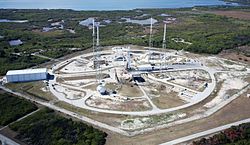
SpaceX leased LC-40 from the U.S. Air Force in April 2007 to launch its Falcon 9 rocket, getting renamed to SLC-40 much like what happened to SLC-41 and SLC-37.[7] Ground facility construction began the following year, including a rocket and payload preparation hangar and new fuel tanks. A spherical liquid oxygen tank previously used at LC-34 was purchased from NASA.
The first Falcon 9 arrived in late 2008, with the inaugural launch in June 2010 carrying a dummy payload. A Dragon spacecraft demonstration flight followed in December. Starting in 2012, SLC-40 became the primary launch site for the Dragon cargo vehicle providing provide two-way logistics to and from the International Space Station, a role previously filled by the Space Shuttle until its retirement in 2011.[8]
To accommodate the heavier Falcon 9 v1.1 rocket, the launch pad was modified in 2013.[9] Launch frequency gradually increased from 2014, with a mix of Dragon and satellite missions.
A catastrophic explosion occurred at SLC-40 in September 2016 during a static fire test, destroying a Falcon 9 rocket and its payload, the AMOS-6 satellite. The incident caused significant damage to the launch pad.[10][11] After a thorough investigation and cleanup, repairs and upgrades began in early 2017.[12] SLC-40 returned to service in December 2017 with the successful launch of CRS-13.[13][14][15]
SpaceX had leased Launch Complex 39A (LC-39A) at the nearby Kennedy Space Center from NASA in April 2014, which allowed launches to continue to from Florida during the reconstruction of SLC-40. In August 2018, LC-39A's crew access tower received an access arm, allowing crew to be loaded onto Crew Dragon 2 capsules along with late payload changes on Cargo Dragon 2 capsules. Because SLC-40 lacked an access tower, Dragon missions were paused after the original Dragon 1 capsule was retired in 2020.[16]
.jpg)

In the 2020s, SLC-40 would become SpaceX's "workhorse" launch pad, hosting less complex satellite launch missions as frequently as every week, completing 50 launches of this launch pad alone in 2023. Meanwhile, LC-39A was used less, being reserved for Dragon crew and cargo flights, Falcon Heavy missions, and other complex missions.[16]
To add additional operational flexibility and reduce reliance on LC-39A, in early 2023, SpaceX began constructing an access tower at SLC-40.[16] In February 2024, SpaceX tested its new emergency escape system for future crewed missions, which uses an evacuation slide instead of the slidewire baskets used at LC-39A.[17]
The tower was first used ahead of in early 2024 to accommodate late loading of supplies into cargo spacecraft.[16][18] SLC-40 was used to launch its first crewed mission in September 2024, SpaceX Crew-9.[19] The mission had been slated to use LC-39A, but was shifted to SLC-40 when the launch was delayed due to issues with the Boeing Starliner Calypso spacecraft that was docked to the ISS. In addition, the delay would have bled into LC-39A's conversion process into Falcon Heavy launches, as one was being used to launch NASA's Europa Clipper in October.[20]
SpaceX built a Falcon 9 landing pad within the SLC‑40 launch complex to eliminate use of Landing Zones 1 and 2.[21][22] The first landing on this pad occurred on February 13, 2026.[23]
Launch & Landing history
[edit]


SLC-40
[edit]Titan III and IV
[edit]All IIIC, 34D, and IV flights operated by the United States Air Force. All Commercial flights operated by Martin Marietta.
| No. | Date | Time (UTC) | Launch vehicle | S/N and Configuration | Payload | Result | Remarks |
|---|---|---|---|---|---|---|---|
| 1 | 18 June 1965 | 14:00 | Titan IIIC | 3C-7 | Mass simulator | Success | Maiden flight of the Titan IIIC. First flight from LC-40 and the ITL Complex. |
| 2 | 15 October 1965 | 17:24 | Titan IIIC | 3C-4 | LCS-2 | Failure | Transtage ultimately failed while in low Earth orbit due to leak in oxidizer tank. |
| 3 | 3 November 1966 | 13:50 | Titan IIIC | 3C-9 | OPS-0855 (Gemini B) | Success | Only flight for the Air Force's Manned Orbiting Laboratory program. Gemini B capsule flew on a suborbital trajectory while the rest continued into orbit. First ever flight of a reused spacecraft, being Gemini SC-2 flown on Gemini 2. |
| 4 | 8 April 1970 | 10:50 | Titan IIIC | 3C-18 | OPS-7033 and OPS-7034 (Vela) | Success | First Titan IIIC flight following rocket's decommission from LC-41. |
| 5 | 6 November 1970 | 10:35 | Titan IIIC | 3C-19 | OPS-5960 (DSP) | Partial failure | Third burn of Transtage failed, leaving payload unusable in a lower orbit than intended. |
| 6 | 5 May 1971 | 07:43 | Titan IIIC | 3C-20 | OPS-3811 (DSP) | Success | |
| 7 | 3 November 1971 | 03:09 | Titan IIIC | 3C-21 | OPS-9431 and OPS-9432 (DSCS-II) | Success | |
| 8 | 1 March 1972 | 09:39 | Titan IIIC | 3C-22 | OPS-1570 (DSP) | Success | |
| 9 | 13 June 1973 | 07:14 | Titan IIIC | 3C-24 | OPS-6157 (DSP) | Success | |
| 10 | 13 December 1973 | 23:57 | Titan IIIC | 3C-26 | OPS-9433 and OPS-9434 (DSCS-II) | Success | |
| 11 | 30 May 1974 | 13:00 | Titan IIIC | 3C-27 | ATS-6 | Success | Part of the Applications Technology Satellites program. Collaboration between NASA and ISRO. First civilian launch from LC-40. |
| 12 | 20 May 1975 | 14:03 | Titan IIIC | 3C-25 | OPS-9435 and OPS-9436 (DSCS-II) | Failure | Failure of Transtage's inertial measurement unit left payload stranded in LEO. |
| 13 | 14 December 1975 | 05:15 | Titan IIIC | 3C-29 | OPS-3165 (DSP) | Success | |
| 14 | 15 March 1975 | 01:25 | Titan IIIC | 3C-30 | LES-8, LES-9, Solrad 11A, and Solrad 11B | Success | |
| 15 | 26 June 1976 | 03:00 | Titan IIIC | 3C-28 | OPS-2112 (DSP) | Success | |
| 16 | 6 February 1977 | 06:00 | Titan IIIC | 3C-23 | OPS-3151 (DSP) | Success | |
| 17 | 12 May 1977 | 14:26 | Titan IIIC | 3C-32 | OPS-9437 and OPS-9438 (DSCS-II) | Success | |
| 18 | 25 March 1978 | 18:09 | Titan IIIC | 3C-35 | OPS-9439 and OPS-9440 (DSCS-II) | Failure | Hydraulics pump failure in second stage forced range safety protocols to be activated 8 minutes into flight. |
| 19 | 10 June 1978 | 19:12 | Titan IIIC | 3C-33 | OPS-9454 (Vortex) | Success | |
| 20 | 14 December 1978 | 00:43 | Titan IIIC | 3C-36 | OPS-9441 and OPS-9442 (DSCS-II) | Success | |
| 21 | 10 June 1979 | 13:39 | Titan IIIC | 3C-31 | OPS-7484 (DSP) | Success | |
| 22 | 1 October 1979 | 11:22 | Titan IIIC | 3C-34 | OPS-1948 (Vortex) | Success | |
| 23 | 21 November 1979 | 21:36 | Titan IIIC | 3C-37 | OPS-9443 and OPS-9444 (DSCS-II) | Success | |
| 24 | 16 March 1981 | 19:24 | Titan IIIC | 3C-40 | OPS-7390 (DSP) | Success | |
| 25 | 31 October 1981 | 09:22 | Titan IIIC | 3C-39 | OPS-4029 (Vortex) | Success | |
| 26 | 6 March 1982 | 19:25 | Titan IIIC | 3C-38 | OPS-8701 (DSP) | Success | Final flight of the Titan IIIC. |
| 27 | 30 October 1982 | 03:05 | Titan 34D | 34D-1, IUS | OPS-9445 (DSCS-II) and DSCS-III 1 | Success | Maiden flight of the Titan 34D, and first flight of the Inertial Upper Stage. Only Titan 34D flight with an IUS. |
| 28 | 31 January 1984 | 03:08 | Titan 34D | 34D-10, Transtage | OPS-0441 (Vortex) | Success | |
| 29 | 14 April 1984 | 16:52 | Titan 34D | 34D-11, Transtage | OPS-7641 (DSP) | Success | |
| 30 | 22 December 1984 | 00:02 | Titan 34D | 34D-13, Transtage | USA-7 (DSP) | Success | |
| 31 | 29 November 1987 | 03:28 | Titan 34D | 34D-8, Transtage | USA-28 (DSP) | Success | |
| 32 | 2 September 1988 | 12:05 | Titan 34D | 34D-3, Transtage | USA-31 (Vortex) | Partial failure | Broken pressurization lines forced early shutdown of Transtage during apogee burn, placing satellite in lower than intended orbit. |
| 33 | 10 May 1989 | 19:47 | Titan 34D | 34D-16, Transtage | USA-37 (Vortex) | Success | |
| 34 | 4 September 1989 | 05:54 | Titan 34D | 34D-2, Transtage | USA-42 (DSCS-II) and USA-43 (DSCS-III) | Success | Final flight of the Titan 34D and final flight of the Transtage. |
| 35 | 1 January 1990 | 00:07 | Commercial Titan III | CT-1 | Skynet 4A and JCSAT 2 | Success | Maiden flight of the Commercial Titan III, and first commercial launch from LC-40. |
| 36 | 14 March 1990 | 11:52 | Commercial Titan III | CT-2 | Intelsat 603 | Partial failure | Second stage failed to separate from kick motor, leaving payload stranded in LEO. Was visited by Space Shuttle Endeavour during STS-49 two years later, where a new kickstage was attached and boosted into geostationary orbit. |
| 37 | 23 June 1990 | 11:19 | Commercial Titan III | CT-3 | Intelsat 604 | Success | |
| 38 | 25 September 1992 | 17:05 | Commercial Titan III | CT-4 | Mars Observer | Success | Only flight of the Planetary Observer program, aimed at studying Mars. Final flight of the Commercial Titan III and final launch of the Titan III subfamily. First launch beyond geostationary orbit from LC-40. While launch was successful, communication was lost prior to Mars orbit insertion, likely due to a rupture in the fuel tank system. |
| 39 | 7 February 1994 | 21:47 | Titan IV | K-10, 401A / Centaur | USA-99 (Milstar) | Success | First Titan IV flight from LC-40. First Titan IV flight with a Centaur third stage. |
| 40 | 22 December 1994 | 22:19 | Titan IV | K-14, 402A / IUS | USA-107 (DSP) | Success | |
| 41 | 14 May 1995 | 13:45 | Titan IV | K-23, 401A / Centaur | USA-110 (Orion) | Success | |
| 42 | 6 November 1995 | 05:15 | Titan IV | K-21, 401A / Centaur | USA-115 (Milstar) | Success | |
| 43 | 3 July 1996 | 00:31 | Titan IV | K-2, 405A | USA-125 (SDS) | Success | Final Titan IV-A flight from LC-40. |
| 44 | 23 February 1997 | 20:20 | Titan IV | B-24, 402B / IUS | USA-130 (DSP) | Success | Maiden flight of the Titan IV-B. |
| 45 | 15 October 1997 | 08:43 | Titan IV | B-33, 401B / Centaur | Cassini-Huygens | Success | Part of the Large Strategic Science Missions, aimed at studying Saturn and its moons such as Titan and Enceladus. Collaboration between NASA, ESA, and the ASI. First spacecraft to orbit Saturn. Included the Huygens lander, first spacecraft to land on an outer solar system body and a moon besides the Moon. Only civilian launch on a Titan IV, and final Titan flight to go beyond geostationary orbit. |
| 46 | 9 May 1998 | 01:38 | Titan IV | B-25, 401B / Centaur | NROL-6 | Success | NRO launch. Orion satellite, also known as USA-139. First acknowledged launch by the National Reconnaissance Office from LC-40. |
| 47 | 30 April 1999 | 16:30 | Titan IV | B-32, 401B / Centaur | USA-143 (Milstar) | Failure | Database error in Centaur lead to failure of attitude control and incorrect burns, placing satellite into useless orbit. |
| 48 | 8 May 2000 | 16:01 | Titan IV | B-29, 402B / IUS | USA-149 (DSP) | Success | |
| 49 | 27 February 2001 | 21:20 | Titan IV | B-41, 401B / Centaur | USA-157 (Milstar) | Success | |
| 50 | 6 August 2001 | 07:28 | Titan IV | B-31, 402B / IUS | USA-159 (DSP) | Success | |
| 51 | 16 January 2002 | 00:30 | Titan IV | B-38, 401B / Centaur | USA-164 (Milstar) | Success | |
| 52 | 8 April 2003 | 13:43 | Titan IV | B-35, 401B / Centaur | USA-169 (Milstar) | Success | |
| 53 | 9 September 2003 | 04:29 | Titan IV | B-36, 401B / Centaur | NROL-19 | Success | NRO launch. Orion satellite, also known as USA-171. Final Titan flight with a Centaur. |
| 54 | 14 February 2004 | 18:50 | Titan IV | B-39, 402B / IUS | USA-176 (DSP) | Success | Final flight of the Inertial Upper Stage. |
| 55 | 30 April 2005 | 00:50 | Titan IV | B-26, 405B | NROL-16 | Success | NRO launch. Lacrosse satellite, also known as USA-182. Final Titan IV launch from LC-40, final Titan launch from Cape Canaveral, and penultimate flight of the Titan family. The final flight was made in October at SLC-4E in Vandenberg. |
Falcon 9 (2010–23)
[edit]All flights operated by SpaceX.
| No. | Date | Time (UTC) | Launch Vehicle | Booster flight[a] | Payload/mission | Result | Remarks |
|---|---|---|---|---|---|---|---|
| 56 | 4 June 2010 | 18:45 | Falcon 9 v1.0 | 0003 | Dragon Spacecraft Qualification Unit | Success | Maiden flight of Falcon 9 and first launch as SLC-40. Flew a boilerplate Dragon capsule attached to the second stage. |
| 57 | 8 December 2010 | 05:43 | Falcon 9 v1.0 | 0004 | SpaceX COTS Demo-1 | Success | Demo flight for Commercial Resupply Services. Maiden flight of an operational Dragon spacecraft. First orbital flight of pressurized commercial spacecraft. |
| 58 | 22 May 2012 | 07:44 | Falcon 9 v1.0 | 0005 | SpaceX COTS Demo-2 | Success | Demo flight for Commercial Resupply Services. Berthed to the International Space Station, becoming the first commercial spacecraft to visit it. |
| 59 | 8 October 2012 | 00:35 | Falcon 9 v1.0 | 0006 | SpaceX CRS-1 | Success | ISS resupply flight. First operational CRS flight. Carried an Orbcomm satellite as a secondary payload, but an engine failure on the first stage forced it to be deployed in a lower than intended orbit. |
| 60 | 1 March 2013 | 15:10 | Falcon 9 v1.0 | 0007 | SpaceX CRS-2 | Success | ISS resupply flight. Final flight of Falcon 9 v1.0. |
| 61 | 3 December 2013 | 22:41 | Falcon 9 v1.1 | 1004 | SES 8 | Success | First flight of Falcon 9 v1.1 from SLC-40 and first non-Dragon flight for Falcon 9 from Cape Canaveral. First Falcon 9 flight to geostationary orbit. |
| 62 | 6 January 2014 | 22:06 | Falcon 9 v1.1 | 1005 | Thaicom 6 | Success | |
| 63 | 18 April 2014 | 19:25 | Falcon 9 v1.1 | 1006 | SpaceX CRS-3 | Success | ISS resupply flight. First Dragon flight on Falcon 9 v1.1. Booster performed a soft water landing. |
| 64 | 14 July 2014 | 15:15 | Falcon 9 v1.1 | 1007 | Orbcomm-OG2-1 | Success | Booster performed a soft water landing. |
| 65 | 5 August 2014 | 08:00 | Falcon 9 v1.1 | 1008 | AsiaSat 8 | Success | |
| 66 | 7 September 2014 | 05:00 | Falcon 9 v1.1 | 1011 | AsiaSat 6 | Success | |
| 67 | 21 September 2014 | 05:52 | Falcon 9 v1.1 | 1010 | SpaceX CRS-4 | Success | ISS resupply fight. Booster attempted a soft water landing, but ran out of liquid oxygen and crashed. |
| 68 | 10 January 2015 | 09:47 | Falcon 9 v1.1 | 1012 | SpaceX CRS-5 | Success | ISS resupply fight. First attempt at a first stage landing, and first deployment of drone ship Just Read the Instructions. grid-fins lost hydraulic fluid and caused it to crash. |
| 69 | 11 February 2015 | 23:03 | Falcon 9 v1.1 | 1013 | DSCOVR | Success | Earth observation satellite and solar weather satellite. First deep space probe for NOAA. First Falcon 9 flight beyond geostationary orbit, to the L1 Lagrange point. Booster performed a soft water landing. |
| 70 | 2 March 2015 | 03:50 | Falcon 9 v1.1 | 1014 | ABS 3A and Eutelsat 115 West B | Success | |
| 71 | 14 April 2015 | 20:10 | Falcon 9 v1.1 | 1015 | SpaceX CRS-6 | Success | ISS resupply fight. Attempt at a first stage landing, but a stuck throttle valve caused excess lateral velocity and caused it to crash. |
| 72 | 27 April 2015 | 23:03 | Falcon 9 v1.1 | 1016 | TurkmenAlem52E / MonacoSat | Success | |
| 73 | 28 June 2015 | 14:21 | Falcon 9 v1.1 | 1018 | SpaceX CRS-7 | Failure | ISS resupply fight. Intended to launch and deliver IDA-1. Final flight of Falcon 9 v1.1 from Cape Canaveral, and first deployment of drone ship Of Course I Still Love You. Overpressure incident in second stage LOX tank 150 seconds into launch caused vehicle to break up. Dragon capsule survived breakup, but was destroyed upon impacting the ocean due to having no parachute deployment protocols for aborts. |
| 74 | 22 December 2015 | 01:29 | Falcon 9 Full Thrust | 1019 | Orbcomm OG2-2 | Success | First successful Falcon 9 landing, and first landing attempt at Landing Zone 1 in LC-13. Maiden flight of Falcon 9 Full Thrust, and first landing attempt with a non-Dragon payload. |
| 75 | 4 March 2016 | 23:35 | Falcon 9 Full Thrust | 1020 | SES-9 | Success | First landing attempt on a flight heading beyond low Earth orbit. Booster failed to kill velocity during descent and crashed. |
| 76 | 8 April 2016 | 20:43 | Falcon 9 Full Thrust | 1021‑1 | SpaceX CRS-8 | Success | ISS resupply flight. Launched and delivered the Bigelow Expandable Activity Module. First successful drone ship landing. First Dragon flight on Falcon 9 Full Thrust. Booster would be eventually reflown on SES-10. |
| 77 | 6 May 2016 | 05:21 | Falcon 9 Full Thrust | 1022 | JCSAT-14 | Success | First successful landing on a flight heading beyond LEO. |
| 78 | 27 May 2016 | 21:39 | Falcon 9 Full Thrust | 1023‑1 | Thaicom 8 | Success | Booster would eventually be reflown on the Falcon Heavy test flight. |
| 79 | 15 June 2016 | 14:29 | Falcon 9 Full Thrust | 1024 | Eutelsat 117 West B and ABS 2A | Success | |
| 80 | 18 July 2016 | 04:45 | Falcon 9 Full Thrust | 1025‑1 | SpaceX CRS-9 | Success | ISS resupply flight. Launched and delivered IDA-2. |
| 81 | 14 August 2016 | 05:26 | Falcon 9 Full Thrust | 1026 | JCSAT-16 | Success | Final Falcon 9 flight before the AMOS-6 explosion. |
| - | Planned for 3 September 2016 | Cancelled | Falcon 9 Full Thrust | 1028 | AMOS-6 | Precluded | Buckled liner in several COPVs led to deflagration in the second stage during fuel loading prior to a static-fire test on 1 September. Satellite lost in accident, leading to change in SpaceX policy where active payloads are not used during static-fire tests. |
| 82 | 15 December 2017 | 15:36 | Falcon 9 Full Thrust | 1035‑2 | SpaceX CRS-13 | Success | ISS resupply flight. First launch from SLC-40 following completion of repairs. First flight of a reused booster from SLC-40. |
| 83 | 8 January 2018 | 01:00 | Falcon 9 Block 4 | 1043‑1 | Zuma | Success | Classified payload for the NRO. Also known as USA-280. First Falcon 9 Block 4 launch from SLC-40. |
| 84 | 31 January 2018 | 21:25 | Falcon 9 Full Thrust | 1032‑2 | GovSat-1 | Success | Final Falcon 9 Full Thrust flight from Cape Canaveral. Booster expended via water landing. |
| 85 | 6 March 2018 | 05:33 | Falcon 9 Block 4 | 1044 | Hispasat 30W-6 | Success | Booster expended via water landing. |
| 86 | 2 April 2018 | 20:30 | Falcon 9 Block 4 | 1039‑2 | SpaceX CRS-14 | Success | ISS resupply flight. Only Dragon flight on Falcon 9 Block 4. Booster expended. |
| 87 | 18 April 2018 | 22:51 | Falcon 9 Block 4 | 1045‑1 | TESS | Success | Part of the Explorer program, designed to search for exoplanets using the transit method. First Falcon 9 flight by another celestial body, as spacecraft used a gravity assist at the Moon. |
| 88 | 4 June 2018 | 04:45 | Falcon 9 Block 4 | 1040‑2 | SES-12 | Success | Booster expended. |
| 89 | 29 June 2018 | 09:42 | Falcon 9 Block 4 | 1045‑2 | SpaceX CRS-15 | Success | ISS resupply flight. Final flight of Falcon 9 Block 4. Booster expended. |
| 90 | 22 July 2018 | 05:50 | Falcon 9 Block 5 | 1047‑1 | Telstar 19V | Success | First launch of Falcon 9 Block 5 from SLC-40. |
| 91 | 7 August 2018 | 05:18 | Falcon 9 Block 5 | 1046‑2 | Telkom-4 (Merah Putih) | Success | |
| 92 | 10 September 2018 | 04:45 | Falcon 9 Block 5 | 1049‑1 | Telstar 18V | Success | |
| 93 | 5 December 2018 | 18:16 | Falcon 9 Block 5 | 1050 | SpaceX CRS-16 | Success | ISS resupply flight. First Dragon flight on Falcon 9 Block 5. |
| 94 | 23 December 2018 | 13:51 | Falcon 9 Block 5 | 1054 | GPS III-1 | Success | Part of the Global Positioning System. First launch of GPS Block III. First GPS launch for SpaceX and first GPS launch from SLC-40. Booster expended. |
| 95 | 22 February 2019 | 01:45 | Falcon 9 Block 5 | 1048‑3 | Nusantara Satu and Beresheet | Success | Beresheet operated by SpaceIL, originally a finalist for the Google Lunar X Prize. First attempted private lunar landing, but gyroscope failure led to premature main engine cutoff and crashed. First Falcon 9 launch to two different destinations and first Falcon 9 launch to another celestial body. |
| 96 | 4 May 2019 | 06:48 | Falcon 9 Block 5 | 1056‑1 | SpaceX CRS-17 | Success | ISS resupply flight. Launched and delivered the Orbiting Carbon Observatory-3. |
| 97 | 24 May 2019 | 02:30 | Falcon 9 Block 5 | 1049‑2 | Starlink 1 | Success | First test launch of the Starlink megaconstellation. |
| 98 | 25 July 2019 | 22:02 | Falcon 9 Block 5 | 1056‑2 | SpaceX CRS-18 | Success | ISS resupply flight. Launched and delivered IDA-3. |
| 99 | 6 August 2019 | 23:23 | Falcon 9 Block 5 | 1047‑2 | AMOS 17 | Success | Free makeup flight for Spacecom following the loss of AMOS 6. Booster expended. |
| 100 | 11 November 2019 | 14:56 | Falcon 9 Block 5 | 1048‑4 | Starlink 1 (v1.0) | Success | First operational launch of the Starlink megaconstellation. |
| 101 | 5 December 2019 | 17:29 | Falcon 9 Block 5 | 1059‑1 | SpaceX CRS-19 | Success | ISS resupply flight. |
| 102 | 17 December 2019 | 00:10 | Falcon 9 Block 5 | 1056‑2 | JCSAT-18 / Kacific 1 | Success | |
| 103 | 7 January 2020 | 02:19 | Falcon 9 Block 5 | 1049‑4 | Starlink 2 (v1.0) | Success | |
| 104 | 29 January 2020 | 14:06 | Falcon 9 Block 5 | 1051‑3 | Starlink 3 (v1.0) | Success | |
| 105 | 17 February 2020 | 15:05 | Falcon 9 Block 5 | 1056‑4 | Starlink 4 (v1.0) | Success | |
| 106 | 7 March 2020 | 04:50 | Falcon 9 Block 5 | 1059‑2 | SpaceX CRS-20 | Success | ISS resupply flight. Final flight of Dragon 1. |
| 107 | 4 June 2020 | 01:25 | Falcon 9 Block 5 | 1049‑5 | Starlink 7 (v1.0) | Success | |
| 108 | 13 June 2020 | 09:21 | Falcon 9 Block 5 | 1059‑3 | Starlink 8 (v1.0) / SkySat 16–18 | Success | |
| 109 | 30 June 2020 | 20:10 | Falcon 9 Block 5 | 1060‑1 | GPS III-3 | Success | Part of the Global Positioning System. |
| 110 | 20 July 2020 | 21:30 | Falcon 9 Block 5 | 1058‑2 | Anasis-II | Success | |
| 111 | 18 August 2020 | 14:31 | Falcon 9 Block 5 | 1049‑6 | Starlink 10 (v1.0) / SkySat 19–21 | Success | |
| 112 | 30 August 2020 | 23:19 | Falcon 9 Block 5 | 1059‑4 | SAOCOM 1B / GNOMES 1 / Tyvak 0172 | Success | First flight from Cape Canaveral to go into polar orbit since 1969 and first polar launch from SLC-40. |
| 113 | 24 October 2020 | 15:31 | Falcon 9 Block 5 | 1060‑3 | Starlink 14 (v1.0) | Success | |
| 114 | 5 November 2020 | 23:24 | Falcon 9 Block 5 | 1062‑1 | GPS III-4 | Success | Part of the Global Positioning System. |
| 115 | 25 November 2020 | 02:13 | Falcon 9 Block 5 | 1049‑7 | Starlink 15 (v1.0) | Success | 100th Falcon 9 flight. |
| 116 | 13 December 2020 | 17:30 | Falcon 9 Block 5 | 1051‑7 | SXM-7 | Success | |
| 117 | 8 January 2021 | 02:15 | Falcon 9 Block 5 | 1060‑4 | Türksat 5A | Success | |
| 118 | 24 January 2021 | 15:00 | Falcon 9 Block 5 | 1058‑5 | Transporter-1 | Success | First flight of SpaceX's Transporter program for rideshare satellites. |
| 119 | 4 February 2021 | 06:19 | Falcon 9 Block 5 | 1060‑5 | Starlink V1.0-L18 | Success | |
| 120 | 15 February 2021 | 03:59 | Falcon 9 Block 5 | 1059‑6 | Starlink V1.0-L19 | Success | |
| 121 | 11 March 2021 | 08:13 | Falcon 9 Block 5 | 1058‑6 | Starlink V1.0-L20 | Success | |
| 122 | 24 March 2021 | 08:28 | Falcon 9 Block 5 | 1060‑6 | Starlink V1.0-L22 | Success | |
| 123 | 7 April 2021 | 16:34 | Falcon 9 Block 5 | 1058‑7 | Starlink V1.0-L23 | Success | |
| 124 | 29 April 2021 | 03:44 | Falcon 9 Block 5 | 1060‑7 | Starlink V1.0-L24 | Success | |
| 125 | 9 May 2021 | 07:42 | Falcon 9 Block 5 | 1051‑10 | Starlink V1.0-L27 | Success | |
| 126 | 26 May 2021 | 18:59 | Falcon 9 Block 5 | 1063‑2 | Starlink V1.0-L28 | Success | |
| 127 | 6 June 2021 | 04:26 | Falcon 9 Block 5 | 1061‑3 | SXM-8 | Success | |
| 128 | 17 June 2021 | 16:09 | Falcon 9 Block 5 | 1062‑2 | GPS III-5 | Success | Part of the Global Positioning System. |
| 129 | 30 June 2021 | 19:31 | Falcon 9 Block 5 | 1060‑8 | Transporter-2 | Success | |
| 130 | 13 November 2021 | 12:19 | Falcon 9 Block 5 | 1058‑9 | Starlink Group 4‑1 | Success | |
| 131 | 2 December 2021 | 23:12 | Falcon 9 Block 5 | 1060‑9 | Starlink Group 4‑3 | Success | |
| 132 | 19 December 2021 | 03:58 | Falcon 9 Block 5 | 1067‑3 | Türksat 5B | Success | |
| 133 | 13 January 2022 | 15:25 | Falcon 9 Block 5 | 1058‑10 | Transporter-3 | Success | |
| 134 | 31 January 2022 | 23:11 | Falcon 9 Block 5 | 1052‑3 | CSG-2 | Success | |
| 135 | 21 February 2022 | 14:44 | Falcon 9 Block 5 | 1058‑11 | Starlink Group 4‑8 | Success | |
| 136 | 9 March 2022 | 13:45 | Falcon 9 Block 5 | 1052‑4 | Starlink Group 4‑10 | Success | |
| 137 | 19 March 2022 | 04:22 | Falcon 9 Block 5 | 1051‑12 | Starlink Group 4‑12 | Success | |
| 138 | 1 April 2022 | 12:47 | Falcon 9 Block 5 | 1061‑7 | Transporter-4 | Success | |
| 139 | 21 April 2022 | 17:51 | Falcon 9 Block 5 | 1060‑12 | Starlink Group 4‑14 | Success | |
| 140 | 29 April 2022 | 21:27 | Falcon 9 Block 5 | 1062‑6 | Starlink Group 4‑16 | Success | |
| 141 | 14 May 2022 | 20:40 | Falcon 9 Block 5 | 1073‑1 | Starlink Group 4‑15 | Success | |
| 142 | 25 May 2022 | 18:35 | Falcon 9 Block 5 | 1061‑8 | Transporter-5 | Success | |
| 143 | 8 June 2022 | 21:04 | Falcon 9 Block 5 | 1062‑7 | Nilesat-301 | Success | |
| 144 | 19 June 2022 | 04:27 | Falcon 9 Block 5 | 1061‑9 | Globalstar FM15 | Success | |
| 145 | 29 June 2022 | 21:04 | Falcon 9 Block 5 | 1073‑2 | SES-22 | Success | |
| 146 | 7 July 2022 | 13:11 | Falcon 9 Block 5 | 1058‑13 | Starlink Group 4-21 | Success | |
| 147 | 17 July 2022 | 14:20 | Falcon 9 Block 5 | 1051‑13 | Starlink Group 4-22 | Success | |
| 148 | 4 August 2022 | 23:08 | Falcon 9 Block 5 | 1052‑6 | KPLO | Success | Also known as Danuri, and placed on a low-energy ballistic Lunar transfer. Made South Korea the sixth nation to put a satellite into Lunar orbit. |
| 149 | 19 August 2022 | 19:21 | Falcon 9 Block 5 | 1062‑9 | Starlink Group 4-27 | Success | |
| 150 | 28 August 2022 | 03:41 | Falcon 9 Block 5 | 1069‑2 | Starlink Group 4-23 | Success | |
| 151 | 5 September 2022 | 02:09 | Falcon 9 Block 5 | 1052‑7 | Starlink Group 4-20 | Success | |
| 152 | 19 September 2022 | 00:18 | Falcon 9 Block 5 | 1067‑6 | Starlink Group 4-34 | Success | |
| 153 | 24 September 2022 | 23:32 | Falcon 9 Block 5 | 1073‑4 | Starlink Group 4-35 | Success | |
| 154 | 8 October 2022 | 23:05 | Falcon 9 Block 5 | 1060‑14 | Galaxy 33 & 34 | Success | |
| 155 | 15 October 2022 | 05:22 | Falcon 9 Block 5 | 1069‑3 | Hotbird 13F | Success | |
| 156 | 30 October 2022 | 14:50 | Falcon 9 Block 5 | 1062‑10 | Starlink Group 4-36 | Success | |
| 157 | 3 November 2022 | 05:22 | Falcon 9 Block 5 | 1067‑7 | Hotbird 13G | Success | |
| 158 | 12 November 2022 | 16:06 | Falcon 9 Block 5 | 1051‑14 | Galaxy 31 & 32 | Success | |
| 159 | 23 November 2022 | 02:57 | Falcon 9 Block 5 | 1049‑11 | Eutelsat 10B | Success | |
| 160 | 11 December 2022 | 07:38 | Falcon 9 Block 5 | 1073‑5 | Hakuto-R Mission 1 | Success | Private Lunar landing attempt operated by ispace. Error with radar altimeter caused spacecraft to hover overhead until fuel depletion, causing it to crash. |
| 161 | 16 December 2022 | 22:48 | Falcon 9 Block 5 | 1067‑8 | O3b mPOWER 1 & 2 | Success | |
| 162 | 28 December 2022 | 09:34 | Falcon 9 Block 5 | 1062‑11 | Starlink Group 5‑1 | Success | |
| 163 | 3 January 2023 | 14:56 | Falcon 9 Block 5 | 1060‑15 | Transporter-6 | Success | |
| 164 | 10 January 2023 | 04:50 | Falcon 9 Block 5 | 1076‑2 | OneWeb L16 | Success | |
| 165 | 18 January 2023 | 12:24 | Falcon 9 Block 5 | 1077‑2 | GPS III-6 | Success | Part of the Global Positioning System. |
| 166 | 26 January 2023 | 09:32 | Falcon 9 Block 5 | 1067‑9 | Starlink Group 5‑2 | Success | |
| 167 | 7 February 2023 | 01:32 | Falcon 9 Block 5 | 1073‑6 | Amazonas Nexus | Success | |
| 168 | 12 February 2023 | 05:10 | Falcon 9 Block 5 | 1062‑12 | Starlink Group 5‑4 | Success | |
| 169 | 18 February 2023 | 03:59 | Falcon 9 Block 5 | 1077‑3 | Inmarsat-6 F2 | Success | |
| 170 | 27 February, 2023 | 23:13 | Falcon 9 Block 5 | 1076‑3 | Starlink Group 6‑1 | Success | |
| 171 | 9 March 2023 | 19:13 | Falcon 9 Block 5 | 1062‑13 | OneWeb L17 | Success | |
| 172 | 17 March 2023 | 23:38 | Falcon 9 Block 5 | 1069‑6 | SES-18 & SES-19 | Success | |
| 173 | 24 March 2023 | 15:43 | Falcon 9 Block 5 | 1067‑10 | Starlink Group 5‑5 | Success | |
| 174 | 29 March 2023 | 20:01 | Falcon 9 Block 5 | 1077‑4 | Starlink Group 5‑10 | Success | |
| 175 | 7 April 2023 | 04:30 | Falcon 9 Block 5 | 1076‑4 | Intelsat 40e | Success | Satellite included the TEMPO experiment. |
| 176 | 19 April 2023 | 14:31 | Falcon 9 Block 5 | 1073‑8 | Starlink Group 6‑2 | Success | |
| 177 | 28 April 2023 | 22:12 | Falcon 9 Block 5 | 1078‑2 | O3b mPOWER 3 & 4 | Success | |
| 178 | 4 May 2023 | 07:31 | Falcon 9 Block 5 | 1069‑7 | Starlink Group 5‑6 | Success | |
| 179 | 14 May 2023 | 05:03 | Falcon 9 Block 5 | 1067‑11 | Starlink Group 5‑9 | Success | |
| 180 | 19 May 2023 | 06:19 | Falcon 9 Block 5 | 1076‑5 | Starlink Group 6‑3 | Success | |
| 181 | 27 May 2023 | 04:30 | Falcon 9 Block 5 | 1062‑14 | Arabsat 7B (Badr 8) | Success | |
| 182 | 4 June 2023 | 12:20 | Falcon 9 Block 5 | 1078‑3 | Starlink Group 6‑4 | Success | |
| 183 | 12 June 2023 | 07:10 | Falcon 9 Block 5 | 1073‑9 | Starlink Group 5‑11 | Success | |
| 184 | 18 June 2023 | 22:21 | Falcon 9 Block 5 | 1067‑12 | Satria | Success | |
| 185 | 23 June 2023 | 15:35 | Falcon 9 Block 5 | 1069‑8 | Starlink Group 5‑12 | Success | |
| 186 | 1 July 2023 | 15:12 | Falcon 9 Block 5 | 1080‑2 | Euclid | Success | Part of the Cosmic Vision program, aimed at surveying redshift in galaxies to better understand dark matter and dark energy. Originally planned to launch on Soyuz, but moved to Falcon 9 following the Russian Invasion of Ukraine. First dedicated ESA launch from Falcon 9. |
| 187 | 10 July 2023 | 03:58 | Falcon 9 Block 5 | 1058‑16 | Starlink Group 6‑5 | Success | |
| 188 | 16 July 2023 | 03:50 | Falcon 9 Block 5 | 1060‑16 | Starlink Group 5‑15 | Success | |
| 189 | 24 July 2023 | 00:50 | Falcon 9 Block 5 | 1076‑6 | Starlink Group 6‑6 | Success | |
| 190 | 28 July 2023 | 04:01 | Falcon 9 Block 5 | 1062‑15 | Starlink Group 6‑7 | Success | |
| 191 | 3 August 2023 | 05:00 | Falcon 9 Block 5 | 1077‑6 | Galaxy 37 | Success | |
| 192 | 7 August 2023 | 02:41 | Falcon 9 Block 5 | 1078‑4 | Starlink Group 6‑8 | Success | |
| 193 | 11 August 2023 | 05:17 | Falcon 9 Block 5 | 1069‑9 | Starlink Group 6‑9 | Success | |
| 194 | 17 August 2023 | 03:36 | Falcon 9 Block 5 | 1067‑13 | Starlink Group 6‑10 | Success | |
| 195 | 27 August 2023 | 01:05 | Falcon 9 Block 5 | 1080‑3 | Starlink Group 6‑11 | Success | |
| 196 | 1 September 2023 | 02:21 | Falcon 9 Block 5 | 1077‑7 | Starlink Group 6‑13 | Success | |
| 197 | 9 September 2023 | 03:12 | Falcon 9 Block 5 | 1076‑7 | Starlink Group 6‑14 | Success | |
| 198 | 16 September 2023 | 03:38 | Falcon 9 Block 5 | 1078‑5 | Starlink Group 6‑16 | Success | |
| 199 | 20 September 2023 | 03:38 | Falcon 9 Block 5 | 1058‑17 | Starlink Group 6‑17 | Success | |
| 200 | 24 September 2023 | 03:38 | Falcon 9 Block 5 | 1060‑17 | Starlink Group 6‑18 | Success | |
| 201 | 30 September 2023 | 02:00 | Falcon 9 Block 5 | 1069‑10 | Starlink Group 6‑19 | Success | |
| 202 | 5 October 2023 | 05:36 | Falcon 9 Block 5 | 1076‑8 | Starlink Group 6‑21 | Success | |
| 203 | 13 October 2023 | 23:01 | Falcon 9 Block 5 | 1067‑14 | Starlink Group 6‑22 | Success | |
| 204 | 18 October 2023 | 00:39 | Falcon 9 Block 5 | 1062‑16 | Starlink Group 6‑23 | Success | |
| 205 | 22 October 2023 | 02:17 | Falcon 9 Block 5 | 1080‑4 | Starlink Group 6‑24 | Success | |
| 206 | 30 October 2023 | 23:20 | Falcon 9 Block 5 | 1077‑8 | Starlink Group 6‑25 | Success | |
| 207 | 4 November 2023 | 00:37 | Falcon 9 Block 5 | 1058‑18 | Starlink Group 6‑26 | Success | |
| 208 | 8 November 2023 | 05:05 | Falcon 9 Block 5 | 1073‑11 | Starlink Group 6‑27 | Success | |
| 209 | 12 November 2023 | 21:08 | Falcon 9 Block 5 | 1076‑9 | O3b mPOWER 5 & 6 | Success | |
| 210 | 18 November 2023 | 05:05 | Falcon 9 Block 5 | 1069‑11 | Starlink Group 6‑28 | Success | |
| 211 | 22 November 2023 | 07:47 | Falcon 9 Block 5 | 1067‑15 | Starlink Group 6‑29 | Success | |
| 212 | 28 November 2023 | 04:20 | Falcon 9 Block 5 | 1062‑17 | Starlink Group 6‑30 | Success | |
| 213 | 3 December 2023 | 04:00 | Falcon 9 Block 5 | 1078‑6 | Starlink Group 6‑31 | Success | |
| 214 | 7 December 2023 | 05:07 | Falcon 9 Block 5 | 1077‑9 | Starlink Group 6‑33 | Success | |
| 215 | 19 December 2023 | 04:01 | Falcon 9 Block 5 | 1081‑3 | Starlink Group 6‑34 | Success | |
| 216 | 23 December 2023 | 05:33 | Falcon 9 Block 5 | 1058‑19 | Starlink Group 6‑32 | Success | |
| 217 | 29 December 2023 | 04:01 | Falcon 9 Block 5 | 1069‑12 | Starlink Group 6‑36 | Success |
Falcon 9 (2024–25)
[edit]All flights operated by SpaceX.
| No. | Date | Time (UTC) | Launch vehicle | Booster flight[a] | Payload/mission | Result | Remarks |
|---|---|---|---|---|---|---|---|
| 218 | 3 January 2024 | 23:04 | Falcon 9 Block 5 | 1076‑10 | Ovzon-3 | Success | |
| 219 | 7 January 2024 | 22:35 | Falcon 9 Block 5 | 1067‑16 | Starlink Group 6‑35 | Success | |
| 220 | 15 January 2024 | 01:52 | Falcon 9 Block 5 | 1073‑12 | Starlink Group 6‑37 | Success | |
| 221 | 30 January 2024 | 17:07 | Falcon 9 Block 5 | 1077‑10 | Cygnus CRS NG-20 | Success | ISS resupply flight. First of four Cygnus flights on Falcon 9, thanks to Northrop Grumman's Antares being affected by the Russian Invasion of Ukraine. |
| 222 | 8 February 2024 | 06:33 | Falcon 9 Block 5 | 1081‑4 | PACE | Success | Part of the Large Strategic Science Missions, aimed to study Earth's ocean color, biogeochemistry, and ecology. |
| 223 | 14 February 2024 | 22:30 | Falcon 9 Block 5 | 1078‑7 | USSF-124 | Success | Launch for the United States Space Force. Two HBTSS satellites. |
| 224 | 20 February 2024 | 20:11 | Falcon 9 Block 5 | 1067‑17 | Telkomsat HTS 113BT | Success | |
| 225 | 25 February 2024 | 22:06 | Falcon 9 Block 5 | 1069‑13 | Starlink Group 6‑39 | Success | |
| 226 | 29 February 2024 | 15:30 | Falcon 9 Block 5 | 1076‑11 | Starlink Group 6‑40 | Success | |
| 227 | 4 March 2024 | 23:56 | Falcon 9 Block 5 | 1073‑13 | Starlink Group 6‑41 | Success | |
| 228 | 10 March 2024 | 23:05 | Falcon 9 Block 5 | 1077‑11 | Starlink Group 6‑43 | Success | |
| 229 | 21 March 2024 | 20:55 | Falcon 9 Block 5 | 1080‑6 | SpaceX CRS-30 | Success | ISS resupply flight. First Cargo Dragon 2 flight from SLC-40, and first use of pad's launch tower. |
| 230 | 25 March 2024 | 23:42 | Falcon 9 Block 5 | 1078‑8 | Starlink Group 6‑46 | Success | |
| 231 | 31 March 2024 | 01:30 | Falcon 9 Block 5 | 1067‑18 | Starlink Group 6‑45 | Success | |
| 232 | 5 April 2024 | 09:12 | Falcon 9 Block 5 | 1069‑14 | Starlink Group 6‑47 | Success | |
| 233 | 10 April 2024 | 05:40 | Falcon 9 Block 5 | 1083‑2 | Starlink Group 6‑48 | Success | |
| 234 | 13 April 2024 | 01:40 | Falcon 9 Block 5 | 1062‑20 | Starlink Group 6‑49 | Success | |
| 235 | 18 April 2024 | 22:40 | Falcon 9 Block 5 | 1080‑7 | Starlink Group 6‑52 | Success | |
| 236 | 23 April 2024 | 22:17 | Falcon 9 Block 5 | 1078‑9 | Starlink Group 6‑53 | Success | |
| 237 | 28 April 2024 | 22:08 | Falcon 9 Block 5 | 1076‑13 | Starlink Group 6‑54 | Success | |
| 238 | 3 May 2024 | 02:37 | Falcon 9 Block 5 | 1067‑19 | Starlink Group 6‑55 | Success | |
| 239 | 6 May 2024 | 18:14 | Falcon 9 Block 5 | 1069‑15 | Starlink Group 6‑57 | Success | |
| 240 | 13 May 2024 | 00:53 | Falcon 9 Block 5 | 1073‑15 | Starlink Group 6‑58 | Success | |
| 241 | 18 May 2024 | 00:32 | Falcon 9 Block 5 | 1062‑21 | Starlink Group 6‑59 | Success | |
| 242 | 23 May 2024 | 02:35 | Falcon 9 Block 5 | 1080‑8 | Starlink Group 6‑62 | Success | |
| 243 | 28 May 2024 | 14:24 | Falcon 9 Block 5 | 1078‑10 | Starlink Group 6‑60 | Success | |
| 244 | 1 June 2024 | 02:37 | Falcon 9 Block 5 | 1076‑14 | Starlink Group 6‑64 | Success | |
| 245 | 5 June 2024 | 02:16 | Falcon 9 Block 5 | 1067‑20 | Starlink Group 8‑5 | Success | |
| 246 | 8 June 2024 | 01:56 | Falcon 9 Block 5 | 1069‑16 | Starlink Group 10‑1 | Success | |
| 247 | 20 June 2024 | 21:35 | Falcon 9 Block 5 | 1080‑9 | Astra 1P/SES-24 | Success | |
| 248 | 23 June 2024 | 17:15 | Falcon 9 Block 5 | 1078‑11 | Starlink Group 10‑2 | Success | |
| 249 | 27 June 2024 | 11:14 | Falcon 9 Block 5 | 1062‑22 | Starlink Group 10‑3 | Success | |
| 250 | 3 July 2024 | 08:55 | Falcon 9 Block 5 | 1073‑16 | Starlink Group 8‑9 | Success | |
| 251 | 8 July 2024 | 23:30 | Falcon 9 Block 5 | 1076‑15 | Türksat 6A | Success | |
| 252 | 28 July 2024 | 05:09 | Falcon 9 Block 5 | 1077‑14 | Starlink Group 10‑4 | Success | |
| 253 | 4 August 2024 | 15:02 | Falcon 9 Block 5 | 1080‑10 | Cygnus CRS NG-21 | Success | ISS resupply flight. Second of four Cygnus flights on Falcon 9. |
| 254 | 10 August 2024 | 12:50 | Falcon 9 Block 5 | 1067‑21 | Starlink Group 8‑3 | Success | |
| 255 | 15 August 2024 | 13:00 | Falcon 9 Block 5 | 1076‑16 | WorldView Legion 3–4 | Success | |
| 256 | 20 August 2024 | 13:20 | Falcon 9 Block 5 | 1085‑1 | Starlink Group 10‑5 | Success | |
| 257 | 28 August 2024 | 07:48 | Falcon 9 Block 5 | 1062‑23 | Starlink Group 8‑6 | Success | |
| 258 | 31 August 2024 | 07:43 | Falcon 9 Block 5 | 1069‑18 | Starlink Group 8‑10 | Success | |
| 259 | 5 September 2024 | 14:33 | Falcon 9 Block 5 | 1077‑15 | Starlink Group 8‑11 | Success | |
| 260 | 12 September 2024 | 08:52 | Falcon 9 Block 5 | 1078‑13 | BlueBird Block 1 #1-5 | Success | |
| 261 | 17 September 2024 | 22:50 | Falcon 9 Block 5 | 1067‑22 | Galileo-L13 (FOC FM26 & FM32) | Success | Part of the Galileo satellite navigation system. Originally supposed to launch on Soyuz, but was moved to Falcon 9 following the Russian Invasion of Ukraine. First Galileo launch from SLC-40. |
| 262 | 28 September 2024 | 17:17 | Falcon 9 Block 5 | 1085‑2 | SpaceX Crew-9 | Success | ISS crew rotation mission. First Crew Dragon flight from SLC-40 and crewed flight from SLC-40, carrying astronaut Nick Hague and cosmonaut Aleksandr Gorbunov to the ISS. Originally planned to carry four astronauts, but two seats were made open following Boeing CFT astronauts Barry Wilmore and Sunita Williams' reassignment to the ISS expedition crew. |
| 263 | 7 October 2024 | 14:52 | Falcon 9 Block 5 | 1061‑23 | Hera | Success | Second and final of NASA and ESA's Asteroid Impact and Deflection Assessment missions, aimed at demonstrating and studying impacting for asteroid defense at 65803 Didymos. Compliments the 2021 launch of DART. First Falcon 9 launch to another planet. Flew while Falcon 9 was grounded following an off-nominal deorbit burn during SpaceX Crew-9, but was waived due to heliocentric trajectory. Booster expended. |
| 264 | 15 October 2024 | 16:10 | Falcon 9 Block 5 | 1080‑11 | Starlink Group 10‑10 | Success | |
| 265 | 18 October 2024 | 23:31 | Falcon 9 Block 5 | 1076‑17 | Starlink Group 8‑19 | Success | |
| 266 | 23 October 2024 | 21:47 | Falcon 9 Block 5 | 1073‑18 | Starlink Group 6‑61 | Success | |
| 267 | 26 October 2024 | 21:47 | Falcon 9 Block 5 | 1069‑19 | Starlink Group 10‑8 | Success | |
| 268 | 30 October 2024 | 21:10 | Falcon 9 Block 5 | 1078‑14 | Starlink Group 10‑13 | Success | |
| 269 | 7 November 2024 | 20:19 | Falcon 9 Block 5 | 1085‑3 | Starlink Group 6‑77 | Success | |
| 270 | 11 November 2024 | 21:28 | Falcon 9 Block 5 | 1080‑12 | Starlink Group 6‑69 | Success | |
| 271 | 14 November 2024 | 13:21 | Falcon 9 Block 5 | 1076‑18 | Starlink Group 6‑68 | Success | |
| 272 | 18 November 2024 | 18:31 | Falcon 9 Block 5 | 1073‑19 | GSAT-20 (GSAT-N2) | Success | |
| 273 | 21 November 2024 | 16:07 | Falcon 9 Block 5 | 1069‑20 | Starlink Group 6‑66 | Success | |
| 274 | 25 November 2024 | 10:02 | Falcon 9 Block 5 | 1080‑13 | Starlink Group 12‑1 | Success | |
| 275 | 30 November 2024 | 05:00 | Falcon 9 Block 5 | 1083‑6 | Starlink Group 6‑65 | Success | |
| 276 | 4 December 2024 | 10:13 | Falcon 9 Block 5 | 1067‑24 | Starlink Group 6‑70 | Success | |
| 277 | 8 December 2024 | 05:12 | Falcon 9 Block 5 | 1086‑2 | Starlink Group 12‑5 | Success | |
| 278 | 17 December 2024 | 00:52 | Falcon 9 Block 5 | 1085‑4 | GPS III-7 | Success | Part of the Global Positioning System. |
| 279 | 29 December 2024 | 05:00 | Falcon 9 Block 5 | 1083‑7 | Astranis: From One to Many | Success | |
| 280 | 4 January 2025 | 01:27 | Falcon 9 Block 5 | 1073‑20 | Thuraya 4-NGS | Success | |
| 281 | 6 January 2025 | 20:43 | Falcon 9 Block 5 | 1077‑17 | Starlink Group 6‑71 | Success | |
| 282 | 10 January 2025 | 19:11 | Falcon 9 Block 5 | 1067‑25 | Starlink Group 12‑12 | Success | |
| 283 | 13 January 2025 | 16:47 | Falcon 9 Block 5 | 1080‑15 | Starlink Group 12‑4 | Success | |
| 284 | 27 January 2025 | 22:05 | Falcon 9 Block 5 | 1076‑20 | Starlink Group 12‑7 | Success | |
| 285 | 4 February 2025 | 10:15 | Falcon 9 Block 5 | 1069‑21 | Starlink Group 12‑3 | Success | |
| 286 | 8 February 2025 | 19:18 | Falcon 9 Block 5 | 1078‑17 | Starlink Group 12‑9 | Success | |
| 287 | 11 February 2025 | 18:53 | Falcon 9 Block 5 | 1077‑18 | Starlink Group 12‑18 | Success | |
| 288 | 15 February 2025 | 01:14 | Falcon 9 Block 5 | 1067‑26 | Starlink Group 12‑8 | Success | |
| 289 | 18 February 2025 | 23:21 | Falcon 9 Block 5 | 1080‑16 | Starlink Group 10‑12 | Success | First booster landing performed in waters of a foreign nation, landing in the Bahamas. |
| 290 | 21 February 2025 | 15:19 | Falcon 9 Block 5 | 1076‑21 | Starlink Group 12‑14 | Success | |
| 291 | 27 February 2025 | 03:34 | Falcon 9 Block 5 | 1092‑1 | Starlink Group 12‑13 | Success | |
| 292 | 3 March 2025 | 02:24 | Falcon 9 Block 5 | 1086‑5 | Starlink Group 12‑20 | Success | |
| 293 | 13 March 2025 | 02:35 | Falcon 9 Block 5 | 1069‑22 | Starlink Group 12‑21 | Success | |
| 294 | 15 March 2025 | 11:35 | Falcon 9 Block 5 | 1081‑13 | Starlink Group 12‑16 | Success | |
| 295 | 28 March 2025 | 19:57 | Falcon 9 Block 5 | 1077‑19 | Starlink Group 12‑25 | Success | |
| 296 | 24 March 2025 | 17:48 | Falcon 9 Block 5 | 1092‑2 | NROL-69 | Success | NRO launch. Two Naval Ocean Surveillance System satellites, both known as USA-498. |
| 297 | 31 March 2025 | 19:52 | Falcon 9 Block 5 | 1080‑17 | Starlink Group 6‑80 | Success | |
| 298 | 6 April 2025 | 03:07 | Falcon 9 Block 5 | 1078‑19 | Starlink Group 6‑72 | Success | |
| 299 | 14 April 2025 | 04:00 | Falcon 9 Block 5 | 1067‑27 | Starlink Group 6‑73 | Success | |
| 300 | 22 April 2025 | 00:48 | Falcon 9 Block 5 | 1090‑3 | Bandwagon-3 | Success | |
| 301 | 25 April 2025 | 01:52 | Falcon 9 Block 5 | 1069‑23 | Starlink Group 6‑74 | Success | |
| 302 | 28 April 2025 | 02:09 | Falcon 9 Block 5 | 1077‑20 | Starlink Group 12‑23 | Success | |
| 303 | 2 May 2025 | 01:51 | Falcon 9 Block 5 | 1080‑18 | Starlink Group 6‑75 | Success | |
| 304 | 7 May 2025 | 01:17 | Falcon 9 Block 5 | 1085‑7 | Starlink Group 6‑93 | Success | |
| 305 | 10 May 2025 | 06:28 | Falcon 9 Block 5 | 1083‑11 | Starlink Group 6‑91 | Success | |
| 306 | 14 May 2025 | 16:38 | Falcon 9 Block 5 | 1090‑4 | Starlink Group 6‑67 | Success | |
| 307 | 21 May 2025 | 03:19 | Falcon 9 Block 5 | 1095‑1 | Starlink Group 12‑15 | Success | |
| 308 | 24 May 2025 | 17:19 | Falcon 9 Block 5 | 1069‑24 | Starlink Group 12‑22 | Success | |
| 309 | 30 May 2025 | 17:37 | Falcon 9 Block 5 | 1092‑4 | GPS III-8 | Success | Part of the Global Positioning System. |
| 310 | 3 June 2025 | 04:43 | Falcon 9 Block 5 | 1077‑21 | Starlink Group 12‑19 | Success | |
| 311 | 7 June 2025 | 04:54 | Falcon 9 Block 5 | 1085‑8 | SXM-10 | Success | |
| 312 | 10 June 2025 | 13:05 | Falcon 9 Block 5 | 1083‑12 | Starlink Group 12‑24 | Success | |
| 313 | 13 June 2025 | 15:29 | Falcon 9 Block 5 | 1078‑21 | Starlink Group 12‑26 | Success | |
| 314 | 18 June 2025 | 05:55 | Falcon 9 Block 5 | 1090‑5 | Starlink Group 10‑18 | Success | |
| 315 | 23 June 2025 | 05:58 | Falcon 9 Block 5 | 1069‑25 | Starlink Group 10‑23 | Success | |
| 316 | 25 June 2025 | 19:54 | Falcon 9 Block 5 | 1080‑20 | Starlink Group 10‑16 | Success | |
| 317 | 28 June 2025 | 04:26 | Falcon 9 Block 5 | 1092‑5 | Starlink Group 10‑34 | Success | |
| 318 | 2 July 2025 | 06:28 | Falcon 9 Block 5 | 1067‑29 | Starlink Group 10‑25 | Success | 500th Falcon 9 launch. |
| 319 | 8 July 2025 | 08:21 | Falcon 9 Block 5 | 1077‑22 | Starlink Group 10‑28 | Success | |
| 320 | 13 July 2025 | 05:04 | Falcon 9 Block 5 | 1083‑13 | Dror-1 | Success | |
| 321 | 16 July 2025 | 06:30 | Falcon 9 Block 5 | 1096‑1 | KuiperSat KF-01 | Success | First of three Falcon 9 launches supporting the Kuiper Systems megaconstellation for Amazon. |
| 322 | 22 July 2025 | 21:12 | Falcon 9 Block 5 | 1090‑6 | O3b mPOWER 9 & 10 | Success | |
| 323 | 26 July 2025 | 09:01 | Falcon 9 Block 5 | 1078‑22 | Starlink Group 10‑26 | Success | |
| 324 | 30 July 2025 | 03:37 | Falcon 9 Block 5 | 1069‑26 | Starlink Group 10‑29 | Success | |
| 325 | 4 August 2025 | 07:57 | Falcon 9 Block 5 | 1080‑21 | Starlink Group 10‑30 | Success | |
| 326 | 11 August 2025 | 12:35 | Falcon 9 Block 5 | 1091‑1 | KuiperSat KF-02 | Success | |
| 327 | 14 August 2025 | 12:29 | Falcon 9 Block 5 | 1085‑10 | Starlink Group 10‑20 | Success | |
| 328 | 24 August 2025 | 06:45 | Falcon 9 Block 5 | 1090‑7 | SpaceX CRS-33 | Success | ISS resupply flight. |
| 329 | 27 August 2025 | 11:10 | Falcon 9 Block 5 | 1095‑2 | Starlink Group 10‑56 | Success | |
| 330 | 31 August 2025 | 11:49 | Falcon 9 Block 5 | 1077‑23 | Starlink Group 10‑14 | Success | |
| 331 | 3 September 2025 | 11:56 | Falcon 9 Block 5 | 1083‑14 | Starlink Group 10‑22 | Success | |
| 332 | 12 September 2025 | 01:56 | Falcon 9 Block 5 | 1078‑23 | Nusantara Lima | Success | |
| 333 | 14 September 2025 | 22:11 | Falcon 9 Block 5 | 1094‑4 | Cygnus CRS NG-23 | Success | ISS resupply flight. Third of four Cygnus flights on Falcon 9. Originally slated to fly NG-22, but was switched following damage made to spacecraft during shipping. First flight of the XL variation. |
| 334 | 18 September 2025 | 09:30 | Falcon 9 Block 5 | 1092‑7 | Starlink Group 10‑61 | Success | |
| 335 | 21 September 2025 | 10:53 | Falcon 9 Block 5 | 1085‑11 | Starlink Group 10‑27 | Success | |
| 336 | 25 September 2025 | 08:39 | Falcon 9 Block 5 | 1080‑22 | Starlink Group 10‑15 | Success | |
| 337 | 7 October 2025 | 06:46 | Falcon 9 Block 5 | 1090‑8 | Starlink Group 10‑59 | Success | |
| 338 | 14 October 2025 | 01:58 | Falcon 9 Block 5 | 1091‑2 | KuiperSat KF-03 | Success | Final Kuiper launch prior to its renaming to Amazon Leo. |
| 339 | 16 October 2025 | 09:27 | Falcon 9 Block 5 | 1095‑3 | Starlink Group 10‑52 | Success | |
| 340 | 19 October 2025 | 17:39 | Falcon 9 Block 5 | 1067‑31 | Starlink Group 10‑17 | Success | |
| 341 | 24 October 2025 | 01:30 | Falcon 9 Block 5 | 1076‑22 | Spainsat NG II | Success | Booster expended. |
| 342 | 26 October 2025 | 15:00 | Falcon 9 Block 5 | 1077‑24 | Starlink Group 10‑21 | Success | |
| 343 | 29 October 2025 | 16:35 | Falcon 9 Block 5 | 1083‑15 | Starlink Group 10‑37 | Success | |
| 344 | 2 November 2025 | 05:09 | Falcon 9 Block 5 | 1091‑3 | Bandwagon-4 | Success | |
| 345 | 6 November 2025 | 01:31 | Falcon 9 Block 5 | 1094‑5 | Starlink Group 6‑81 | Success | |
| 346 | 11 November 2025 | 03:21 | Falcon 9 Block 5 | 1096‑3 | Starlink Group 6‑87 | Success | |
| 347 | 15 November 2025 | 06:44 | Falcon 9 Block 5 | 1078‑24 | Starlink Group 6‑85 | Success | |
| 348 | 19 November 2025 | 00:12 | Falcon 9 Block 5 | 1085‑12 | Starlink Group 6‑94 | Success | |
| 349 | 22 November 2025 | 07:53 | Falcon 9 Block 5 | 1090‑9 | Starlink Group 6‑79 | Success | |
| 350 | 2 December 2025 | 22:18 | Falcon 9 Block 5 | 1077‑25 | Starlink Group 6‑95 | Success | |
| 351 | 9 December 2025 | 19:16 | Falcon 9 Block 5 | 1096‑4 | NROL-77 | Success | NRO launch. Naval Ocean Surveillance System satellite, also known as USA-570. Final booster landing at LZ-2. |
| 352 | 11 December 2025 | 22:01 | Falcon 9 Block 5 | 1083‑16 | Starlink Group 6–90 | Success | |
| 353 | 15 December 2025 | 05:25 | Falcon 9 Block 5 | 1092‑9 | Starlink Group 6–82 | Success |
Falcon 9 (2026)
[edit]All flights operated by SpaceX.
| No. | Date | Time (UTC) | Launch vehicle | Booster flight[a] | Payload/mission | Result | Remarks |
|---|---|---|---|---|---|---|---|
| 354 | 4 January 2026 | 06:48 | Falcon 9 Block 5 | 1101‑1 | Starlink Group 6–88 | Success | |
| 355 | 9 January 2026 | 21:41 | Falcon 9 Block 5 | 1069‑29 | Starlink Group 6–96 | Success | |
| 356 | 12 January 2026 | 21:08 | Falcon 9 Block 5 | 1078‑25 | Starlink Group 6–97 | Success | |
| 357 | 14 January 2026 | 18:08 | Falcon 9 Block 5 | 1085‑13 | Starlink Group 6–98 | Success | |
| 358 | 18 January 2026 | 23:31 | Falcon 9 Block 5 | 1080‑24 | Starlink Group 6–100 | Success | |
| 359 | 28 January 2025 | 04:53 | Falcon 9 Block 5 | 1096‑5 | GPS III-9 | Success | Part of the Global Positioning System. |
| 360 | 30 January 2026 | 07:22 | Falcon 9 Block 5 | 1095‑5 | Starlink Group 6–101 | Success | |
| 361 | 13 February 2026 | 10:15 | Falcon 9 Block 5 | 1101‑2 | SpaceX Crew-12 (Dragon Freedom) |
Success | ISS crew rotation mission. First booster landing at Landing Zone 40. |
| 362 | 16 February 2026 | 07:59 | Falcon 9 Block 5 | 1090‑10 | Starlink Group 6–103 | Success | |
| 363 | 20 February 2026 | 01:41 | Falcon 9 Block 5 | 1077‑26 | Starlink Group 10–36 | Success | |
| 364 | 22 February 2026 | 03:47 | Falcon 9 Block 5 | 1067‑33 | Starlink Group 6–104 | Success | |
| 365 | 24 February 2026 | 23:04 | Falcon 9 Block 5 | 1092‑10 | Starlink Group 6–110 | Success | |
| 366 | 27 February 2026 | 12:16 | Falcon 9 Block 5 | 1069‑30 | Starlink Group 6–108 | Success | |
| 367 | 2 March 2026 | 02:56 | Falcon 9 Block 5 | 1078‑26 | Starlink Group 10–41 | Success | |
| 368 | 4 March 2026 | 10:52 | Falcon 9 Block 5 | 1080‑25 | Starlink Group 10–40 | Success | |
| 369 | 10 March 2026 | 04:19 | Falcon 9 Block 5 | 1085‑14 | EchoStar XXV | Success | |
| 370 | 14 March 2026 | 12:37 | Falcon 9 Block 5 | 1095‑6 | Starlink Group 10–48 | Success | |
| 371 | 17 March 2026 | 13:27 | Falcon 9 Block 5 | 1090‑11 | Starlink Group 10–46 | Success | |
| 372 | 19 March 2026 | 14:20 | Falcon 9 Block 5 | 1077‑27 | Starlink Group 10–33 | Success | |
| 373 | 22 March 2026 | 14:47 | Falcon 9 Block 5 | 1078‑27 | Starlink Group 10–62 | Success | |
| 374 | 30 March 2026 | 21:15 | Falcon 9 Block 5 | 1067‑34 | Starlink Group 10–44 | Success | |
| 375 | 2 April 2026 | 11:55 | Falcon 9 Block 5 | 1085‑15 | Starlink Group 10–58 | Success |
Upcoming launches
[edit]| Date | Rocket Type | Mission / Payload |
|---|---|---|
| 8 April 2026 | Falcon 9 Block 5 | Cygnus CRS NG-24 |
| 12 April 2026 | Falcon 9 Block 5 | Starlink Group 10–24 |
LZ-40
[edit]- Falcon 9 Success
- Falcon 9 Failure
Falcon 9 landings
[edit]All landings operated by SpaceX.
| No. | Date (UTC) | Launch vehicle | Booster flight | Launch site | Payload | Result |
|---|---|---|---|---|---|---|
| 1 | 13 February 2026 | Falcon 9 Block 5 | 1101-2 | SLC-40 | SpaceX Crew-12[23] | Success |
| 2 | 8 April 2026 | Falcon 9 Block 5 | 1094-7 | SLC-40 | Cygnus CRS NG-24 | Planned |
References
[edit]

Notes
[edit]Citations
[edit]

- ^ "Falcon User's Guide" (PDF). SpaceX. September 2021. p. 11. Archived (PDF) from the original on 8 December 2023. Retrieved 4 September 2024.
- ^ "Cape Canaveral Space Force Museum". ccspacemuseum.org. Retrieved 7 April 2025.
- ^ "Final use of LZ-1". x.com. 30 July 2025. Retrieved 30 July 2025.
- ^ Edwards, Brooke. "SpaceX proposes increase in rocket launches from Cape Canaveral and new landing zone". Florida Today. Retrieved 1 August 2025.
- ^ a b Hidalgo Whitesides, Loretta (1 May 2008). "Launch Pad Demolition Clears Way for SpaceX Rockets". Wired. Archived from the original on 19 September 2008. Retrieved 5 June 2010.
- ^ "Launch Complex 40". Afspacemuseum.org. Archived from the original on 12 August 2014. Retrieved 16 August 2014.
- ^ Kelly, John (25 April 2007). "SpaceX cleared for Cape launches". Florida Today. Archived from the original on 30 September 2007. Retrieved 5 June 2010.
- ^ "NASA Selects SpaceX's Falcon 9 Booster and Dragon Spacecraft for Cargo Resupply Services to the International Space Station". SpaceX.com. 23 December 2008. Archived from the original on 21 July 2009. Retrieved 26 January 2009.
- ^ "Falcon 9's commercial promise to be tested in 2013". Spaceflight Now. Archived from the original on 20 November 2012. Retrieved 17 November 2012.
- ^ "SpaceX Anomaly Update". SpaceX.com. 2 September 2016. Archived from the original on 6 September 2016. Retrieved 7 September 2016.
- ^ Bill Chappell (1 September 2016). "SpaceX Rocket And Its Cargo Explode On Launch Pad In Florida". NPR. Archived from the original on 4 April 2023. Retrieved 3 April 2023.
- ^ Klotz, Irene (2 August 2013). "SpaceX Appetite for U.S. Launch Sites Grows". Space News. Retrieved 5 September 2013.
{{cite news}}: CS1 maint: deprecated archival service (link) - ^ "SpaceX Will Launch Another Used Dragon Capsule to Space Station Soon". Space.com. Archived from the original on 29 October 2017. Retrieved 30 October 2017.
- ^ Bergin, Chris (7 March 2017). "SpaceX prepares Falcon 9 for EchoStar 23 launch as SLC-40 targets return". NASASpaceFlight.com. Archived from the original on 9 March 2017. Retrieved 11 March 2017.
On the West Coast, three missions have set placeholders for launch from Vandenberg, namely Iridium 2 on June 17, the Formosat-5 mission on July 22 and Iridium-3 on August 24.
- ^ "SpaceX launches and lands its first used rocket for NASA". The Verge. 15 December 2017. Archived from the original on 8 December 2020. Retrieved 15 December 2017.
- ^ a b c d Clark, Stephen (20 March 2024). "SpaceX's workhorse launch pad now has the accoutrements for astronauts". Ars Technica. Archived from the original on 21 March 2024. Retrieved 21 March 2024.
- ^ Robinson-Smith, Will (27 February 2024). "SpaceX tests new emergency escape system to certify pad 40 at Cape Canaveral for astronaut missions". Spaceflight Now. Retrieved 7 August 2024.
- ^ Smith, Martin (21 March 2024). "SpaceX's 30th resupply mission uses new access tower at SLC-40 for the first time". NASASpaceflight. Archived from the original on 22 September 2024. Retrieved 28 April 2024.
- ^ Berger, Eric (6 August 2024). "NASA chief will make the final decision on how Starliner crew flies home". Ars Technica. Archived from the original on 6 August 2024. Retrieved 7 August 2024.
The Crew-9 launched from Space Launch Complex 40 at Cape Canaveral Space Force Station in Florida. This was the first crewed launch from this complex, which SpaceX has built up in addition to its crew tower at Launch Complex 39A at nearby Kennedy Space Center.
- ^ Niles-Carnes, Elyna (6 August 2024). "NASA Adjusts Crew-9 Launch Date for Operational Flexibility". NASA. Archived from the original on 8 October 2024. Retrieved 6 August 2024.
- ^ "Final use of LZ-1". x.com. 30 July 2025. Retrieved 30 July 2025.
- ^ Edwards, Brooke. "SpaceX proposes increase in rocket launches from Cape Canaveral and new landing zone". Florida Today. Retrieved 1 August 2025.
- ^ a b ""Very lucky day": NASA, SpaceX ace astronaut launch to the space station on Friday the 13th – Spaceflight Now". Retrieved 14 February 2026.

- Pages using gadget WikiMiniAtlas
- CS1 maint: deprecated archival service
- Articles with short description
- Short description is different from Wikidata
- Use dmy dates from March 2025
- Pages using infobox mapframe without shape links in Wikidata
- Coordinates on Wikidata
- Articles containing OSM location maps
- Commons category link is on Wikidata
- Pages using the Kartographer extension