
| Sannine Formation | |
|---|---|
| Stratigraphic range: Late Cenomanian ~95–93.5 Ma | |
| 👁 Image Outcrops of the Sannine Formation: (a) Haqel; (b) Nammoura; (c) Hjoula | |
| Type | Geological formation |
| Underlies | Maameltain Formation |
| Overlies | Hammana Formation |
| Thickness | Coastal: >2,000 m (6,600 ft) Mountains: 500–700 m (1,600–2,300 ft) |
| Lithology | |
| Primary | Chalk, limestone |
| Other | Marl |
| Location | |
| Coordinates | 34°06′N 35°42′E / 34.1°N 35.7°E / 34.1; 35.7 |
| Approximate paleocoordinates | 12°54′N 30°24′E / 12.9°N 30.4°E / 12.9; 30.4 |
| Region | Jabal Lubnan |
| Country | Lebanon |
| Type section | |
| Named for | Mount Sannine |
Sannine Formation (Lebanon) | |


The Sannine Formation, also called the Sannine Limestone, is a Cretaceous geologic formation in Lebanon. It is a Konservat-Lagerstätte that contains a high diversity of well-preserved fish, reptiles, and invertebrates from the Tethys Ocean within its three main localities: Haqel (alternatively Hakel or Haqil), Hjoula (alternatively Hadjoula, Hajoula, or Hgula), and Nammoura (alternatively Namoura).[1]
It is one of three major Cretaceous lagerstätte in Lebanon, alongside the older (Barremian-aged) Lebanese amber and the younger (Santonian-aged) Sahel Aalma site. The Sannine Formation localities, combined with Sahel Alma, are together referred to as the "Fish Beds" of Lebanon.[1]
Description
[edit]It is primarily Cenomanian in age, with Haqel and Hjoula being late Cenomanian, while the slightly older Nammoura site is middle Cenomanian.[1] Although Lebanon is now a part of Asia, the depositional environment for both formations would have been located off the coast of northern Africa during the Cretaceous, which would technically make their biota African rather than Asian.[2][3]


The Cretaceous formations of Lebanon laterally vary from east to west; the western lowland "coastal" sequence (containing Sahel Aalma) is over 2000 metres thick and primarily consists of deep water limestone and chalk, while the eastern "mountain" sequence (containing the Sannine Formation) is 500–700 metres thick and consists of shallow water limestone.[4] Two different shallow-water environments are preserved by the formation: Nammoura preserves a nearshore inner continental shelf environment with significant terrestrial input, while Haqel & Hjoula preserve an outer continental shelf environment. The neritic nature of these habitats contrasts with the other major marine lagerstätte of the region, Sahel Aalma, which is thought to have been deposited in a deepwater continental slope environment.[1]
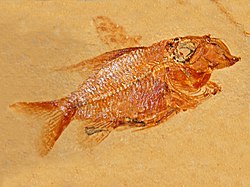
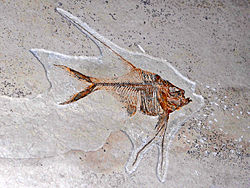
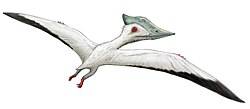
Pterosaur fossils have been recovered from the formation, including those of Mimodactylus[3] and Microtuban.[5] The pythonomorphs Pontosaurus, Eupodophis and probably Aphanizocnemus are known from the formation.[6] Insects are also known from compression fossils, including those of a dragonfly,[7] enigmatic pond-skater like insect Chresmoda.[8] and a mesoblattinid cockroach.[9] Compression fossils of angiosperm Sapindopsis are also known.[10] Numerous species of fossil fish are known,[11] including the ionoscopid Spathiurus dorsalis[12] and pycnodontid Flagellipinna rhomboides.[13] An incredible diversity of fossil pycnodonts of various, highly unusual body plans is known, in addition to the earliest representatives of modern fish groups such as acanthomorphs, African butterflyfish and eels.[1]
History
[edit]

The Sannine Formation and its fossil fishes have been known of since Roman Phoenicia. The earliest mention of them is in the Chronicon by Eusebius around 314 CE (references to earlier mentions by Herodotus are thought to be apocryphal), who mentions fossil fishes commonly being found during quarrying operations in the mountains, and cites them as evidence of the Biblical Flood. The site that these fish were recovered from is thought to correspond to the modern Haqel site. Around 1250, fossil fishes were presented to Louis IX during the Seventh Crusade and documented by Jean de Joinville, although it remains uncertain whether these originated from Haqel or the younger Sahel Alma site.[1][14]
The first European to visit a Lebanese fossil fish locality in person was Cornelis de Bruijn in 1698, who illustrated a fossil fish that corresponds with the species Prionolepis cataphractus from Haqel. The first scientific presentation on the fossil fishes of Haqel was in 1703 at the French Academy of Sciences, and the first scientific studies were conducted by Henri Marie Ducrotay de Blainville in 1818. Lady Hester Stanhope collected and circulated fossil fishes from Haqel and Sahel Alma during the early 19th century, contributing to the study of these specimens by scientists such as Louis Agassiz. The Hadjoula site was only discovered in the late 19th century, and the Nammoura site in the early 20th century.[1][14]
Paleobiota
[edit]Vertebrates
[edit]Jawless fish
[edit]| Agnathans reported from the Sannine Formation | ||||
|---|---|---|---|---|
| Genus | Species | Presence | Notes | Images |
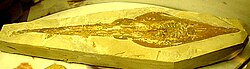
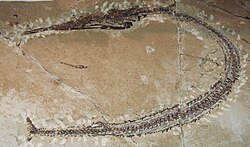
| Tethymyxine | T. tapirostrum | Hjoula | One of the earliest known definitive fossil hagfish.[15] | 👁 Image |


Cartilaginous fish
[edit]| Chondrichthyans reported from the Sannine Formation[16][17] | ||||
|---|---|---|---|---|
| Genus | Species | Presence | Notes | Images |
| Cantioscyllium | C. decipiens | Haqel & Hjoula | A nurse shark. | |
| C. sp. | Hjoula | |||
| Crassescyliorhinus | C. cf. germanicus | Hjoula | A catshark. | |
| Cretalamna | C. sp. | Hjoula | An otodontid shark, formerly identified as C. appendiculata.[18] | 👁 Image |
| Cretodus | C. "longiplicatus" | Hjoula | A pseudoscapanorhynchid shark. | |
| C. semiplicatus | Haqel & Hjoula | 👁 Image | ||
| Cretoxyrhina | C. mantelli | Hjoula | A ginsu shark. | 👁 Image |
| Cyclobatis | C. major | Haqel & Hjoula | A cyclobatid ray.[19][20] | 👁 Image |
| C. oligodactylus | Haqel, Hjoula & Nammoura[20] | 👁 Image | ||
| C. tuberculatus | Haqel | |||
| Deania | D. sp. | Haqel | A gulper shark. | |
| Ginglymostomatidae indet. | Hjoula | A nurse shark. | ||
| Haimirichia | H. amonensis | Haqel & Nammoura | A haimirichiid mackerel shark. | |
| Hemiscylliidae indet. | Haqel & Hjoula | A bamboo shark. | ||
| Heterodontus | H. sp. | Hjoula | A bullhead shark. | 👁 Image |
| Libanopristis | L. hiram | Haqel & Hjoula | A sawskate. | 👁 Image |
| Mesiteia | M. emiliae | Haqel | A mesiteiid carpet shark. | |
| Micropristis | M. solomonis | Hjoula | A sawskate. | 👁 Image |
| Odontaspididae indet. | Hjoula | A sand shark. | 👁 Image | |
| Odontaspis | O. aculeatus | Hjoula | A sand shark. | 👁 Image |
| O. sp. | ||||
| Paranomotodon | P. sp. | Hjoula | A thresher shark. | |
| Pararhincodon | P. lehmani | Haqel | A collared carpet shark.[21] | 👁 Image |
| P. sp. | Haqel & Hjoula | |||
| Protoscyliorhinus | P. sp. | Haqel | A catshark. | |
| Pseudocorax | P. kindlimmani | Haqel | A false crow shark.[22] | 👁 Image |
| Rajorhina | R. expansa | Hjoula | A skate. | 👁 Image |
| 'Rhinobatos' (gen. nov. 1) | R. grandis | Haqel | A potential relative of wedgefishes. Likely its own genus.[23] | |
| R. maronita | 👁 Image | |||
| 'Rhinobatos' (gen. nov. 3) | R. hakelensis | Haqel | A guitarfish-like ray. Likely its own genus, and its status as a guitarfish is disputed.[23] | 👁 Image |
| R. whitfieldi | Hjoula | 👁 Image | ||
| Rhombopterygia | R. rajoides | Hjoula | A guitarfish. | 👁 Image |
| Scyliorhinidae indet. | Haqel | A catshark. | ||
| Scyliorhinus | S. arambourgi | Hjoula | A catshark. | 👁 Image |
| S. bloti | Haqel | |||
| S. sp. | ||||
| Squalicorax | S. falcatus | Nammoura | A crow shark. | 👁 Image |
| S. sp. | Haqel, Hjoula & Nammoura | |||
| Squatina | S. sp. | Haqel | An angelshark. | 👁 Image |
| Triakidae indet. | Haqel | A houndshark. | ||


.gif)




.jpg)


Ray-finned fish
[edit]| Actinopterygians reported from the Sannine Formation[16] | ||||
|---|---|---|---|---|
| Genus | Species | Presence | Notes | Images |
| Abisaadia | A. hakelensis | Haqel | An eel. | 👁 Image |
| Abisaadichthys | A. libanicus | Hjoula | A protobramid tselfatiiform. | |
| Acrognathus | A. dodgei | Haqel & Hjoula | A greeneye. | 👁 Image |
| Acrorhinichthys | A. poyatoi | Haqel & Nammoura | A pycnodont of uncertain affinities. | |
| Aipichthys | A. minor | Haqel & Hjoula | A lamprimorph. | 👁 Image |
| A. oblongus | Haqel | |||
| A. velifer | Haqel | 👁 Image | ||
| Anguillavus | A. mazeni | Haqel & Hjoula | An eel. | 👁 Image |
| A. quadripinnis | Hjoula | |||
| Apateopholidae indet. | nov. gen. nov. sp. | Haqel | An apateopholid aulopiform. | |
| Apateopholis | A. laniatus | Haqel, Hjoula & Nammoura | An apateopholid aulopiform. | |
| A. nov. sp. | Nammoura | |||
| Aphanepygus | A. dorsalis | Haqel | An aphanepygid. | 👁 Image |
| Akromystax | A. tilmachiton | Haqel & Nammoura | A pycnodont of uncertain affinities. | 👁 Image |
| Armigatus | A. alticorpus | Nammoura[24] and Haqel[25] | A clupeomorph[25][24] | |
| A. brevissimus | Haqel and Hjoula[25] | An armigatid clupeomorph[25] | ||
| A. namourensis | Nammoura[24] | A clupeomorph[25] | ||
| Belonostomus | B. "sp. 1" | Nammoura[24] | An aspidorhynchid. 2 unnamed species awaiting better material[24] | 👁 Image |
| B. "sp. 2" | ||||
| Benthesikyme | B. serpentina | Haqel & Hjoula | A dercetid aulopiform.[26] | 👁 Image |
| Berycopsis | B. pulcher | Hjoula | A beardfish. | 👁 Image |
| Capassopiscis | C. pankowskii | Haqel | A pantodontid.[27] | |
| Charitopsis | C. spinosus | Haqel & Hjoula | A gonorynchid. | 👁 Image |
| Chirocentrites | C. sp. | Nammoura | A cladocyclid ichthyodectiform. | 👁 Image |
| Coccodus | C. armatus | Haqel | A coccodontid pycnodont. | |
| C. insignis | Hjoula | 👁 Image | ||
| Corusichthys | C. megacephalus | Haqel | A coccodontid pycnodont. | 👁 Image |
| Cretapantodon | C. polli | Haqel | A pantodontid.[28] | |
| Cryptoberyx | C. minimus | Hjoula | An indeterminate acanthopterygian. | |
| Ctenodentelops | C. striatus | Nammoura[24] | An elopid.[24] | |
| Ctenothrissa | C. protodorsalis | Haqel | A ctenothrissiform acanthomorph. | |
| C. signifer | Hjoula | |||
| C. vexillifer | Haqel | 👁 Image | ||
| ?Cylindracanthus | ?C. libanicus | Haqel & Hjoula | An indeterminate ray-finned fish known only from rostral spines. | |
| Davichthys | D. gardnieri | Haqel | An elopid. | 👁 Image |
| Dercetidae indet. | nov. gen. nov. sp. | Hjoula | A dercetid aulopiform. | |
| Diplomystus | D. birdi | Haqel & Hjoula | An armigatid clupeomorph. | 👁 Image |
| Ducrotayichthys | D. cornutus | Haqel | A gladiopycnodontid pycnodont. | |
| Enchelion | E. montium | Haqel & Hjoula | An eel. | 👁 Image |
| Enchodus | E. marchesetti | Haqel & Hjoula | An enchodontid aulopiform. | 👁 Image |
| E. mecoanalis | Nammoura[24] | |||
| E. "sp. 1." | Haqel | |||
| E. "sp. 2." | Nammoura | |||
| Eubiodectes | E. libanicus | Haqel, Hjoula & Nammoura | A cladocyclid ichthyodectiform. | 👁 Image |
| Eurypholidae indet. | nov. gen. nov. sp. | Nammoura | An enchodontid aulopiform. | |
| Eurypholis | E. boissieri | Haqel, Hjoula & Nammoura | An enchodontid aulopiform. | 👁 Image |
| Eusebichthys | E. byblosi | Haqel | A protobramid tselfatiiform. | |
| E. "sp. 1" | Haqel | |||
| E. "sp. 2" | Hjoula | |||
| Exocoetoides | E. minor | Haqel & Hjoula | A cheirothricid. | 👁 Image |
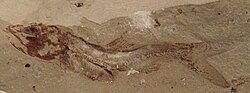
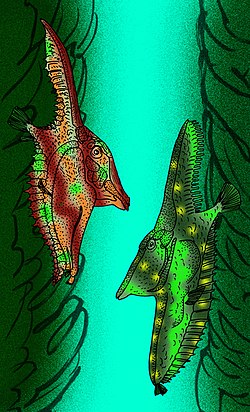
| Flagellipinna | F. rhomboides | Haqel | A pycnodontid pycnodont.[13] | 👁 Image |
| Freigichthys | F. elleipsis | Hjoula | A lamprimorph. | |
| Gebrayelichthys | G. uyenoi | Haqel | A gebrayelichthyid pycnodont. | 👁 Image |
| G. vexillarius | Haqel | |||
| Gaudryella | G. gaudryi | Haqel, Hjoula & Nammoura | An indeterminate euteleost. | 👁 Image |
| Gharbouria | G. libanica | Nammoura | An indeterminate euteleost. | |
| Gigapteryx | G. tethyestris | Nammoura[24] | A lamprimorph.[24][29] | |
| Gladiopycnodus | G. byrnei | Hjoula | A gladiopycnodontid pycnodont.[30] | |
| G. karami | Haqel | |||
| Ginsburgia | G. operta | Haqel & Hjoula | An indeterminate euteleost. | |
| Hajulia | H. multidens | Haqel & Hjoula | A bonefish. | |
| Hakelia | H. laticauda | Haqel & Hjoula | An indeterminate neoteleost. | |
| Hakeliosomus | H. hakelensis | Haqel & Hjoula | A gonorynchid. | 👁 Image |
| Haqelpycnodus | H. picteti | Haqel | A pycnodontid pycnodont. | |
| Hastichthys | H. gracilis | Haqel & Nammoura | A dercetid aulopiform. | |
| Hayenchelys | H. germanus | Hjoula | An eel. | 👁 Image |
| Hayolperichthys | H. pectospinus | Haqel | A gladiopycnodontid pycnodont. | |
| Hemisaurida | H. hakelensis | Haqel | A halecid aulopiform. | 👁 Image |
| Hensodon | H. spinosus | Haqel | A coccodontid pycnodont[31] | 👁 Image |
| Heterothrissa | H. signeuxae | Haqel | A ctenothrissiform acanthomorph. | |
| Hgulichthys | H. spinus | Hjoula | A trachichthyiform. | |
| Humilichthys | H. orientalis | Hjoula | A ctenothrissiform acanthomorph. | |
| Ichthyoceros | I. spinosus | Haqel | A coccodontid pyncodont. | 👁 Image |
| Ichthyotringa | I. delicata | Haqel & Hjoula | An ichthyotringid aulopiform. | 👁 Image |
| Joinvillichthys | J. kriweti | Haqel & Hjoula | A gladiopycnodontid pycnodont. | |
| J. lindstroemi | Haqel | |||
| Lebonichthys | L. lewisi | Hjoula | A bonefish.[24] | |
| L. namourensis | Nammoura[24] | |||
| Lebrunichthys | L. nammourensis | Nammoura | A pachyrhizodontid. | |
| Libanoberyx | L. spinosus | A trachichthyiform. | ||
| Lissoberyx | L. arambourgi | Hjoula | A trachichthyiform. | 👁 Image |
| L. dayi | ||||
| L. denticulatus | ||||
| Luenchelys | L. minimus | Nammoura | An eel. | |
| Maraldichthys | M. verticalis | Haqel | A gebrayelichthyid pycnodont. | 👁 Image |
| Microcapros | M. libanicus | Hjoula | A quaesitoberycid beryciform.[32] | |
| Monocerichthys | M. scheuchzeri | Haqel & Hjoula | A gladiopycnodontid pycnodont. | |
| Nematonotus | N. bottae | Haqel & Nammoura | A flagfin. | 👁 Image |
| N. longispinus | Hjoula | 👁 Image | ||
| 'Nursallia' | 'N.' goedeli | Haqel, Hjoula & Nammoura | A pycnodontid pycnodont. | 👁 Image |
| 'N.' tethysensis | Nammoura and Hjoula | |||
| Omosoma | O. sp./gen. nov. sp. nov. | Nammoura | Possibly an indeterminate beardfish,[32] potentially a new genus. | |
| Ornategulum | O. sardinioides | Haqel & Nammoura | A clupeomorph. | |
| Palaeopantodon | P. vandersypeni | Haqel[33] | A pantodontid. | |
| Pankowskichthys | P. libanicus | Haqel & Nammoura | A gladiopycnodontid pycnodont. | |
| Pankowskipiscis | P. haqelensis | Haqel[34] | A pantodontid. | |
| Paracentrus | P. lebanonensis | Nammoura[24] | A holocentriform[24] | |
| P. sp. nov. | ||||
| Paraclupeidae indet. | nov. gen. 1 | Nammoura | A paraclupeid clupeomorph; two different genera. | |
| nov. gen. 2. | Hjoula | |||
| Paracoccodus | P. woodwardi | Haqel | A coccodontid pyncodont. | |
| Pateroperca | P. libanica | Hjoula | A ctenothrissiform acanthomorph. | |
| P. robusta | ||||
| Pattersonichthys | P. delicatus | Hjoula | A ctenothrissiform acanthomorph. | |
| Pattersonoberyx | P. pharsus | Haqel | A potential holocentriform.[32] | |
| Petalopteryx | P. syriacus | Haqel | An aphanepygid. | |
| Petersichthys | P. libanicus | Haqel | A pantodontid. | |
| Pharmacichthys | P. numismalis | Haqel | A pharmacichthyid lamprimorph. | |
| P. venenifer | 👁 Image | |||
| Phoenicolepis | P. arcuatus | Hjoula | A ctenothrissiform acanthomorph. | |
| Phylactocephalus | P. microlepis | Haqel & Hjoula | A halecid aulopiform. | 👁 Image |
| Plectocretacicus | P. clarae | Haqel | A potential tetraodontiform. | 👁 Image |
| Plesioberyx | P. discoides | Haqel | An indeterminate acanthopterygian. | |
| P. maximus | ||||
| Prognathoglossum | P. kalassyi | Haqel | A pantodontid. | |
| Prionolepis | P. cataphractus | Haqel & Hjoula | A prionolepid aulopiform. | 👁 Image |
| Protobrama | P. avus | Haqel & Hjoula | A protobramid tselfatiiform. | 👁 Image |
| P. woodwardi | Haqel | |||
| Protobramidae indet. | nov. gen. nov. sp. | Nammoura | A protobramid tselfatiiform. | |
| Pseudoberyx | P. bottae | Haqel & Hjoula | An indeterminate teleost. | |
| P. grandis | Haqel | |||
| P. syriacus | Haqel & Hjoula | |||
| Pycnosteroides | P. levispinus | Hjoula | A pycnosteroidid lamprimorph. | |
| Quaesitoberyx | Q. minutus | Hjoula | A quaesitoberycid beryciform.[32] | |
| Rhamphoichthys | R. taxidiotis | Haqel[35] | A billfish-like plethodid tselfatiiform. | 👁 Image |
| Rhinopycnodus | R. gabriellae | Haqel | A pycnodontid pycnodont. | |
| Rhynchodercetis | R. hakelensis | Haqel & Hjoula | A dercetid aulopiform. | 👁 Image |
| Rostropycnodus | R. gayeti | Haqel | A gladiopycnodontid pycnodont. | |
| Sardinioides | S. attenuatus | Haqel & Hjoula | A sardinioidid myctophiform. | 👁 Image |
| S. minimus | ||||
| S. pontivagus | ||||
| Saurorhamphus | S. giorgiae | Nammoura | An enchodontid aulopiform. | |
| Scombroclupea | S. diminuta | Nammoura[24] | A clupeomorph.[24] | 👁 Image |
| S. macrophthalma | Haqel & Hjoula | |||
| Scutatoclupea | S. bacchiai | Nammoura | A paraclupeid clupeomorph. | |
| Sedenhorstia | S. dayi | Hjoula | A tarpon. | 👁 Image |
| S. libanica | Haqel | |||
| S. orientalis | Hjoula | |||
| Serrilepis | S. minor | Nammoura[24] | A halecid aulopiform.[24] | |
| S. prymnostrigos | ||||
| Sigmapycnodus | S. giganteus | Haqel | A pycnodontid pycnodont. | |
| Sorbinichthys | S. elusivo | Nammoura | A sorbinichthyid clupeomorph. | 👁 Image |
| Spathiurus | S. dorsalis | Haqel | An ionoscopiform.[12] | |
| Spinascutichthys | S. pankowskiae | Nammoura | An enchodontoid aulopiform.[36] | |
| Stanhopeichthys | S. libanicus | Hjoula | A pachyrhizodontid. | |
| Stenoprotome | S. hamata | Haqel | A gladiopycnodontid pycnodont. | |
| Stichocentrus | S. elegans | Hjoula | A holocentriform. | 👁 Image |
| S. liratus | ||||
| S. spinulosus | ||||
| S. sp. | ||||
| Stichopteryx[32] | S. lewisi | Haqel & Hjoula | A trachichthyiform. | |
| Telepholis | T. tenuis | Haqel & Hjoula | A cheirothricid. | |
| Trewavasia | T. carinata | Haqel | A coccodontid pycnodont.[31] | 👁 Image |
| Tricerichthys | T. wenzi | Haqel | A gladiopycnodontid pycnodont. | |
| Triplomystus | T. noorae | Nammoura[24] | A paraclupeid clupeomorph.[24] | |
| T. oligoscutatus | ||||
| Volcichthys | V. sp. | Haqel | An indeterminate aulopiform or sardinioid myctophiform. | |
| Ypsiloichthys | Y. sibelleae | Haqel[37] | A teleost of uncertain affinities. | 👁 Image |


.jpg)


.jpg)










Lobe-finned fish
[edit]| Sarcopterygians reported from the Sannine Formation | ||||
|---|---|---|---|---|
| Genus | Species | Presence | Notes | Images |
| Macropomoides | M. orientalis | Haqel & Hjoula | A latimeriid coelacanth. | 👁 Image |


Amniotes
[edit]| Amniotes reported from the Sannine Formation | ||||
|---|---|---|---|---|
| Genus | Species | Presence | Notes | Images |
| Aphanizocnemus | A. libanensis | Although the type locality is unknown, it is said to "almost certainly" originate from the Sannine Formation. | A marine lizard.[6] | |
| Enantiophoenix | E. electrophyla | Nammoura | An enantiornithine bird.[38] | |
| Eupodophis | E. descouensi | Nammoura | An early marine simoliophiid snake with hind limbs.[6] | |
| Microtuban | M. altivolans | Hjoula | An azdarchoid pterosaur.[5] | 👁 Image |
| Mimodactylus | M. libanensis | Hjoula | An istiodactyliform pterosaur.[3] | |
| Pontosaurus | P. kornhuberi | Nammoura | A marine dolichosaurid lizard.[6] | |
| Rhinochelys | R. nammourensis | Nammoura | A marine protostegid turtle. Adult and multiple hatchling remains known, suggesting a nesting site was nearby.[39] | |
| Theropoda indet. | Nammoura | The partial arm of a theropod dinosaur, the only non-avialan dinosaur material known from the formation. Now lost.[1] | ||




Invertebrates
[edit]Arthropods
[edit]| Arthropods reported from the Sannine Formation[40] | ||||
|---|---|---|---|---|
| Genus | Species | Presence | Notes | Images |
| Acanthochirana | A. smithwoodwardi | Haqel & Hjoula | An aegerid prawn. | 👁 Image |
| Acanthophoenicides | A. peterpani | A slipper lobster. | ||
| Aeger | A. libanensis | Haqel & Hjoula | An aegerid prawn. | 👁 Image |
| Armacrangon | A. edwardsi | A glyphocrangonid shrimp. | ||
| ?Bentheogennema | B. phoenicia | A benthesicymid crustacean. | ||
| Callianassa | C. sp. | Hjoula | A callianassid crustacean.[41] | |
| Calliaxina | C. hadjoulaensis | Hjoula | A callianassid crustacean. | |
| Carinacaris | C. antennae | A penaeid prawn. | ||
| C. teruzzi | Haqel & Hjoula | |||
| Carpopenaeus | C. callirostris | Haqel & Hjoula | A carpopenaeid prawn. | 👁 Image |
| C. septemspinatus | Haqel & Hjoula | 👁 Image | ||
| Charbelicaris | C. maronites | Hjoula | A slipper lobster.[42] | |
| Chresmoda | C. libanica | Nammoura | A water strider-like chresmodid insect.[8] | 👁 Image |
| Corazzatocarcinus | C. hadjoulae | Hjoula | A necrocarcinid crab.[43] | 👁 Image |
| Cretaxiopsis | C. libanotica | An axiid crustacean. | ||
| Cretacalliax | C. levantina | Hjoula | A callianopsid ghost shrimp.[44] | |
| Epipenaeus | E. abisaadorum | An carpopenaeid shrimp. | ||
| Eryma | E. oscari | Hjoula | An erymid "lobster". | 👁 Image |
| Gladicrangon | G. coriacea | A glyphocrangonid shrimp. | ||
| Globulacaris | G. garassinoi | Haqel | A protozoeid thylacocephalan. | |
| Glyphea | G. damesi | Hjoula | A glypheoid crustacean.[41] | 👁 Image |
| Hakelocaris | H. vavassorii | Haqel & Hjoula | A penaeid prawn. | 👁 Image |
| Homolopsis | H. aff. edwardsii | Hjoula | A carrier crab.[43] | |
| Jasus | J. sp. | Hjoula | A spiny lobster.[41] | 👁 Image |
| Joinvilleicaris | J. longirostris | A penaeid prawn. | ||
| Libanoaxius | L. beatae | An axiid crustacean. | ||
| Libanocaris | L. curvirostra | A penaeid prawn. | ||
| L. rogeri | Haqel & Hjoula | |||
| Lebanoaktassia | L. curiosa | Hjoula | An aktassiid dragonfly.[45] | |
| Libanoaeshna | L. mikhaeli | Haqel | A libanoaeshnid dragonfly.[46] | |
| Libanobelostoma | L. calineae | Haqel | A giant water bug.[47] | |
| Libanocordulia | L. debiei | Hjoula | A libanocorduliid dragonfly[7] | |
| Libanogomphus | L. lionelcavini | Hjoula | A libanogomphid dragonfly.[48] | |
| Libanoliupanshania | L. mimi | Hjoula | A liupanshaniid dragonfly[7] | |
| Linuparus | L. secretanae | A spiny lobster. | 👁 Image | |
| Macropenaeus | M. incertus | Haqel & Hjoula | A penaeid prawn. | 👁 Image |
| Magila | M. cretacica | An axiid crustacean. | ||
| Microchela | M. rostrata | Haqel & Hjoula | A penaeid prawn. | |
| Mieroblattina | M. pacis | Nammoura | A mesoblattinid cockroach.[9] | |
| Notahomarus | N. hakelensis | Haqel & Hjoula | A true lobster. | 👁 Image |
| Odontochelion | O. bicarinatum | A crangonid shrimp. | ||
| O. cretaceum | Haqel & Hjoula | |||
| Palaeobenthonectes | P. arambourgi | A benthesicymid crustacean. | ||
| Palaeopalinurellus | P. jbeilensis | Haqel | A slipper lobster.[49] | |
| Palaeopandalus | P. komaii | A pandalid shrimp. | ||
| Palibacus | P. praecursor | Haqel & Hjoula | A slipper lobster. | 👁 Image |
| Palinurus | P. teruzzii | A spiny lobster. | 👁 Image | |
| Paracancrinos | P. libanensis | Hjoula | A slipper lobster.[42] | |
| Paradollocaris | P. vannieri | Hjoula | A dollocaridid thylacocephalan. | |
| Paranecrocarcinus | P. cf. milbournei | Hjoula | A necrocarcinid crab. Specimen consumed by a catshark.[50] | |
| Phalangiopsis | P. antoinei | A chirostylid squat lobster. | ||
| P. rogeri | ||||
| Phoenice | P. pasinii | Haqel | A boxer shrimp.[41] | |
| Pseudastacus | P. dubertreti | Haqel & Hjoula | A stenochirid "lobster". | 👁 Image |
| Pustulina | P. cretacea[51] | Haqel & Hjoula | An erymid "lobster". | 👁 Image |
| Striadiogenes | S. frigerioi | Hjoula | A diogenid hermit crab.[52] | |
| Tachypleus | T. syriacus | Hjoula | A horseshoe crab.[53] | 👁 Image |
| Telamonocarcinus | T. gambulatus | Haqel & Hjoula | A dorippid crab.[43] | |
| Thylacocaris | T. schrami | Hjoula | A dollocaridid thylacocephalan. | |


,_Parque_natural_de_la_Arr%C3%A1bida,_Portugal,_2023-07-27,_DD_12.jpg)


Molluscs
[edit]| Molluscs reported from the Sannine Formation | ||||
|---|---|---|---|---|
| Genus | Species | Presence | Notes | Images |
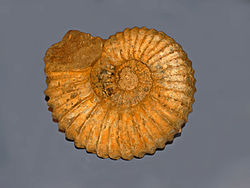
| Allocrioceras | A. cf. annulatum | An anisoceratid ammonite.[22][54] | 👁 Image | |
| Boreopeltis | B. smithi | Haqel or Hjoula | A plesioteuthid coleoid.[55] | |
| Dorateuthis | D. syriaca | Haqel & Hjoula | A plesioteuthid coleoid.[56] | 👁 Image |
| Edmunditeuthis | E. bacchiai | Haqel & Hjoula | A trachyteuthid coleoid.[57][58] | |
| Glyphidopsis | G. waagei | Haqel | A trachyteuthid coleoid.[55] | |
| Glyphiteuthis | G. abisaadorum | Haqel & Hjoula | A trachyteuthid coleoid.[55][59] | |
| G. freijii | Haqel, Hjoula & Nammoura | |||
| G. libanotica | Haqel & Hjoula | |||
| Keuppia | K. levante | Hjoula | An early octopus. 2 or 3 species known from the same locality[60] | |
| K. hyperbolaris | ||||
| K. sp. | ||||
| Mantelliceras | M. mantelli | Haqel | "the occurrence of Mantelliceras mantelli is regarded doubtful, as this species has been used for various taxa within the family Acanthoceratidae de Grossouvre, 1894, and specimens have never been figured"[22][54] | 👁 Image |
| Rachiteuthis | R. acutali | Hjoula | A palaeololiginid coleoid.[61] | |
| R. donovani | Hâqel | |||
| Styletoctopus | S. annae | Hâqel | An early octopus.[60] | |
| Teudopsinia | T. haasi | Haqel | A teudopsid coleoid.[57] | |
| Syrionautilus | S. libanoticus | Hjoula | A cymatoceratid nautiloid.[62] | |


_(14764863622).jpg)


Echinoderms
[edit]| Echinoderms reported from the Sannine Formation[63] | ||||
|---|---|---|---|---|
| Genus | Species | Presence | Notes | Images |
| Antedon | A. pinnulata | Haqel | A crinoid. | 👁 Image |
| Aspidochirotida indet. | Hjoula | A sea cucumber.[64] | ||
| Geocoma | G. libanotica | Haqel | A brittle star. | 👁 Image |


Annelids
[edit]| Annelids reported from the Sannine Formation[65] | ||||
|---|---|---|---|---|
| Genus | Species | Presence | Notes | Images |
| Didone | D. pulcherrima | A didonid bristleworm. | ||
| Eunicites | E. diopatroides | A eunicid bristleworm. | ||
| E. falcatus | ||||
| E. joinvillei | ||||
| E. mariacristinae | ||||
| Ferragutia | F. cenomaniana | A bristleworm. | ||
| Lumbriconereites | L. garassinoi | A bristleworm. | ||
| L. hadjulae | ||||
| Palaeoaphrodite | P. libanica | An aphroditid bristleworm. | ||
| Phoeniciarabella | P. caesaris | A lumbrinerid bristleworm. | ||
| P. orensanzi | ||||
| P. pinnulata | ||||
| Teruzzia | T. gryphoeides | A lumbrinerid bristleworm. | ||
| T. pezzolii | ||||
| T. pusilla | ||||
| T. sagittifera | ||||
| Rollinschaeta | R. myoplena | Haqel & Hjoula | A fireworm.[66] | |
Plants
[edit]| Plants reported from the Sannine Formation | ||||
|---|---|---|---|---|
| Genus | Species | Presence | Notes | Images |
| Aryskumia | cf. A. zelkovifolia | Nammoura | Dicot known from a poorly preserved leaf with ovate blade.[67] | |
| Nammouria | N. gracilis | An aquatic fern of uncertain affinities.[67] | ||
| Nammourophyllum | N. altingioides | A dicot known from leaves, a possible member of the Altingiaceae.[67] | ||
| Nupharanthus | N. cretacea | A dicot known by a preserved flower, possibly a member of the Nympheales.[67] | ||
| Parvileguminophyllum | P. sp. | Dicot known from a complete leaflet, possibly a member of the Fabaceae.[67] | ||
| 'Phragmites' | P. sp. | A monocot of uncertain affinities, vaguely similar to the modern reed.[67] | ||
| Platycaryeae gen. et sp. indet. | Infructescence of bracteate fruits resembling Platycarya americana.[67] | |||
| Pseudolarix | P. sp. | A conifer related to the modern golden larch.[67] | 👁 Image | |
| Pseudotorellia | P. sp. | A gymnosperm of uncertain affinities.[67] | ||
| Pteris | P. sp. | A pteridacean fern.[67] | 👁 Image | |
| Sapindopsis | S. anhouryi | A platanacean, related to the modern plane trees.[67] | 👁 Image | |
| S. libanensis | ||||


See also
[edit]References
[edit]- ^ a b c d e f g h George, Hady; Bazzi, Mohamad; Hossny, Tamara El; Ashraf, Nida; Saad, Pierre Abi; Clements, Thomas (2024-04-29). "The famous fish beds of Lebanon: the Upper Cretaceous Lagerstätten of Haqel, Hjoula, Nammoura, and Sahel Aalma". Journal of the Geological Society. 181 (5). doi:10.1144/jgs2023-210. ISSN 0016-7649.
- ^ López-Arbarello, Adriana. "The record of Mesozoic fishes from Gondwana (excluding India and Madagascar)". Mesozoic Fishes 3 – Systematics, Paleoenvironments and Biodiversity.
- ^ a b c Kellner, Alexander W. A.; Caldwell, Michael W.; Holgado, Borja; Vecchia, Fabio M. Dalla; Nohra, Roy; Sayão, Juliana M.; Currie, Philip J. (2019-11-29). "First complete pterosaur from the Afro-Arabian continent: insight into pterodactyloid diversity". Scientific Reports. 9 (1): 17875. Bibcode:2019NatSR...917875K. doi:10.1038/s41598-019-54042-z. ISSN 2045-2322. PMC 6884559. PMID 31784545.
- ^ Walley, Christopher D. (1997). The Lithostratigraphy of Lebanon: A Review (PDF). pp. 1–20. Archived from the original (PDF) on 2019-07-13. Retrieved 2023-10-06.
- ^ a b Elgin, Ross A.; Frey, Eberhard (December 2011). "A new azhdarchoid pterosaur from the Cenomanian (Late Cretaceous) of Lebanon". Swiss Journal of Geosciences. 104 (S1): 21–33. doi:10.1007/s00015-011-0081-1. ISSN 1661-8726. S2CID 128405107.
- ^ a b c d Campbell Mekarski, Michelle; Pierce, Stephanie E.; Caldwell, Michael W. (2019-09-24). "Spatiotemporal Distributions of Non-ophidian Ophidiomorphs, With Implications for Their Origin, Radiation, and Extinction". Frontiers in Earth Science. 7: 245. Bibcode:2019FrEaS...7..245M. doi:10.3389/feart.2019.00245. ISSN 2296-6463.
- ^ a b c Azar, Dany; Maksoud, Sibelle; Huang, Diying; Nel, André (January 2019). "First Lebanese dragonflies (Insecta: Odonata, Aeshnoptera, Cavilabiata) from the Arabo-African mid-Cretaceous paleocontinent" (PDF). Cretaceous Research. 93: 78–89. Bibcode:2019CrRes..93...78A. doi:10.1016/j.cretres.2018.08.025. S2CID 134308438.
- ^ a b Nel, Andre; Azar, Dany; Martinez-Delclos, Xavier; Makhoul, Edouard (2004-03-25). "A new Upper Cretaceous species of Chresmoda from Lebanon - a latest representative of Chresmodidae (Insecta: Polyneoptera inc. sed.): first record of homeotic mutations in the fossil record of insects". European Journal of Entomology. 101 (1): 145–151. doi:10.14411/eje.2004.019.
- ^ a b P. Vršanský and E. Makhoul. 2013. Mieroblattina pacis gen. et sp. n. - Upper Cretaceous cockroach (Blattida: Mesoblattinidae) from Nammoura limestone of Lebanon. Insect Evolution in an Ambiferous and Stone Alphabet 167-172
- ^ D. L. Dilcher and P. W. Basson. 1990. Mid-Cretaceous angiosperm leaves from a new fossil locality in Lebanon. Botanical Gazette 151(4):538-547
- ^ Forey, Peter L.; Yi, Lu; Patterson, Colin; Davies, Cliff E. (January 2003). "Fossil fishes from the Cenomanian (Upper Cretaceous) of Namoura, Lebanon". Journal of Systematic Palaeontology. 1 (4): 227–330. Bibcode:2003JSPal...1..227F. doi:10.1017/S147720190300107X. ISSN 1477-2019. S2CID 85606708.
- ^ a b El Hossny, Tamara; Maksoud, Sibelle; Azar, Dany; Saad, Pierre Abi; Cavin, Lionel (August 2020). "Spathiurus dorsalis Davis, 1887, from the Upper Cretaceous of Haqel, Lebanon, and the evolutionary history of Ionoscopiformes". Cretaceous Research. 116 104619. Bibcode:2020CrRes.11604619E. doi:10.1016/j.cretres.2020.104619. S2CID 224978290.
- ^ a b Cawley, John Joseph; Kriwet, Jürgen (2019-03-04). "A new genus and species of pycnodontid fish Flagellipinna rhomboides , gen. et sp. nov. (Neopterygii, Pycnodontiformes), from the Upper Cretaceous (Cenomanian) of Lebanon, with notes on juvenile form and ecology". Journal of Vertebrate Paleontology. 39 (2) e1614012. Bibcode:2019JVPal..39E4012C. doi:10.1080/02724634.2019.1614012. ISSN 0272-4634. PMC 6817322. PMID 31709027.
- ^ a b Capasso, Luigi (2017). "The history and the situation of the world famous fossil fish quarries in Lebanon". Bollettino del Museo Civico di Storia Naturale di Verona. 41: 53–76.
- ^ Miyashita, Tetsuto; Coates, Michael I.; Farrar, Robert; Larson, Peter; Manning, Phillip L.; Wogelius, Roy A.; Edwards, Nicholas P.; Anné, Jennifer; Bergmann, Uwe; Palmer, A. Richard; Currie, Philip J. (2019-02-05). "Hagfish from the Cretaceous Tethys Sea and a reconciliation of the morphological–molecular conflict in early vertebrate phylogeny". Proceedings of the National Academy of Sciences. 116 (6): 2146–2151. Bibcode:2019PNAS..116.2146M. doi:10.1073/pnas.1814794116. ISSN 0027-8424. PMC 6369785. PMID 30670644.
- ^ a b Amalfitano, Jacopo; Giusberti, Luca; Fornaciari, Eliana; Carnevale, Giorgio (2020-04-03). "UPPER CENOMANIAN FISHES FROM THE BONARELLI LEVEL (OAE2) OF NORTHEASTERN ITALY". Rivista Italiana di Paleontologia e Stratigrafia. 126 (2). doi:10.13130/2039-4942/13224. ISSN 2039-4942.
- ^ Pradel, Alan; Denton, John S. S.; Janvier, Philippe; Maisey, John G., eds. (2021). Ancient fishes and their living relatives: a tribute to John G. Maisey. München: Verlag Dr. Friedrich Pfeil. ISBN 978-3-89937-269-4.
- ^ Greenfield, T. (2022). "Additions to "List of skeletal material from megatooth sharks", with a response to Shimada (2022)". Paleoichthys. 6: 6–11.
- ^ Egerton, Philip Grey (1845). "Description of a Fossil Ray from Mount Lebanon (Cyclobatis oligodactylus)". Quarterly Journal of the Geological Society. 1 (1): 225–229. doi:10.1144/GSL.JGS.1845.001.01.60. S2CID 128842555.
- ^ a b "A new Miocene skate from the Central Paratethys (Upper Austria): the first unambiguous skeletal record for the Rajiformes (Chondrichthyes: Batomorphii) (project)". MorphoBank datasets. 2019-04-29. Retrieved 2022-07-22.
- ^ Dearden, Richard P.; Johanson, Zerina; O'Neill, Helen L.; Miles, Kieran; Bernard, Emma L.; Clark, Brett; Underwood, Charlie J.; Rücklin, Martin (2025-04-30). "Three-dimensional fossils of a Cretaceous collared carpet shark (Parascylliidae, Orectolobiformes) shed light on skeletal evolution in galeomorphs". Royal Society Open Science. 12 (4) 242011. doi:10.1098/rsos.242011. PMC 12040461. PMID 40309188.
- ^ a b c Jambura; Stumpf; Kriwet, Patrick L.; Sebastian; Jürgen (September 2021). "Skeletal remains of the oldest known pseudocoracid shark Pseudocorax kindlimanni sp. nov. (Chondrichthyes, Lamniformes) from the Late Cretaceous of Lebanon". Cretaceous Research. 125 104842. Bibcode:2021CrRes.12504842J. doi:10.1016/j.cretres.2021.104842. PMC 7611798. PMID 34642522.
{{cite journal}}: CS1 maint: multiple names: authors list (link) - ^ a b Georges Kachacha, Gilles Cuny (2017). "Revision of the fossil batomorphs from the Cretaceous of Lebanon, and their impact on our understanding of the early step of the evolution of the clade". Research & Knowledge. 3: 2. doi:10.14456/RANDK.2017.22.
- ^ a b c d e f g h i j k l m n o p q r s t 1945-, Forey, Peter L. (Peter Lawrence), (2003). Fossil fishes from the Cenomanian (Upper Cretaceous) of Namoura, Lebanon. Cambridge University Press. OCLC 66582935.{{cite book}}: CS1 maint: extra punctuation (link) CS1 maint: numeric names: authors list (link)
- ^ a b c d e Than-Marchese, Bruno Andrés; Alvarado-Ortega, Jesús (2022-10-01). "Armigatus felixi sp. nov. An Albian double armored herring (Clupeomorpha, Ellimmichthyiformes) from the Tlayúa lagerstätte, Mexico". Journal of South American Earth Sciences. 118 103905. Bibcode:2022JSAES.11803905T. doi:10.1016/j.jsames.2022.103905. ISSN 0895-9811.
- ^ Alvarado-Ortega, Jesús; Díaz-Cruz, Jesús Alberto (2021-01-01). "Hastichthys totonacus sp. nov., a North American Turonian dercetid fish (Teleostei, Aulopiformes) from the Huehuetla quarry, Puebla, Mexico". Journal of South American Earth Sciences. 105 102900. Bibcode:2021JSAES.10502900A. doi:10.1016/j.jsames.2020.102900. ISSN 0895-9811.
- ^ Taverne, L. (2022). "The Pantodontidae (Teleostei, Osteoglossomorpha) from the marine Cenomanian (Upper Cretaceous) of Lebanon. 4°. Capassopiscis pankowskii gen. and sp. nov" (PDF). Geo-Eco-Trop. 46 (1): 149–158.
- ^ Taverne, L. (2022). "The Pantodontidae (Teleostei, Osteoglossomorpha) from the marine Cenomanian (Upper Cretaceous) of Lebanon. 6°. Cretapantodon polli gen. and sp. nov" (PDF). Geo-Eco-Trop. 46 (1): 149–158.
- ^ Delbarre, Daniel J.; Davesne, Donald; Friedman, Matt (2016-07-02). "Anatomy and relationships of † Aipichthys pretiosus and †' Aipichthys ' nuchalis (Acanthomorpha: Lampridomorpha), with a review of Late Cretaceous relatives of oarfishes and their allies". Journal of Systematic Palaeontology. 14 (7): 545–567. Bibcode:2016JSPal..14..545D. doi:10.1080/14772019.2015.1078538. ISSN 1477-2019.
- ^ Marramà, Giuseppe; Villier, Boris; Dalla Vecchia, Fabio M.; Carnevale, Giorgio (2016-06). "A new species of Gladiopycnodus (Coccodontoidea, Pycnodontomorpha) from the Cretaceous of Lebanon provides new insights about the morphological diversification of pycnodont fishes through time". Cretaceous Research. 61: 34–43. doi:10.1016/j.cretres.2015.12.022. ISSN 0195-6671.
- ^ a b Kriwet, Jürgen (2004-09-10). "A new pycnodont fish genus (Neopterygii: Pycnodontiformes) from the Cenomanian (Upper Cretaceous) of Mount Lebanon". Journal of Vertebrate Paleontology. 24 (3): 525–532. doi:10.1671/0272-4634(2004)024[0525:anpfgn]2.0.co;2. ISSN 0272-4634. S2CID 129294502.
- ^ a b c d e Murray, Alison M. (2014). "Mid-Cretaceous acanthomorph fishes with the description of a new species from the Turonian of Lac des Bois, Northwest Territories, Canada". Vertebrate Anatomy Morphology Palaeontology. 1: 101–115. doi:10.18435/B5CC78. ISSN 2292-1389.
- ^ Taverne, L. (2021). "The Pantodontidae (Teleostei, Osteoglossomorpha) from the marine Cenomanian (Upper Cretaceous) of Lebanon. 3°. Palaeopantodon vandersypeni gen. and sp. nov" (PDF). Geo-Eco-Trop. 45 (4): 699–708.
- ^ Taverne, L. (2021). "The Pantodontidae (Teleostei, Osteoglossomorpha) from the marine Cenomanian (Upper Cretaceous) of Lebanon. 1°. Pankowskipiscis haqelensis gen. and sp. nov" (PDF). Geo-Eco-Trop. 45 (4): 551–562.
- ^ El Hossny, Tamara; Cavin, Lionel; Kaplan, Ulrich; Schwermann, Achim H.; Samankassou, Elias; Friedman, Matt (2023). "The first articulated skeletons of enigmatic Late Cretaceous billfish-like actinopterygians". Royal Society Open Science. 10 (12) 231296. Bibcode:2023RSOS...1031296E. doi:10.1098/rsos.231296. ISSN 2054-5703. PMC 10698480. PMID 38077217.
- ^ Murray, Alison M.; Chida, Mori; Holmes, Robert B. (2022-06-30). "New enchodontoid fish (Teleostei: Aulopiformes) from the Late Cretaceous of Lebanon". Journal of Vertebrate Paleontology. 42 (1). Bibcode:2022JVPal..42E1370M. doi:10.1080/02724634.2022.2101370. ISSN 0272-4634.
- ^ El Hossny, Tamara; Cavin, Lionel (July 2023). "A New Enigmatic Teleost Fish from the Mid-Cretaceous of Lebanon". Diversity. 15 (7): 839. doi:10.3390/d15070839. ISSN 1424-2818.
- ^ Cau, A.; Arduini, P. (2008). "Enantiophoenix electrophyla gen. et sp. nov. (Aves, Enantiornithes) from the Upper Cretaceous (Cenomanian) of Lebanon and its phylogenetic relationships". Atti della Societa Italiana di Scienze Naturali e del Museo Ivico di Storia Naturale in Milano. 149 (2): 293–324.
- ^ Rhinochelys (Chelonioidea: Protostegidae) from the Late Cretaceous (Cenomanian) of Nammoura, Lebanon
- ^ Sylvain Charbonnier; Denis Audo; Alessandro Garassino; Matúš Hyžný (2017). Fossil Crustacea of Lebanon. National Museum of Natural History. pp. 1–252. ISBN 978-2-85653-785-5.
- ^ a b c d Garassino, A. (2000). "New decapod crustaceans from the Cenomanian (Upper Cretaceous) of Lebanon". Atti Soc. It. Sci. Nat. Museo Civ. Stor. Nat. Milano. S2CID 88896292.
- ^ a b Haug, Joachim T.; Audo, Denis; Charbonnier, Sylvain; Palero, Ferran; Petit, Gilles; Abi Saad, Pierre; Haug, Carolin (2016-03-01). "The evolution of a key character, or how to evolve a slipper lobster". Arthropod Structure & Development. Special Issue: Fossils as Living Beings. 45 (2): 97–107. Bibcode:2016ArtSD..45...97H. doi:10.1016/j.asd.2015.08.003. ISSN 1467-8039. PMID 26319267.
- ^ a b c Larghi, Cristiano (2004). "Brachyuran decapod Crustacea from the Upper Cretaceous of Lebanon". Journal of Paleontology. 78 (3): 528–541. Bibcode:2004JPal...78..528L. doi:10.1666/0022-3360(2004)078<0528:BDCFTU>2.0.CO;2. ISSN 0022-3360.
- ^ Pasini, Giovanni; Poore, Gary C. B.; Garassino, Alessandro (2020-08-28). "A new ghost shrimp (Axiidea, Callianopsidae) from the Late Cretaceous (Cenomanian) of Hadjoula, Lebanon". Neues Jahrbuch für Geologie und Paläontologie - Abhandlungen. 297 (2): 217–225. doi:10.1127/njgpa/2020/0922.
- ^ Azar, Dany; Nel, André (2024). "The youngest and first Gondwanan representative of the anisopteran family Aktassiidae from the Upper Cretaceous of Lebanon (Odonata, Petalurida)". Cretaceous Research. 154 105744. Bibcode:2024CrRes.15405744A. doi:10.1016/j.cretres.2023.105744. ISSN 0195-6671.
- ^ Azar, Dany; Maksoud, Sibelle; Abi-Saad, Pierre; Nel, Andre (2024-08-22). "A new, to date endemic, family of dragonfly in the mid-Cretaceous fossil fish Konservat-Lagerstätte of Haqel, Lebanon (Odonata: Anisoptera)". Zootaxa. 5497 (1): 142–150. doi:10.11646/zootaxa.5497.1.9. ISSN 1175-5334.
- ^ Boderau, Mathieu; Nel, André; Maksoud, Sibelle; Abi-Saad, Pierre; Azar, Dany (2024-12-31). "The first aquatic insect fossil from the Cenomanian Konservat-Lagerstätte of Haqel (Lebanon) fills a gap in the fossil record of giant water bugs (Heteroptera: Belostomatidae)". Zootaxa. 5562 (1): 11–22. doi:10.11646/zootaxa.5562.1.4. ISSN 1175-5334.
- ^ Azar, Dany; Nel, André (2023-08-01). "Libanogomphidae, a new extraordinary dragonfly family from the Upper Cretaceous of Lebanon (Odonata, Anisoptera)". Cretaceous Research. 148 105501. Bibcode:2023CrRes.14805501A. doi:10.1016/j.cretres.2023.105501. ISSN 0195-6671.
- ^ Garassino, Alessandro; Pasini, Giovanni (2020-10-02). "A new furry lobster (Crustacea, Decapoda, Synaxidae) from the Upper Cretaceous (Cenomanian) of Lebanon". Palaeodiversity. 13 (1). doi:10.18476/pale.v13.a10. ISSN 1867-6294.
- ^ Pasini, Giovanni; Garassino, Alessandro (2011). "Predation on brachyuran (Crustacea, Decapoda): an [sic] unique direct evidence from the Late Cretaceous (Cenomanian) of Hadjoula (Lebanon)". Atti Soc. It. Sci. Nat. Museo Civ. Stor. Nat. Milano. 152 (II): 233–245.
- ^ Devillez, Julien; Charbonnier, Sylvain (2022-03-03). "A synthesis of the evolutionary history of erymoid lobsters (Crustacea, Decapoda, Erymoidea)". Geodiversitas. 44 (9). doi:10.5252/geodiversitas2022v44a9. ISSN 1280-9659.
- ^ Garassino, A.; Angeli, Antonio De; Pasini, Giovanni (2009). "A new hermit crab (Crustacea, Anomura, Paguroidea) from the Late Cretaceous (Cenomanian) of Lebanon". Atti Soc. It. Sci. Nat. Museo Civ. Stor. Nat. Milano. 150 (II): 215–228. S2CID 130639300.
- ^ Lamsdell, James C.; McKenzie, Scott C. (2015-12-01). "Tachypleus syriacus (Woodward)—a sexually dimorphic Cretaceous crown limulid reveals underestimated horseshoe crab divergence times". Organisms Diversity & Evolution. 15 (4): 681–693. Bibcode:2015ODivE..15..681L. doi:10.1007/s13127-015-0229-3. ISSN 1618-1077.
- ^ a b Wippich, Max G. E.; Lehmann, Jens (September 2004). "Allocrioceras from the Cenomanian (mid-Cretaceous) of the Lebanon and its bearing on the palaeobiological interpretation of heteromorphic ammonites". Palaeontology. 47 (5): 1093–1107. Bibcode:2004Palgy..47.1093W. doi:10.1111/j.0031-0239.2004.00408.x. ISSN 0031-0239. S2CID 129293243.
- ^ a b c Fuchs; Larson, Dirk; Neal L (March 2011). "Diversity, Morphology, and Phylogeny of Coleoid Cephalopods from the Upper Cretaceous Plattenkalks of Lebanon–Part I: Prototeuthidina". Journal of Paleontology. 85 (2): 234–249.
- ^ Jattiot, Romain; Brayard, Arnaud; Fara, Emmanuel; Charbonnier, Sylvain (2015). "Gladius-bearing coleoids from the Upper Cretaceous Lebanese Lagerstätten: diversity, morphology, and phylogenetic implications". Journal of Paleontology. 89 (1): 148–167. Bibcode:2015JPal...89..148J. doi:10.1017/jpa.2014.13. ISSN 0022-3360.
- ^ a b Fuchs, Dirk; Larson, Neal (2011). "Diversity, Morphology, and Phylogeny of Coleoid Cephalopods from the Upper Cretaceous Plattenkalks of Lebanon–Part II: Teudopseina". Journal of Paleontology. 85 (5): 815–834. Bibcode:2011JPal...85..815F. doi:10.1666/10-159.1. ISSN 0022-3360.
- ^ Whalen, Christopher D.; Landman, Neil H. (2022-03-08). "Fossil coleoid cephalopod from the Mississippian Bear Gulch Lagerstätte sheds light on early vampyropod evolution". Nature Communications. 13 (1): 1107. Bibcode:2022NatCo..13.1107W. doi:10.1038/s41467-022-28333-5. ISSN 2041-1723. PMC 8904582. PMID 35260548.
- ^ Fuchs, D.; Weis, R. (2009-08-01). "A new Cenomanian (Late Cretaceous) coleoid (Cephalopoda) from Hâdjoula, Lebanon". Fossil Record. 12 (2): 175–181. Bibcode:2009FossR..12..175F. doi:10.1002/mmng.200900005. ISSN 2193-0066.
- ^ a b Fuchs; Bracchi; Weis, Dirk; Giacomo; Robert (31 December 2008). "NEW OCTOPODS (CEPHALOPODA: COLEOIDEA) FROM THE LATE CRETACEOUS (UPPER CENOMANIAN) OF HÂKEL AND HÂDJOULA, LEBANON". Palaeontology. 52 (1): 65–81. doi:10.1111/j.1475-4983.2008.00828.x. S2CID 129082916.
{{cite journal}}: CS1 maint: multiple names: authors list (link) - ^ Jattiot, Romain; Brayard, Arnaud; Fara, Emmanuel; Charbonnier, Sylvain (January 2015). "Gladius-bearing coleoids from the Upper Cretaceous Lebanese Lagerstätten: diversity, morphology, and phylogenetic implications". Journal of Paleontology. 89 (1): 148–167. Bibcode:2015JPal...89..148J. doi:10.1017/jpa.2014.13. ISSN 0022-3360.
- ^ Klug, Christian; Pohle, Alexander; Roth, Rosemarie; Hoffmann, René; Wani, Ryoji; Tajika, Amane (2021-07-23). "Preservation of nautilid soft parts inside and outside the conch interpreted as central nervous system, eyes, and renal concrements from the Lebanese Cenomanian". Swiss Journal of Palaeontology. 140 (1): 15. Bibcode:2021SwJP..140...15K. doi:10.1186/s13358-021-00229-9. ISSN 1664-2384. PMC 8549922. PMID 34721283.
- ^ "Lebanese Fossils". www.fossilmuseum.net. Retrieved 2024-07-10.
- ^ Reich, M. (2004-12-15). Nebelsick, J; Heinzeller, T (eds.). "Echinoderms: Munchen: Proceedings of the 11th International Echinoderm Conference, 6-10 October 2003, Munich, Germany". Echinoderms: Milnchen - Heinzeller & Nebelsick (Eds). Taylor & Francis. doi:10.1201/9780203970881. ISBN 978-0-415-36481-2.
- ^ "WoRMS - World Register of Marine Species". www.marinespecies.org. Retrieved 2024-07-10.
- ^ Parry, Luke A.; Wilson, Paul; Sykes, Dan; Edgecombe, Gregory D.; Vinther, Jakob (2015-11-17). "A new fireworm (Amphinomidae) from the Cretaceous of Lebanon identified from three-dimensionally preserved myoanatomy". BMC Evolutionary Biology. 15 (1): 256. Bibcode:2015BMCEE..15..256P. doi:10.1186/s12862-015-0541-8. ISSN 1471-2148. PMC 4650273. PMID 26577802.
- ^ a b c d e f g h i j k Krassilov, Valentin; Bacchia, Flavio (2000-12). "Cenomanian florule of Nammoura, Lebanon". Cretaceous Research. 21 (6): 785–799. doi:10.1006/cres.2000.0229. ISSN 0195-6671.