| 👁 Image | |
| Function | Sounding rocket |
|---|---|
| Manufacturer | Instituto de Aeronáutica e Espaço |
| Country of origin | Brazil |
| Size | |
| Height | 5 m (16.40 ft) |
| Diameter | 0.56 m (1.83 ft) |
| Mass | 1,400 kg (3,000 lb) |
| Stages | 1 or 2 |
| Launch history | |
| Status | Active |
| Launch sites | Alcântara Andøya Barreira do Inferno Svalbard Rocket Range |
| Failure | 1 |
| First flight | April 28, 1997 |
| First Stage - S-30 | |
| Powered by | 1× S-30 solid rocket motor |
| Maximum thrust | 102.00 kN (22,930 lbf) |
| Burn time | 20 seconds |
| Propellant | AP / HTPB |
| Second stage – Improved Orion (optional) | |
| Height | 2.8 m |
| Diameter | 0.35 m |
| Powered by | 1 Aerojet M112 dual-thrust solid rocket motor |
| Maximum thrust | 7 kN (1,600 lbf) |
| Burn time | 32 seconds |


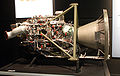
The VS-30 is a Brazilian sounding rocket, developed by the Instituto de Aeronáutica e Espaço and derived from the Sonda 3 sounding rocket first stage.[1] It consists of a single, solid-fuelled S-30 stage,[2] and has been launched from Alcântara, Maranhão and Barreira do Inferno, Rio Grande do Norte, in Brazil, and Andøya and Svalbard Rocket Range in Norway.


It has been launched both on its own, or in the VS-30 Orion configuration,[3] with an American Improved Orion second stage.[4][5] On its own, it can reach an apogee of 140 kilometres,[1][2] and with an Orion upper stage, it can reach an apogee of 434 kilometres.[4]
The VS-30 is also used as the upper stage of the VSB-30 rocket.
Flights
[edit]List of VS-30 and VS-30 Orion flights:[6][7][5]
| Date | Flight | Location | Mission | Apogee |
|---|---|---|---|---|
| 28.04.1997 | VS-30 XV-01 | Alcântara | DLR AL-VS30-223 (test) | 128 km |
| 12.10.1997 | VS-30 XV-02 | Andøya | DLR AL-VS30-226 (aeronomy) | 120 km |
| 31.01.1998 | VS-30 XV-03 | Andøya | DLR AL-VS30-229 (aeronomy) | 120 km |
| 15.03.1999 | VS-30 XV-04 | Alcântara | "São Marcos" (microgravity) | 128 km |
| 06.02.2000 | VS-30 XV-05 | Alcântara | "Lençois Maranhenses" (microgravity) | 148 km |
| 01.12.2002 | VS-30 XV-06 | Alcântara | "Cuma" (microgravity) | 145 km |
| 16.12.2007 | VS-30 V07 | CLBI | "Angicos" (GPS technology) | 120 km |
| 02.12.2011 | VS-30 V08 | CLBI | "Brasil-Alemanha"[8] | |
| 28.06.2013 | VS-30 V09 | Andøya | WADIS 1 | |
| 05.07.2013 | VS-30 V10 | Esrange | MAPHEUS 4 | |
| 01.09.2014 | VS-30 V13 | Alcântara | EPL-MEL5 "Raposa" (L5 liquid rocket engine test for 90s, total flight time 3m34s)[9][10][11][12] | |
| 05.03.2015 | VS-30 V11 | Andøya | WADIS 2[6] | |
| 02.02.2016 | VS-30 V12 | Esrange | SPIDER / LEEWAVES[6] | |
| 12.09.2018 | VS-30 V124 | Alcântara | "MUTITI"[13] | 120 km |
| 21.08.2000 | VS-30 Orion XV-01 | Alcântara | "Baronesa" | |
| 23.11.2002 | VS-30 Orion XV-02 | Alcântara | "Piraperna" | |
| 27.10.2005 | VS-30 Orion V03 | Andøya | SHEFEX 1 (DLR) | |
| 31.01.2008 | VS-30 Orion V04 | Andøya | ARR HotPay-2 | |
| 05.12.2008 | VS-30 Orion V05 | Svalbard | ICI 2 | |
| 03.12.2011 | VS-30 Orion V08 | Svalbard | ICI 3 | |
| 23.04.2012 | VS-30 Orion V06 | Andøya | HIFiRE 5 | |
| 13.09.2012 | VS-30 Orion V07 | Andøya | HIFiRE 3 | |
| 08.12.2012 | VS-30 Orion V10 | Alcântara | "Iguaiba" | |
| 18.09.2013 | VS-30 Orion V09 | Andøya | ScramSpace 1 (launch failure)[14][15] | |
| 01.09.2014 | VS-30 V13 | Alcântara | EPL-ME (liquid rocket engine test) | |
| 19.02.2015 | VS-30 Orion V11 | Andøya | ICI 4 | |
| 18.05.2016 | VS-30 Orion | Woomera | HIFiRE 5b | |
| 09.12.2018 | VS-30 V14 | Alcântara | PSR 01 | |
| 29.11.2024 | VS-30 V15 | CLBI | "Potiguar" |
VS-30 was used to test the EPL-ME (Estágio Propulsivo a Propelente Líquido) liquid propulsion upper stage in 2014.[16]
On December 2, 2023, AEB's president announced that a VS-30 flight from Barreira do Inferno Launch Center is planned for 2024.[17]
Characteristics
[edit]

- Length (mm) 7428
- Payload Mass (kg) 260
- Diameter (mm) 557
- Total takeoff mass (kg) 1460
- Apogee (km) 160
S-30 rocket engine
[edit]The VS-30 sounding rocket uses the S-30 motor as a single-stage rocket for suborbital flights. It is also used in multiple stage configurations, such as the VLS (fourth stage), VS-30 Orion (mentioned above) and VSB-30 (where the S-30 is used as a booster stage).[18][19]
The S-30 rocket engine is a solid-fuel rocket motor developed by the Brazilian Department of Aerospace Science and Technology (DCTA), primarily for sounding rockets (suborbital research rockets).[20] It is part of the Sonda series, developed by the Instituto de Aeronáutica e Espaço (IAE) under the Brazilian Space Agency (AEB).
S-30 specifications
[edit]- Type: Solid-fuel rocket motor[19]
- Fuel: HTPB-based composite propellant[18]
- Thrust: 103 kN[19]
- Burn time: 21 seconds[19]
- SI: 275 s[18]
- Diameter: 66 cm[18]
- Length: 4.3 meters[20]
- Fuel Mass: 880 kg[19]
- Total Mass: 1250 kg[20]
See also
[edit]References
[edit]- ^ a b "VS-30". www.astronautix.com. Retrieved 2025-07-15.
- ^ a b "VS-30 - IAE". iae.dcta.mil.br. Retrieved 2023-12-03.
- ^ "VS-30 Orion - IAE". iae.dcta.mil.br. Retrieved 2023-12-03.
- ^ a b "VS-30/Orion". www.astronautix.com. Retrieved 2025-07-15.
- ^ a b "VS-30 Orion". Gunter's Space Page. Retrieved 2023-12-03.
- ^ a b c "S-30 family". space.skyrocket.de.
- ^ "VS-30". Gunter's Space Page. Retrieved 2023-12-03.
- ^ "Archived copy". www.cta.br. Archived from the original on 15 April 2012. Retrieved 17 January 2022.
{{cite web}}: CS1 maint: archived copy as title (link) - ^ "IAE - Página inicial". www.iae.cta.br.
- ^ "Atividade espacial no país foi debatida em reunião no CLA | Agência Espacial Brasileira". www.aeb.gov.br. Archived from the original on 25 May 2014. Retrieved 17 January 2022.
- ^ "Brasil faz teste inédito com foguete movido à propulsão líquida | Agência Espacial Brasileira". www.aeb.gov.br. Archived from the original on 3 September 2014. Retrieved 17 January 2022.
- ^ "VS-30 EPL-ME". space.skyrocket.de.
- ^ "VS-30/V14 é lançado com sucesso do CLA, como parte da Operação MUTITI - CLA". www2.fab.mil.br. Archived from the original on 2019-10-24.
- ^ Queensl, The University of; Lucia, Australia Brisbane St; Gatton, QLD 4072 +61 7 3365 1111 Other Campuses: UQ; Maps, UQ Herston; Queensl, Directions 2019 The University of. "SCRAMSPACE team awaits further information on launch". UQ News.
{{cite web}}: CS1 maint: numeric names: authors list (link) - ^ "Failed rocket lands near town center". Barentsobserver.
- ^ "VS-30 EPL-ME". Gunter's Space Page. Retrieved 2025-07-15.
- ^ Andrade, Gabriel (2023-12-02). "Foguete brasileiro deve ser lançado em 2024, diz presidente da Agência Espacial Brasileira". Giz Brasil (in Brazilian Portuguese). Retrieved 2023-12-07.
- ^ a b c d "S-30 engine". www.astronautix.com. Retrieved 2025-07-15.
- ^ a b c d e "Avibras Indústria Aeroespacial S/A - Space". www.avibras.com.br. Retrieved 2025-07-15.
- ^ a b c MORABA Launch Vehicles (PDF). German Aerospace Center. 2020. pp. 10, 11.