


Substance (From Latin substantia for “substance, essence”, from substāns, substō for “exist" or literally, "stand under”) is a term indicating an essential quality of anything, especially the most vital aspects or portions. It also commonly refers to physical matter, or to anything with apparent substantiality, solidity, or firmness by various measures, including resources, property, or material possessions; in philosophy and theology it often refers to the hypostasis of reality, the cosmos, or God.
Quotes
[edit]


.jpg)

- Spinoza's use of the term finite tends to make space the only form of substance, and all existing things but affections of space, and this, I think, is really one of the ultimate foundations of his system.
- George Boole, in An Investigation of the Laws of Thought: On which are Founded the Mathematical Theories of Logic and Probabilities (1854), p. 215
- The trika is the essence of the śaiva tradition, and the Mālinī is the essence of the trika. (Abhinavagupta)
- In the Trika the god Śiva mostly appears in the hypostasis of Bhairava.
- What matters for the progress of the myth is the fact common to all versions that the godhead, to meet the aggressor, had to produce a special "creation" representing his own self... in response to the ensuing fate of this divine hypostasis the further multiplication of divine figures out of the supreme source comes about. This is the general gnostic principle of emanation...
- Hans Jonas, The Gnostic Religion, 1963, p. 216
- The Divine Logos is God reflected in His own eternal Thought; in the Logos God is His own Object. This infinite Thought, the reflection and counterpart of God, subsisting in God as a Being or Hypostasis, and having a tendency to self-communication,—such is the Logos. The Logos is the Thought of God, not intermittent and precarious like human thought, but subsisting with the intensity of a personal form. The very expression seems to court the argument of Athenagoras, that since God could never have been ἀλογος, the Logos must have been not created but eternal.
- Henry Liddon, The Divinity of Our Lord and Saviour Jesus Christ: Eight Lectures Preached before the University of Oxford in the Year 1866, 16th edition (London: Longmans, Green, and Co., 1892), Lecture V: "The Doctrine of Christ's Divinity in the Writings of St. John", pp. 230–231.
- This Idea of Spinoza's we must allow to be in the main true and well-grounded; absolute substance is the truth, but it is not the whole truth; in order to be this, it must also be thought of as in itself active and living, and by that very means it must determine itself as mind. But substance with Spinoza is only the universal and consequently the abstract determination of mind ; it may undoubtedly be said that this thought is the foundation of all true views — not, however, as their absolutely fixed and permanent basis, but as the abstract unity which mind is in itself. It is therefore worthy of note that thought must begin by placing itself at the standpoint of Spinozism; to be a follower of Spinoza is the essential commencement of all Philosophy. For as we saw above … when man begins to philosophize, the soul must commence by bathing in this ether of the One Substance, in which all that man has held as true has disappeared ; this negation of all that is particular, to which every philosopher must have come, is the liberation of the mind and its absolute foundation.
- Georg Wilhelm Friedrich Hegel, comparing Spinoza's philosophy to that of the Eleatics, in Lectures on the History of Philosophy (1896), Vol. 3, Ch. I : The Metaphysics of the Understanding, § 2 : Spinoza, p. 257
- The hypostasis of the particular methods of procedure employed by natural science … results in the view that all theoretical differences which rest on historically conditioned antagonisms of interest are to be settles by a “crucial experiment” rather than by struggle and counter-struggle. The harmonious relation of individuals to one another becomes a fact, therefore, that has even more general character than a law of nature.
- Max Horkheimer, "The Latest Attack on Metaphysics" (1937), as published in Critical Theory: Selected Essays (1982), p. 148.
- Spinoza redefines the problem of Modern philosophy, which is the conquest of the world and the liberation of humanity, and destroys both its multiple antinomies and the continually resurgent separation (dualistic, transcendental, etc.) in the theory of knowledge and history, in the same way that criticism has always destroyed Zenonian sophism: moving forward, putting reality in motion. Spinoza's philosophy is born from the radicalization of the ontological paradox of being: in the recognition that the hypostasis, the only possible hypostasis, is that of the world and of the development of its necessity from physics to practice. It is a conception of the world that immediately produces, as if from its own basis, a completely modern conception of science and worldly knowledge, both technical and liberatory. It is a radically materialistic conception of being and of the world.
- The Savage Anomaly: The Power of Spinoza's Metaphysics and Politics (1991) by Antonio Negri, translated from the Italian by Michael Hardt. Originally published as L'anomalia selvaggia. Saggio su potere e potenza in Baruch Spinoza (Milano: Feltrinelli, 1981)
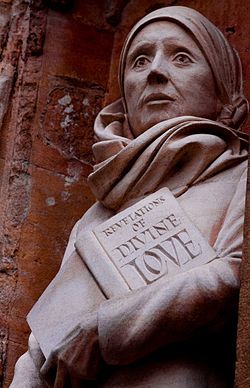
- Our is our Father, God Almighty, and our Substance is our Mother, God, All-wisdom; and our Substance is in our Lord the Holy Ghost, God All-goodness.
- Julian of Norwich, in Revelations of Divine Love (c.1393), Ch. 58
- The world will accept you changing your style for them, but pretty soon they’re going to demand that you change your substance. They’re going to demand that you – well, they liked the fact that you’ve taken their method, but they’re going to demand you change your message.
- John F. MacArthur, Ashamed of the Gospel: When the Church Becomes Like the World (1993)
- We shall see when we come to Newton's laws of motion that in the words "so far as in it lies," properly understood, is to be found the true primary definition of matter, and the true measure of its quantity. Descartes, however, never attained to a full understanding of his own words (quantum in se est), and so fell back on his original confusion of matter with space — space being, according to him, the only form of substance, and all existing things but affections of space. This error runs through every part of Descartes' great work, and it forms one of the ultimate foundations of the system of Spinoza. I shall not attempt to trace it down to more modern times, but I would advise those who study any system of metaphysics to examine carefully that part of it which deals with physical ideas.
We shall find it more conducive to scientific progress to recognise, with Newton, the ideas of time and space as distinct, at least in thought, from that of the material system whose relations these ideas serve to co-ordinate.- James Clerk Maxwell, in Matter and Motion (1876)
- This identification of extension with substance runs through the whole of Descartes's works, and it forms one of the ultimate foundations of the system of Spinoza.
- James Clerk Maxwell, "Atom" in Encyclopaedia Britannica as published in The Scientific Papers of James Clerk Maxwell (1890)
- Let no one think, however, that when we give him the name "wisdom of God" we mean anything without hypostatic existence that is, to take an illustration, that we understand him to be not as it were some wise living being, but a certain thing which makes men wise by revealing and imparting itself to those who are able to receive its influence and intelligence. If men it is once tighdy accepted that the only begotten Son of God is God's wisdom hypostatically existing, I do not think that our mind ought to stray beyond this to me suspicion that this hypostasis or substance could possibly possess bodily characteristics, since everything that is corporeal is distinguished by shape or color or size. And who in his sober senses ever looked for shape or color or measurable size in wisdom, considered solely as wisdom?
- Origen, On First Principles, Bk. 1, Chapter II
- Things essentially incorporeal, because they are more excellent than all body and place, are every where, not with interval, but impartibly.
Things essentially incorporeal are not locally present with bodies but are present with them when they please; by verging towards them so far as they are naturally adapted so to verge. They are not, however, present with them locally, but through habitude, proximity, and alliance.
Things essentially incorporeal, are not present with bodies, by hypostasis and essence; for they are not mingled with bodies. But they impart a certain power which is proximate to bodies, through verging towards them. For tendency constitutes a certain secondary power proximate to bodies.- Porphyry, Auxiliaries to the Perception of Intelligible Natures, 2 - 4
- Invention, it must be humbly admitted, does not consist in creating out of void, but out of chaos; the materials must, in the first place, be afforded: it can give form to dark, shapeless substances, but cannot bring into being the substance itself. In all matters of discovery and invention, even of those that appertain to the imagination, we are continually reminded of the story of Columbus and his egg. Invention consists in the capacity of seizing on the capabilities of a subject, and in the power of moulding and fashioning ideas suggested to it.
- Mary Shelley, in the Introduction to Frankenstein (1818).
- By God, I mean a being absolutely infinite — that is, a substance consisting in infinite attributes, of which each expresses eternal and infinite essentiality.
Explanation — I say absolutely infinite, not infinite after its kind: for, of a thing infinite only after its kind, infinite attributes may be denied; but that which is absolutely infinite, contains in its essence whatever expresses reality, and involves no negation.- Baruch Spinoza, in Ethics Geometrically Demonstrated (1677), Definition 6
- Whatsoever can be perceived by the infinite intellect as constituting the essence of substance, belongs altogether only to one substance: consequently, substance thinking and substance extended are one and the same substance, comprehended now through one attribute, now through another. So, also, a mode of extension and the idea of that mode are one and the same thing, though expressed in two ways. This truth seems to have been dimly recognized by those Jews who maintained that God, God's intellect, and the things understood by God are identical. ...Thus, whether we conceive of nature under the attribute of thought, or under any other attribute, we shall find the same order, or one and the same chain of causes — that is, the same things follow in either case. ...Wherefore of things as they are of themselves, God is really the cause, inasmuch as he consists of infinite attributes.
- Baruch Spinoza, in Ethics Geometrically Demonstrated (1677), Prop. 7: Note
- The being of substance does not appertain to the essence of man — in other words, substance does not constitute the actual being of man.
- Baruch Spinoza, in Ethics Geometrically Demonstrated (1677), Prop. 10
- Substance is in its nature infinite, immutable, indivisible...
- Baruch Spinoza, in Ethics Geometrically Demonstrated (1677), Prop. 10, Note
- God, or substance, consisting of infinite attributes, of which each expresses eternal and infinite essentiality, necessarily exists.
- Baruch Spinoza, in Ethics Geometrically Demonstrated (1677), Prop. 11
- It is also clear that there can be no accident in God. If all perfections are one in Him, and if existence, power, action, and all such attributes pertain to perfection, they are necessarily all identical with His essence. Therefore none of these perfections is an accident in God.
- Furthermore, a being to whose perfection something can be added, cannot be infinite in perfection. But if a being has some perfection that is an accident, a perfection can be added to its essence, since every accident is super-added to essence. Hence infinite perfection will not be found in its essence. But, as we have shown, God is of infinite perfection according to essence. Consequently there can be in Him no accidental perfection; whatever is in Him, is His substance.
- The same truth can be easily inferred from God’s supreme simplicity, and from the fact that He is pure act and is the first among beings. For some sort of composition obtains between an accident and its subject. Likewise, that which is a subject of this kind cannot be pure act, since an accident is a certain, form or act of the subject. Similarly, what is per se always precedes what is per accidens. From all this we can infer, in keeping with the truths established above, that nothing can be predicated of God as an accident.
- We are all made of the same stuff, remember, we of the Jungle, you of the City. The same composes us — the tree overhead, the stone beneath us, the bird, the beast, the star — we are all one, all moving to the same end. Remember that when you no longer remember me, my child.
- P. L. Travers, in Mary Poppins (1934), Hamadryad, the King Cobra, in Ch. 10 "Full-Moon"
- I have coined the phrase “Thinking is linking.” I thought of Kerenyi — “Mythology occupies a higher position in the bios, the Existence, of a people in which it is still alive than poetry, storytelling or any other art.” And of Malinowski — “Myth is not merely a story told, but a reality lived.” And, along with those, the word “Pollen,” the most pervasive substance in the world, kept knocking at my ear. Or rather, not knocking, but humming. What hums? What buzzes? What travels the world? Suddenly I found what I sought. “What the bee knows,” I told myself. “That is what I’m after.”
But even as I patted my back, I found myself cursing, and not for the first time, the artful trickiness of words, their capriciousness, their lack of conscience. Betray them and they will betray you. Be true to them and, without compunction, they will also betray you, foxily turning all the tables, thumbing syntactical noses. For — note bene! — if you speak or write about What The Bee Knows, what the listener, or the reader, will get — indeed, cannot help but get — is Myth, Symbol, and Tradition! You see the paradox? The words, by their very perfidy — which is also their honorable intention — have brought us to where we need to be. For, to stand in the presence of paradox, to be spiked on the horns of dilemma, between what is small and what is great, microcosm and macrocosm, or, if you like, the two ends of the stick, is the only posture we can assume in front of this ancient knowledge — one could even say everlasting knowledge.- P. L. Travers, in "What the Bee Knows" in Parabola : The Magazine of Myth and Tradition, Vol. VI, No. 1 (February 1981); later published in What the Bee Knows : Reflections on Myth, Symbol, and Story (1989)
- You do not chop off a section of your imaginative substance and make a book specifically for children, for — if you are honest — you have no idea where childhood ends and maturity begins. It is all endless and all one.
- P. L. Travers, as quoted in Sticks and Stones : The Troublesome Success of Children's Literature from Slovenly Peter to Harry Potter (2002) by Jack Zipes
See also
[edit]External links
[edit]


Look up Substance in Wiktionary, the free dictionary


Wikimedia Commons has media related to:
Retrieved from "https://en.wikiquote.org/w/index.php?title=Substance&oldid=3918810"