Photo: Amy Sussman/Getty Images
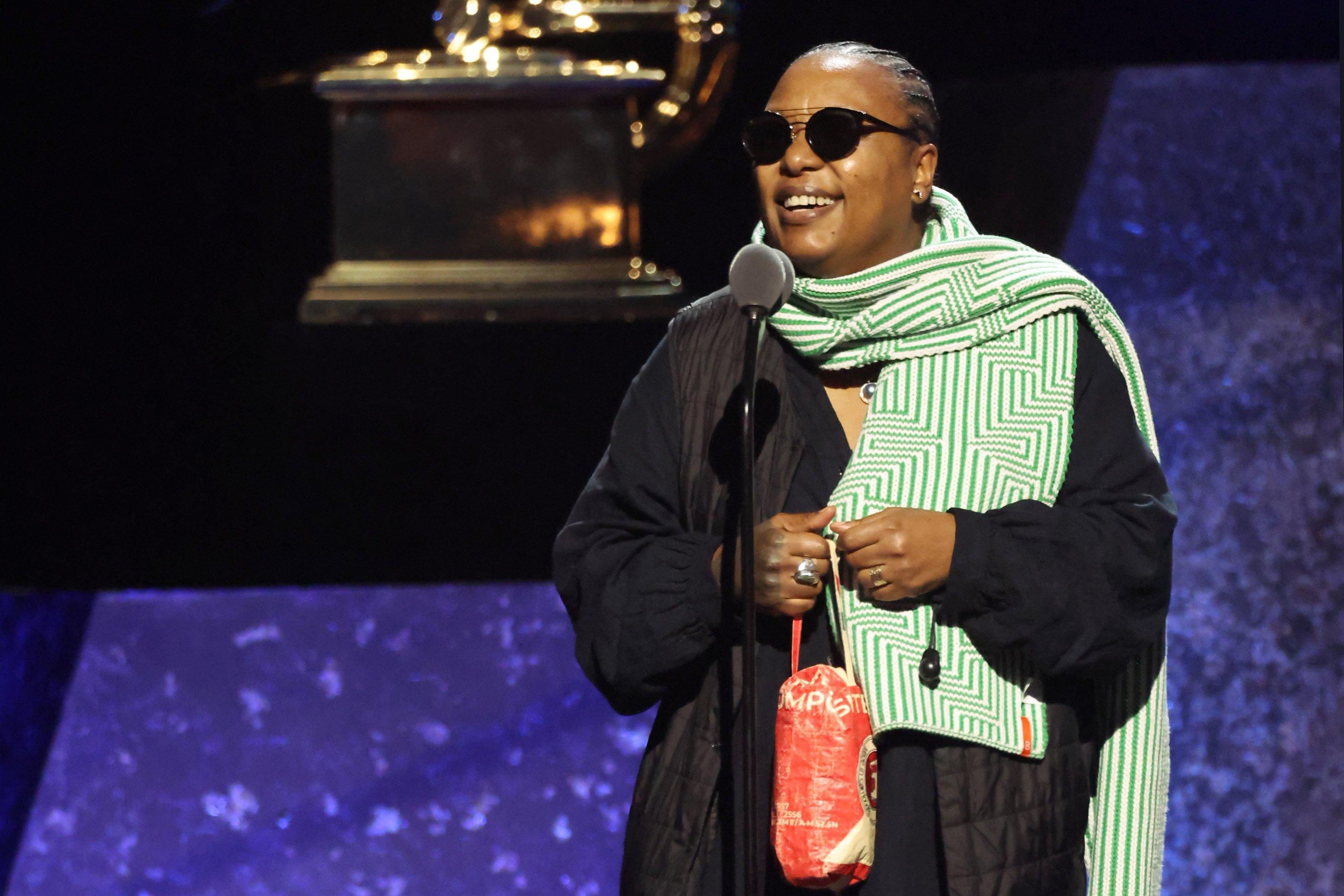
Meshell Ndegeocello Wins The First-Ever GRAMMY For Best Alternative Jazz Album At The 2024 GRAMMYs
Meshell Ndegeocello won the first-ever GRAMMY for Best Alternative Jazz Album. Ndegeocello bested Arooj Aftab, Vijay Iyer and Shahzad Ismaily; Louis Cole; Kurt Elling, Charlie Hunter and SuperBlue; and Cory Henry.
Meshell Ndegeocello won the first-ever GRAMMY for Best Alternative Jazz Album at the 2024 GRAMMYs.
The album bested Arooj Aftab,Vijay IyerandShahzad Ismaily's Love in Exile;Louis Cole'sQuality Over Opinion;Kurt Elling,Charlie Hunterand SuperBlue'sSuperBlue: The Iridescent Spree; andCory Henry'sLive at the Piano.
In her acceptance speech, the two-time GRAMMY winner and 12-time nominee thanked Don Was, the president of Blue Note Records, as well as other colleagues and loved ones — including her two sons. “I hope I haven’t forgotten anybody,” Ndegeocello graciously said at the end, and invoked an elder of the music: “Oliver Lake, this is for you.”
Keep watching this space for more information about the 2024 GRAMMYs!
A Year In Alternative Jazz: 10 Albums To Understand The New GRAMMYs Category
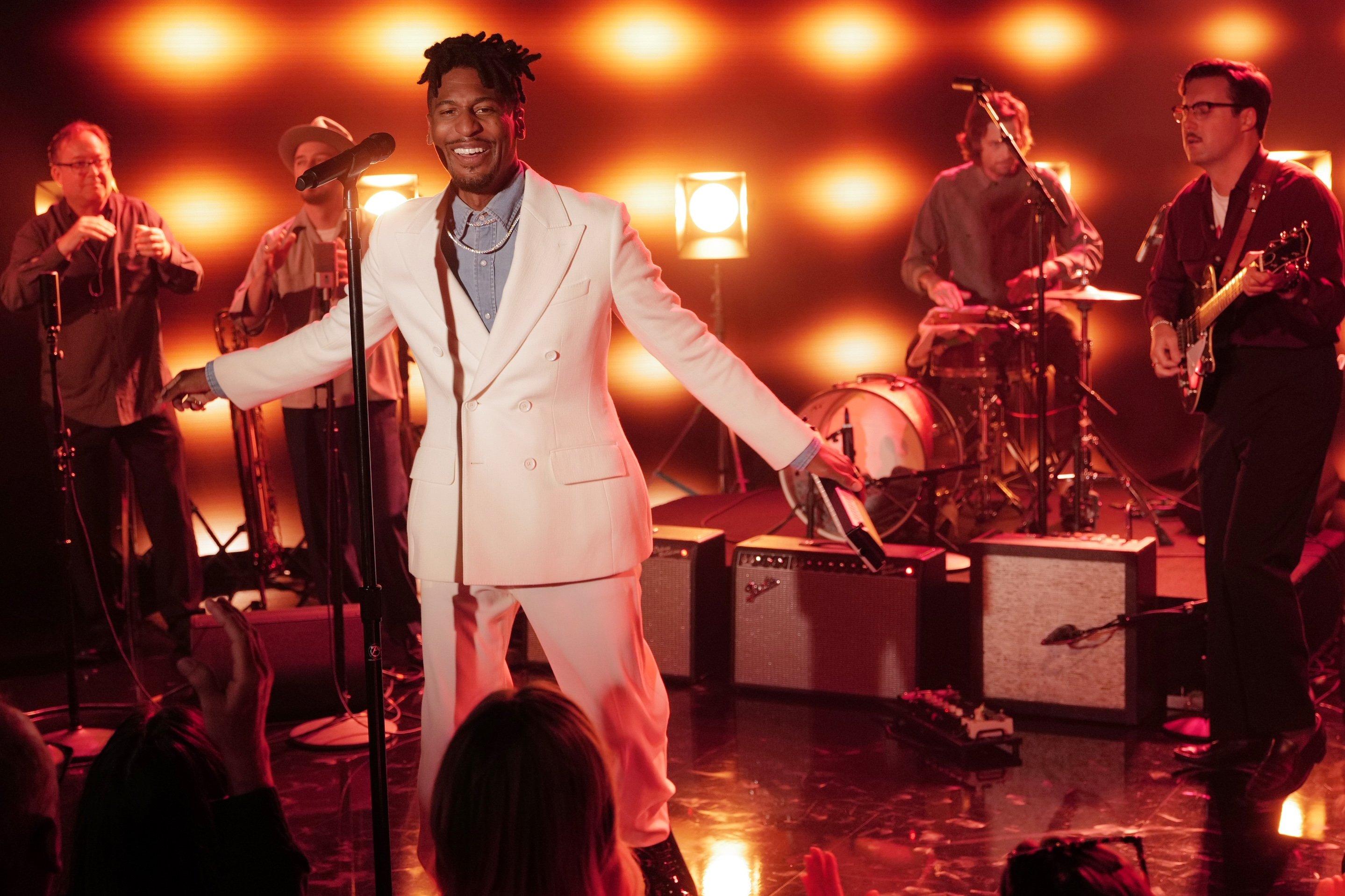
Photo: Randy Holmes/Disney via Getty Images
8 Jon Batiste Songs That Show His Ability To Unite Through Music
With his new album, 'BIG MONEY,' Jon Batiste continues the message-driven lyrics and hope-instilling sounds that have made him so acclaimed — from his moving take on "What a Wonderful World" to the title track of 2022's GRAMMY Album Of The Year, 'WE ARE.'
Music offers a language and a palette to speak of untruths, to right wrongs in song, and to call people to rise up. Few modern artists are better at eliciting this collective meeting of the minds than Jon Batiste.
The classically-trained pianist and 7-time GRAMMY winner — and first-ever recipient of Ray Charles "Architect of Sound" Award at the 2025 GRAMMY Hall Of Fame Gala — uses his voice and the 88 keys on the piano to create sonic textures that evoke the zeitgeist. Batiste has inspired listeners with his songs, whether originals or reimagined covers of standards from the American songbook, since his 2005 debut Times in New Orleans. And it's no surprise that his latest, BIG MONEY, offers another batch of powerful songs that make strong statements.
The message that permeates the nine-song collection — and is symbolized by its title— is that no matter how hard you work, or how much money you make, you can not add any more life to the balance sheet. The album also further exemplifies Batiste's ability to defy genre, as BIG MONEY is a subdued, bluesier sonic exploration that features a palette of musical colors and his signature jolts of joy.
As BIG MONEY implies, Batiste's songs are gifts from somewhere in the ether that offer hope when we need them the most. His entire discography bursts with compositions that create and celebrate community, and inspire and teach without getting too preachy. Batiste's goal is to reach your soul and uplift your spirit; these are songs about hope, freedom and love that both move you and make you want to move to the music.
In honor of Batiste's latest release, GRAMMY.com combed his catalog to highlight eight tracks that showcase the depth — and the breadth — of this accomplished artist.
Following graduation from Julliard, Batiste assembled a band featuring many of his classmates and musical peers. He named the group Stay Human to reflect his belief in the power of music to uplift. Batiste has always used his music as a connector, and that was the raison d'etre behind the concept (and the recording) of his 2011 EP with Stay Human, MY N.Y.
The 11-song project was recorded all on a New York subway train, using this physical representation of "connections" to make a statement about the importance of community. The artist's goal is to always search for ways — whether through original lyrics or through feelings he evokes with his chosen instruments by rearranging well-known melodies — to make connections. Sometimes, like in this version of the 1930 jazz standard "On the Sunny Side of the Street," no words are needed to move people to action.
This traditional tune from the American songbook was first a poem penned by Julia Ward Howe in the mid-1860s; she was inspired by the abolitionist singalong "John Brown's Body," adding new lyrics to create a patriotic Union rallying call for the end of slavery. On Batiste's rearranged version for The Atlantic, he brings his feelings to the classic and reinterprets it knowing the social history of the past and contemplating the present, trying to capture all of these moods in the music.
He keeps the melody intact and instead creates this bittersweet reworking in two ways. First, in the gospel delivery of a preacher the song's chorus, "Glory, glory Hallelujah." And, second, by composing this reimagination entirely on a prepared piano — a technique where objects (in this case his wallet, paper and duct tape) are placed on the strings to create unique sounds such as Gregorian chants and global rhythms to symbolize what, to him, the American Dream really means.
As he said in an interview with "Face the Nation," "It's just a blend of everything that I think that if we, at our best … the ideal of American life at its best everything co-existing and the great compromise of everything being her and being as one, and that's what the piece represents."
Originally written for Louis Armstrong as a vehicle to unite people in turbulent times, "What a Wonderful World" was penned by a pair of songwriters during the mid-1960s with the assassinations of the Kennedys, the escalating Vietnam War, the Civil Rights revolution, and racial tensions weighing heavy on their minds.
With an emotive solo piano rendition, Batiste breathes new life into this timeless tune at a time America needs it the most and once again faces a divided nation. The country, and the people, needs this elixir of optimism in song as a reminder of the everyday beauty that surrounds us.
Alongside Trent Reznor and Atticus Ross, Batiste scored the music to Soul, the award-winning 2020 Disney/Pixar animated film that follows the main character, Joe Gardner, into another realm on a journey to reunite his body and his soul using jazz music as the soundtrack to this quest. As Batiste told Rolling Stone, "music in the film is a character."
Perhaps one of the most moving musical moments comes from Batiste's version of Curtis Mayfield's "It's All Right," which was made famous by his band, The Impressions, in 1963. Featured during the end credits, the uplifting track offers the perfect bookend to Soul, reminding listeners to live in the present and take every day as a gift.
"We are the chosen ones." This is the universal message that lingers long after one listens to the title cut of Batiste's Album Of The Year-winning WE ARE.
The record's underlying theme of hope and its message that humans are all connected resonated as it arrived in the midst of a global pandemic — a time of uncertainty and isolation when the world was looking for something to cling to. WE ARE offered messages that were both autobiographical and universal, blending the past, present and future in melodies and compositions that offered hope amidst hopelessness.
The title track features the St. Augustine High School Marching 100, a nod to his past and his heritage, as several generations of his family are alumni of this historically Black New Orleans high school. Written and inspired during the Black Lives Matter movement, with the killings of George Floyd and Breonna Taylor weighing on his mind, the gospel-esque song is overwrought with the spirit of "we shall overcome" and leaves one with the universal message that "we are the chosen ones."
The funky title to WE ARE's anticipated follow-up alludes to Batiste's ongoing mission to use music as a conduit to connect. Radio, the medium to receive music for generations, should not be defined by genre, but be a place where all voices and all sounds are heard; in Batiste's eyes, all music is "world music." And with album cut "Be Who You Are," he broadcasts an important message: we need to celebrate our differences.
"You're bringing something they can't bring/ And singing something they can't sing," he asserts to the listener on the song's opening verse. With rapper J.I.D, K-pop group New Jeans and Spanish star Camilo sending a similar message in their own style (and languages), "Be Who You Are" is a quintessential example of Batiste's knack for both inspiration and connection.
Batiste's documentary explores the love and the relationship between him and his wife, Suleika Jaouad. It also chronicles Jaouad's brave battle with leukemia as Batiste attempts to pen his first symphony. This ballad — which appears in the final scene of the doc, with Batiste alone at the piano to bring this story to its poignant conclusion — encapsulates the power of their enduring love and Jaouad's courage.
As Batiste sings, "Summertime adventure/ That's what we were meant for/ I need you/And that's never goin' to change." Though specifically a personal ode, this composition is a conversation in song that is also an omnipresent lullaby of perseverance and survival that hits home for everyone.
Read More: Inside 'American Symphony': 5 Revelations About The Jon Batiste Documentary
You can't take it with you. Batiste reprises the age-old adage in the title track from his new album.
The bluesy song is a gospel-infused number that tackles capitalism head-on, along with humans' desire to acquire more and more greenbacks thinking material wealth equals happiness. Reminding us of this truth in this catchy song, Batiste croons: "You could be livin' the life, but not the dream … everybody is chasing that big, big money … so you might as well live for something you can feel." Wise words indeed, JB.
Latest News & Exclusive Videos


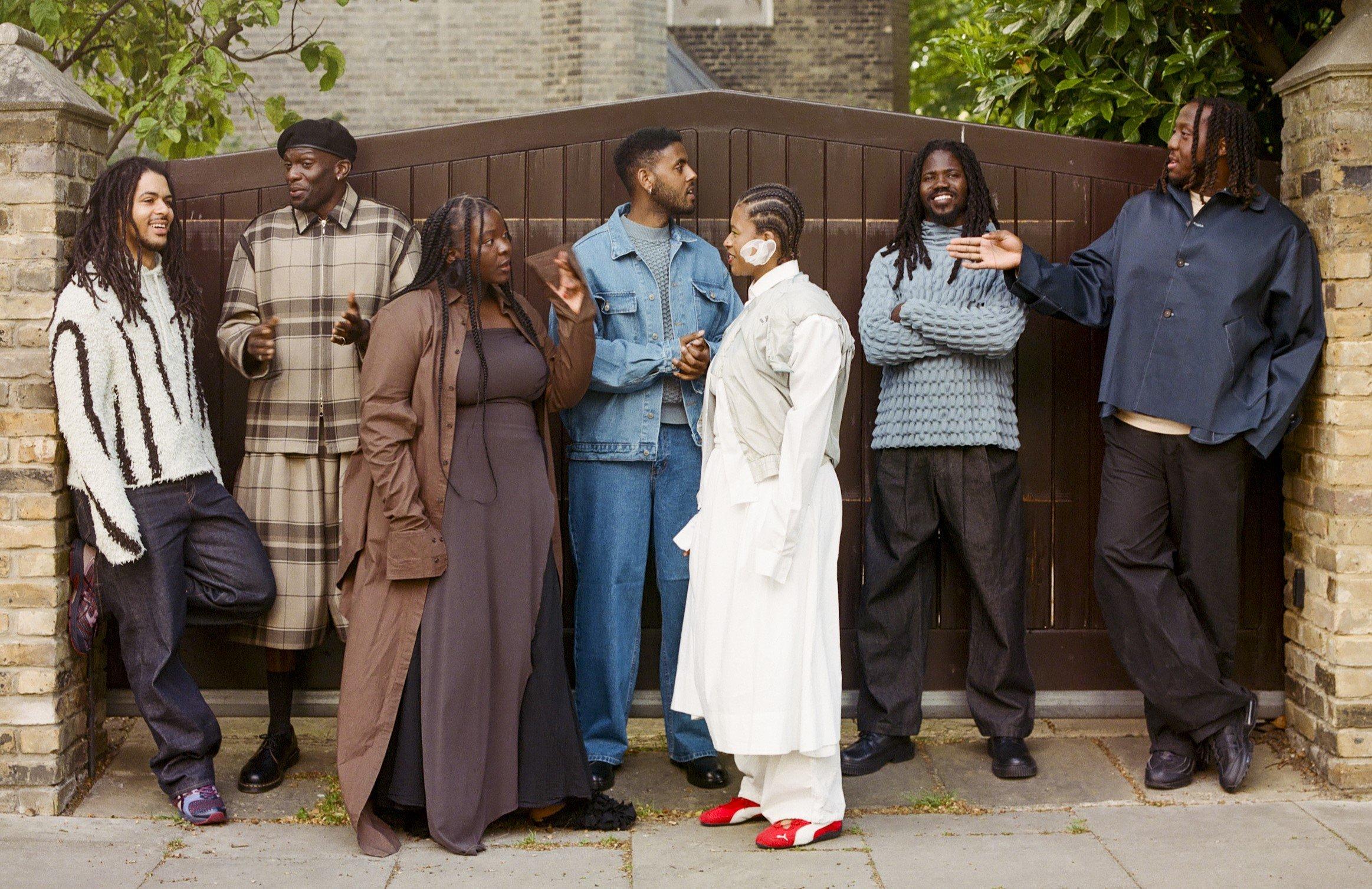
Photo: Kemka Ajoko
Kokoroko's Joyous, Pan-African LP Is A Reminder 'That Tuff Times Never Last'
Kokoroko are a testament to their wide-ranging community. "We want to be a part of sharing that story. We are, just by living. But we can put it down on paper and in music," says percussionist Onome Edgeworth.
In a world where Black musicians are often pigeonholed, forced to maintain legibility, Kokoroko remains unpindownable, ever-changing. In the tradition of British African ensembles like Osibisa and the West African Rhythm Brothers, the London-based seven-piece are masters of African fusion, intent on bridging the divide between young people and African popular music of old.
Their unique sonic disposition paved way for the critical success of 2018’s "Abusey Junction," a tranquil, 7-minute debut record inspired by everything from the lilt of the West African kora to the warmth of Ghanaian highlife. With a breakout track so significant, many tastemakers rushed to define the troupe’s sound, often categorizing them within the confines of dominant "Black" live music genres like jazz and Afrobeat. But much like the Black London in which they were raised — known for its ever-shifting face, for its chaotically diasporic character that makes it difficult to ascertain where one culture ends and another begins — their soundscape remains grander than life itself.
On their 2022 debut LP Could We Be More, for example, funk and Afrobeat meet seamlessly on tracks like" War Dance" and "Something’s Going On." In their 2024 EP Get the Message, they flirt with reggae and dub on their intro "Higher," before jumping into the Highlife-soul potpourri that is "Sweeter Than."
Their latest release, Tuff Times Never Last, is no different. The album features Kokoroko’s telltale confluence of West African and global Black sonics, but with fresh references ranging from West African disco to D’Angelo’s Voodoo. And unlike Could We Be More, which implored listeners to reflect on the turbulence of the times via striking instrumentals, Tuff Times Never Last looks to prove its title right. It is warm, uncomplicated, buoyed along by calming vocals, and emblematic of a London summer — a soothing balm in a harsh and unpredictable world.
Following a packed summer spent touring Europe for the album, Kokoroko will kick off their U.S. tour at the end of July. Having shut down iconic venues like New York’s Baby’s All Right and Warsaw on their 2024 North American tour, they have gone even bigger this year, taking on the likes of Brooklyn Steel and the Telluride Jazz Festival. GRAMMY.com sat down with Kokoroko co-founders Sheila Maurice-Grey and Onome Edgeworth in the band’s Hackney studio, to discuss the many references behind their new album, British African identity, and the unending fount of inspiration that is Black London.
You released four tracks ahead of the album drop, including "Just Can’t Wait" and "Closer to Me." How has the reception been so far for the new work?
Onome: It’s been super good so far. We have one song that just is always ahead of the others, with "Abusey." But these songs have started to creep up in the streams, and month by month they’re matching it. It’s a different sound for us, so you're never sure how people are gonna take it. It's been such a positive response to us doing something different.
Sheila: One person in particular waslike, "I actually really like the music you’ve been releasing recently." [Laughs.] But it’s kind of like a compliment, in a way. I feel like we’ve matured in our writing, so there’s a different type of appreciation at the moment. There are a lot more lyrics [on this album], and I think we pushed ourselves way out of our comfort zone.
From a consumer’s perspective, Tuff Times Never Last feels deeply heartwarming and free-spirited. What was your approach — thematically and sonically — behind this new era, especially when contrasted with your more introspective debut album, Could We Be More?
Sheila: It’s interesting that you’re saying [the last album] was more demanding and more introspective. With this one, you can hear more openness, the playfulness, the joy. I think the remit that we gave ourselves was —
Onome: "Enjoyment."
Sheila: Yeah. And "tough times never last." Just for it to be a light in a dark place. To bring joy to people when they’re listening to it.
But then there's so many different references. We have Loose Ends in the UK, to Azymuth from Brazil, to, maybe, Herbie Hancock, to Ebo Taylor. I think a lot of the songs [on the album] do take on Highlife structures, so you have the horns first, and then you've got the melody — the chorus or verse.
Onome: Also, we tour a lot, and you've got to live with songs. You've got to play it. It might be your life for the next two years or 10 years if it goes well. So we realized, how do we want our lives to look? Let's really put something into the world that feels how we want to feel. So we wrote a lot of music that we just enjoyed playing and enjoyed writing.
Was there anything in particular that the band was responding to — either in your personal lives or on a larger scale — that made you want to create a joy-centered project?
Onome: Prior to us writing the album, for me, there were a lot of ups and downs. Just a lot of change in my life with family, with relationships, growing into a relationship. It was a lot to process and understand. And I think you can hear it in the lyrics of a lot of the songs, they're basically about the title. I'm only realizing now, that all the lyrics are basically like,"A lot has happened, but we've landed." A lot of it is a celebration of things becoming sweet and finding sweetness.
Sometimes you don't realise how you're feeling until you've written the songs and written the music, and you look back on it and you're like, All this music is about this, I must have been going through it. [Laughs.]
Sheila: It was a very uncertain time in our personal lives. We also didn't have a lot of confidence writing, but we were like, "Okay, let's just do this. Let’s go for it." So I think you definitely can hear that energy. There’s a vulnerability to it, but there’s also an openness to it.
Onome: We were broke as well. [Everyone laughs.] Music sounds different when you’re broke.
Notably, you have only three features on the project and they’re all British Africans. Was this intentional?
Sheila: You’ve got LULU., you’ve got Azekel, you’ve got Demae. All Londoners, all Nigerian as well. These collaborations are really important for us, especially for this album, just having it feel like London. It really represents us, and bringing other people who come from a similar background to be part of the story is a beautiful thing for us.
After the album drops, you all will be heading off on your second-ever U.S. tour. How was the tour the first time around, and what are your expectations now, considering that the U.S. is such a distinct market when compared with the U.K.?
Sheila: Being in the U.S. feels like such a big thing for us. Prior to last year, we'd been trying to get to America for maybe five years.
Onome: We'd done the whole visa application, interviews, everything. And then we got [our visas], and lockdown happened.
Sheila: Being able to tour last year — for us we were all like, "This is probably the best tour we've ever done." For many reasons. We were in a tour bus as well.
Onome: For the first time.
Sheila: It's not just that, obviously. Being able to explore America and see all the different sides. Going through Canada, coming back to the East Coast, then the West Coast, was amazing.
And with the music we’re playing, even more so now, there's a lot that you can trace back to Black American music. And in the most recent gigs that we did [in the U.S.], we had probably 50 percent Black people [in the audience], which we never experienced in Europe. Having predominantly Black people at our shows and giving us good feedback outside of London. There was one gig that we did in New York, where someone was like,"I've never seen so many Black women at your shows."
Onome: For a non-pop gig or a non-hip-hop gig — it's major to us.
Sheila: [Onome] always talks about the show that we did in Chicago when we played "Da Du Dah," and on the right of the stage, there were loads of aunties just dancing. It just felt really special to see people really resonating and giving us so much love.
Onome: In San Fran there were like, four generations of Black people, a lot of people in their 80s and 90s. It’s amazing to us. There are few places where you can play that people really get music and there's a history of music. And playing across America, there's so much history in every city and they've been exposed to a lot of greatness. So it's a challenge, you can't come and just play badly.
If you're playing fora jazz crowd, they've seen jazz. If you’re playing soul, they've seen soul music. So I think it's affirming, and it's a beautiful thing when it goes well. Knowing that we can do it now pushes us on.
There’s been a tendency for people to pigeonhole Kokoroko as solely an Afrobeat troupe or a jazz troupe. In reality, however, it seems like you’re all of that and so much more. How do you all work to define yourselves on your own terms, in a music landscape that’s quite preoccupied with categorization?
Sheila: If you’re being true to yourself, you're always gonna keep on moving with the times, and not necessarily with what is going on in popular culture.
The greatest musicians that I love — like Miles Davis, Herbie Hancock, even Patrice Rushen — I would say that all three of them were popular artists at some point, but they’ve all delved into so many different genres. And Miles talked about how you've got to move with the times. Keep it fresh. You can't just be stuck and say, "This is the box that we’re in, and we’re going to make this music for the rest of our lives." Which some people do, but I think it's not true to us.
Upbringing-wise, what got me into music in this way was going to Kinetika Bloco, which is a music youth group [in London]. We were playing Dizzee Rascal, Fela Kuti, Abdullah Ibrahim, Funkadelic, music from Brazil — all sorts of music. I think all of us [in the band] have had a similar upbringing where we've listened to so much music. So it's inevitably going to translate in the music that we make somehow.
The beauty of this moment, in terms of where African music is now, is that artists and creatives are able to access platforms that our predecessors were never able to, and simultaneously use these platforms to pay homage to our music greats. How does Kokoroko use its work to pay homage to African music’s past, while offering a voice to the next generation?
Onome: Our live shows are a window to what we love. We always play covers, and especially with West African music, there's so much good music across the spectrum. From psychedelic music to disco to whatever.
We try and play those songs knowing that when people come to our shows, they follow it up, and if people like it, they find similar things. We’ve seen not just with us, but with all the bands that are doing what we do — there’s definitely more and more shows in London that young people are going to, as opposed to it being a "world music" thing. We played at Recessland [recent Black music festival in London], and seeing a young crowd…when I was younger, you couldn't get that many Black people in London in a space. You could, but the vibe was completely different. That was so positive and so beautiful that we're seeing that we have actually moved things forward.
And as we're playing covers and whatnot, the next thing is recording them, releasing them, letting people go find the original. It benefits us because it's good music, and then you're shedding light on those artists as much as possible. We've been playing music by this woman Jean Adebambo, who is from Montserrat and Nigeria, and from London. Just beautiful, beautiful music. I think that’s maybe the first one we want to release as a cover — "Paradise."
In this country we speak a lot about and celebrate the Windrush Generation, which is one part of the story of the Black community. My grandfather moved here in a completely different way. I think something we want to do is be a part of telling that story as well, of West Africans coming to this country, and just celebrating that generation.
What we're doing now and what our generation is doing now is a real testament to those people who came over here and set up our community. We want to be a part of sharing that story. We are, just by living. But we can put it down on paper and in music.
Sheila: I did some research and found that my grandfather was a sea merchant, but he actually came to the U.K. to study engineering. It seems to be a common story; there's so many Africans who have been here. There's this center in Norwood Junction called the Samuel Coleridge-Taylor Center, and he was from Sierra Leone. So there is a stamp of Africans being in Europe, in London — for probably centuries now — that doesn't get spoken about.
Onome: What's interesting is that when we were growing up, Caribbean culture was definitely dominant.
Sheila: And everyone was from Jamaica. [Laughs.]
Onome: But I really celebrate the influence and the impact that had on us — especially reggae music and live instrumentation. The positivity in a lot of their music was, for me, mind-blowing. Music that was telling stories — it's gorgeous, gorgeous stuff. Us being able to add to that story makes all of our communities stronger. If we all get that shine, it just enriches us as a community here. I think it's a beautiful thing.
Sheila: Another important thing that we've been talking about is having a stamp of this time, this moment in time, as Black people in London, and just as people in London. I think being a part of that story feels important — it feels like a big responsibility to try and accurately paint where we're at.
Explore More Sounds From Around The World


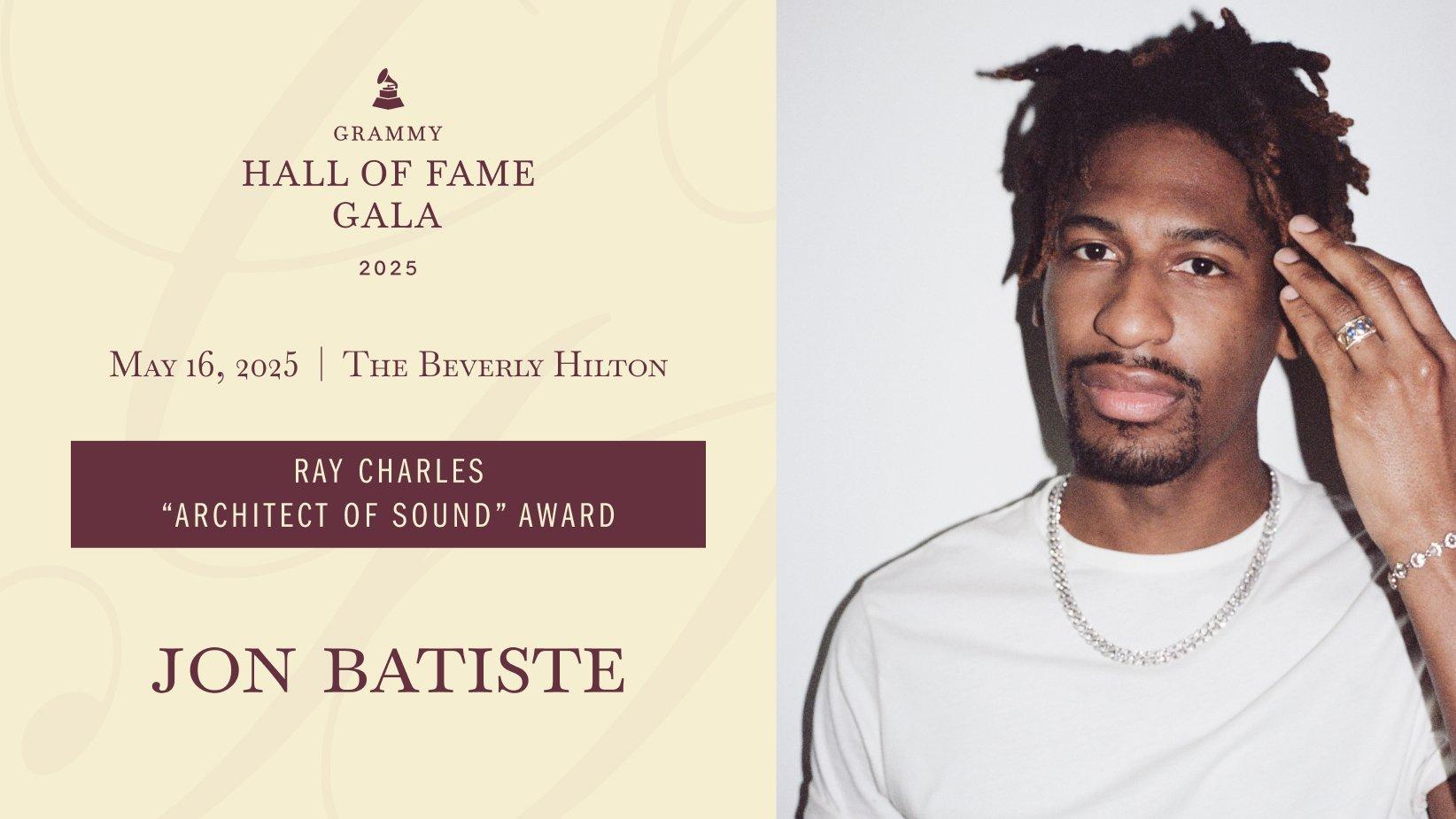
Graphic courtesy of the GRAMMY Museum.
Jon Batiste To Receive Inaugural Ray Charles "Architect of Sound" Award At The 2025 GRAMMY Hall Of Fame Gala
The GRAMMY Museum and Ray Charles Foundation will honor Jon Batiste with the first-ever Ray Charles "Architect of Sound" Award at the 2025 GRAMMY Hall of Fame Gala, where he will also perform.
Editor’s Note: Updated Friday, May 2, 2025, and Friday, May 9, to add the full performer lineup for the 2025 GRAMMY Hall Of Fame Gala.
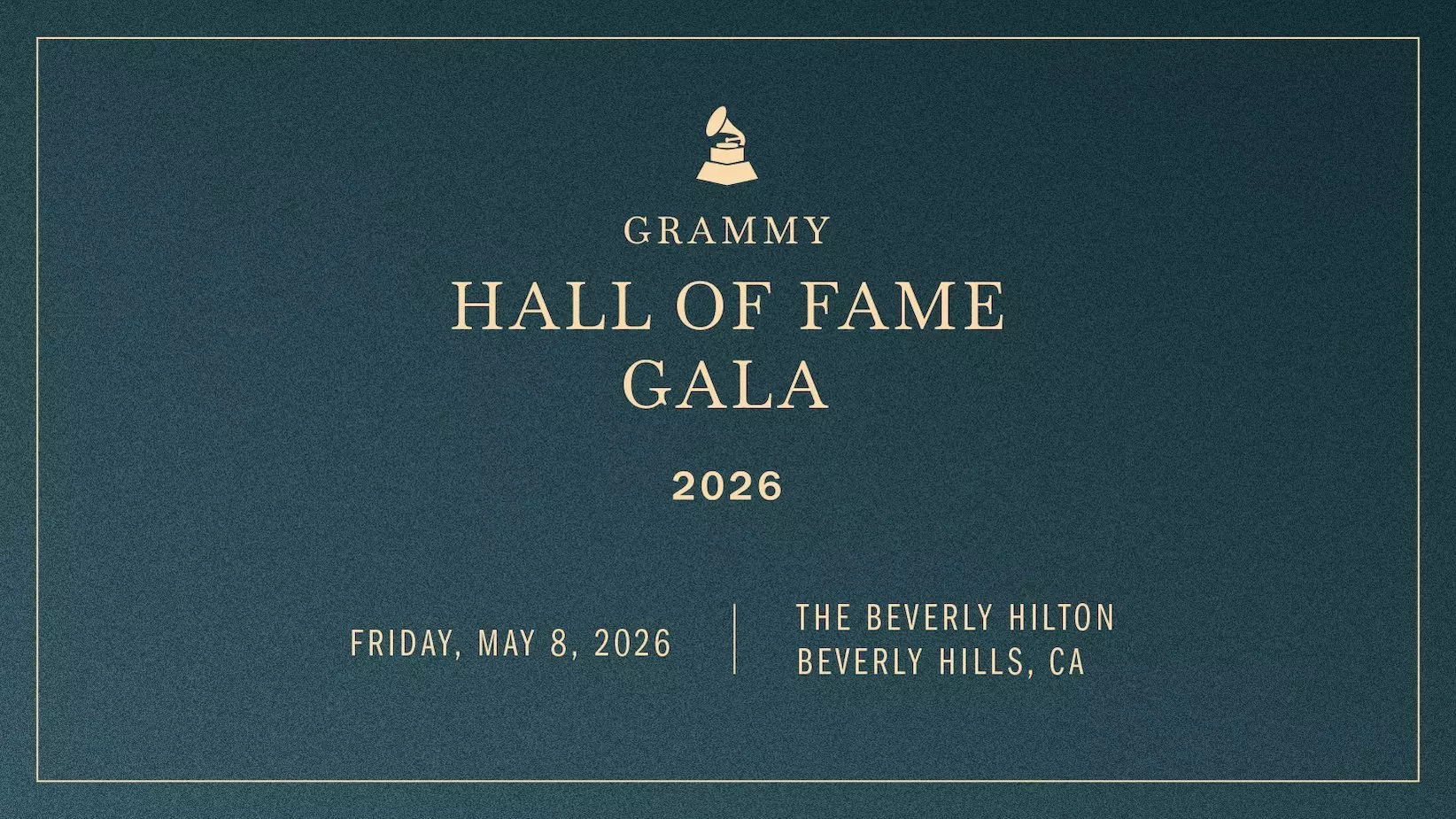
The GRAMMY Museum has announced the creation of the Ray Charles "Architect of Sound" Award, an annual honor that will be presented at the Recording Academy and GRAMMY Museum’s GRAMMY Hall Of Fame Gala. The inaugural recipient, multi-GRAMMY Award-winning artist Jon Batiste, will receive the award on May 16 at The Beverly Hilton in Los Angeles, where Batiste will also perform.
Inspired by the genre-spanning genius of Ray Charles — whose legacy as a performer, pianist, songwriter, producer, and entrepreneur forever transformed the musical landscape — the "Architect of Sound" Award honors an artist whose innovation, influence, and creative vision have left a lasting impact on music and culture. Batiste, known for his genre-defying work as a pianist, composer, bandleader, and singer/songwriter, exemplifies the award’s purpose of recognizing transformative artistry. A 17-time GRAMMY winner with 10 recordings inducted into the GRAMMY Hall of Fame and a Recording Academy Lifetime Achievement Award honoree, Ray Charles was one of the most influential artists of all time.
"Ray Charles is a beacon for me, a blueprint," said Batiste. "He is a singular example of musical genius, artistic freedom and craft of the highest level that will continue to inspire humanity for generations. I am honored to receive this award."
Batiste is a seven-time GRAMMY and Academy Award-winning singer, songwriter, and composer. His latest release, Beethoven Blues (Batiste Piano Series, Vol. 1), is the first in a solo piano series that reimagines classical works through a fresh, contemporary lens. The album follows World Music Radio (2023), which earned five GRAMMY nominations, including Album of the Year. Batiste also earned an Oscar nomination and a GRAMMY win for his song "It Never Went Away," featured in the Netflix documentary AMERICAN SYMPHONY. His innovative score was also featured in Jason Reitman’s 2024 film SATURDAY NIGHT.
Michael Sticka, President/CEO of the GRAMMY Museum, added, "Ray Charles was a trailblazing artist whose influence knows no bounds, and Jon Batiste is a true reflection of that legacy. Beyond his immense talent, Jon has been a dedicated partner in advancing the GRAMMY Museum’s mission to make music education more accessible. Honoring him with the inaugural Ray Charles ‘Architect of Sound’ Award is not just fitting—it’s a celebration of two artists who have shaped the sound of generations."
“Ray Charles was always pushing music forward — blending genres, breaking barriers, and inspiring generations,” said Valerie Ervin, President of The Ray Charles Foundation. “He would be deeply honored to have his name attached to an award that celebrates artists who share his fearless creativity and dedication to their craft. Jon Batiste embodies that spirit, and The Ray Charles Foundation is proud to join the GRAMMY Museum in recognizing his extraordinary contributions to music.”
Batiste will deliver two special performances during the Gala, which will also include musical tributes and one-of-a-kind moments from a lineup of artists to be announced. The event will also honor this year’s label honoree, Republic Records.
The Recording Academy and GRAMMY Museum have also announced the performer lineup for the 2025 GRAMMY Hall Of Fame Gala, which includes:
Andy Vargas, longtime band member of Santana, whose 1999 GRAMMY-winning album, Supernatural, is being inducted into the GRAMMY Hall Of Fame this year
Cindy Blackman, a celebrated percussionist
Conan Gray, acclaimed rising singer/songwriter
Eddie Floyd, soul legend whose 1966 Stax single "Knock On Wood" is a 2025 GRAMMY Hall Of Fame inductee
Emmylou Harris, 13-time GRAMMY winner and Recording Academy Lifetime Achievement Award honoree whose 1995 album, Wrecking Ball, is being inducted into the GRAMMY Hall Of Fame this year; she will be joined by multi-GRAMMY-Award-winning producer Daniel Lanois and acclaimed multi-GRAMMY-Award-winning jazz drummer Brian Blade for a rare collaboration
Jody Stephens, iconic drummer for Big Star, whose 1972 debut album #1 Record will be inducted into the GRAMMY Hall Of Fame this year
John Mellencamp, legendary GRAMMY-winning singer/songwriter
Jon Batiste, multi-GRAMMY-Award-winning composer and bandleader who was previously announced as the inaugural recipient of the newly created Ray Charles "Architect of Sound" Award, which will be awarded at the 2025 GRAMMY Hall Of Fame Gala
Ledisi, GRAMMY-winning vocal powerhouse
Leslie Grace, Latin GRAMMY nominee, singer/songwriter and actor
Leslie Odom, Jr., GRAMMY-winning singer and actor
Orianthi, guitar virtuoso
Susanna Hoffs, musician, author and co-founder of the Bangles
Performances throughout the night will pay tribute to the 2025 GRAMMY Hall Of Fame inducted recordings:
Cindy Blackman and Orianthi, joined by Andy Vargas, will perform Santana's "Smooth"
Conan Gray will perform as part of a tribute to Republic Records
Eddie Floyd and Jody Stephens will perform "Knock On Wood"
Emmylou Harris, Daniel Lanois and Brian Blade will present selections from Wrecking Ball
John Mellencamp will perform as part of a tribute to Republic Records
Ledisi will perform Clara Ward's "How I Got Over"
Leslie Grace will deliver Gloria Estefan's "Conga"
Leslie Odom, Jr. will interpret Luther Vandross' "Never Too Much"
Susanna Hoffs will take on Cat Stevens' "Wild World"
Esteemed CBS News journalist Anthony Mason will return as the Gala's host. GRAMMY- and Latin-GRAMMY-Award-winning composer, producer and conductor Cheche Alara will serve as musical director.
The 2025 GRAMMY Hall Of Fame Gala will celebrate this year’s inducted recordings, which include iconic albums and singles such as JAY-Z’s Reasonable Doubt, Cat Stevens’ Tea For The Tillerman, Carlos Santana’s Supernatural, and classics by Big Star, Clara Ward, Eddie Floyd, Emmylou Harris, Fela Kuti & Afrika 70, Geeshie Wiley, Gloria Estefan & Miami Sound Machine, J.D. Crowe & The New South, Linda Martell, and Luther Vandross.
Established in 1973 by the Recording Academy’s National Trustees, the GRAMMY Hall Of Fame honors recordings that have qualitative or historical significance and are at least 25 years old. Inducted recordings are selected annually by a special member committee of professionals across the recording arts, with final approval by the National Board of Trustees. With the 13 new additions this year, the Hall Of Fame now includes 1,165 recordings. Eligible recipients will receive an official certificate from the Recording Academy.
Learn more about and purchase tickets for the 2025 GRAMMY Hall Of Fame Gala.
The 2025 GRAMMY Hall Of Fame Gala is produced by former GRAMMY Awards Executive Producer Ken Ehrlich, alongside Ron Basile, Lindsay Saunders Carl and Lynne Sheridan.
Explore The 2025 GRAMMY Hall Of Fame Inductees
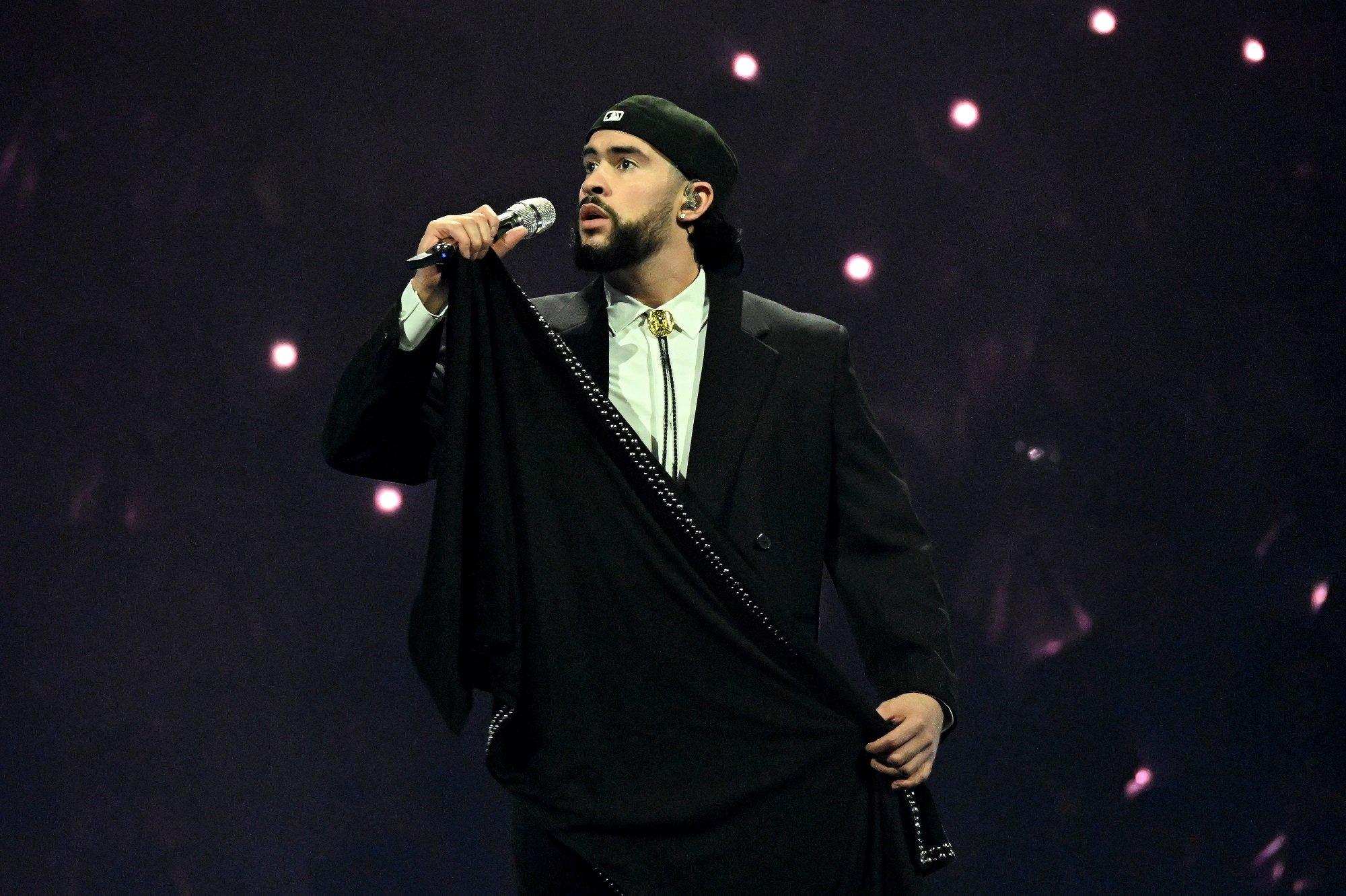
Photo: Stephen J. Cohen/Getty Images
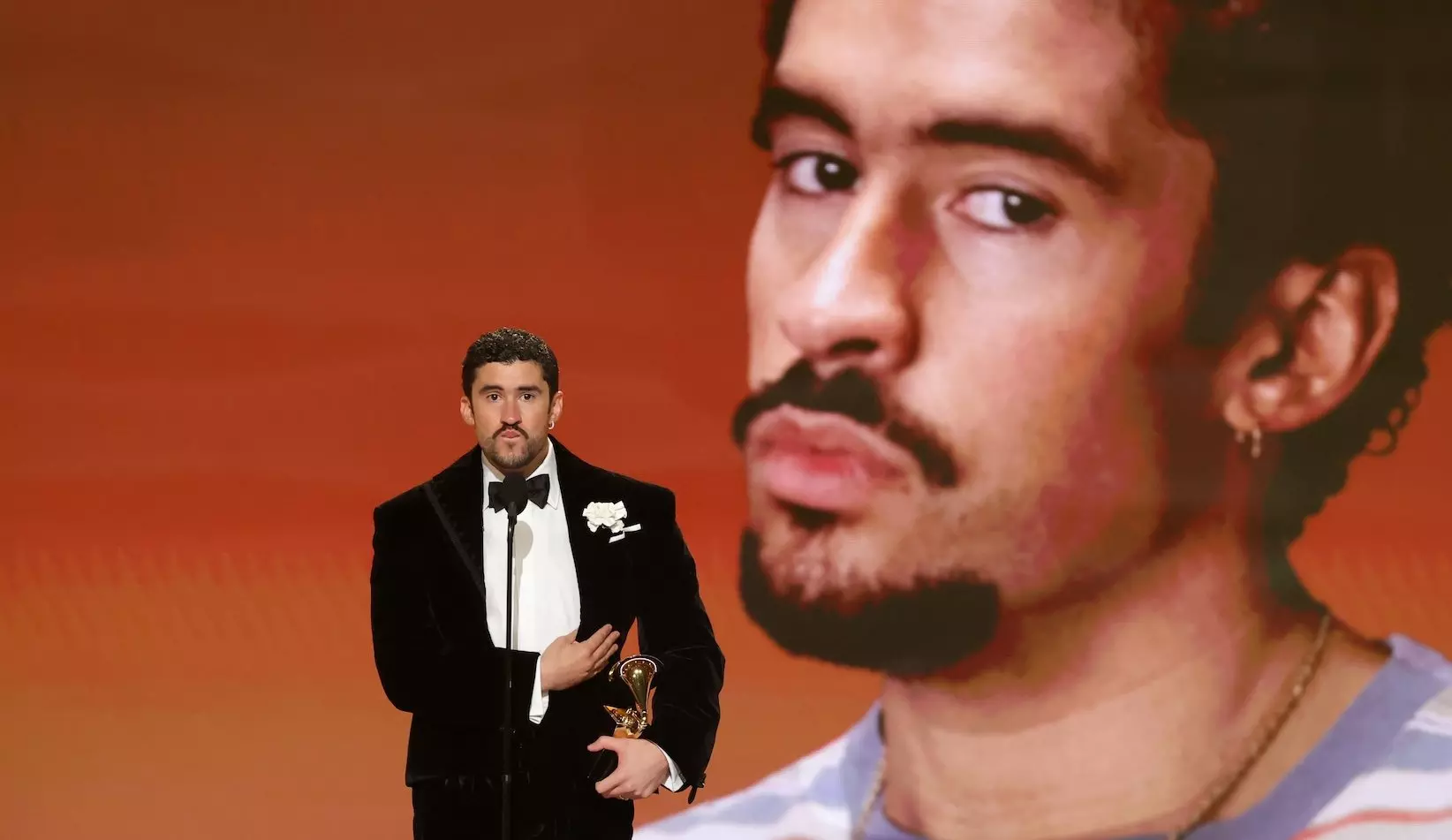
5 Takeaways From Bad Bunny’s 'Debí Tirar Más Fotos': A Very Personal, Very Political Sixth Album
Recorded entirely in Puerto Rico, the 17-track release fuses the music of the island into something new and completely unique to Benito.
"Bad Bunny makes a salsa-inspired album" was not on our 2025 bingo card — at least not before the GRAMMY winner released the album singles "EL CLúB" and "PIToRRO DE COCO," in December. The distorted strains of música jíbara on the former and the plena-inspired guitar on the latter were a tip-off that a new chapter was opening.
Debí Tirar Más Fotos ("I Should Have Taken More Photos"), announced in the final week of 2024 and released on Jan. 5, sounds like nothing he’s done before. While 2023’s cinematic, trap-filled Nadie Sabe Lo Que Va a Pasar Mañana — which is nominated for Best Música Urbana Album at the 2025 GRAMMYs — was more obviously ambitious, Bad Bunny’s follow up is even more of a feat. The perpetually shapeshifting artist took distinctly Puerto Rican musical styles, including very old folk rhythms and used them both to explore his personal roots and as a symbol of resistance.
The album’s cover art is a photograph of what looks like someone’s backyard, bordered by banana trees. The only objects in the frame are two mismatched white plastic chairs. In the promotional photos for the album, he appears sunburned and dressed down in a way that suggests a rural lifestyle well inland on the island. Like many of Benito Antonio Martínez Ocasio’s artistic choices, it’s both serious and self-consciously ironic. In this case, it’s an assertion of Puerto Rican identity and a deadpan comeback for critical fans who say he went Hollywood on his last album.
It’s true that BB’s feet haven’t touched the ground for, oh, his entire career. He spent 2023 doing the bicoastal hustle between New York and Los Angeles. In 2024, his Most Wanted Tour took him across North America for 48 dates, including three nights in San Juan, Puerto Rico. With upcoming roles in Adam Sandler’s Happy Gilmore 2 and the Darren Aronofsky picture Caught Stealing, he clearly isn’t done with Hollywood. Still, Debí Tirar Más Fotos finds Bad Bunny returning his attention to Puerto Rico, and finding fresh inspiration there.
Here’s five more key points we gleaned from el conejo malo’s latest.
He’s Feeling Very Grounded
Between his often emotionally honest lyrics, and history of political advocacy, no one would call the maverick of Latin trap shallow. However, until March 2024, he was twenty-something. Debí Tirar Más Fotos is an encouraging look at how the wunderkind (who will turn 31 in just a few months) has changed so many rules in the music industry, and is stepping into his third decade of life as well as the second decade of his career.
The 17-track release has intense Saturn-return energy. It finds him sounding grounded in a way that’s new. This is a mature Bad Bunny, dispensing wisdom like, "While you're alive, you should love as much as you can" — even when he’s speaking through Puerto Rican filmmaker Jacobo Morales.
If you are feeling the need to plant your feet in terra firma to prepare for whatever 2025 might hold, this is the album to add to your rotation.
It’s A Roots Album…
This is a consciously Puerto Rican album, musically as in every other way. It’s well documented that Bad Bunny loves salsa, and on "BAILE INoLVIDABLE" and "NuevaYol" he reinterprets salsa with the ear of a passionate, lifelong young fan. He also goes beyond the mezcolanza of sounds and influences identified as salsa to delve into the many roots of Puerto Rican music, including bomba and plena.
"Café con Ron" draws on plena with an assist from Los Pleneros de la Cresta. Meanwhile, the raw sound of "EoO" and "Voy a llevarte pa PR" references reggaeton’s ’90s roots.
…But It’s More Than A Roots Album
Going back to your primordial musical roots is a tried and true move for an artist at a certain point in their career, and an album that tosses a few folksy references into the mix as a statement can find its way to a corny place. Debí Tirar Más Fotos never gets there.
Expressive and thoughtful production from MAG, Tainy, and La Pacienca (the singer’s usual team of collaborators) gives the album an ethereal feel. This elevates the more traditional, acoustic elements and helps blend them into the reggaeton and electronic sounds. In the process, they end up creating entirely new fusions, as is the case with the electro-plena of "EL CLúB."
As always, Bad Bunny is more concerned with what he has to say than meeting anyone's external expectations. Figuring out where to file Debí Tirar Más Fotos is someone else’s problem.
It’s Personal, Even At Its Most Unspecific
With its eclectic mix of sounds and dreamy production, the album takes on a free-associative quality that feels like a trip through Benito's mind.
There are many singer/songwriter moments that border on Latin indie: "WELTiTA" is an actual collaboration with Puerto Rican indie band Chuwi; "TURiSTA" is a sensitive bolero sung to a past lover. "En mi vida fuiste turista / tu solo viste lo mejor de mi y no lo que yo sufría," he sings in the latter song. ("You were a tourist in my life / You only saw the best of me and not what I suffered") It can be read as a love song or a rueful reflection on actual tourism.
"Tourists come here to enjoy the beautiful places, and then they leave and they don't have to deal with the problems that Puerto Ricans have to deal with day-to-day," he told TIME magazine. "And they leave. They couldn't see that part of each one of us: the defects, the trauma, the worries, the pains, the wounds of the past. It's like they were a tourist in your life."
He has said that none of the lovelorn songs are about anyone in particular, but that’s neither here nor there. The album as a whole — the tributes to the music and artists who made him, the admission that it all represents who he is — is more vulnerable than any romantic confession could be. The permission he seems to have given himself to be this genuine, also gave him the freedom required to take his art to new heights.
It's Political & Full Of Boricua Pride
There are layers of meaning in the Debí Tirar Más Fotos’s emphatic Puerto Rican-ness. Some of those go beyond the personal and speak to larger issues around the island and its history. The album was entirely recorded in Puerto Rico and everyone involved is Puerto Rican. In addition to those already mentioned, he pulled in fellow islanders RaiNao, Omar Courtz and Dei V. The "BAILE INoLVIDABLE" features young instrumentalists from the music school Libre de Música San Juan.
"Every one of them is Puerto Rican and there for a reason," Bad Bunny told The New York Times. "When I listened to them, I felt like I was there in Santurce, hanging out."
It goes beyond feel-good gestures and includes direct protest against those who would exploit Puerto Rico and its resources and the expense of its people and culture. On "LO QUE LE PASÓ A HAWAii" he sings "Quieren quitarme el río y también la playa, quieren al barrio mío y que abuelita se vaya, no sueltes la bandera … que no quiero que hagan contigo lo que pasó a Hawaii." ("They want to take away the river and also the beach, they want my neighborhood and grandma to leave, don’t let go of the flag … I don’t want them to do with you what happened to Hawaii.")