
The Hertog War Studies Program is an intensive two-week program run by the Institute for the Study of War in Washington DC. The program aims to educate advanced undergraduate students about the theory, practice, organization, and control of war and military forces. Students will learn from and interact with distinguished senior leaders in the national security and military communities. This course bridges the civil-military divide and teaches students at the start of their careers how to assess military decision-making. It is not an international relations course about why wars occur.
The curriculum includes extensive and intensive reading on military theory, history, operations, and current conflicts. Studies of military history inform discussions of issues such as the introductions of new technology to warfare, whether political leaders should shape military decisions, and ethics in the conduct of war. Students participate in a battlefield staff-ride to Gettysburg to explore the relationships between terrain, timing, and decision-making in war. Alumni are eligible to participate in the War Studies Advanced Programs offered twice annually; previous topics include the American All-Volunteer Force, Civil-Military Relations in the United States, and Russian Hybrid Warfare.
What is War Studies?
All students will receive a stipend of $1,500 in addition to housing, meals, and subsidized transportation to and within Washington, DC. This is a full-time commitment.
-
Frederick W. Kagan
AEI
×Frederick W. Kagan
AEI
Frederick W. Kagan is a Senior Instructor with the Hertog War Studies Program at the Institute for the Study of War. The author of the 2007 report “Choosing Victory: A Plan for Success in Iraq,” he is one of the intellectual architects of the successful “surge” strategy in Iraq. He is the Director of AEI’s Critical Threats Project.
Featured Publication
👁 Image
-
Kimberly Kagan
ISW
×Kimberly Kagan
ISW
Kimberly Kagan is a Senior Instructor with the Hertog War Studies Program and founder and president of the Institute for the Study of War. She is a military historian who has taught at the U.S. Military Academy at West Point, Yale, Georgetown, and American University.
-
Brian Babcock-Lumish
ISW
×Brian Babcock-Lumish
ISW
Brian Babcock-Lumish is the Recanati-Kaplan Chair and Director of the General David H. Petraeus Center for Emerging Leaders at the Institute for the Study of War. Prior to joining the Institute, he served as a US Army military intelligence officer, retiring after 24 years in uniform. Dr. Babcock-Lumish twice deployed as a part of Multi-National Force-Iraq, first leading a team training Iraqi intelligence collectors, and later serving for a year as a strategic intelligence analyst and General Petraeus’ daily intelligence briefer during “The Surge” in 2007. During his assignment at U.S. Army Pacific, he served as General Vincent Brooks’ analysis chief leading 200 analysts watching the 36 countries of the Indo-Pacific, and as a strategic planner in General Robert Brown’s commander’s action group.
-
James M. Dubik
ISW
×James M. Dubik
ISW
LTG James M. Dubik (U.S. Army, Ret.) is a Senior Fellow at the Institute for the Study of War and a Professor at Georgetown University’s Security Studies Program. General Dubik has extensive operational experience in Iraq, Afghanistan, Japan, Korea, Thailand, Bosnia, Haiti, Panama, and in many NATO countries.
-
John R. Allen
Microsoft
×John R. Allen
Microsoft
John R. Allen is a retired U.S. Marine Corps four-star general. Previously, he was commander of the International Security Assistance Force in Afghanistan, senior advisor to the Secretary of Defense on Middle East security, and special presidential envoy to the Global Coalition to Counter ISIL.
-
Curtis Scaparrotti
Cohen Group
×Curtis Scaparrotti
Cohen Group
General Scaparrotti assumed duties as Commander of European Command and as Supreme Allied Commander, Europe in late spring of 2016. He ad previously been assigned as the Commander, United Nations Command / Combined Forces Command / United States Forces Korea. He also served as the Director, Joint Staff. His awards and decorations include the Defense Distinguished Service Medal, Distinguished Service Medal, Defense Superior Service Medal, Legion of Merit, Bronze Star, and the Army Meritorious Service Medal. He has earned the Combat Action Badge, Expert Infantryman Badge, Master Parachutist Badge, and Ranger Tab.
-
Dan Blumenthal
AEI
×Dan Blumenthal
AEI
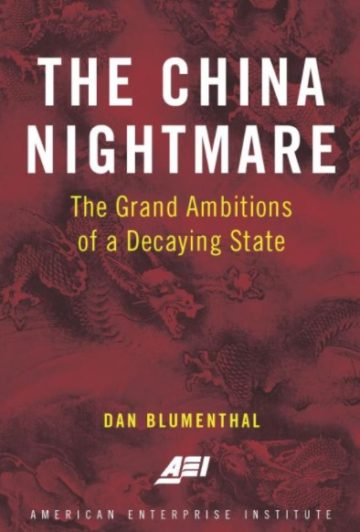
Dan Blumenthal is a senior fellow at the American Enterprise Institute, where he focuses on East Asian security issues and Sino-American relations. Mr. Blumenthal has served in and advised the US government on China issues for more than a decade.
-
Stan McChrystal
McChrystal Group
×Stan McChrystal
McChrystal Group
Gen. McChrystal is the former commander of US and International Security Assistance Forces Afghanistan and the nation’s premier military counter-terrorism force, Joint Special Operations Command. He is best known for developing and implementing a comprehensive counterinsurgency strategy in Afghanistan, and for creating a cohesive counter-terrorism organization that revolutionized the interagency operating culture.
-
H. R. McMaster
Hoover Institution
×H. R. McMaster
Hoover Institution
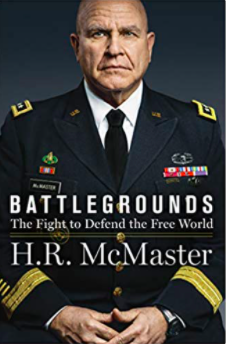
H. R. McMaster is the Fouad and Michelle Ajami Senior Fellow at the Hoover Institution, Stanford University. Previously, he served as the 26th assistant to the president for National Security Affairs and as a commissioned officer in the United States Army for 34 years before retiring as a Lieutenant General. He is author of Battlegrounds: The Fight to Defend the Free World.
-
Michael Nagata
CACI
×Michael Nagata
CACI
Michael K. Nagata is a Senior Vice President and Strategic Advisor for CACI International, and also owns and operates Hanada Bridge LLC, a national security and counterterrorism consulting firm. Retiring from the US Army in 2019 after 38 years of active duty in the US Army, with 34 years in US Special Operations, his final assignment was Director of Strategic Operational Planning for the National Counterterrorism Center.
-
David H. Petraeus
KKR Institute
×David H. Petraeus
KKR Institute
General (Ret) David H. Petraeus is Chairman of the KKR Global Institute. Prior to joining KKR, Gen. Petraeus served over 37 years in the U.S. military, culminating his career with six consecutive commands, five of which were in combat, including command of coalition forces during the Surge in Iraq, command of U.S. Central Command, and command of coalition forces in Afghanistan.
-
Mick Ryan
CSIS
×Mick Ryan
CSIS
Mick Ryan is a retired major general in the Australian Army. He is now an adjunct fellow at the Center for Strategic and International Studies in Washington DC, and a non-resident fellow of the Lowy Institute in Sydney. In January 2023 Mick was also appointed as an Adjunct Professor at the University of Queensland in Brisbane, Australia.
Download the Full Syllabus
Preview the Syllabus by Week/Session
Week I
Lesson 1: Language and Logic of War
Purpose
Gain foundational knowledge vital for the remainder of the course, including the levels of war framework.
Objectives:
- How are militaries organized? What frameworks help us study war? How do you read a military map?
-
- Learn the levels of war
- Learn how military forces are organized and echeloned
- Learn the basic vocabulary needed to discuss war and military operations
- Understand how to read military maps and symbols
Readings:
- Kagan Readings (Reading Packet)
- U.S. Department of Defense, Ch. 1, “Theory and Foundations,” Joint Publication 1, Doctrine for the Armed Forces of the United States
- U.S. Department of the Army, Army Field Manual 1-02, Operational Terms and Graphics
- Definitions of tactical terms, pp. 15ff
- Tactical mission graphics, Appendix A-1, p. 435ff
- All of the maps under the Austerlitz (1805) Campaign section
Videos:
- Reading a Topographical Map
- Military Symbols
Lesson 2: One Napoleonic Battle: Austerlitz
Purpose:
Apply the terms and concepts you learned in lesson 1 to the study of a particular campaign.
Objectives:
- Understand the the Austerlitz Campaign of 1805
-
- Learn how to read military operational history with maps
- Learn how to evaluate a campaign
- How did each actor understand the situation at the start of the period covered by the reading? How accurate were their respective pictures?
- What assumptions did each actor make about what the others would do and his own capabilities?
- What plans did each actor make to achieve his objectives based on that understanding?
- Were the plans good? What would that mean?
- How well did each actor execute his plans?
- How well did each actor adjust his understanding of the situation both to new information and to changes in the situation itself?
- Why did Napoleon win? Why did the coalition lose?
- How did political, diplomatic, and inter-personal considerations affect the conduct of military operations?
- What lessons should each actor (including Napoleon) have drawn from this campaign?
- Which actor was best (and which was worst) at each level of war from strategic to tactical? Bring evidence to bear!
- How did each side try to shape the other’s perceptions of the situation and its own intentions? Which was more successful? Why?
Readings:
- David G. Chandler, Austerlitz 1805: Battle of Three Emperors (London: Osprey Publishing, Ltd., 1990), pp. 6–20
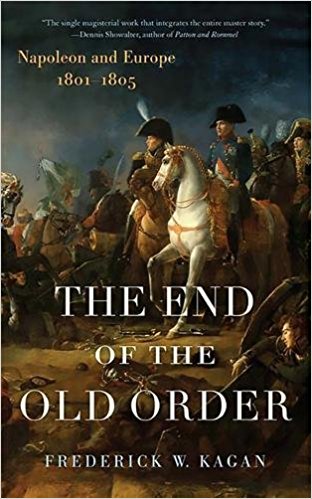
- Frederick W. Kagan, Chs. 17–18, 21–23, The End of the Old Order: Napoleon and Europe, 1801–1805 (Cambridge, MA, MA: De Capo Press, 2008)
Videos:
Lesson 3: Battle of Gettysburg
👁 Image
General (Ret.) John R. Allen


General (Ret.) Allen is a retired U.S. Marine Corps four-star general and former commander of the NATO International Security Assistance Force, and U.S. Forces in Afghanistan. Following his retirement, Allen served as advisor to the secretary of defense on Middle East Security and appointed as special presidential envoy to the Global Coalition to Counter ISIL by President Barack Obama. Allen is also the co-author of the book Turning Point: Policymaking in the Era of Artificial Intelligence.
Purpose:
War in reality vs. war on paper: visualize a battlefield, a campaign, and a war.
Objectives:
- Apply lesson one and two framework to the Gettysburg campaign; focus on visualizing battles on terrain
-
- Understand how to “see” terrain using military cartography
- Understand how terrain affects combat in particular technological and doctrinal circumstances
- Understand how the operational level of war interacts with tactical decision-making before and during combat
- Understand how strategic considerations shape tactical decision-making
- Understand the moral and ethical consequences of military decision-making
- Understand how some military theorists and practitioners interpreted and implemented Napoleonic warfare
Readings:
- Stephen Sears, Chs. 1–2, Gettysburg (New York: Mariner Books Reprint, 2004)
- James McPherson, Chapter 21, Battle Cry of Freedom (Oxford: Oxford University Press, 1988)
- Excerpts from Mark Grimsley and Brooks Simpson, Gettysburg, A Battlefield Guide (Lincoln, NE: Bison Books, 1999)
- Gettysburg Campaign Maps
Videos:
- Ronald F. Maxwell, director, Gettysburg (1993)
- Understanding Gettysburg
- Decision-Making & Levels of War
Lesson 4: Clausewitz (Friction, Contrasting Superficial With Substantive Understandings of War); Chaos and War
Purpose:
Learn an additional language to describe military operations and theory, and evaluate the utility of that language in understanding traditional military theory.
Objectives:
- What is war? What should a theory of war achieve? Can it forecast an outcome?
- Read Clausewitz Books I and 8 and discuss the questions above
- Learn the basic concepts of nonlinearity, complexity, and chaos theory in the scientific/mathematical context from which they arose
- Evaluate the validity of applying those concepts to the understanding of On War
Readings:
Block 1: Chaos Theory, Clausewitz, and Moltke
- Azar Gat, Ch. 6, “The Reaction against the Enlightenment,” A History of Military Thought from the Enlightenment to the Cold War, pp. 141–57
- This section situates Clausewitz in the context of the Counter-Enlightenment or German Movement and introduces some of the philosophical trends and ideas we talk about in class.
- Clausewitz, On War (Book I, Chapters 1–8, Book II, Chapters 5–6), pp.75–123 and 156–74
- This is the core Clausewitz theory and the portion of the book that best represents his finished thought. Read it extremely closely. Look at the various analogies and metaphors he uses. Pay attention to the “extremes” and reflect on what he means by the concept of an extreme. You may find it useful to look at http://csmt.uchicago.edu/glossary2004/dialectic.htm if you are not familiar with the philosophical concept of the dialectic.
- Hajo Holborn, “The Prusso-German School: Moltke and the Rise of the General Staff,” in Makers of Modern Strategy, pp. 281–95
- This is a brief and brilliant essay on a phenomenally complex personality. The interplay between Moltke and Clausewitz requires careful examination. Reflect on the ways in which Moltke is a true Clausewitzian—and the ways in which he clearly is not. The following short excerpt from Moltke’s writings may help clarify.
- Optional: Vanya Eftimova Bellinger, Chs. 5, 9, and 11, Marie von Clausewitz: The Woman behind the Making of On War
Block 2: Chaos, Nonlinearity, and Complexity
- Alan Beyerchen, “Clausewitz, Nonlinearity and the Unpredictability of War,” in Thomas J. Czerwinski, Coping with the Bounds: A Neo-Clausewitzian Primer
- This is another, more detailed and broader, exposition of chaos theory, now with explicit reference to war, military theory, and, especially, Clausewitz. It specifically addresses On War, Book 1, Chapter 1, which is assigned for the next block of this lesson. You may want to read that first, or at least have it handy when reading the Beyerchen.
- Edward Lorenz, Chs. 1 and 4, The Essence of Chaos (Seattle, WA: Univ. of Washington Press, 2008) (Focus on the section that starts with “Searching” subhead and read until the end of the chapter).
- Lorenz was a meteorologist who made some of the most important intellectual breakthroughs in the formation of chaos theory as a mathematical discipline. This reading has nothing to do with war in principle, but, rather, describes what was at the time a new way of looking at aspects of the world that had been supposed previously to be rule-bound and predictable
Lesson 5: Politics and War: Clausewitz vs. Moltke
Purpose:
Reflect upon the correct relationship between military operations and high politics (or policy) in order to decide whether you believe that Clausewitz or Moltke had it right.
Objectives:
- How much can and should a political leader intervene in military operations?
- Understand Clausewitz’s views on the relationship between politics (policy) and military operations at every level. Are his views coherent or contradictory?
- Evaluate Moltke’s portrayal of Clausewitz’s views (consider both the Moltke reading and the footnote in On War noted below). Did Moltke get it right?
- Why was this dispute of such moment to Moltke? (Look to the Craig reading for this.)
- Was Moltke wrong, or had Clausewitz simply failed to foresee the kind of challenge Moltke faced?
- What does it mean to have a “system of war” or “war as a system?”
- Explore the utility of reading the work of Helmuth von Moltke the Elder through the prism of nonlinearity, complexity, and chaos theory
Readings:
Block 1: Clausewitz on Politics and War
- Clausewitz, On War, pp. 61–71
- Notes by Clausewitz and his wife regarding the nature of the composition and the manner of its publication. This is extremely important front-matter. You need to understand how On War took the final form that it did and what aspects of it best reflected Clausewitz’s most advanced thinking.
- Re-read Clausewitz, Chs. 1 and 2, On War, pp. 75–99, Book I
- Seriously, re-read them. There is no amount of re-reading of On War that will cease to be of interest.
- Clausewitz, Book VIII, Ch. 6, Part B, On War, pp. 605–10
- Especially see the note on p. 608 (This is short and vital—especially the footnote. We say again: READ THE FOOTNOTE!)
Block 2: Moltke and Clausewitz
- Clausewitz, Carl von Clausewitz: Two Letters on Strategy, pp. 13–21
- A portion of Clausewitz’s letter to Roeder, December 22, 1827 (This is an obscure, rarely discussed exposition of Clausewitz’s thoughts, particularly relating to the topic of this lesson. Your understanding of the Clausewitzian understanding of the relationship between war and politics [and therefore of that question itself] is apt to be partial if you don’t read this letter.)
- Gordon A. Craig, The Politics of the Prussian Army, 1640–1945, pp. 180–92
- An important brief overview of the history in question.
- Helmuth von Moltke, “War and Politics,” Moltke on the Art of War: Selected Writings, ed. Daniel J. Hughes, pp. 35–6
- Helmuth von Moltke, “On Strategy, 1871,” in Moltke on the Art of War, pp. 44–47
Lesson 6: Maj. Gen. (Ret.) Mick Ryan | Railroads and Rifles
👁 Image
Major General (Ret.) Mick Ryan


Mick Ryan is a retired major general in the Australian Army. He is now an adjunct fellow at the Center for Strategic and International Studies in Washington DC, and a non-resident fellow of the Lowy Institute in Sydney. In January 2023 Mick was also appointed as an Adjunct Professor at the University of Queensland in Brisbane, Australia.
Purpose:
Understand how changes in technology generated (required) transformations in military organization, doctrine, and theory.
Objectives:
How does a revolutionary new technology change the conduct of war? And how does any large organization adopt a revolutionary new technology?
Readings:
- Dennis Showalter, Railroads and Rifles, Part One (Railroads), pp. 19–72
- This is a long, intricate history of a period you are not likely familiar with at all. But you have already read about Moltke—who he was, where he came from, and what he did—and you have read some of his own writing. You have also read a lot about the Napoleonic Wars and, particularly, the different lessons contemporaries drew from them. This reading should help you reflect on the challenges and opportunities offered to military theorists and practitioners by changing technology. How can one tell if a new technology might revolutionize warfare? How can one guess about how to use that technology to do so? How do military requirements interact with economic needs to shape the evolution of both military and civilian technology? What role do individuals play in generating disjunctive change?
- Gen. Gordon R. Sullivan and Col. James M. Dubik, Envisioning Future Warfare, 1995
- James M. Dubik, The Army’s Twofer: The Dual Role of the Interim Force, October 2001
- Gen (Ret) Gordon Sullivan and Col (Ret) Michael Harper, Hope is Not a Method, pp. 9–21, 39–42, 49-54, 77–82, 147–49, 155–71, 182–87, and 236–41
- Mick Ryan, War Transformed (Annapolis, MD; Naval Institute Press, 2022)
Lesson 7: General (Ret.) David Petraeus | Schlieffen to Stalemate
👁 Image
General David H. Petraeus


General (Ret.) David H. Petraeus currently serves as the Chairman of the KKR Global Institute at Kohlberg Kravis Roberts & Co. L.P. He previously served as Director of the Central Intelligence Agency from September 2011 to November 2012. Prior to that, he commanded the United States Central Command from October 2008 to July 2011. He relinquished command of the Multi-National Force-Iraq after over 19 months at the helm of the Coalition force in Iraq.
Previous to his tour as MNF-I Commander, he commanded the U.S. Army Combined Arms Center and Fort Leavenworth. Before that assignment, he was the first commander of the Multi-national Security Transition Command-Iraq, which he led from June 2004 to September 2005, and the NATO Training Mission-Iraq, which he commanded from October 2004 to September 2005. That deployment to Iraq followed his command of the 101st Airborne Division (Air Assault), during which he led the “Screaming Eagles” in combat throughout the first year of Operation Iraqi Freedom. His command of the 101st followed a year deployed on Operation Joint Forge in Bosnia, where he was the Assistant Chief of Staff for Operations of the NATO Stabilization Force and the Deputy Commander of the US Joint Interagency Counter-Terrorism Task Force-Bosnia. Prior to his tour in Bosnia, he spent two years at Fort Bragg, North Carolina, serving first as the Assistant Division Commander for Operations of the 82nd Airborne Division and then as the Chief of Staff of XVIII Airborne Corps.
Purpose:
- Decide which of the following are true:
- Trench warfare stalemate resulted from the stupidity of generals
- Stalemate was the inevitable result of the military technology of the time
- The German attack in 1914 failed because of Moltke’s changes to Schlieffen’s plan
- The 1914 attack failed because Schlieffen designed it mechanistically and in disregard of Moltke’s dictum that no plan survives first contact with the enemy
- The attack failed because Schlieffen sought Napoleonic-style decisive victories in an era in which they were no longer possible
- Why did the war stalemate on the Western Front?
- How did the various actors try to overcome the stalemate?
Readings:
- Terence Zuber, “1920: Kuhl Reveals the Schlieffen Plan,” German War Planning, 1891–1914, pp. 265–71
- Gunther Rothenberg, “Moltke, Schlieffen, and the Doctrine of Strategic Envelopment,” in Makers of Modern Strategy, pp. 296–325
- Another brilliant essay from one of the best compilations of writings about war ever produced. Pay careful attention—there are TWO Helmuth von Moltkes. You have been reading about Helmuth von Moltke the Elder, who introduced railway mobilization and the general staff system to the Prussian Army and led that army through the Wars of German Unification. Now you’ll meet his nephew, Helmuth von Moltke the Younger, who will occupy his uncle’s position as Germany approaches and enters World War I. Use this essay to reflect on all of the theoretical and practical debates swirling between Clausewitz, Moltke the Elder, Jomini, and Schlieffen about the nature of war as art, science, or a hybrid.
- James L. Stokesbury, A Short History of World War I, pp. 22–56 (through the First Marne). Recommended as overview; not required—but make sure you understand what happened in 1914 through the First Battle of the Marne.
- Terence Zuber, “The ‘Schlieffen’ Plan,” German War Planning, 1891–1914, pp. 187–204 (Read closely and with a map).
- This is the closest we can get to the “Schlieffen Plan,” which was destroyed along with most of the documents relating to Germany’s pre- war planning in a vain attempt to absolve Germany of responsibility for the war. This is NOT the actual plan, however. It is a concept of operations, and a preliminary one. Understand how it was supposed to work. Try to identify logical gaps and potential problems within this document. Then reflect on how much Moltke the Younger was to blame for the “failure” of the “Schlieffen Plan.” Finally, think about what this debate says about the nature of war.
- Timothy Lupfer, The Dynamics of Doctrine: The Changes in German Tactical Doctrine During the First World War, Combat Studies Institute, Fort Leavenworth, Kansas, 1981.
- This is the only reading this lesson that describes the nature and challenges of trench warfare— understanding that is more important than mastering the details of infiltration tactics.
Videos:
Week II
Lesson 8: Armored Warfare and Operational Art
Purpose:
Understand the evolution of operational art as a distinct branch of military theory and practice.
Objectives:
Learning from success and failure: How did the combatants of WWI try to envision the next war and adapt their forces to fight it?
Readings:
“Coping with Trench-Warfare Stalemate”
This block is absolutely pivotal for understanding the evolution of armored warfare, so do not skip it. Make sure that you read the Lupfer without fail. If we do not get to it today, then skim to refresh your memory on it during the reading day tomorrow so that you have it in your mind after reading day.
- David Glantz, Chs. 2, 4, and 5, “The Nature of Operational Art,” “The Formative Years of Soviet Operational Art,” and “The Great Patriotic War and the Maturation of Operational,” Soviet Military Operational Art: In Pursuit of Deep Battle, (New York: Frank Cass, 1991)
- Make sure you get to this reading. The Germans took armored warfare and operational art one way—the Soviets took it somewhere rather different. Make sure you can sense the differences.
- J. F. C. Fuller, “The Application of Recent Developments In Mechanics And Other Scientific Knowledge To Preparation And Training For Future War On Land,” Gold Medal (Military) Prize Essay in the Journal of the Royal United Services Institute, 1919
- J. F. C. Fuller, “Plan 1919”
- Michael Geyer, Ch. 19, “German Strategy in the Age of Machine Warfare, 1914–1945,” in Makers of Modern Strategy
- Robert M. Citino, Quest for Decisive Victory: From Stalemate to Blitzkrieg in Europe, 1899–1940
- Second half of Ch. 6, “The Interwar Years,” pp. 193–213 (from “Germany: Doctrine and Developments) as well as Ch. 8, “Operational Art Reborn,” pp. 251–83
- Robert Doughty, Chs. 1, 5, and Conclusion, The Seeds of Disaster: The Development of French Army Doctrine, 1919–39
Videos:
Lesson 9: Airpower & U.S. Conventional Warfare
Morning
Purpose:
Understand the terms and concepts of air power theory as it evolved from early in the 20th century to the present.
Objectives:
The search for a silver bullet: Can we fight by air alone?
- Understand the rationale for seeing airpower as fundamentally revolutionary in the first half of the 20th century
- Evaluate the nature of the debate over the right relationship between airpower and other forms of military power in that time
- Master the concept of “center of gravity” as it is used in the context of airpower theory
- Compare and contrast the airpower view of the enemy (and how to operate against him) with the view presented by operational art theory
- Consider both operational art and airpower theory in the context of nonlinearity, complexity, and chaos theory.
Readings:
- David Deptula, “Defining Rapid Decisive Operations: Parallel Warfare,” in Effects Based Operations: Changes in the Nature of War, pp. 3–7
- David MacIsaac, Ch. 21, “Voices from the Central Blue: The Air Power Theorists,” in Makers of Modern Strategy, pp. 624–47.
- John Warden, The Air Campaign (entire)
- This is a long reading, but students should focus on Chs. 1, 2, 10, and “The Air Campaign in Retrospect.”
- NOT REQUIRED BUT FOR YOUR FUTURE EXPLORATION: John F. Boyd’s briefings are available at https://www.airuniversity.af.edu/Portals/10/AUPress/Books/B_0151_Boyd_Discourse_Winning_Losing.PDF
- These readings are seminal works shaping the evolution of American airpower theory—and, thus, of the world’s airpower theory. The required papers are:
- 5 – Abstract
- 42 – Pattern
- 43 – The Strategic Game of ? and ?
- 45 – Winning and losing
- These readings are seminal works shaping the evolution of American airpower theory—and, thus, of the world’s airpower theory. The required papers are:
Videos:
- Victory Through Air Power: Animated History of Aviation (1942)
- Airpower in WWI
- Tactical and Strategic Power in WWII
- Airpower in the Korean War
- Airpower in Vietnam
Afternoon
Purpose:
The wars we want to fight: how the U.S. prepared for, won, and learned from the Gulf War.
Objectives:
- Understand the American theory and practice of conventional warfare at the end of the 20th
- Examine different approaches to the problem of designing military doctrine based on observation of contemporary wars and the study of adversary intentions and theory.
- Evaluate competing explanations for the outcome of the first Gulf War and their implications for the future of American war-fighting.
- Consider the continuities and discontinuities of warfare over many changes in technology throughout the 20th
- Evaluate the nature of the debate over the right relationship between airpower and other forms of military power
- Contrast the experience of the Gulf War with the other U.S. military deployments of the 1990s
Readings:
- Douglas W. Skinner, Airland Battle Doctrine, September 1998
- John Warden, Epilogue, The Air Campaign
- Thomas A. Keaney and Eliot A. Cohen, Summary Report, pp. 1–27, (“What happened?”), and 235–53 (“Was Desert Storm a Revolution in Warfare?”), Gulf War Air Power Survey
- Stephen Biddle, “Victory Misunderstood: What the Gulf War Tells Us about the Future of Conflict,” 1996
- H.R. McMaster, “Eagle Troop, Second Squadron, Second Armored Cavalry Regiment,” The Bridge, February 26, 2016
- H.R. McMaster, “What We Learned: from the Battle of 73 Easting”
- Stephen D. Biddle, Commentary on “Victory Misunderstood
- Max Boot, Chs. 14 and 16 (“In the Shadow of Vietnam” and “In Defense of Pax Americana”), The Savage Wars of Peace
Videos:
Lesson 10: General (Ret.) Stanley McChrystal | U.S. Unconventional Warfare - Iraq
Morning
👁 Image
General (Ret.) Stanley McChrystal


Gen. McChrystal is the former commander of US and International Security Assistance Forces Afghanistan and the nation’s premier military counter-terrorism force, Joint Special Operations Command. He is best known for developing and implementing a comprehensive counterinsurgency strategy in Afghanistan, and for creating a cohesive counter-terrorism organization that revolutionized the interagency operating culture.
Reading:
- Stanley McChrystal, My Share of the Task, pp. 89–263
- Students should begin this reading, focusing on the narrative of the creation of the Joint Special Operations Task Force and reflecting on how the principles embodied in that organization reflect the theories and history articulated in other lessons.
Afternoon
Purpose:
Learn about the two decades of war post-9/11
Objectives:
- Understand why the Iraq War became an insurgency and how the US recognized and adapted to the insurgency overtime.
- Understand core elements of the US counterinsurgency approach.
Reading:
- Kimberly Kagan, The Surge
- Read: Intro, Chs 1-2, Chs 4-5, Ch 7, Conclusion
- Skim: Ch 3, Ch 6
- Army FM 2-24: Counterinsurgency (2006) [Ch 1; skim remainder]
- H.R. McMaster, “The Human Element,” World Affairs
- H.R. McMaster, “Assessment of the Counterinsurgency Effort in Iraq” (October 2003)
- George Packer, “The Lessons of Tel Afar,” The New Yorker, April 3, 2006
Lesson 11: Lt. Gen. (Ret.) H.R. McMaster | Russia-Ukraine War
👁 Image
LTG (Ret.) H.R. McMaster

LTG McMaster served as a commissioned officer in the United States Army for thirty-four years before retiring as a Lieutenant General in June 2018. From 2014 to 2017 McMaster designed the future army as the director of the Army Capabilities Integration Center and the deputy commanding general of the US Army Training and Doctrine Command (TRADOC). As commanding general of the Maneuver Center of Excellence at Fort Benning, he oversaw all training and education for the army’s infantry, armor, and cavalry force. Most recently, McMaster published, “Battlegrounds: The Fight to Defend the Free World.”
Afternoon
Purpose:
Understand modern Russian military thinking with a focus on its differences from US/NATO mechanized warfare and the ongoing war in Ukraine
Objectives:
- How does the Russian military system differ from NATO and Ukraine? What are the strengths and weaknesses of that system?
- How have Russian military capabilities evolved since the beginning of the full-scale invasion of Ukraine? To what degree are changes in Russian capabilities driven by the character of the war in Ukraine versus the culture and processes of the Russian military?
- What Russian weaknesses could Ukrainian forces exploit? What does Ukraine require in order to take advantage of those Russian weaknesses?
Reading:
- Frederick W. Kagan and Kimberly Kagan with Mason Clark, Karolina Hird, Nataliya Bugayova, Kateryna Stepanenko, and George Barros, “Ukraine and the Problem of Restoring Maneuver in Contemporary War,” Institute for the Study of War, August 2024
- Charles Bartles, “Foreword – How to Evaluate the Modernized Russian Military’s Performance in Ukraine,” Jamestown Foundation, April 22, 2022
- Michael Kofman and Rob Lee, “Not Built for Purpose: The Russian Military’s Ill-Fated Force-Design,” War on the Rocks, June 2, 2022
- Amos C. Fox, “Reflections on Russia’s 2022 Invasion of Ukraine: Combined Arms Warfare, The Battalion Tactical Group and Wars in a Fishbowl,” Association of the United States Army, September 29, 2022
- Kateryna Stepanenko, Karolina Hird, Grace Mappes, and Frederick W. Kagan, “Russian Offensive Campaign Assessment, September 11 [Ukrainian counteroffensive in Kharkiv Oblast],” Institute for the Study of War, September 11, 2022 [topline only]
- Karolina Hird, Grace Mappes, Kateryna Stepanenko, Madison Williams, Yekaterina Klepanchuk, Nicholas Carl, and Mason Clark, “Russian Offensive Campaign Assessment, November 9 [Russia Withdraws across Dnipro River],” Institute for the Study of War, November 9, 2022 [topline only]
- Riley Bailey and Kateryna Stepanenko, “Russian Offensive Campaign Assessment, April 30, 2023 [Russian Command Changes],” Institute for the Study of War, April 30, 2023 [topline only]
- Karolina Hird, “Russia’s Military Restructuring and Expansion Hindered by the Ukraine War,” Institute for the Study of War, November 12, 2023 [topline only]
- Riley Bailey and Frederick W. Kagan with Nicole Wolkov and Christina Harward, “The Russian Winter-Spring 2024 Offensive Operation on the Kharkiv-Luhansk Axis,” Institute for the Study of War, February 21, 2024 [topline only]
- Riley Bailey and Frederick W. Kagan, “How Delays in Western Aid Gave Russia the Initiative: From the Ukrainian Counteroffensive to Kharkiv,” Institute for the Study of War, May 22, 2024 [topline only]
- Riley Bailey, Christina Harward, et al, “Assessing the Significance of the Current Russian and Ukrainian Operations for the Course of the War,” Institute for the Study of War, August 17, 2024 [topline only]
- Angelica Evans, “The Ukrainian Defense of Pokrovsk Has Compelled Russia to Change its Approach in Eastern Ukraine,” Institute for the Study of War, November 17, 2024 [topline only]
- Christina Harward, Angelica Evans, et al. “Russian Offensive Campaign Assessment, November 19, 2024 [1,000th Day of the Russian Invasion of Ukraine],” Institute for the Study of War [topline only]
- Kateryna Stepanenko, “Russian Efforts to Centralize Drone Units May Degrade Russian Drone Operations,” Institute for the Study of War, December 13, 2024 [topline only]
- Angelica Evans, “Ukraine’s Kursk Incursion: Six Month Assessment,” Institute for the Study of War, February 6, 2025 [topline only]
- Grace Mappes, “Russia Has Failed to Break Ukraine,” Institute for the Study of War, February 24, 2025 [topline only]
- Angelica Evans, Christina Harward, et al. “Russian Offensive Campaign Assessment [Russian Rates of Advance and Likely Operational Planning in mid-2025],” Institute for the Study of War, July 14, 2025 [topline only]
- Mykhaylo Zabrodskyi, Jack Watling, Oleksandr V. Danylyuk, and Nick Reynolds, “Preliminary Lessons in Conventional Warfighting from Russia’s Invasion of Ukraine: February-July 2022,” Royal United Services Institute, November 30, 2022
- Dr Jack Watling and Nick Reynolds, “Meatgrinder: Russian Tactics in the Second Year of Its Invasion of Ukraine,” Royal United Services Institute, May 19, 2023
- Jack Watling and Nick Reynolds, “Stormbreak: Fighting Through Russian Defences in Ukraine’s 2023 Offensive,” Royal United Services Institute, September 2023
- Jack Watling, Oleksandr V. Danylyuk, and Nick Reynolds, “Preliminary Lessons from Ukraine’s Offensive Operations, 2022–23,” Royal United Services Institute, July 2024
- Michael Kofman, “Assessing Russian Military Adaptation in 2023,” Carnegie Endowment for International Peace, October 8, 2024
- Dr Jack Watling, Nick Reynolds, “Tactical Developments During the Third Year of the Russo–Ukrainian War,” Royal United Services Institute, February 14, 2025
- Nataliya Bugayova and Frederick W. Kagan with Kateryna Stepanenko, “Denying Russia’s Only Strategy for Success,” Institute for the Study of War, March 27, 2024
- Riley Bailey, Christina Harward, et al. “Russian Offensive Campaign Assessment, June 7, 2024 [Putin’s Theory of Victory],” Institute for the Study of War, June 7, 2024
Multimedia:
- Paul Sonne, Isabelle Khurshudyan, Serhiy Morgunov and Kostiantyn Khudov, “Battle for Kyiv: Ukrainian valor, Russian blunders combined to save the capital,” Washington Post, August 24, 2022
Lesson 12: The Changing Character of Warfare
Reading:
- Jack Watling, The Arms of the Future, (London, UK: Bloomsbury Academic, 2024), Intro, Chs 1, 11, 12, Conclusion
- Congressional Research Service, US Ballistic Missile Defense
- Stefan Soesanto, “The Ukrainian Way of Digital Warfighting,” Center for Security Studies, July 2024
- Nicole Wolkov, “Special Edition Campaign Assessment: Ukraine’s Strike Campaign Against Crimea,” Institute for the Study of War, October 8, 2023
- Katya Stepanenko, “Centralizing Drone Units,” Institute for the Study of War, December 13, 2024
- Nicole Wolkov, Daniel Mealie, Kateryna Stepanenko, “Ukrainian Strikes Have Changed Russian Naval Operations in the Black,” Institute for the Study of War, December 16, 2025
- Nicole Wolkov, Christina Harward, Grace Mappes, George Barros, “Russian Offensive Campaign Assessment, February 3, 2025,” Institute for the Study of War, February 3, 2025
- Christina Harward, Olivia Gibson, Anna Harvey, Grace Mappes, and George Barros with Nate Trotter, “Russian Offensive Campaign Assessment, April 22, 2025,” Institute for the Study of War, April 22, 2025
- Katya Stepanenko, “The Battlefield AI Revolution Is Not Here Yet: The Status of Current Russian and Ukrainian AI Drone Efforts,” Institute for the Study of War, June 6, 2025
- Kateryna Stepanenko, Tetiana Trach, Olivia Gibson, and Jessica Sobieski, “Russian Force Generation and Technological Adaptations Update June 11, 2025,” Institute for the Study of War, June 11, 2025
- Kateryna Stepanenko, Nate Trotter, Christina Harward, Tetiana Trach, Jennie Olmsted, Olivia Gibson, and George Barros, “Russian Force Generation and Technological Adaptations Update June 27, 2025,” Institute for the Study of War, June 27, 2025
- Olivia Gibson, Jennie Olmsted, Jessica Sobieski, Anna Harvey, Christina Harward, and Frederick W. Kagan with Nate Trotter, “Russian Offensive Campaign Assessment, July 6, 2025,” Institute for the Study of War, July 6, 2025
- Angelica Evans, Christina Harward, Anna Harvey, Jennie Olmsted, Olivia Gibson, and Frederick W. Kagan, “Russian Offensive Campaign Assessment, July 7, 2025,” Institute for the Study of War, July 7, 2025
- Anna Harvey, Jessica Sobieski, Christina Harward, Grace Mappes, and Karolina Hird, “Russian Offensive Campaign Assessment, July 9, 2025,” Institute for the Study of War, July 9, 2025
- Christina Harward, Grace Mappes, Daria Novikov, Jennie Olmsted, Olivia Gibson, Jessica Sobieski, and Karolina Hird, “Russian Offensive Campaign Assessment, July 10, 2025,” Institute for the Study of War, July 10, 2025
- Brian Carter and Frederick W. Kagan, “Iran’s Attempt to Hit Israel with a Russian-Style Strike Package Failed…For Now,” Institute for the Study of War, April 14, 2024
- Jamie Dettmer, “How Israel foiled Iran’s attack,” Politico, April 14, 2024.
- David S. Cloud, “How The US Forged A Fragile Middle Eastern Alliance to Repel Iran’s Israel Attack,” The Wall Street Journal, April 15, 2024
- Alexandra Braverman, Annika Ganzeveld, Kelly Campa, Carolyn Moorman, Siddhant Kishore, Katherine Wells, Ria Reddy, Johanna Moore, and Brian Carter, “Iran Update, October 1, 2024,” Institute for the Study of War, October 1, 2024
- Ria Reddy, Ben Rezaei, Johanna Moore, Annika Ganzeveld, and Brian Carter, “Iran Update Special Edition: Israeli Strikes on Iran, June 12, 2025,” Institute for the Study of War, June 12, 2025
- Andie Parry, Nicholas Carl, and Annika Ganzeveld, “Iran Update Special Edition: Israeli Strikes on Iran, June 13, 2025,” Institute for the Study of War, June 13, 2025
- Ben Rezaei, Ria Reddy, Kelly Campa, Avery Borens, Johanna Moore, Nidal Morrison, Nicholas Carl, Andie Parry, Annika Ganzeveld, and Brian Carter, “Iran Update Special Edition: Israeli Strikes on Iran, June 13, 2025, 2:00 PM ET,” Institute for the Study of War, June 13, 2025
- Benjamin Jense, “Ungentlemanly Robots: Israel’s Operation Rising Lion and the New Way of War,” Center for Strategic & International Studies, June 13, 2025
- Avery Borens, Ben Schmida, Ben Rezaei, Ria Reddy, Kelly Campa, Johanna Moore, Carolyn Moorman, Andie Parry and Brian Carter, “Iran Update Special Report, June 24, 2025, Evening Edition,” Institute for the Study of War, June 24, 2025
Multimedia:
- LTG Alexus Grynkewich, CNAS, Virtual Mission Brief: Innovation and Experimentation: A New Approach for the US Airforce in the Middle East
- ISW Interactive Map of Russian Military Objects within Range of ATACMs
- Missile Defense Agency DoD
- Drone videos
- Missiles Threat, “Missiles of Iran,” Center for Strategic & International Studies, August 10, 2021
- Missiles Threat, “Missiles of Israel,” Center for Strategic & International Studies, August 10, 2021
Lesson 13: China
👁 Image
Dan Blumenthal


Dan Blumenthal is the Director of Asian Studies at the American Enterprise Institute, where he focuses on East Asian security issues and Sino-American relations. Mr. Blumenthal has both served in and advised the U.S. government on China issues for over a decade.
From 2001 to 2004, he served as senior director for China, Taiwan, and Mongolia at the Department of Defense. Additionally, he served as a commissioner on the congressionally-mandated U.S.-China Economic and Security Review Commission since 2006-2012, and held the position of vice chairman in 2007. He has also served on the Academic Advisory Board of the congressional U.S.-China Working Group. Mr. Blumenthal is the coauthor of An Awkward Embrace: The United States and China in the 21st Century (AEI Press, November 2012).
He holds a B.A. from Washington University, an M.A. from the School of Advanced International Studies at Johns Hopkins University, and a J.D. from Duke Law School.
Purpose:
Understand how state adversaries have attempted to circumvent U.S. conventional superiority.
Objectives:
- What are the central ideas of Chinese military strategy? How does China’s way of war compare to that of other countries you have studied?
- How has China’s military strategy changed since the introduction of the 1993 Military Strategic Guidelines? What geopolitical conditions had the greatest impact on this strategic change?
Readings:
- Historical
- Paul Godwin, “Change and Continuity in Chinese Military Doctrine, 1949-1999,” Chinese Warfighting: The PLA Experience since 1949 (Abingdon, UK: Routledge, 2003)
- M. Taylor Fravel, Chs. 2 and 5, Active Defense: China’s Military Strategy Since 1949 (Princeton, NJ: Princeton University Press, 2019)
- C.M. Paine, “Mao Zedong and Strategies of Nested War,” in The New Makers of Modern Strategy (Princeton, NJ: Princeton University Press, 2023)
- Andrew Scobell, Chs. 4 and 6,China’s Use of Military Force: Beyond the Great Wall and the Long March (Cambridge, UK: Cambridge University Press, 2003)
- [RECOMMENDED]: Larry Wortzel, “China’s Foreign Conflicts since 1949,” in A Military History of China (Louisville, Kentucky: University of Kentucky Press, 2012)
- Modernization/Modern Way of War
- M. Taylor Fravel, Ch. 6, Active Defense: China’s Military Strategy Since 1949 (Princeton, NJ: Princeton University Press, 2019)
- Rush Doshi, Chs. 4 and 8, The Long Game (Oxford, UK: Oxford University Press, 2021)
- Roderick Lee and Marcus Clay, “Don’t Call it a Gray Zone: China’s Use-of-Force Spectrum,” War on the Rocks
- Dean Cheng “PLA Perspectives on Network Warfare in Informationized Local Wars,” US Congressional Testimony, February 17, 2022
- US Department of Defense, Military and Security Developments Involving the People’s Republic of China (2024)
- Taiwain
- Dan Blumenthal and Frederick W. Kagan, “China’s Three Roads to Controlling Taiwan,” AEI
- Riley Bailey and Frederick W. Kagan, “Defense of Taiwan with Ukrainian Characteristics: Lessons from the War in Ukraine for the Western Pacific,” Institute for the Study of War, October 30, 2024
- Andrew Krepinevich, “Archipelagic Defense 2.0,” Hudson Institute, September 2023
Further Discussion Questions:
- Historical
- What was Mao’s strategy for revolution? What effect did the transition from guerilla tactics/mobile warfare to maneuver operations have on PLA campaign operations in the three major campaigns of the Chinese Civil War?
- PRC Military Thinking Post-Korean War
- What is Active Defense? How does it differ from previous operational strategies used by the PLA? What impact might Active Defense have on the conduct of future wars?
- What do you see as the biggest changes in PLA strategy since the Chinese Civil War?
- Political Warfare
- What is the Chinese conception of political warfare? What impact has it had on Chinese strategy?
- Future
- What are the PLA strategies of informatization and intelligentization? What technological and strategic innovation would be necessary for the PLA to effectively enact either of these strategies in a future conflict?
- What new technologies do you think will have the biggest impact in a future war with China? How do you see China’s technological advancement impacting overall PLA force posture?
- China has not fought a war since 1979, and have thus closely studied the wars fought by other countries. What lessons from recent wars do you believe will have an impact on a potential future war over Taiwan?
Lesson 14: Thinking About the Future of War
👁 Image
General (Ret.) John R. Allen
General (Ret.) Allen is a retired U.S. Marine Corps four-star general and former commander of the NATO International Security Assistance Force, and U.S. Forces in Afghanistan. Following his retirement, Allen served as advisor to the secretary of defense on Middle East Security and appointed as special presidential envoy to the Global Coalition to Counter ISIL by President Barack Obama. Allen is also the co-author of the book Turning Point: Policymaking in the Era of Artificial Intelligence.
👁 Image
Lieutenant General (Ret.) Michael Nagata


Michael K. Nagata is a Senior Vice President and Strategic Advisor for CACI International, and also owns and operates Hanada Bridge LLC, a national security and counterterrorism consulting firm. Retiring from the US Army in 2019 after 38 years of active duty in the US Army, with 34 years in US Special Operations, his final assignment was Director of Strategic Operational Planning for the National Counterterrorism Center.
Purpose:
What have we learned?
Objectives:
- How can one intelligently speak about the future of war?
- What can the study of military history teach us?
- Key takeaways and conclusions.
Readings:
- H.R. McMaster, “The Pipe Dream of Easy War,” The New York Times, July 20, 2013
- Michael Howard, “The Use and Abuse of Military History,” Royal United Services Institution Journal 107:625 (1962)
- John Allen, Frederick Ben Hodges, Julian Lindley-French, Future War and the Defence of Europe (Oxford, England: Oxford University Press, 2021), “Scenario 1,” “Introduction,” “Could NATO (still) defend Europe?”, “Hyperwar: Europe’s digital and nuclear flanks,” and “Defending Europe”
- Olivia Gibson, Anna Harvey, Daria Novikov, Christina Harward, and Kateryna Stepanenko, “Russia Offensive Campaign Assessment,” Institute for the Study of War, June 1, 2025
- Anna Harvey, Daria Novikov, Angelica Evans, Grace Mappes, Jennie Olmsted, Jessica Sobieski, and George Barros with Nate Trotter and William Runkel, “Russia Offensive Campaign Assessment,” Institute for the Study of War, June 3, 2025
- Christina Harward, Anna Harvey, Grace Mappes, Daria Novikov, Jennie Olmsted, Jessica Sobieski, and Karolina Hird with Nate Trotter and William Runkel, “Russia Offensive Campaign Assessment,” Institute for the Study of War, June 4, 2025
- Mick Ryan, War Transformed (Annapolis, MD; Naval Institute Press, 2022) [review]
Advancement Opportunities
Advanced Programs
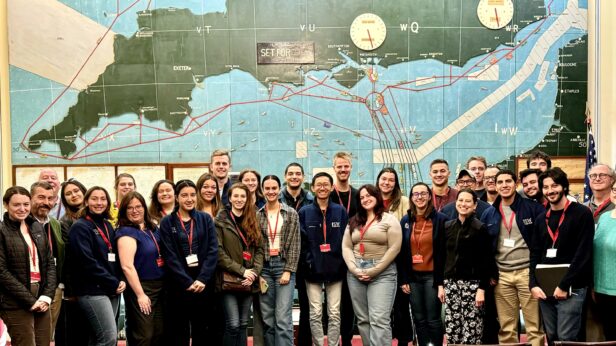
War Studies alumni have the opportunity to participate in advanced sessions. These sessions focus either on a national security challenge or on a historical conflict. Previous advanced seminars have focused on ISIS's ideology and vision and on the Eastern Front of World War II.
Fellowships
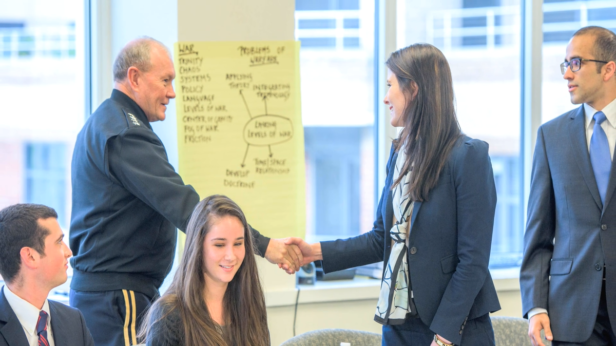
The Evans Hanson and War Studies Fellowships are designed to provide an opportunity for outstanding alumni of the War Studies Program to work as a research analyst at the Institute for the Study of War. The Fellowships seek to help build the next generation of national security leaders.
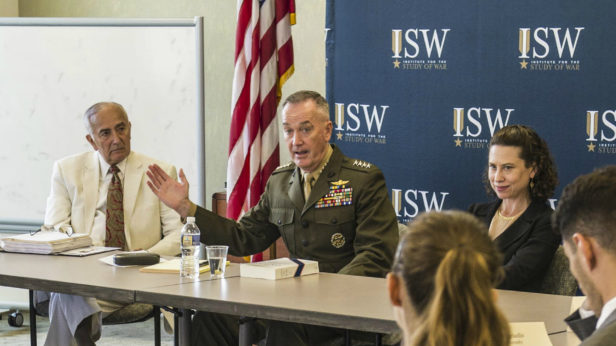
Internships & Employment Opportunities
Alumni of the War Studies Program are also able to take advantage of internship and employment opportunities at ISW. Interns work directly with analysts and have many opportunities to engage with Institute leadership on the subjects of their research. Learn more about interning with ISW.
Other Courses You Might Be Interested In

Geopolitics & Military History
Study the principles and complexities of geopolitics.
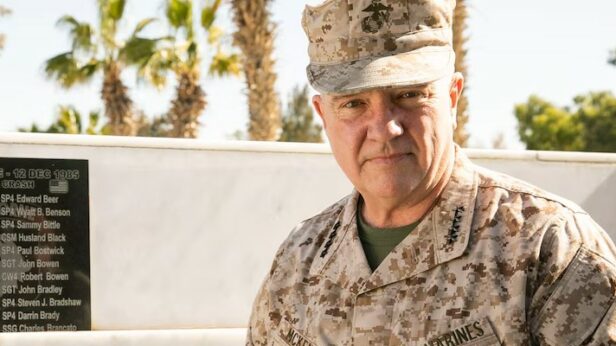
Generalship: High Command in War
Examine what it means to command at the very highest levels of war with a former CENTCOM commander.
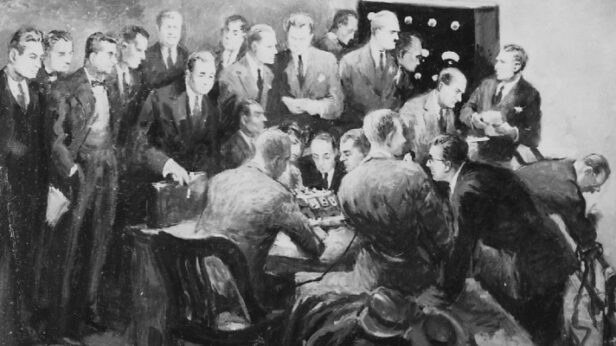
Richard Rhodes’ The Making of the Atomic Bomb
Read a history that's part biography of the scientists working at the advent of nuclear physics & part biography of the atom itself.
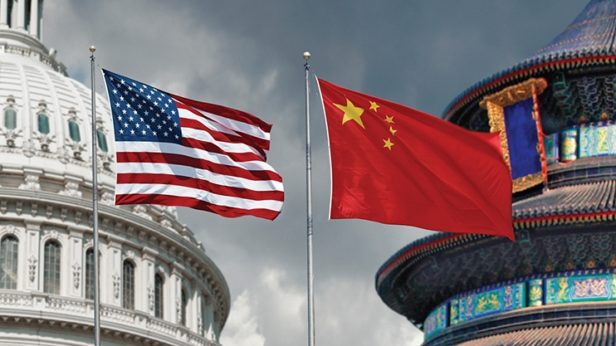
Debating U.S.-China Strategic Competition
Explore contemporary views on U.S.-China strategic competition alongside a variety of prominent instructors.
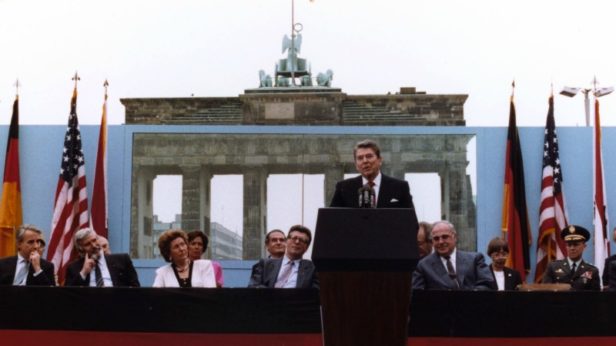
Lessons of the Cold War
Study Soviet and American grand strategic thinking in the early Cold War.
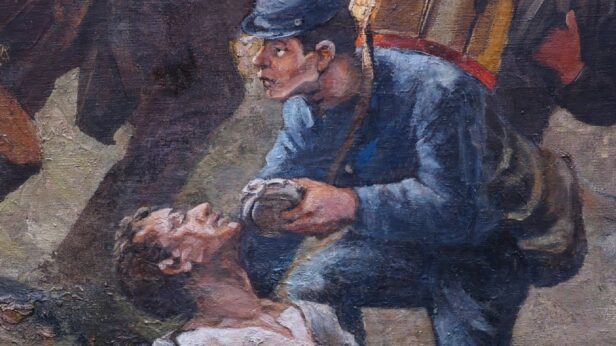
The Moral Landscape of War
Reflect on the morality of war’s central features: killing and risking life.

Darren Staloff
Darren Staloff is a retired Professor of History from the City College of New York and the Graduate Center of CUNY. Professor Staloff has published numerous papers and reviews on the subject of early American history.

Robert Barlett
Robert C. Bartlett is the Behrakis Professor of Hellenic Political Studies at Boston College. His principal area of research is classical political philosophy, with particular attention to the thinkers of ancient Hellas, including Thucydides, Plato, and Aristotle. He is the co-translator of a new edition of Aristotle’s Nicomachean Ethics.

Vickie Sullivan
Vickie Sullivan is the Cornelia M. Jackson Professor of Political Science and teaches and studies political thought and philosophy. She also maintains teaching and research interests in politics and literature. She has published extensively on Montesquieu and Machiavelli and is the co-editor of Shakespeare’s Political Pageant.
Daniel Blumenthal
Dan Blumenthal is a senior fellow at the American Enterprise Institute, where he focuses on East Asian security issues and Sino-American relations. Mr. Blumenthal has served in and advised the US government on China issues for more than a decade.
Aaron MacLean
Aaron MacLean is dean of Hertog Security Studies, national security analyst for CBS News, and the host of the School of War podcast. Previously, Mr. MacLean was senior foreign policy advisor and legislative director to Senator Tom Cotton (R-AR). He served on active duty as a United States Marine for seven years, deploying to Afghanistan as an infantry officer in 2009–10.
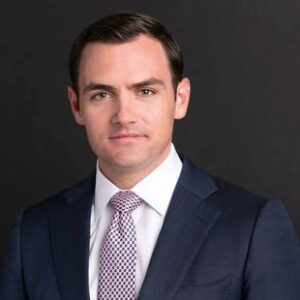
Mike Gallagher
Mike Gallagher served for four terms in the U.S. House of Representatives as Wisconsin’s 8th Congressional District representative. Previously, he served seven years on active duty in the U.S. Marine Corps, including two deployments to Iraq.

Gen. Kenneth F. McKenzie Jr.
Gen. Kenneth ‘Frank’ McKenzie Jr. is the former Commander of United States Central Command. He led a distinguished 42-year military career, commanding at multiple levels within the Marine Corps and serving on the Joint Staff. His leadership roles included commanding the First Battalion, Sixth Marines, and the 22nd MEU (SOC) during combat deployments to Afghanistan and Iraq.

Patrick Coleman
Patrick Coleman is a Tutor at St. John’s College. He earned his Ph.D. in Physics from University of Illinois, Urbana-Champaign, with a dissertation on synchronization, and his B.S. in Physics from William & Mary College along with a minor in Philosophy. He is currently leading a research group on the integration of a Technology and Computation segment in St. John’s College’s Graduate Institute. Patrick has led seminars and reading groups for The Catherine Project, including a recent reading group on Richard Feynman’s Lectures on Computation, and is especially devoted to deepening scientific literacy.
Daniel Blumenthal
Dan Blumenthal is a senior fellow at the American Enterprise Institute, where he focuses on East Asian security issues and Sino-American relations. Mr. Blumenthal has served in and advised the US government on China issues for more than a decade.

Christian Brose
Christian Brose is a Senior Fellow at the Carnegie Endowment for International Peace and the Head of Strategy at Anduril Industries, prior to which he served as staff director of the Senate Armed Services Committee. He was also responsible for leading the production, negotiation, and passage of four National Defense Authorization Acts, which set policy and authorized spending for all U.S. national defense activities.
Matthew Kroenig
Matthew Kroenig is a Professor in the Department of Government and the Edmund A. Walsh School of Foreign Service at Georgetown University. A 2019 study in Perspectives on Politics ranked him as one of the top 25 most-cited political scientists of his generation. He has served in several positions in the U.S. Department of Defense and the intelligence community in the Bush and Obama administrations.
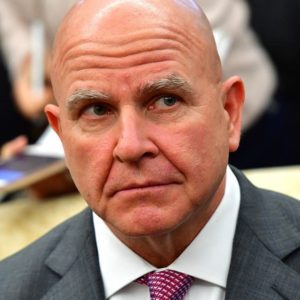
H.R. McMaster
H. R. McMaster is the Fouad and Michelle Ajami Senior Fellow at the Hoover Institution, Stanford University. Previously, he served as the 26th assistant to the president for National Security Affairs and as a commissioned officer in the United States Army for 34 years before retiring as a Lieutenant General. He is author of Battlegrounds: The Fight to Defend the Free World.
James M. Dubik
LTG James M. Dubik (U.S. Army, Ret.) is a Senior Fellow at the Institute for the Study of War and a Professor at Georgetown University’s Security Studies Program. General Dubik has extensive operational experience in Iraq, Afghanistan, Japan, Korea, Thailand, Bosnia, Haiti, Panama, and in many NATO countries.
Frederick W. Kagan
Frederick W. Kagan is a Senior Instructor with the Hertog War Studies Program at the Institute for the Study of War. The author of the 2007 report “Choosing Victory: A Plan for Success in Iraq,” he is one of the intellectual architects of the successful “surge” strategy in Iraq. He is the Director of AEI’s Critical Threats Project.
Kimberly Kagan
Kimberly Kagan is a Senior Instructor with the Hertog War Studies Program and founder and president of the Institute for the Study of War. She is a military historian who has taught at the U.S. Military Academy at West Point, Yale, Georgetown, and American University.