 |
VOOZH | about |
|
VOOZH | about |
The private costs of ambition, the slow accrual of loneliness, the fragile narratives we tell ourselves to stay whole — the best books of 2025 share a preoccupation with what lies beneath apparent order. Across fiction, memoir and history, these works resist neat conclusions, moving between decades and continents, between intimate domestic spaces and the public domain of markets and politics, attentive to how personal lives are shaped by larger forces of history, politics and climate change:
Kiran Desai
Fiction
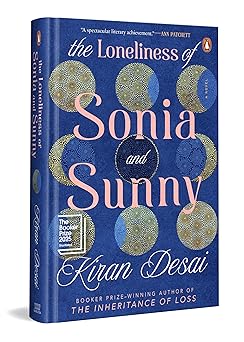
Kiran Desai had begun The Loneliness of Sonia and Sunny with the intention of writing an unresolved modern love story. But over the course of two decades, her novel unfolded as a meditation on modern-day loneliness; an investigation into the nature of art and artistes; into histories of loss, aspiration and disconnection. Set across the 1990s and early 2000s, The Loneliness of Sonia and Sunny follows two Indian immigrants — Sonia Shah, newly returned from Vermont, and Sunny Bhatia, a restless journalist in New York — whose lives brush against and away from each other in a way that feel both accidental and fated.
Their trajectories, born of migration and ambition, trace a long arc of belonging and alienation, inheritance and the subtle, corrosive ache of solitude. Desai’s prose is richly observant of detail — familial quarrels, the churn of cities, the awkwardness of intimacy — and while the novel’s breadth occasionally outstrips its momentum, it is buoyed by wit and a lightness of touch that never allows its vast canvas to become a drag.
Andrew Ross Sorkin
Non-fiction
Andrew Ross Sorkin’s 1929 revisits the Wall Street crash with the pace of a thriller and the granular texture of lived history. Drawing on prodigious reporting, Sorkin reconstructs the Roaring Twenties as a decade high on leverage and confidence, where financiers, politicians and regulators moved within a tight-knit nexus of money, power and overconfidence. Sorkin anchors his narrative in the people who populated the markets, the legislators who responded to catastrophe, and the technologies that shaped how information, fear and hope circulated on Wall Street in the autumn of 1929. What emerges is a vivid sense of how euphoria and leverage intertwined in ways that felt inevitable only in retrospect. 1929 is not merely a history of collapse, but a reminder of how quickly prosperity curdles when hubris takes centre stage.
Arundhati Roy
Non-fiction
Arundhati Roy’s memoir navigates with unflinching candour the fraught terrain of love and rupture — her lifelong relationship with her mother, Mary Roy, a pioneering educator and activist whose legal struggle helped secure women’s inheritance rights in India. The portrait that emerges is a complex negotiation between admiration and ambivalence, dignity and pain. Roy’s prose — lyrical and incantatory, sharp and reflective — resists tidy resolution, much as her relationship with her mother did.
Accounts of Mary’s indomitable will, her capacity to build institutions, and her mercurial temperament sit alongside recollections that unsettle and occasionally disturb, requiring readers to hold contradictory impressions in tandem. The memoir unfolds both as personal reckoning and as a broader meditation on how formative bonds shape creative life. Across those pages, Roy’s voice carries her impatience with facile sentimentality and her insistence on emotional honesty, even when it confounds expectation.
Andrew Miller
Fiction
Set during the Big Freeze of 1962–63, that immobilised the British countryside, Andrew Miller conjures the seemingly inert vastness of a prolonged British winter as a lens through which everyday lives reveal their hidden disquiet in The Land in Winter. In a rural landscape locked by snow and ice, Miller follows a small constellation of lives — a country doctor, his pregnant wife, an aspiring farmer struggling with the harshness of both land and aspiration, and his wife, also expecting their first child — as weather seeps into thought and feeling.
The cold sharpens isolation, exposing fault lines in marriage, work and friendship. Miller’s prose is luminous, attentive to gesture, silence and the incremental weight of history. It is the kind of book that you want to keep returning to, keep reading in big, greedy gulps, not merely for the deeply compassionate study of people living through conditions that narrow the world and intensify the self but also for its utterly beautiful prose, its ability to slow time down into an attentive quiet, for the warmth it offers as both benediction and balm.
Katie Kitamura
Fiction
Katie Kitamura’s Audition is a novel of poise and disquiet, its surface calm concealing deep fissures. A finely wrought study of identity as performance, Audition explores the labour of selfhood — the roles we perform, the parts we resist, the scripts imposed by intimacy. Its unnamed protagonist rehearses a minimalist play she barely understands, just as she rehearses the roles life imposes on her: Spouse, actor, interpreter of the assumptions and expectations of others. A complication arises when a young man claiming to be her son appears, prompting a bifurcation of reality and a possibility that the novel never resolves. Kitamura’s prose is pared to austerity — the cadence of speech becomes both mask and revelation. It makes the book a charged, unsettling read, a disconcerting examination of self and script, image and truth. Audition is less about revelation, more about the choreography of self-presentation and the subtle fractures that appear when performance falters.
