|
VOOZH | about |
|
VOOZH | about |
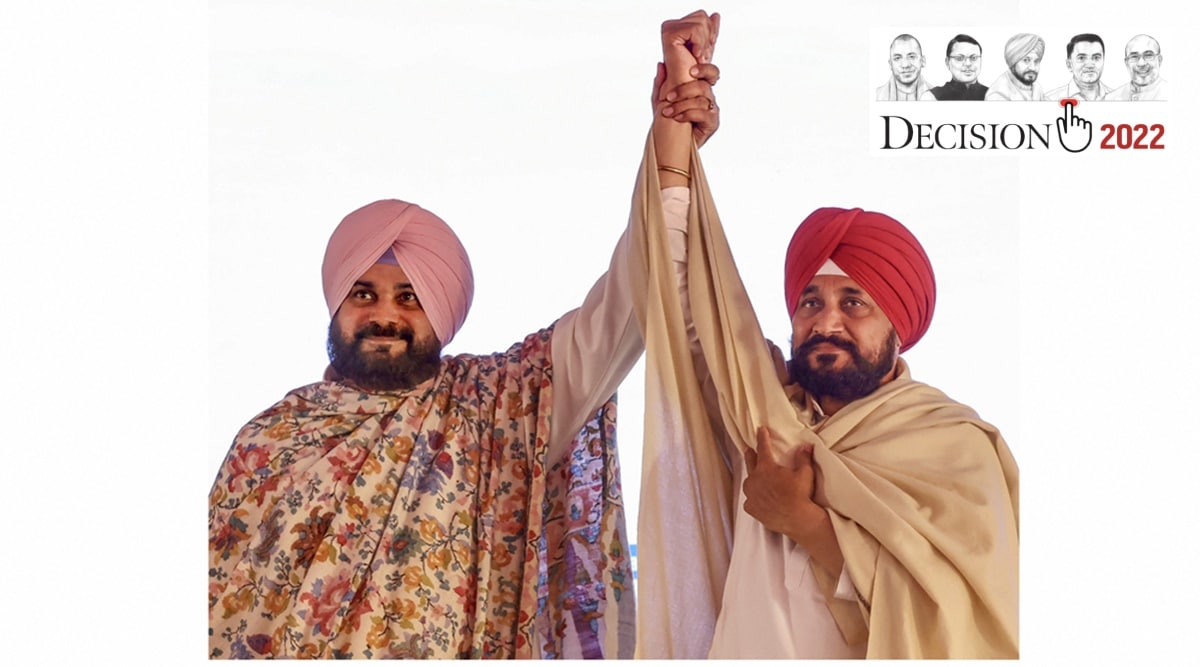
Two weeks to go for the polls, the Congress on Sunday named Charanjit Singh Channi as its Chief Minister face. Despite Punjab having the highest concentration of Dalits in the country of any state – 32% of the population, against the national average of 16.6% – and despite as many as 34 reserved seats out of a total 117 in the state (more than 30%), Channi is the first CM in the state from the community.
Unlike their counterparts elsewhere, Dalits in Punjab are more prosperous, and many have climbed up the social ladder too, appropriating Jat Sikh surnames. Traditionally, they have never voted en masse for a single party, due to internal divisions. Even BSP founder Kanshi Ram, a Punjabi himself, was unable to make big gains as the party’s anti-Manuwadi and purity-pollution ideology did not resonate in the state heavily influenced by Sikhism, envisaged as a casteless religion, and Arya Samaj.
So can the Congress’s gamble of Dalit CM pay off?
The Community
In Punjab, Dalits are a conglomerate of 39 castes and many sub-castes, with different sets of beliefs. The Mazhabis, largely Sikhs, are numerically the most strong, comprising almost 31% of the SC population, followed closely by the Chamars or leather workers (26%), Ad Dharmis (14.19%) and Balmikis (11.2%). Channi is a Ramdasia, a sub-sect of the Chamars.
Electorally, the Ad Dharmi / Ravidassia candidates have often got the lion’s share of seats. According to a study by Prof Nirmal Singh of Panjab University, they represented half the reserved tickets in 10 Assembly elections from 1985 to 2012.
The continuing Ravidassia clout is evident from the fact that the coming elections were postponed from February 14 to 20 as the Ravidas Jayanti, marked by week-long celebrations, falls on February 16.
The various caste associations routinely demand proportionate representation in government jobs. Balmikis and Mazhabis have already got this in the Punjab Civil Services, with the other groups accusing them of cornering half of the 25% reservation for SCs in government jobs in the state.
The divisions came into sharp focus in 2009 after a guru of the Ravidassia sect was assassinated in Vienna, Austria, and the Balmikis and Meghas kept out of the protests. Ever since, the Ravidassias have been demanding the status of a separate religion in the Constitution.
👁 Image
The Spread
Geographically, the highest concentration of Dalits in Punjab is in the Doaba districts of Jalandhar, Kapurthala, Hoshiarpur and Nawanshahr, where they number up to 45% in some of the 23 seats. Here, Dalit assertion has taken the form of Dalit pop, opulent houses, and deras, the most powerful being Dera Sach Khand at Ballan village, headquarters of the Ravidassia sect. Late last month, Channi spent a night at the Dera.
The districts of Amritsar and Gurdaspur have a considerable presence of Dalits who have converted to Christianity and who have traditionally alternated between Congress and the Akali Dal, with a tilt towards the former.
In Malwa, the districts of Ludhiana, Patiala, Sangrur, Mansa, Muktsar and Moga have a large population of landless labourers, and it’s here that complaints of landowning Jats appropriating the village common land meant for SCs are most common.
Despite their numerical strength, Dalits own only 6% of landholdings in the state and occupy only 3.3% of the total area under cultivation.
The politics
While the announcement of Channi as CM face might not bring together Dalits across the state, it has enthused SC voters in some parts of Doaba. However, the main reason is the slashing of power bills by the government in January.
In the last elections, the Congress had won 21 of the 34 seats reserved for Dalits while AAP had won 9 and finished second on 6 more seats. The Akali Dal had won only 4 SC seats.
However, this time the Akalis, who introduced schemes such as free atta-daal and Shagun for the weddings of Dalit girls, have tied up with the BSP, giving it 20 seats. The last time the two had a truck was in the 1996 Lok Sabha polls when the BSP had won three seats. The BSP has had a poor run in the Assembly polls ever since, with its vote share falling from 16.3% in 1992 to 1.5% in 2017.
The voting history
A high vote share of Dalits is not necessarily a guarantor of victory. The Congress lost the polls to the Akali Dal-BJP combine in 2007 and 2012 despite having the highest vote share among Dalit Sikhs.
In 2007, it was estimated to have got 56% of the Hindu Dalit votes against 25% for the Akali Dal-BJP, and 49% of the Dalit Sikh votes against the latter’s 32%, but still could not form the government
Total reserved seats: 34
2012
Cong: 10
Akali Dal: 22
BJP: 2
2017
Cong: 21
Akali Dal: 4
AAP: 9
Manraj Grewal Sharma is a senior journalist and the Resident Editor Read More