
Igniting Discovery in Alzheimer’s Research
Taking on one of the toughest diseases
Six million Americans are living with Alzheimer’s Disease, and that number is projected to soar to 14 million by 2050.
At the Keck School of Medicine, five world-renowned research centers and institutes are dedicated to fighting Alzheimer’s disease. Our work spans the full spectrum of discovery, from uncovering the earliest molecular changes that lead to cognitive decline to conducting landmark clinical trials. Committed to open science, we share data and findings that empower researchers worldwide. With this foundation, the Keck School of Medicine is positioned to lead the next decade of progress in Alzheimer’s prevention.
A Multi-angled Approach to Alzheimer’s Breakthroughs

Leading the Charge on New Treatments: The USC Epstein Family Alzheimer’s Therapeutic Research Institute at USC
The USC Epstein Family Alzheimer’s Therapeutic Research Institute (Epstein ATRI) at USC is at the forefront of bringing effective new treatments for Alzheimer’s disease to the world through rigorous clinical trial design and the identification of reliable biomarkers for early detection of the disease – long before cognitive decline occurs.
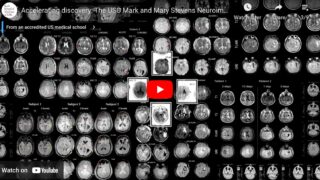
Accelerating Discovery: The USC Mark and Mary Stevens Neuroimaging and Informatics Institute
With cutting-edge imaging and information technologies, and one of the largest global data networks in the world, the USC Mark and Mary Stevens Neuroimaging and Informatics Institute is accelerating the pace of discovery in Alzheimer’s disease by leveraging imaging and big data to reveal what was impossible to perceive before.
Cutting-Edge Alzheimer’s Research and Care: USC Neurology/Alzheimer’s Disease Research Center
In the hunt for innovative treatments for Alzheimer’s disease, the Keck School of Medicine of USC’s Department of Neurology, home to the USC’s Alzheimer’s Disease Research Center, is working to bring the latest discoveries to patients and their families.
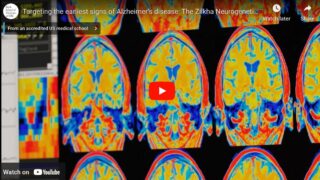
Targeting the Earliest Signs of Alzheimer’s Disease: The Zilkha Neurogenetic Institute
The Zilkha Neurogenetic Institute is pursuing new treatments for Alzheimer’s disease that could stop the disease process long before cognitive decline begins – treatments which would target early problems in the brain’s vascular system that may lead to dementia.
Centers & Institutes
The Keck School of Medicine is dedicated to advancing Alzheimer’s research through specialized centers and institutes. These facilities employ cutting-edge techniques and interdisciplinary collaboration to unravel the complexities of Alzheimer’s disease, paving the way for innovative treatments and improved patient care.
The Alzheimer Disease Research Center at USC (ADRC) works to understand the biological changes that may precede worsening memory and to assess whether new treatments, including drugs, may be helpful in preventing memory or delay memory loss.
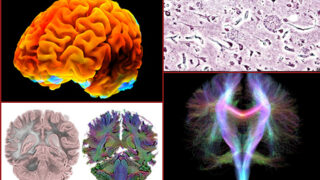
The mission of the USC Epstein Family Alzheimer’s Therapeutic Research Institute (Epstein ATRI) is to rigorously test methods for early detection of, and treatments for Alzheimer’s disease (AD) and bring effective therapeutics to the world.
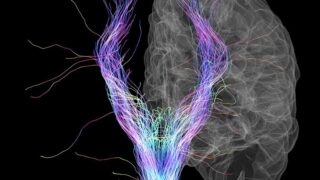
USC’s Mark and Mary Stevens Neuroimaging and Informatics Institute (USC Stevens INI) applies innovative imaging and information technologies to the study of the brain. We share our data and resources with thousands of collaborators around the world.
The USC Center for Personalized Brain Health focuses on preventing Alzheimer’s disease by targeting the APOE gene and the roles of fatty acids in the brain, translating scientific discoveries into personalized prevention strategies. The center brings together experts from various disciplines to create a roadmap for personalized brain health and reduce Alzheimer’s genetic risk.

The Zilkha Neurogenetic Institute (ZNI) is a cross-disciplinary hub for the neuroscience community at USC. At Zilkha, we conduct world-class science in state-of-the-art labs.

Educational Programs
The Keck School of Mecidine offers an inter-campus PhD in medical biophysics (MBPH) that includes faculty from all over USC who not only have active biophysical research programs and serve as mentors, but also contribute to courses offered by the program. Meanwhile, the MS in Neuroimaging and Informatics, at the USC Mark and Mary Stevens Neuroimaging and Informatics Institute, is a premier one-year degree program on brain imaging and the associated informatics.
Learn More About Our Work