












Power to Explore Student Challenge
Students were challenged to plan a mission that would use Radioisotope Power Systems to explore a dark, dusty, or faraway moon in our solar system.

NASA Glenn Welcomes Winners of the 2024-2025 Power to Explore Challenge
Winners of the 2024-2025 Power to Explore Student Writing Challenge were invited to NASA’s Glenn Research Center in Cleveland for a prize trip that consisted of an exclusive tour of Glenn’s world-class facilities, and a day at Great Lakes Science Center — home of the NASA Glenn Visitor Center.
The three national winners, accompanied by a parent, started the prize trip on Aug. 14 with a welcome from Dr. Michael Barrett, director, Space Flight Systems at Glenn. The tour included a close-up view of the Simulated Lunar Operations Laboratory, Zero Gravity Research Facility, Stirling Research Lab, Power Systems Facility, Graphic & Visualization Lab, and the 10x10 Supersonic Wind Tunnel. The trip concluded with an encounter with the NASA Glenn Visitor Center at Great Lakes Science Center.
Power to Explore Challenge Winners Visit NASA Glenn
The three student winners of NASA’s 2025 Power to Explore Challenge went behind the scenes at NASA’s Glenn Research Center in Cleveland in August.
During the national essay contest, K-12 students learned about radioisotope power systems, "nuclear batteries" used in space. While touring NASA Glenn, the winning students met with engineers and researchers to discover more about innovative technologies advancing exploration of the Moon, Mars, and beyond.
2024-2025 Winners of NASA’s Power to Explore Challenge
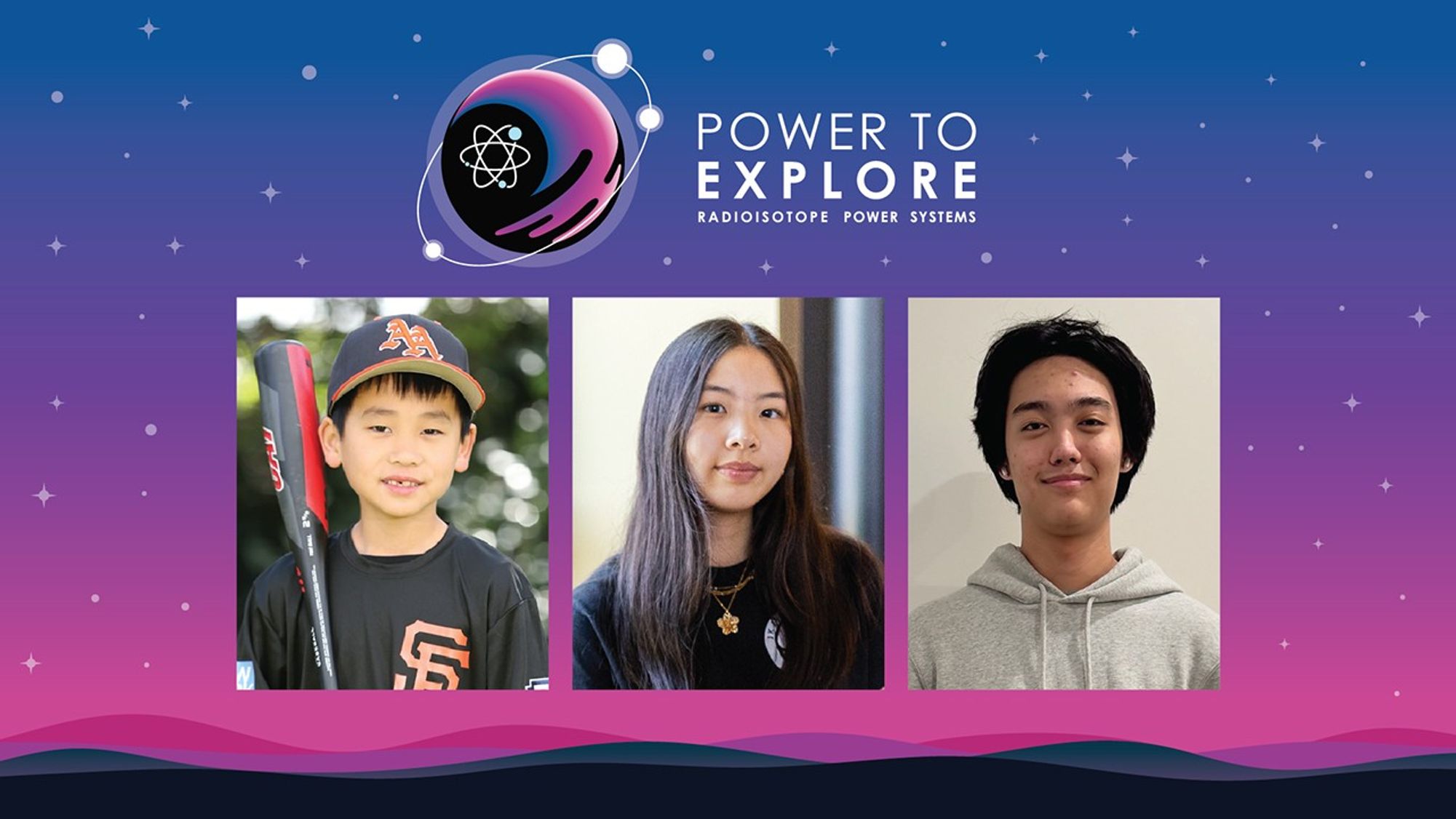
On May 7, 2025, NASA announced three winners out of nine finalists in the fourth annual Power to Explore Challenge, a national writing competition designed to teach K-12 students about the enabling power of radioisotopes for space exploration.
Grades K-4
- Terry Xu, ten-year-old from Arcadia, California
Grades 5-8
- Maggie Hou, 14-year-old from Snohomish, Washington
Grades 9-12
- Kairat Otorov, 17-year-old from Trumbull, Connecticut
About the Power to Explore Student Essay Challenge 2024 - 2025
Did you know that our solar system has more than 891 moons? This includes 421 officially recognized moons orbiting planets — including Pluto. These moons provide an incredible opportunity for discovery. Radioisotope Power Systems, a type of nuclear "battery," have powered missions near Jupiter's moon Io, where over 400 active volcanoes were revealed; Saturn's dusty moon Titan, where it helped uncover its methane lakes, oceans, and rivers; and Pluto's moon Charon, where NASA recently discovered jagged mountains and deep canyons.
If entrants could plan an RPS-powered mission to any moon in our solar system, which moon would they choose to unravel its mysteries?
NASA wants to know what they plan to explore, the discoveries they hope to make, and how they would use this special power to achieve mission success.
Entries needed to address the topics below:
- Dark, dusty, or distant mission destination: Tell us which moon your RPS-powered space mission will go and describe your mission goal(s). Keep in mind that your mission can either flyby, orbit, land, or rove.
- Radioisotope Power Systems (RPS): Explain the importance and advantages of using RPS for this mission. How does this technology overcome the challenges of these extreme environments and destinations?
- Your power: NASA missions are also powered by people – from mission planning and development, to designing, launching, and operating a spacecraft. Tell us what you think your unique power is and how your special power will help you achieve mission success. Your power could be a skill, personality trait, or other personal strength that is uniquely you.
About the Challenge
The challenge is funded by the Radioisotope Power Systems Program in NASA’s Science Mission Directorate and administered by Future Engineers under a Small Business Innovation Research phase III contract. This task is managed by the NASA Tournament Lab, a part of the Prizes, Challenges, and Crowdsourcing Program in NASA’s Space Technology Mission Directorate.
Learn More and Get Involved
2024 - 2025 Winners Announced
NASA has chosen three winners out of nine finalists in the fourth annual Power to Explore Challenge.

2024 - 2025 Contest Details
Winners were announced on May 7.

Meet the 2023 - 2024 Winners
Aadya Karthik, Rainie Lin, and Thomas Liu's essays won them a trip to NASA's Glenn Research Center.
Explore the Moons
Moons come in many shapes, sizes, and types. A few have atmospheres and even hidden oceans beneath their surfaces.

NASA's Space Place
Space Place's mission is to inspire and enrich upper-elementary-aged kids' learning of space and Earth science online through fun games, hands-on activities, informative articles and engaging short videos.
More About Radioisotope Power Systems
Radioisotope Power Systems
Space nuclear power to explore the deepest, dustiest, darkest, and most distant regions of our solar system and beyond.
About Plutonium-238
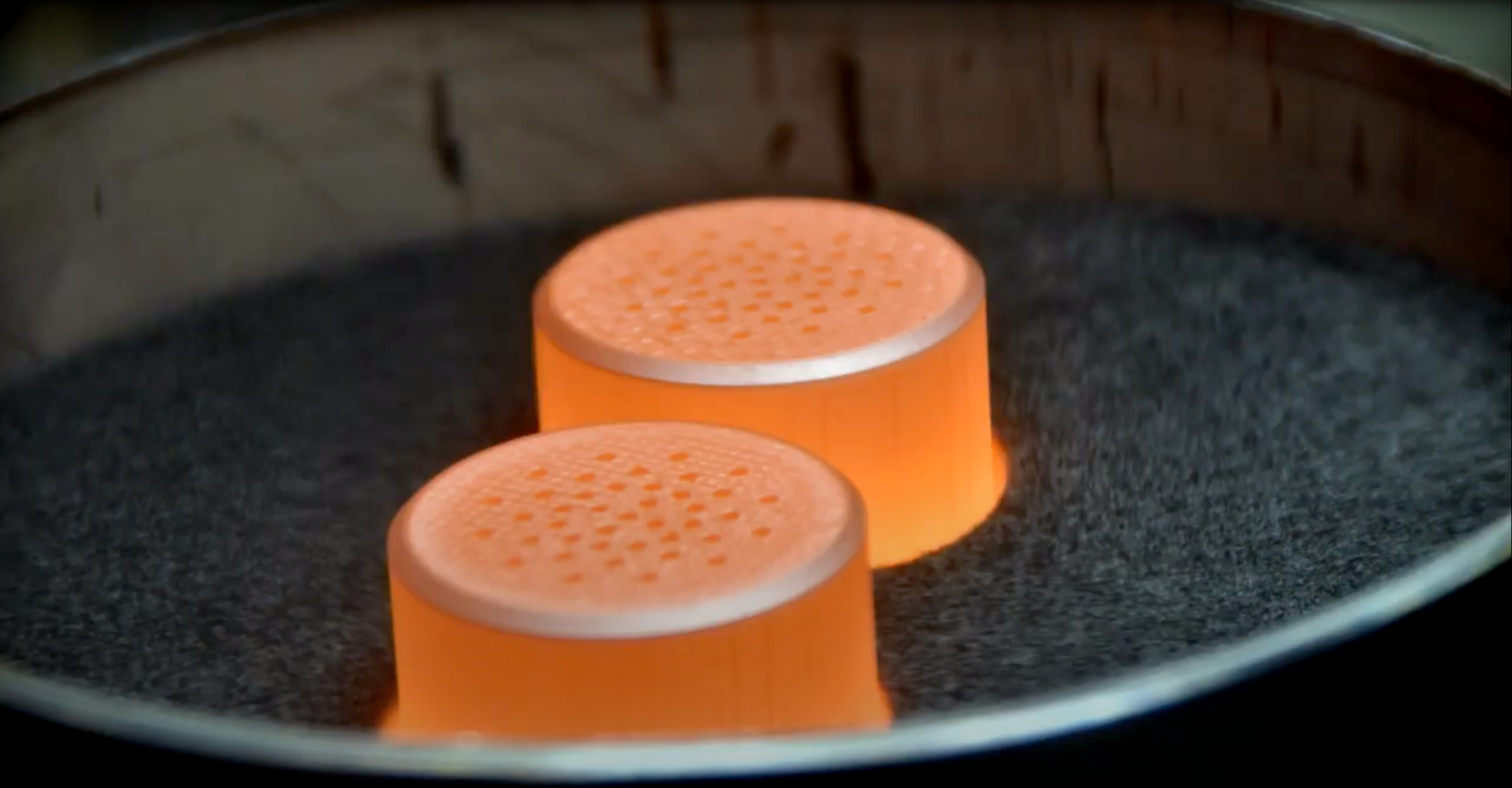
Several unique features of plutonium-238 have made it the material of choice to help produce electrical power for spacecraft.
Radioisotope Power Systems Missions
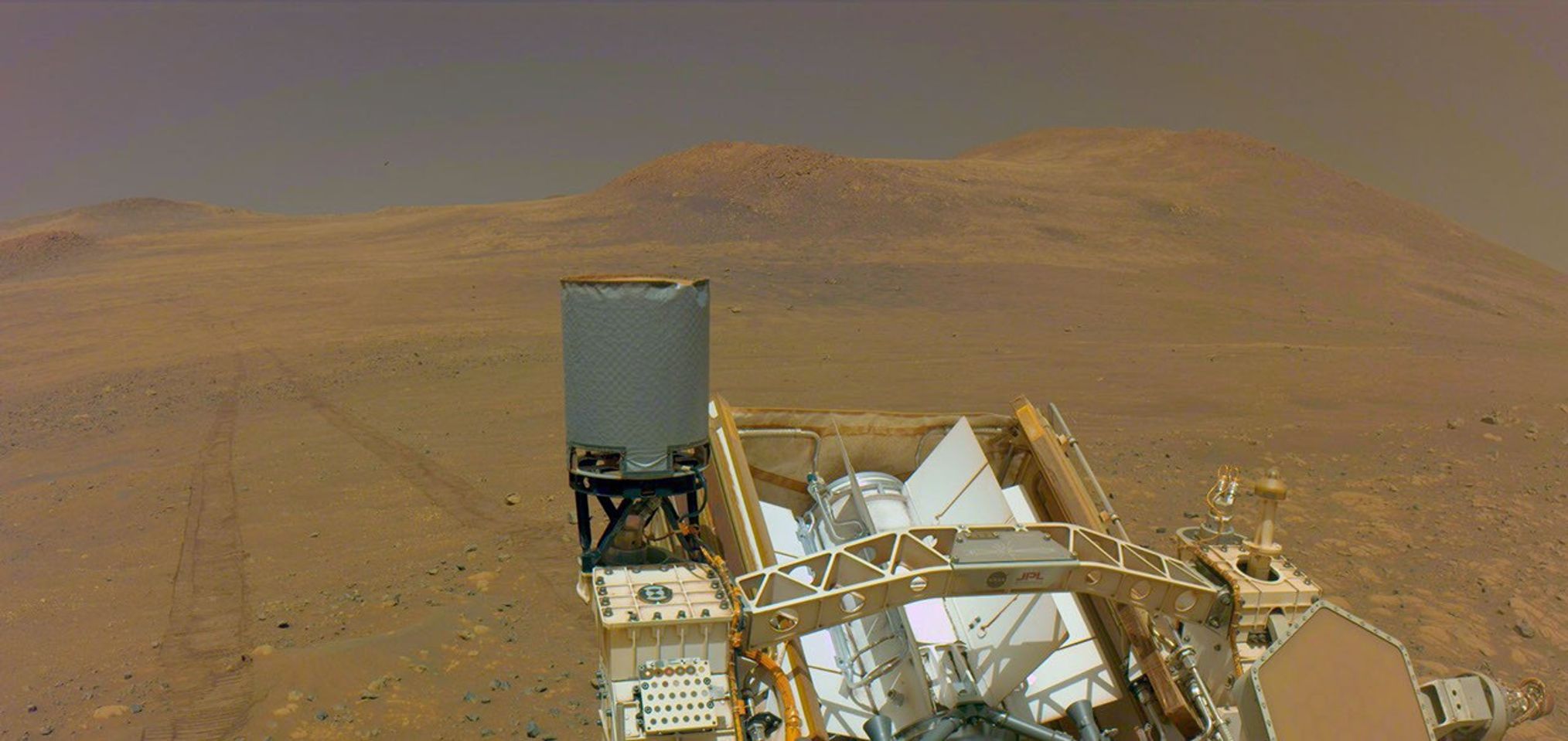
Two dozen NASA missions have successfully flown with an RPS since 1969.

Radioisotope Power Systems Safety and Reliability
Safety is a critical priority in NASA’s use of radioisotope power systems, and is integrated into every phase of the…