VOOZH about

URL: https://pubmed.ncbi.nlm.nih.gov/27626062/

⇱ Toxicity and management in CAR T-cell therapy - PubMed


Clipboard, Search History, and several other advanced features are temporarily unavailable.
Skip to main page content
👁 Dot gov

The .gov means it’s official.
Federal government websites often end in .gov or .mil. Before sharing sensitive information, make sure you’re on a federal government site.

👁 Https

The site is secure.
The https:// ensures that you are connecting to the official website and that any information you provide is encrypted and transmitted securely.

Access keys NCBI Homepage MyNCBI Homepage Main Content Main Navigation

Add to Collections

Add to My Bibliography

Your saved search

Create a file for external citation management software

Your RSS Feed

Abstract

T cells can be genetically modified to target tumors through the expression of a chimeric antigen receptor (CAR). Most notably, CAR T cells have demonstrated clinical efficacy in hematologic malignancies with more modest responses when targeting solid tumors. However, CAR T cells also have the capacity to elicit expected and unexpected toxicities including: cytokine release syndrome, neurologic toxicity, "on target/off tumor" recognition, and anaphylaxis. Theoretical toxicities including clonal expansion secondary to insertional oncogenesis, graft versus host disease, and off-target antigen recognition have not been clinically evident. Abrogating toxicity has become a critical step in the successful application of this emerging technology. To this end, we review the reported and theoretical toxicities of CAR T cells and their management.


Figures

👁 Figure 1
Figure 1
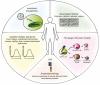
Toxicities of chimeric antigen receptor (CAR) T-cell therapy. Depiction of reported/potential toxicities following the use of CAR T cells: insertional oncogenesis (theoretical); neurological toxicity; “on-target, off-tumor” toxicity (engagement of target antigen on nonpathogenic tissues); anaphylaxis/allergy (host reaction to foreign antigen expressed by the CAR T cell); cytokine release syndrome (systemic inflammatory response following activation of CAR T cells). CRP, C-reactive protein.
👁 Figure 2
Figure 2
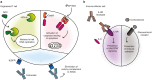
Management of chimeric antigen receptor (CAR) T-cell toxicity. (a) CAR T cells can be further engineered to express “suicide genes” or “elimination genes” such as herpes simplex virus thymidine kinase (HSV-tk) which converts the prodrug ganciclovir (GCV) into GCV-triphosphate resulting in cell death by incorporation into replicating DNA; inducible caspase 9 (iCasp9) a chimeric protein that binds the small molecule AP1903, leading to caspase 9 dimerization and ultimate apoptosis; truncated endothelial growth factor receptor (tEGFR) which is a targetable antigen which allows for elimination of modified cells following infusion of associated anti-EGFR MAb (cetuximab). (b) Pharmacological immunosuppression will ameliorate toxicity from CAR T including blockade of IL-6R and/or treatment with systemic corticosteroid. ADCC, antibody-dependent cellular cytotoxicity.

References

    1. Mitchison, NA (1955). Studies on the immunological response to foreign tumor transplants in the mouse. I. The role of lymph node cells in conferring immunity by adoptive transfer. J Exp Med 102: 157–177. - PMC - PubMed
    1. Hinrichs, CS and Rosenberg, SA (2014). Exploiting the curative potential of adoptive T-cell therapy for cancer. Immunol Rev 257: 56–71. - PMC - PubMed
    1. Maude, SL, Frey, N, Shaw, PA, Aplenc, R, Barrett, DM, Bunin, NJ et al. (2014). Chimeric antigen receptor T cells for sustained remissions in leukemia. N Engl J Med 371: 1507–1517. - PMC - PubMed
    1. Manzo, T, Heslop, HE and Rooney, CM (2015). Antigen-specific T cell therapies for cancer. Hum Mol Genet 24: R67–R73. - PMC - PubMed
    1. Themeli, M, Rivière, I and Sadelain, M (2015). New cell sources for T cell engineering and adoptive immunotherapy. Cell Stem Cell 16: 357–366. - PMC - PubMed
Cite

NCBI Literature Resources

MeSH PMC Bookshelf Disclaimer

The PubMed wordmark and PubMed logo are registered trademarks of the U.S. Department of Health and Human Services (HHS). Unauthorized use of these marks is strictly prohibited.