


Abstract
Background and aims: COVID-19 is an emerging pandemic due to droplet infection of 2019-novel coronavirus (2019-nCoV). Due to its rapid transmission and high case-fatality rate, recognition of its risk and prognostic factor is important. Obesity has been associated with impaired immune system, increasing the susceptibility for 2019-nCoV infection. We aimed to study the impact of obesity to the prognosis and disease severity of COVID-19.
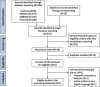
Methods: A systematic search and handsearching was conducted in four databases: Cochrane, MEDLINE, EMBASE, and PubMed. The identified articles were screened using the chosen eligibility criteria. We obtained three retrospective cohort studies (Wu J et al., Lighter J et al., and Simonnet A et al.) to be critically appraised using Newcastle Ottawa Scale.
Results: The findings of all included studies were consistent in stating the contribution of obesity as a risk factor to increase the requirement for advanced medical care. Study with the highest quality, Simonnet A et al., reported an increase need of invasive mechanical ventilation in COVID-19 patients with body mass index higher than 35 kg/m2, OR: 7.36 (1.63-33.14; p = 0.021). This is associated with a higher mortality rate in obese population infected with COVID-19.
Conclusion: Obesity is an independent risk and prognostic factor for the disease severity and the requirement of advanced medical care in COVID-19. This systematic review highlights a particularly vulnerable group - obese, and emphasises on the importance of treatment aggression and disease prevention in this population group.
Keywords: COVID-19; Obesity; Predictor; Prognosis.
Copyright © 2020 Diabetes India. Published by Elsevier Ltd. All rights reserved.
Conflict of interest statement
Declaration of competing interest The authors declare no conflict of interest.
Figures

References
-
- Worldometer. Coronavirus update (live): 2,902,708 Cases and 202,179 deaths from COVID-19 virus pandemic. 2020. https://www.worldometers.info/coronavirus/#countries [Internet], [cited 2020 Apr 26]. Available from:
-
- Grasselli G., Zangrillo A., Zanella A., Antonelli M., Cabrini L., Castelli A. Baseline characteristics and outcomes of 1591 patients infected with SARS-CoV-2 admitted to ICUs of the Lombardy region, Italy. JAMA. 2020. http://www.ncbi.nlm.nih.gov/pubmed/32250385 [Internet]Available from: - PMC - PubMed
-
- Wang B., Li R., Lu Z., Huang Y. Does comorbidity increase the risk of patients with COVID-19: evidence from meta-analysis. Aging (Albany NY) 2020;12(7):6049–6057. http://www.ncbi.nlm.nih.gov/pubmed/32267833 [Internet] Available from: - PMC - PubMed
Publication types
MeSH terms
LinkOut - more resources
Full Text Sources
Other Literature Sources
Medical
