


























Air Quality
Air pollution is a significant threat to human health and our environment. Instruments on NASA satellites, along with airborne and ground-based sensors, are constantly collecting data on major pollutants in our atmosphere.
Where Does NASA fit?
NASA instruments — on satellites, planes, and the ground — constantly collect data on air quality. NASA-funded scientists track the sources and concentrations of major pollutants and their movement through the atmosphere. They provide managers and policymakers with Earth observations that can inform decisions around air quality for economic and human benefit.
What’s in the Air?
Watch to learn what air quality is and why it’s so important that we study it.
Watch on YouTubeAir's Ingredients
The air we breathe is a stew of components—some natural, some introduced by human activity.

Curious Universe Podcast: Tiny but Mighty
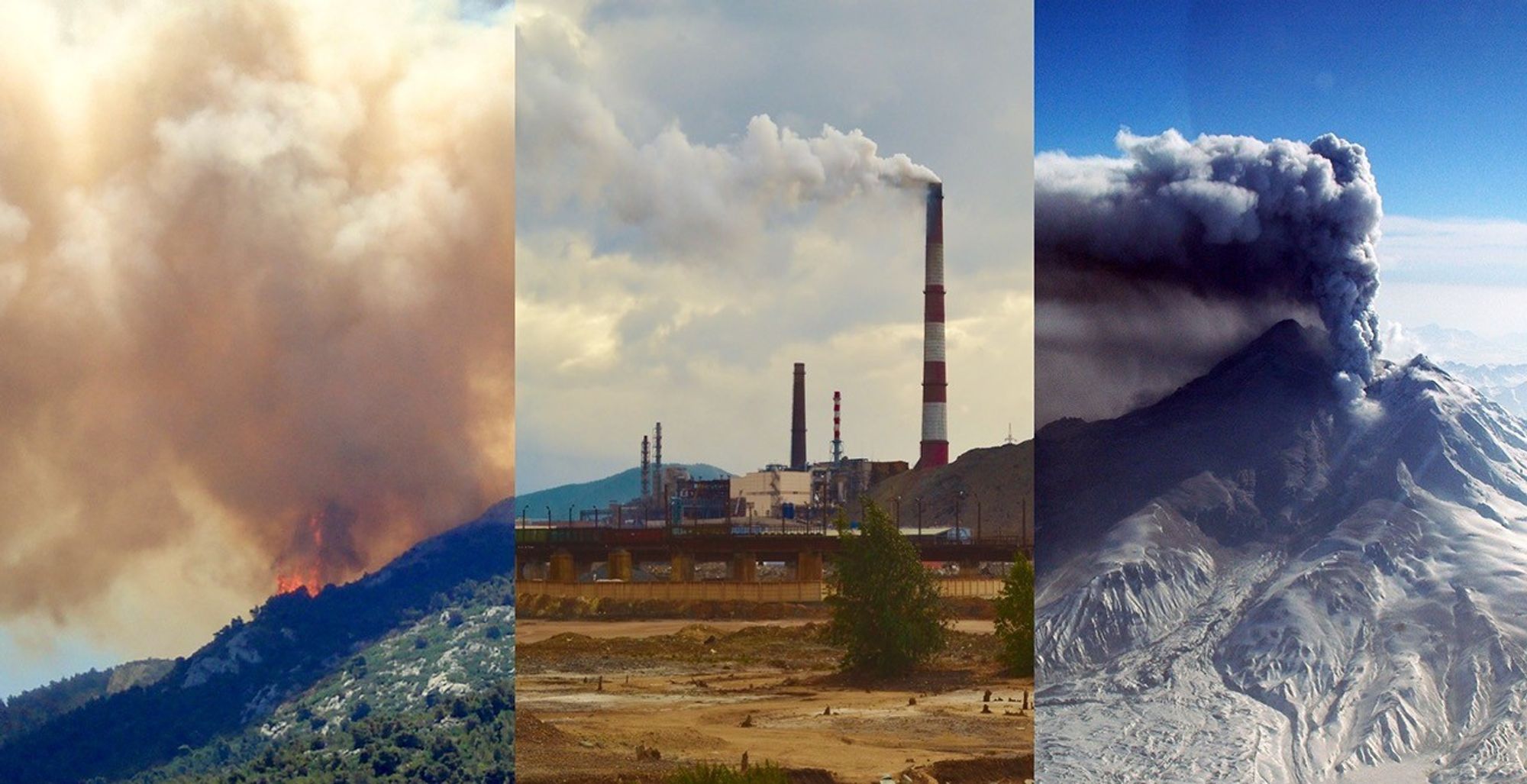
Aerosols: Particles with Big Climate Effects

NASA Mission: TEMPO
TEMPO, or Tropospheric Emissions: Monitoring of Pollution, is the first space-based instrument to continuously measure air quality above North America with the resolution of a few square miles. It is a collaboration between NASA and the Harvard-Smithsonian Astrophysical Observatory.
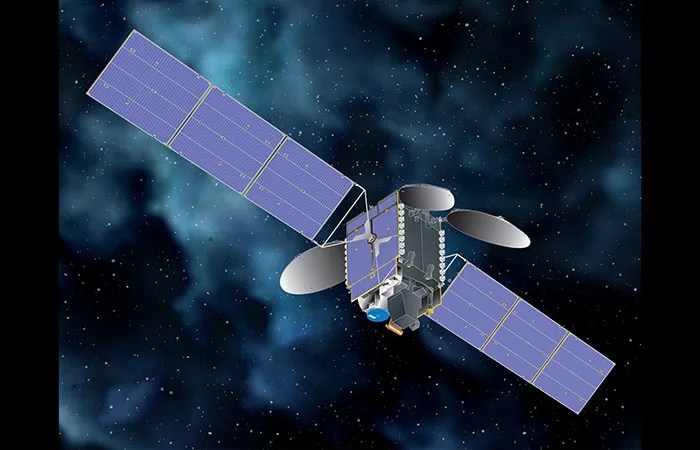
60 Second Science: The TEMPO Instrument

TEMPO: Exploring Air Quality
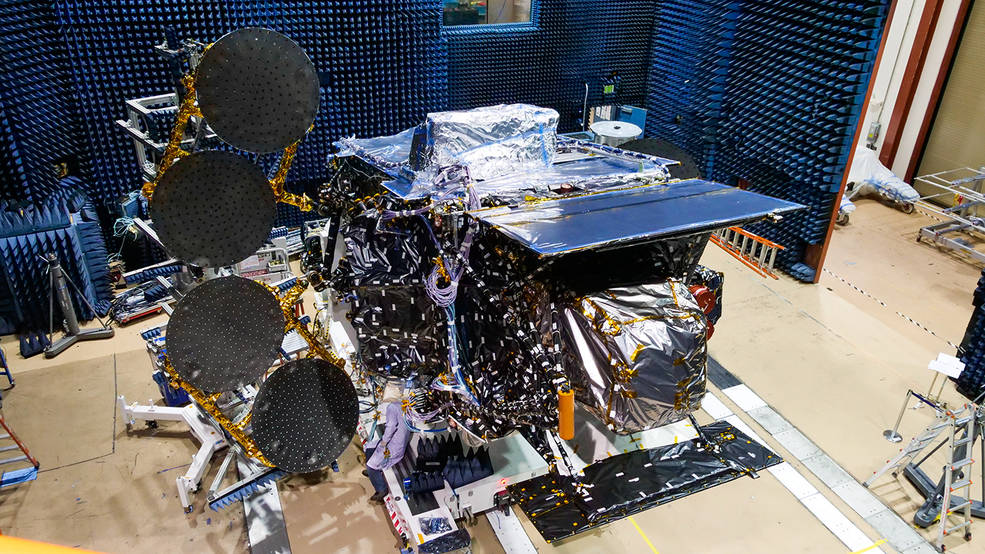
New Instrument to Track Air Pollution Hourly, Shed Light on Disparities
NASA Mission: PACE
The Plankton, Aerosol, Cloud, ocean Ecosystem (PACE) mission helps us understand our ocean and atmosphere by measuring key variables associated with cloud formation, particles and pollutants in the air, and microscopic, floating marine life (phytoplankton). These observations provide us better monitors of ocean health, air quality, and climate change.
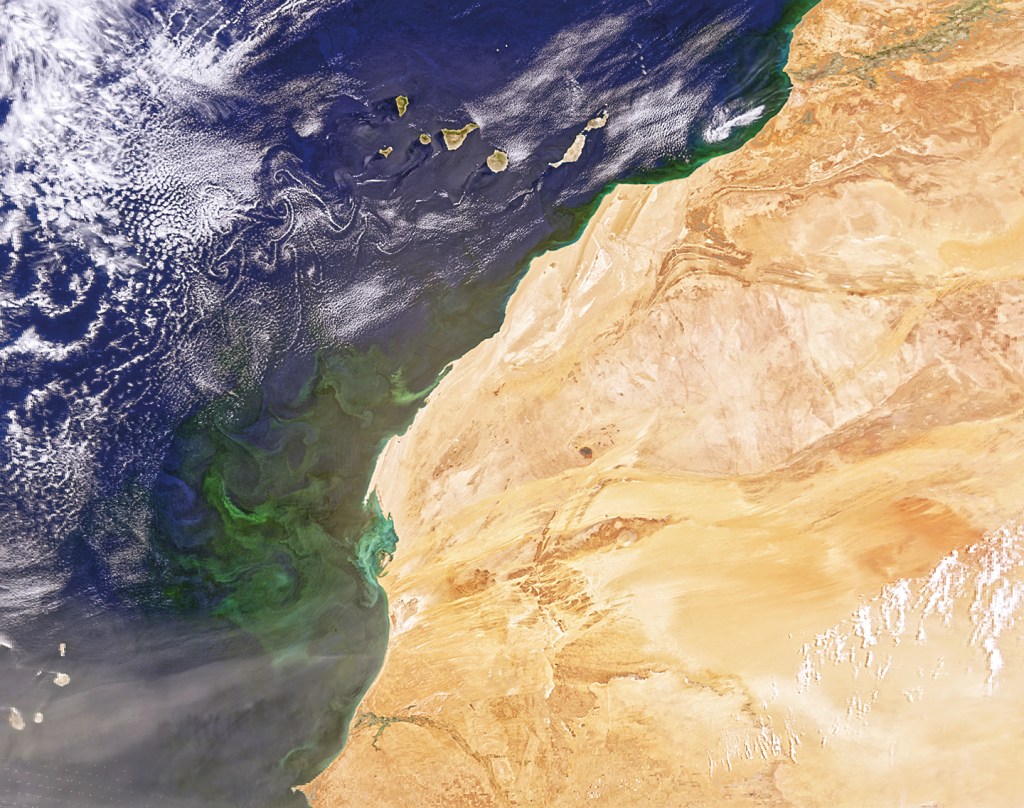
Keeping Pace with PACE
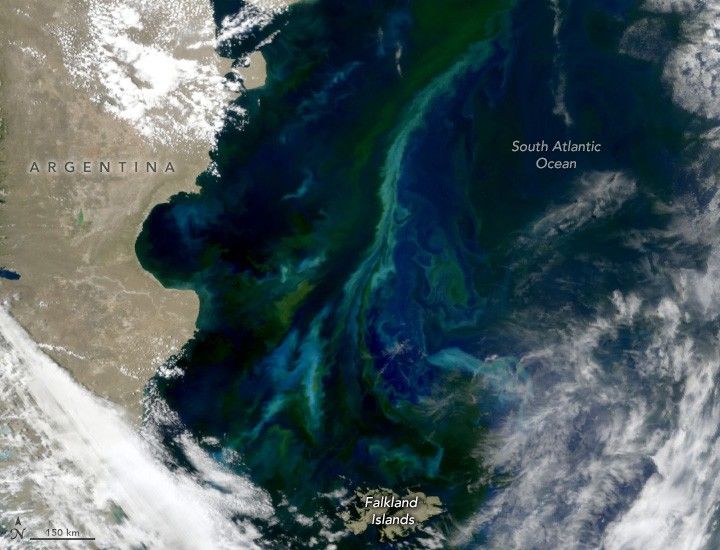
PACE Makes the Invisible Visible
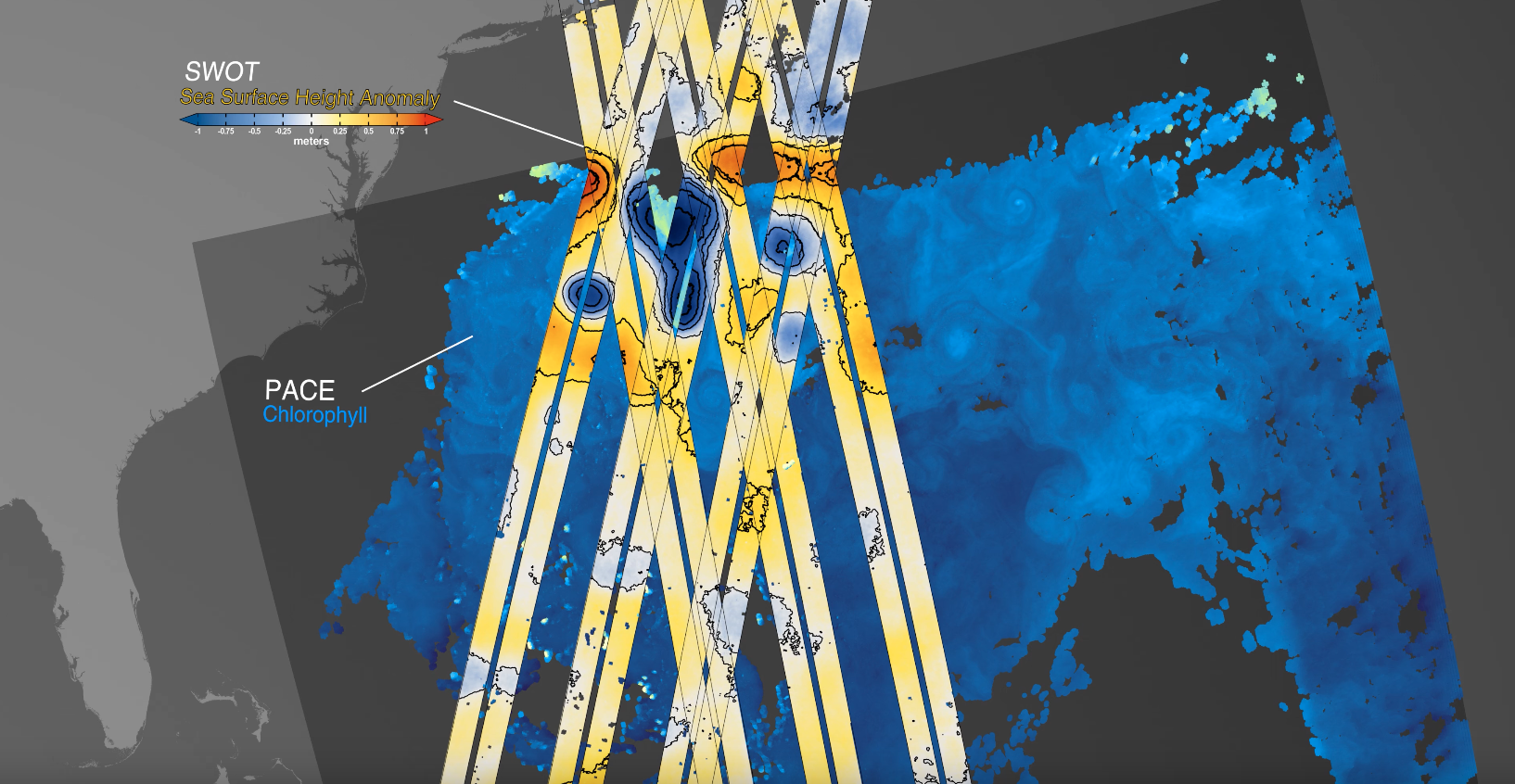
NASA’s PACE, US-European SWOT Satellites Offer Combined Look at Ocean

New NASA Satellite To Unravel Mysteries About Clouds, Aerosols
How NASA Helps
Human Fingerprint on Global Air Quality
Scientist Bryan Duncan and his team examined observations made from 2005 to 2014 by the Ozone Monitoring Instrument aboard NASA’s Aura satellite. One of the atmospheric gases the instrument detects is nitrogen dioxide, a yellow-brown gas that is a common emission from cars, power plants, and industrial activity.
Nitrogen dioxide can quickly transform into ground-level ozone, a major respiratory pollutant in urban smog. Nitrogen dioxide hotspots, used as an indicator of general air quality, occur over most major cities in developed and developing nations.
How NASA Sees the Air We Breathe
A Goddard Space Flight Center video describes NASA’s Earth observations.
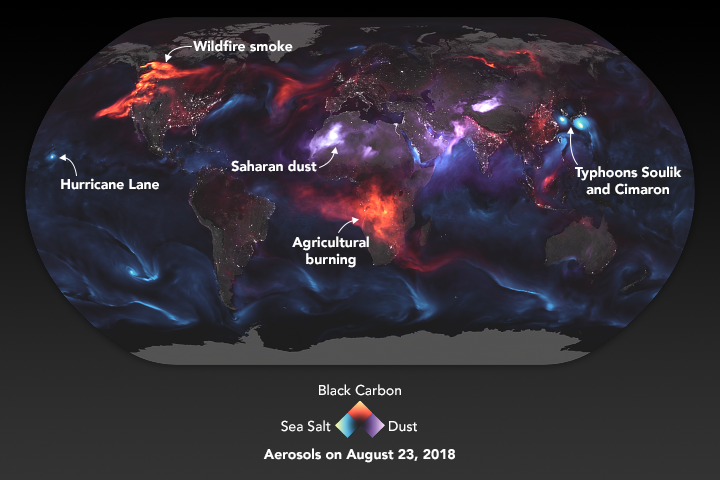
Just Another Day on Aerosol Earth
NASA satellites trace ingredients of air worldwide on one particularly representative day in the life of planet Earth.
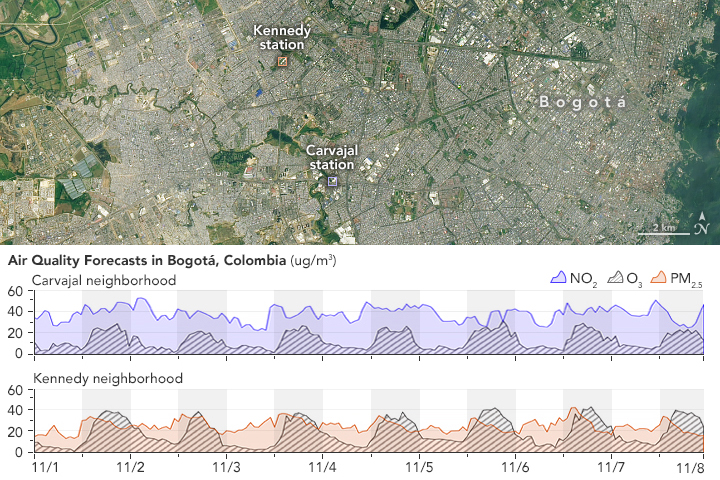
Filling an Air Pollution Data Gap
Many cities have shortages of air quality monitors. NASA developed a tool called GEOS-CF that can help.
NASA and NOAA Take to the Air to Chase Smoke
NASA, NOAA and university partners are taking to the skies, and the ground, to chase smoke from fires burning across the United States.
The Fire Influence on Regional to Global Environments and Air Quality (FIREX-AQ) is starting in Boise, Idaho, with a long-term of goal of improving our understanding of how smoke from fires affects air quality across North America.
Air Quality News
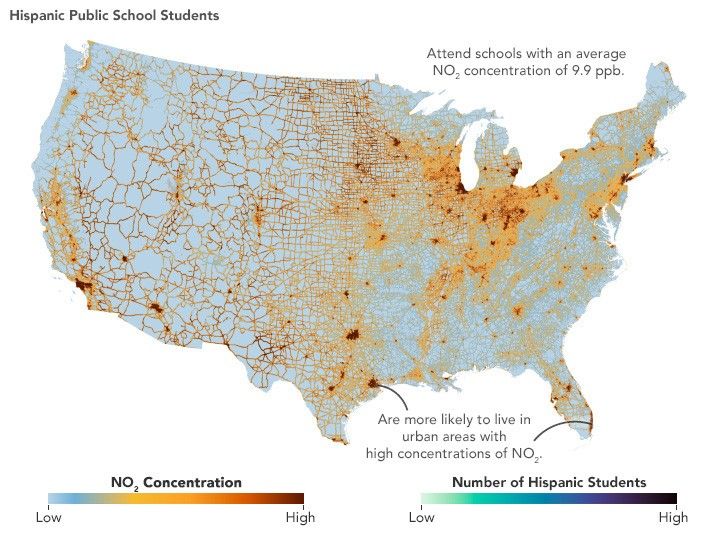
An Unequal Air Pollution Burden at Schools
Satellite observations show that students of color in the U.S. attend public schools with higher concentrations of air pollution than their white peers.
Satellite Data Can Help Limit the Dangers of Windblown Dust
A new model of windblown dust, powered by NASA and NOAA satellite data, provides important early warnings.

How Dust Affects the World’s Health
NASA research finds that a combination of windblown dust and human-caused particle pollution was associated with nearly 3 million premature deaths in 2019.
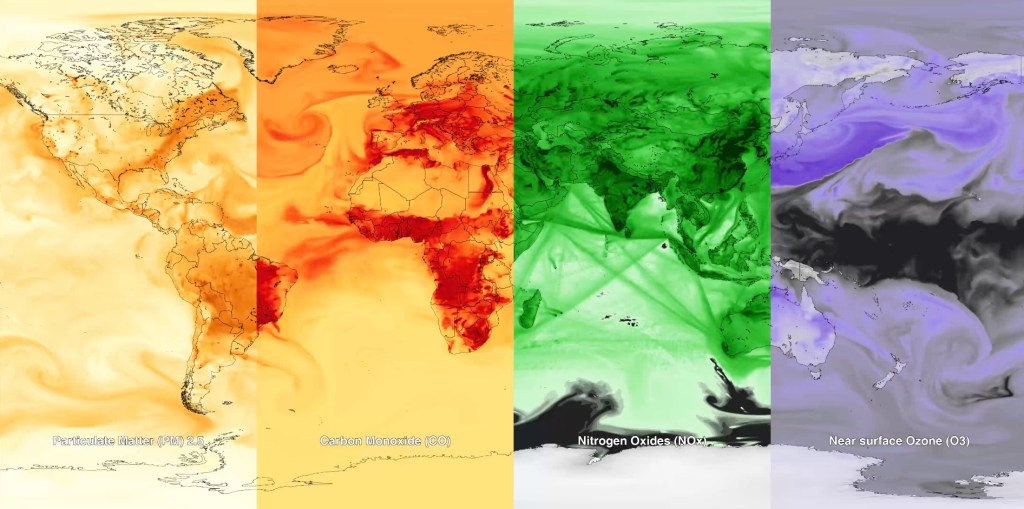
NASA Models the Complex Chemistry of Earth's Atmosphere
A NASA visualization shows 96 chemical species that help form one common air pollutant — surface ozone.
Show Me the Data

NASA EarthData: Air Quality
Find NASA's data on air quality, including trainings, articles, webinars, additional related topics, and more.
Current Research
NASA Multi-Angle Imager for Aerosols (MAIA)
The investigation represents the first time NASA has partnered with epidemiologists and health organizations on a satellite mission to study human health and improve lives.

Getting to the Heart of the (Particulate) Matter
A first-ever partnership between NASA, epidemiologists, and health organizations will use data from a NASA space mission to study how particulate matter air pollution affects our health.
NASA-led Mission to Map Air Pollution in 3D Over Megacities
The STAQS mission connects air quality from space to skies to the streets of Chicago, New York, Toronto, and Los Angeles.
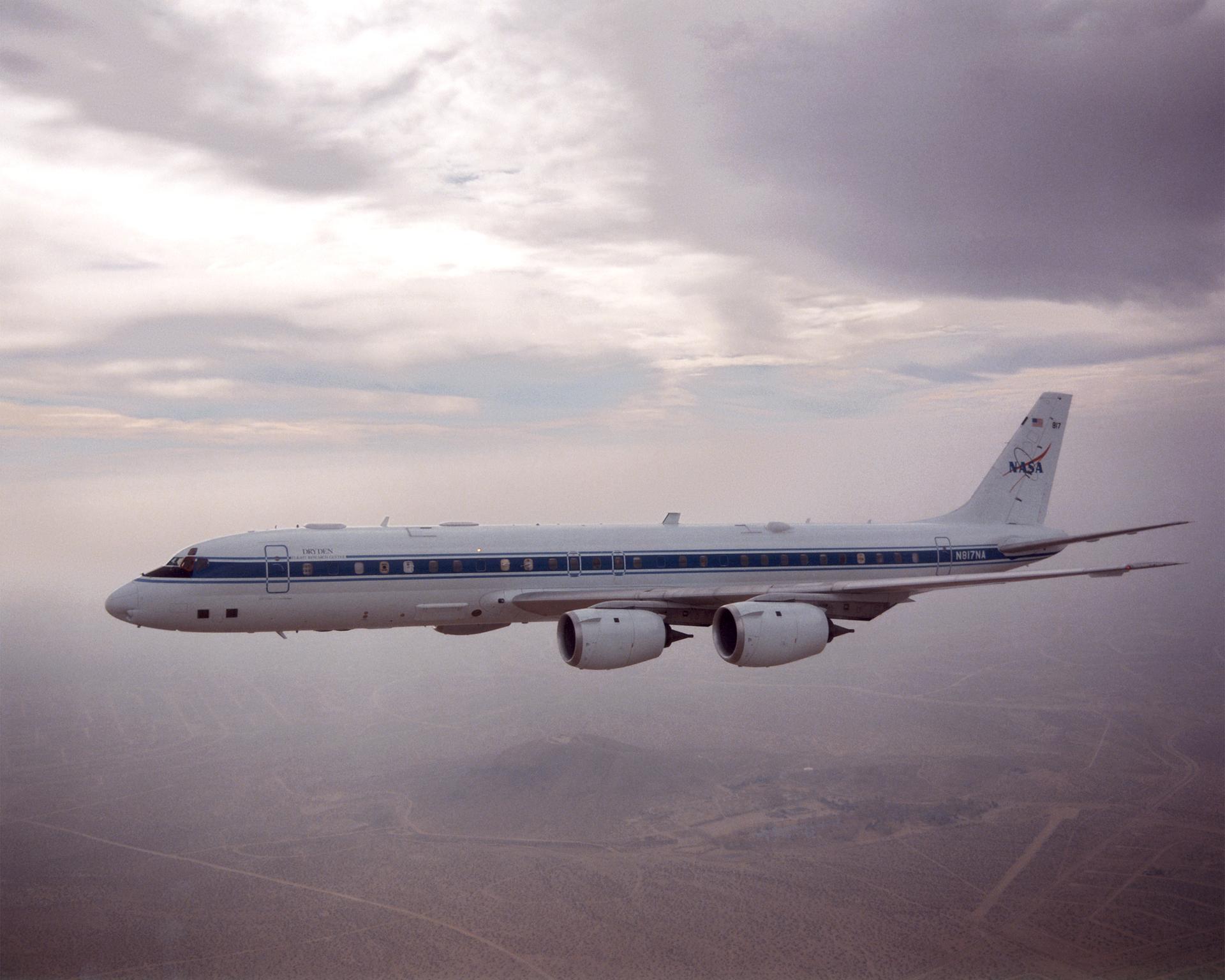
Low-Altitude Flights Study Everyday Emissions
The AEROMMA project focused on gathering data on human-based pollution sources.
Additional Information
NASA Goddard's Air Quality Observations from Space
Learn more about how NASA Goddard studies air pollution.

Contrails
From space and below, NASA studies aircraft contrails, the conditions that lead to their formation, and their effect on the atmosphere.
Discover More Topics From NASA
Earth
Your home. Our Mission. And the one planet that NASA studies more than any other.

Climate Change
NASA is a global leader in studying Earth’s changing climate.

Explore Earth Science

Earth Science in Action
NASA's unique vantage point helps us inform solutions to enhance decision-making, improve livelihoods, and protect our planet.
