


























Arcstone

NASA's Arcstone instrument will be the first mission exclusively dedicated to measuring moonlight, or lunar reflectance, from space as a way to calibrate and improve science data collected by Earth-viewing, in-orbit instruments.
MISSION TYPE
Partners
Launch
OBJECTIVE
NASA Tech to Use Moonlight to Enhance Measurements from Space
Editor’s note: NASA’s Arcstone lunar calibration instrument lifted off aboard the Transporter-14 rideshare mission with SpaceX via launch integrator Maverick Space Systems from Vandenberg Space…
Read the Story
High Accuracy. In-Orbit Calibration Reference. Lunar Reflectance.
One of the most challenging tasks in remote sensing from space is achieving instrument calibration accuracy on-orbit.
The Moon is considered to be an excellent exoatmospheric calibration source. In fact, SeaWiFS, launched in the late 1990’s, was the first spaceborne sensor to make full use of Moon imaging for on-orbit radiometric performance.
Unfortunately, the current accuracy of the Moon as an absolute reference is limited to 5 – 10%, meaning that the inadequate accuracy of absolute lunar irradiance values causes mission operators to cite the risk of lunar maneuvers as exceeding the benefits of using the Moon as a reference.
Arcstone is a mission concept that provides a solution to this challenge. An orbiting spectrometer flying on a small satellite in low Earth orbit (LEO) will provide lunar spectral reflectance with accuracy sufficient to establish an SI-traceable absolute lunar calibration standard for past, current, and future Earth viewing sensors and constellation systems.
Arcstone will leverage existing NASA assets by using the Total and Spectral Irradiance Sensor (TSIS) observations – accurate Spectral Solar Irradiance (SSI) – for SI-traceable and spectral calibration of the Arcstone instrument on orbit.
Game-changing Measurements
Spectral measurements of lunar and solar irradiance are required to retrieve reflectance of the Moon with a spectral range of 350 nm to 2300 nm and a spectral sampling of 4 nm.
The Arcstone mission’s goal is to achieve < 1.0% (k = 2) absolute accuracy for spectral lunar reflectance. Daily observations over 3 years are needed to cover minimum required libration space.
This animation shows what the changing view of the Moon looks like when a month is compressed into 24 seconds.
The wobble is called libration.
Establishing International Standards and Improving Performance
Arcstone establishes international standards and improves the performance of past, current and future space sensors.
- Collaborating with the Global Space-based Inter-Calibration System (GSICS) community, the Arcstone mission will provide the data necessary to establish the international standard for absolute lunar calibration.
- Improving the performance and impact of past (SeaWiFS), current (Moderate Resolution Imaging Spectroradiometer (MODIS), Visible Infrared Imaging Radiometer Suite (VIIRS), and future Decadal Survey missions – Plankton, Aerosol, Cloud, ocean Ecosystem (PACE), Climate Absolute Radiance and Refractivity Earth Observatory (CLARREO), and the Advanced Composition Explorer (ACE).
you can find a list of instruments with lunar observation capabilities from the 2014 GSICS Lunar Calibration Workshop.

Download Arcstone Resources
Arcstone Fact Sheet (.pdf)
Jul 16, 2025
PDF (1.18 MB)
Discover More Topics From NASA
Moonlight
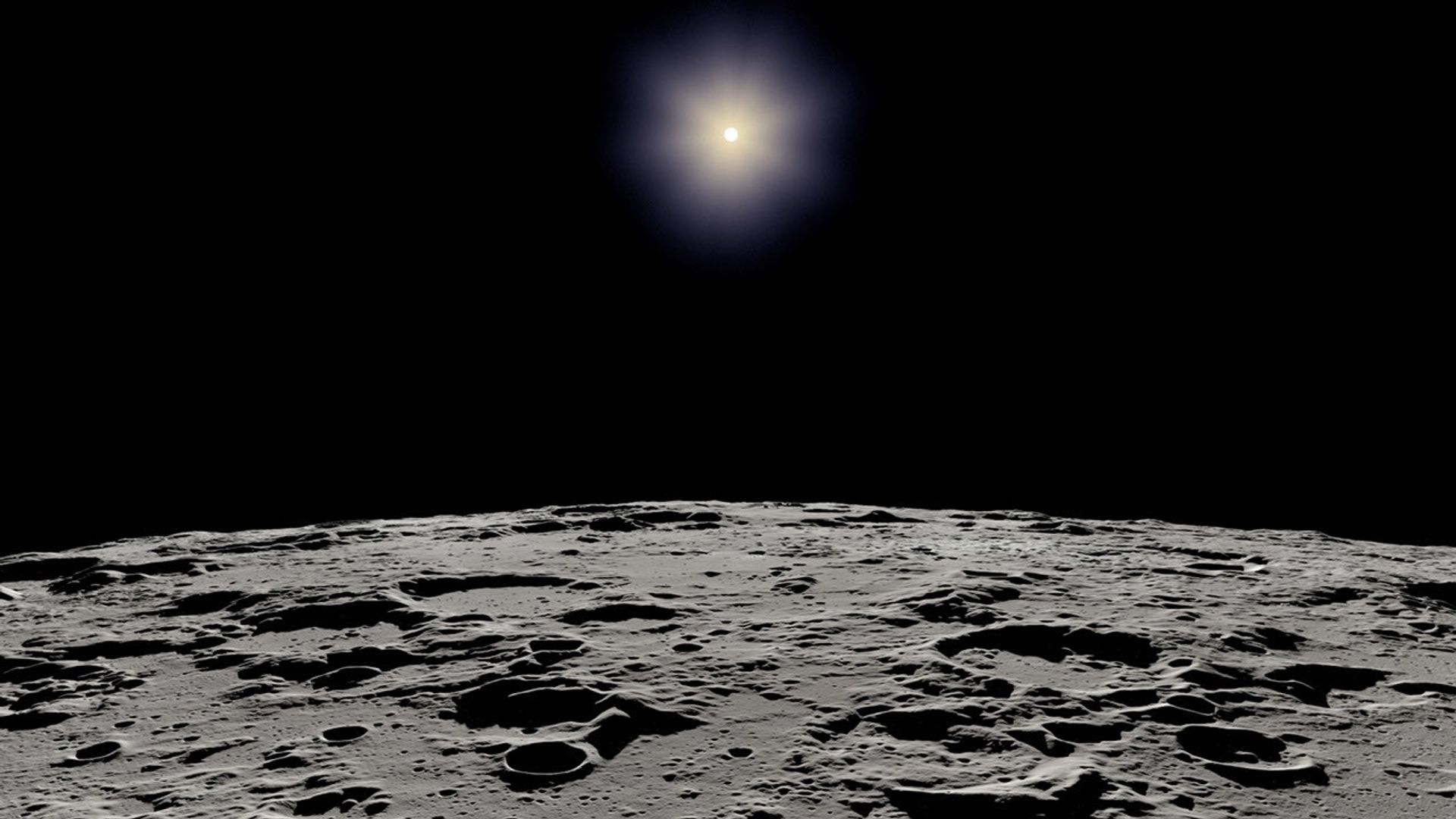
The Moon does not make its own light. "Moonlight” is reflected sunlight. At any moment, it's daytime on one half…
Earth’s Moon Resources
This page showcases our resources for those interested in learning more about Earth's Moon.

Space Weather Program – Implementation Office
The Space Weather Program Office (SWxPO) implements and coordinates comprehensive program management to support NASA Headquarters' space weather initiatives.

Langley Science
Science at NASA’s Langley Research Center.
