












Equator-S
Type
Launch
Target
Objective

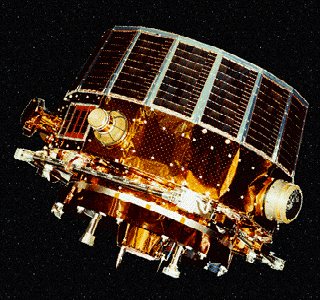
Equator-S was a low-cost mission designed to study Earth’s magnetic environment, the magnetosphere, above the equator. This unique orbit took Equator-S through both the day and night sides of the magnetosphere, giving us a new perspective on the behavior of particles, electric currents, and magnetic fields at the boundary between near-Earth and interplanetary space. This complex system is influenced by changes in the space environment near Earth, often precipitated by a change in the sun’s constant outflow of material, the solar wind, or the arrival of a hot, dense cloud of solar material known as a coronal mass ejection. Because of its high spin rate and equatorial orbit, Equator-S gave us unique observations of processes that influence the flow of energy, mass, and momentum in and out of Earth’s magnetosphere.
Discover More Topics From NASA
James Webb Space Telescope
Webb is the premier observatory of the next decade, serving thousands of astronomers worldwide. It studies every phase in the…

Perseverance Rover
This rover and its aerial sidekick were assigned to study the geology of Mars and seek signs of ancient microbial…
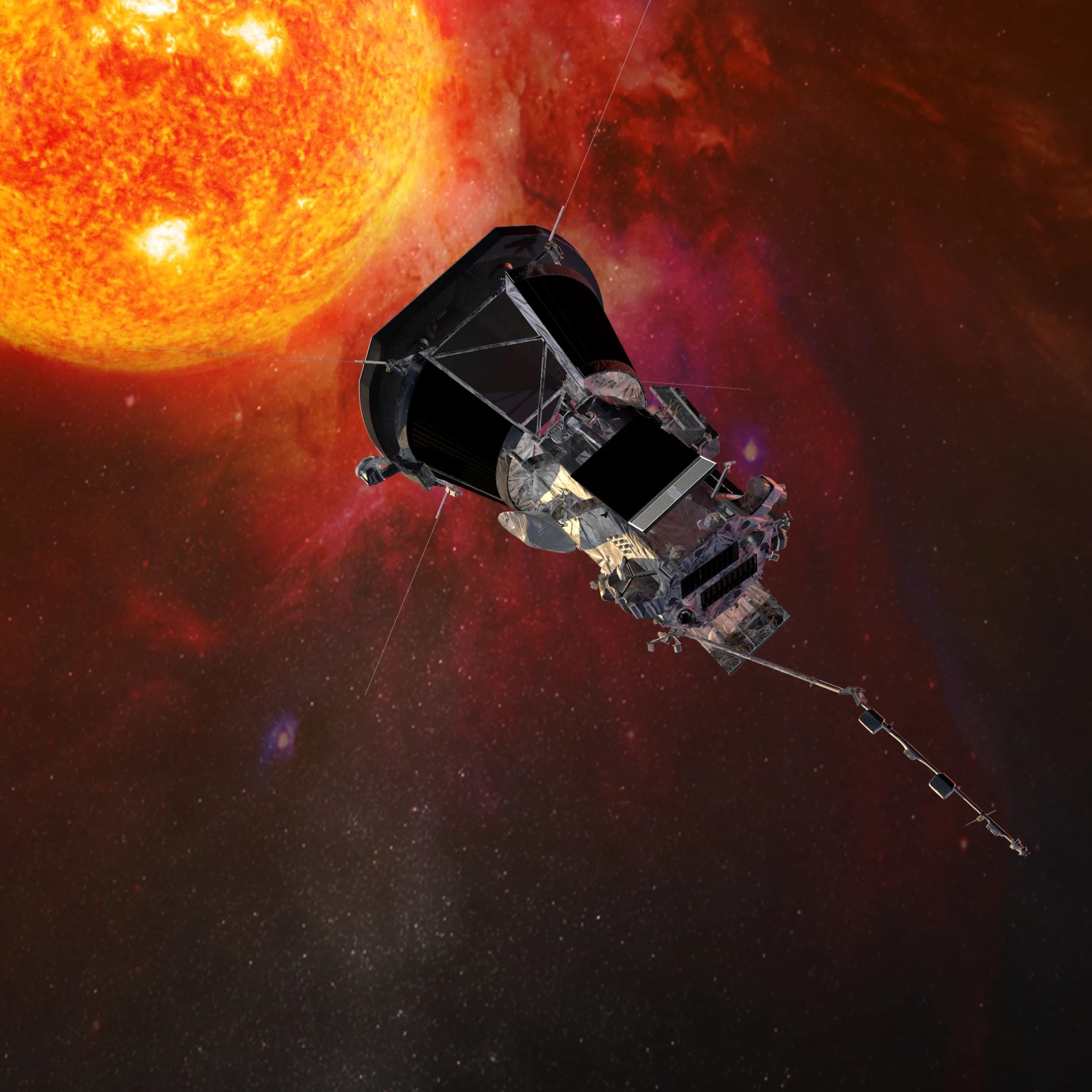
Parker Solar Probe
On a mission to “touch the Sun,” NASA's Parker Solar Probe became the first spacecraft to fly through the corona…
Juno
NASA’s Juno spacecraft entered orbit around Jupiter in 2016, the first explorer to peer below the planet's dense clouds to…