When a star runs out of its hydrogen fuel, the path it takes toward death depends on its size. For stars, it’s a balance between the radiation pressure of their fuel-burning cores pushing outward, and their gravity pulling inward. When stars run out of fuel, gravity wins this struggle, and the star begins to collapse into black hole, neutron star, or white dwarf depending on its size.
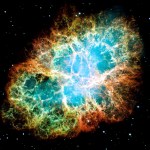
The Crab Nebula
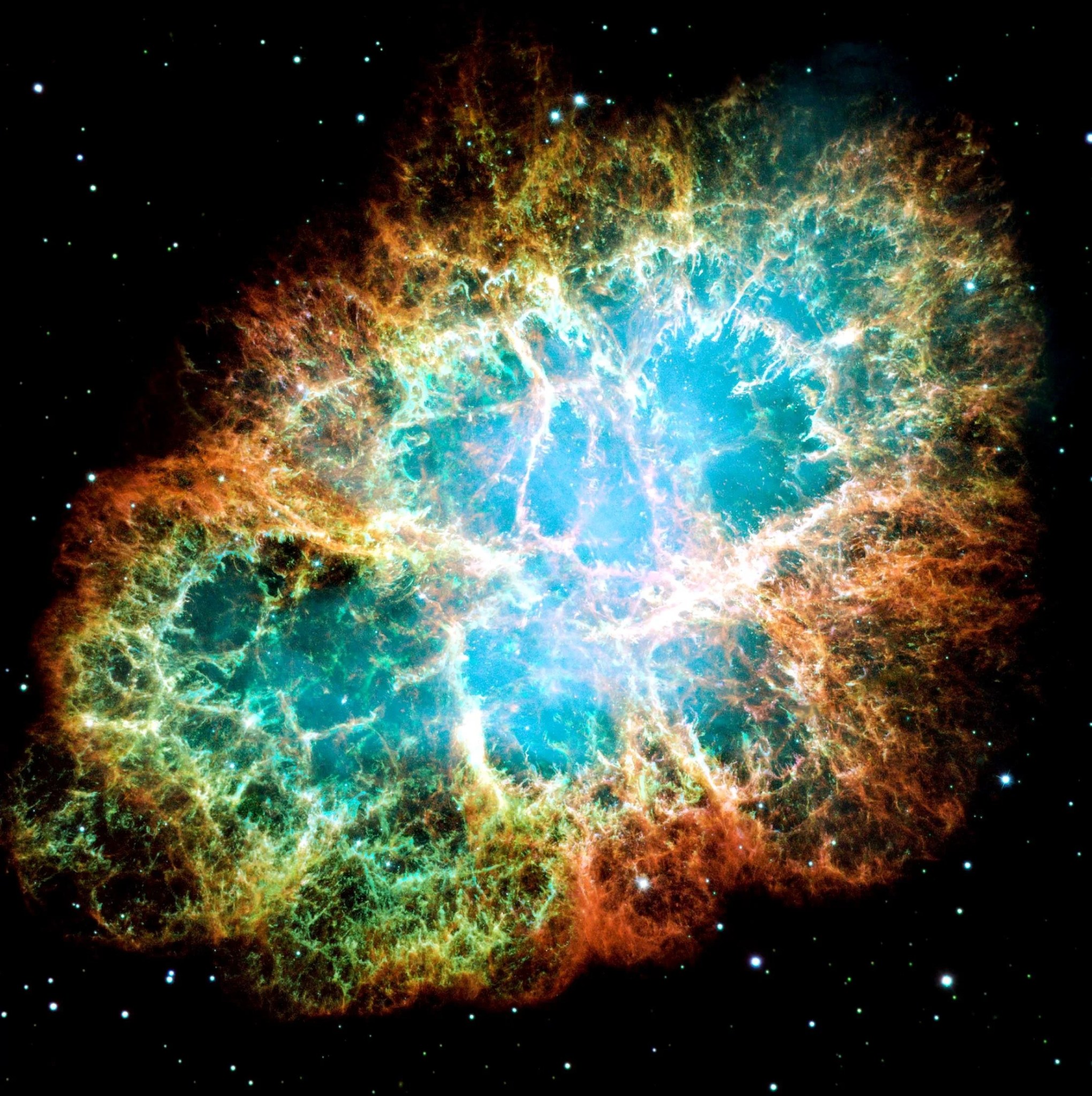
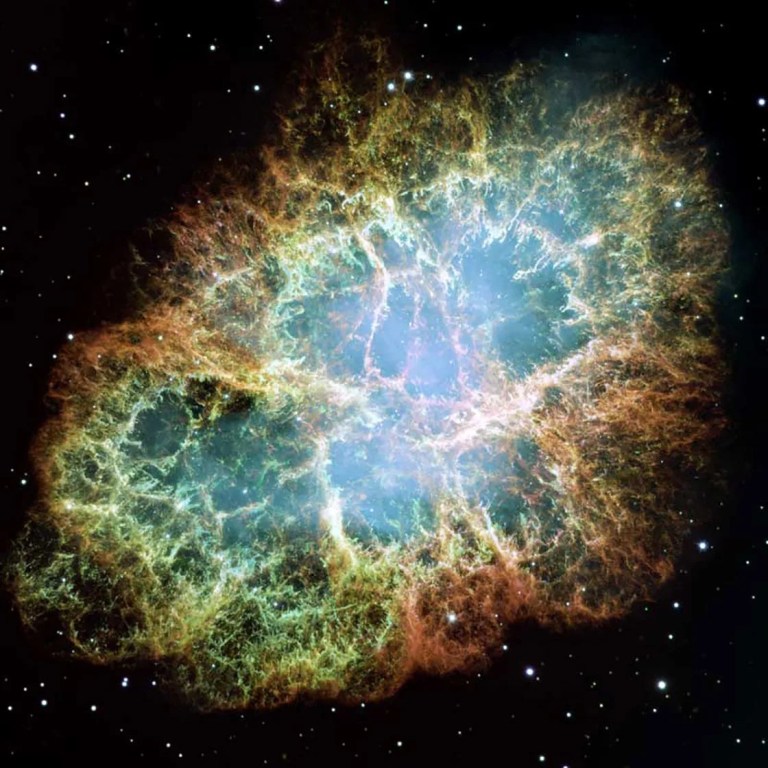
The Crab Nebula is the result of a massive star's collapsing core that ignited an uncontrolled explosion called a supernova. That explosion was visible during daylight hours on Earth in 1054 CE. The faint remnant we see today is an expanding shell of gas and dust aided by an outflowing wind from a rapidly spinning, highly magnetized neutron star called a pulsar.
NASA, ESA, J. Hester and A. Loll (Arizona State University)
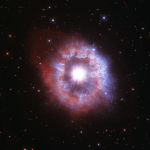
Eta Carinae
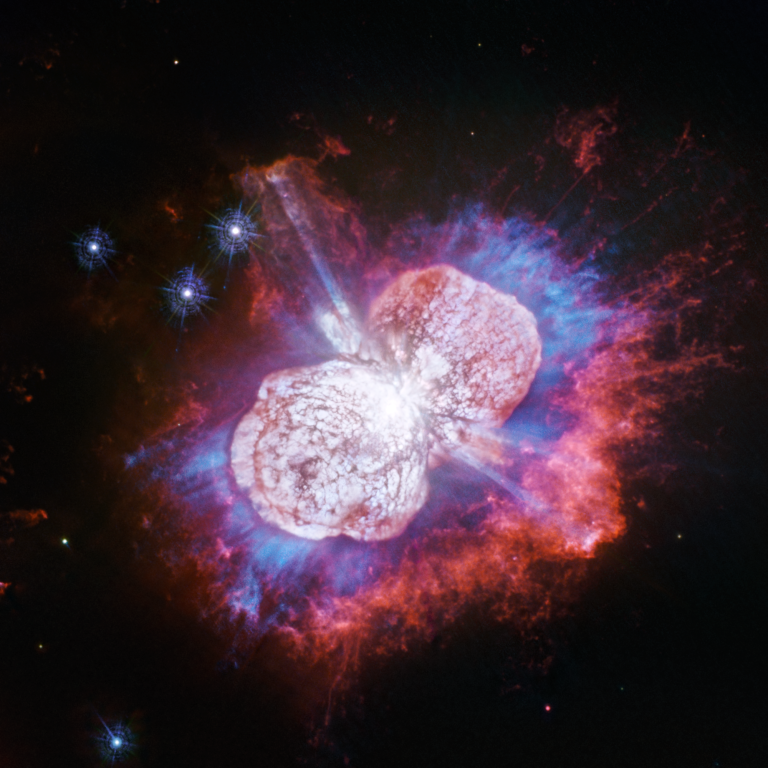
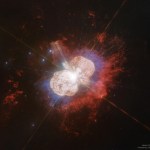
Eta Carinae is another doomed star that will also end its life in a supernova explosion. A regular target for Hubble since its 1990 launch, Eta Carinae is a system with at least two stars. The largest and brightest is an enormous supergiant star about 100 times the mass of the Sun and five million times brighter. This ultraviolet image from Hubble’s Wide Field Camera 3 revealed new areas of magnesium embedded in warm gas (blue). The glowing magnesium dwells between the dusty bipolar bubbles and the outer shock-heated, nitrogen-rich filaments (red). The two lobes likely formed during an outburst the star had in the early 1800s.
NASA, ESA, N. Smith (University of Arizona) and J. Morse (BoldlyGo Institute)
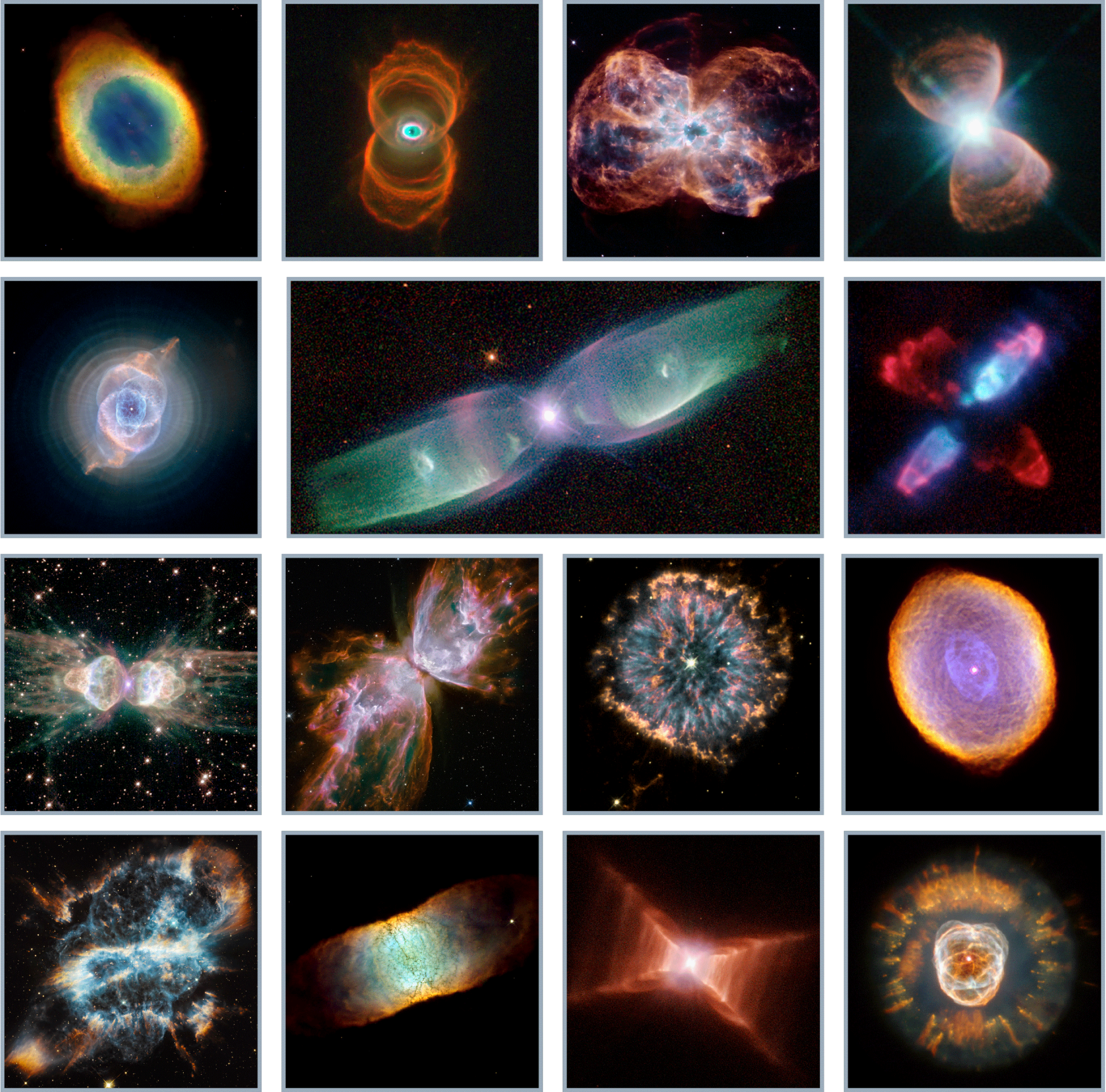
Planetary Nebulae
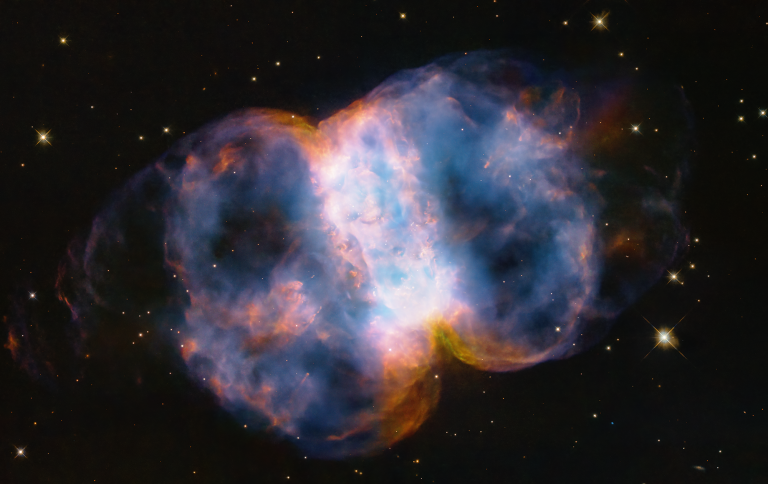
When a medium-sized star begins to die, it sheds its outer layers, forming a shell of gas and dust called a “planetary nebula.” Before Hubble, ground-based images suggested that planetary nebulae have simple, spherical shapes. Hubble observations revealed unprecedented details that show they are much more varied and complex. These images offer insights into the complex dynamics that accompany a star’s release of its outer gaseous layers before it collapses to form a white dwarf or neutron star.
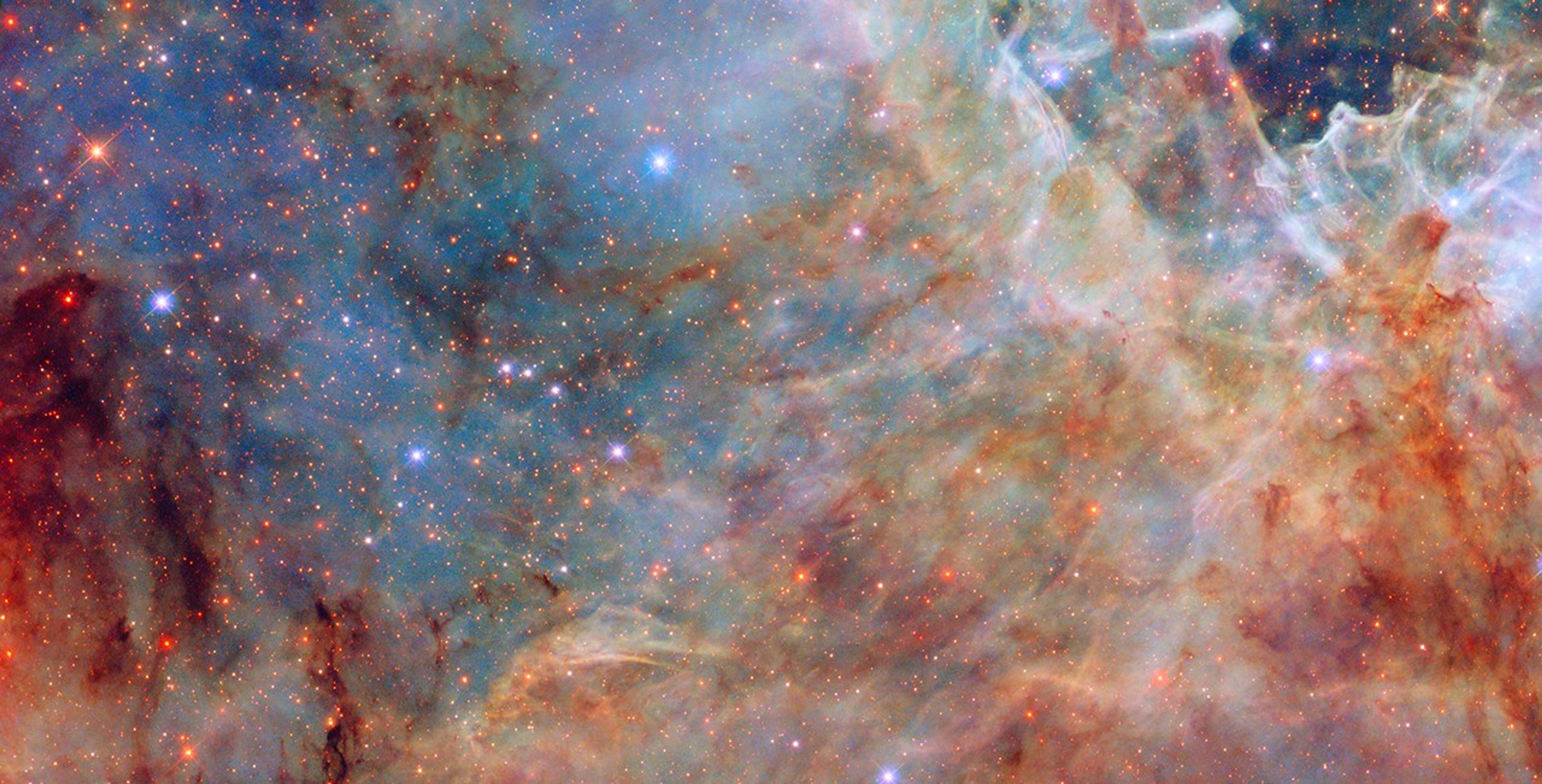
This composite image holds 24 individual Hubble exposures. It is one of the largest images taken by Hubble and is the highest resolution image ever made of the entire Crab Nebula.