














Surveyor 4
Type
Launch
Target
Objective

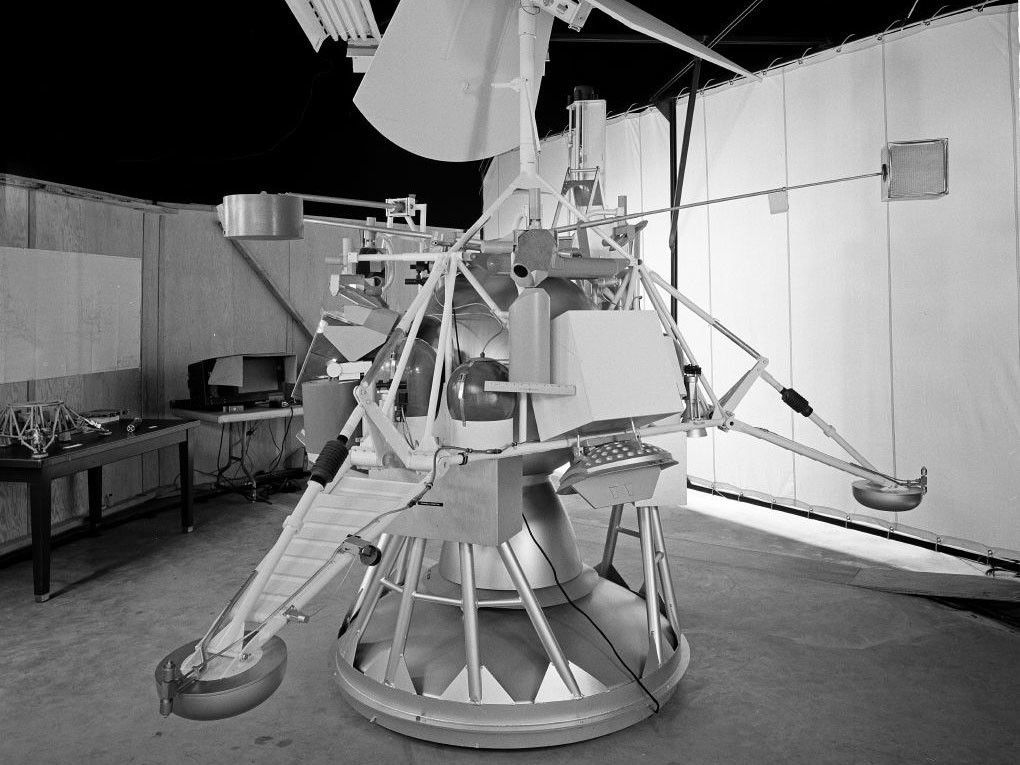
What was Surveyor 4?
NASA's Surveyor 4 was the fourth in a series of spacecraft designed to make a soft landing on the Moon. Radio signals from the spacecraft stopped a few minutes before touchdown and contact was never reestablished.
| Nation | United States of America (USA) |
| Objective(s) | Lunar Soft-Landing |
| Spacecraft | Surveyor-D |
| Spacecraft Mass | 2,287 pounds (1,037.4 kilograms) |
| Mission Design and Management | NASA / JPL |
| Launch Vehicle | Atlas Centaur (AC-11 / Atlas D no. 291 / Centaur D) |
| Launch Date and Time | July 14, 1967 / 11:53:29 UT |
| Launch Site | Cape Canaveral, Fla. / Launch Complex 36A |
| Scientific Instruments | 1. TV Camera 2. Surface Sampler |
Key Dates
July 14, 1967: Launch
July 17, 1967: Communication lost
In Depth: Surveyor 4
Like Surveyor 3, Surveyor 4 was equipped with a surface claw (with a magnet in the claw) to detect and measure ferrous elements in the lunar surface.
The mission appeared successful until all communications were abruptly lost two seconds prior to retro-rocket cutoff at 02:03 UT July 17, 1967, just two-and-a-half minutes before landing on the Moon. The landing target was Sinus Medii (Central Bay) at 0.4 degrees north latitude and 1.33 degrees west longitude.
NASA believed that the solid propellant retro-rocket might have exploded, destroying the vehicle.
Key Source
Siddiqi, Asif A. Beyond Earth: A Chronicle of Deep Space Exploration, 1958-2016. NASA History Program Office, 2018.
Latest News


Discover More Topics From NASA
James Webb Space Telescope
Webb is the premier observatory of the next decade, serving thousands of astronomers worldwide. It studies every phase in the…
Perseverance Rover
This rover and its aerial sidekick were assigned to study the geology of Mars and seek signs of ancient microbial…
Parker Solar Probe
On a mission to “touch the Sun,” NASA's Parker Solar Probe became the first spacecraft to fly through the corona…
Juno
NASA’s Juno spacecraft entered orbit around Jupiter in 2016, the first explorer to peer below the planet's dense clouds to…