Mariner 1
Type
Launch
Target
Results
What was Mariner 1?
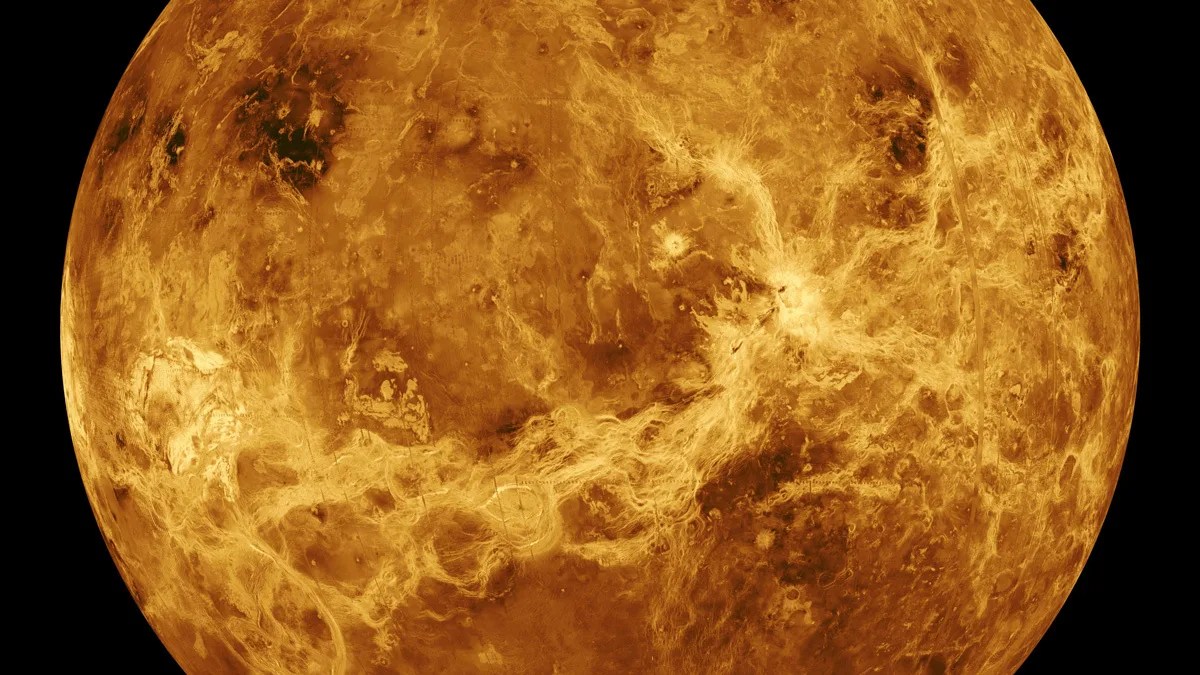
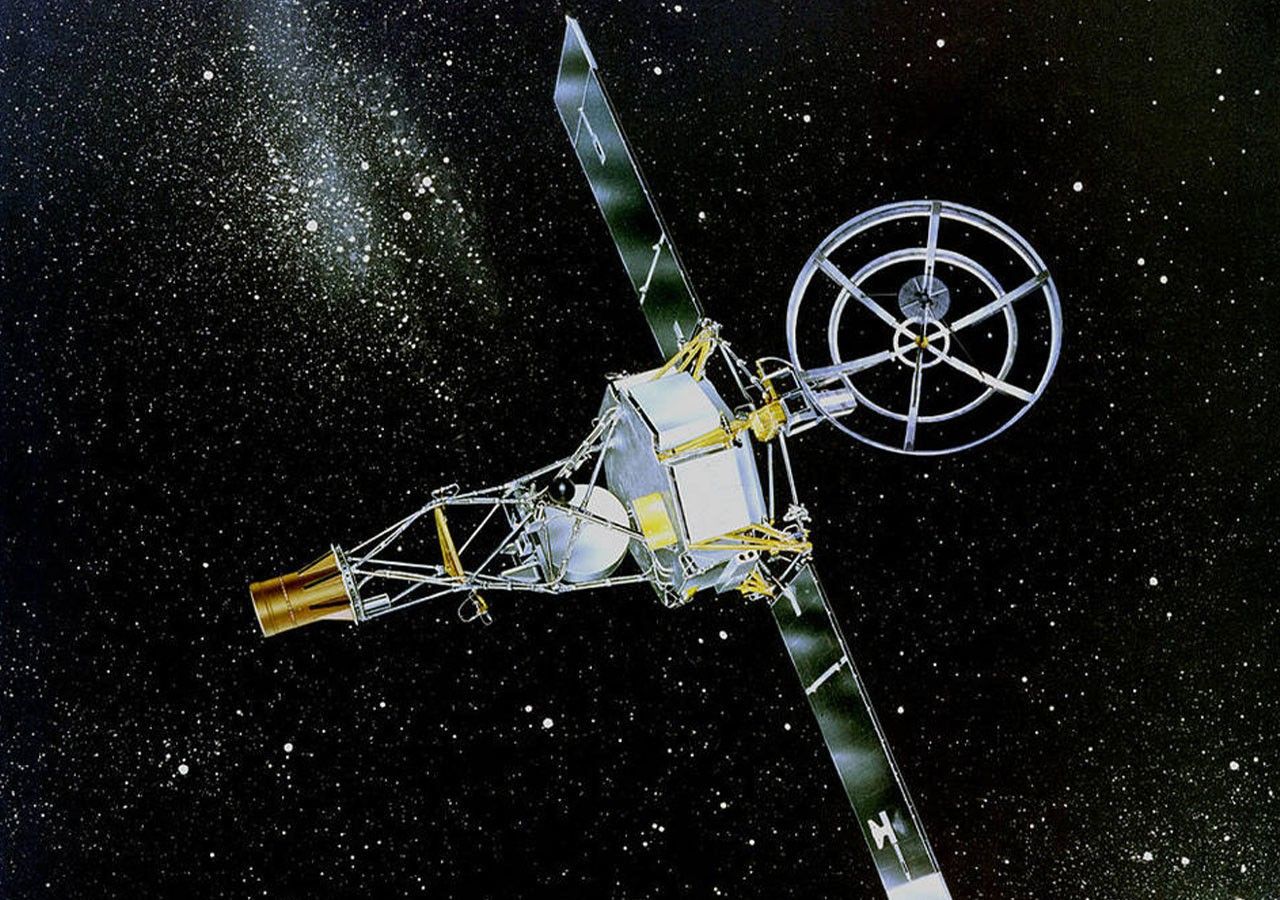
Mariner 1 was the first U.S. attempt to launch a spacecraft to explore Venus up close. It was intended to perform a Venus flyby. The spacecraft was lost to a software glitch. Investigators found a typo had caused a fault in the launch vehicle's guidance software. The spacecraft and booster were destroyed shortly after launch for safety.
| Nation | United States of America |
| Objective | Venus Flyby |
| Spacecraft | P-37 / Mariner R-1 |
| Spacecraft Mass | 447 pounds (202.8 kilograms) |
| Spacecraft Power | Solar |
| Mission Design and Management | NASA/JPL |
| Launch Vehicle | Atlas Agena B (Atlas Agena B no. 5 / Atlas D no. 145 / Agena B no. 6901) |
| Launch Date | July 22, 1962 / 09:21:23 UT |
| Launch Site | Cape Canaveral Fla. / Launch Complex 12 |
| Scientific Instruments | 1. Microwave Radiometer 2. Infrared Radiometer 3. Fluxgate Magnetometer 4. Cosmic Dust Detector 5. Solar Plasma Spectrometer 6. Energetic Particle Detectors 7. Ionization Chamber |


Results
Mariner 1 was the first of two spacecraft NASA designed to send to Venus. Each carried a modest suite (about 20 pounds or 9 kilograms) of scientific instrumentation but had no imaging capability.
The spacecraft included 54,000 components and were designed to maintain contact with Earth for about 15 weeks.
Mariner 1 lifted off on July 22, 1962, but its rocket veered off course and the Range Safety Officer had to send a destruct command to the vehicle at T+294.5 seconds.
The failure was traced to a guidance antenna on the Atlas. Also, a software error, the omission of an overbar for the symbol R for radius (R instead of R̅) in an equation, caused the program to not respond as planned. It should be noted the omission was not a hyphen, as is sometimes erroneously reported.
Engineers quickly fixed the problems and sent Mariner 2 on its way to Venus on Aug. 27, 1962. It completed the first remote encounter with another planet on Dec. 14, 1962, returning valuable information about our celestial neighbor.
Read More
NSSDC Master Catalog: Mariner 1
In depth mission details and data from the National Space Science Data Center.

Beyond Earth: A Chronicle of Deep Space Exploration
A definitive history of deep space missions.