












Mariner 8
Type
Launch
Target
Objective
What was Mariner 8?
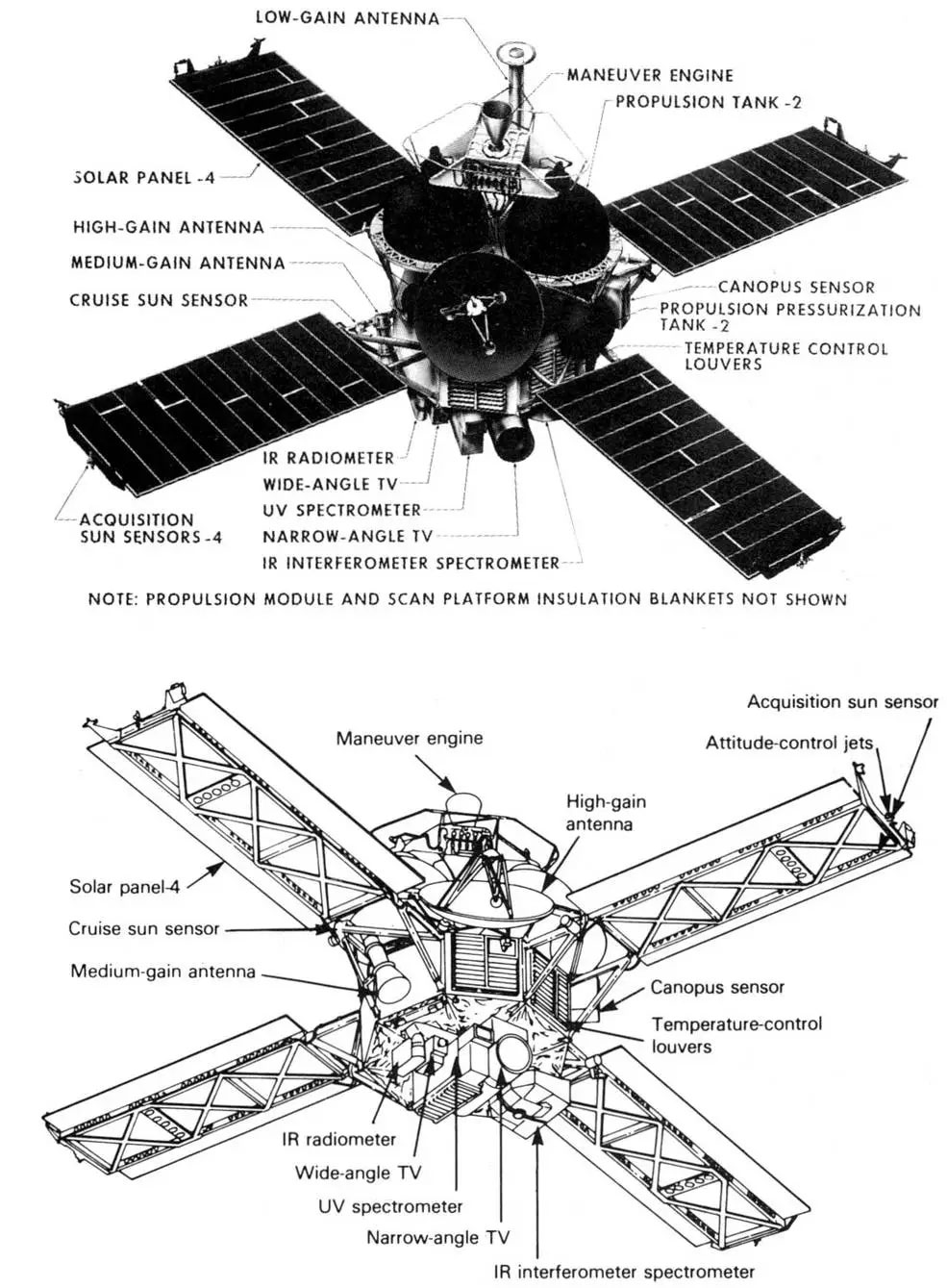
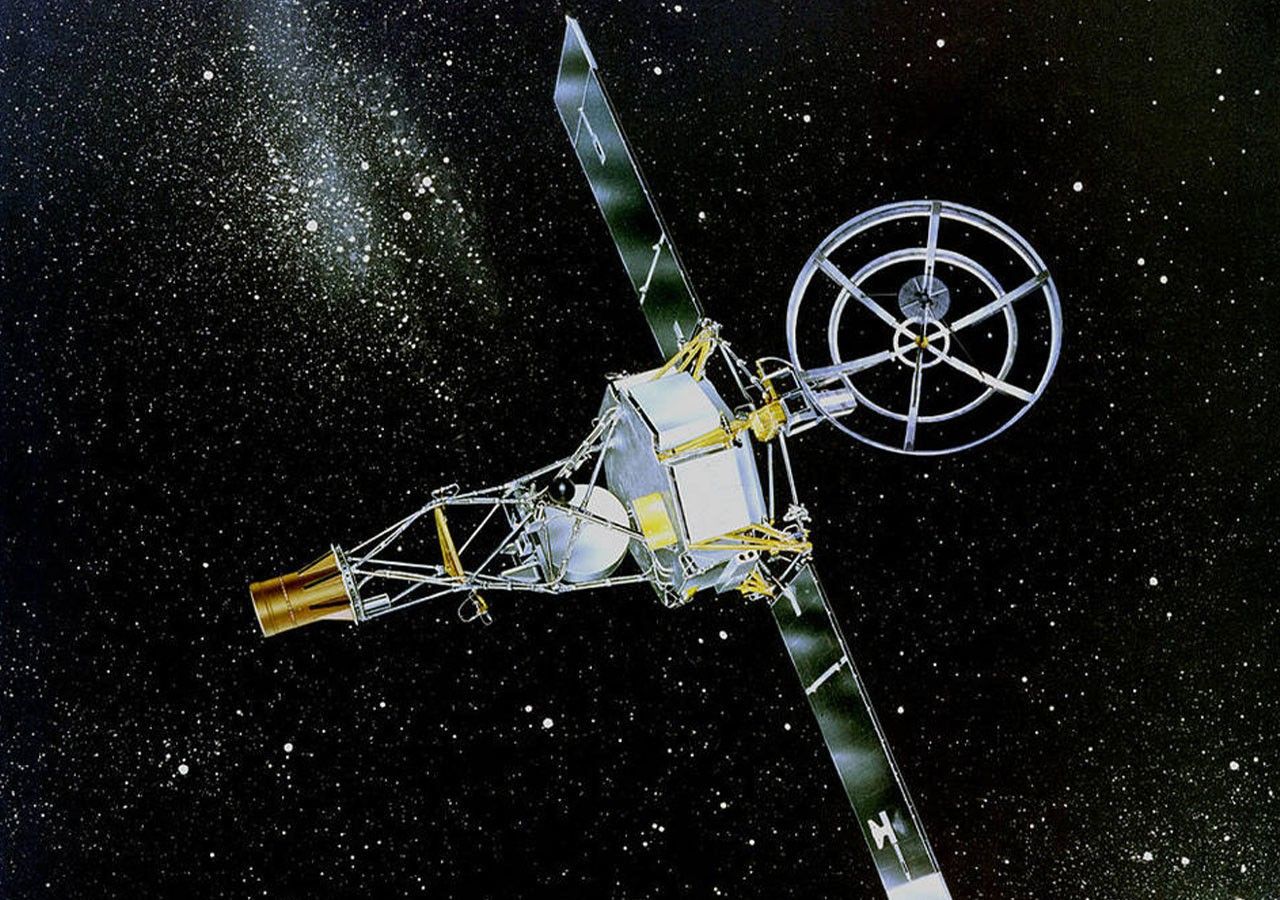
Mariner 8 was the first of two spacecraft designed to orbit Mars for at least 90 days and gather data on the Martian atmosphere and surface. Mariner 8’s launch vehicle malfunctioned and the spacecraft reentered Earth’s atmosphere north of Puerto Rico.
| Nation | United States of America (USA) |
| Objective(s) | Mars Orbit |
| Spacecraft | Mariner-71H / Mariner-H |
| Spacecraft Mass | 2,200 pounds (997.9 kilograms) |
| Spacecraft Power | Solar |
| Mission Design and Management | NASA / JPL |
| Launch Vehicle | Atlas Centaur (AC-24 / Atlas 3C no. 5405C / Centaur D-1A) |
| Launch Date and Time | May 9, 1971 / 01:11:01 UT |
| Launch Site | Cape Canaveral, Fla. / Launch Complex 36A |
| Scientific Instruments | 1. Imaging System 2. Ultraviolet Spectrometer 3. Infrared Spectrometer 4. Infrared Radiometer |

Results
NASA’s Mariner 8 (also called Mariner-H and Mariner-71H) was the first in a pair of American spacecraft intended to explore the physical and dynamic characteristics of Mars from Martian orbit.
The overall goals for the spacecraft were to search for an environment that could support life; to collect data on the origins and evolution of Mars; to gather information on planetary physics, geology, planetology, and cosmology; and to provide data that could aid future spacecraft such as the Viking landers.
Mariner 8 was launched at 01:11:01 UT May 9, 1971, from Cape Canaveral, Florida.
The launch was nominal until just after the separation of the Centaur upper stage when a malfunction occurred in the stage’s flight control system leading to loss of pitch control at an altitude of 92 miles (148 kilometers) at T+4.7 minutes.
As a result, the stack began to tumble and the Centaur engines shut down.
The stage and its payload reentered Earth’s atmosphere approximately 1,500 kilometers downrange from the launch site, about 250 miles (400 kilometers) north of Puerto Rico.
The problem was traced to a failed integrated circuit in the pitch guidance module.
Read More
NSSDC Master Catalog: Mariner 8
In depth mission details and data from the National Space Science Data Center.

Beyond Earth: A Chronicle of Deep Space Exploration
A definitive history of deep space missions.

Discover More Topics From NASA
James Webb Space Telescope
Webb is the premier observatory of the next decade, serving thousands of astronomers worldwide. It studies every phase in the…
Perseverance Rover
This rover and its aerial sidekick were assigned to study the geology of Mars and seek signs of ancient microbial…
Parker Solar Probe
On a mission to “touch the Sun,” NASA's Parker Solar Probe became the first spacecraft to fly through the corona…
Juno
NASA’s Juno spacecraft entered orbit around Jupiter in 2016, the first explorer to peer below the planet's dense clouds to…