















Yohkoh
Type
Launch
Target
Objective
Orbit: Low Earth Orbit
Yohkoh (“Sunbeam”) was a Japanese solar mission with USA and UK collaborators. It was launched into Earth orbit in August 1991 from the Kagoshima Space Center in Southern Japan, and provided valuable data about the Sun’s corona and solar flares. Its mission was to observe in X-ray radiation the energetic phenomena occurring in the solar atmosphere or corona, such as solar flares and gamma-ray emissions. To meet the task, the satellite carried four instruments: a Soft X-ray Telescope, Hard X-ray Telescope, Bragg Crystal Spectrometer, and Wide Band Spectrometer.
In December 2001, a fatal spacecraft failure ended Yohkoh’s mission. During an annular solar eclipse on December 14, the spacecraft lost pointing and the batteries discharged. Spacecraft operators were unable to command the satellite to point toward the Sun. Yohkoh re-entered Earth’s atmosphere on September 12, 2005.
Top of Page | Back to Missions
Discover More Topics From NASA
James Webb Space Telescope
Webb is the premier observatory of the next decade, serving thousands of astronomers worldwide. It studies every phase in the…

Perseverance Rover
This rover and its aerial sidekick were assigned to study the geology of Mars and seek signs of ancient microbial…
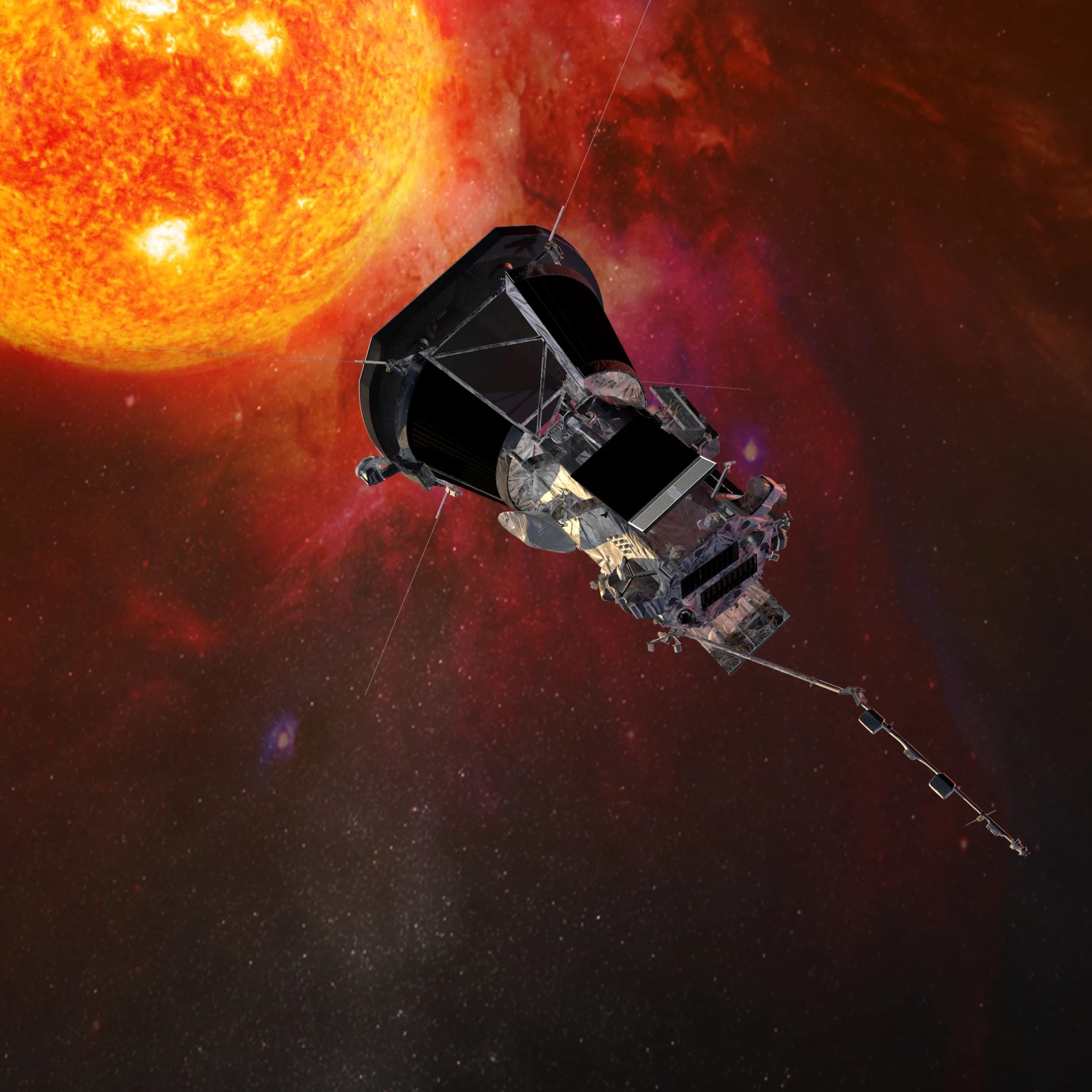
Parker Solar Probe
On a mission to “touch the Sun,” NASA's Parker Solar Probe became the first spacecraft to fly through the corona…
Juno
NASA’s Juno spacecraft entered orbit around Jupiter in 2016, the first explorer to peer below the planet's dense clouds to…