














Solar System Exploration
Join us as we explore our solar system.
Planets
Dwarf Planets
Follow Their Journey, Live
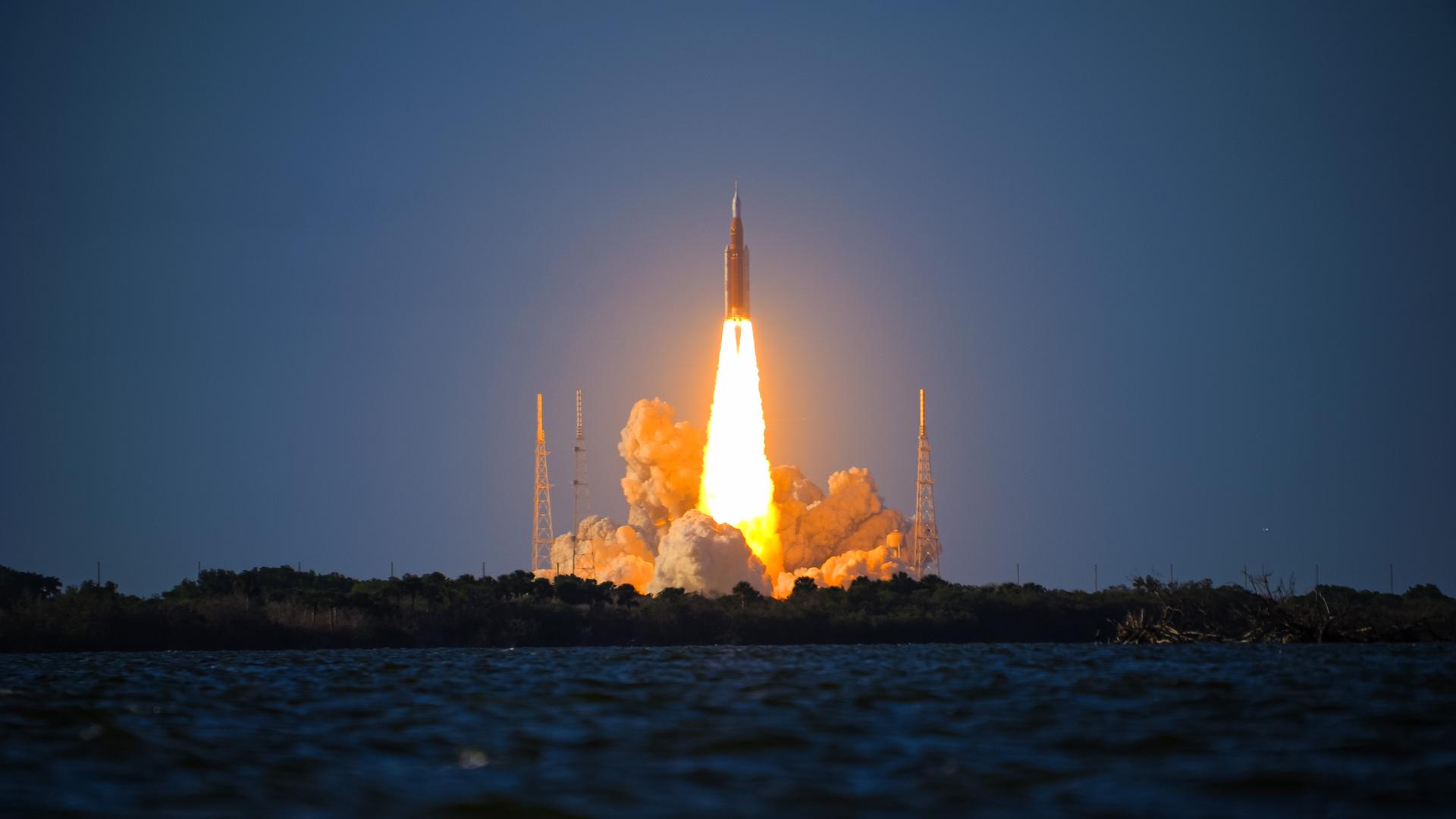
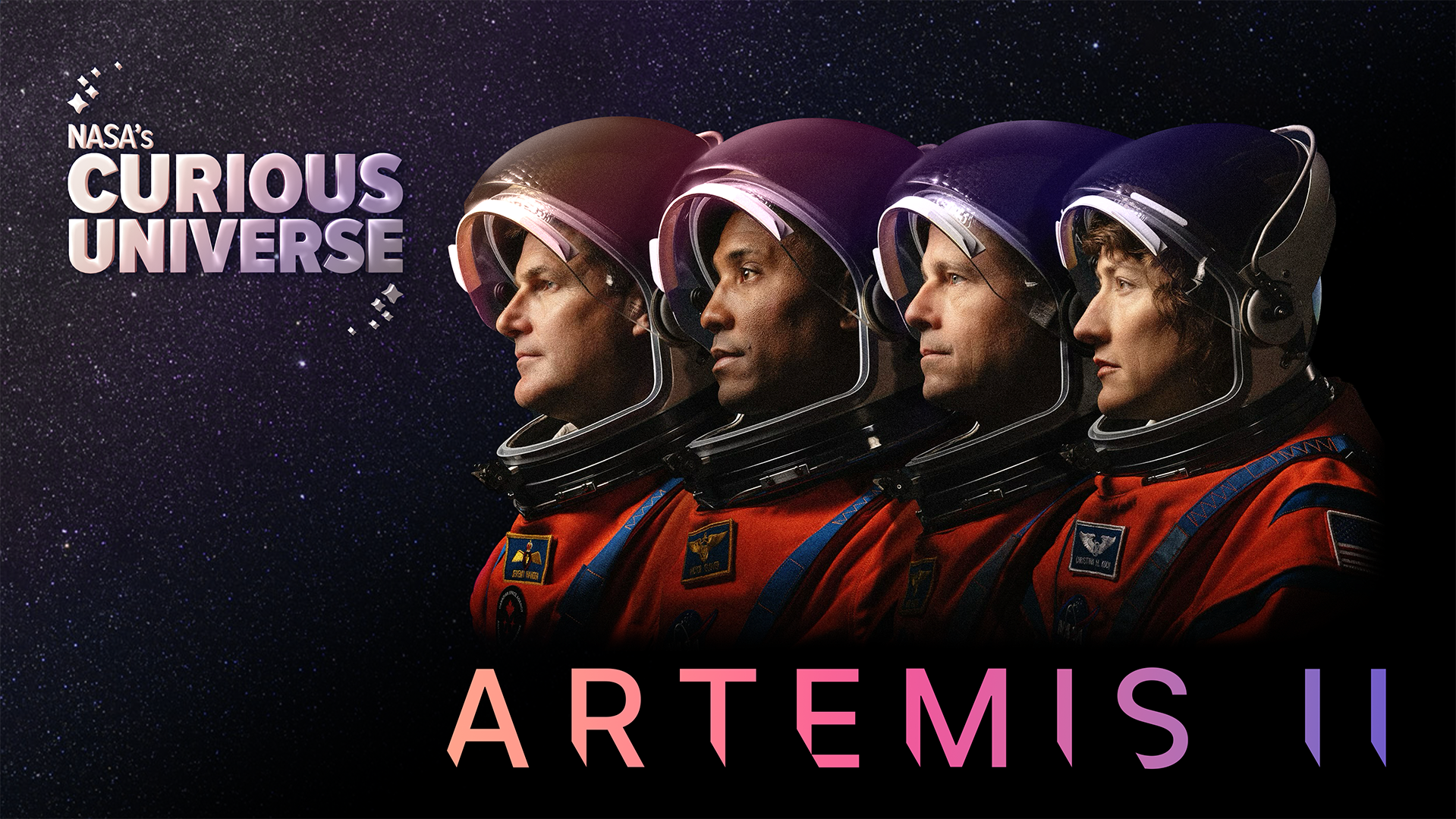
NASA’s Artemis II Crew Launches to the Moon
NASA astronauts Reid Wiseman, Victor Glover, Christina Koch, and CSA (Canadian Space Agency) astronaut Jeremy Hansen launched from Kennedy Space Center in Florida at 6:35 p.m. EDT on Wednesday, April 1, for an approximately 10‑day journey around the Moon. For mission updates and live views from their Orion spacecraft, check in at NASA.gov.
10 THINGS about our solar system
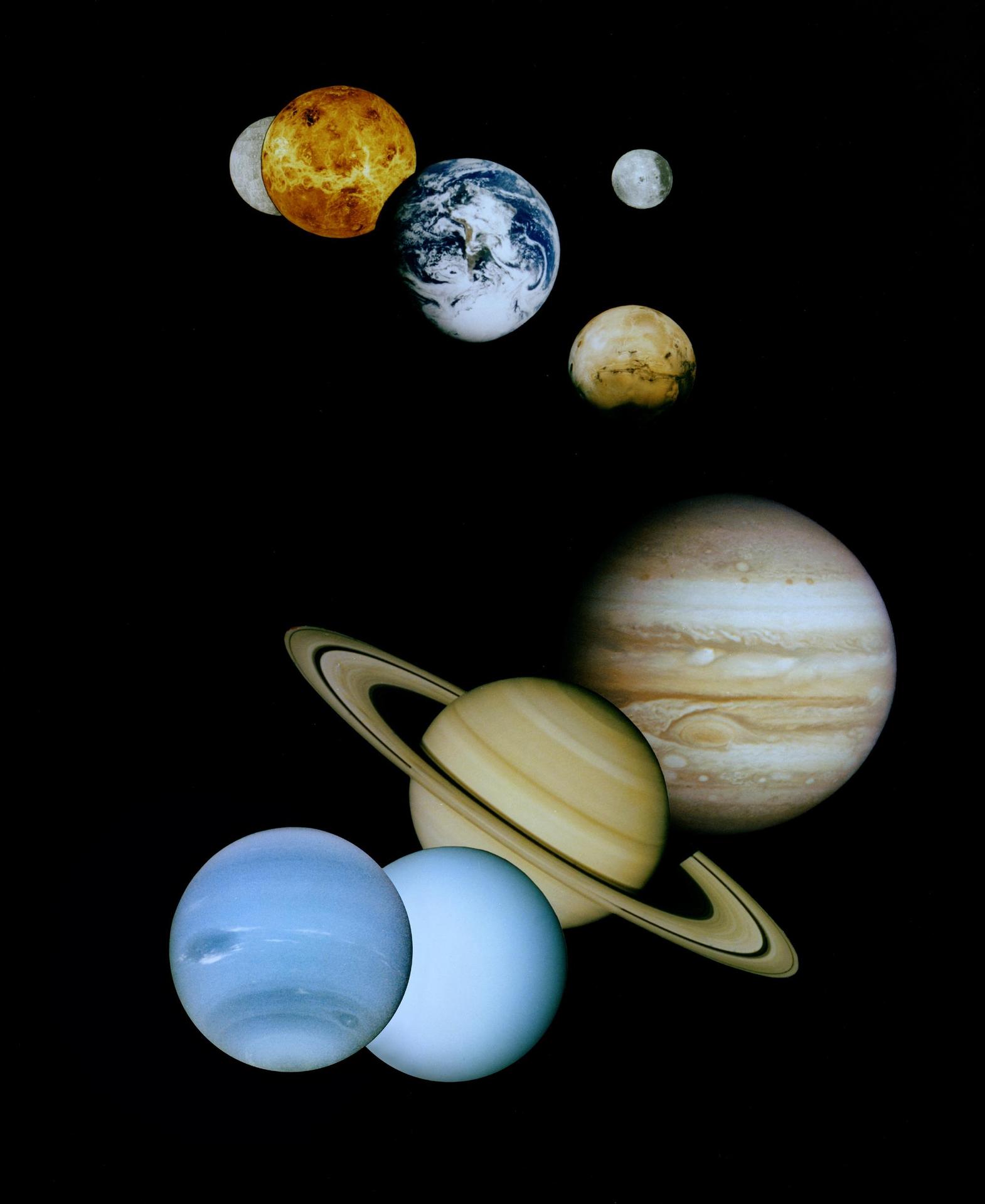
1. Many Worlds
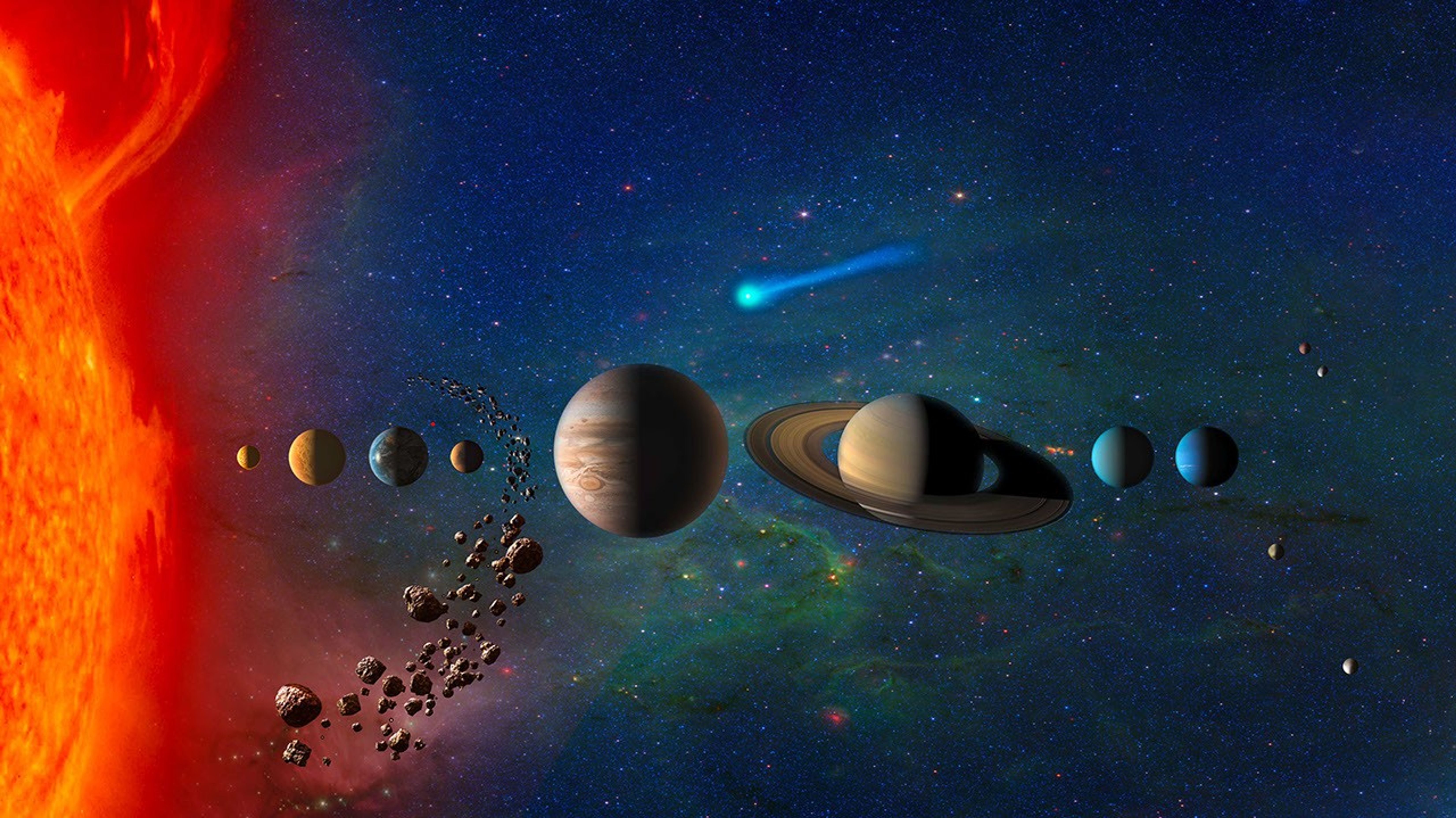
Our solar system has eight planets, and five dwarf planets.
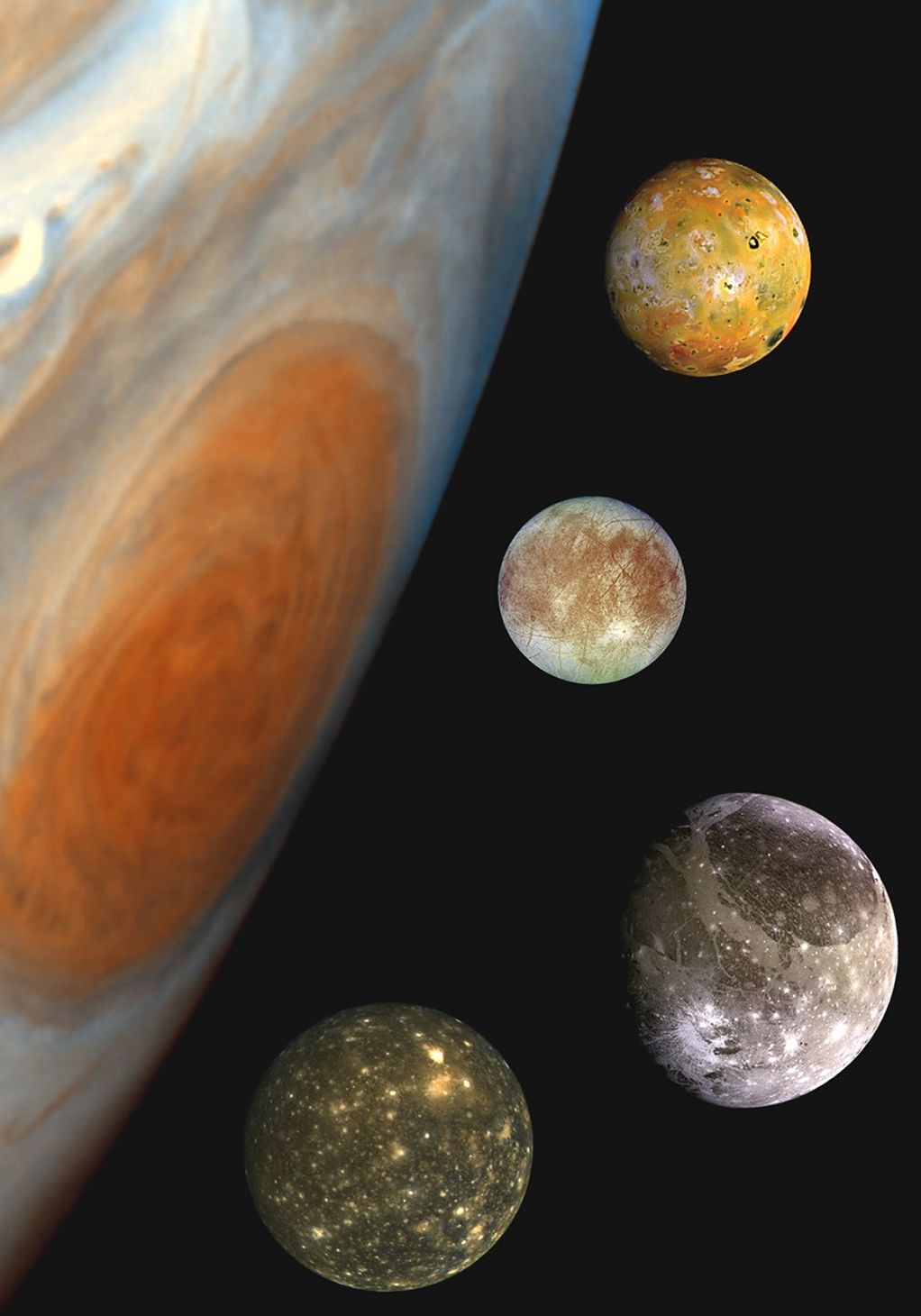
3. Lots of Moons
Our solar system has hundreds of moons.
5. A Long Way Around
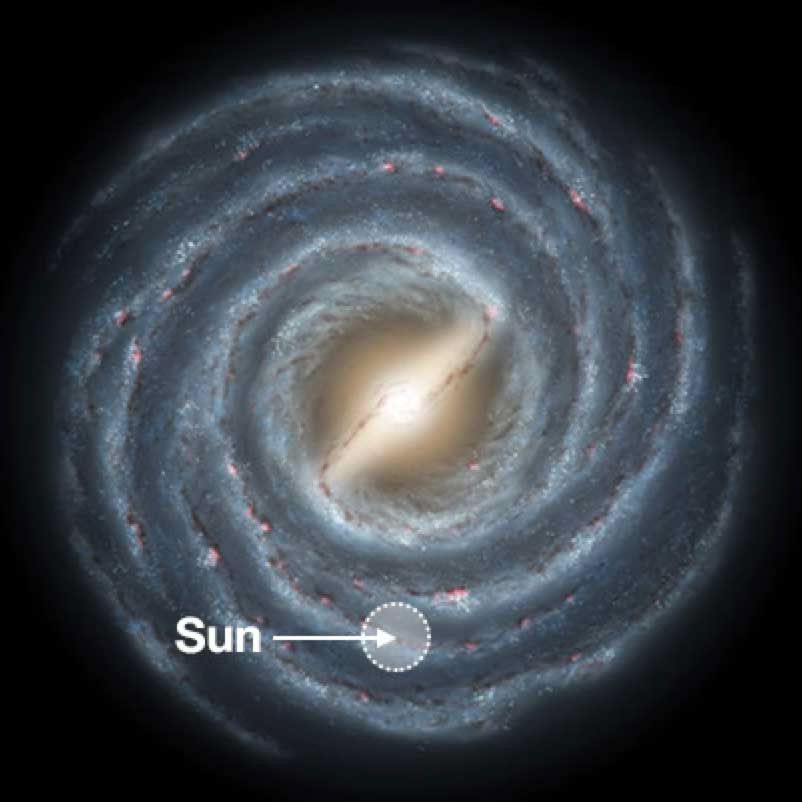
Our solar system takes about 230 million years to orbit the galactic center.

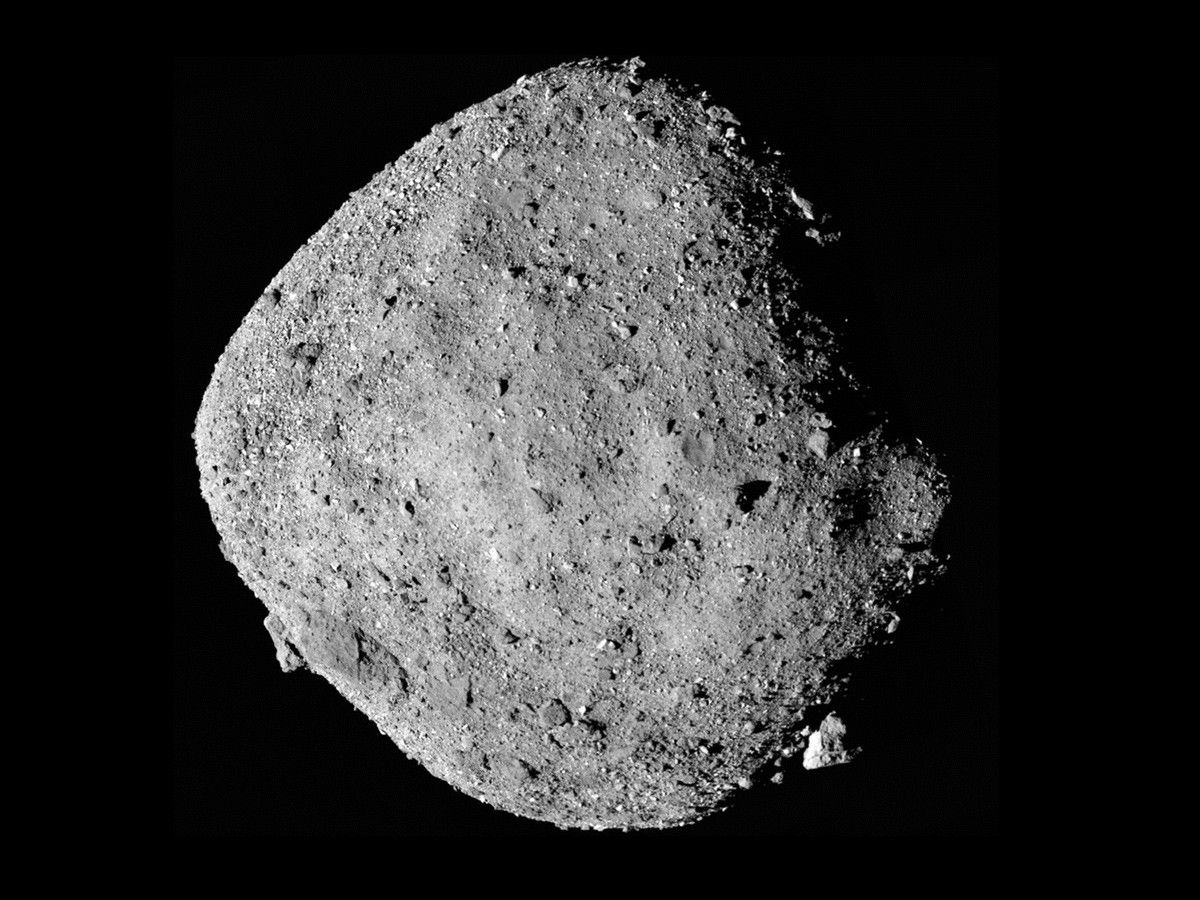
8. Ring Worlds
The four giant planets – and at least one asteroid – have rings.
9. Getting Out There
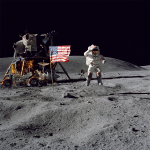
More than 300 robotic spacecraft have left Earth's orbit, and 24 U.S. astronauts have traveled to the Moon.

10. Life as We Know It
So far, Earth is the only place we've found life in our solar system.
Solar System Facts
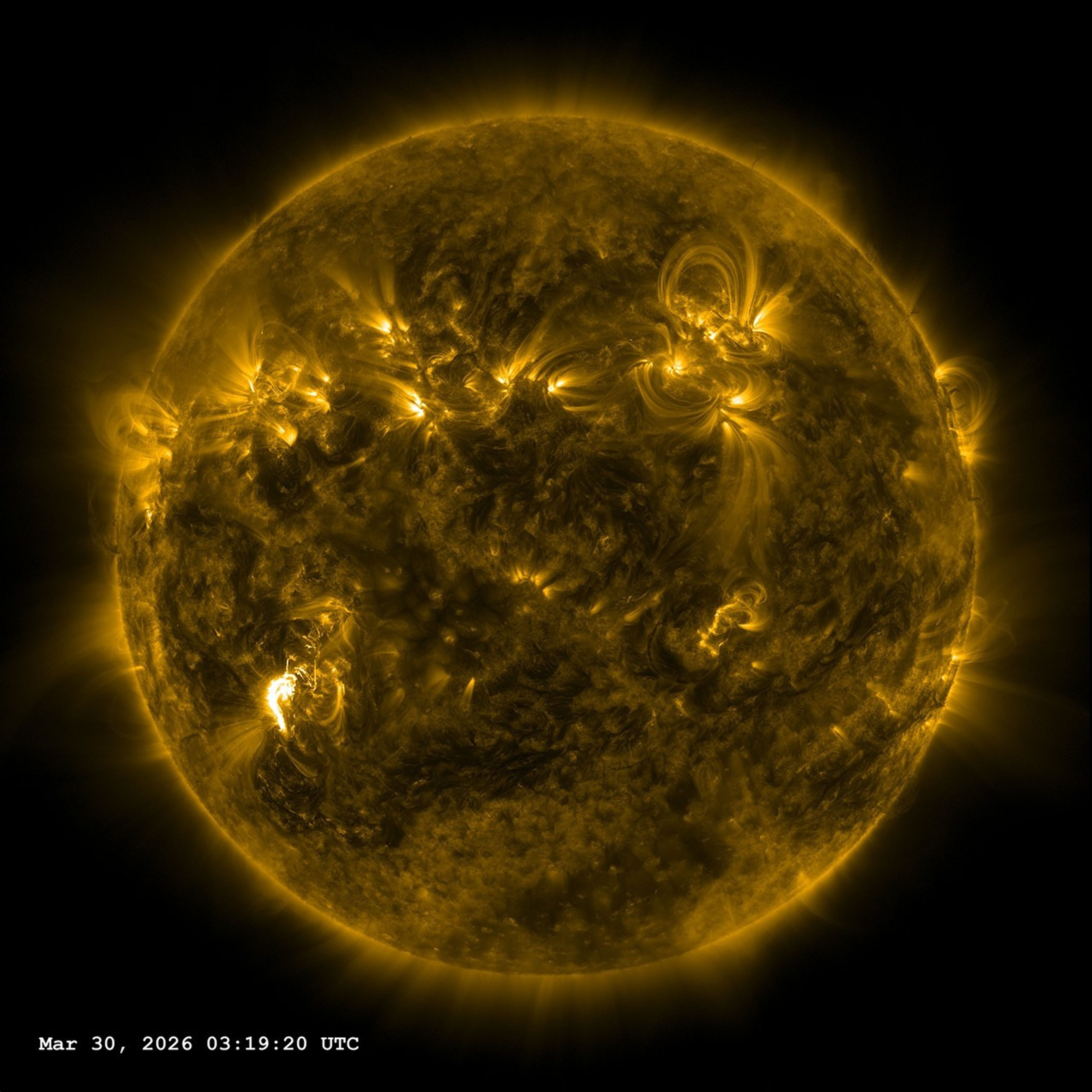
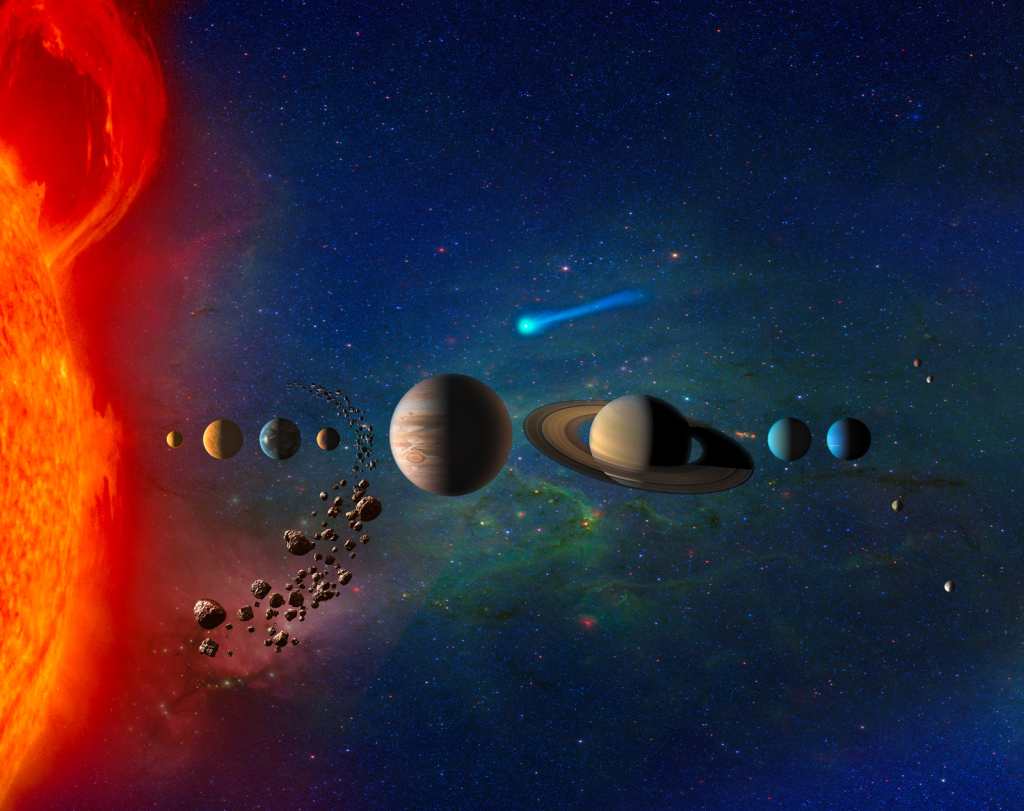
Our solar system includes the Sun, eight planets, five officially named dwarf planets, hundreds of moons, and thousands of asteroids and comets.
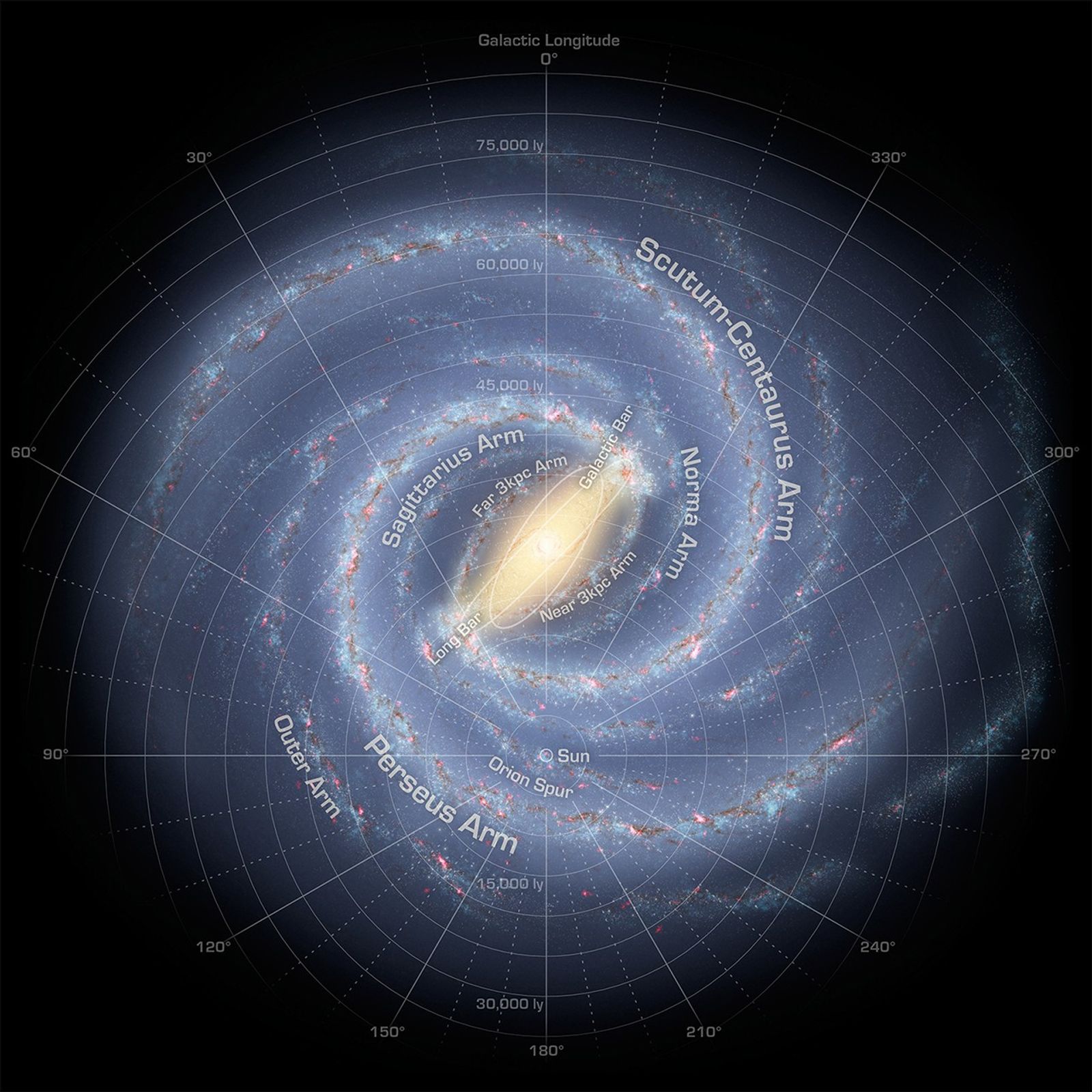
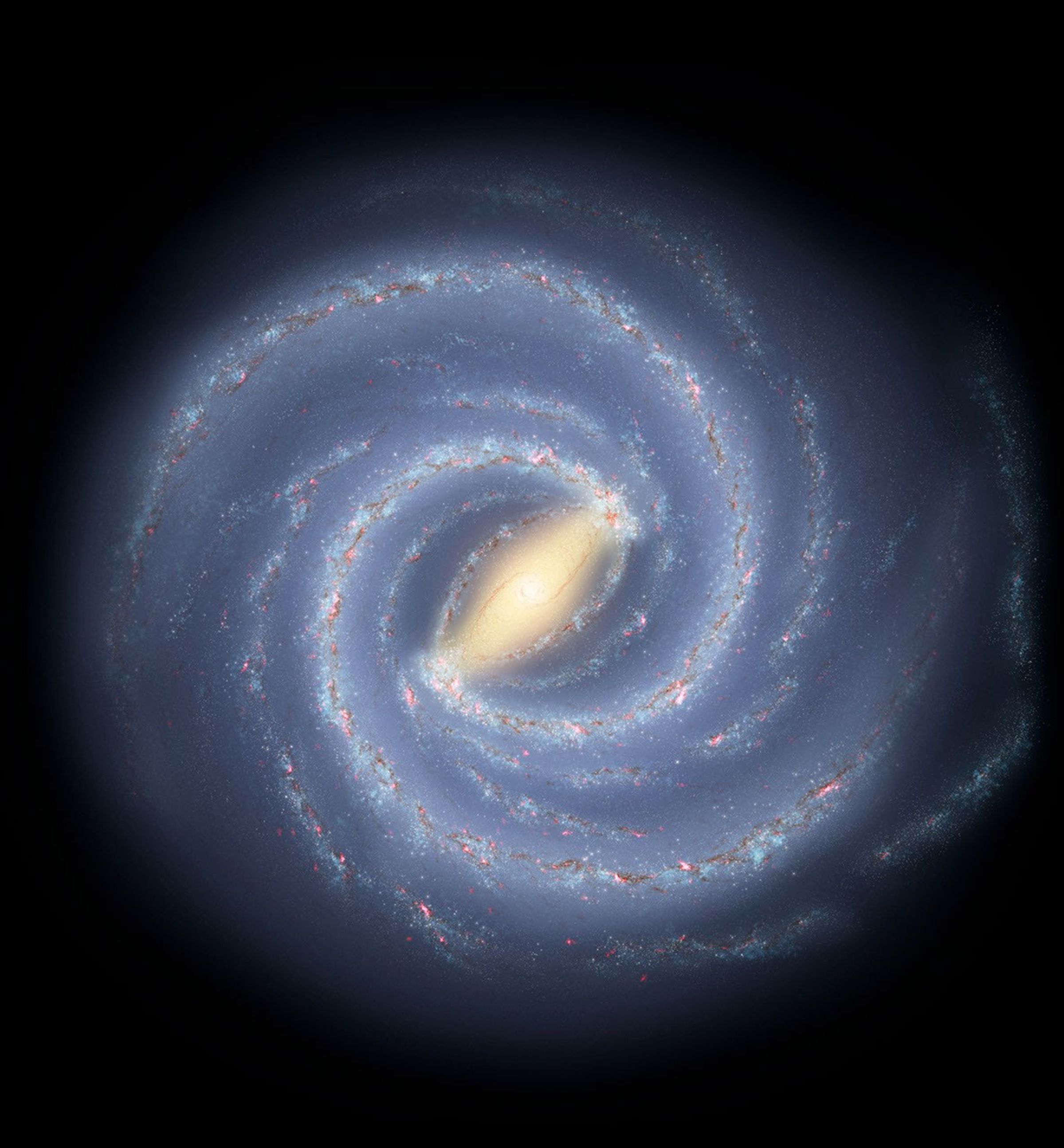
Our solar system is located in the Milky Way, a barred spiral galaxy with two major arms, and two minor arms. Our Sun is in a small, partial arm of the Milky Way called the Orion Arm, or Orion Spur, between the Sagittarius and Perseus arms. Our solar system orbits the center of the galaxy at about 515,000 mph (828,000 kph). It takes about 230 million years to complete one orbit around the galactic center.
About the Planets
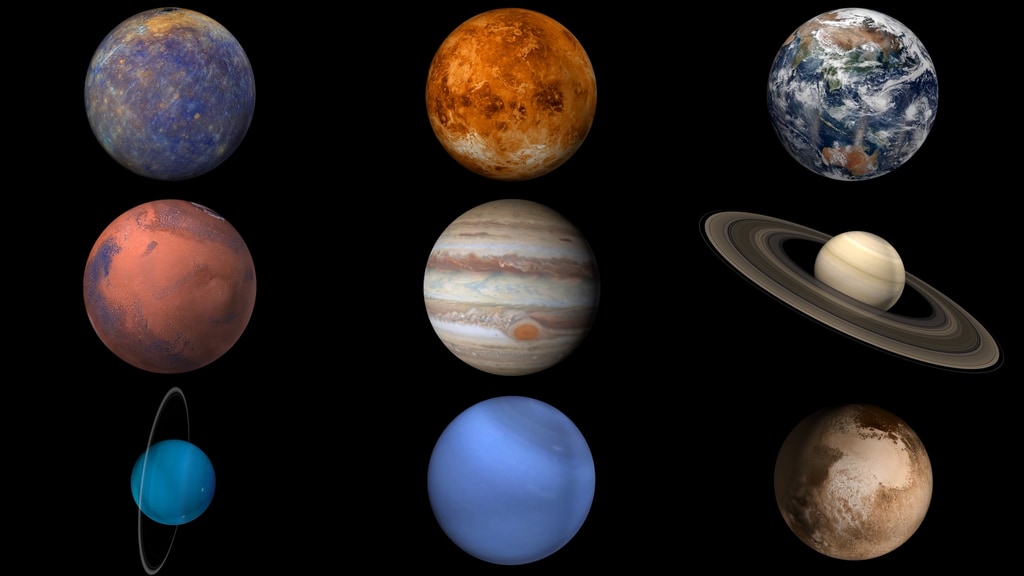
Learn about the inner planets, the outer planets, and the dwarf planets.
Moons in Our Solar System
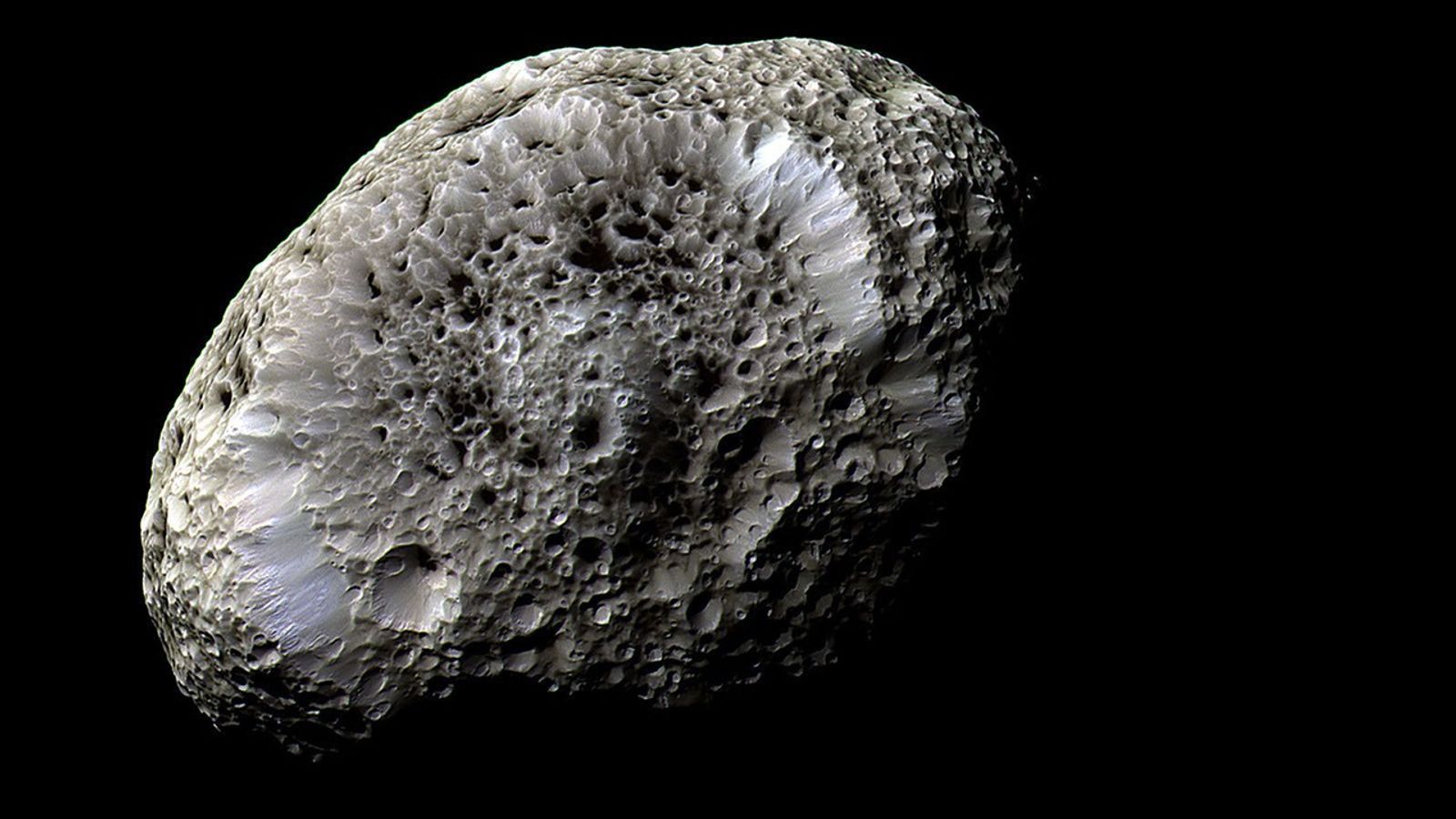
Our solar system has hundreds of moons, and they come in a variety of shapes and sizes. Many moons orbit planets, and even some asteroids have moons.
What’s Up: April 2026 Skywatching Tips from NASA
Mercury shines at its brightest for the year, the Lyrid meteor shower peaks, and a bright new comet makes an…
Read the Story
Eyes on the Solar System
NASA’s DART Mission Changed Orbit of Asteroid Didymos Around Sun
New research reveals that when NASA’s DART (Double Asteroid Redirection Test) spacecraft intentionally impacted the asteroid moonlet Dimorphos in September…
Read the Story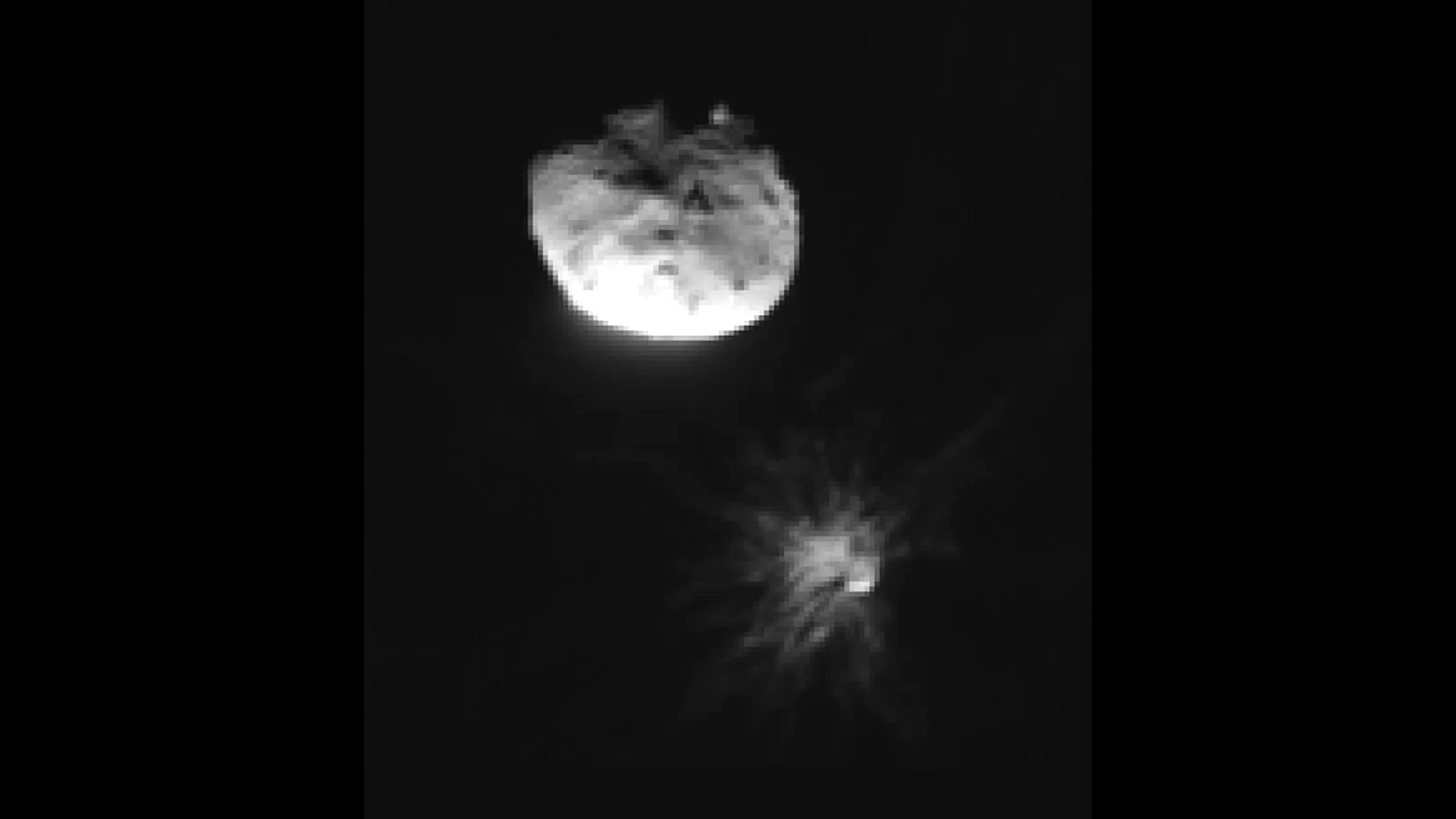
Featured Missions
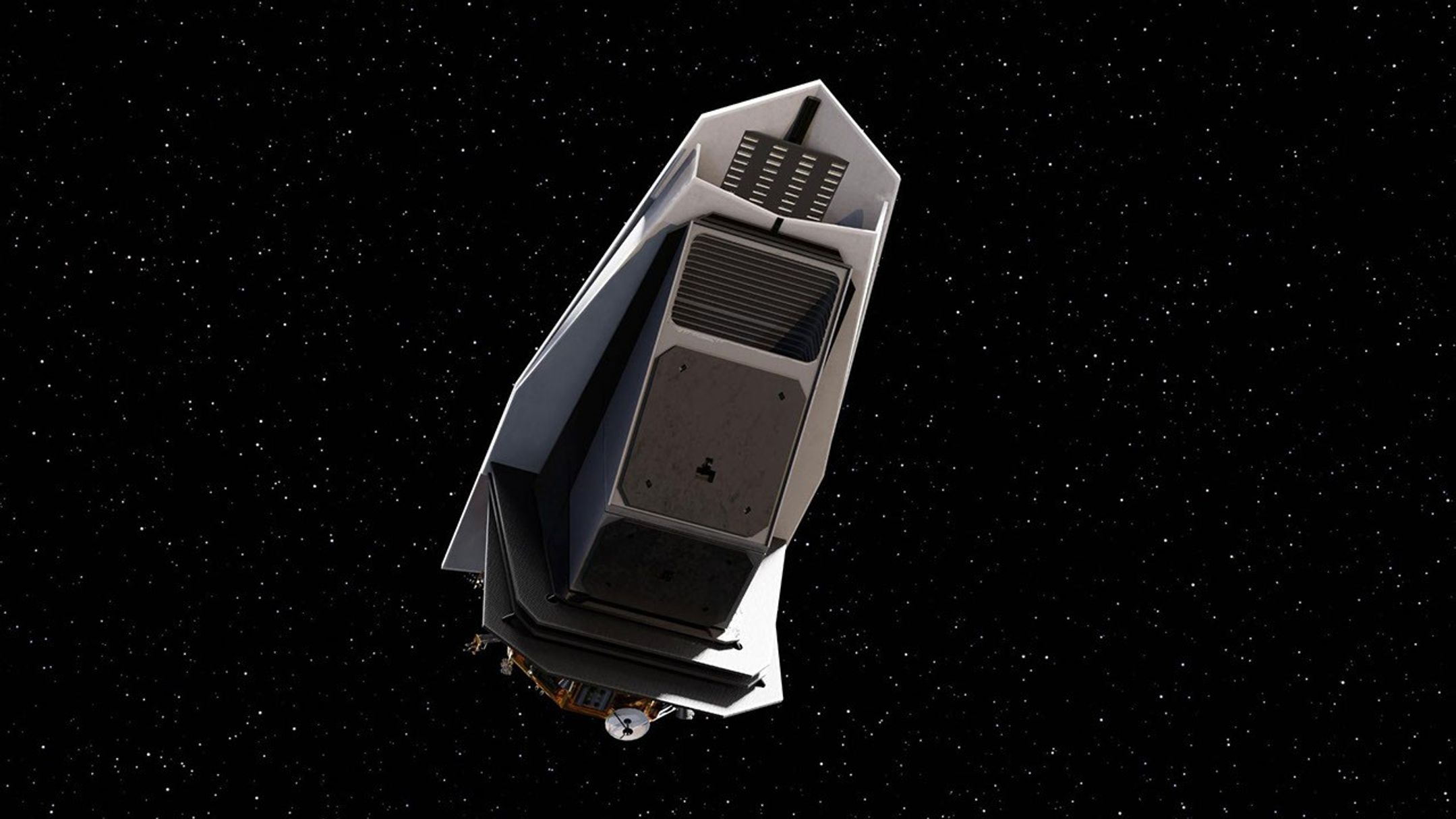
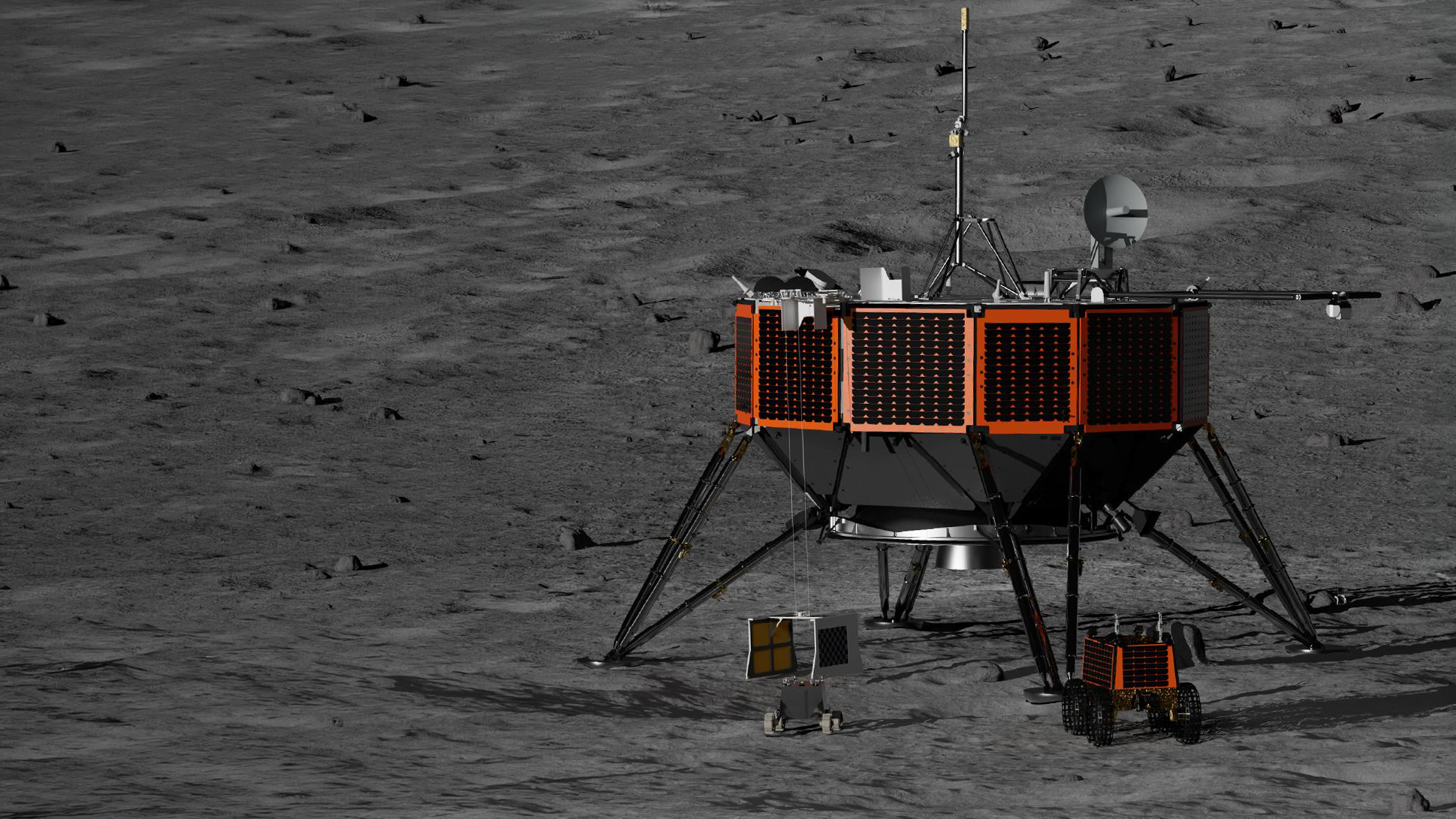
NEO Surveyor
NEO Surveyor will hunt asteroids and comets that are potential hazards to Earth. Launch is no earlier than September 2027.
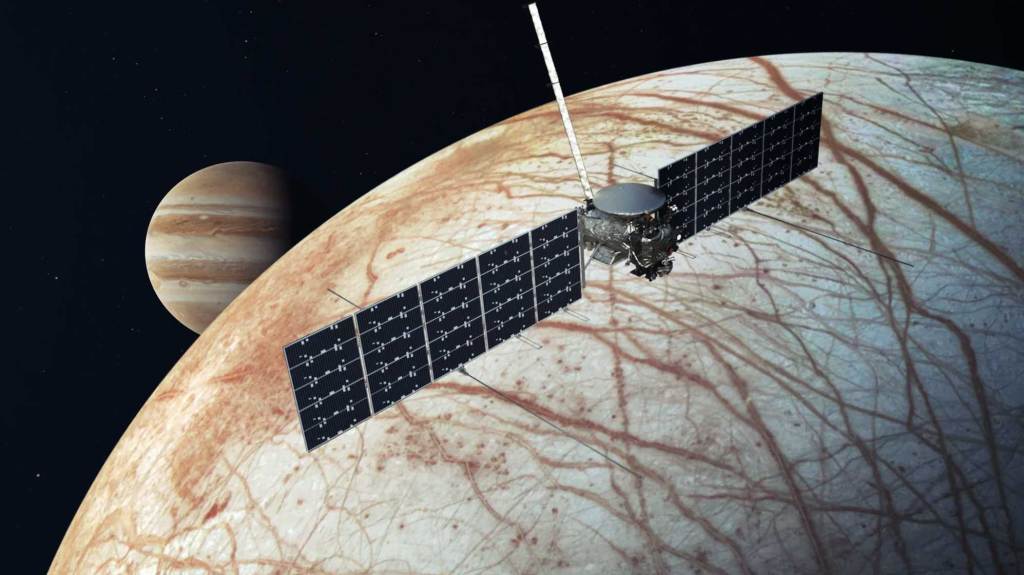
Europa Clipper
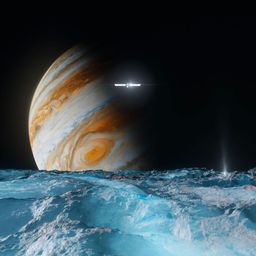
Europa Clipper launched Oct. 14, 2024, to conduct a detailed investigation of Jupiter's moon Europa.
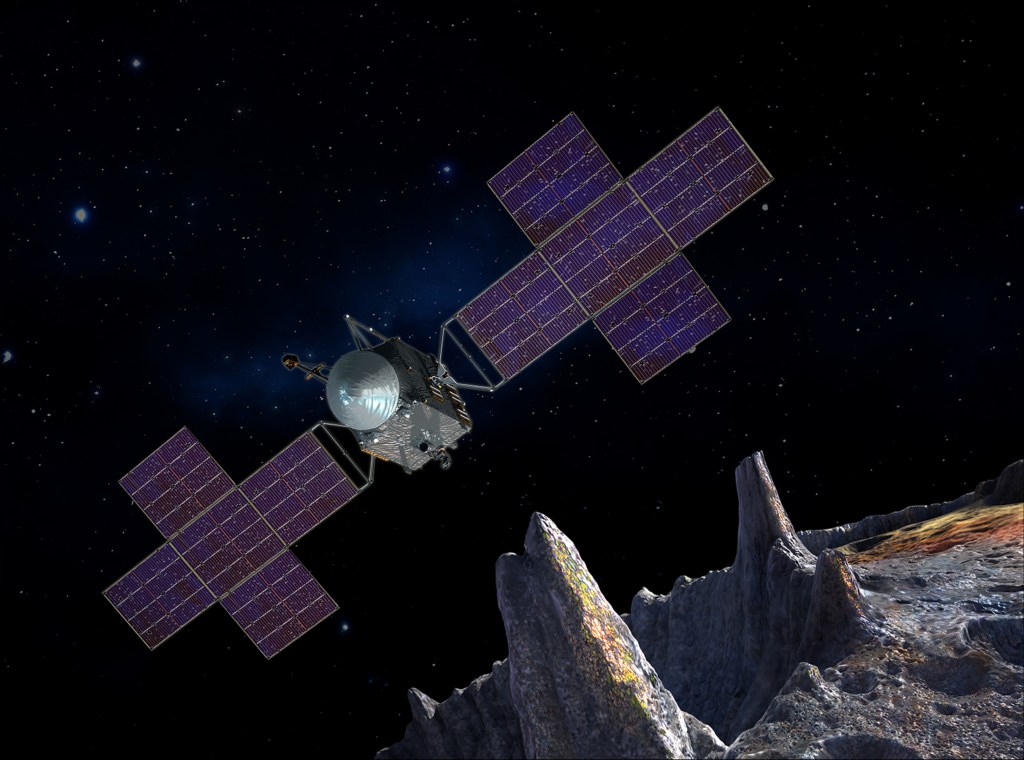
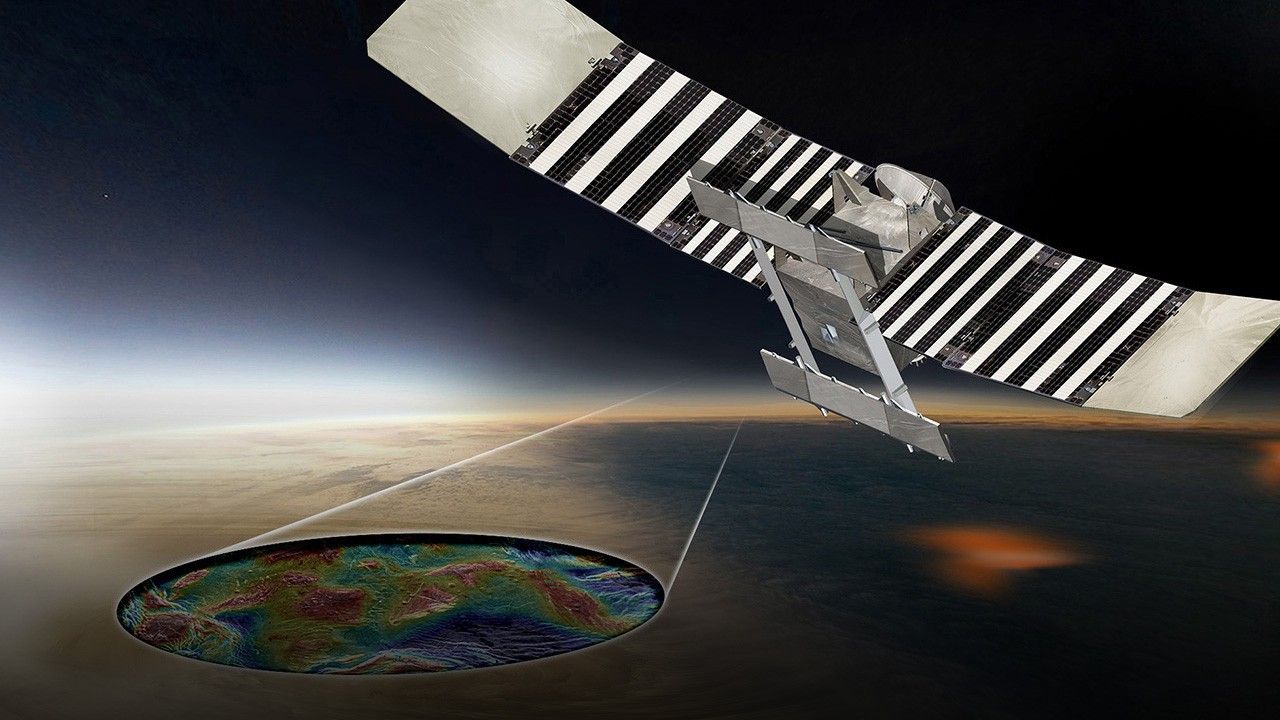
VERITAS
VERITAS and DAVINCI will be the first NASA spacecraft to explore Venus since the 1990s. VERITAS will launch no earlier than 2031.
Featured Articles
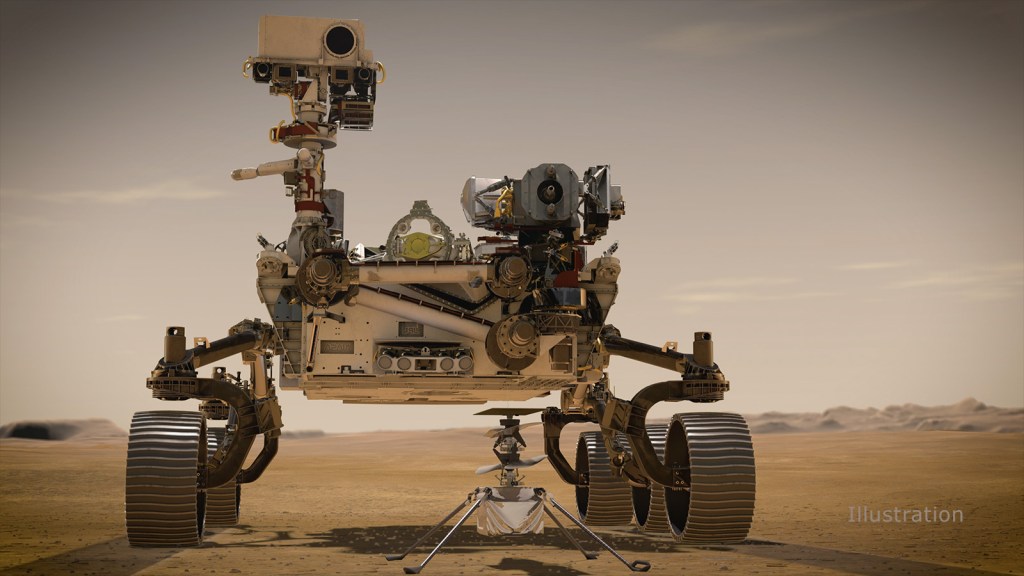
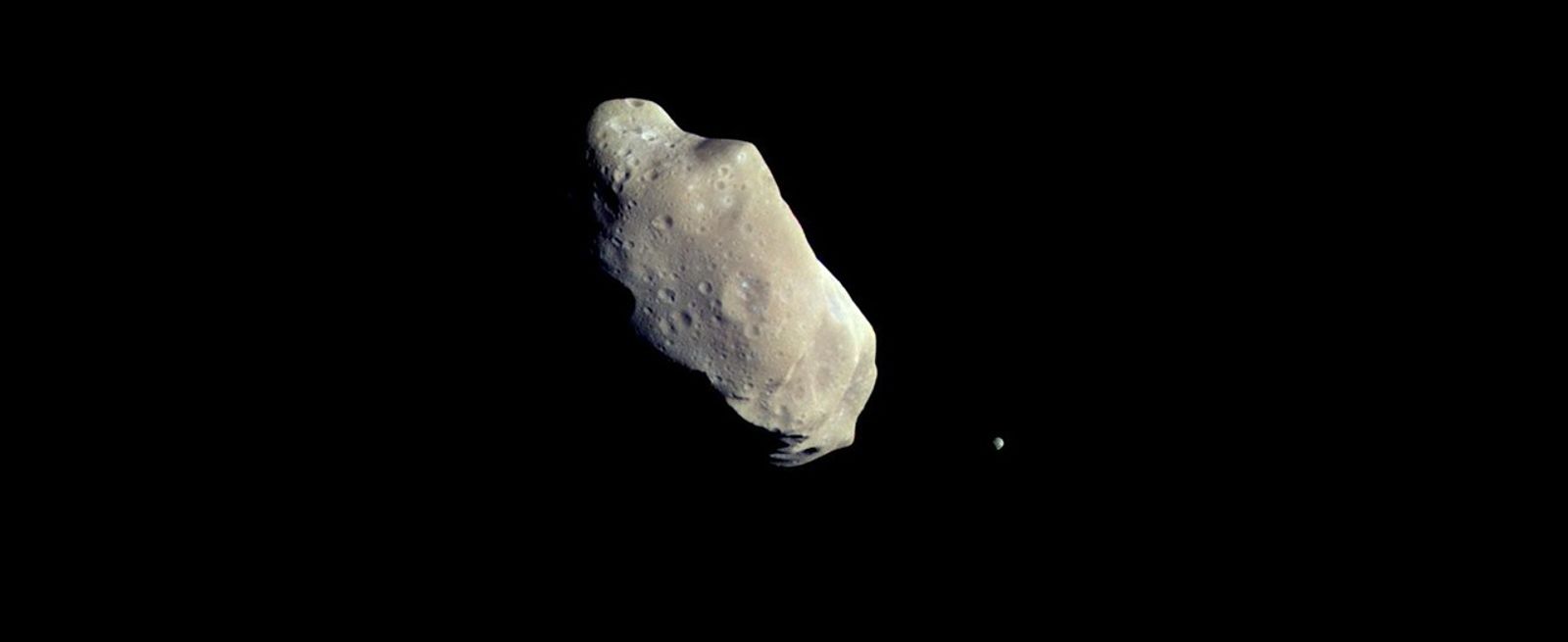
What's That Space Rock?
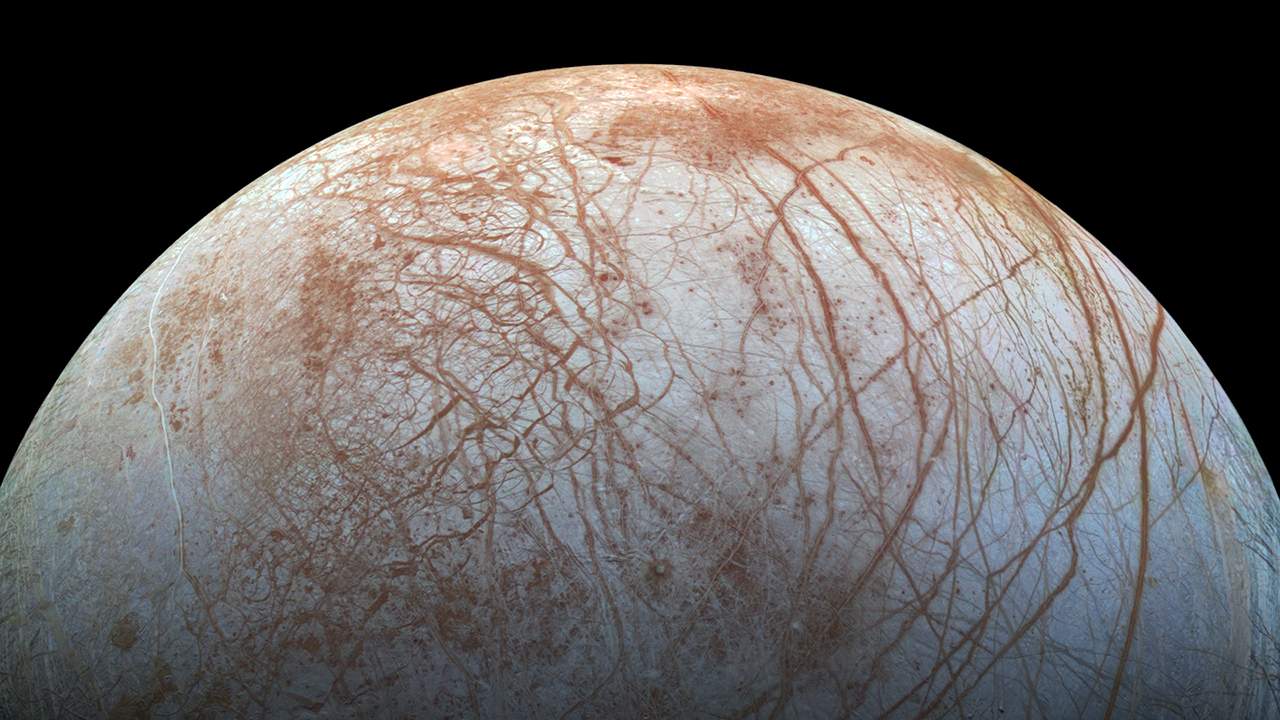
10 Things: Our Solar System’s Most Marvelous Moons
Resources
Explore curated collections of resources, including activities that can be done at home, as well as videos, animations, handouts, and online interactives.
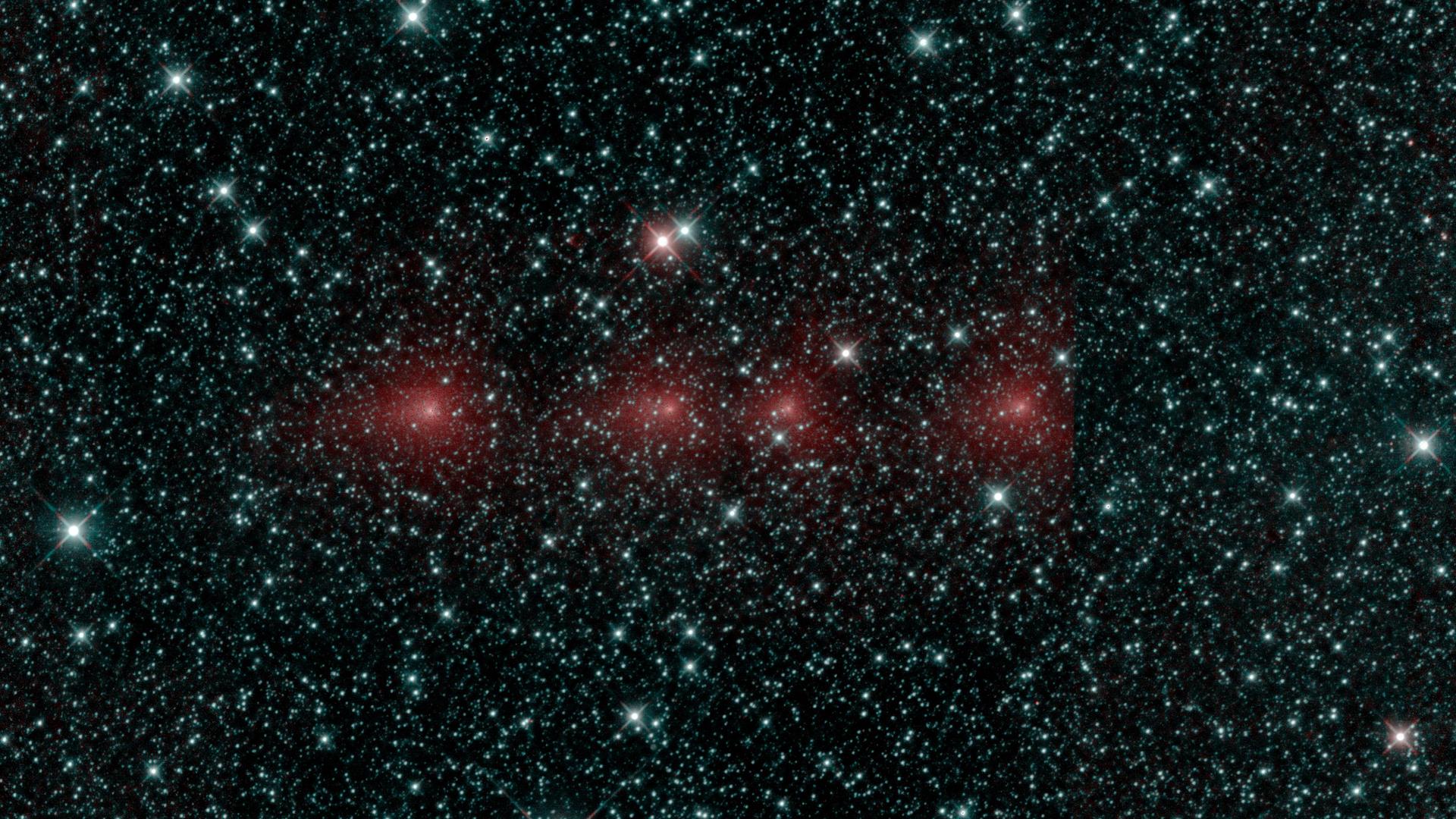
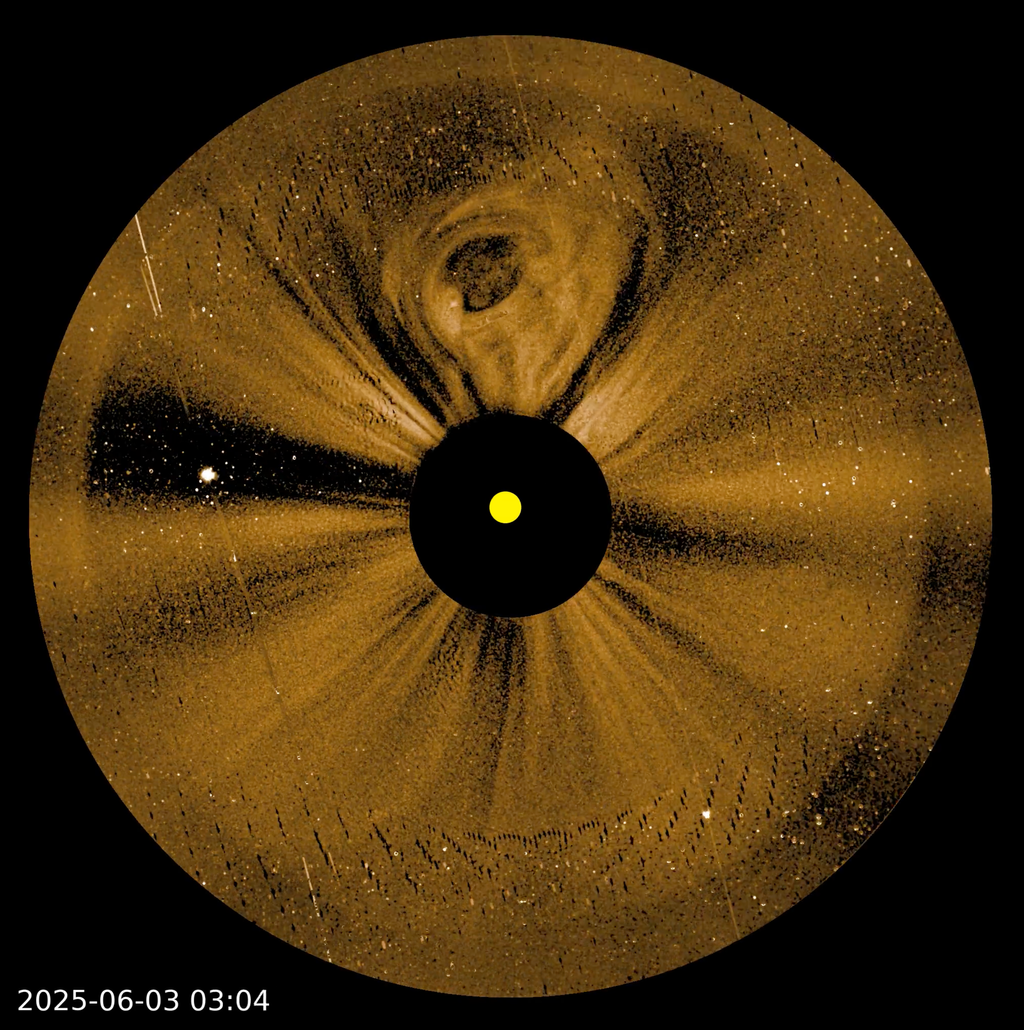
View Interstellar Comet 3I/ATLAS Through NASA’s Multiple Lenses
Since the interstellar comet was discovered July 1, a dozen NASA assets have captured and processed imagery of the icy interloper, and several others will have opportunities to capture more images as the comet continues to pass through our solar system. Its path runs far beyond Earth; at its closest — on or around Friday, Dec. 19 — comet 3I/ATLAS will be about 170 million miles away, or nearly twice the distance from Earth to the Sun. NASA spacecraft will continue to observe the comet as it makes its journey through the solar system, passing the orbit of Jupiter in spring 2026.
Learn More