In the science-fiction novel and movie “Project Hail Mary,” the story revolves around the rigors of an astronaut working and surviving during a yearslong mission, the power of deep-space communications, the search for life beyond Earth, and nearby star systems that actually exist — Tau Ceti and 40 Eridani A.
Let NASA shed some light: Explore the resources below to learn the science facts fueling the science fiction.
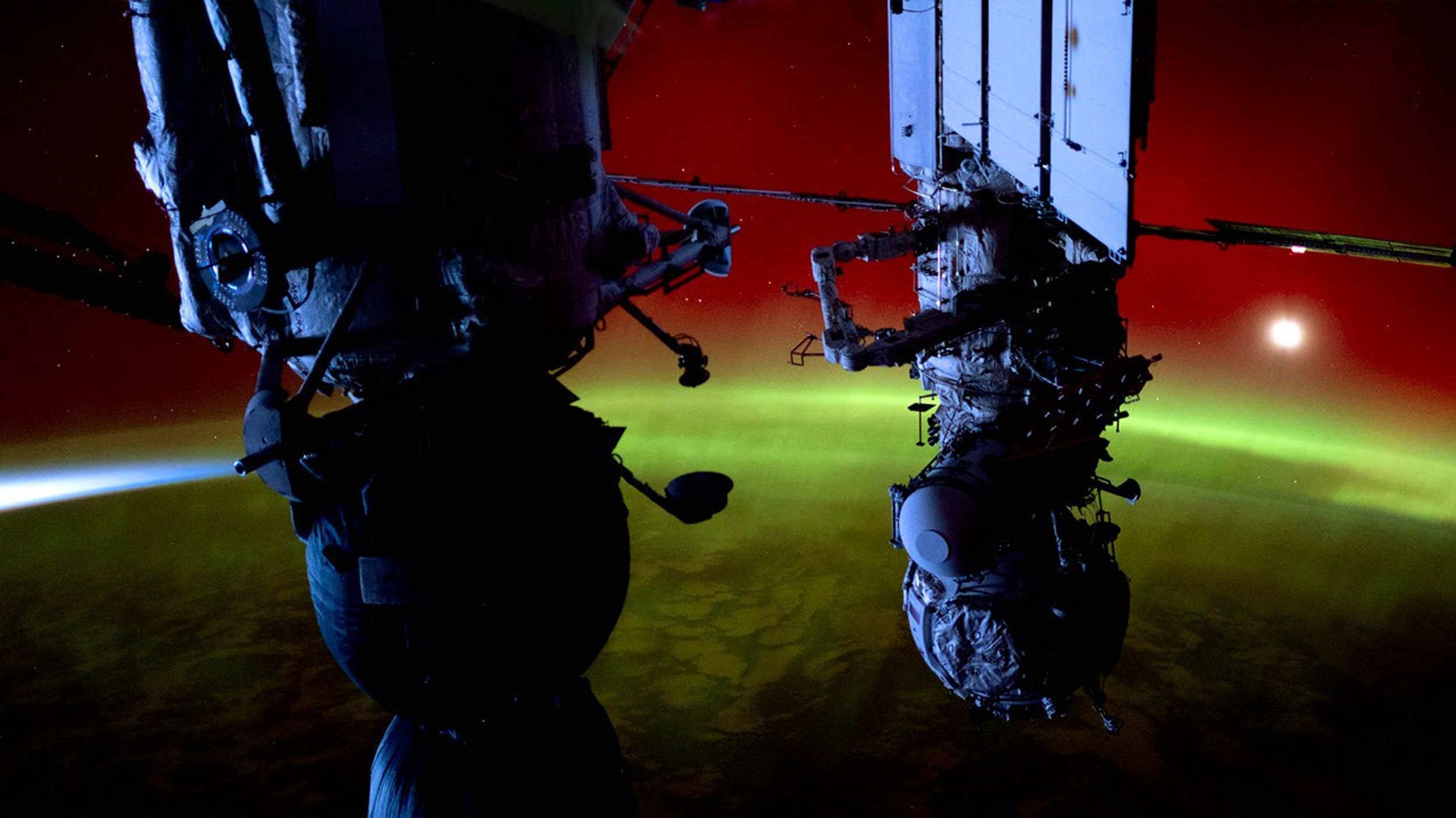
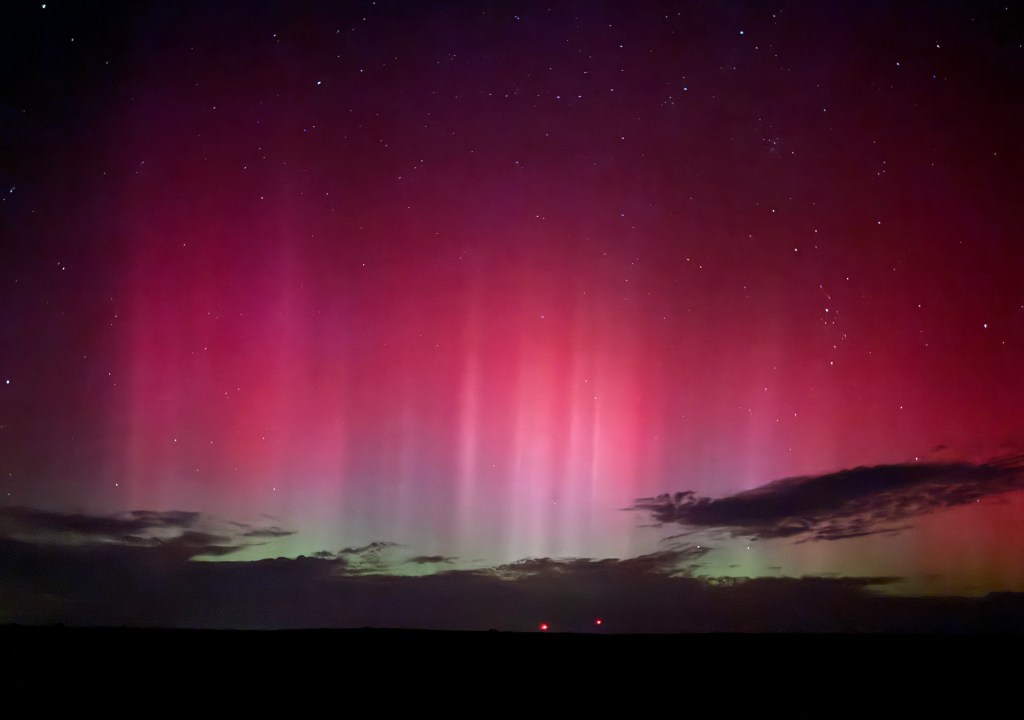
What might look like a pair of spacecraft orbiting a pale green exoplanet (as "Adrian" is described) is actually a photo of the International Space Station above Earth in October 2024. Severe geomagnetic storms created not only the more common shimmering green northern lights, but also very rare bright-red auroras in the atmosphere. Credit: NASA astronaut Don Pettit
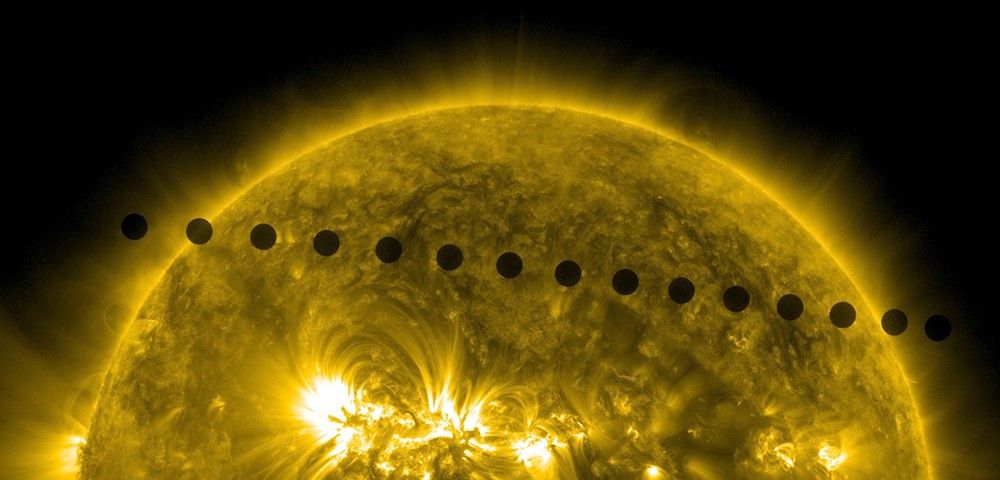
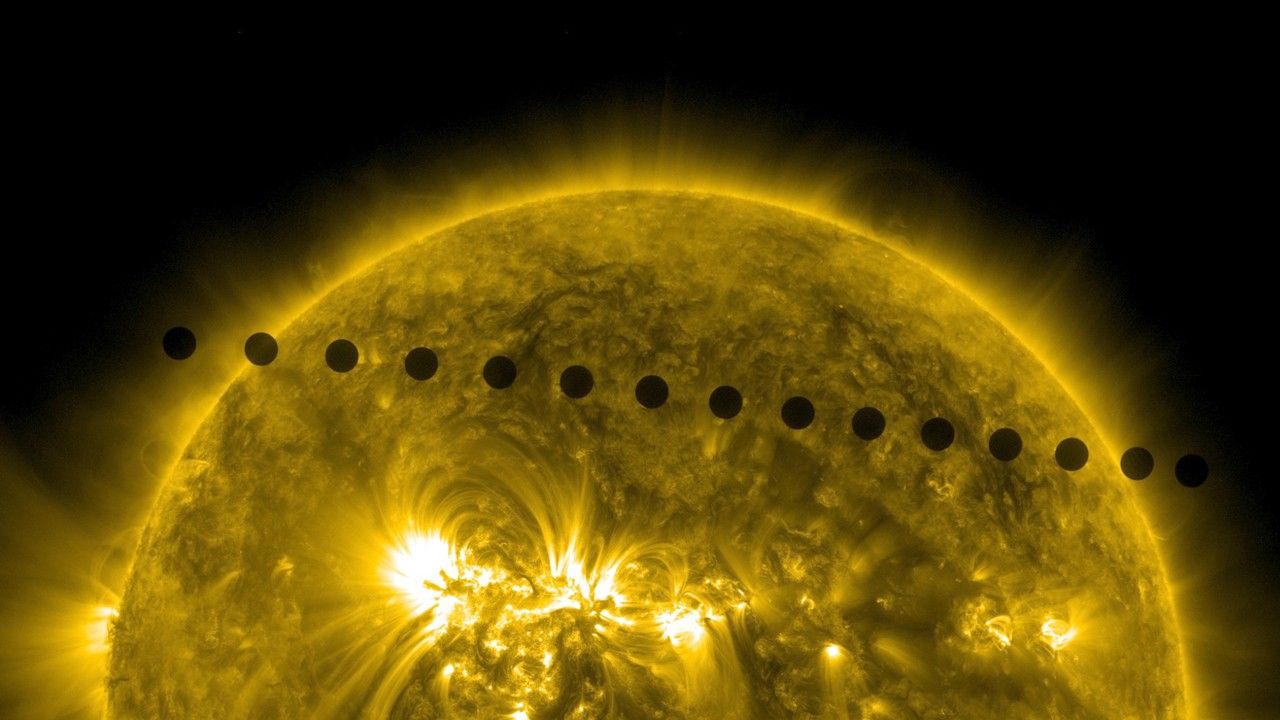
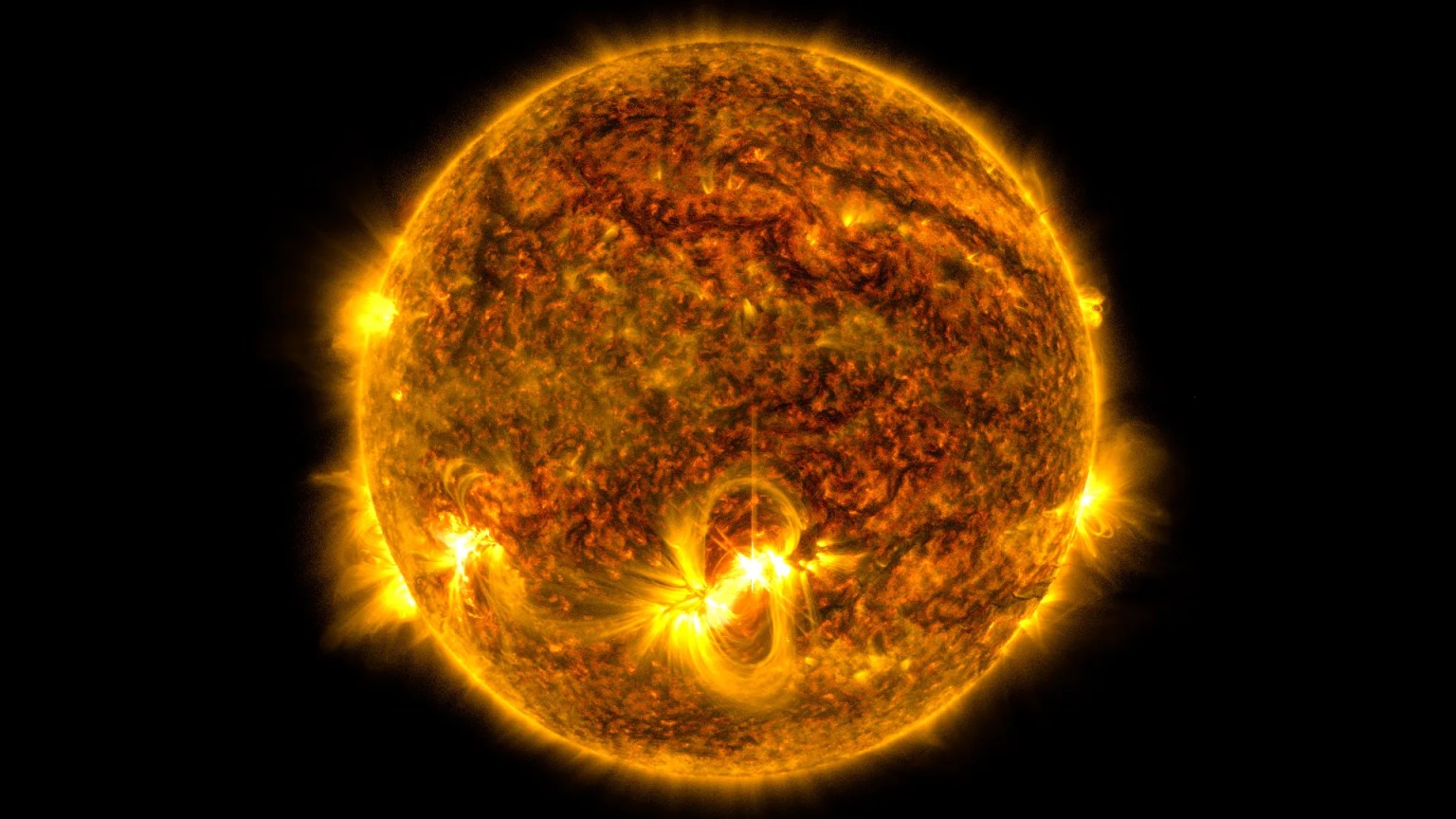
The 2012 Transit of Venus — the spectacle of Venus as it passes across the face of the Sun — is captured in this multiple-exposure, ultra-high-definition view by the Solar Dynamics Observatory spacecraft. The rarest predictable solar event, the next Venus transit won’t happen until 2117. Credit: NASA/Goddard Space Flight Center/SDO
Rocky exoplanet 40 Eridani A b might not exist, but this near-infrared image shows the confirmed exoplanet 51 Eridani b, about 96 light-years from Earth. Captured in 2014 by the Gemini Planet Imager, this view masks the star at center, 51 Eridani, so its glare doesn't obscure the Jupiter-sized planet, 51 Eridani b, which orbits 11 billion miles from its star, a little farther out than Saturn's orbit in our solar system. Credit: Gemini Observatory, NSF’s NOIRLab, NSF, AURA, Julien Rameau (University of Montreal), Christian Marois (NRC Herzberg)
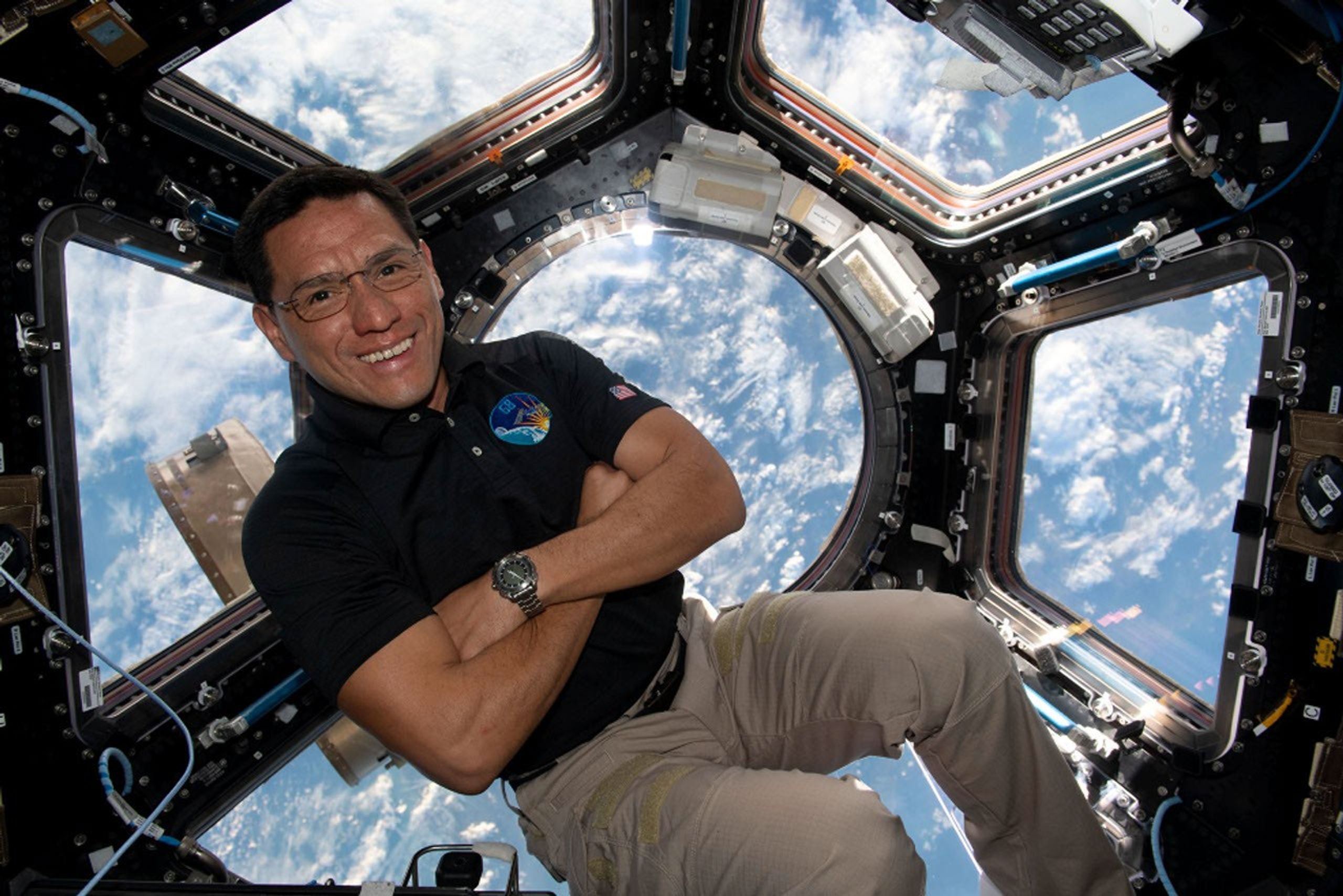
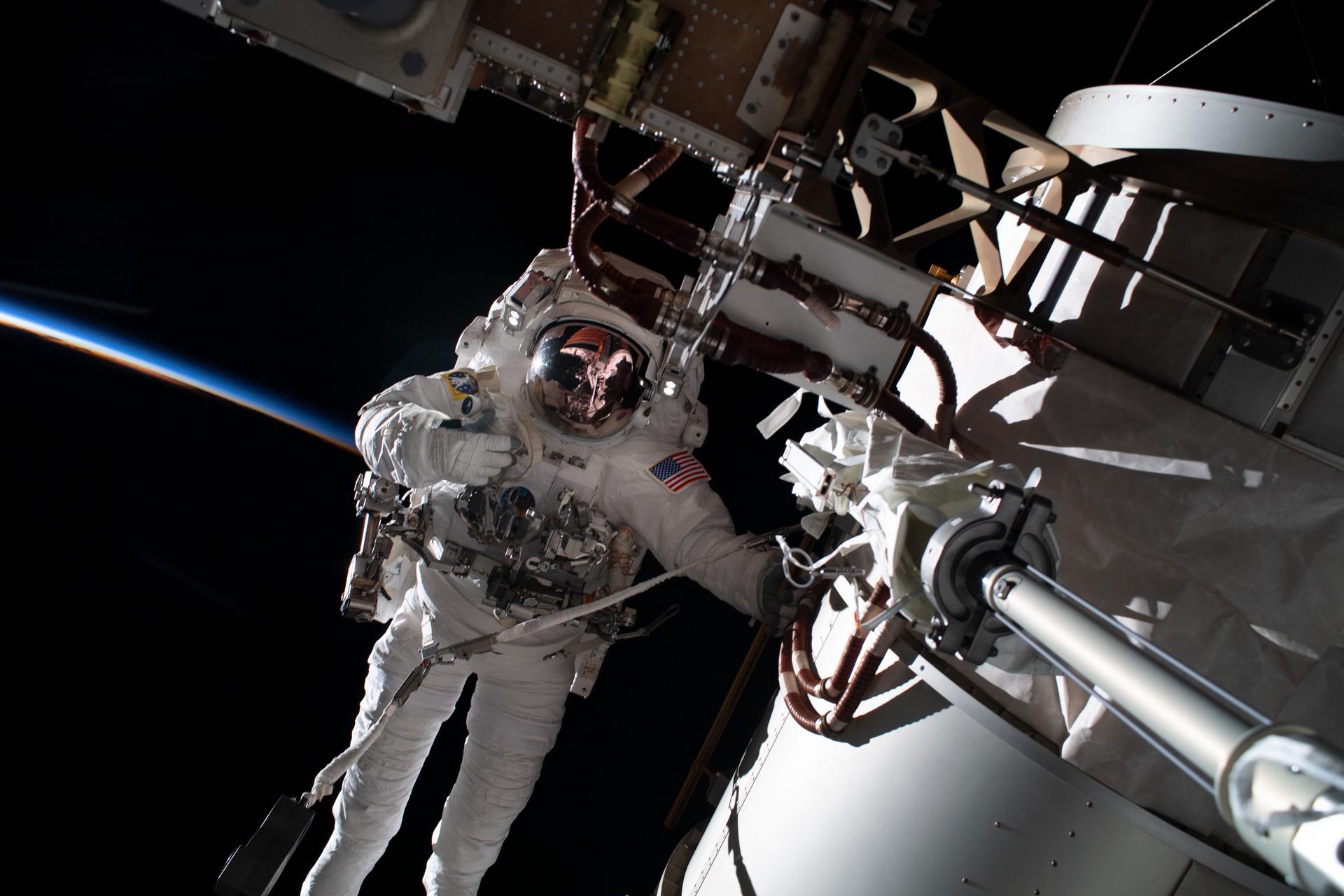
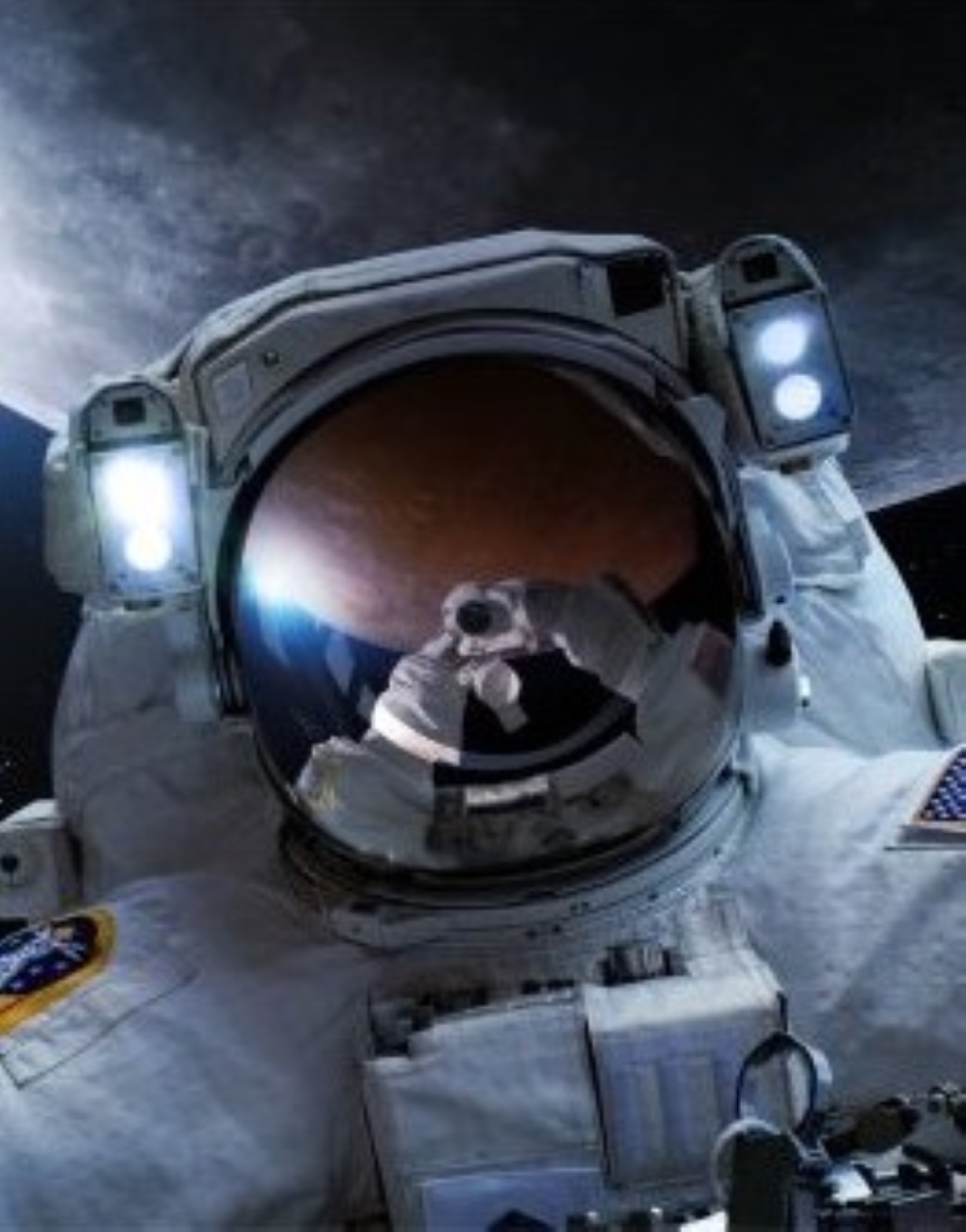
(Nov. 15, 2022) — NASA astronaut and Expedition 68 Flight Engineer Frank Rubio is pictured during a spacewalk tethered to the International Space Station's starboard truss structure. Behind Rubio, the last rays of an orbital sunset penetrate Earth's thin atmosphere as the space station flew 258 miles above the African nation of Algeria.
NASA
Artemis and Human Spaceflight
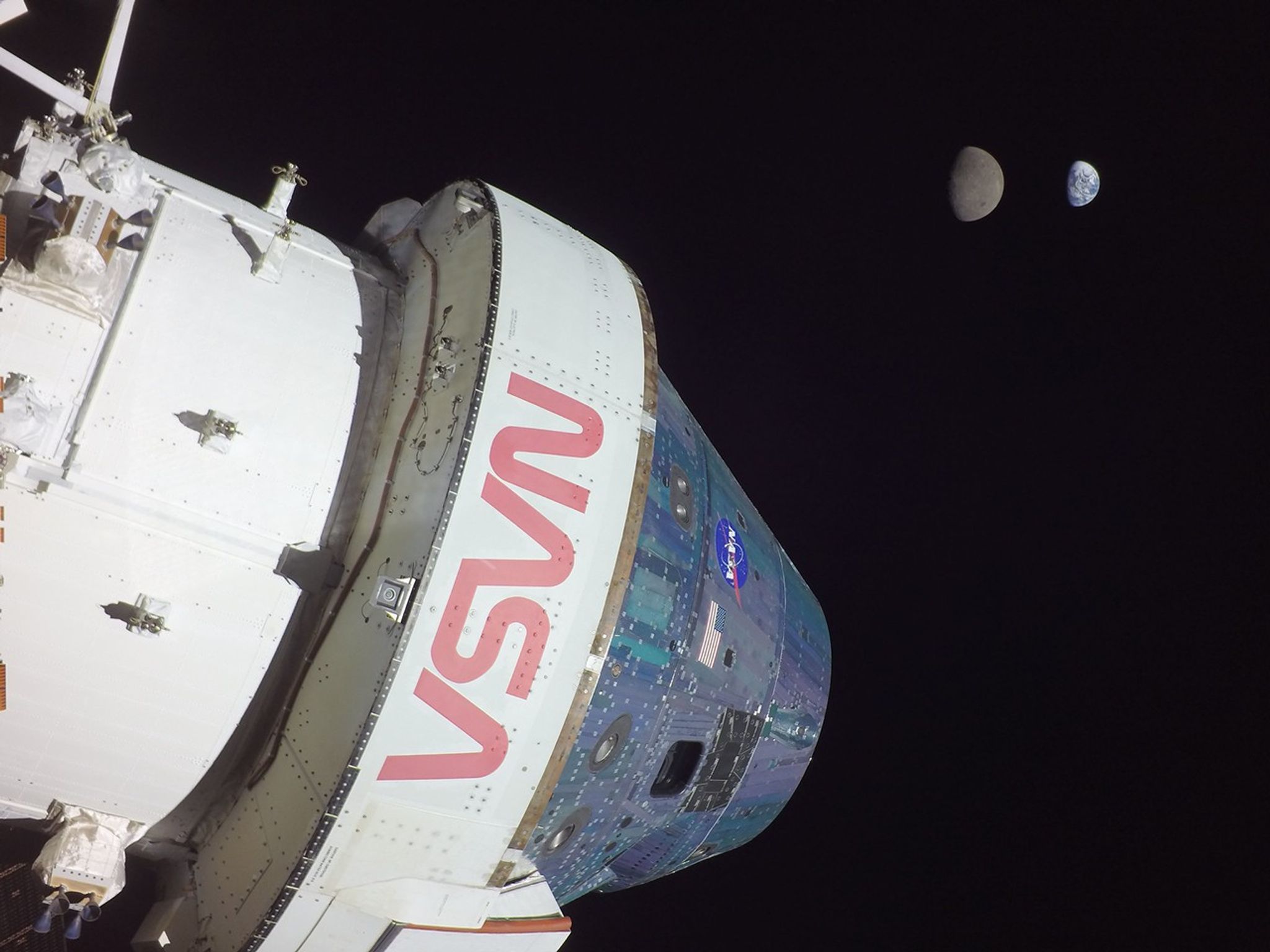
NASA is returning astronauts to deep space for the first time in 50+ years, with the launch of Artemis II on Wednesday, April 1, carrying four crew members beyond the Moon and back — aiming to venture farther from Earth than humans have ever traveled. Artemis III and IV will follow, orbiting Earth and then returning astronauts to the surface of the Moon. Each mission builds on the ones before it, extending further, for ever-longer periods of time, expanding human exploration from the Moon, to Mars, and beyond.
Sending astronauts on increasingly difficult missions to explore more of the Moon for scientific discovery, economic benefits, and to build on our foundation for the first crewed missions to Mars.
For 25 years, it's been the extraterrestrial home and science lab for rotating crews of astronauts, now totaling nearly 300 individuals, working and living for hundreds of days at a time. Come aboard!
In It For the Long Haul
Long-Duration Spaceflights
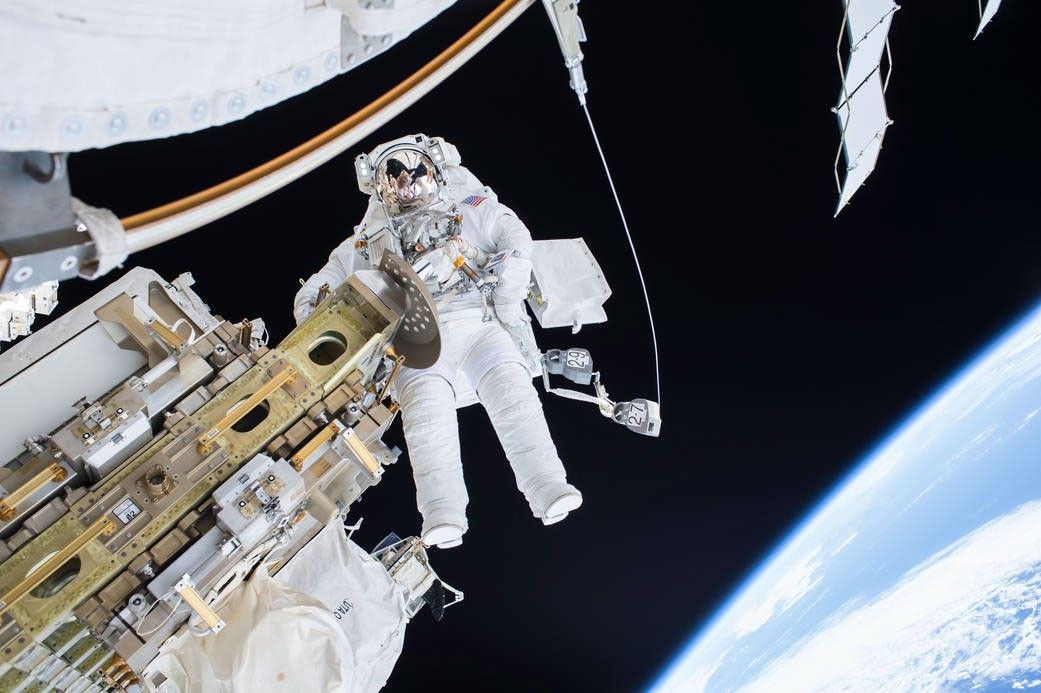
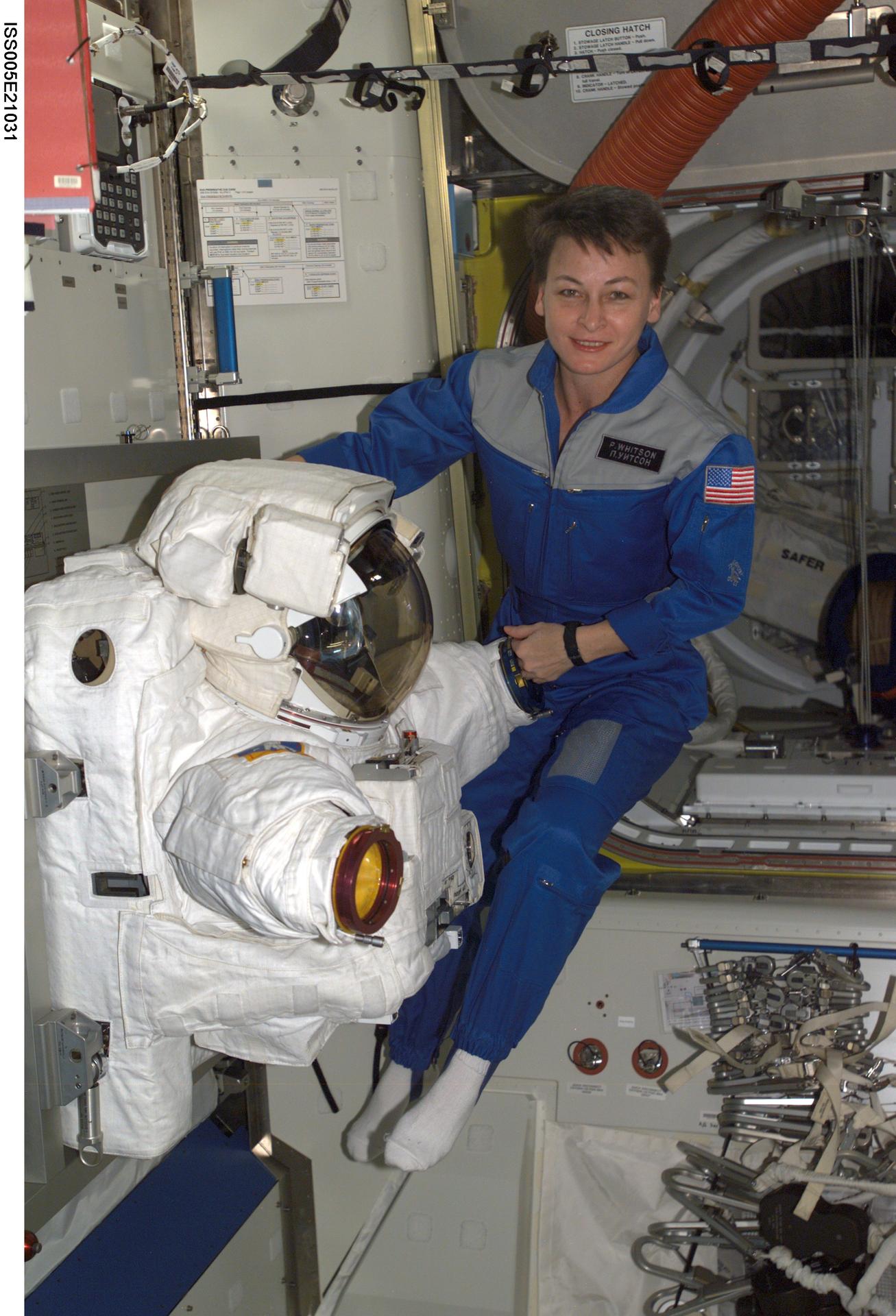
Among NASA astronauts, Frank Rubio and Peggy Whitson are the current extended-stay record holders. On Sept. 27, 2023, Rubio ended a 371-day mission aboard the International Space Station, the first time a U.S. astronaut spent more than one year in space on a single mission. Whitson holds the cumulative record among U.S. astronauts, with a total of 665 days during three long-duration missions — two of which she was ISS commander. Russian cosmonauts have spent even longer periods in space.
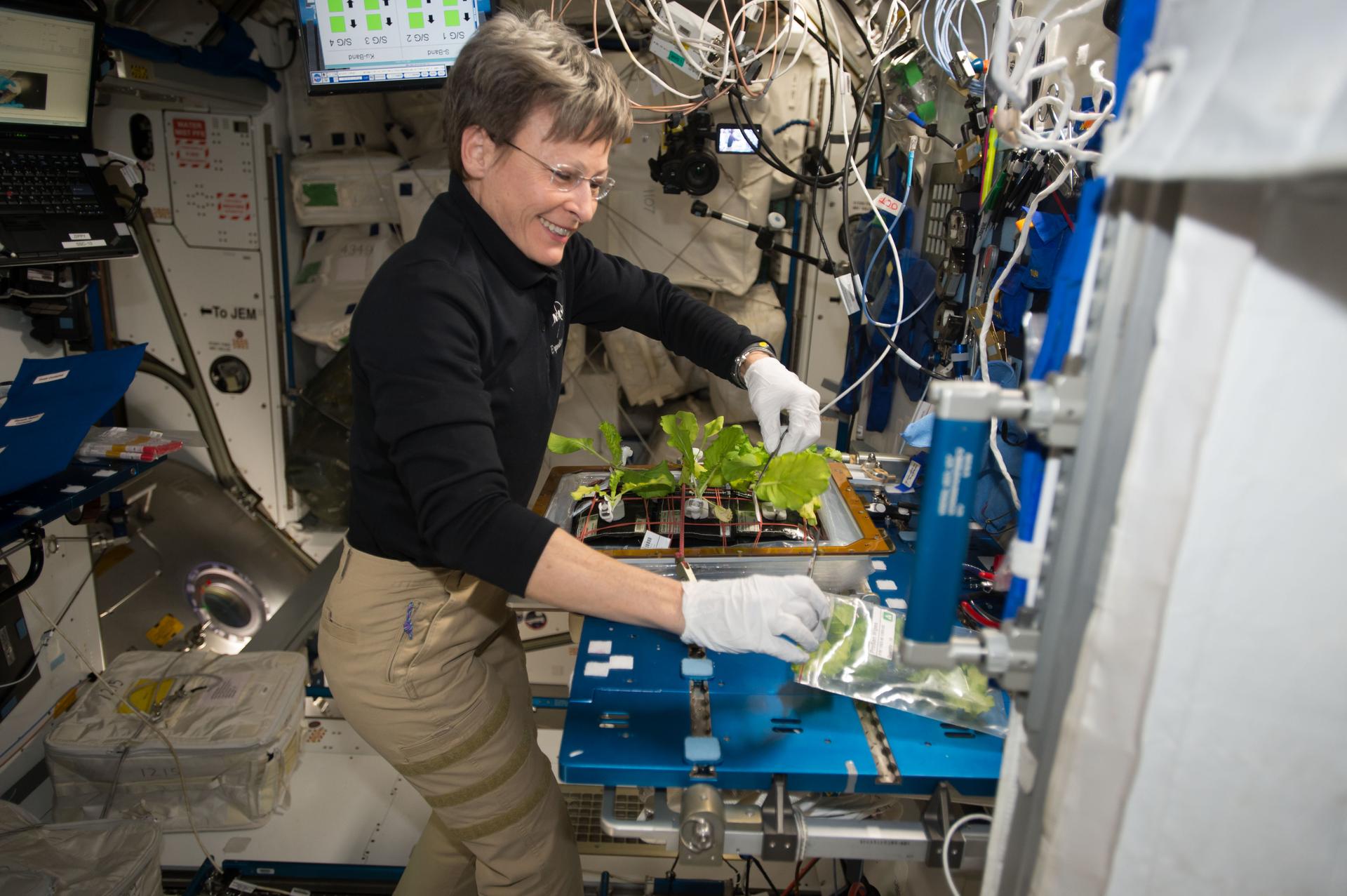
(2/17/2017) — Aboard the International Space Station, NASA astronaut Peggy Whitson harvests and cleans a type of cabbage, cultivated in orbit, sampled, and returned to Earth for testing. Organisms grow differently in space, from single-celled bacteria to plants and humans. But future long-duration space missions will require crew members to grow their own food, so understanding how plants respond to microgravity is an important step toward that goal.
Thomas Pesquet
What Hardships Do Astronauts Face on Long Missions?
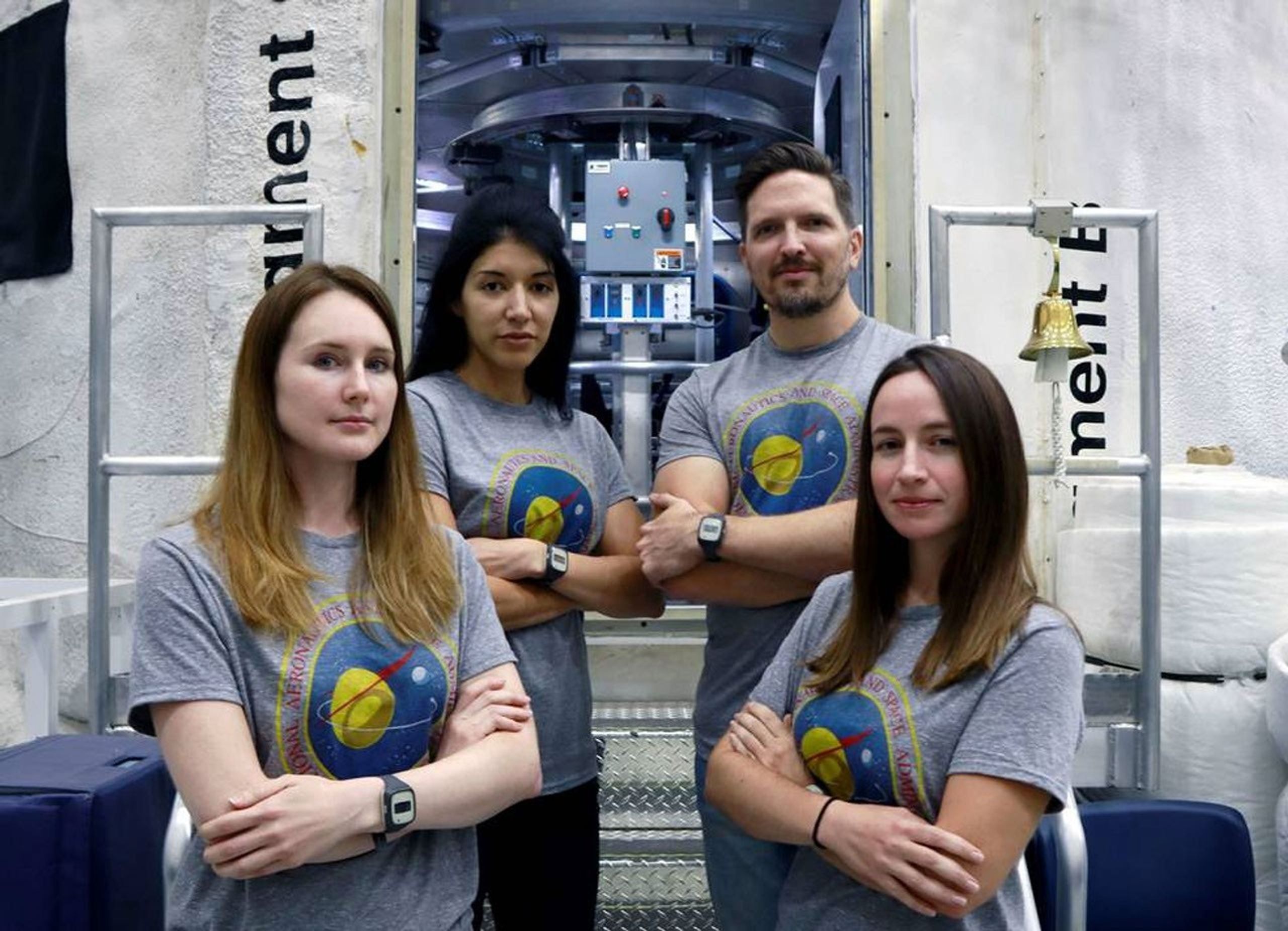
NASA has been studying people in isolated and confined environments for years, and has developed methods and technologies to counteract possible problems — in cognition, nutrition, behavior, and other areas.
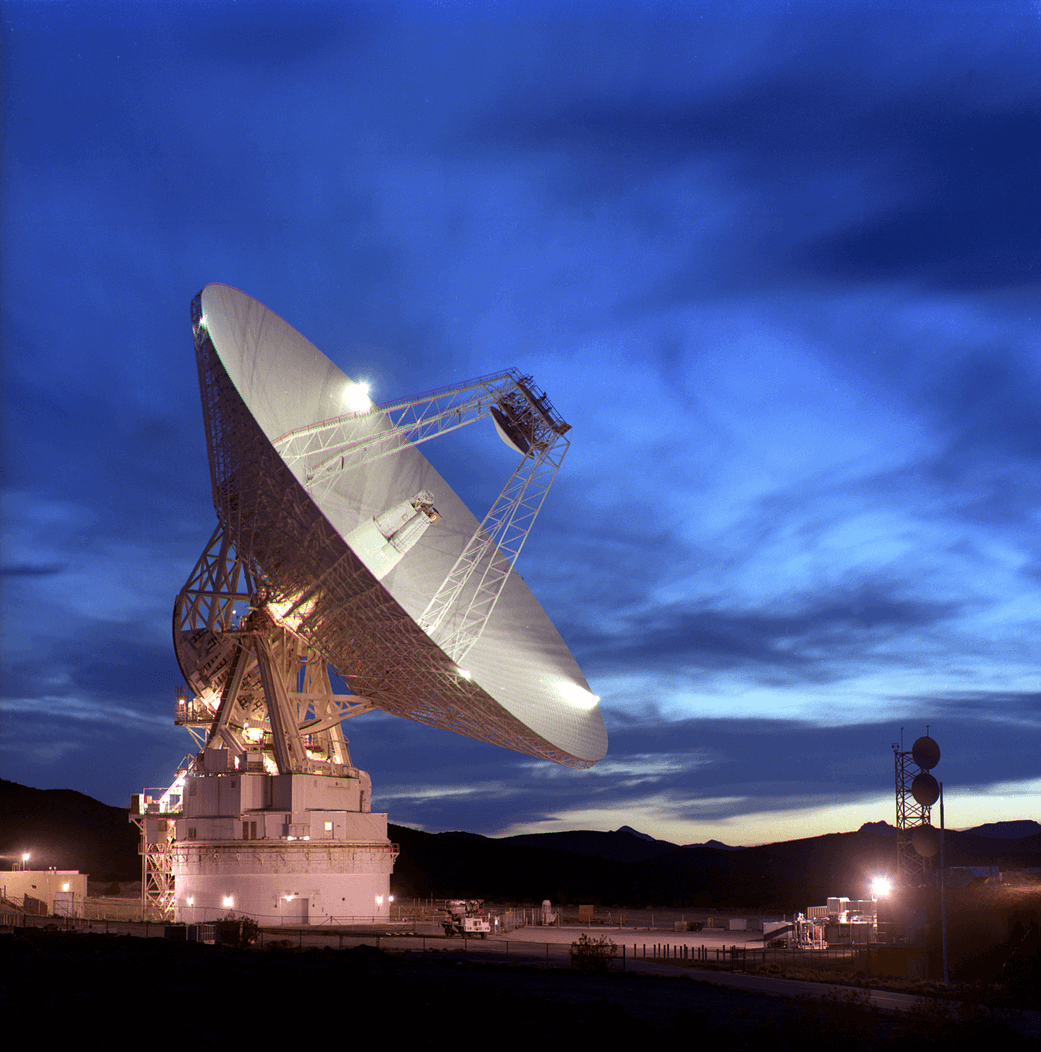
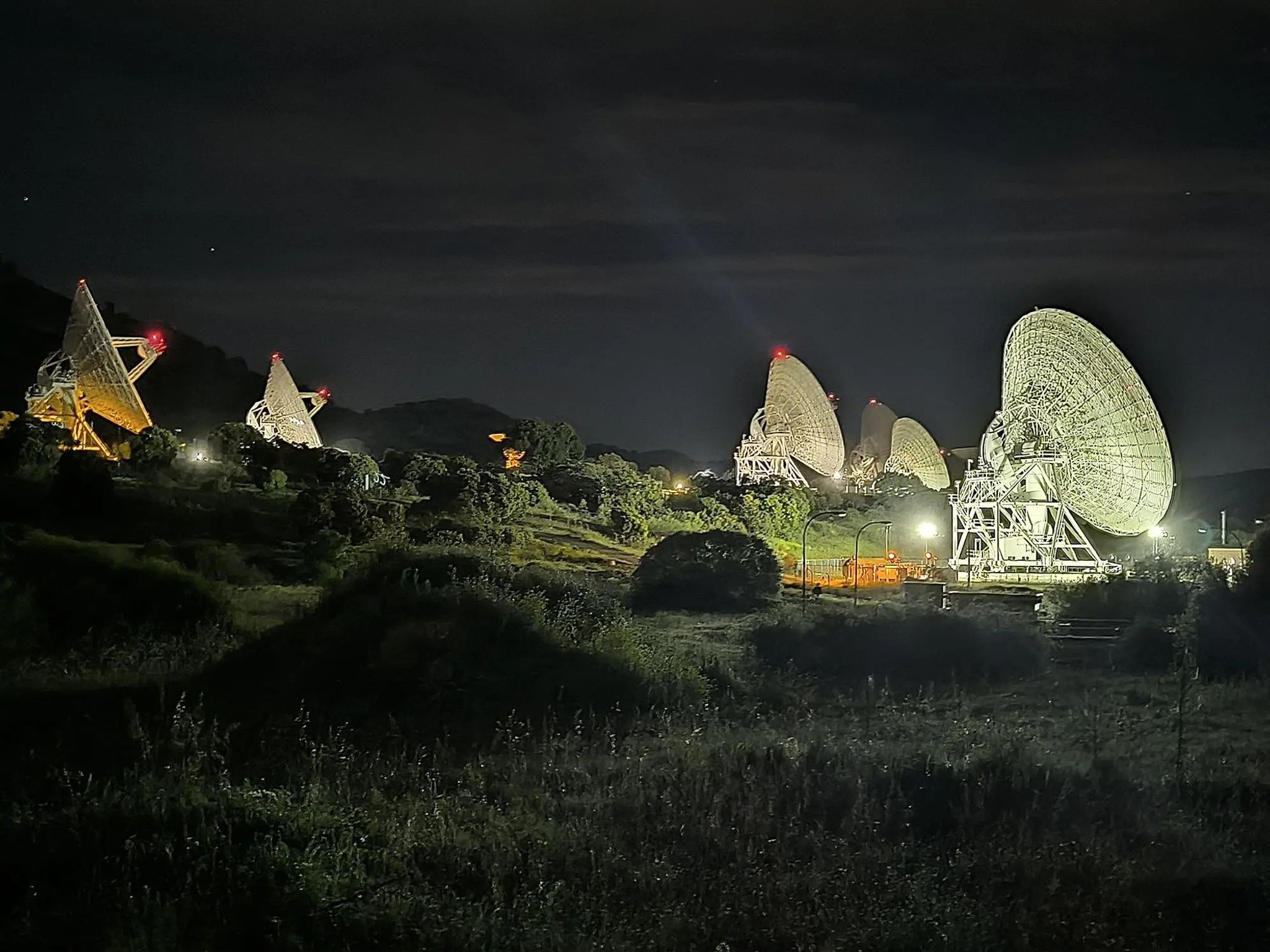
The Deep Space Network, NASA's worldwide network of enormous radio antennas is communicating with our spacecraft 24/7, including probes headed for the asteroid belt, at Mars, even in interstellar space. Based in Madrid, Spain, in Canberra, Australia, and in the Southern California desert at Goldstone, they're evenly spaced around the globe so every area of the sky is covered.
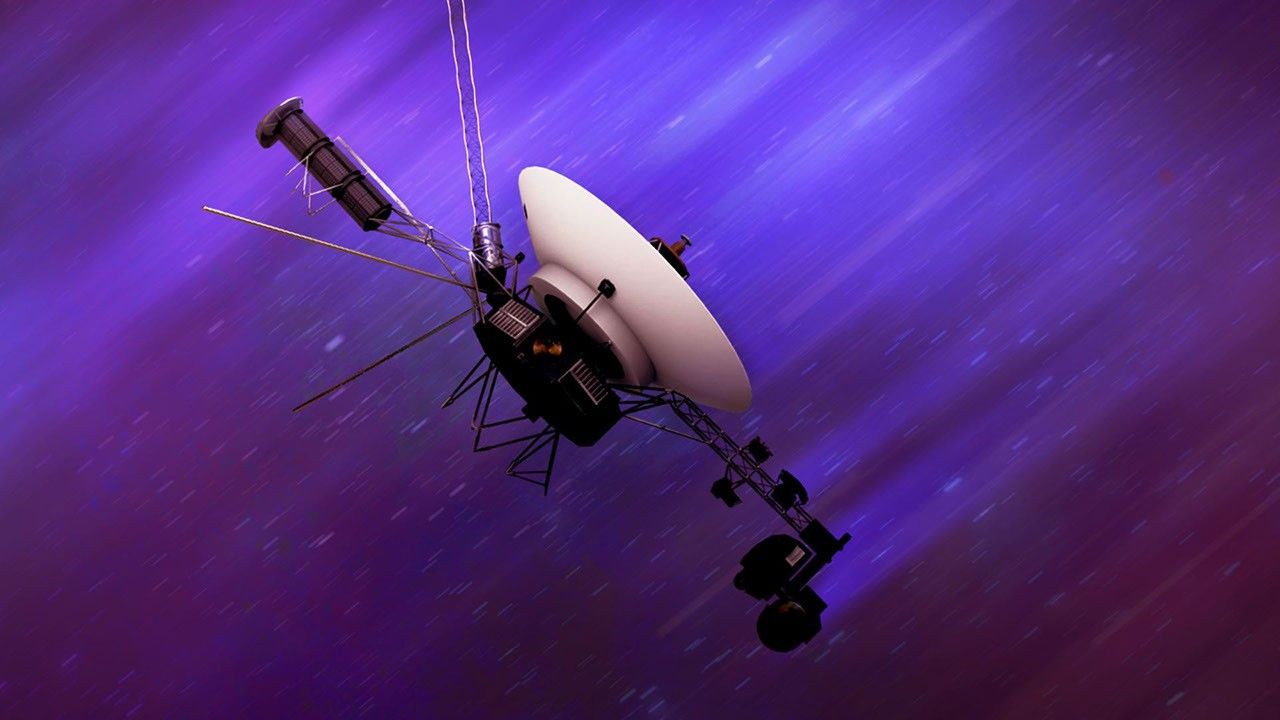
In "Project Hail Mary," a character mentions that his spacecraft will "await instructions from the Deep Space Network," and that they could be as far away as the orbit of Saturn. In real life, the DSN routinely sends and receives messages to spacecraft at the Moon, the outer planets, and even the farthest spacecraft in history, Voyager 1, which is currently about 16 billion miles beyond Saturn (26 billion kilometers).
Long-Distance Call and Response: Watch How the DSN Works
When scientists and engineers want to send commands to a spacecraft in deep space, they turn to the Deep Space Network, NASA’s array of giant radio antennas around the globe, making it possible to communicate with spacecraft at the Moon and far beyond.
Are we alone? Is there life anywhere else in the universe? NASA has been striving to answer these big questions — maybe the biggest — since its first exobiology research in 1959. Ever since, the agency has been investigating life on many levels: how it began, how it evolved here on Earth, and where it might exist elsewhere.
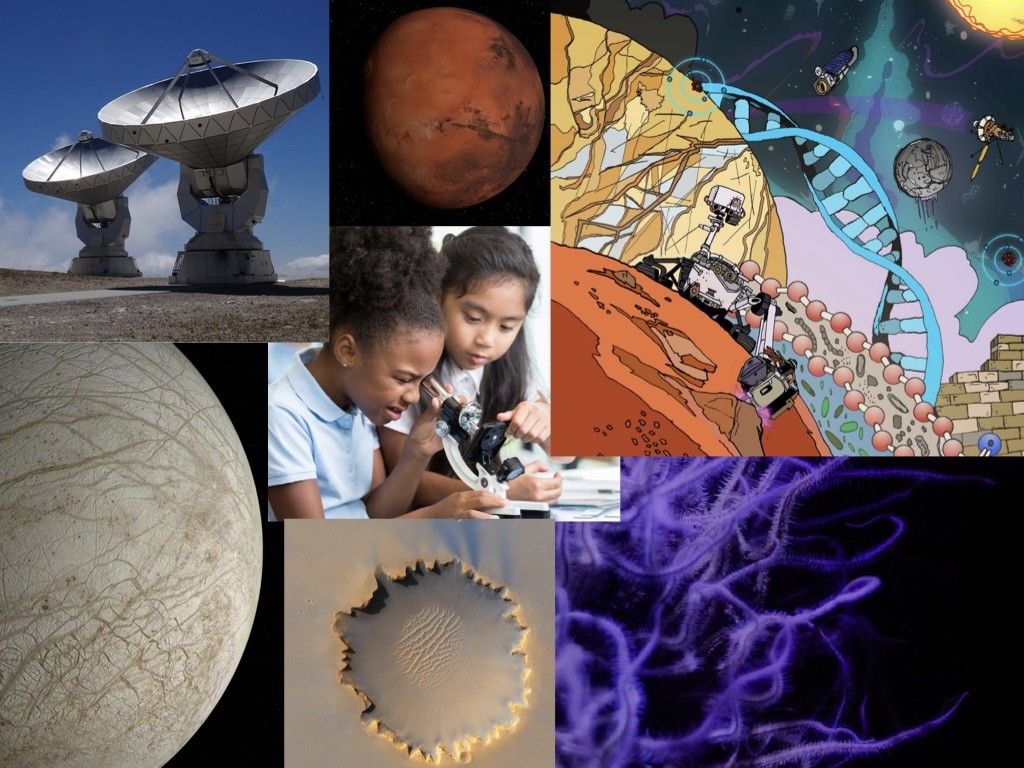
This image collage includes various elements related to astrobiology and space exploration. It features large satellite dishes used for communication or observation, the planet Mars, a comic-style illustration of a Mars rover exploring the planet with DNA strands, two young girls using a microscope in a scientific experiment, the icy surface of Europa, a Martian crater, and purple-colored biological filaments resembling microscopic organisms. The imagery emphasizes scientific inquiry, space exploration, planetary science, and the search for life beyond Earth.
‘The closest we have ever come to discovering life on Mars.’
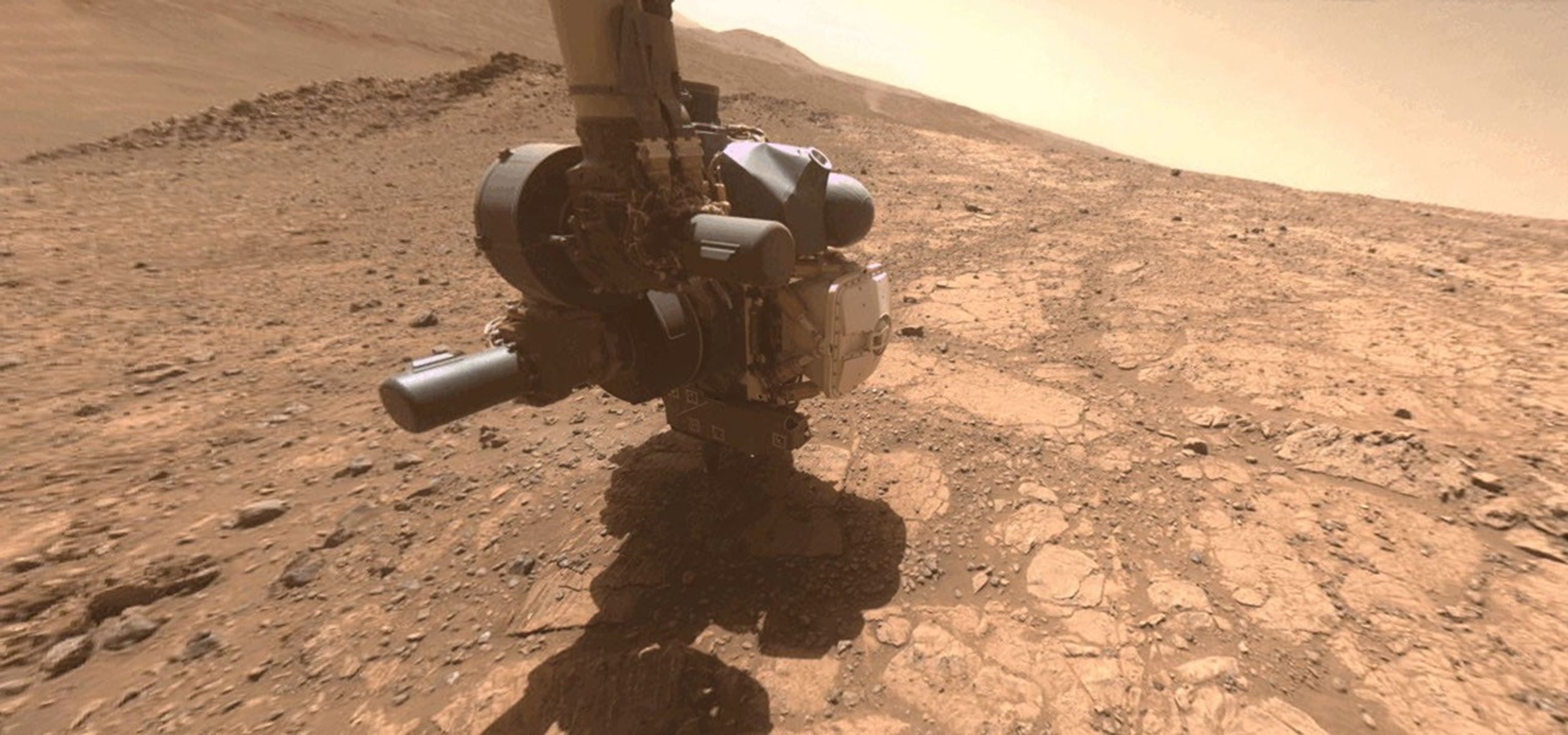
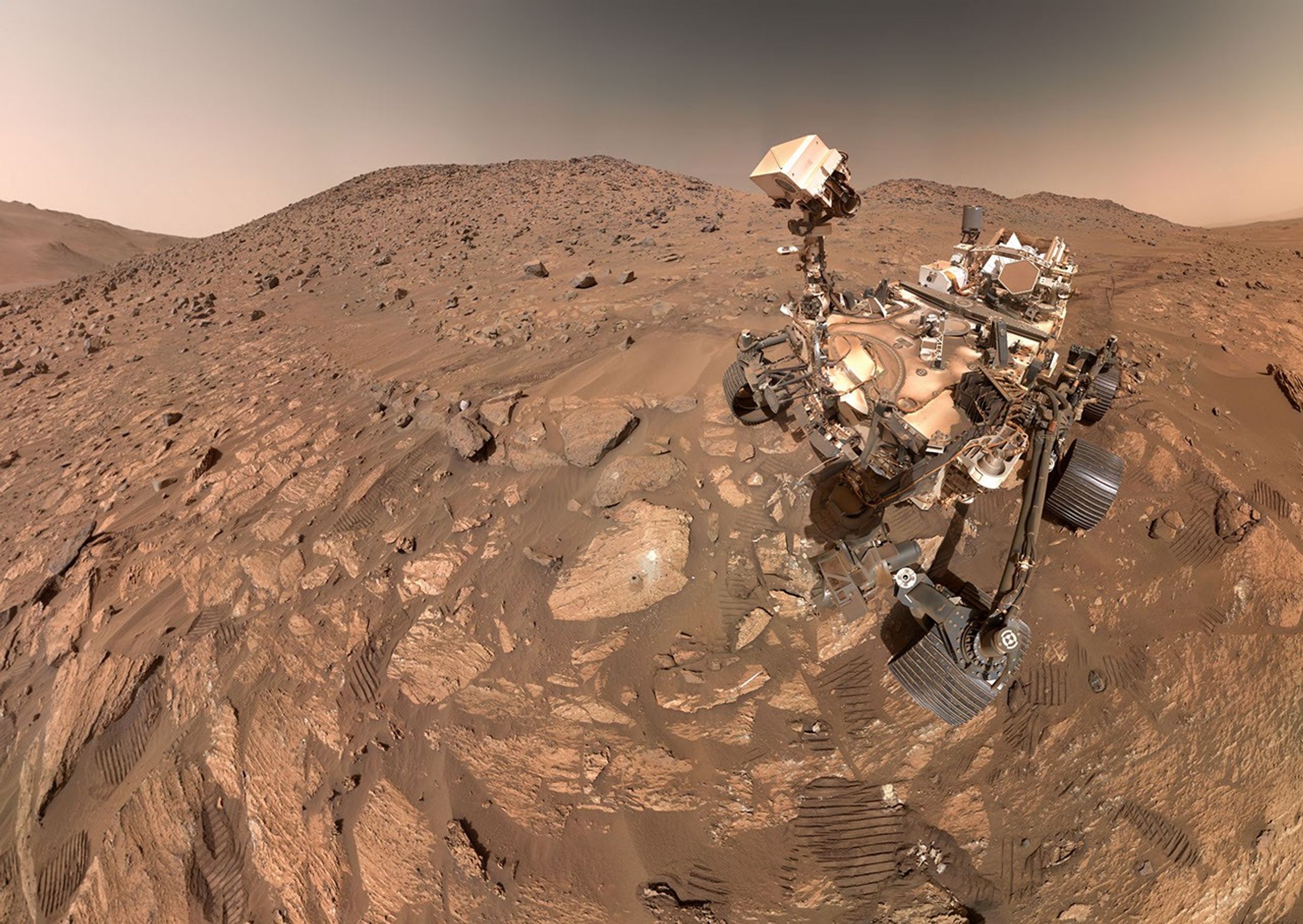
In the summer of 2024, NASA's Perseverance Mars rover investigated its “most puzzling, complex, and potentially important rock yet,” according to one mission scientist. It showed signs of past water, organic material, and clues suggesting chemical reactions by microbial life. In September 2025, after a rigorous, yearlong peer-review to scrutinize the Mars 2020 team findings, the journal Nature published the validated results: Perseverance’s "Sapphire Canyon" sample from the rock nicknamed “Cheyava Falls” contains potential biosignatures — clues that suggest past life may have been present, but that require more data or further study before any conclusions about the absence or presence of life.
NASA’s Perseverance Mars rover took this selfie, made up of 62 individual images, on July 23, 2024. A rock nicknamed “Cheyava Falls,” which has features that may bear on the question of whether the Red Planet was long ago home to microscopic life, is to the left of the rover near the center of the image.
NASA/JPL-Caltech/MSSS
The Sun
The star in our backyard; it may appear like an unchanging source of light and heat in the sky. But the Sun is a dynamic star, constantly changing and sending energy out into space — energy necessary for life on Earth. And it's been doing that for about 4.6 billion years, with another 5 billion or or so in its current state. Learn more about the Sun and how NASA studies it, including the first spacecraft ever to fly through its atmosphere and touch the only star we can study up close.
Venus is sometimes called Earth’s twin, because it’s our closest planetary neighbor and is similar in size and structure. But the similarities end pretty quickly. Venus has a surface temperature hotter than Mercury (even though that planet is much closer to the Sun), and its atmosphere is a heat-trapping blanket of carbon dioxide that creates air pressure 93 times greater on the surface than at sea level on Earth, with sulfuric-acid clouds swirling at 200 mph.
The carbon dioxide so attractive to fictional “astrophage” — the microbial menace in “Project Hail Mary” — has led to a runaway greenhouse effect on a planet that scientists believe may have once been habitable, like its erstwhile twin, but now has surface temperatures reaching 872 degrees Fahrenheit (467 degrees Celsius). The story is different higher up, though — about 30 miles above the surface of Venus (about 50 kilometers), temperatures range from 86 to 158 degrees Fahrenheit (30 to 70 Celsius), with atmospheric pressure similar to what we find on Earth’s surface.
Exoplanets are planets outside our solar system; for the most part they orbit other stars, the way that Earth, Venus, and the other planets in our solar system orbit the Sun. Scientists have confirmed more than 6,000 exoplanets in our galaxy, out of the billions that we believe exist. Learn more about some of the nearby star systems with newfound celebrity — Tau Ceti and 40 Eridani A.
Tau Ceti
Tau Ceti has long been a popular setting in science fiction, as one of the nearest Sun-like stars. Featured in works by Isaac Asimov, Arthur C. Clarke, Frank Herbert, Robert Heinlein, Ursula K. Le Guin, and Kim Stanley Robinson, the Tau Ceti system even serves as the setting for the 1968 Jane Fonda film, "Barbarella." In "Project Hail Mary" it's the origin of an apocalyptic plague, source of the Earth-saving solution, and perhaps even the ancestral home of one or more characters.
Tau Ceti e
Nicknamed “Adrian” in "Project Hail Mary," this exoplanet was one of four planets announced to be orbiting Tau Ceti in 2017. But new studies released in 2024 and 2025, which performed additional monitoring and analysis of the star, showed that all four signals are likely due to quirks of the data-analysis process, or activity on the surface of Tau Ceti itself, not by any planets around it.
Another popular star in science fiction, 40 Eridani A is home to the planet Vulcan in “Star Trek” and a life-supporting planet in "Dune." The star is actually part of a three-star system, with 40 Eridani B and C; it’s also called Keid (from the Arabic word for eggshells) or HD 26965.
40 Eridani A b
The exoplanet called Erid in “Project Hail Mary” — Rocky’s home world; it was thought to be a real exoplanet when discovered in 2018, but turned out to be a false positive. At the time, people liked to compare it to Vulcan from Star Trek, because that planet also orbited 40 Eridani A. For “Project Hail Mary” novelist Andy Weir, the exobiology in his story was inspired by the supposed environment of 40 Eridani A b — an extremely high-pressure world where life evolved to “see” using echolocation, to minimize movement and energy expenditure.
A planet thought to orbit the star 40 Eridani A — host to Mr. Spock’s fictional home planet, Vulcan, in the “Star Trek” universe (as well as Rocky's home planet in "Project Hail Mary") — was really a kind of astronomical illusion caused by the pulses and jitters of the star itself, a 2024 study showed.
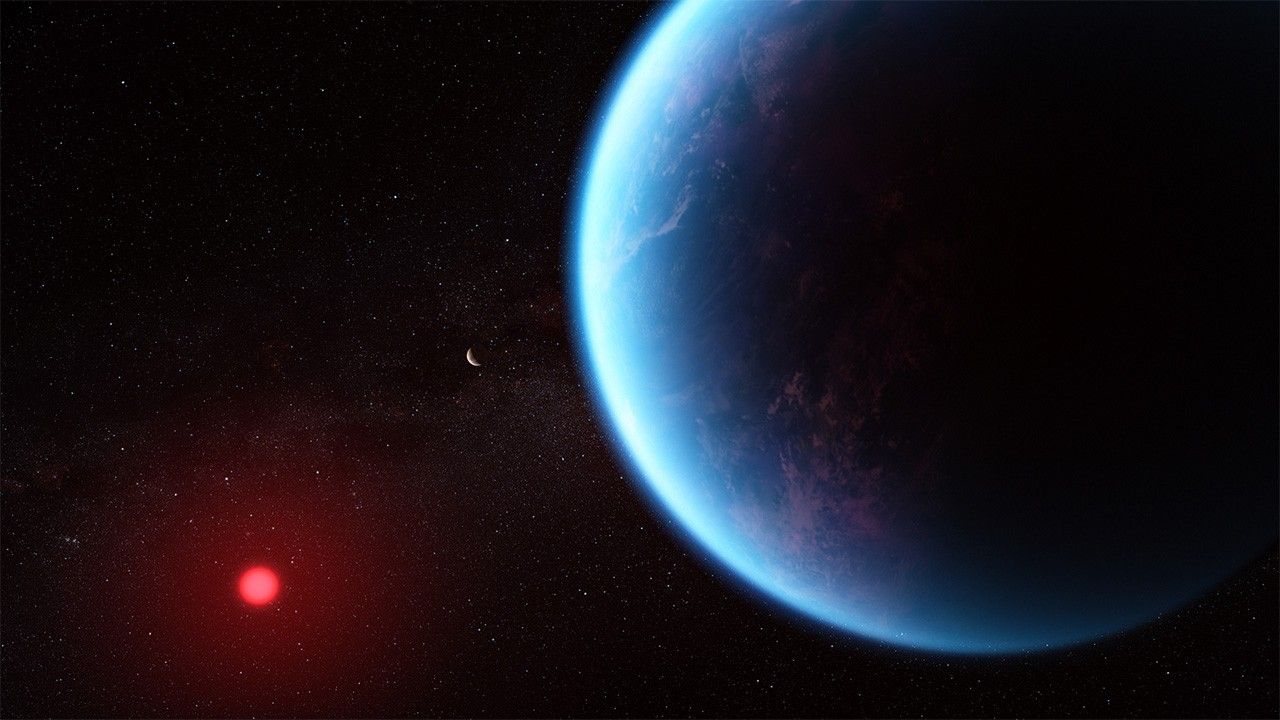
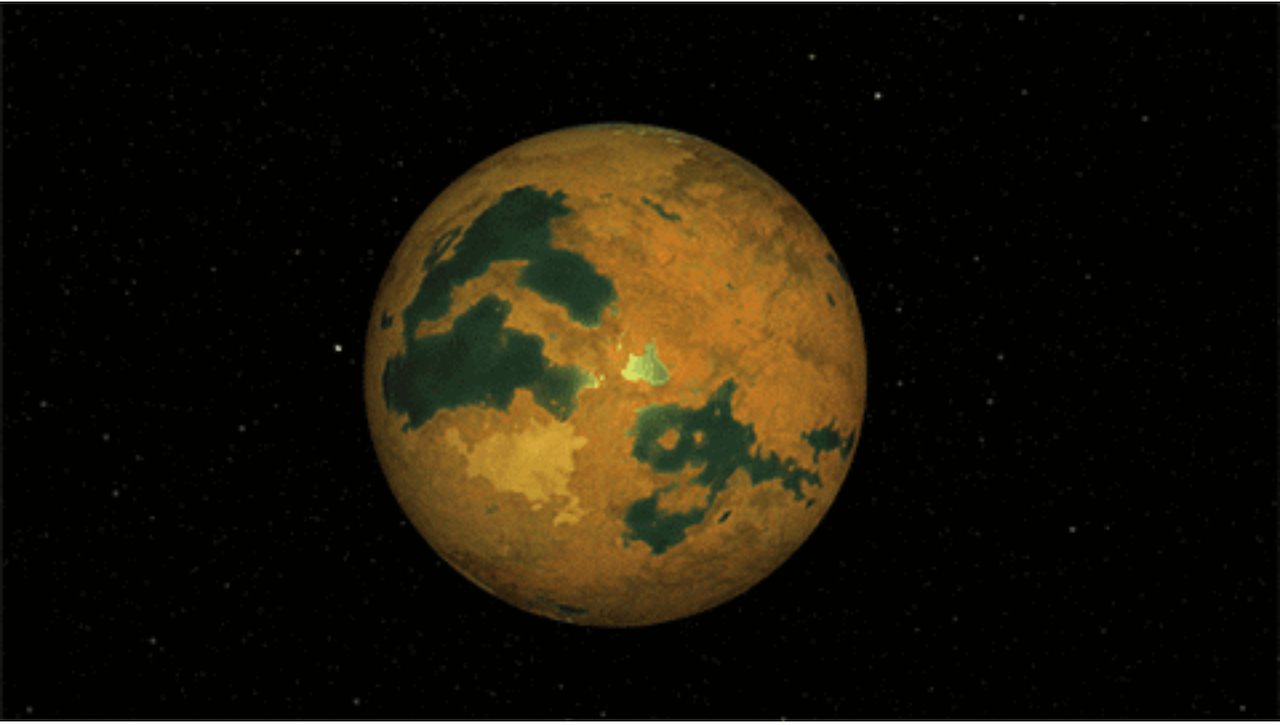
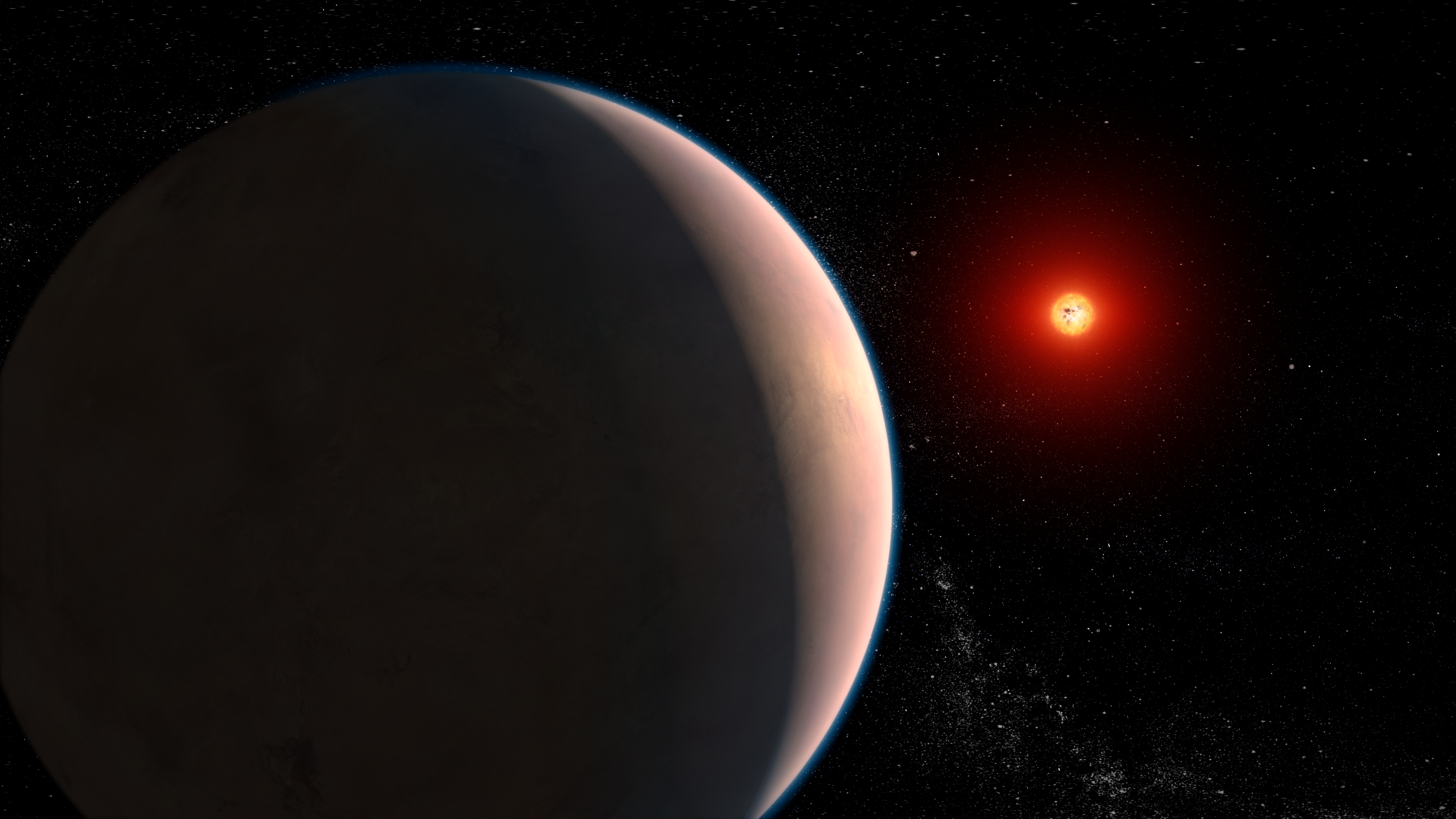
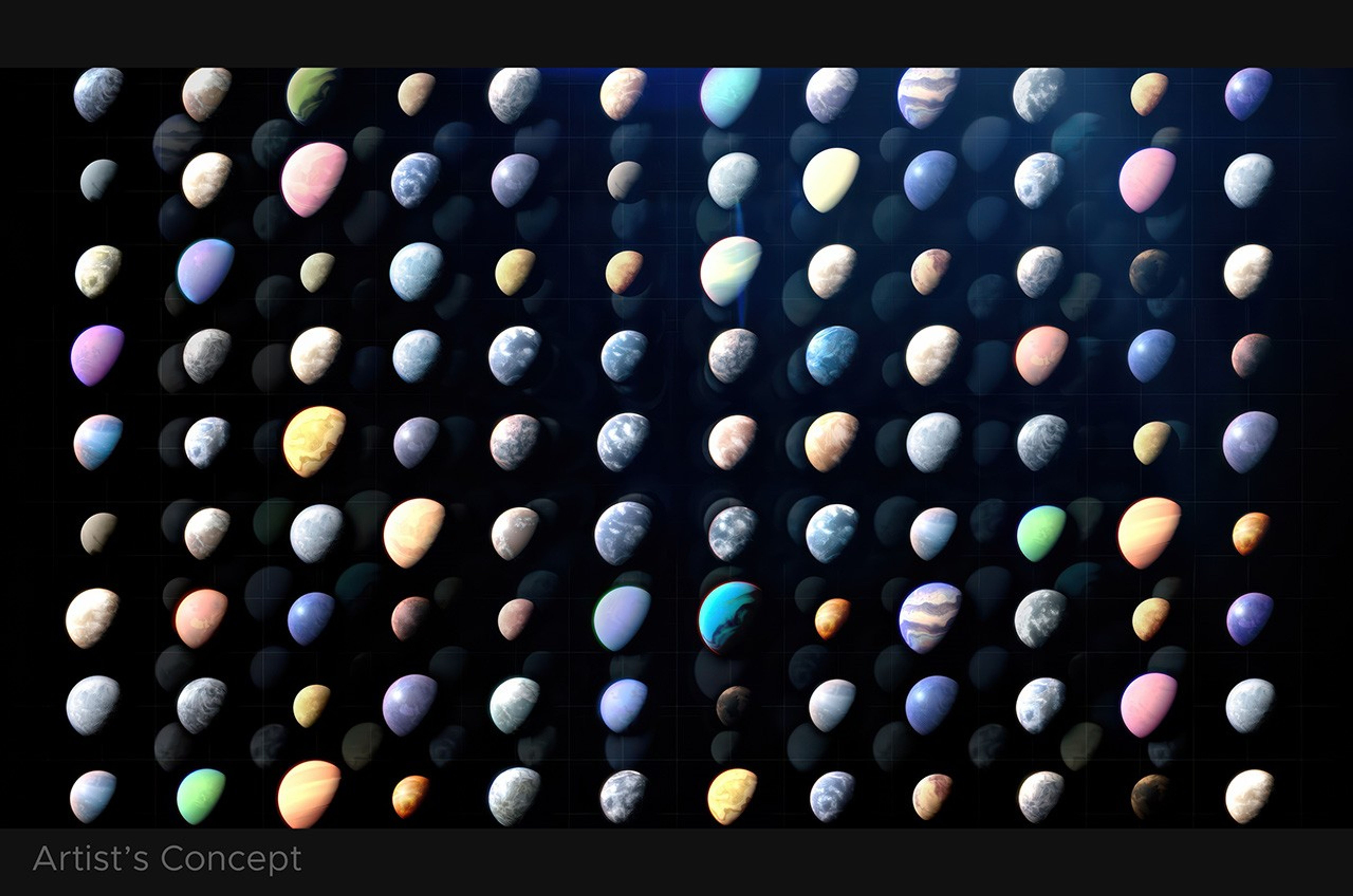
Artist’s concept shows a full disk of the imagined exoplanet around 40 Eridani A, nicknamed “Vulcan” for the home planet in “Star Trek” of Mr. Spock, and Erid, the home planet of Rocky in “Project Hail Mary.”
NASA/JPL-Caltech
Other Movie Stars... But With Dimming Futures
Several other stars mentioned in the story were portrayed as falling victim to the crisis in "Project Hail Mary." Here's what we know about their real-life counterparts.
Also known as Ran, it’s 10.5 light-years from Earth, and the third-brightest star visible to the naked eye. Its system contains two confirmed exoplanets, and two asteroid belts.
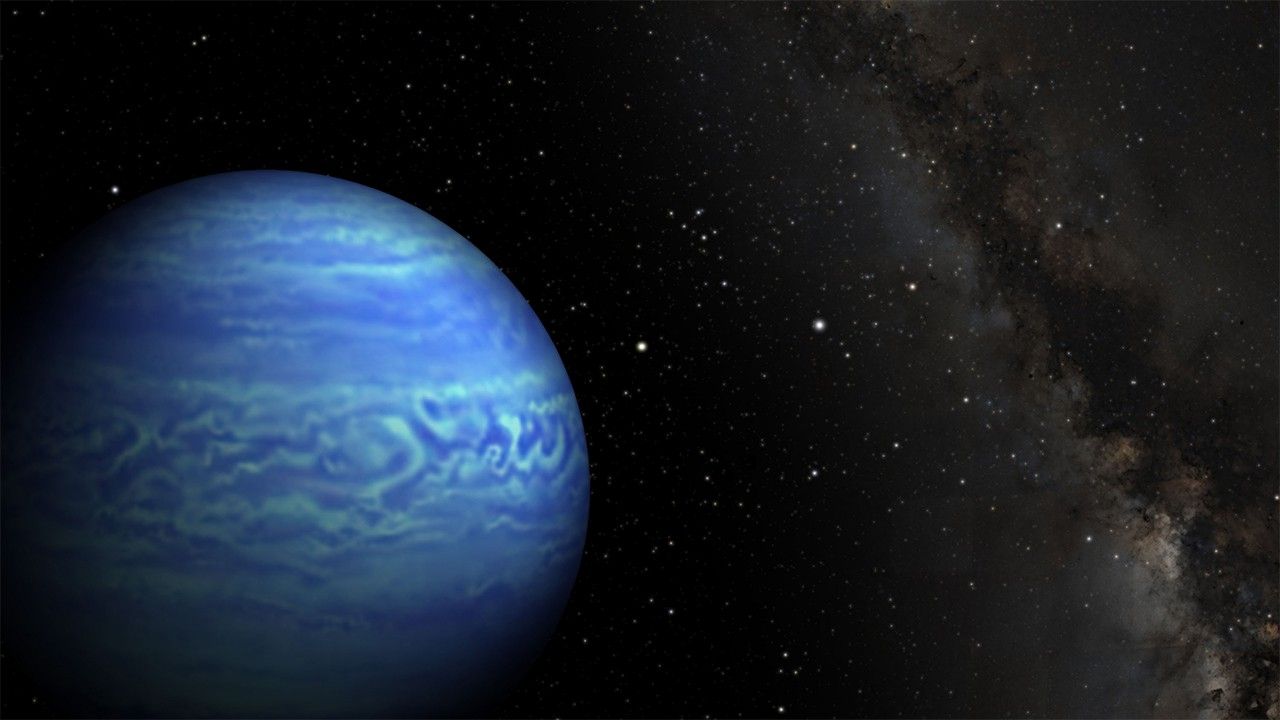
Neither star nor planet, this is a “brown dwarf,” a failed star about five times the size of Jupiter, and only 7.2 light-years from Earth. Detected in 2014, it’s the coldest known object outside of our solar system.
The brightest star in our night sky, and also known as the “Dog Star,” Sirius is actually a binary system — Sirius A and the tiny companion Sirius B. About 8.6 light-years from Earth, it’s the fifth-closest stellar system.
Only 7.8 light-years away, one of the closest stars to our solar system, Wolf 359 is a red dwarf — also known as M-type, the most common stars in the universe — with a mass about one-tenth that of the Sun.
About 11 light-years away, Ross 128 is a red dwarf star that had a Super-Earth exoplanet (Ross 128 b, illustrated above) confirmed in 2017, which orbits the star in 9.9 days.
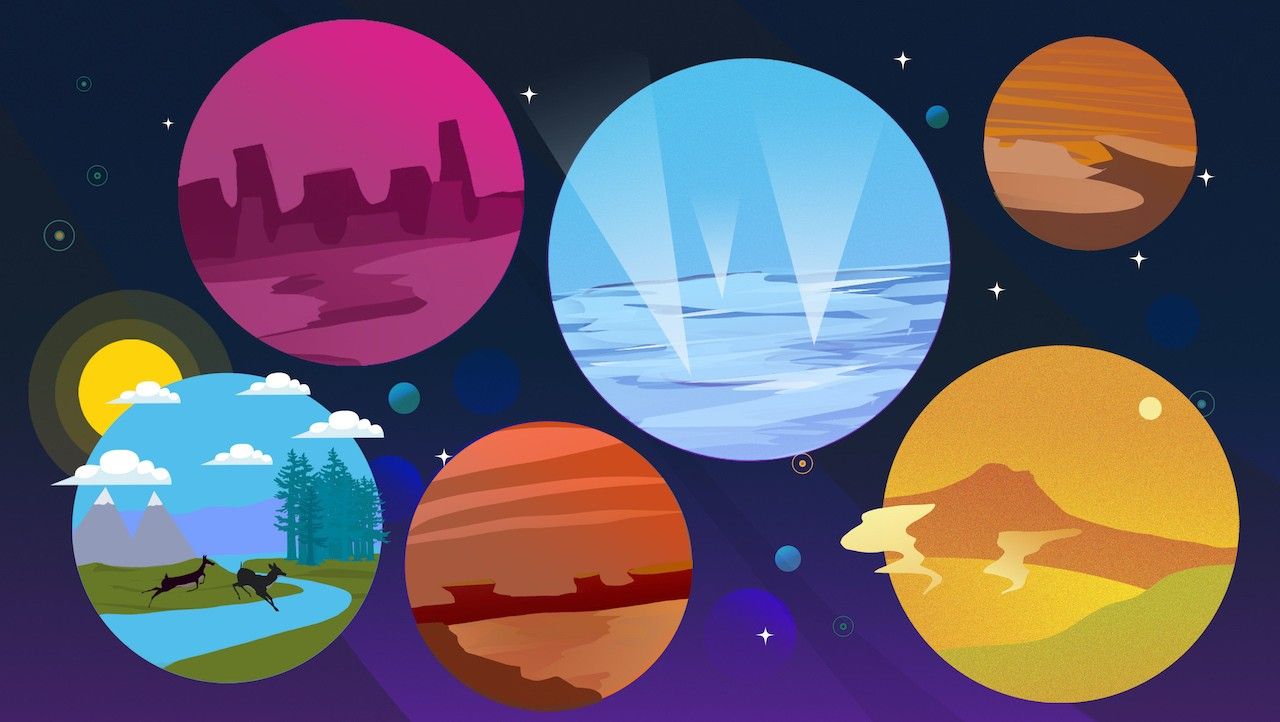
We can't travel to other stars and their planets — yet. But what if we could? And what if the trip was for pleasure and not for work (saving your species)? We teamed with scientists, futurists, and artists to imagine what an otherwordly vacation could look like.
NASA Biological & Physical Sciences: Managing the Microscopic
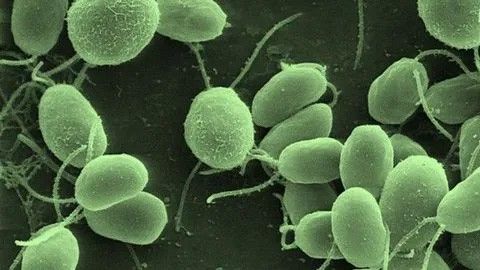
“Project Hail Mary” explores how microorganisms can be both threat and solution in deep space. In reality, every spacecraft carries trillions of microbes, and understanding how these invisible passengers behave is critical. NASA monitors the International Space Station’s microbial communities using real-time DNA sequencing to track what changes and why. For missions to Mars and beyond, managing microscopic life is essential for crew safety.
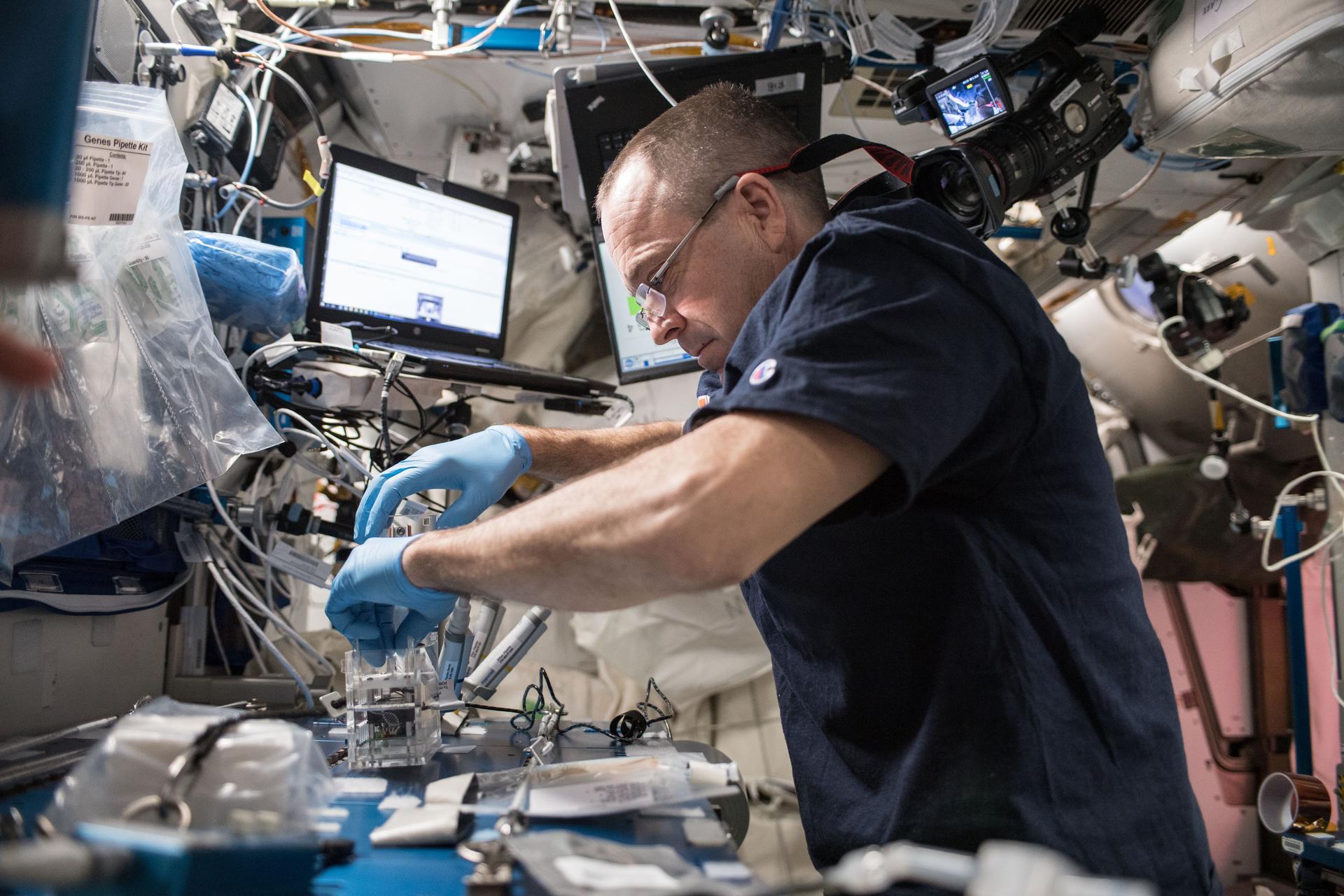
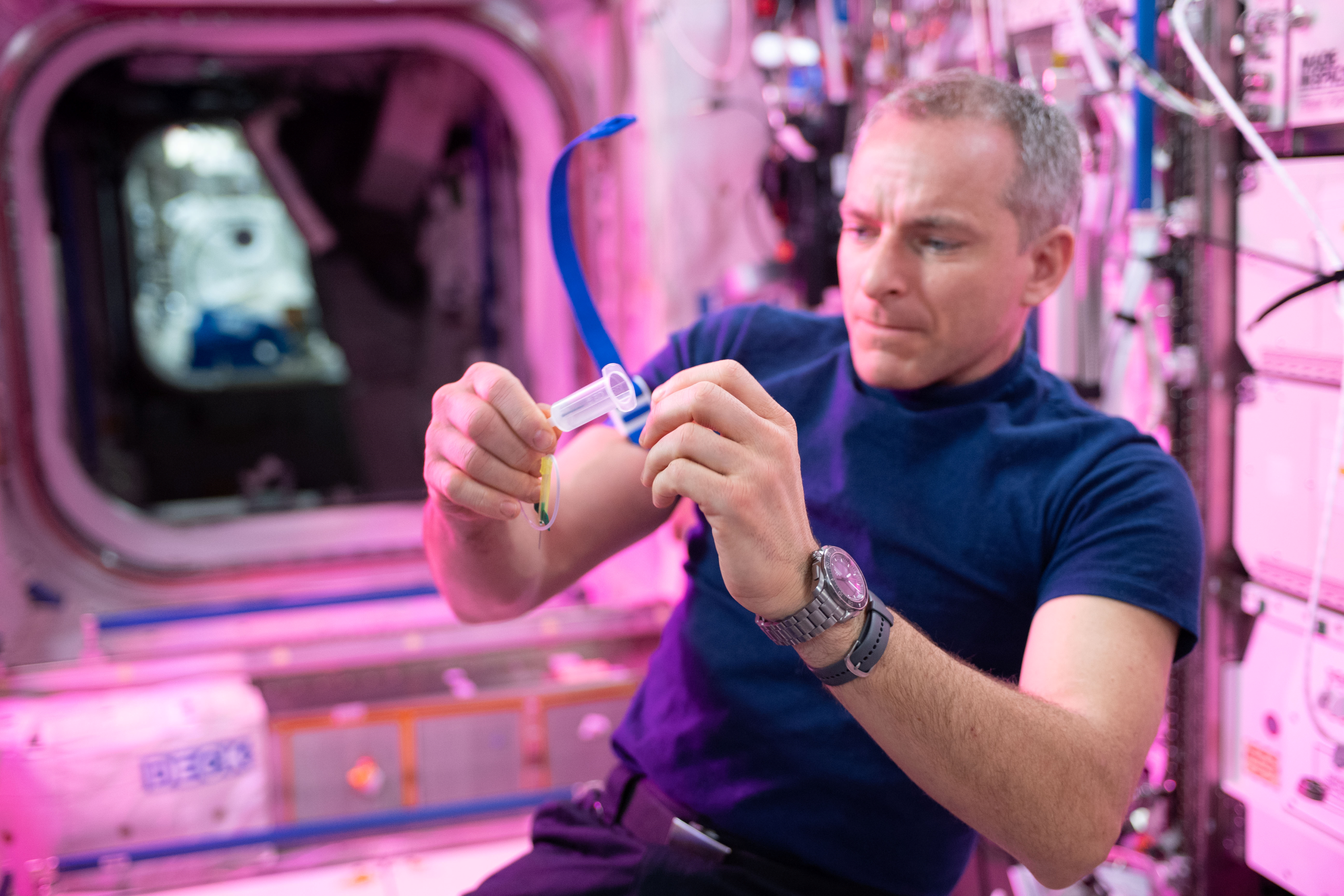
(July 19, 2018) — NASA astronaut Ricky Arnold swabbed surfaces in the International Space Station to collect microbe samples. He then processed the microbial DNA using the Biomolecule Sequencer, a device that enables DNA sequencing in microgravity, to identify microbes able to survive in microgravity.
Ricky Arnold
Extreme Survivors
It may sound like science fiction, but it’s just biology. Water bears (microscopic animals also known as tardigrades) can survive conditions that would kill almost anything else: extreme radiation, temperatures near absolute zero, and the vacuum of space. When threatened, they shut down all life processes and enter suspended animation for decades or even centuries. Add water, and they reactivate within an hour, moving and reproducing as if nothing happened. NASA studies these extremophiles aboard the International Space Station to identify the molecular mechanisms behind their remarkable resilience, and the survival tricks that could protect astronauts during yearslong missions to distant places.
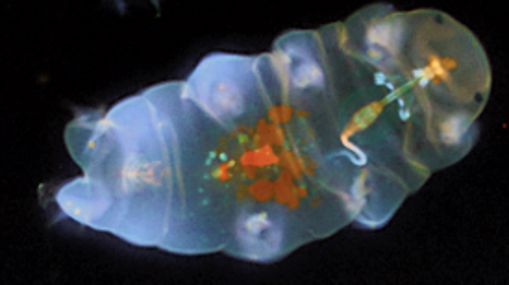
The tardigrade, Hypsibius exemplaris, a model for understanding how organisms survive in extreme environments. Tardigrades will be cultured aboard the International Space Station over multiple generations.
Tagide deCarvalho
Microscopic Solutions for Deep Space
In “Project Hail Mary,” a microscopic organism becomes the key to survival. NASA is exploring similar possibilities in real life. During the Artemis I mission, algae traveled around the Moon to test whether a single type of microorganism could serve multiple important functions on missions, like producing fuel, providing nutrition, and creating medicine. The algae didn't just survive the harsh radiation beyond Earth's protective magnetic field. It thrived. Understanding how these tiny organisms adapt to extreme conditions could inform future missions to the Moon, Mars, and beyond.