


Today marks 30 years since easyJet operated its first-ever passenger flight. The orange-clad low-cost carrier started off small, operating wet-leased Boeing 737s on domestic routes from its first base at London Luton Airport (LTN), and has since gone on to become one of Europe's largest airlines.
In order to mark its 30th birthday, easyJet arranged for one of the flights on its first-ever route from Luton to Glasgow Airport (GLA) in Scotland to be operated solely by pilots and cabin crew who, themselves, have turned or are turning 30 this November. The carrier also marked the occasion with a special event before the flight, which saw the Captain of the maiden easyJet flight make an appearance and share his thoughts on the industry.
easyJet Turns 30
The easyJet story began on November 10, 1995, when flight EZY121 departed London Luton for Glasgow Airport with 122 passengers onboard. The Captain that day was Fred Rivett, who is pictured above flanked by easyJet CEO Kenton Jarvis and the Captain of today's anniversary flight, Jamie Smart.
easyJet has come a long way from its humble beginnings as a domestic low-cost carrier operating wet-leased Boeing 737s, and it now has bases all over Europe. Next year will also see it open its first African base in Marrakech, Morocco. The aviation industry, and, indeed, the world as a whole, has changed a lot during easyJet's three decades of existence, but Captain Fred Rivett remains optimistic for the coming years. He told Simple Flying that:
"Aviation has gone leaps and bounds over the years. I wouldn't have thought, 30 years ago that [easyJet was] going to be this big. I’m really excited for the future of the industry."
Luton To Glasgow Remains An Important Route For easyJet
Despite its international growth, one thing that hasn't changed for easyJet is the importance of its routes between London and Scotland. Today, data from Cirium, an aviation analytics company, shows that the carrier operates 18 flights a week between London Luton and Glasgow Airport alone, with either two or three round trips every day. easyJet's other initial route in 1995 was Luton to Edinburgh (EDI), which also sees 18 weekly rotations.
Today's special anniversary flight with its exclusively 30-year-old pilots and cabin crew was numbered as U2-402, with tracking data made available by Flightradar24 showing that it was operated by a one-year-old Airbus A320neo that bears the registration G-UZLR. The video below shows its departure from Luton.
Looking more broadly at easyJet's considerable operations between London and Scotland, Cirium shows that, this November, the carrier has scheduled 1,460 flights on routes between the capital and cities north of the border. London Gatwick Airport (LGW) to Edinburgh is the most popular, with 30 round trips a week, followed by London Stansted (STN) to Edinburgh (25 weekly rotations) and Gatwick to Glasgow (24 weekly rotations).
French Connection: easyJet Announces 17 New Routes Across France
The carrier is looking to expand its network.
easyJet Commissioned Anniversary Research Into Societal Changes👁 easyJet Staff At Anniversary Event
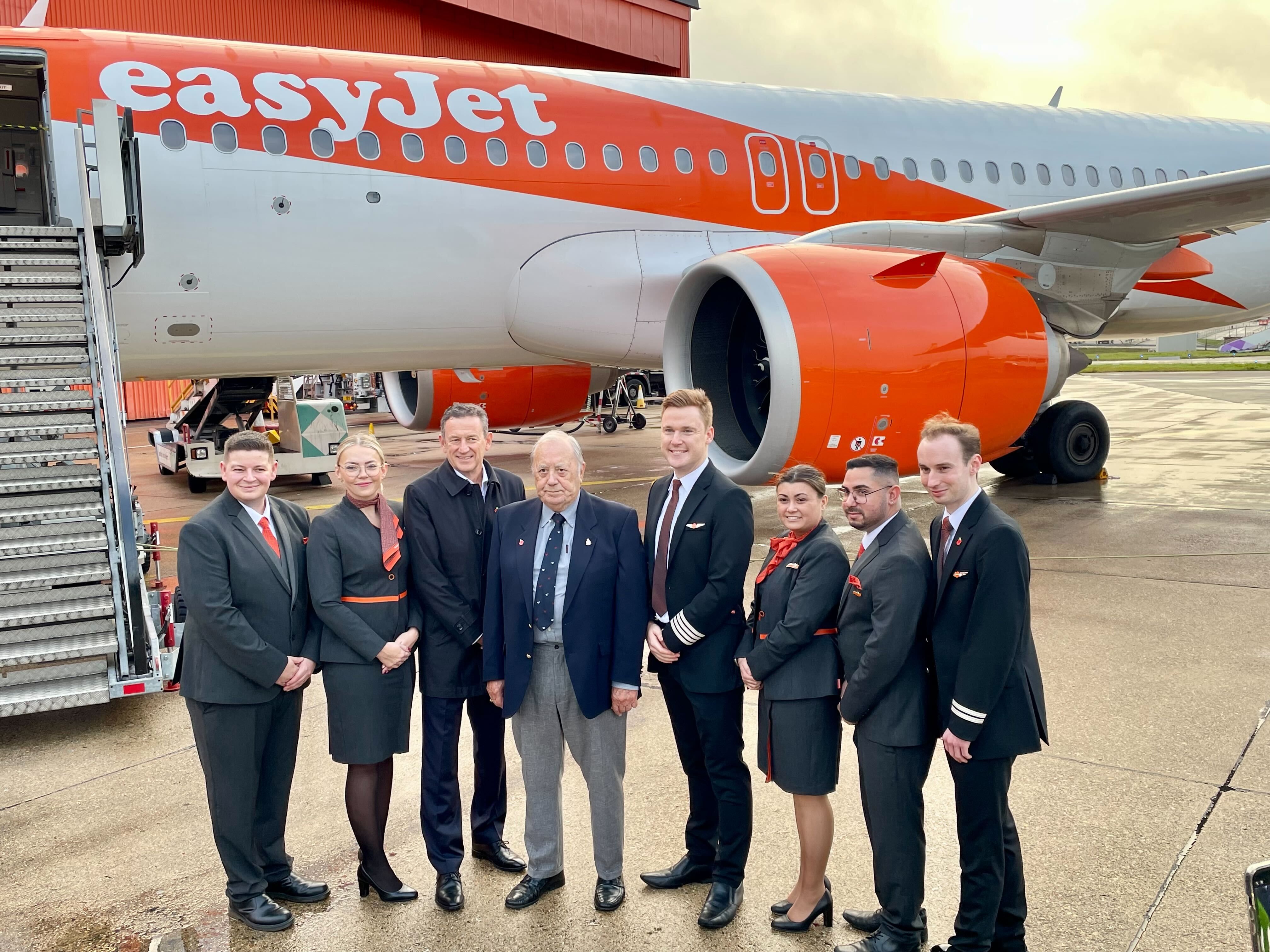
Aside from operating its 30th anniversary flight with a crew of pilots and flight attendants that are all 30 years old, easyJet has also marked three decades in the skies by commissioning research into how aviation, and the world in general, has changed during its operational history. 1.2 billion passengers have flown with the airline in this time, with its starting fares having actually decreased 55% in real terms from £29 (£58 today) to £26.
Contrastingly, easyJet's research found that other everyday purchases have become considerably more expensive in real terms, with first class stamps being the worst offenders, at 231%. Tickets to the Glastonbury Festival, house prices, and Arsenal football tickets have also more than doubled in price in real terms, with respective increases of 178%, 154%, and 147%, underlining the impressive nature of easyJet's real-terms drop.
easyJet's research also found that the low-cost boom has changed the way that Brits fly, with 94% of the respondents to its survey agreeing that "going on family holidays to Europe is much easier than when they were children." The carrier's commitment to regional aviation and secondary airports is also evidenced by the fact that 73% of Brits have seen opportunities to fly to Europe from their local airports grow in the last 30 years.