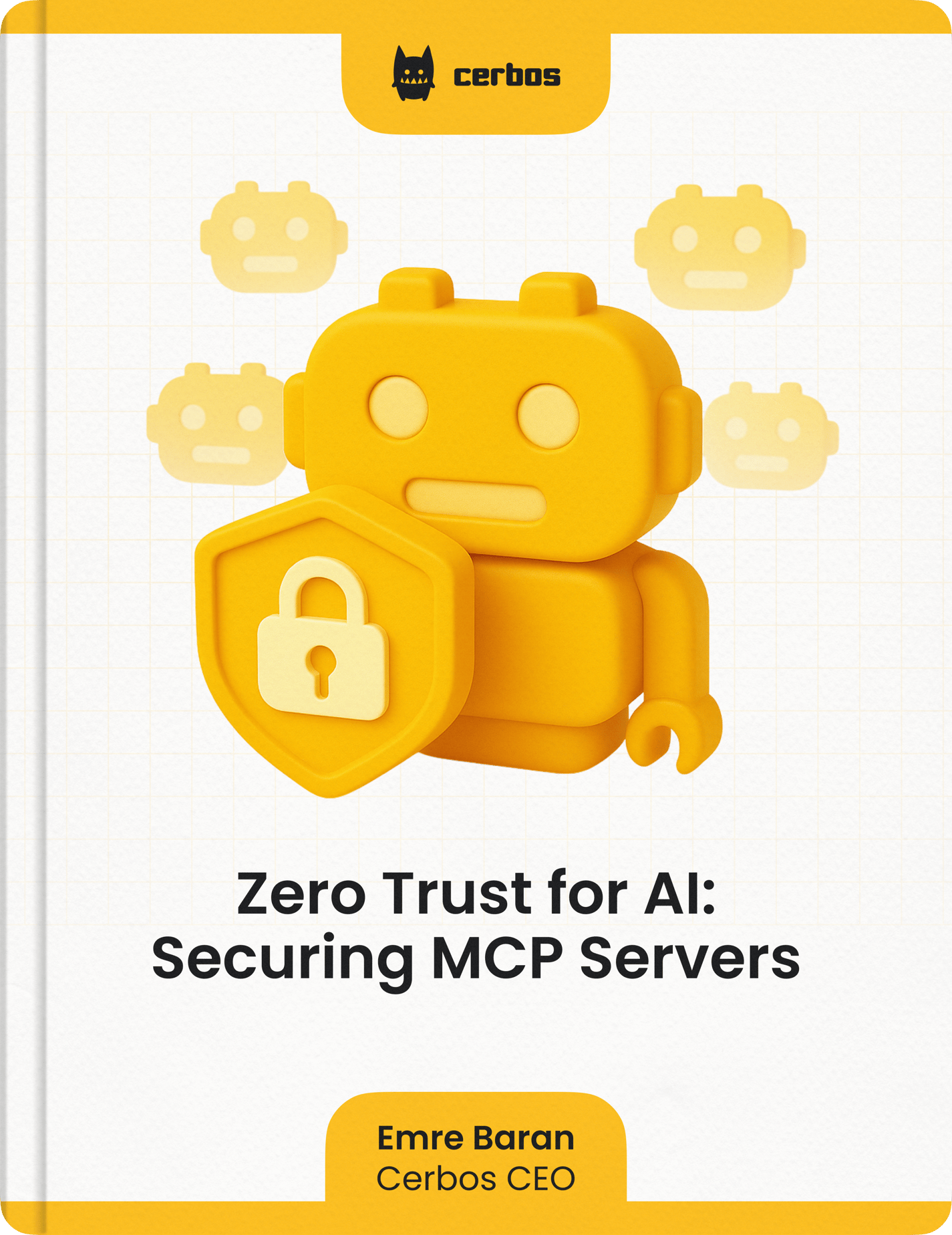
Zero Trust for AI: Securing MCP Servers
MCP servers are now among the most privileged components in your AI stack.
They represent a fundamental new risk that traditional security controls weren't designed to address, requiring immediate attention from security, compliance, and risk management teams.
This ebook provides a practical blueprint for securing MCP servers using externalized, fine-grained authorization.
What's inside the ebook
Drawing from customer implementations, security architect discussions, and emerging MCP security research, we cover:
-
Strategic risk considerations
How MCP servers fit into your broader risk management and compliance framework, and what security leaders need to know.
-
Implementation frameworks
Authorization policies and deployment patterns to transform your MCP server from a “confused deputy” into a governed, trusted co-pilot.
-
Externalized authorization architecture
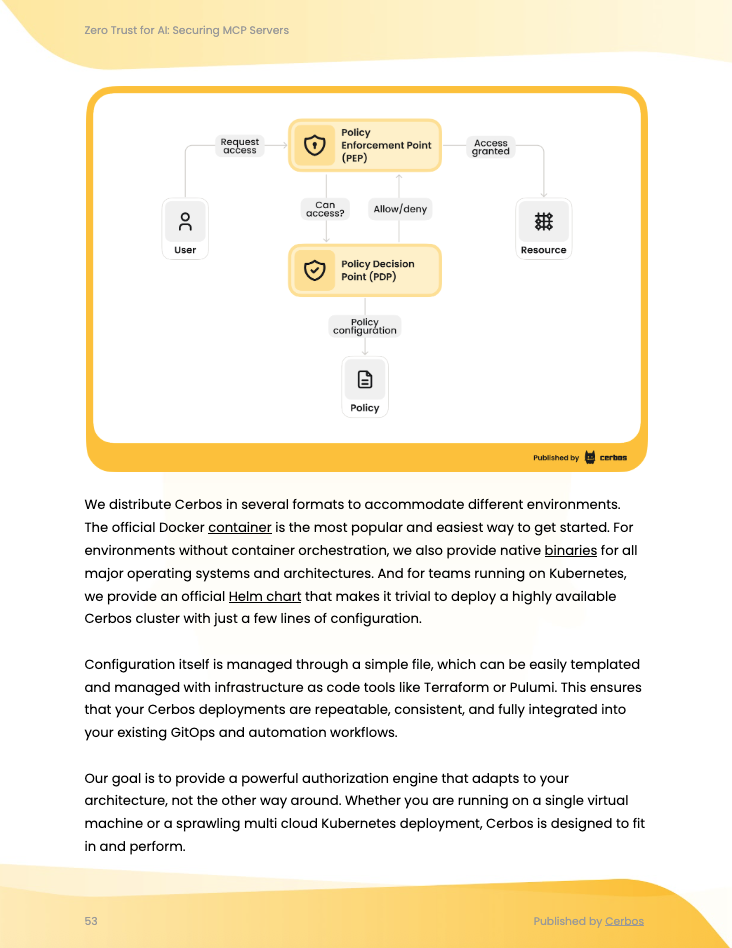
The PEP/PDP pattern that decouples policy enforcement from policy decisions, enabling Zero Trust for AI systems.

Created for IAM, security and engineering team
Strategic guidance for enterprise risk management
Proven frameworks and deployment patterns
50+ pages
of in depth content
Zero Trust architecture to prevent MCP servers from becoming your biggest liability
Your MCP server is the new high privilege account
We establish why MCP servers represent a fundamental shift in enterprise security architecture. You will learn how changes in identity workflows create new considerations for risk management teams and what this means for your organization's security posture.
Topics covered: Broken identity chains, high risk workflow anatomy, streaming state complexity, privilege concentration, transaction tokens.
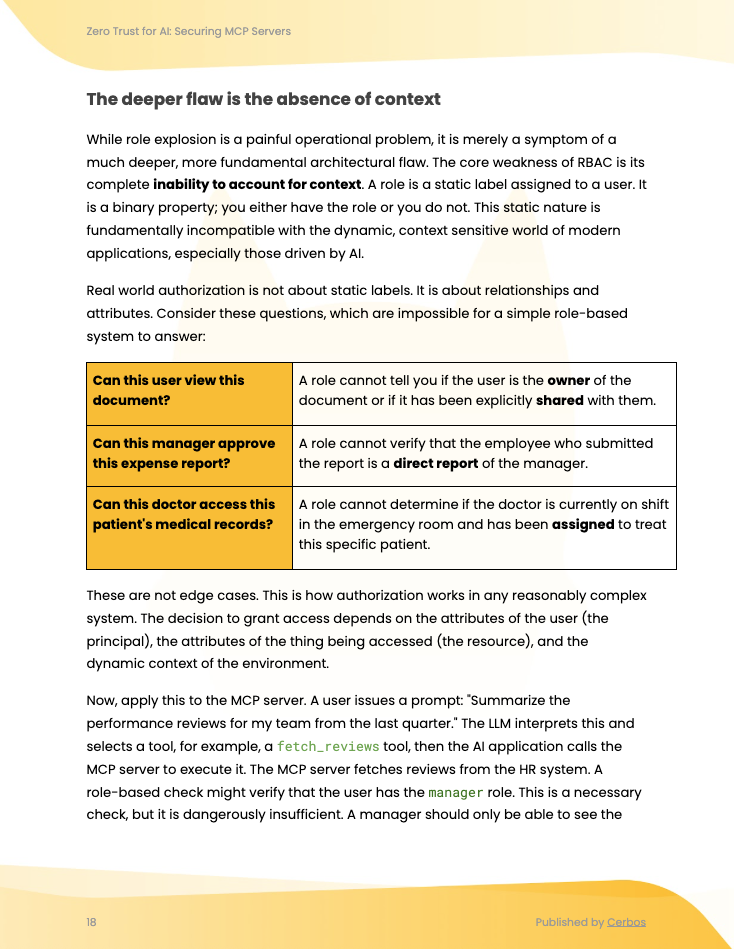
Why traditional roles fail in a dynamic world
We examine the critical flaws of Role-Based Access Control when applied to AI agents. You will see the pattern of role explosion, understand context blindness as RBAC's fatal flaw, and learn why teams resort to dangerous admin role bypasses.
Topics covered: Role explosion patterns, context-aware authorization requirements, hard coded logic antipatterns, principle of least privilege violations.
An architectural pattern for modern authorization
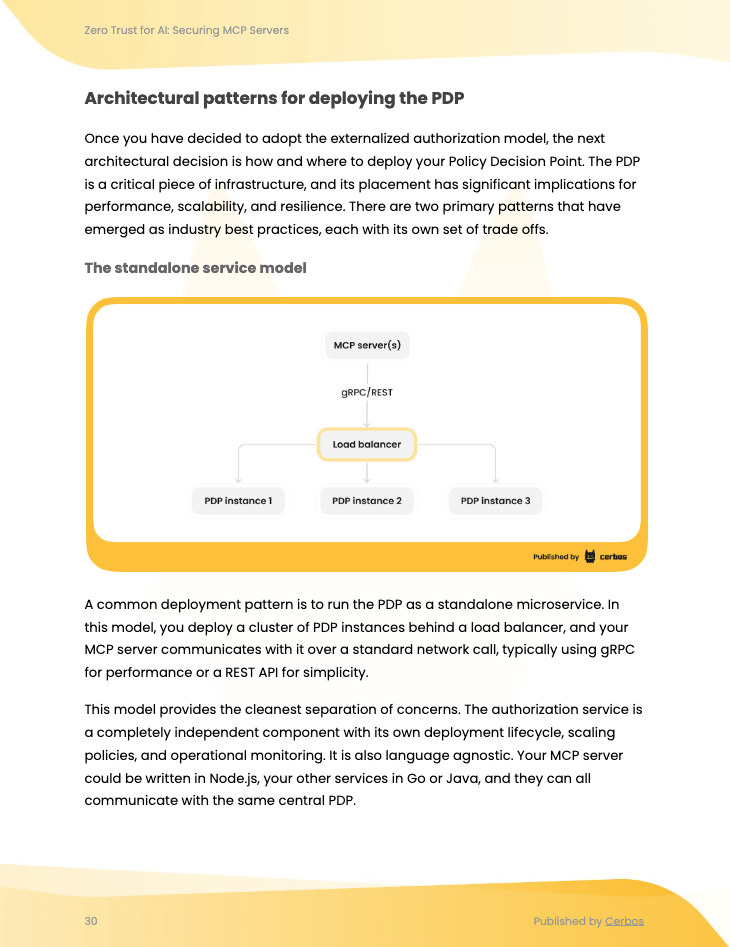
We introduce externalized authorization as the solution, covering Policy Enforcement Points and Policy Decision Points. You will learn deployment patterns including standalone service and sidecar models, plus specific integration strategies for MCP servers.
Topics covered: PEP/PDP architecture, deployment patterns, authorization checkpoints, integration workflows.
Writing rules that your business can understand
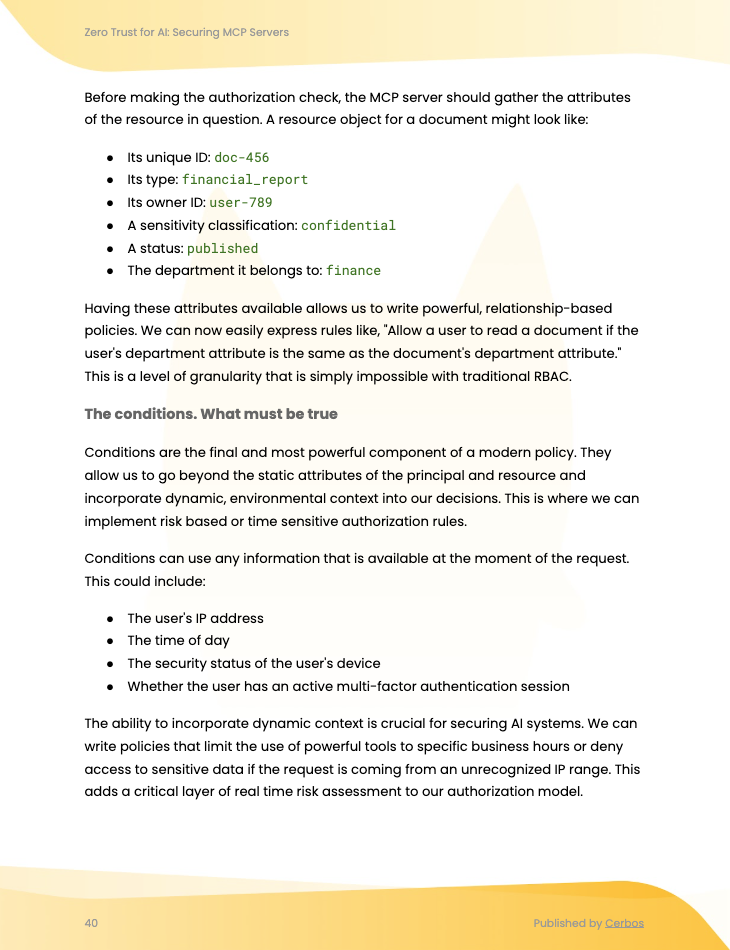
We cover the paradigm shift from imperative code to declarative policy-as-code. You will master the anatomy of modern policies using principals, actions, resources, and conditions, and learn the careful role of AI in policy management.
Topics covered: Declarative vs imperative authorization, policy components, human-readable governance, collaborative security, AI assisted policy tools.
Bonus: A comprehensive list of NHI security vendors
We’ve compiled a thorough list of NHI security vendors that can help you close this security gap before attackers make use of it.
How Cerbos delivers on this architecture
We demonstrate how purpose-built authorization engines provide the performance and developer experience needed for production MCP deployments. You will see real implementation examples, with stateless architecture benefits, sub-millisecond performance benchmarks, and derived roles in action.
Topics covered: Stateless authorization, performance optimization, derived roles, developer workflows, deployment flexibility.

About the author
Emre Baran, co-founder of Cerbos, ex-Googler, entrepreneur & software executive with 20+ years of experience.

Authorization implementation and management solution
Implement scalable, secure, fine-grained authorization for both human and non-human identities.
.png?width=2000&height=1125&name=externalized%20authorization%20ebook%20webinar%20page%20image%20(8).png)