VOOZH about

URL: https://thebulletin.org/magazine/2025-05/

⇱ May 2025 - Bulletin of the Atomic Scientists


Follow our Iran coverage

DIGITAL MAGAZINE

May 2025

DIGITAL MAGAZINE

May 2025

May 2025

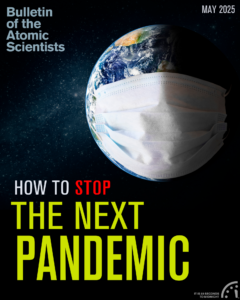
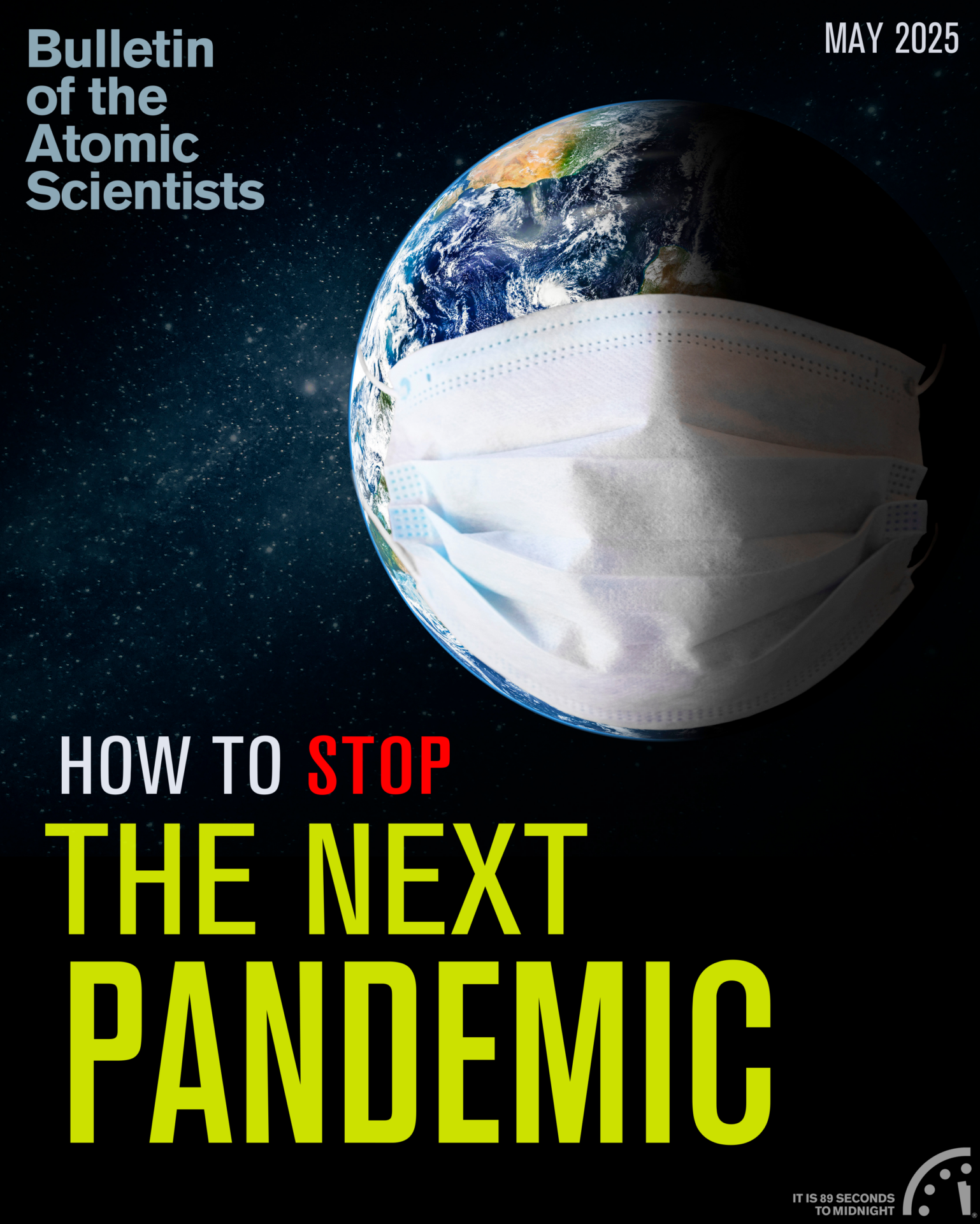
Introduction: How to stop the next pandemic

By Dan Drollette Jr

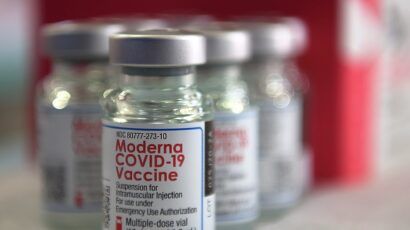
"The operation was a success but the patient died" is an old trope in medicine. Similarly, pandemics can be fought successfully—but the trick is to do it without alienating the public so much that they become distrustful of all health policymaking and scientific research in the future. So, what lessons can be drawn from the recent experience with COVID?

Introduction: How to stop the next pandemic

By Dan Drollette Jr

"The operation was a success but the patient died" is an old trope in medicine. Similarly, pandemics can be fought successfully—but the trick is to do it without alienating the public so much that they become distrustful of all health policymaking and scientific research in the future. So, what lessons can be drawn from the recent experience with COVID?

The impact of DOGE’s funding cuts on biomedical research, from the point of view of former NIH director Monica Bertagnolli

By Dan Drollette Jr

The NIH faces cuts of 35 percent, requested by billionaire Elon Musk’s so-called Department of Government Efficiency (DOGE). Consequently, researchers have had to struggle with getting reimbursed for routine expenses such as lab mice—especially after DOGE put a one-dollar spending limit on the use of government credit cards. Years of work are being put at risk, says former NIH director Monica Bertagnolli, who explains what the cuts mean, for science and the public.

How AI can slow the rise of antibiotic-resistant “superbugs”

By Cesar de la Fuente-Nunez, Henry Skinner, Christina Yen

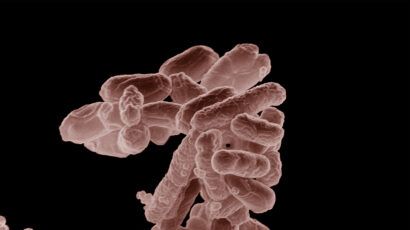
Antimicrobial-resistant (AMR) “superbugs” contribute to more than 4.5 million deaths globally per year and threaten to make common medical procedures such as surgery and chemotherapy less safe. At the same time, very few innovative antibiotics, antifungals, and other antimicrobial therapies are in development and private investment is insufficient. But AI, machine learning, and related tech could accelerate antimicrobial drug discovery and development—and improve clinical care for patients suffering with AMR infections.

Sonia Shah on pandemics and pushback: Lessons from the COVID experience

By Dan Drollette Jr

What went wrong, what went right, and what have we learned (or not learned) from the COVID experience? Investigative reporter, book author, and 2024 Guggenheim recipient Sonia Shah —who has been covering epidemiology for years—gives her take.

Pandemic risks: Are there some genetic experiments that simply should not be done?

By Filippa Lentzos

What does responsible science mean when it comes to genetic experiments? Are some experiments so risky they simply should not be done? Researchers, policy makers, and the public have been debating these issues for the past 50 years, ever since the first tools of genetic engineering enabled scientists to rewrite the genetic code and create organisms that had never before existed.

Pandemics, public health, and popular support: What history can tell us

By J. Alexander Navarro

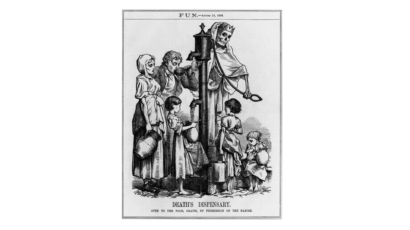
Closing businesses and schools, isolating and quarantining people, banning public gatherings, and requiring masks are effective public health measures in times of pandemics—but also highly disruptive. As a result, they have a long history of public pushback. For public health measures to be most effective, rates of compliance must be high. This requires accurate and consistent public health messaging, equitable implementation of health orders and recommendations, and an understanding of the ancillary burdens these measures can cause.

Interview: The ‘holy grail’ of pandemic preparedness—the search for a universal vaccine

By Matt Field

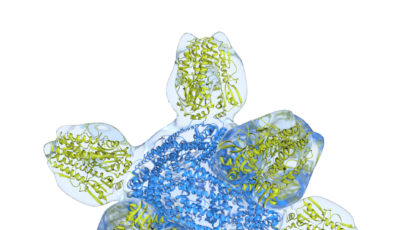
Scientists have been pursuing a universal vaccine against influenza for decades, both to protect against seasonal influenza and potential flu pandemics. Whereas season flu vaccines target a constantly shape-shifting protein on influenza viruses and therefore must be updated each year to match currently circulating strains, a universal vaccine might target an unchanging part of the virus. Government investment has been crucial in this area of pandemic preparedness research but may be uncertain going forward, given an anti-vaccine bent to the new presidential administration.

The future of global health, without the United States

By Scott L. Greer, Rachel Kulikoff

The changes wrought by Donald Trump's second administration have already been momentous, and the changes in global health are among the biggest: The US has withdrawn from the WHO, and global health policy is being destroyed—as seen in the closure of USAID. Global health will be gravely harmed. The WHO will suffer and will likely become a less effective institution. The world will face greater health risks, have less resilience, and be less able to mount an effective response to health threats.

Amplifying doubt: How Russian trolls leveraged pandemic uncertainty for strategic gain

By Maksim Markelov

Russian state-sponsored trolls seized on the moment of uncertainty posed by COVID-19—not to promote any coherent counter-narrative, but to make coherence itself elusive. Their strategy was not to persuade but to confuse, amplifying deep-seated anxieties and contradictions, and fostering ideological polarization. By strategically amplifying both vaccine skepticism and criticism of government failure and so-called overreach, this operation did not merely seek to instill doubt in a particular version of reality. Rather, it aimed to erode faith in the very possibility of a shared reality altogether. This deliberate amplification of uncertainties carries consequences that extend far beyond COVID-19.

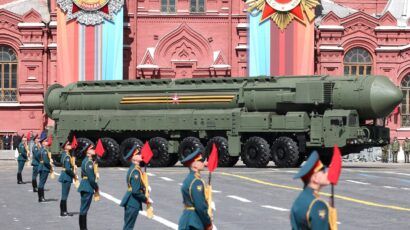
Russian nuclear weapons, 2025

By Hans M. Kristensen, Matt Korda, Eliana Johns, Mackenzie Knight-Boyle

Russia's nuclear modernization program has faced significant challenges and delays. We estimate that Russia now possesses about 4,309 nuclear warheads.

The impact of DOGE’s funding cuts on biomedical research, from the point of view of former NIH director Monica Bertagnolli

By Dan Drollette Jr

The NIH faces cuts of 35 percent, requested by billionaire Elon Musk’s so-called Department of Government Efficiency (DOGE). Consequently, researchers have had to struggle with getting reimbursed for routine expenses such as lab mice—especially after DOGE put a one-dollar spending limit on the use of government credit cards. Years of work are being put at risk, says former NIH director Monica Bertagnolli, who explains what the cuts mean, for science and the public.

How AI can slow the rise of antibiotic-resistant “superbugs”

By Cesar de la Fuente-Nunez, Henry Skinner, Christina Yen

Antimicrobial-resistant (AMR) “superbugs” contribute to more than 4.5 million deaths globally per year and threaten to make common medical procedures such as surgery and chemotherapy less safe. At the same time, very few innovative antibiotics, antifungals, and other antimicrobial therapies are in development and private investment is insufficient. But AI, machine learning, and related tech could accelerate antimicrobial drug discovery and development—and improve clinical care for patients suffering with AMR infections.

Sonia Shah on pandemics and pushback: Lessons from the COVID experience

By Dan Drollette Jr

What went wrong, what went right, and what have we learned (or not learned) from the COVID experience? Investigative reporter, book author, and 2024 Guggenheim recipient Sonia Shah —who has been covering epidemiology for years—gives her take.

Pandemic risks: Are there some genetic experiments that simply should not be done?

By Filippa Lentzos

What does responsible science mean when it comes to genetic experiments? Are some experiments so risky they simply should not be done? Researchers, policy makers, and the public have been debating these issues for the past 50 years, ever since the first tools of genetic engineering enabled scientists to rewrite the genetic code and create organisms that had never before existed.

Pandemics, public health, and popular support: What history can tell us

By J. Alexander Navarro

Closing businesses and schools, isolating and quarantining people, banning public gatherings, and requiring masks are effective public health measures in times of pandemics—but also highly disruptive. As a result, they have a long history of public pushback. For public health measures to be most effective, rates of compliance must be high. This requires accurate and consistent public health messaging, equitable implementation of health orders and recommendations, and an understanding of the ancillary burdens these measures can cause.

Interview: The ‘holy grail’ of pandemic preparedness—the search for a universal vaccine

By Matt Field

Scientists have been pursuing a universal vaccine against influenza for decades, both to protect against seasonal influenza and potential flu pandemics. Whereas season flu vaccines target a constantly shape-shifting protein on influenza viruses and therefore must be updated each year to match currently circulating strains, a universal vaccine might target an unchanging part of the virus. Government investment has been crucial in this area of pandemic preparedness research but may be uncertain going forward, given an anti-vaccine bent to the new presidential administration.

The future of global health, without the United States

By Scott L. Greer, Rachel Kulikoff

The changes wrought by Donald Trump's second administration have already been momentous, and the changes in global health are among the biggest: The US has withdrawn from the WHO, and global health policy is being destroyed—as seen in the closure of USAID. Global health will be gravely harmed. The WHO will suffer and will likely become a less effective institution. The world will face greater health risks, have less resilience, and be less able to mount an effective response to health threats.

Amplifying doubt: How Russian trolls leveraged pandemic uncertainty for strategic gain

By Maksim Markelov

Russian state-sponsored trolls seized on the moment of uncertainty posed by COVID-19—not to promote any coherent counter-narrative, but to make coherence itself elusive. Their strategy was not to persuade but to confuse, amplifying deep-seated anxieties and contradictions, and fostering ideological polarization. By strategically amplifying both vaccine skepticism and criticism of government failure and so-called overreach, this operation did not merely seek to instill doubt in a particular version of reality. Rather, it aimed to erode faith in the very possibility of a shared reality altogether. This deliberate amplification of uncertainties carries consequences that extend far beyond COVID-19.

Russian nuclear weapons, 2025

By Hans M. Kristensen, Matt Korda, Eliana Johns, Mackenzie Knight-Boyle

Russia's nuclear modernization program has faced significant challenges and delays. We estimate that Russia now possesses about 4,309 nuclear warheads.

May 2025

Subscribe now

We've relaunched the Bulletin's award-winning digital magazine. Get access to every issue and our archive going back to 1945.

Magazine archive

Premium subscribers can read the complete Bulletin of the Atomic Scientists’ archive, which contains every article published since our founding in 1945.

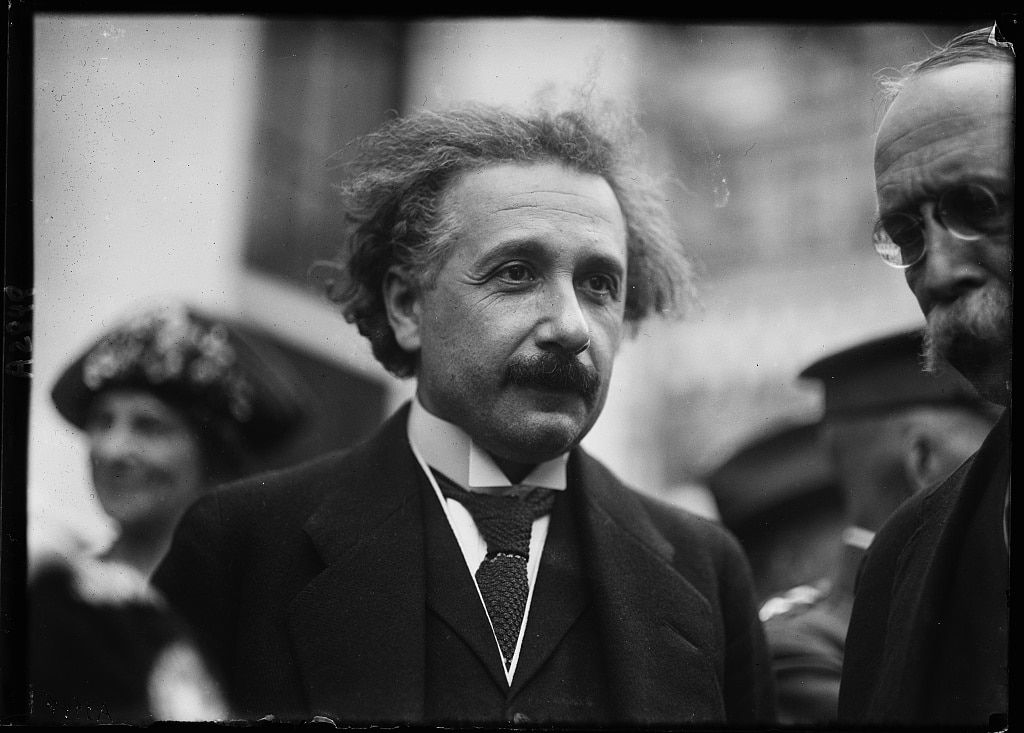
This archive was created in honor of John A. Simpson, one of the Bulletin’s principal founders and a longtime member of its Board of Sponsors. This searchable archive provides exclusive online access to original interviews and commentary by luminaries like Albert Einstein, J. Robert Oppenheimer, Ruth Adams, John F. Kennedy, Stephen Hawking, Christine Todd Whitman, US Secretary of Defense William J. Perry, and multiple Nobel laureates.

Over 80 years of magazine covers

👁 feb-1978-cover

February 1978

👁 Sept-Oct_1995Cover

September - October 1995

👁 Aug-Sept_1986Cover

August - September 1986

👁 Oct_1978Cover

October 1978

👁 Dec_1991Cover

December 1991

👁 Jul-Aug_1997Cover

July - August 1997