VOOZH about

URL: https://thebulletin.org/magazine/2025-07/

⇱ July 2025 - Bulletin of the Atomic Scientists


Follow our Iran coverage

DIGITAL MAGAZINE

July 2025

DIGITAL MAGAZINE

July 2025

July 2025

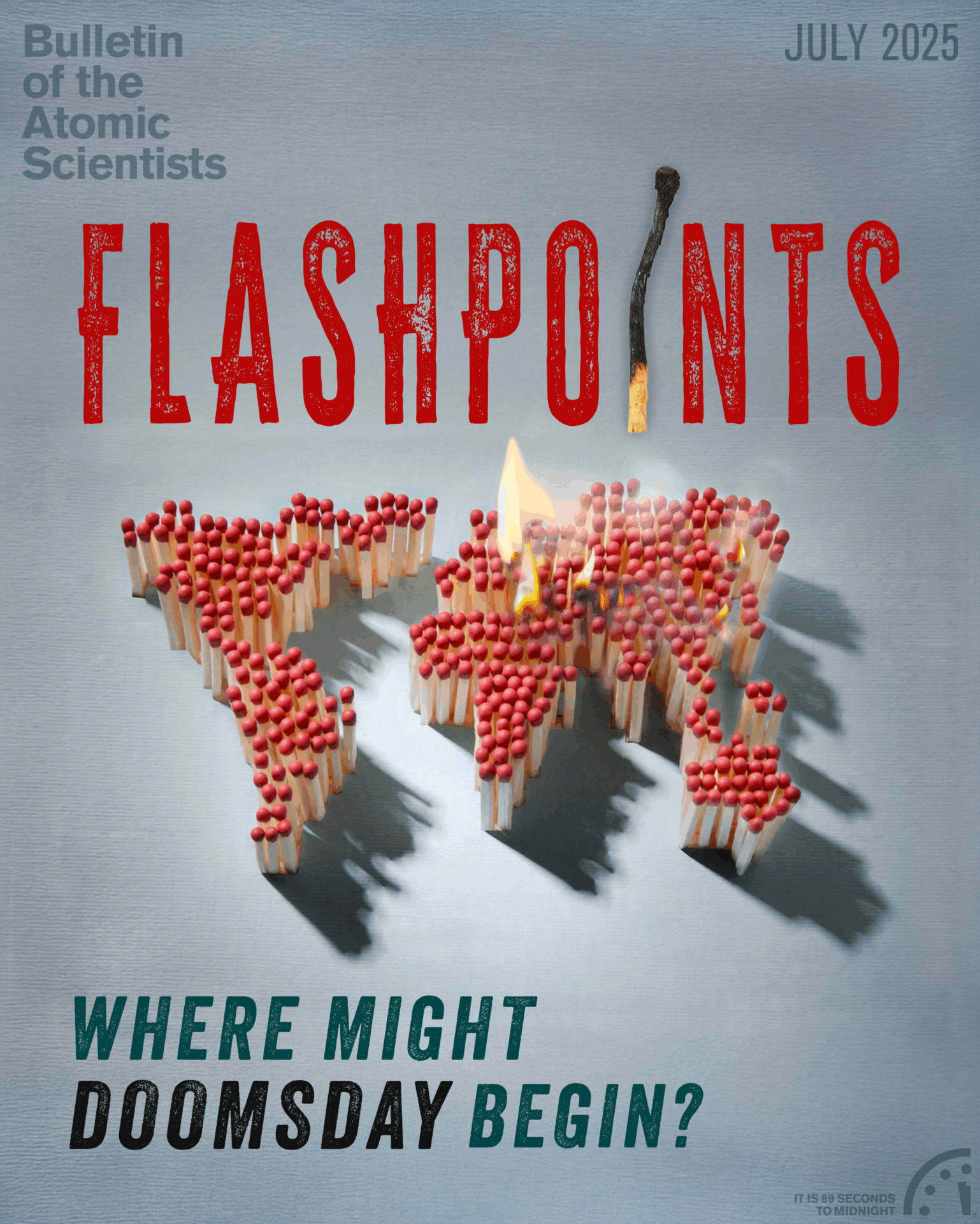
Introduction: Possible flashpoints for the next major conflict

By Dan Drollette Jr

Sometimes a relatively small event—such as the assassination of an obscure archduke in a distant corner of the Balkans—explodes into a bona fide world war. All it takes is the right initial ingredients, and a spark. What places contain these attributes? Read on.

Introduction: Possible flashpoints for the next major conflict

By Dan Drollette Jr

Sometimes a relatively small event—such as the assassination of an obscure archduke in a distant corner of the Balkans—explodes into a bona fide world war. All it takes is the right initial ingredients, and a spark. What places contain these attributes? Read on.

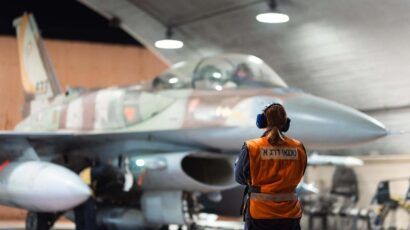
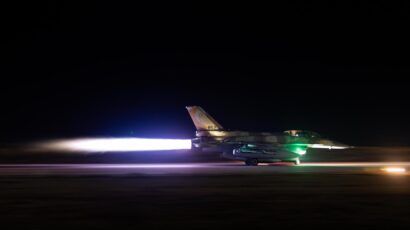
The lead-up to war: Will Israel strike Iran’s nuclear facilities with US support?

By Assaf Zoran

Coordinated US-Israel dialogue on both diplomatic and military contingencies is essential to managing escalation risks and ensuring a sustainable resolution.

Containment vs. confrontation: Trump and a nuclear Iran

By Mohammad Eslami, Christian Kaunert

A balanced diplomatic approach—one that addresses Iran’s security concerns—may be more effective than coercion alone in preventing nuclear proliferation and maintaining regional stability. Consequently, four scenarios are possible under Trump 2.0: regime change, prolonged stalemate, a new nuclear agreement, or military conflict.

Fiona Hill: What Putin (and Trump?) might do next, after Ukraine

By Dan Drollette Jr

Russia expert, intelligence analyst, and former National Security Council member Fiona Hill gives her analysis of what might happen after active fighting stops in Ukraine: What the West can expect next from Vladimir Putin, whom she’s met in person and has written books about. In this interview, she not only provides a psychological portrait of Putin but also of Donald Trump—from the point of view of someone who worked under Trump for nearly three years during the “Trump 1.0” administration. She discusses the similarities between the two men and their world view—and just as important, the differences.

Cyberstorm on the horizon: David E. Sanger on what two recent breaches reveal about modern warfare

By Sara Goudarzi

In 2023 and 2024, there were two cyber espionage operations against the US that were traced back to Chinese groups. “Volt Typhoon” focused on shutting down critical American infrastructure—presumably in the wake of a Chinese invasion of Taiwan. The other, referred by cyber analysts as “Salt Typhoon,” was an extremely sophisticated operation that used the country’s telecommunications networks to spy on Americans. David E. Sanger, chief Washington correspondent for The New York Times, who has reported extensively on the topic, describes how cyber operations factor into the geopolitical landscape and future wars, and how the US can best prepare for similar breaches on the horizon.

Orville Schell on China vs Taiwan in the Trump 2.0 era

By Dan Drollette Jr

Schell gives his take on what to expect from the second Trump administration when it comes to mainland China and the island of Taiwan, going into what would happen if there an assault or invasion of Taiwan—and the strategic and ethical implications for the West.

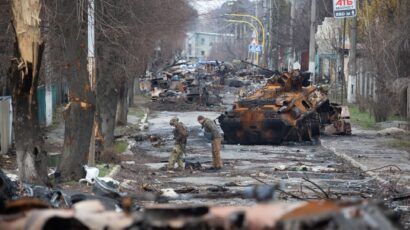
Is Ukraine still a possible flashpoint for a larger war?

By John Mecklin

An interview with former US ambassador to Ukraine Steven Pifer back in May—when negotiations between Ukraine and Russia were underway but seemed unlikely to reach a quick agreement—about the Russian invasion of Ukraine and the possibility of escalation in that war as it drags on into its fourth year.

North Korea: A renewed flashpoint or continuity of the status quo?

By Rachel Minyoung Lee

North Korea appears unlikely to deliberately escalate tensions in the coming year as the regime will prioritize domestic development. However, its nuclear policy, burgeoning relations with Russia, and evolving geopolitical factors will increase the risks of North Korea becoming a flash point in the medium to long term.

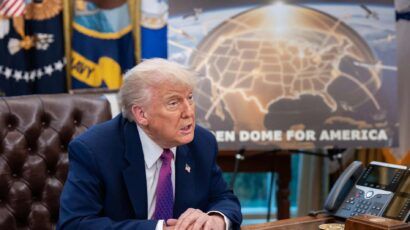
Golden Dome and arms control: impediment or opportunity?

By Pranay Vaddi, John K. Warden

The Trump administration identified arms control talks with Russia and China as an early priority. At the same time, the US President directed the Defense Department to develop a comprehensive air and missile defense system for the United States, and potentially for forward-deployed forces and allies as well. The interrelationship between strategic offensive and defensive arms will complicate, but not necessarily derail, the administration’s strategic arms control agenda.

Will the next world war begin in orbit? Jonathan McDowell on strategic competition in space

By Dan Drollette Jr

Jonathan McDowell is a British-American astronomer and astrophysicist who, until two months ago, worked at the Harvard–Smithsonian Center for Astrophysics's Chandra X-ray Center, where he led the group that has operated this noted space telescope for the past 26 years. He describes some of the myriad ways in which international friction—and even war—could begin in orbit, due to more players, more competition, more accidents, the increasing commercialization of space, and the lack of international coordination of space traffic.

Six ways AI could cause the next big war, and why it probably won’t

By Zachary Burdette, Karl Mueller, Jim Mitre, Lily Hoak

Unlike the dystopian visions of artificial intelligence ushering in a new era of conflict and chaos, the likelihood of AI tools directly triggering a major war appears limited. But there are specific pathways that could increase the risk of conflict if governments do not manage them properly. The two most concerning are the traditional challenge that technological breakthroughs will lead to destabilizing shifts in the balance of power, and the novel problem that AI could distort human strategic judgment in ways that fuel misperceptions and miscalculations.

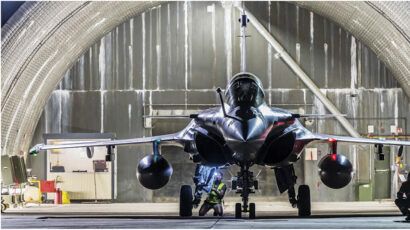
French nuclear weapons, 2025

By Hans M. Kristensen, Matt Korda, Eliana Johns, Mackenzie Knight-Boyle

France’s nuclear weapons arsenal has remained stable in recent years, but significant modernizations are underway of the country’s ballistic missiles, cruise missiles, submarines, aircraft, and nuclear industrial complex. We estimate that France currently has a nuclear weapons stockpile of approximately 290 warheads, as well as approximately 80 retired warheads awaiting dismantlement.

The lead-up to war: Will Israel strike Iran’s nuclear facilities with US support?

By Assaf Zoran

Coordinated US-Israel dialogue on both diplomatic and military contingencies is essential to managing escalation risks and ensuring a sustainable resolution.

Containment vs. confrontation: Trump and a nuclear Iran

By Mohammad Eslami, Christian Kaunert

A balanced diplomatic approach—one that addresses Iran’s security concerns—may be more effective than coercion alone in preventing nuclear proliferation and maintaining regional stability. Consequently, four scenarios are possible under Trump 2.0: regime change, prolonged stalemate, a new nuclear agreement, or military conflict.

Fiona Hill: What Putin (and Trump?) might do next, after Ukraine

By Dan Drollette Jr

Russia expert, intelligence analyst, and former National Security Council member Fiona Hill gives her analysis of what might happen after active fighting stops in Ukraine: What the West can expect next from Vladimir Putin, whom she’s met in person and has written books about. In this interview, she not only provides a psychological portrait of Putin but also of Donald Trump—from the point of view of someone who worked under Trump for nearly three years during the “Trump 1.0” administration. She discusses the similarities between the two men and their world view—and just as important, the differences.

Cyberstorm on the horizon: David E. Sanger on what two recent breaches reveal about modern warfare

By Sara Goudarzi

In 2023 and 2024, there were two cyber espionage operations against the US that were traced back to Chinese groups. “Volt Typhoon” focused on shutting down critical American infrastructure—presumably in the wake of a Chinese invasion of Taiwan. The other, referred by cyber analysts as “Salt Typhoon,” was an extremely sophisticated operation that used the country’s telecommunications networks to spy on Americans. David E. Sanger, chief Washington correspondent for The New York Times, who has reported extensively on the topic, describes how cyber operations factor into the geopolitical landscape and future wars, and how the US can best prepare for similar breaches on the horizon.

Orville Schell on China vs Taiwan in the Trump 2.0 era

By Dan Drollette Jr

Schell gives his take on what to expect from the second Trump administration when it comes to mainland China and the island of Taiwan, going into what would happen if there an assault or invasion of Taiwan—and the strategic and ethical implications for the West.

Is Ukraine still a possible flashpoint for a larger war?

By John Mecklin

An interview with former US ambassador to Ukraine Steven Pifer back in May—when negotiations between Ukraine and Russia were underway but seemed unlikely to reach a quick agreement—about the Russian invasion of Ukraine and the possibility of escalation in that war as it drags on into its fourth year.

North Korea: A renewed flashpoint or continuity of the status quo?

By Rachel Minyoung Lee

North Korea appears unlikely to deliberately escalate tensions in the coming year as the regime will prioritize domestic development. However, its nuclear policy, burgeoning relations with Russia, and evolving geopolitical factors will increase the risks of North Korea becoming a flash point in the medium to long term.

Golden Dome and arms control: impediment or opportunity?

By Pranay Vaddi, John K. Warden

The Trump administration identified arms control talks with Russia and China as an early priority. At the same time, the US President directed the Defense Department to develop a comprehensive air and missile defense system for the United States, and potentially for forward-deployed forces and allies as well. The interrelationship between strategic offensive and defensive arms will complicate, but not necessarily derail, the administration’s strategic arms control agenda.

Will the next world war begin in orbit? Jonathan McDowell on strategic competition in space

By Dan Drollette Jr

Jonathan McDowell is a British-American astronomer and astrophysicist who, until two months ago, worked at the Harvard–Smithsonian Center for Astrophysics's Chandra X-ray Center, where he led the group that has operated this noted space telescope for the past 26 years. He describes some of the myriad ways in which international friction—and even war—could begin in orbit, due to more players, more competition, more accidents, the increasing commercialization of space, and the lack of international coordination of space traffic.

Six ways AI could cause the next big war, and why it probably won’t

By Zachary Burdette, Karl Mueller, Jim Mitre, Lily Hoak

Unlike the dystopian visions of artificial intelligence ushering in a new era of conflict and chaos, the likelihood of AI tools directly triggering a major war appears limited. But there are specific pathways that could increase the risk of conflict if governments do not manage them properly. The two most concerning are the traditional challenge that technological breakthroughs will lead to destabilizing shifts in the balance of power, and the novel problem that AI could distort human strategic judgment in ways that fuel misperceptions and miscalculations.

French nuclear weapons, 2025

By Hans M. Kristensen, Matt Korda, Eliana Johns, Mackenzie Knight-Boyle

France’s nuclear weapons arsenal has remained stable in recent years, but significant modernizations are underway of the country’s ballistic missiles, cruise missiles, submarines, aircraft, and nuclear industrial complex. We estimate that France currently has a nuclear weapons stockpile of approximately 290 warheads, as well as approximately 80 retired warheads awaiting dismantlement.

July 2025

Subscribe now

We've relaunched the Bulletin's award-winning digital magazine. Get access to every issue and our archive going back to 1945.

Magazine archive

Premium subscribers can read the complete Bulletin of the Atomic Scientists’ archive, which contains every article published since our founding in 1945.

This archive was created in honor of John A. Simpson, one of the Bulletin’s principal founders and a longtime member of its Board of Sponsors. This searchable archive provides exclusive online access to original interviews and commentary by luminaries like Albert Einstein, J. Robert Oppenheimer, Ruth Adams, John F. Kennedy, Stephen Hawking, Christine Todd Whitman, US Secretary of Defense William J. Perry, and multiple Nobel laureates.

Over 80 years of magazine covers

👁 feb-1978-cover

February 1978

👁 Sept-Oct_1995Cover

September - October 1995

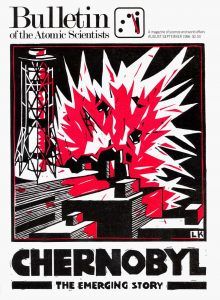
👁 Aug-Sept_1986Cover

August - September 1986

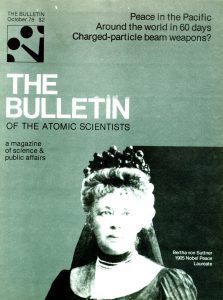
👁 Oct_1978Cover

October 1978

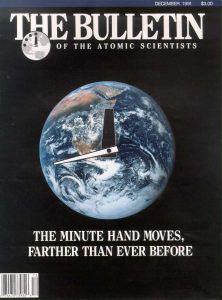
👁 Dec_1991Cover

December 1991

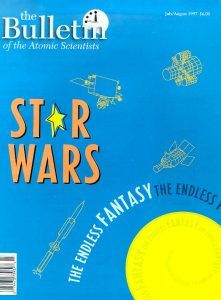
👁 Jul-Aug_1997Cover

July - August 1997