VOOZH about

URL: https://thebulletin.org/magazine/2025-09/

⇱ September 2025 - Bulletin of the Atomic Scientists


Follow our Iran coverage

DIGITAL MAGAZINE

September 2025

DIGITAL MAGAZINE

September 2025

September 2025

Introduction: How the Trump administration has upended international relations and increased existential risk

By Dan Drollette Jr

The role of the United States in international affairs is changing dramatically, as the Trump administration imposes a new order upon the planet.

Introduction: How the Trump administration has upended international relations and increased existential risk

By Dan Drollette Jr

The role of the United States in international affairs is changing dramatically, as the Trump administration imposes a new order upon the planet.

Interview: Harvard’s Graham Allison on the second Trump administration and the international security order

By John Mecklin

A top analyst of international security policy—who has advised or served in the Defense Department, State Department, and the CIA, as well as teaching at the Harvard Kennedy School for more than 40 years—analyzes the vicissitudes of the Trump administration’s approach to international trade and security. In his words: “Since I take solace in the belief that God looks after drunks, little children, and the USA, I still think maybe, somehow, out of chaos will come something good."

“Expertise is not only not valued by this administration, it’s inherently suspicious to them”—Nobel Prize-winning economist Paul Krugman

By Dan Drollette Jr

Nobel Prize-winning economist and former New York Times columnist Paul Krugman gives his take on tariffs, Trump, trade, technology—and democracy.

“He’s basically running a reality TV show”: Francis Gavin on Trump’s impact on the US, its allies, and the post-war world order

By Dan Drollette Jr

When it comes to the post-Cold War order, the president doesn't really make a distinction between US allies or US adversaries. They're all just the competition.

Michael Mann, on how the second US withdrawal from the Paris Agreement may alter the world’s climate change landscape

By Dan Drollette Jr

The climate scientist behind the "hockey-stick graph" of global warming has a message for younger scientists: Don't give up. Be part of the fight for science, for reason, for fact-based discourse, and policy making.

Obama’s science adviser on Trump’s science cuts: “The system will starve”

By Matt Field

Since 1945, there has been a system in place in the US of government research investment in the sciences—particularly at universities. The idea was that the new knowledge created by scientists would lead to economic prosperity, greater national security, and better health. A former presidential science advisor delves into what it means when that positive feedback loop is broken.

Lessons from former arms control negotiators

By Doreen Horschig

With the collapse of key treaties amid rising geopolitical tensions, arms control efforts struggle to keep pace with today’s security environment. As new technologies and multipolar dynamics redefine strategic competition, a reimagined, flexible form of arms control, rooted in past experience but adapted for the present, is both necessary and possible.

Will the Trump administration attempt to annex Greenland, Canada, or somewhere else? A prominent historian’s take

By Dan Drollette Jr

How seriously should the world take the Trump administration's threats to annex the lands of other countries "one way or another?" The author of "How to Hide an Empire" says that while a land grab may seem an arbitrary and fanciful notion, it reflects a deeper and darker desire: the dismantling of the post-war international order and its norms.

Autocracy and the university in America today

By Leon Botstein

From its immigration and deportation policies to its highly publicized assault on several of America’s leading universities, the Trump administration seems determined to upend decades of close cooperation between the US federal government and higher education. The president of Bard College examines what this could mean for the future of scientific research, educational standards, democracy, and the US—and calls for a renewed and reformed university and college system after the end of the Trump era.

The climate consequences of the US-Russia global realignment

By Robert Orttung, Debra Javeline, Graeme Robertson, Richard Arnold, Andrew Barnes, Edward Holland, Mikhail Troitskiy, Judyth Twigg, Susanne Wengle

Trump and Putin have both expressed support for better ties between the US and Russia. Despite obvious different interests in some areas, the two both want to promote the oil and gas sector—and will likely join forces to undermine progress at future international climate talks. The consequences for health and food security among the most vulnerable counties will be severe.

Pakistan nuclear weapons, 2025

By Hans M. Kristensen, Matt Korda, Eliana Johns, Mackenzie Knight-Boyle

Pakistan currently has a stockpile of approximately 170 nuclear warheads—a number that could potentially grow to around 200 by the late 2020s.

Interview: Harvard’s Graham Allison on the second Trump administration and the international security order

By John Mecklin

A top analyst of international security policy—who has advised or served in the Defense Department, State Department, and the CIA, as well as teaching at the Harvard Kennedy School for more than 40 years—analyzes the vicissitudes of the Trump administration’s approach to international trade and security. In his words: “Since I take solace in the belief that God looks after drunks, little children, and the USA, I still think maybe, somehow, out of chaos will come something good."

“Expertise is not only not valued by this administration, it’s inherently suspicious to them”—Nobel Prize-winning economist Paul Krugman

By Dan Drollette Jr

Nobel Prize-winning economist and former New York Times columnist Paul Krugman gives his take on tariffs, Trump, trade, technology—and democracy.

“He’s basically running a reality TV show”: Francis Gavin on Trump’s impact on the US, its allies, and the post-war world order

By Dan Drollette Jr

When it comes to the post-Cold War order, the president doesn't really make a distinction between US allies or US adversaries. They're all just the competition.

Michael Mann, on how the second US withdrawal from the Paris Agreement may alter the world’s climate change landscape

By Dan Drollette Jr

The climate scientist behind the "hockey-stick graph" of global warming has a message for younger scientists: Don't give up. Be part of the fight for science, for reason, for fact-based discourse, and policy making.

Obama’s science adviser on Trump’s science cuts: “The system will starve”

By Matt Field

Since 1945, there has been a system in place in the US of government research investment in the sciences—particularly at universities. The idea was that the new knowledge created by scientists would lead to economic prosperity, greater national security, and better health. A former presidential science advisor delves into what it means when that positive feedback loop is broken.

Lessons from former arms control negotiators

By Doreen Horschig

With the collapse of key treaties amid rising geopolitical tensions, arms control efforts struggle to keep pace with today’s security environment. As new technologies and multipolar dynamics redefine strategic competition, a reimagined, flexible form of arms control, rooted in past experience but adapted for the present, is both necessary and possible.

Will the Trump administration attempt to annex Greenland, Canada, or somewhere else? A prominent historian’s take

By Dan Drollette Jr

How seriously should the world take the Trump administration's threats to annex the lands of other countries "one way or another?" The author of "How to Hide an Empire" says that while a land grab may seem an arbitrary and fanciful notion, it reflects a deeper and darker desire: the dismantling of the post-war international order and its norms.

Autocracy and the university in America today

By Leon Botstein

From its immigration and deportation policies to its highly publicized assault on several of America’s leading universities, the Trump administration seems determined to upend decades of close cooperation between the US federal government and higher education. The president of Bard College examines what this could mean for the future of scientific research, educational standards, democracy, and the US—and calls for a renewed and reformed university and college system after the end of the Trump era.

The climate consequences of the US-Russia global realignment

By Robert Orttung, Debra Javeline, Graeme Robertson, Richard Arnold, Andrew Barnes, Edward Holland, Mikhail Troitskiy, Judyth Twigg, Susanne Wengle

Trump and Putin have both expressed support for better ties between the US and Russia. Despite obvious different interests in some areas, the two both want to promote the oil and gas sector—and will likely join forces to undermine progress at future international climate talks. The consequences for health and food security among the most vulnerable counties will be severe.

Pakistan nuclear weapons, 2025

By Hans M. Kristensen, Matt Korda, Eliana Johns, Mackenzie Knight-Boyle

Pakistan currently has a stockpile of approximately 170 nuclear warheads—a number that could potentially grow to around 200 by the late 2020s.

September 2025

Subscribe now

We've relaunched the Bulletin's award-winning digital magazine. Get access to every issue and our archive going back to 1945.

Magazine archive

Premium subscribers can read the complete Bulletin of the Atomic Scientists’ archive, which contains every article published since our founding in 1945.

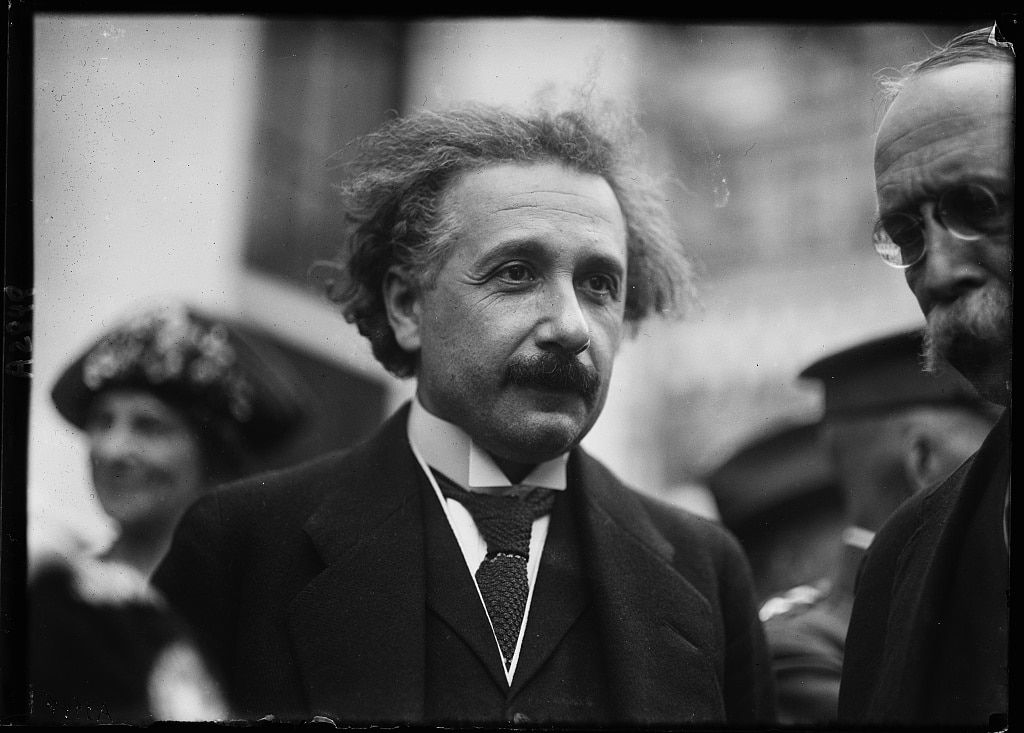
This archive was created in honor of John A. Simpson, one of the Bulletin’s principal founders and a longtime member of its Board of Sponsors. This searchable archive provides exclusive online access to original interviews and commentary by luminaries like Albert Einstein, J. Robert Oppenheimer, Ruth Adams, John F. Kennedy, Stephen Hawking, Christine Todd Whitman, US Secretary of Defense William J. Perry, and multiple Nobel laureates.

Over 80 years of magazine covers

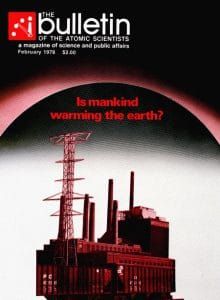
👁 feb-1978-cover

February 1978

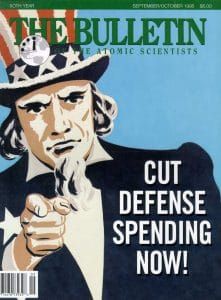
👁 Sept-Oct_1995Cover

September - October 1995

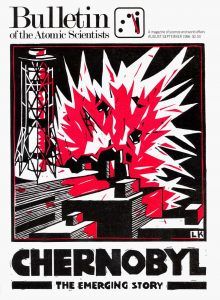
👁 Aug-Sept_1986Cover

August - September 1986

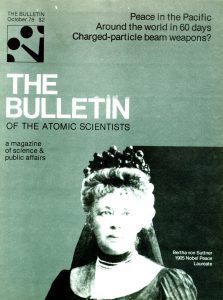
👁 Oct_1978Cover

October 1978

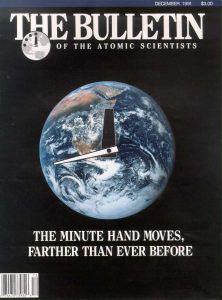
👁 Dec_1991Cover

December 1991

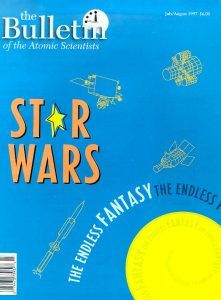
👁 Jul-Aug_1997Cover

July - August 1997