|
VOOZH | about |
|
VOOZH | about |
reference-global.com
https://doi.org/10.1515/9783110223583.201…
35 pages
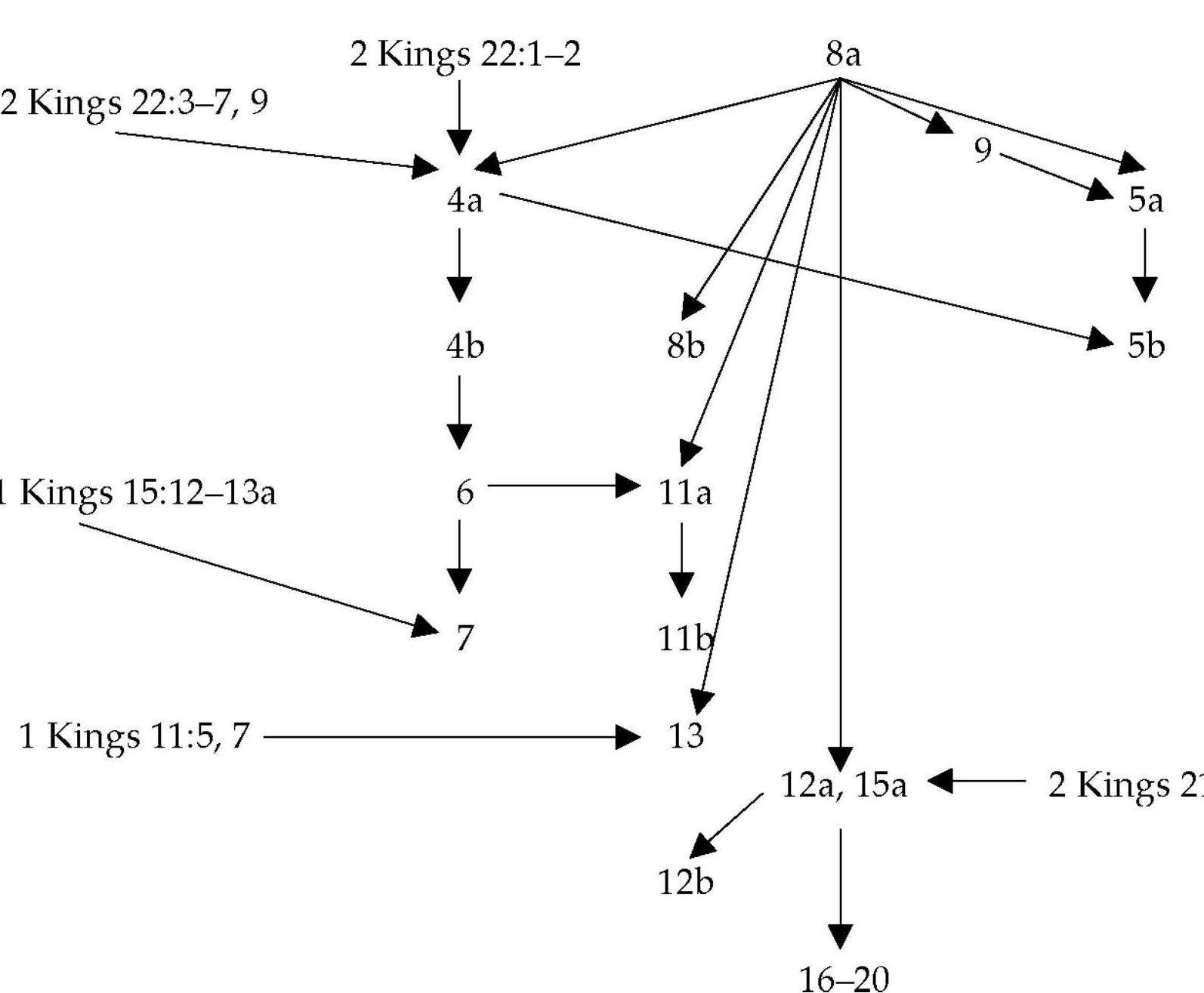
Many features in the texts and the broader historical context suggest that the cult reforms, in any form intended by the Biblical authors, did not take place. It is more probable that they are literary inventions and projections of later ideals into the monarchic period. The probable excerpts from annals in 2 Kings 22:2–7, 9 and 23:11 are significant fragments, but, solely on their basis, there is no reason to assume that any cult reform took place. Although they should not be used uncritically as authentic documents, perhaps something can be extracted from them about events during the time of Josiah.
Pharos Journal of Theology
Reformist leadership is a term that refers to people who have a desire to carry out an act of change that is better than before. Reformers are defined as people who advocate reform or people who support reform. Practically reform is an action that leads to change for the better. So reformist leadership is in essence leadership towards change in accordance with God's will. In this study, an in-depth study of the explanatory and confirmatory studies of Josiah's reformist approach as a model of leadership based on 2 Kings 22-23:1-30 was carried out among the servants in Batam in order to ascertain the extent to which it is infused in leadership in Batam. Josiah’s story guides Christians to a critical dynamic in the way in which people, especially leaders lead their nations. Josiah constantly sought to do “right in the sight of God. Josiah’s enthusiasm, and determination to serve God faitfhully confirmed that it was indeed possible to do what God wills fully and his actions are ...
Journal of Higher Criticism, 2022
This article outlines evidence for the existence of two major redactions of Kings that replaces the dual redaction theory of the Cross school. The oldest literary stratum, the Manasseh Redaction (DtrM), dated no earlier than the fall of Jerusalem in 585 BCE, schematically portrayed all the last kings from Manasseh to the fall of Jerusalem as uniformly wicked. The book of Jeremiah, which knew nothing of a righteous Josiah or of Deuteronomistic reforms, provides key external literary evidence for the existence of the Manasseh Redaction. The account of the last kings of Judah in 2 Kgs 21-25 in DtrM reads smoothly as a consistent negative account of the approaching divine punishment of Jerusalem for the sins of Manasseh. The Josiah Redaction (DtrJ), of even later date, inserted a new and entirely fictional portrait of Josiah as a righteous king and a Deuteronomistic reformer. The DtrJ additions contain systematic literary dependence on the older DtrM materials, while the reverse is never the case, showing the relative sequence of these contradictory traditions. • An immediate consequence is that DtrJ does not bear contemporary historical witness to events in the time of Josiah as commonly supposed. • A second consequence is to definitively remove the traditional argument that dates the introduction of the Deuteronomic law code to the time of Josiah. • A third consequence is to allow the possibility that all the materials in the Hebrew Bible attributed to the so-called Deuteronomistic School may be near-contemporary rather than a product of centuries of literary activity as commonly proposed.
The Israelite cult and its connection to the surrounding culture Introduction to the book "A Brief History of Yahweh" The kingdoms of Israel and Judah were not disconnected from the cultures of the surrounding peoples, including in the realm of worship. The biblical texts themselves attest to this reality. It is therefore understandable to observe that the deity is presented in a diverse and sometimes even contradictory manner. This diversity can be explained by the layered composition of the Bible, written at different times by various authors. This present work delves into the representation of Yahweh in the biblical texts and attempts to conduct a thorough analysis of it. It seeks to highlight the variability of the identity of the god "Yahweh" across different texts, examining the political contexts that influenced this evolution. It demonstrates that theology, philosophy, society, and politics are closely intertwined, and that events related to the worship of Yahweh are intimately associated with the composition and writing of the Hebrew Bible. It is not coincidental that this study begins with the exploration of significant events in the monarchy of Judah, particularly during the time of King Josiah, under the supervision of his scribe, Shaphan, the son of Azalia. The starting point for these changes in Judean worship is the discovery, during the restoration of the Temple in Jerusalem, of a book that this study identifies as the "Deuteronomy." This research introduces a major modification by assigning crucial importance to the character of Shaphan and his lineage, his connection to the priestly tradition of Shiloh, and his role in formulating the principles of Deuteronomy's reform. The scribes responsible for this text also compiled oral traditions and existing texts of their time, arranging them according to their judgment. This reform had a decisive influence on the final version of the biblical writings, far beyond its initial historical context.
Edinburgh University, 2005
This thesis seeks to contribute to a dynamic scholarly debate regarding the relationship of the biblical books of Samuel-Kings and Chronicles. The wider frame of reference, in which this study is set, is on the one hand, the prevailing view since de Wette that the main source of Chronicles is Samuel-Kings by and large in its existing form, and on the other, the recently revived older theory of a common source behind both Samuel-Kings and Chronicles. The present investigation looks at the merits of the latter, particularly the challenge it poses to the view of Chronicles being dependent on Samuel-Kings, as the portions of Kings and Chronicles dealing with divided monarchy in general and the reform of Josiah in particular are considered. After preliminary matters in the introduction, the regnal framework and the royal cultic reforms as presented in Kings and Chronicles are examined in chapters one and two. One of the major conclusions drawn from text and literary critical studies of the regnal formulae of these two historiographical works is that the framework of Israelite rulers in Kings may be a later (=postchronistic) development in that book, since close links are observed between the parts of regnal formulae of Judean monarchs in Kings that are absent from Chronicles and the framework of the rulers of Israel included only in Kings. The cultic reform accounts in Kings display a set of common characteristics often considered 'deuteronomistic'. Since these language characteristics are also shared by the reform narratives in Chronicles, it is argued that, in this sense, Chronicles in its reform accounts is no less 'deuteronomistic' than Kings. Of the only two cultic reform narratives that are found in Kings but not in Chronicles, the one relating to Jehu includes a subtle link to the Elijah/Elisha cycle that occurs again only in Kings, thus implying that both Jehu's reform account and the Elijah-Elisha cycle with which it is closely connected were originally absent from the main source of Chronicles. A major investigation is launched in chapter three into the parallel texts of one of the more prominent shared cultic reform accounts, that of king Josiah (2Kgs 23:4-20 + 24 and 2Chr 33:4-7 + 33). The study culminates with a tentative proposal of a primary form of Josiah's reform report that lies behind the two parallel texts. The next chapter investigates how that earlier reform account was expanded in Kings, as well as the many connections with other texts both within and outside the book of Kings in the process of its evolution. With the findings of the study of the texts of Josiah's reform in Kings and Chronicles in the major part of the thesis endorsing the main tenets of common source theory, the final chapter then hints at similar processes for other parts of Kings relating to the story of the divided monarchy, where the texts may have developed from the shorter material identifiable also as the main source for Chronicles.
The Last Century in the History of the Kingdom of Judah - The 7th Century BCE in Archaeological, Historical and Biblical Perspective , 2019
Chapter analyses figure of Judaean king Joshiah as it is documented in biblical texts. Simultaneously, it deals with archaeological record from the 7th century BCE when this ruler was active and tries to bring both of these sources into critical dialogue.
Jerusalem journal of archaeology, 2024
This article presents a tentative review of the information about First Temple-period Judahite cult, which historians of religion can glean from the various inscriptions discovered so far. It surveys the various deities, sanctuaries, cultic rites, and feast days mentioned. When an inscription's reading, dating, or interpretation is controversial, I take a stand as an epigrapher but also consider the archaeological context and biblical literature. This status quaestionis seems to capture an important historical evolution of Juhadite cult.
Sorry, preview is currently unavailable. You can download the paper by clicking the button above.
Was There A Cult Reform under King Josiah? The Case for a Well-Grounded Minimum, in: L. L. Grabbe (ed.), Good Kings/Bad Kings: The Kingdom of Judah in the Seventh Century (European Seminar in Historical Methodology, 5; Library of Hebrew Bible/Old Testament Studies, 393), London – New York: Continuum, 2005 (ppb ed. 2007), 279-316.
Kamlah, J. and Witte, M., eds. Sacred Architecture in Ancient Palestine from the Bronze Age to Medieval Times (Abhandlungen des Deutschen Palästina Vereins 49), 2023
Religions, 2023
The Book of Kings presents religious reforms in ancient Israel and Judah in an elaborately designed pattern. Repetitive verbal and thematic parallels concerning reforms and political incidents reveal a systematic–concentric chiastic structure. A good king/bad king pattern framed within a concept of “one Israel” shows that Solomon’s/Jeroboam’s and Manasseh’s/Josiah’s reforms are placed at the opposite ends of the chiasmus, enveloping those of Asa/Ahab and Ahaz/Hezekiah and then Jehu’s/Joash’s reforms centered within the larger structure. By virtue of their positioning inside the structure, the Yahwistic reforms of Solomon, Josiah, and Jehu/Joash are emphasized as compared to other kings’ reforms. All of northern Israel’s reforms fail, while in Judah only some succeed, and even these have limitations and require further development. The Davidic heirs and their supporters may now perceive that Kings presents and pursues the pro-Yahwistic reforms as the ideal ones, based on the Davidic ...
This article examines 2 Chronicles 21 and the description it provides of Jehoram of Judah's reign, which diverges widely from the parallel in 2 Kings 8. Addressing some of the structural, substantive, and linguistic issues that arise from the text, it suggests that this chapter integrates two perspectives regarding Jehoram, each of which contain different details—that are nonetheless essentially interlinked. The proposal offered herein resolves some of the fundamental questions relating to the text, including the structure of the chapter and the duplications and meaning of the unique phrases it contains. The paper also discusses the Chronicler's views concerning the family and Israelite kingship and the manner in which the promise to the house of David is presented in the chapter. Keywords Jehoram – Davidic kingship – Chronicles – מעים
This essay provides a survey of the archaeological data which bear on the question of the historicity of Josiah's reforms as represented in 2 Kings 22-23. I reach the conclusion that the account in 2 Kings is more rhetorical than historical.
Anschrifte n der He rausgeber: M. Dietrich -0 . Lore tz, Schlaunstr. 2, 48143 MUnster Manuskripte s ind an einen de r He rausgeber zu senden. FUr unverlangt eingesandte Manuskripte kann keine Gewahr iibernomme n werden.
Journal of Hebrew Scriptures, 2007
In this paper I look at the famous story of the finding of the “book of the law” in the temple during the reign of Josiah. Adopting a pragmatic/plausible approach and keeping in mind the biblical testimony about earlier circumstances in Judah, I argue that the story as we have it lacks inherent plausibility and should be rejected as an etiological invention, whether or not of the time. None of the various scenarios that could explain its disappearance can also serve to explain why it remained hidden for so long, only to be discovered at just the right moment to provide a willing Josiah with the justification to begin a cultic reform program.