|
VOOZH | about |
|
VOOZH | about |
Download the free Kindle app and start reading Kindle books instantly on your smartphone, tablet, or computer - no Kindle device required.
Read instantly on your browser with Kindle for Web.
Using your mobile phone camera - scan the code below and download the Kindle app.
OK
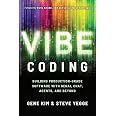
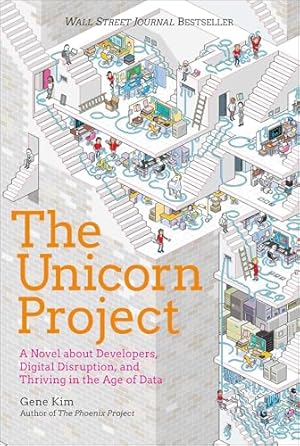
Gene Kim is a multiple award-winning CTO, researcher and author, and has been studying high-performing technology organizations since 1999. He was founder and CTO of Tripwire for 13 years. He has written six books, including The Unicorn Project (2019), The Phoenix Project (2013), The DevOps Handbook (2016), the Shingo Publication Award winning Accelerate (2018), and The Visible Ops Handbook (2004-2006) series. Since 2014, he has been the founder and organizer of the DevOps Enterprise Summit, studying the technology transformations of large, complex organizations.
In 2007, ComputerWorld added Gene to the “40 Innovative IT People to Watch Under the Age of 40” list, and he was named a Computer Science Outstanding Alumnus by Purdue University for achievement and leadership in the profession.
He lives in Portland, OR, with his wife and family.
Steve has been both an engineer and a software engineering leader for over 30 years, almost 20 of which were spent working at Amazon (1998-2005) and then Google (2005-2017). He also served as Head of Engineering, Ads and Data Monetization at Grab in Southeast Asia from 2017 until Covid/2020, and is currently an engineer at Sourcegraph working on cutting-edge coding assistants. Steve began blogging about technical topics at Amazon in 2001-2002, and his blogging portfolio over the past twenty years is filled with solid Top Ten hits, and even a few platinum singles. He is currently focused on how AI is transforming programming and software development.
Customer Reviews, including Product Star Ratings help customers to learn more about the product and decide whether it is the right product for them.
To calculate the overall star rating and percentage breakdown by star, we don’t use a simple average. Instead, our system considers things like how recent a review is and if the reviewer bought the item on Amazon. It also analyzed reviews to verify trustworthiness.
Learn more how customers reviews work on AmazonAnother great book from IT Revolution. Gene & Steve focused on creating timeless patterns rather than a quick-and-dirty howto like many of the other books appearing on the market. Drawing on Auguste Escoffier's Kitchen Brigade metaphor they concisely and accurately convey important concepts of delegation and management. Based on my own experience with vibe coding large projects over the last year I can confirm that they identified the key skills to master such as memory and context management, effective delegation, source control, etc. I highly recommend this as a text to save you days or weeks of frustration.
One note regarding the audiobook, David is a fine reader but this is formatted like a business book with chapter introductions and summaries, which makes the physical book easy to skim but become extremely redundant in audio form. As a result anyone listening to it will conclude the book is 30-40% longer than necessary, but that's not a knock on the content just the format.
This book offers terrific advice for anyone interested in harnessing the awesome power of agentic or vibe-coding.
I'm writing this review in February, 2024 and I want to refute the idea that the advice in this book is dated. Steve Yegge admitted that this book was ready to ship earlier, and the release of Claude Code forced them to reconstruct some core elements of the book.
Vibe Coding by Kim and Yegge was a decent book; but the best book on this topic is The Learner's Apprentice, by Ken Kahn (2025).
I usually enjoy Gene’s and Steve’s writing. But this book is just full of fluff and hype to get you into vibe coding. Sure there are some practical guidance but it’s one of those things that could have been a blog article. Get ready to read 50 pages for only one piece of advice. They should just sell the ai summary of this book and save everyone time. It’s just too full of metaphors, hype, relatable examples and a smidge of practice advice. Don’t get me wrong the advice is good but it takes forever to uncover. I bet in 10 years they will reveal that ai wrote this entire book with 4o or something. Skip this book if you have used ai successfully for 6 months or more and have multiple agents going.
For fun: “Make it better.”
My friend Gene Kim sent me a copy of his latest book. Right from the beginning, I knew I was in for a treat when he and Steve Yegge said they would be using cooking analogies to help explain vibe coding concepts at different times in the book. Cooking has been a long time passion for me.
As I started to dive into part 2: the theory and practice of vibe coding, one of the things that stood out as a simple a-ha moment was their suggestion on how to improve the code that was being generated. They suggested to just enter the prompt:
“Make it better.”
While I have always challenged the LLM‘s that I am working with to produce better results this simple suggestion is one I’ve started to adopt regularly. The next time you are working with your favorite LLM, give it a try. I think you will like the results.
While this book is targets toward a more technical audience than chief marketing officers like me, I’m taking time to invest in new ways to think about vibe coding and its application to marketing.
Gene has always covered technical topics in a very approachable way, and he and Steve accomplish this in Vibe Coding. Reading through the book, I felt like I was side-by-side with them experiencing the same joys and discoveries. Their approach made me more confident in trying vibecoding myself.
It’s definitely worth picking up a copy. I bought copies for our entire team at the office.
For fun: “Make it better.”
My friend Gene Kim sent me a copy of his latest book. Right from the beginning, I knew I was in for a treat when he and Steve Yegge said they would be using cooking analogies to help explain vibe coding concepts at different times in the book. Cooking has been a long time passion for me.
As I started to dive into part 2: the theory and practice of vibe coding, one of the things that stood out as a simple a-ha moment was their suggestion on how to improve the code that was being generated. They suggested to just enter the prompt:
“Make it better.”
While I have always challenged the LLM‘s that I am working with to produce better results this simple suggestion is one I’ve started to adopt regularly. The next time you are working with your favorite LLM, give it a try. I think you will like the results.
While this book is targets toward a more technical audience than chief marketing officers like me, I’m taking time to invest in new ways to think about vibe coding and its application to marketing.
Gene has always covered technical topics in a very approachable way, and he and Steve accomplish this in Vibe Coding. Reading through the book, I felt like I was side-by-side with them experiencing the same joys and discoveries. Their approach made me more confident in trying vibecoding myself.
It’s definitely worth picking up a copy. I bought copies for our entire team at the office.
I pre-ordered this book in July 2025 but set it down and finally finished reading it in January 2026. I'm a senior software engineer with 14 years of experience, 12 of which at fortune 500 companies and 1 at a unicorn startup that succesffully IPOed. I'd used ChatGPT a fair amount prior to buying this book but hadn't ventured into using agentic AI yet.
Reading this book felt like a monumental waste of my time. The first 50 pages are spent convincing you that AI is the future. Fine. As a professional programmer, I think it's pretty obvious AI will have (And already has had) a big impact on our day-to-day work but maybe not everyone is bought into that yet.
Part 2 finally starts to get into "practice" but not only is most of the advice incredibly obvious to anyone who has done a reasonable amount of coding, it's also not very good.
I have since done a hundred or so hours of actual "vibe coding", trying out Claude Code, Gemini, Codex, Copilot and Aider agents on production projects (i.e. multi-million line codebases) and have found the things that do and don't work well for me, many of which are not mentioned in this book.
If you are not a programmer or have never used AI tools like LLMs, this might be helpful to teach you the basics. If you're like me and thought this might help you bring agentic AI into your day job to become a mythical "10x engineer", then you may be disappointed.
I would highly recommend just using your money to instead spend $20 on a month of Claude Pro, use the free Gemini quota, or load up Aider with Ollama and get some actual experience using AI agents. It may take 50 hours to figure out how to fit it reliably into your workflow but at least those hours will have paid off. On the contrary, the hours I spent reading this book were worth not worth the ROI.
This honestly feels like a cash grab to me. Maybe I should write a book about how to vibe code while the hype train is chugging along full steam.
This is an excellent book for professional software developers, technical (or not) product managers, and development managers alike. This is not a book that is all hype (though the authors are fans of the technologies in question). This is a book by long-time software professionals who are generally fairly cynical in their approach to new hot things. You will learn not just how to make best use of these technologies, but also how to integrate them into your organization, common pitfalls and how not just to avoid them, but how to manage them when they happen.
This is a serious book about what is great about using AI in the building of software products and how to make best use of it that will help you (and your organization, if you are a manager, director, VP, or CTO) get the most out of this technology.
Steve and Gene have provided us with one of the most compelling manifestos for domain experts to level up with AI. This book encompasses everything you need to start learning. There are no shortcuts here - just pure getting your hands dirty and seeing where it takes you.
Un ouvrage très intéressant pour toute personne qui s’intéresse à la manière dont l’intelligence artificielle transforme le développement logiciel. Le livre explique bien comment les outils d’IA peuvent accompagner le développeur, non pas pour le remplacer, mais pour augmenter sa productivité et sa créativité.
J’ai particulièrement apprécié l’approche progressive : les concepts sont expliqués simplement, puis illustrés avec des exemples concrets qui permettent de mieux comprendre comment intégrer ces pratiques dans un workflow moderne.
Le livre se lit facilement tout en apportant des idées utiles pour repenser sa façon de travailler avec les nouveaux outils d’IA. C’est une bonne lecture pour les développeurs, les profils techniques ou même les curieux qui souhaitent mieux comprendre ce que l’IA change dans la création de logiciels.
Je recommande.
I strongly recommend Vibe Coding for senior engineers, tech leads, architects and engineering managers who are looking to not just “experiment with AI coding assistants” but to strategically transform how their teams build software. Developers who are curious about stepping into this next frontier should read it too—it will challenge your assumptions about what coding is.
This book doesn’t just predict the future, it attempts to architect it. It says: the writing is on the wall–AI, agents, conversational dev are here–and you either adopt the orchestration mindset now or risk being left playing catch-up. If you approach it with both optimism and discipline (the book emphasises hardening and governance), you can ride the wave rather than be swamped by it.
It took me some time to decide on this book. I recommend it, though I may be biased by previous IT Revolution books and by being a fan of Steve Yegge's hot takes.
I will start coding after 2 decades. This book has given me the confidence that I can get back to programming.
Having practiced vibe coding for some time, I found this to be a very good read. The authors’ experience is evident, and the concise chapters make it accessible and engaging. I enjoyed it.
Having practiced vibe coding for some time, I found this to be a very good read. The authors’ experience is evident, and the concise chapters make it accessible and engaging. I enjoyed it.